English-language podcasts

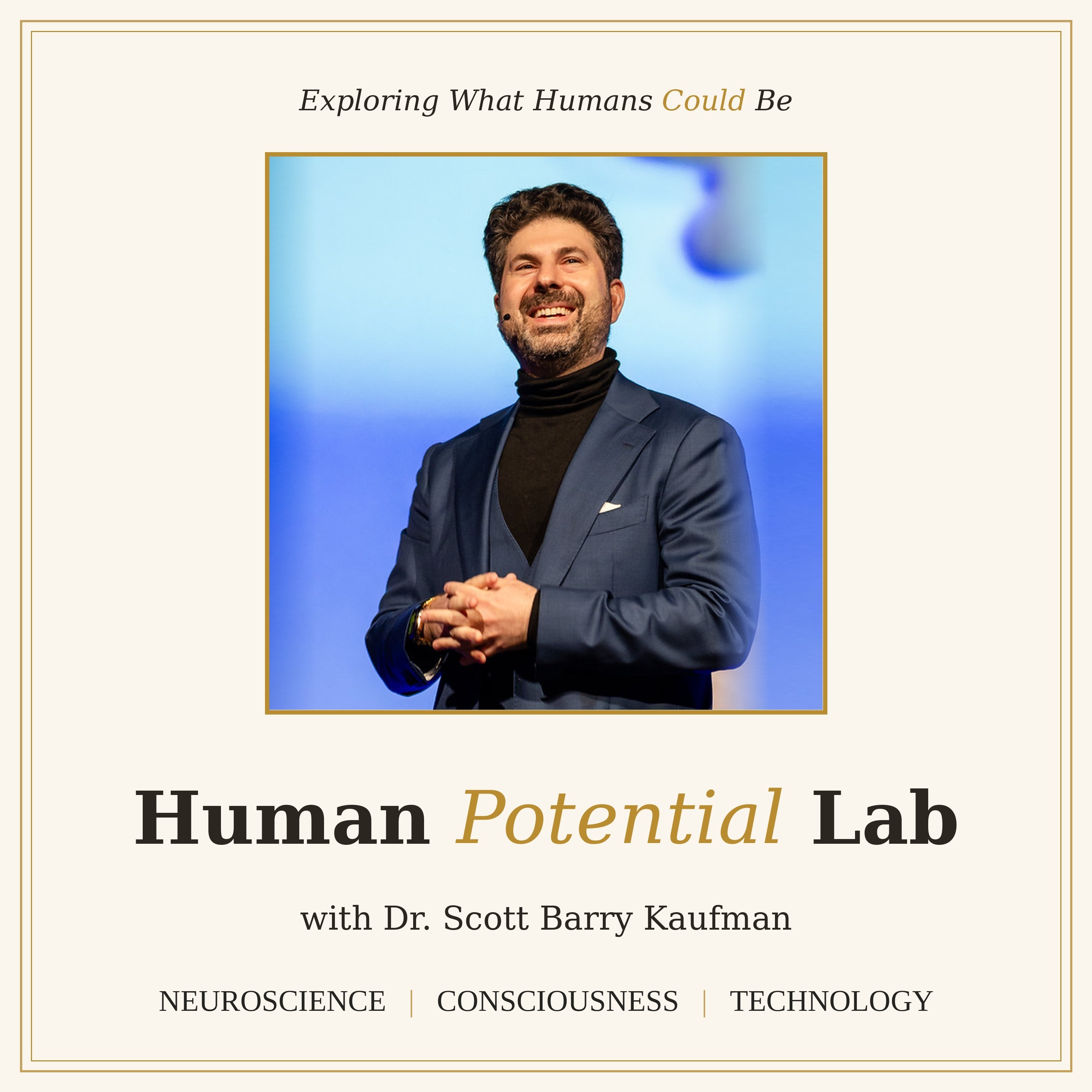
Human Potential Lab

Time Creates You When the Time Is Right for You | Sara Walker
59 min

Listen through the publisher, then discuss the episode here or arrange an in-person Roundtable. Your city determines where to meet.

Roundtables are designed for groups of four, with a shared subject and room for everyone to speak. Come for discussion, with no dating expectation.

Dr. Sara Imari Walker joins Dr. Scott Barry Kaufman for a wide-ranging conversation about the nature of life, the physical meaning of time, and how billions of years of cosmic history have shaped who we are. Drawing on her work in theoretical physics and astrobiology, Walker challenges the idea that science has reached a final understanding of the universe. She explains why life may be better understood as a process through which the universe creates and reproduces structure, and how assembly theory could help scientists understand life's origins and detect life beyond Earth. The conversation explores human uniqueness, scientific creativity, free will, the origins of agency, and the possibility that artificial intelligence is part of the evolutionary process that began long before humanity. Walker also discusses why AI should not automatically be considered alien, how cultural beliefs shape our perceptions, and why uncertainty can be a source of discovery rather than fear. The episode closes with a moving reflection on mortality, the deep history embodied in every living person, and the remarkable opportunity we have to influence what comes next in the universe.

Episode information is provided by the publisher. Listening takes place on the publisher’s service.

Listen at the source ↗

Featured places to meet in Palo Alto, CA

Explore these places and arrange a conversation through ThinkMatch.

City guide for Palo Alto, CA

More from Human Potential Lab

Human Potential Lab

Consciousness Isn't in the Brain | Christof Koch

40 min

Dr. Christof Koch joins Dr. Scott Barry Kaufman to explore one of the deepest questions in science: what is consciousness, and why does anything feel like something from the inside? They discuss integrated information theory, how consciousness might be measured in patients who cannot respond, the distinction between intelligence and consciousness, and whether artificial intelligence could ever become conscious. They also explore the possibility that consciousness may not simply be created by the brain, including Dr. Koch's own near-death experiences, mystical experiences, idealism, and the possibility that consciousness could be fundamental to reality. The conversation moves between neuroscience, artificial intelligence, philosophy, and firsthand experience to examine what science can ultimately tell us about the mystery of consciousness.

Discuss this episode

Community Poll

Access to effective legal representation should not depend mainly on personal wealth.

Share your view, then see how readers voted. No sign-in required. This poll is shared across stories.

Do you agree or disagree?

Choose one answer

Common Quandary

A Common Quandary to discuss

Another conversation to explore, separate from this news story.

Everyone clicks through mandatory training without reading it. May you do the same?

Your employer requires an hour-long annual course whose answers have not changed in years. Coworkers run it in the background and share the quiz answers. Completing it carefully would make you late for actual work with a deadline.

When does pointless compliance excuse pretending to comply?

Explore this quandary