Travis Wayne Bowcock v. His Majesty the King (42055)
140 min
Listen through the publisher, then discuss the episode here or arrange an in-person Roundtable. Your city determines where to meet.
Roundtables are designed for groups of four, with a shared subject and room for everyone to speak. Come for discussion, with no dating expectation.
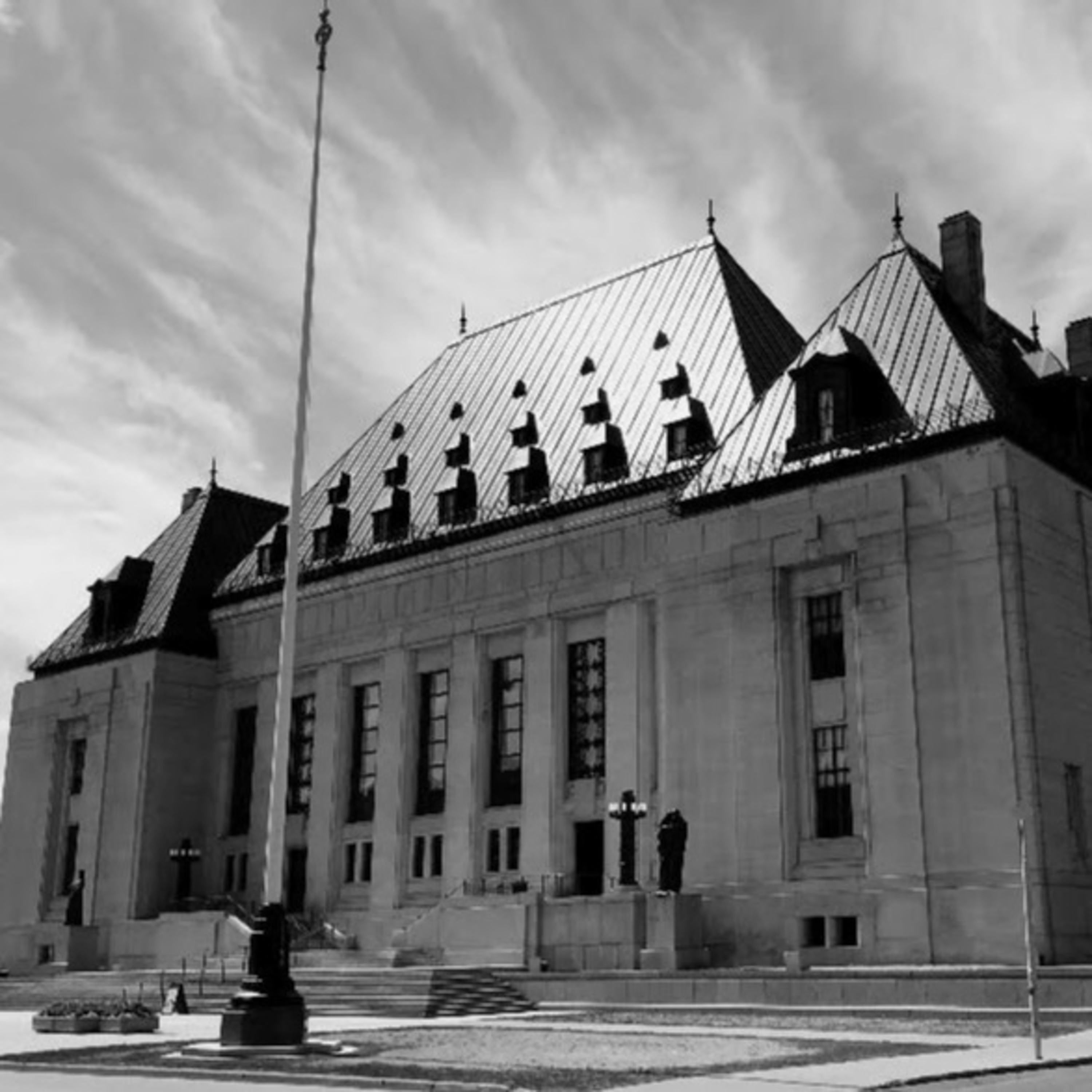
Following a trial before judge and jury in the Supreme Court of British Columbia, the appellant was convicted of attempted murder, aggravated assault and using a firearm to commit an indictable offence. A man wearing a police-style vest knocked on the door of the home of the victims, a father and his adult son. The father opened the door and the man drew a handgun and opened fire. The bullets struck both the father and son. The main issue at trial was the identity of the shooter. The father testified, but was not asked to identify the shooter in the courtroom. Parts of his description of the shooter did not match the appellant. In finding the appellant guilty, the jury must have concluded beyond a reasonable doubt that the appellant was the person at the front door. The appellant appealed his convictions, arguing there were errors in the trial judge’s instructions to the jury on eyewitness identification evidence. The Court of Appeal unanimously dismissed the appeal. Argued Date 2026-11-04 Keywords Criminal law — Charge to jury — Evidence — Identification — Eyewitness evidence — Whether the Court of Appeal erred by finding a caution about exculpatory eyewitness evidence was justified — Whether the Court of Appeal erred by concluding any prejudice was ameliorated by the functional equivalent of a W.(D.) instruction. Notes (British Columbia) (Criminal) (By Leave) Language Floor Audio Disclaimers It is not affiliated with or endorsed by the Court. The original version of this hearing may be found on the Supreme Court of Canada's website (https://www.scc-csc.ca/case-dossier/info/sum-som-eng.aspx?cas=42055).
Episode information is provided by the publisher. Listening takes place on the publisher’s service.
The Petal's New Zealand edition for Friday 20 November 2026 carries 8 decisions newly reported, all from the High Court, seven of them aired as six items. The thread is show your working: each stage of self-defence, each sentencing discount and each line of a debtor's budget has to be reasoned out. Criminal Law Desk (first story). Otimi-Woodhouse v Police [2026] NZHC 3438 - in a judge-alone trial the reasons must show the main issues were considered and why each ingredient was or was not proved beyond reasonable doubt; where self-defence under s 48 of the Crimes Act 1961 is raised, the judge must consider the circumstances as the defendant honestly believed them to be, then whether the prosecution proved he was not acting in self-defence in those circumstances, then whether it proved the force unreasonable; not engaging with his belief, deciding the second stage too early and a one-sentence conclusion on force created a real risk the outcome was affected, a miscarriage of justice under
The Tenth Circuit asks whether an Oklahoma prisoner received fair notice of the crime he needed to defend against. Prosecutors alleged that Brent Morris repeatedly struck a woman in the head with a frying pan, causing serious injuries. Morris disputes that he was the assailant. The written charge called the offense assault and battery with intent to kill. But at the end of trial, the jury was instructed on assault using force likely to produce death, without requiring proof that Morris specifically intended to kill. The jury convicted him of that offense. The state appeals court upheld the conviction, and a federal judge later denied his petition for habeas corpus, the process for challenging unlawful custody. This appeal focuses on the notice issue, not a new trial about who committed the attack. Morris’s lawyer will argue that the charge and the way the case was tried told the defense to contest intent to kill, and that the theory changed too late for a fair defense. The state’s lawy
Who’s in charge of fixing the Palace of Westminster? With projected costs potentially running into tens of billions of pounds and a parliamentary decision still awaited, Conservative Shadow Leader of the House of Commons Jesse Norman MP tells us why he thinks the Restoration and Renewal project needs an urgent rethink. He blames successive failures of political leadership for allowing the scope and costs to grow. He calls for a three-month review to pin down what work is essential, what it should cost and who should be accountable for delivering it. Ruth and Mark press him on what another review would achieve, the Conservatives’ share of responsibility for past delays and whether a project that could span several parliaments needs a government minister to drive it forward. They also discuss why comparisons with the renovation of the Cathedral of Notre Dame and Buckingham Palace only go so far. The conversation also turns to what happens inside the Commons chamber. Norman argues that sp
For America's first 100 years, Supreme Court justices were an integral part of political life. They ran for office from the bench, met with constituents, wrote newspaper op-eds about their work, and more. Today, of course, they do their work mostly in secret and rarely speak to the public aside from a few appearances each year. How did things get this way, and what would happen if the justices went back to having a closer relationship with the people? Our guest today answers those questions and sheds light on what life was like for justices in the 19th century. Rachel A. Shelden is an associate professor of history and director of the George and Ann Richards Civil War Era Center at Penn State. She is the author of The Political Supreme Court: A Forgotten History (https://uncpress.org/9781469697130/the-political-supreme-court/), which explores the court's role as an "unmistakably a political institution." The book also follows the shifts at the turn of the twentieth century, when member
“By a process of elimination, he didn't die from a natural cause. He didn't die from old age in his cell, and he didn't die from an accident. So the only option that we have is that he died as a result of a homicide.” BBC Newsnight presenter Victoria Derbyshire speaks to forensic medicine expert Michael Freeman, who says he's reviewed Jeffrey Epstein's autopsy records and contends Epstein's death in jail was the result of homicide rather than suicide. Epstein was a wealthy American financier and convicted sex offender, with links to prominent figures around the world. He died in a New York jail in 2019 while awaiting trial on charges of sex trafficking involving underage girls. His death was ruled a suicide by New York City's medical examiner. A subsequent FBI investigation found no evidence of criminal activity connected to his death, while the US Department of Justice’s Inspector General also concluded there was no evidence of foul play. In an interview with BBC Newsnight, Freeman ch
Europe's Little Anarchy: The Rise and Fall of Neutral Moresnet (https://bookshop.org/a/12343/9781501788147)(Cornell UP, 2026) uncovers the history of Neutral Moresnet: a once-forgotten space without borders, nationalism, or a recognized government. Between 1815 and 1919, this square mile of land wedged between Belgium, the Netherlands, and Germany was home to thousands of people living off the grid, free of taxation and oversight. But they also had no political status, police, legal currency, proper law courts, or government presence in sectors like public health, infrastructure maintenance, or education. Meanwhile, practical control over Neutral Moresnet lay in the hands of the local industry: a for-profit, multinational mining company that, because it owned rights to the land, also held a near monopoly on the supply of high-quality zinc to the rest of the world. Dr. Steven Press explores how the residents of Neutral Moresnet sought to improve their quality of life, appealing to Germa
The appellant, Hannah Lafferty, was charged with dangerous driving causing death. On the date of the offence, Ms. Lafferty drove an individual she was dating to his ex-girlfriend’s apartment and waited in her truck while he went inside. Shortly after, the ex-girlfriend approached the truck, opened the driver’s door, and as Ms. Lafferty drove off, held onto the truck while Ms. Lafferty accelerated and swerved in an attempt to shake her off, during which the open door struck and killed a bystander. The trial judge found that both the actus reus and mens rea of the offence were established, concluded that the defence of self-defence failed on the first and third prongs of s. 34 of the Criminal Code, and accordingly convicted Ms. Lafferty. Ms. Lafferty appealed the conviction, but the majority of the Court of Appeal for the Northwest Territories dismissed the appeal, finding no error in the trial judge’s analysis of self-defence. Justice Mossey, dissenting, would have allowed the appeal an
On May 1, 2020, the Regulations Amending the Regulations Prescribing Certain Firearms and Other Weapons, Components and Parts of Weapons, Accessories, Cartridge Magazines, Ammunition and Projectiles as Prohibited, Restricted or Non-Restricted, SOR/2020-96, came into force. The new Regulations effectively prohibited over 1,500 firearms previously legal for licensed ownership and use.The Regulations were challenged by licensed firearm owners, hunters, sport shooters, shooting clubs, business owners, and the Canadian Coalition for Firearm Rights. Their applications for judicial review were heard together. The Federal Court dismissed the applications. Four appeals from the Federal Court judgment were consolidated and heard together. The Federal Court of Appeal dismissed the appeals. Argued Date 2026-11-10 Keywords Administrative law — Judicial review — Subordinate legislation — Firearms — Governor in Council (GIC) making regulations prohibiting firearms which had previously been legal for
On May 1, 2020, the Regulations Amending the Regulations Prescribing Certain Firearms and Other Weapons, Components and Parts of Weapons, Accessories, Cartridge Magazines, Ammunition and Projectiles as Prohibited, Restricted or Non-Restricted, SOR/2020-96, came into force. The new Regulations effectively prohibited over 1,500 firearms previously legal for licensed ownership and use.The Regulations were challenged by licensed firearm owners, hunters, sport shooters, shooting clubs, business owners, and the Canadian Coalition for Firearm Rights. Their applications for judicial review were heard together. The Federal Court dismissed the applications. Four appeals from the Federal Court judgment were consolidated and heard together. The Federal Court of Appeal dismissed the appeals. Argued Date 2026-11-09 Keywords Administrative law — Judicial review — Subordinate legislation — Firearms — Governor in Council (GIC) making regulations prohibiting firearms which had previously been legal for
People of different beliefs should be able to cooperate without agreeing on fundamental questions.
Share your view, then see how readers voted. No sign-in required. This poll is shared across stories.
Do you agree or disagree?
Common Quandary
A Common Quandary to discuss
Another conversation to explore, separate from this news story.
Everyone loves the group photo except you. Can you forbid them from posting it?
At a reunion, someone takes a joyful group photo that captures the night perfectly. Everyone looks wonderful except you, caught at an awful angle. The group wants to post it publicly and promises nobody else will care.
How much control should one person have over a memory shared by many?