Tuesday of the Thirty-second Week in Ordinary Time - Gratitude in Wholehearted Servitude
Listen through the publisher, then discuss the episode here or arrange an in-person Roundtable. Your city determines where to meet.
Roundtables are designed for groups of four, with a shared subject and room for everyone to speak. Come for discussion, with no dating expectation.
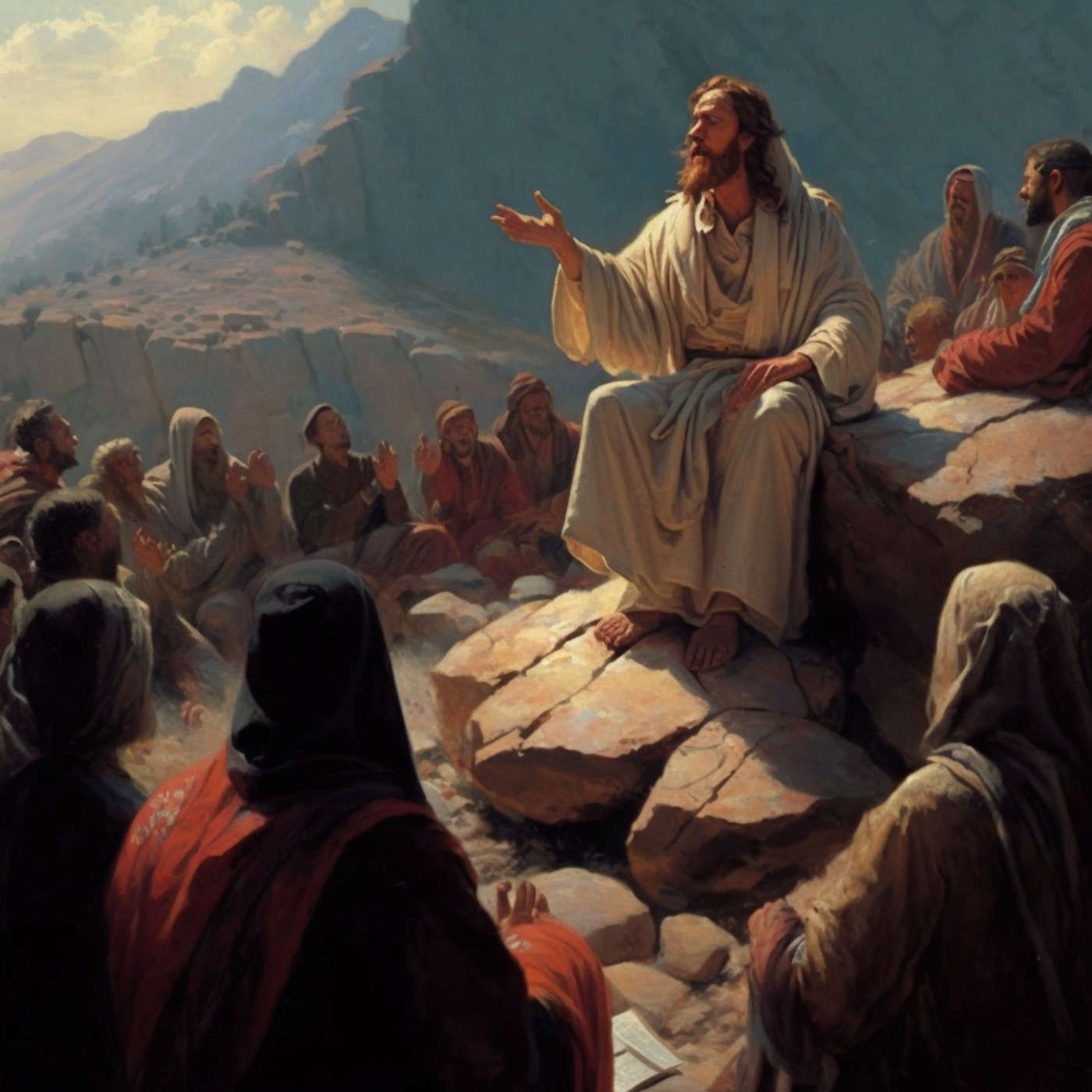
Read Online (https://catholic-daily-reflections.com/2026/11/09/gratitude-in-wholehearted-servitude/) Gratitude in Wholehearted Servitude Jesus said to the Apostles: “Who among you would say to your servant who has just come in from plowing or tending sheep in the field, ‘Come here immediately and take your place at table?’ Would he not rather say to him, ‘Prepare something for me to eat. Put on your apron and wait on me while I eat and drink. You may eat and drink when I am finished?’ Is he grateful to that servant because he did what was commanded?” Luke 17:7–9 It’s easy to fall into the trap of believing a version of the Gospel that differs from what Jesus actually preached. Some tend toward scrupulosity, magnifying our Lord’s more challenging words. More commonly, others soften His message to make it more palatable. Both distort the purity of the Gospel as Christ taught it. Today’s passage is easily misunderstood or ignored. On one hand, it might be misused to justify servitude or ingratitude. On the other, those who downplay difficult teachings may find it easier to dismiss this passage altogether. The ideal response is to meditate on Jesus’ words carefully, receiving the message He intends. The scene is jarring to modern sensibilities. Jesus uses the Greek word doulos, often translated as “servant” or “slave.” In His time, such servitude was common. A doulos was owned by a master, had no legal rights, and existed to carry out the master’s commands. Some were born into slavery, others were sold because of debt, and still others entered servitude voluntarily to escape poverty. Though the word doulos referred to literal enslavement, it is also used in the New Testament in a spiritual sense. For example, Saint Paul called himself “a slave of Christ Jesus” (Romans 1:1), as did Saint James: “James, a slave of God and of the Lord Jesus Christ…” (James 1:1). Perhaps they used this term as they recalled today’s teaching. Because this is a parable, Jesus is not endorsing slavery. Rather, He uses that familiar social structure to illustrate how we should see ourselves before God. In such a relationship, it would be unthinkable for a master to invite his servant to dine with him after work. The servant was expected to prepare and serve the meal The master wouldn’t typically thank the servant for doing what was required. Though the institution of slavery has largely been abolished, the image still teaches us something vital. Like Paul and James, we are called to become slaves of Christ. The difference is that our Divine Master is not oppressive—He commands in love, setting us free from all that binds us. For that reason, we are the ones who owe gratitude to God. Jesus concludes that even when we have perfectly fulfilled God’s will, we should say, “We are unprofitable servants; we have done what we were obliged to do.” And what is our obligation? To receive His mercy, accept salvation, live in grace, and share in His glory. When our Master is God, there is no shame in servitude, only dignity, freedom, and joy. Our servitude to God is another way of declaring that Jesus is the King of kings, our Lord and God, who issues decrees of perfect love, establishing harmony and peace, and giving all a share in His Eternal Banquet. Reflect today on how you perceive your relationship with God. Do you serve Him with the expectation of praise or reward? Or do you recognize how privileged you are to become a servant of such a glorious and merciful Master? Let the humility of this Gospel passage shape your soul. Strive to say with sincerity, “I am an unprofitable servant; I have only done what I was obliged to do.” Then be grateful. Do not be afraid to become a slave of Christ Jesus. In doing so, you will discover the paradox of divine love that in lowering yourself before God, He lifts you up and calls you friend, commanding that you receive a share in His Kingdom. My God and Master, You call us to be Your servants, and even Your slaves. Yet there is no fear in such a calling, for You are the perfect Master and Lord. Help me to understand my duty, that I may obey all You command with trust and love. Let me see that every command You give, even those that challenge or stretch me, is an expression of Your highest love. Jesus, I trust in You. Image: Sealino, CC BY-SA 4.0 (https://creativecommons.org/licenses/by-sa/4.0), via Wikimedia Commons (https://commons.wikimedia.org/wiki/File:Jesus_Christ_teaching_on_moutain.png) Inc. All rights reserved.
Episode information is provided by the publisher. Listening takes place on the publisher’s service.
Listen at the source ↗