USCA, Seventh Circuit Lun v. Milwaukee Electric Tool, Case No. 25-3347
Listen through the publisher, then discuss the episode here or arrange an in-person Roundtable. Your city determines where to meet.
Roundtables are designed for groups of four, with a shared subject and room for everyone to speak. Come for discussion, with no dating expectation.
Labor: May a former Chinese prisoner sue Milwaukee Tool for allegedly selling gloves made with forced prison labor in China? - Argued November 4, 2026 Panel Chief Judge Michael B. Brennan, Circuit Judge Kenneth F. Ripple, Circuit Judge Joshua P. Kolar
Episode information is provided by the publisher. Listening takes place on the publisher’s service.
The Seventh Circuit examines the prison sentence in a federal gun case. The defendant had a domestic-battery conviction that prohibited him from possessing a firearm. He was convicted of unlawful possession and sentenced to thirty-three months in prison. The appeal focuses on the punishment imposed. It helps to keep two questions separate: whether the judge adequately explained the sentence, and whether the sentence itself is unreasonable. The first concerns the sentencing process; the second concerns the resulting punishment. The federal sentencing guidelines are advisory, but the judge must consider the individual case and explain the chosen term. A sentence outside the guideline range is not automatically invalid. And appellate review is not simply a chance for the appeals court to substitute the prison term it would prefer. Listen for whether counsel is challenging the explanation, the length of the sentence, or both, and how those arguments connect to what the sentencing judge act
Today's Digest covers hep B vaccine changes, Medicare vaccine-injury billing, ibogaine funding, a COVID Proximal Origin probe, a facial-recognition suit, NYC's surveillance pricing ban, a metadata tool, MLK's discovered draft, ancient wheat, and blue whales. Click Here for Peak Prosperity (https://peakprosperity.com/good-news-friday-cdc-panel-ends-universal-hep-b-birth-dose-kentucky-judge-rejects-ai-only-arrest/)
Chris McGuire, senior fellow for China and emerging technologies at the Council on Foreign Relations and a former National Security Council official, joins Lawfare Public Service Fellow Julia Curlee to discuss the spy scandal that forced out Nvidia’s Jensen Huang. They examine how advanced Nvidia chips reached Chinese AI labs through Megaspeed, a Singapore company once run by suspected Chinese intelligence asset Alice Huang, and why the Commerce Department never cut off the flow of chips. They also discuss what China gained, Congress’s next moves, and how the scandal will impact this week’s Trump-Xi meeting. For more, read McGuire’s “Howard Lutnick Has Got to Go (https://www.nytimes.com/2026/11/13/opinion/jensen-huang-nvidia-howard-lutnick-commerce.html),” in the New York Times. Hosted on Acast.
This week has been nothing short of surreal: from a tumultuous nuclear three-way in China to inexplicable outages sweeping across America. Amidst this turmoil, we've witnessed alarming developments, including the unsettling rise of Nazi groups in Hamilton and a burgeoning scandal implicating the Ford government and the final countdown for Conservative Leader Pierre Poilievre. Join the Scandal Panel featuring Keith Leslie and Mark Cripps alongside our passionate host Laura Babcock as they navigate these pressing issues with both candour and humour. This isn't just another conversation; it's a therapeutic session where we dissect the realities of the world we inhabit. Together, we're standing up for democracy, and your voice matters! Stick with us until the end for our stress meters and a dose of encouragement. Let's face this fight together—because we truly are in this together! Don't miss out on the insights and camaraderie that can empower us all. Tune in and join the conversation! Pl
The former executive director of the Arkansas Supreme Court's Office of Professional Programs has been charged with 65 felonies for allegedly tampering with bar exam scores over at least eight test administrations. Prosecutors say Nancie Givens took points from some examinees and added them to others, pushing some to a passing score and, in at least one case, turning a passing score into a failing one. She is also accused of deleting roughly 11,400 files to cover it up. Givens has pleaded not guilty. This episode breaks down the charges, the timeline, and the legal fallout—including whether convictions obtained by attorneys who may not have legitimately passed could be challenged. General information only, not legal advice. Based on public records and news reports. Thanks for listening to Gavel & Gazette. Legal news, explained. General information only, not legal advice. This episode includes AI-generated content.
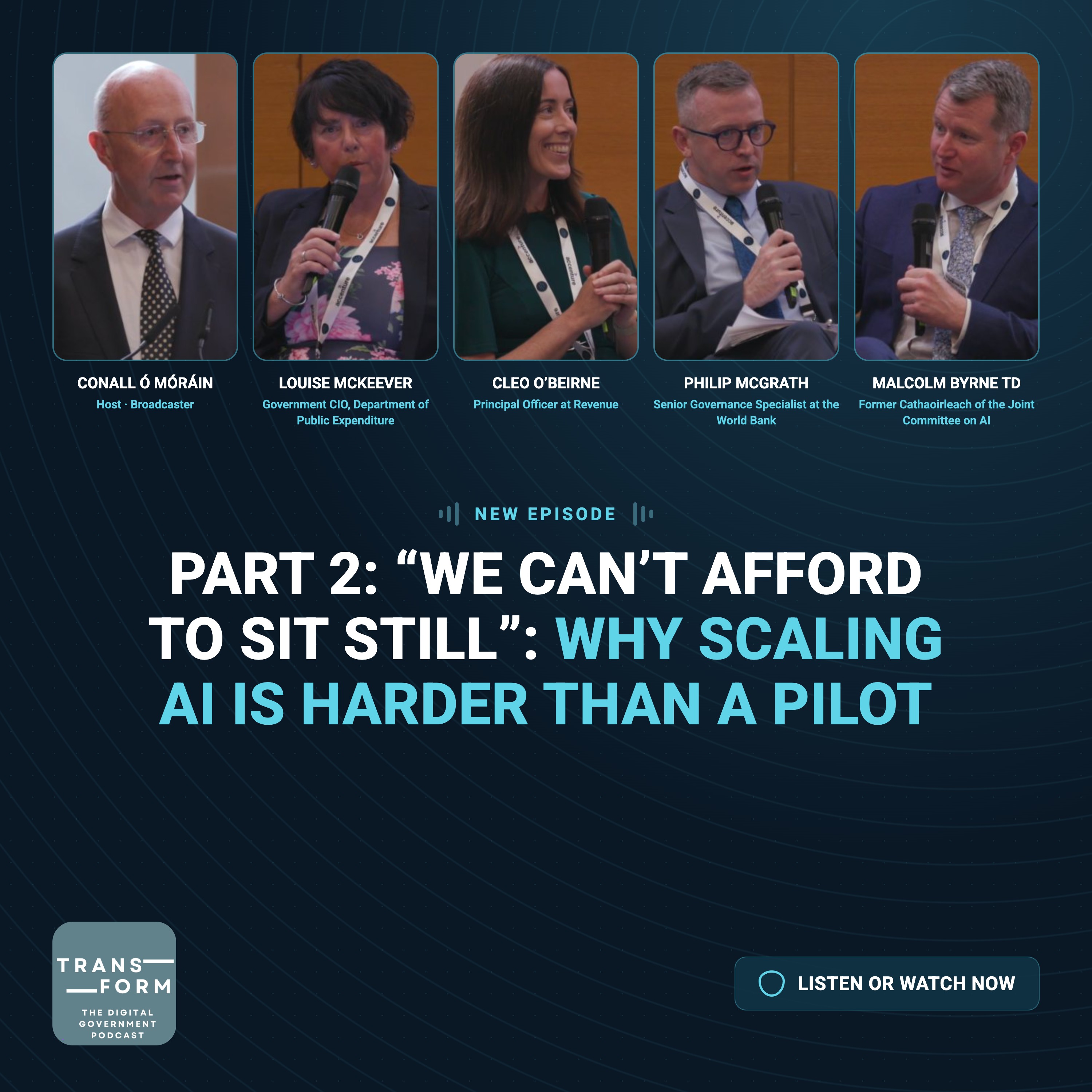
The pilot worked. Now what? In Part 2 of this panel discussion, four leaders explain how they're taking AI from pilot to scale, and what it takes to get data and governance right. This panel discussion took place at the Ireland eGovernment Awards and Leadership Summit 2026 on 24 September 2026 at UCD's O'Reilly Hall. We bring together Louise McKeever, Government CIO; Cleo O'Beirne, Principal Officer at Revenue; Philip McGrath, Senior Governance Specialist at the World Bank; and Malcolm Byrne TD, former Cathaoirleach of the Joint Committee on AI. The panel is chaired by Conall Ó Móráin. If you're taking AI beyond the pilot, here's what to do: Start small, prove it, then scale. Revenue tested agentic AI on a small application first, stage by stage. Redesign the whole process, not one stage. Individual productivity gains only go so far. Plan for lost knowledge, and recovered knowledge. As AI scales, people may know less, but AI can also capture knowledge that has already been lost. Reuse
Free Press: Was DOD's revised escort program unconstitutional retaliation against members of the press who protested the escort requirement? - Argued November 16, 2026 Panel Henderson, Millett, Rogers Arguing Counsel Sean R. Janda (DOJ) Theodore J. Boutrous Jr.
First Amendment: May a public law school discipline and report a student to the bar for allegedly celebrating Charlie Kirk’s assassination? - Argued November 2, 2026 Panel Judge Carolyn Dineen King, Judge Jerry E. Smith, Judge Irma Carrillo Ramirez
Death Penalty: May a death-row prisoner file a second federal habeas petition based on intellectual-disability standards that changed after his first petition? - Argued November 4, 2026 Arguing Counsel William R. Peterson (Solicitor General), for the Petitioner Emily M. Ferguson (Department of Justice), for the United States, as amicus curiae, supporting the Petitioner Jeremy Schepers, for the Respondent
Communities should actively welcome newcomers even when local services must adapt.
Share your view, then see how readers voted. No sign-in required. This poll is shared across stories.
Do you agree or disagree?
Common Quandary
A Common Quandary to discuss
Another conversation to explore, separate from this news story.
If a good deed is filmed for likes, is it still a good deed?
A local creator films themselves buying groceries for strangers. The videos generate substantial income, but they also inspire donations and allow the creator to help more people.
Do mixed motives diminish a genuinely helpful act?