Using Frontline Staff to Transform the Patient Experience
17 min
Listen through the publisher, then discuss the episode here or arrange an in-person Roundtable. Your city determines where to meet.
Roundtables are designed for groups of four, with a shared subject and room for everyone to speak. Come for discussion, with no dating expectation.
Frontline healthcare workers are uniquely positioned to identify the barriers standing between patients and better health, and Duke Health is turning that expertise into action. In this conversation, Erica Taylor, M.D., vice president of health equity and orthopedic surgeon at Duke Health, shares how the organization's frontline liaison network is helping clinic teams implement social needs screening, connect patients with critical community resources, and make a lasting difference in the patient experience.
Episode information is provided by the publisher. Listening takes place on the publisher’s service.
A kiss can be wonderful. It can create an instant connection, spark romance, or make you feel closer to someone. But a kiss can also have the opposite effect — and sometimes ruin everything. So what makes kissing so powerful, and why can one kiss make such a difference? There's some fascinating science behind it. https://www.scientificamerican.com/article/why-we-kiss/ We spend an enormous amount of time worrying about what's going to change. What's next? What's coming? How do we prepare? But what if we're paying attention to the wrong things? Some of the most important forces shaping our lives never change, and understanding them may be far more valuable than trying to predict the future — something humans are notoriously bad at. Morgan Housel, partner at The Collaborative Fund and author of Same as Ever: A Guide to What Never Changes (https://amzn.to/3SwWn6u) (https://amzn.to/3SwWn6u)), joins me to explain why the things that stay the same may be the most important things to understan
A proposed hospital takeover in the Newcastle and Hunter region has raised long standing access issues in women's health care. Restrictions on some reproductive health services are not unique to the Hunter Valley, with Catholic healthcare providers across Australia operating under religious ethical guidelines. Voluntary assisted dying and gender affirming care also affected. How should Catholic ethical obligations be balanced against a patient's need to access medical treatment? Guest/s Dr Veronica Knight, gynaecologist and fertility specialist at Hunter IVF Dr Paddy Moore, obstetrician and gynaecologist with a post graduate degree in bioethics Lara (not her real name) who needed to have a termination for medical reasons and was denied care in a catholic hospital References Calvary Care response to Health Report questions, 19th November (https://live-production.wcms.abc-cdn.net.au/b94b63feeaef6247be44b07a0234edf5) Statement from Federal Health Minister Mark Butler's office (https://liv
Today, Mel is doing something she's never done before on The Mel Robbins Podcast. She's bringing members of her team into the studio for live coaching with world-renowned communications expert Vinh Giang. Vinh is known for teaching millions of people online how to stop sounding insecure, speak more clearly, and get people to listen when you talk. And when you hear him coaching today, it will be like he’s coaching you. One person freezes when they're put on the spot. Another can't stop interrupting people. Someone else has great ideas but stays quiet because they're afraid of being judged. Does any of that sound familiar? And Vinh isn't just giving advice. He's coaching real people through practical exercises, right there in the studio, so you can hear the difference and start making those same changes in your own life. As Mel says, put yourself in their shoes. As Vinh works with each person, you'll recognize things you struggle with, too. You'll learn: -What to do when your mind goes b
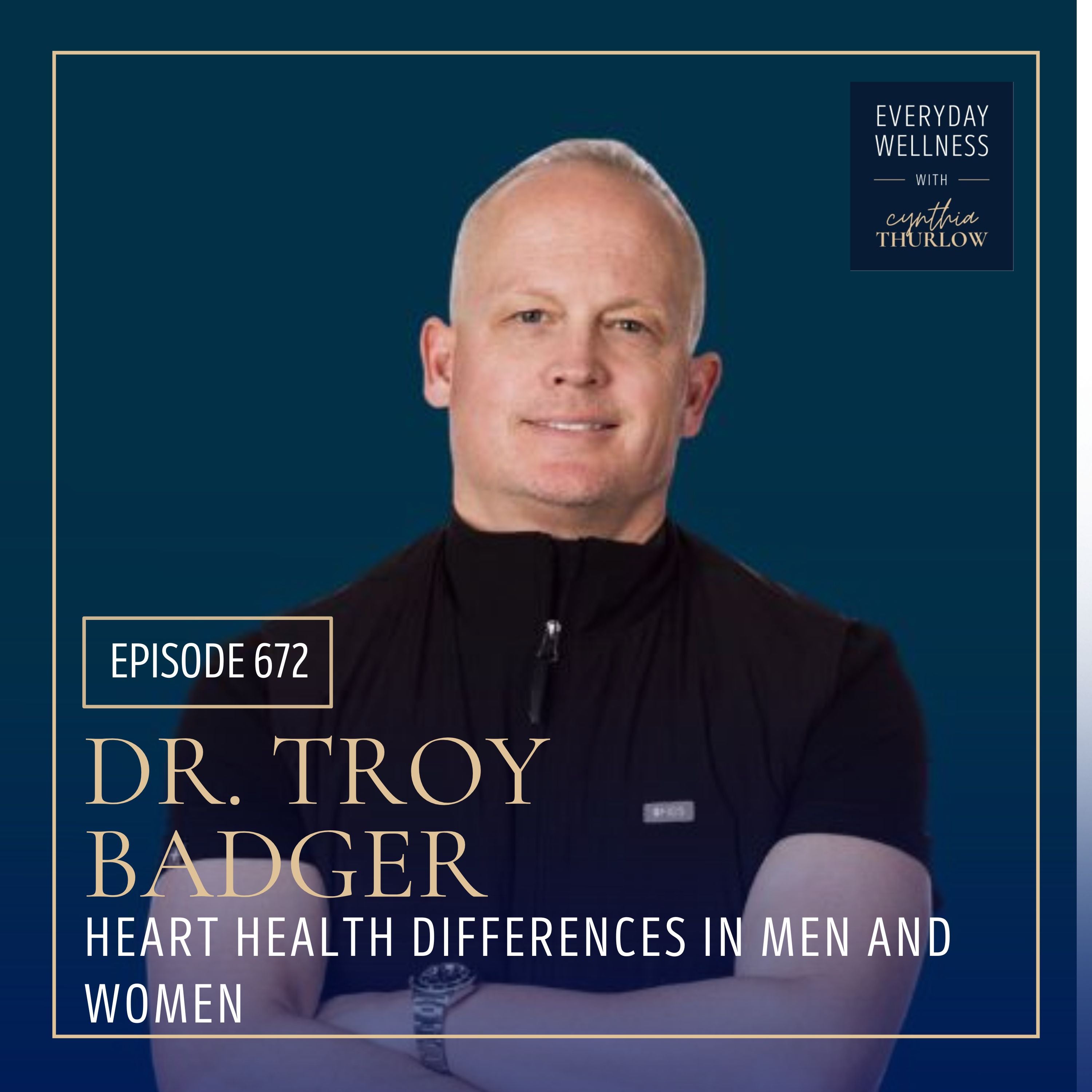
Today, I’m honored to connect with Dr. Troy Badger. He is a board-certified cardiologist and interventionalist and the founder of Cardiostrong, a concierge preventive cardiology clinic in Provo, Utah, focused on reducing cardiovascular risk, optimizing metabolic health, and improving strength and cardiorespiratory fitness for executives and athletes. In today’s conversation, we discuss Dr. Badger’s gender- and age-specific approach to heart health, including treatment differences for men and women, and diagnoses such as INOCA, SCAD, vasospastic disease, and Takotsubo. We examine emotions and their influence on heart health, coronary ischemia and cardiomyopathies, labs and diagnostics, how Dr. Badger assesses risk in his patients, and the differences between a CAC and a CCTA. Dr. Badger also shares the labs he finds essential for all patients and discusses the role of VO2 Max, cardiovascular training, and lifestyle—specifically nutrition, the use of GLP-1 drugs, and a multidisciplinary
The Ninth Circuit considers how JPMorgan uses money left in its employees' retirement plan. These are unvested employer contributions: money departing workers had not yet earned the right to keep. They are not the employees' own salary contributions. The forfeited money stays inside the plan. Wright says JPMorgan used it to offset future employer contributions rather than reduce administrative fees charged to participants. His claim is that the company repeatedly saved itself money while employees continued paying fees. The district court dismissed his lawsuit before trial. It read the plan as not allowing forfeitures to cover participants' share of expenses, and rejected his claims under ERISA, the federal retirement-plan law. The argument will separate two decisions: who pays the plan's expenses, and how money already in the plan is allocated. Wright will argue that the plan's provisions work together and that the choices were subject to duties owed to participants. JPMorgan and the
November 21, 2026; 9am: ICE released data showing that it has deported more than 483K people this year alone, the highest annual figure in ICE’s reported history. New findings by an internal department watchdog discovered a plan under former Sec. Kristi Noem that loosened training standards for thousands of ICE officers hired to support the President’s mass deportation agenda. The draft report, obtained by The New York Times, reveals that the department allowed recruits with prior law enforcement experience to complete their basic training online, instead of at a training center over the course of a month. Some of the officers completed the training in less than one day. Texas Lieutenant Governor-elect Vikki Goodwin joins “The Weekend” to discuss. For more, follow us on social media Bluesky: @theweekendmsnow.bsky.social Instagram: @theweekendmsnow TikTok: @theweekendmsnow Hosted by Simplecast, an AdsWizz company.
In rural America, access to the right specialist can be a six-hour drive away. In this conversation, Jeremy Cauwels, M.D., chief medical officer at Sanford Health, shares how the nation's largest rural health system is using a $350 million investment in virtual care to bring specialty services closer to patients and improve quality and safety across rural communities.
Hospital cyberattacks are moving beyond patient data, and hackers are actively targeting the operational technologies that keep hospitals running. In this conversation, Brian Kaiser, supervisory special agent with the FBI's Cyber Division, and Chad Beebe, deputy executive director of the American Society for Health Care Engineering (ASHE), explain why hospital operational technology is increasingly vulnerable, how attacks can disrupt patient care, and what hospitals can do to protect these critical systems.
What can healthcare organizations learn from veterans? In this special Veterans Day conversation, Robert Mach, CEO of Schoolcraft Memorial Hospital and a United States Marine Corps veteran, discusses how military service builds leadership skills, strengthens the healthcare workforce, and helps rural hospitals serve their communities. He also shares why healthcare can be a natural next mission for veterans seeking meaningful careers after military service.
Employees should usually have a say in whether their work requires office attendance.
Share your view, then see how readers voted. No sign-in required. This poll is shared across stories.
Do you agree or disagree?
Common Quandary
A Common Quandary to discuss
Another conversation to explore, separate from this news story.
The stadium can ban violent fans by scanning every face at the gate. Would you walk in?
A stadium can use facial recognition to identify people banned for violence and shorten security lines. Every visitor would be scanned, error rates are not zero, and the resulting biometric data could become useful to police or advertisers.
How much privacy may a crowd be asked to trade for collective safety?