We Found an Unknown Chemical Signature on Saturn’s Moon Titan
30 min
Listen through the publisher, then discuss the episode here or arrange an in-person Roundtable. Your city determines where to meet.
Roundtables are designed for groups of four, with a shared subject and room for everyone to speak. Come for discussion, with no dating expectation.
Decades after the Cassini-Huygens touched down on Titan, cutting-edge observations from the James Webb Space Telescope are revealing surreal phenomena on this giant Saturnian moon. From monster slow-motion waves in its methane lakes, to unknown organic compounds that defy our knowledge of organic chemistry, there is so much more to understand about this world - and in 2030, we’re going back… ▀▀▀▀▀▀ ▀▀▀▀▀▀ The Astrum book is still available in the US!
Episode information is provided by the publisher. Listening takes place on the publisher’s service.
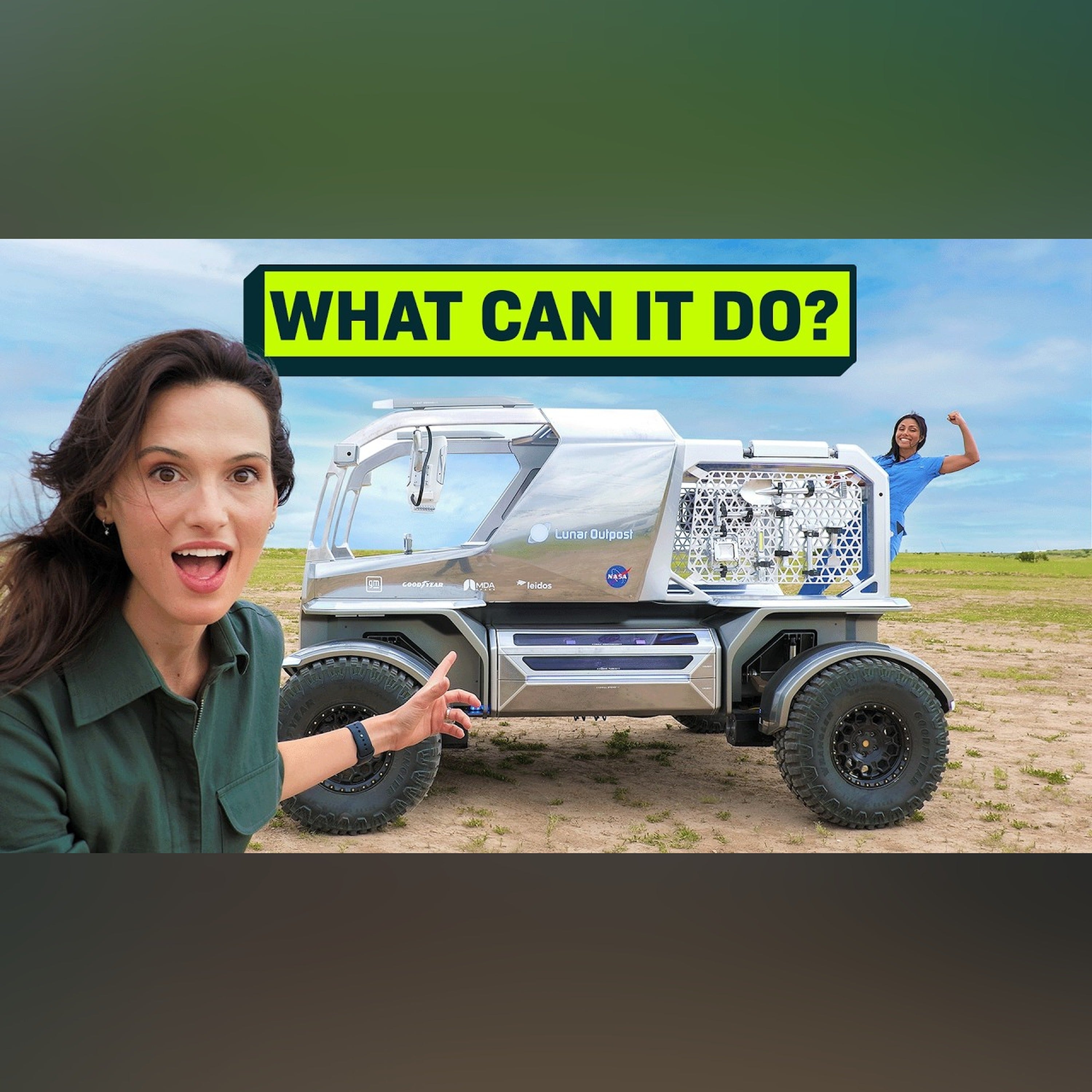
This truck is going to the moon. So we put it to the test… Get an exclusive 15% discount on Saily data plans. Use code CLEO at checkout. Download Saily app or go to https://saily.com/cleo This is the world’s first “space truck.” It’s going to the moon to help us go farther, faster, and discover places we’ve never been… Because humans are about to go back to the moon for the first time in 50 years! And no one but its builders have ever driven it… until today. In this video I'm going to put this brand new space truck to the test in a series of 5 challenges. And I've invited someone who knows a thing or two about challenges: YouTube daredevil and host of Challenge Accepted… Michelle Khare! Let’s go. Chapters: 0:00 This is the world’s first space truck 0:38 Introducing Michelle Khare! 01:04 What is a space truck? 01:52 How do astronauts drive? 02:21 First impressions! 02:47 Moon truck v normal truck 04:47 How fast can you drive on the moon? 05:18 Will we crash? 08:36 Can we break the lunar
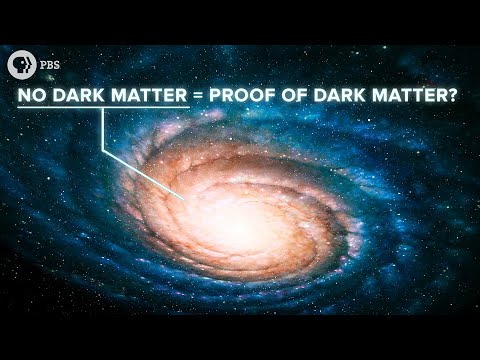
You can learn more about CuriosityStream at https://curiositystream.com/spacetime Uploaded 24-04-19 PBS Member Stations rely on viewers like you. To support your local station, go to: http://to.pbs.org/DonateSPACE We’ve been failing to detect dark matter for decades. Finally, the latest failure to detect dark matter may have actually proved its existence. One of these is true: either most of the matter in the universe is invisible and formed of something not explained by modern particle physics OR our understanding of gravity is completely broken. The debate over which is true has raged for decades, but may finally have been resolved in an unlikely way: the proof that dark matter exists, and really is an exotic, unknown substance, may have come from the discovery of two galaxies that appear to have no dark matter at all. Today on Space Time Journal Club we’ll look at the papers that reveal this discovery: Check out the new Space Time Merch Store! Support Space Time on Patreon Need a Re
This holiday season, inspire the next generation of thinkers with KiwiCo! In this week's episode, David is joined by Jacob Haqq-Misra (https://www.haqqmisra.net), Senior Research Investigator and Co-Founder of Blue Marble Space (https://www.bluemarblespace.org). Check out Jacob's UAP software at https://mcdonald.bluemarblespace.org (https://mcdonald.bluemarblespace.org/) To support this podcast and our research lab, head to https://coolworldslab.com/support REFERENCES - Haqq-Misra et al. (2022): “Detectability of Chlorofluorocarbons in the Atmospheres of Habitable M-dwarf Planets” - Kopparapu et al. (2021): “Nitrogen Dioxide Pollution as a Signature of Extraterrestrial Technology” - Haqq-Misra et al. (2022): “Disruption of a Planetary Nitrogen Cycle as Evidence of Extraterrestrial Agriculture” - Loeb & Turner (2012): “Detection Technique for Artificially-Illuminated Objects in the Outer Solar System and Beyond” - Crawford & Schulze-Makuch (2024): “Is the apparent absence of extraterres
Explore how the Hubble Space Telescope reveals the Universe, from iconic images to major discoveries, and how it complements the James Webb Space Telescope. "ASTROMAN: the Dark Sky Guardian" is a podcast channel that aims to explore popular science in multiple disciplines and research on interdisciplinary approaches, such as sustainability, dark-sky protection, astrophotography, space exploration, astronomy innovation, inclusive science communication, and STEAM Education by integrating science and arts. Exodus Chun-Long Sit, also known as the ASTROMAN, is a transmedia astronomy educator, popular science author, STEAM educator, and science communicator in Hong Kong. He is recently the National Astronomy Education Coordinator (Chair of Hong Kong, China) of the International Astronomical Union and President of Starrix. He was also an International Committee Member of the Dark Sky International, regularly organizing public lectures at the Hong Kong Space Museum and the Hong Kong Science Mu
For extra nuances and all the references, please see the newsletter: https://staycuriousmetabolism.substack.com/p/can-we-become-like-captain-america?r=40ekz2 The StayCurious Human Enhancement Series We're launching a new series at StayCurious Metabolism called Peptides Plus, where we'll explore the most promising tools available today—and the innovations that may shape tomorrow. We have dozens of deep dives planned, covering everything from emerging therapeutics to cutting-edge performance and longevity interventions. GO HERE: https://staycuriousmetabolism.substack.com/p/peptides Chapters 0:00 — Superhuman Biology Is Already Starting 2:40 — Beyond GLP-1: Fat Loss Without Muscle Loss 7:28 — Gene Editing, CRISPR, and the Future of Disease Cure 14:57 — Cellular Reprogramming and Biological Age Reset 18:49 — MicroRNAs, Mitochondria, and What Comes Next Video Description What if the idea of “superhuman biology” isn’t science fiction anymore—but early-stage reality? From drugs that selective
For some reason, it did not stop him.Now I just want to ask you something real quick to put you in the mind of a bear. If you found some of your favorite food just left out and you somehow, like me most of the time, just couldn’t resist the temptation. Bears live and eat by what is detected by their noses, so logically, after eating its fill, a proper expectation would be that the bear would go sleep off a large meal upwind of where its food was cached. The wind carries both scent and sound to the bear as it rests and acts as an alarm to it to defend its cache. The hide was still up in the birch, untouched. He dropped his packboard at the base of the tree and glanced up to see where he would need to climb. Movement in the brush, some three hundred feet away, caught his eye. Two bears, roughly thirty feet apart, moved through the brush. From their color and build, he identified them as grizzlies, also called coastal brown bears.Up to that day, every bear he had met in the wild had chose
Voyager 1 has just reached a major milestone: one light-day from Earth. It’s the furthest a man-made object has ever travelled, crossing the boundary at the edge of our Solar System and venturing out into interstellar space. In this video, we explore what Voyager 1 has found so far, the discoveries it’s still making, and the hazards it faces out there in deep space. Where is it heading next?▀▀▀▀▀▀ Take your fascination for space to a new level with Black Friday offers coming to DWARFLAB. Scan the QR code or follow the link https://bit.ly/astrum_dwarflab to check the offer available in your market.▀▀▀▀▀▀ The Astrum book is still available in the US!
Earth’s magnetic shield is weakening over the South Atlantic. This mysterious “Bermuda Triangle of Space” is a place where satellites glitch, cosmic radiation spikes, and astronauts see strange flashes of light. But what’s causing this growing hole in the magnetosphere isn’t something in space - it’s coming from inside the planet. Using seismic tomography and ancient volcanic lava, scientists have traced the disturbance back to a continent-sized “blob” sitting on top of the Earth’s core that may be the buried remains of an alien planet… and it might even explain how Hawaii formed… ▀▀▀▀▀▀ ▀▀▀▀▀▀ The Astrum book is still available in the US!
This compilation features Astrum’s best content about asteroids. We’re journeying to the asteroid belt and further, to explore the intriguing rocky objects of our solar system. What have we discovered on large asteroids like Ceres and Vesta? Why did NASA's DART mission smash into an asteroid, and what happened next? And what did we find inside the sample from asteroid Bennu? ▀▀▀▀▀▀ The Astrum book is still available in the US!
Patients should be able to compare expected treatment costs before choosing care.
Share your view, then see how readers voted. No sign-in required. This poll is shared across stories.
Do you agree or disagree?
Common Quandary
A Common Quandary to discuss
Another conversation to explore, separate from this news story.
A stranger takes an emotional call in the quiet car. Do you shush them?
On a crowded train's designated quiet car, a passenger answers a call and begins discussing an apparent family emergency. They are speaking softly but continuously, and everyone nearby is listening despite trying not to.
Do public rules make room for private emergencies?