Listen through the publisher, then discuss the episode here or arrange an in-person Roundtable. Your city determines where to meet.
Roundtables are designed for groups of four, with a shared subject and room for everyone to speak. Come for discussion, with no dating expectation.
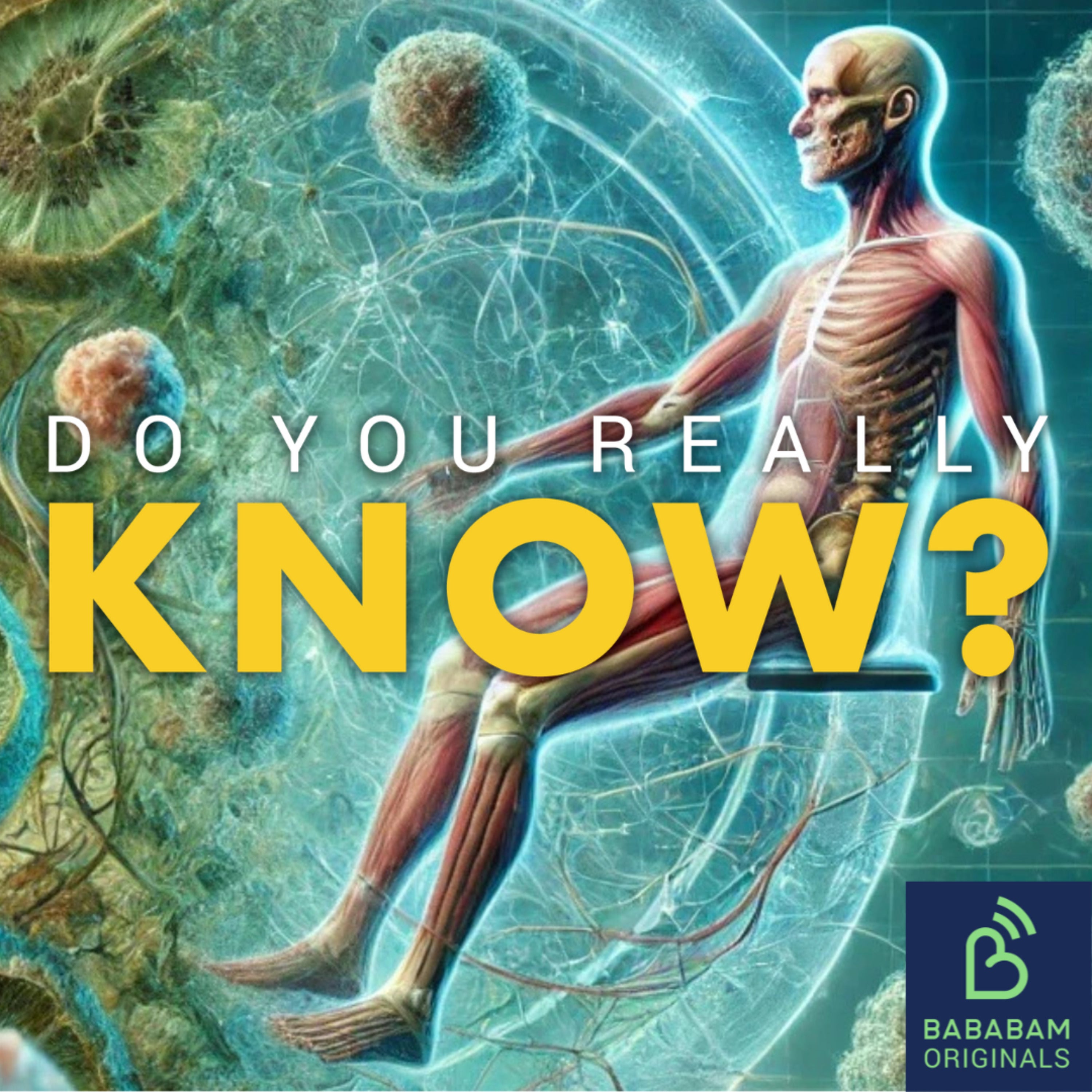
In recent years, dating has become a lot more structured. Terms like "green flags" and "red flags" are now part of everyday language, and the criteria for evaluating potential partners have become more specific and defined. Of course, the main idea behind these colour codes is to help you figure out if someone is right for you based on how they behave. But lately even the flag system has become a little less straightforward, with the introduction of "beige flags" and "yellow flags". Now beige flags refer to boring or insignificant traits, while yellow flags can have a more meaningful impact on a relationship. Are they good or bad? What are some examples? How do yellow flags differ from red flags? Why is she considered a pop culture icon? In under 3 minutes, we answer your questions! To listen to the last episodes, you can click here: What are the secrets of a successful LAT couple? (https://originals.bababam.com/do-you-really-know/202406010300-what-are-secrets-successful-lat-couple) Why do couples often look alike? (https://originals.bababam.com/do-you-really-know/202402230400-why-do-couples-often-look-alike) Could date stacking really help me find love? (https://originals.bababam.com/do-you-really-know/202402170359-could-date-stacking-really-help-me-find-love) A podcast written and realised by Joseph Chance. First Broadcast: 4/11/2024
Episode information is provided by the publisher. Listening takes place on the publisher’s service.
Your free behavior course: https://nci.university/learn Uploaded 10-05-25 Exclusive NCI-4 (Grad School) Vault Release This is Behavioral Magnetics—the hidden force that draws you back to chaos, to patterns you swore you’d outgrow, to people who echo your oldest pain. It’s why peace feels boring. Why CALM makes you anxious. It’s not intuition—it’s your nervous system recycling what it knows. In this Grad School lecture, we uncover the 4 emotional magnets that shape who you trust, chase, or sabotage... even when it hurts. If you've ever said, “Why do I keep doing this?”—this is your answer. Why you're attracted to the wrong people The 4 types of emotional magnets How trauma rewires your compass Why peace can feel like withdrawal How to break free from recycled patterns Please note that the content provided in this broadcast is for informational and educational purposes only and should not be construed as legal, medical, financial, or professional advice. No material in this communication
Amplify Your Strengths - Tony Robbins Podcast When was the last time you spoke in public? Were you able to project confidence and expertise, or did you feel like you were stumbling to present your ideas? Did the presentation achieve the end result you wanted? If you feel like you often fumble and fail to meet your full potential during times of stress, it’s time to learn how to use your strengths instead of falling back on your weaknesses. In this episode of the Tony Robbins podcast, Todd Herman discusses how to maximize your strengths. As a performance coach and advisor, Todd Herman has worked with entrepreneurs, athletes and powerful brands to help them project their strongest assets. A large part of Todd’s coaching focuses on alter egos or secret identities. What is an alter ego? According to Todd, your alter ego is the version of yourself you present when you’re maximizing every ounce of your capabilities. For athletes, this means accessing a secret identity that is confident and f
PBS Member Stations rely on viewers like you. To support your local station, go to: http://to.pbs.org/DonateSPACE ↓ More info below ↓ Uploaded 23-09-19 Sign Up on Patreon to get access to the Space Time Discord! Sign up for the mailing list to get episode notifications and hear special announcements! You know what a planet is, right? A big round thing that orbits a star. Uh, not so fast. The surprisingly vicious debate over the planetary status of Pluto has given us a fascinating glimpse into what a scientific definition really is. And perhaps the word planet is too vague to be used as a scientific definition at all. Hosted by Matt O'Dowd Written by Drew Rosen and Matt O'Dowd Graphics by Leonardo Scholzer Directed by: Andrew Kornhaber Produced By: Kornhaber Brown Check out the new Space Time Merch Store! We love to classify things. Labels help us keep stuff organized in our heads. In science, categorization provides a fast and easy way to know the properties of a member of the group ju
Artificial wombs are coming. That's a good thing. Artificial wombs are the stuff of science fiction, the scary kind. I think of The Matrix, when Neo wakes up in the real world, covered in goo. But in recent years, researchers have taken enormous leaps in helping embryos survive and grow outside a uterus. Artificial wombs are becoming more science, less fiction. Any conversation about this topic gets heated, fast. Some people HATE the idea of an artificial womb. They feel that this technology could be used in terrible ways, like to control how people have kids or breed babies. Or that pregnancy is an important, special connection that we can never replicate with technology. Or that it’s a useless distraction, because there’s way more important stuff we should be investing in right now to make life easier for parents (parental leave, affordable childcare) and in the US at least, we don’t. But others LOVE the idea. They feel that artificial wombs could help reduce the risks of pregnancy,
With the NHL taking a day off for American Thanksgiving and no games on today's schedule, Tyler and Liam are here to catch you up on everything happening around the hockey world. The boys will kick things off with a recap of last night's jam-packed NHL schedule, featuring 14 games across the league. They'll go around the league, break down the biggest results, and highlight all the storylines you might have missed! NHL insider David Pagnotta joins the show to discuss the latest on Simon Edvinsson and whether the Edmonton Oilers could realistically put together a competitive offer to acquire the young star defenseman. Could Edvinsson actually be a legitimate trade target for Edmonton, and what would it take to get a deal done? Pagnotta has the latest! We'll also have a fresh edition of Is It Cake? Plus a special DoorDash preview of today's NFL slate as the football takes centre stage on Thanksgiving. There's plenty to get into even with the NHL taking the day off! The boys will wrap thi
In this Jim Rohn Motivation speech, discover why direction always beats speed. Many people rush through life, working tirelessly but never questioning where they’re headed. Jim Rohn explains that without clarity of purpose, speed only gets you lost faster. Learn how to align your energy, set intentional goals, and move forward with confidence toward what truly matters. Key Topics From This Motivational speech: Why speed without direction leads to burnout How clarity turns momentum into real progress The cost of pursuing the wrong path Why consistency beats scattered urgency How to choose and commit to the right path for you Jim Rohn reveals that the most successful people aren’t the fastest—they’re the clearest. They know exactly where they’re going, why it matters, and what to focus on. This video shows you how to slow down long enough to gain clarity, cut out distractions, and build momentum that compounds over time—creating results that last. This Jim Rohn Motivational speech Is Per
In Niger, married men aged 25 and over are going back to school, not to learn maths or English, but about maternal health, family planning and women’s rights. In some villages, they meet twice a month in groups led by facilitators from local NGOs, then share what they learn with other men. The aim is to make family health a shared responsibility, rather than a burden borne by women alone. Known as “husbands’ schools”, these groups have spread across Niger and inspired similar initiatives elsewhere in West Africa. Why were these schools set up? So why focus on men? So, how do these husbands’ schools work in practice? And has it made a difference? In under 3 minutes, we answer your questions! To listen to the latest episodes, click here: What is a man child? (https://originals.bababam.com/do-you-really-know/202611080359-what-man-child) What is kinkeeping, the invisible workload often done by women? (https://originals.bababam.com/do-you-really-know/202602160359-what-kinkeeping-invisible-w
Do you ever feel like time is slipping through your fingers? That you had several hours to complete one or two simple tasks, but you didn't notice the clock ticking away? The problem might stem from poor time management or a tendency to procrastinate. It could also result from an inability to isolate yourself from sources of distraction. Let’s delve into a productivity strategy that could potentially revolutionise the way you work: the Pomodoro technique. Where does the name come from? How does the Pomodoro method actually work? Why is it so effective? In under 3 minutes, we answer your questions! To listen to the last episodes, you can click here : What is the Pygmalion effect? (https://originals.bababam.com/do-you-really-know/202308180300-what-pygmalion-effect) What are the alternatives to air conditioning? (https://originals.bababam.com/do-you-really-know/202308170300-what-are-alternatives-air-conditioning) What is misogynoir? (https://originals.bababam.com/do-you-really-know/202308
In some religions, people believe in reincarnation or an afterlife, but in medicine, life is generally considered to end when the heart stops beating. Recently though, researchers have challenged that view. In November 2024, American biologists Peter A Noble and Alex Pozhitkov published groundbreaking findings in The Conversation under the title “Biobots arise from the cells of dead organisms − pushing the boundaries of life, death and medicine.” They showed that, under certain conditions, dead cells can not only survive but also reorganise and form new multicellular structures. And that discovery suggests the existence of an intermediate state where biological organisms are neither fully alive nor completely dead. Scientists are now referring to this as the "third state." Doesn’t death occur when the brain stops functioning? How would that even be possible if the person is deceased? What are the implications of the third state? In under 3 minutes, we answer your questions! To listen t
An essential service should remain open until a workable alternative is available.
Share your view, then see how readers voted. No sign-in required. This poll is shared across stories.
Do you agree or disagree?
Common Quandary
A Common Quandary to discuss
Another conversation to explore, separate from this news story.
Your family wants an AI to settle an old argument. Would you hand over the group chat?
A recurring family dispute has reached the point where nobody agrees on what was actually said. Your cousin proposes uploading five years of the family group chat to an AI that can reconstruct events, flag contradictions, and recommend a fair resolution. Nearly everyone agrees—but one relative refuses.
Can a tool make a family argument fair without turning intimacy into evidence?