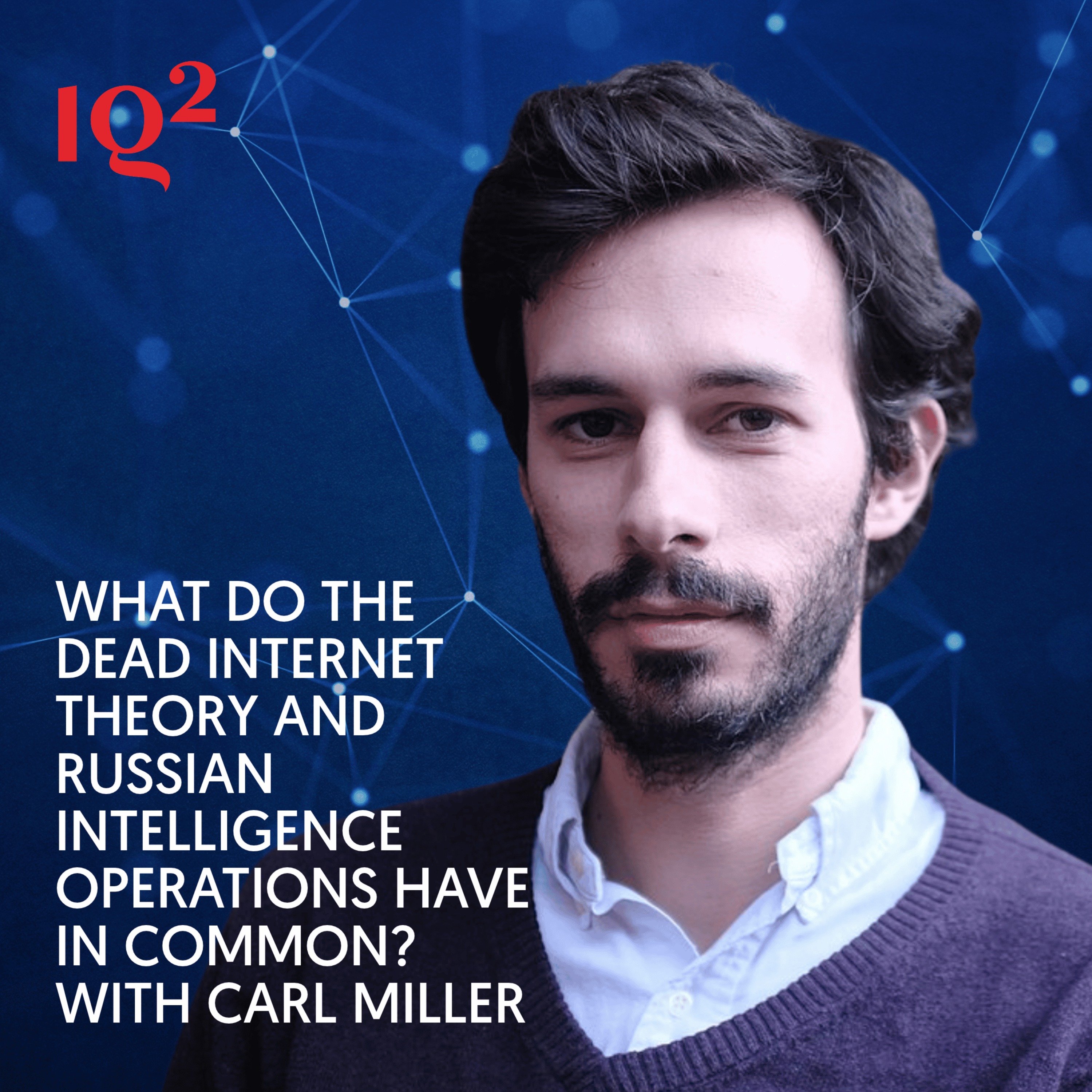
What Do the Dead Internet Theory and Russian Intelligence Operations Have in Common? With Carl Miller
39 min
Listen through the publisher, then discuss the episode here or arrange an in-person Roundtable. Your city determines where to meet.
Roundtables are designed for groups of four, with a shared subject and room for everyone to speak. Come for discussion, with no dating expectation.
The dead internet theory began as an obscure online conspiracy. Its proponents claimed the internet had been overrun by bots and automated content. In 2021, much of it sounded paranoid. Today, parts of the theory are beginning to look uncomfortably plausible. According to Cloudflare, machines now generate more web traffic than people, while AI-generated music, images and writing are flooding online platforms. Some material is even designed not for human readers, but for other bots and AI systems that retrieve and cite it. In this episode, Mia Sorenti speaks with researcher Carl Miller about an internet increasingly shaped by machines talking to machines. Drawing on new research from Demos, Carl sheds light on findings that suggest Russian propagandists are already manipulating the information served up by LLMs - and how we can fight back in a new age of information warfare. Carl Miller is a Demos Fellow and co-founder of the Centre for the Analysis of Social Media. He is co-author of the Demos report GEO for Geopolitics. Mia Sorenti is Senior Producer at Intelligence Squared. Hosted on Acast.
Episode information is provided by the publisher. Listening takes place on the publisher’s service.
Master the skills that change lives — enroll in your free human behavior course today: https://nci.university/learn Uploaded 14-03-26 During the first ninety seconds of any interaction, a window opens in the human brain that most people never notice. A specific sequence of neurological events unfolds — predictable, exploitable, and almost never taught outside of military and intelligence training. Very few people alive understand the full mechanics of what happens inside that window. Only operators, interrogators, and behavioral scientists with the right access have ever had this mapped out for them. Someone made sure it stayed that way. Every interaction you've ever had — every negotiation, every first impression, every moment you walked into a room — was governed by this sequence. You were either running it or it was being run on you. Most people spend their entire lives on the receiving end without ever knowing it. Language is the delivery system. But language isn't where it starts.
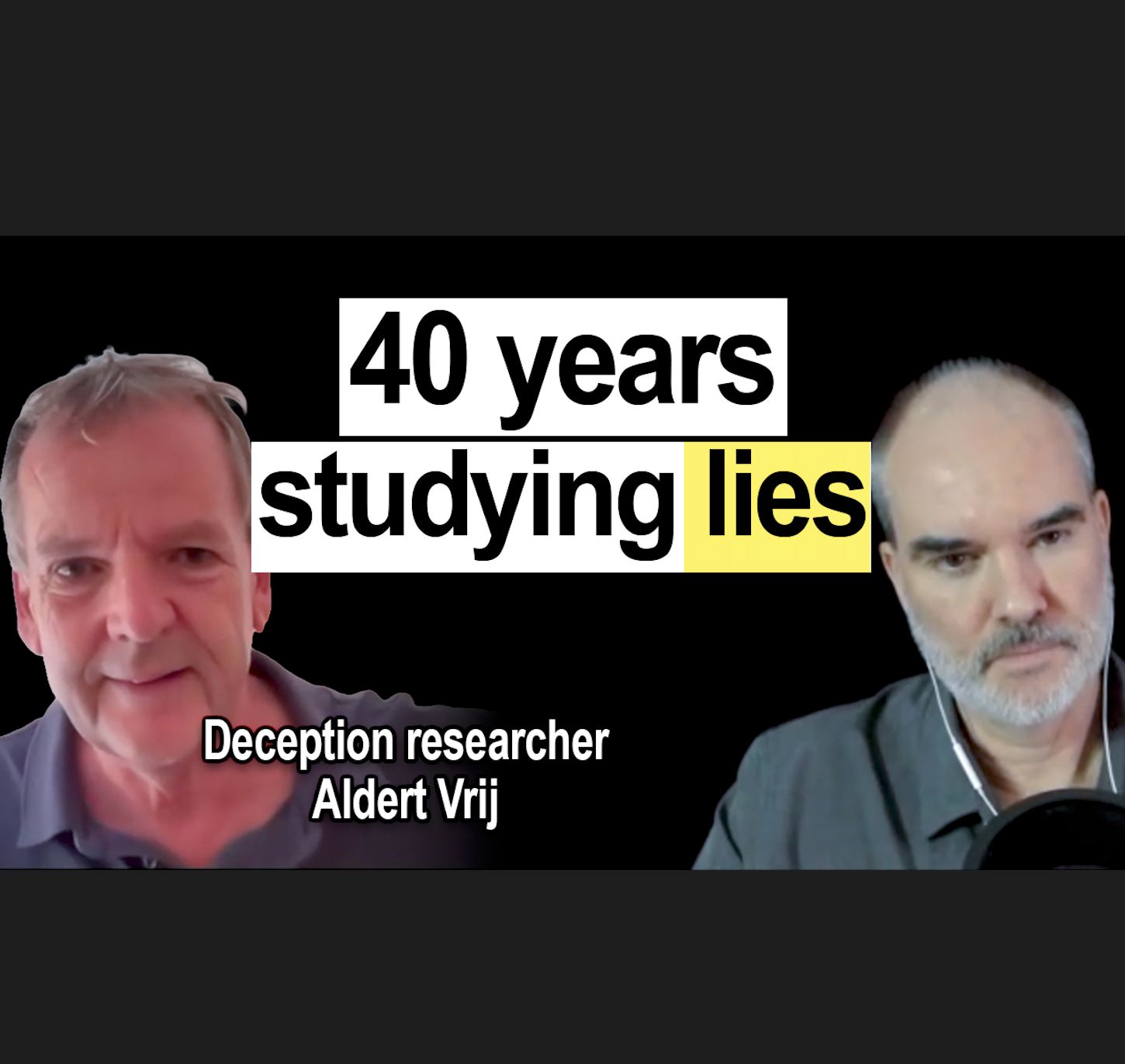
What actually works when it comes to detecting lies, and why are so many popular ideas about reading people and nonverbal behavior at odds with the scientific research? I talk with Aldert Vrij, one of the world's leading deception-detection researchers, who has spent almost four decades studying these topics. We discuss why what people say is far more revealing than their body language; why the perceived “sexiness” of reading nonverbal behavior has contributed to widespread myths and misconceptions; whether vocal behaviors like pitch, volume, and hesitation contain meaningful clues; and whether there's value in analyzing minor word choices and turns of phrase, as is done in so-called “statement analysis.” We discuss Paul Ekman's legacy as a source of faulty ideas about deception, micro-expression-based deception detection training, and the strategies that popular “body language experts” use to appear scientifically credible while simultaneously promoting ideas that conflict with the sc
Today, the dust has settled in Brussels and back in the Newscast studio in London Laura and Paddy take a look at how yesterday’s new EU-UK deal is going down with ministers, in Westminster more widely and most importantly with voters at home. Laura has been speaking to the foreign secretary Ed Miliband about whether the issue of tuition fees for EU students could scupper the rest of the deal. Plus, More in Common pollster Luke Tryl explains what the polls tell us about public opinion of our relationship with the EU and whether voters are ready to reopen the Brexit debate. You can now listen to Newscast on a smart speaker. It works on most smart speakers. New episodes released every day. The presenter was Adam Fleming. It was made by Anna Harris with Jesse Fox. The social producer was Grace Braddock. The technical producer was Mike Regaard. The assistant editor is Chris Gray. The senior news editor is Sam Bonham.
Society is collapsing before our eyes—at least, it is if you’re listening to preppers, who have been getting more attention online than ever thanks to recent tech outages. What started with a nationwide ground stop (https://slate.com/business/2026/11/faa-groundstop-airports-ai.html) went on to include a Microsoft outage, an Apple outage, a JP Morgan Chase outage, and more, prompting many of us to wonder if we should be more prepared for a world in which the internet and all the systems we rely on go dark. On today’s episode, host Kate Lindsay is joined by writer, producer, and Defector co-owner Alex Sujong Laughlin, who wrote aboutfalling down the doomsday prepper rabbit hole (https://defector.com/how-do-i-avoid-becoming-a-doomsday-prepper), and what we’re really scared of when we try to prepare for the worst. This podcast is produced by Vic Whitley-Berry, Daisy Rosario, and Kate Lindsay. Hosted on Acast.
Tonight on America At Night with McGraw Milhaven, we explore the legacy of humanity's journey into interstellar space, the cultural phenomenon surrounding one of gaming's most anticipated releases, and the lessons behind a legendary broadcasting career. Ann Druyan, co-creator of Cosmos, Creative Director of the Voyager Interstellar Messaging Project, and widow of Carl Sagan, joins us for Part 2 of our Voyager 1 series. She reflects on the "soul" of Voyager, the Golden Record, and the message humanity sent into the cosmos. Professor Edward Castronova of Indiana University Bloomington examines the extraordinary anticipation surrounding Grand Theft Auto VI, its cultural influence, and the economic power of the gaming industry. Pat Piper, author and former producer for Larry King, discusses his book The Quiet Teacher, sharing its themes and the experiences that shaped his writing. Plus, Mathew Wolfe, our entertainment guru, returns with the latest box office results, movie news, and Hollyw
A Russian cargo ship has been struck by drones in the eastern Gulf of Finland, in an attack that was likely carried out by Ukraine, according to Finland's military. We hear from General Jarmo Lindberg , a current MP in Finland’s parliament, and the former Chief of Defence. Also on the programme; British endurance athlete Lewis Pugh describes his swim through the Strait of Hormuz, and the concerns about the UN's COP climate summit in Antalya, which could end with no agreement.(Photo: The damaged Russian cargo ship Sparta II, in a location given as the Gulf of Finland, November 21, 2026. Credit:FINNISH BORDER GUARD/Handout via REUTERS)
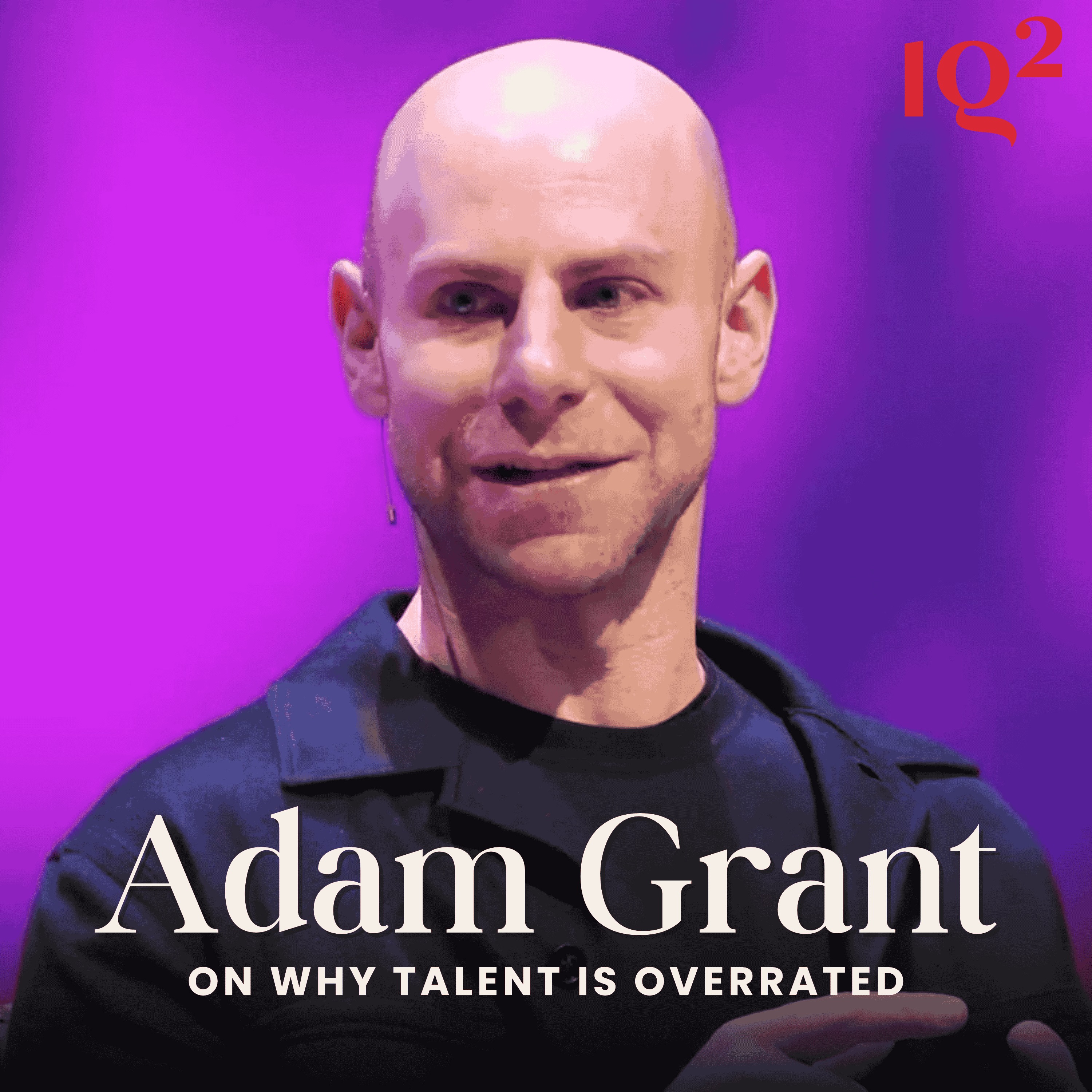
Adam Grant is one of the most sought after organisational psychologists in the world. He has provided expert advice to many of the world’s greatest business leaders, including Bill Gates and Sheryl Sandberg, equipping them with the mental tools to find motivation and meaning, rethink assumptions, and achieve greatness in their business and personal lives. In January 2024 Grant came to the Intelligence Squared stage for a rare, exclusive London event where he shared his revolutionary framework for how we can all exceed the expectations and aspirations we have set for ourselves. Drawing on his new book Hidden Potential he explained that despite living in a world that tends to admire people who start out with innate talent, there is clear scientific evidence that we can all bridge the biology gap and improve ourselves dramatically. In conversation with economist and FT columnist Tim Harford, Grant wove together groundbreaking evidence, surprising insights, and vivid story telling to take
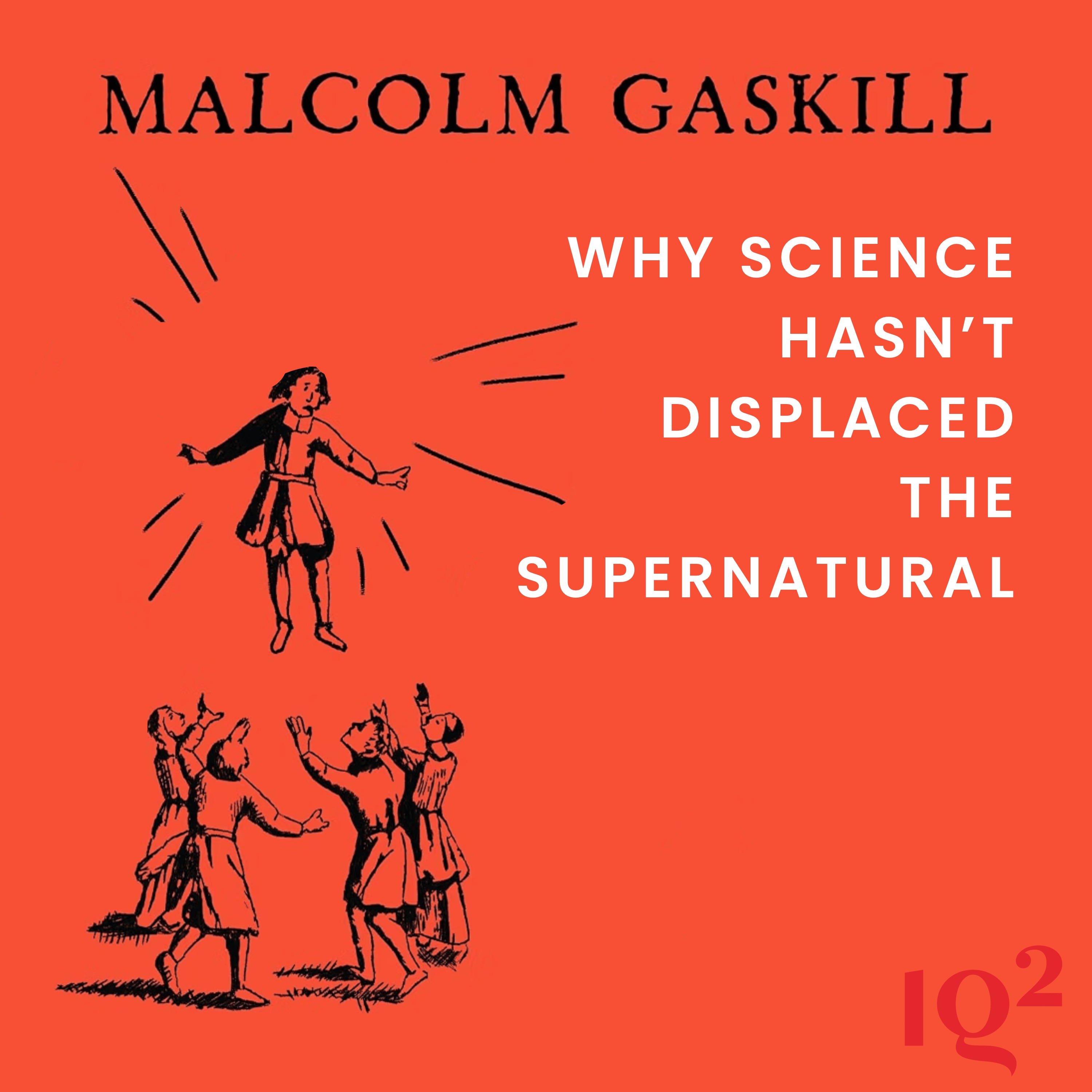
How do we make sense of the unseen? For centuries, the supernatural has offered ways to understand misfortune, find comfort and live with uncertainty. But its history is not simply a story of superstition giving way to reason. Why did people seek evidence in witchcraft trials? Can science and supernatural belief exist alongside one another? And what might today’s encounters with frontier technologies reveal to us about the persistence of the uncanny? In this episode, Margherita Volpato speaks with Malcolm Gaskill about his new book, Worlds of Fear and Wonder: Living with the Supernatural, Past and Present. Together, they explore the emotions behind supernatural beliefs that have shaped culture. They discuss Puritans searching for signs from God, the persistence of enchantment in the modern world and the uneasy relationship between technology and the uncanny. Malcolm Gaskill is Emeritus Professor of Early Modern History at the University of East Anglia and the author of seven books, inc
We live in a world designed to give us ever greater control. We can optimise our routines, monitor our bodies and manage almost every detail of our surroundings. But our pursuit of certainty may also be making us less able to face the parts of life we cannot predict. Are we becoming addicted to control? Why can uncertainty leave us feeling anxious, lonely or ashamed? And could surrender be a source of freedom rather than a sign of defeat? In this episode, Dr Güneş Taylor speaks with Stanford psychiatrist and addiction-medicine specialist Dr Anna Lembke about her new book, Radical Surrender: Letting Go in a World Addicted to Control. Drawing on neuroscience, clinical experience and her own encounter with loss, Lembke explains why accepting the limits of our control might help us find greater meaning and connection. Together, they explore what surrender means in a secular age and whether opening ourselves to uncertainty can change how we live. Dr Anna Lembke is a professor of psychiatry
Vocational training should receive the same respect as university education.
Share your view, then see how readers voted. No sign-in required. This poll is shared across stories.
Do you agree or disagree?
Common Quandary
A Common Quandary to discuss
Another conversation to explore, separate from this news story.
Your teenager locks you out of their phone. When is it okay to look?
Your usually outgoing sixteen-year-old has withdrawn and stopped seeing friends. They insist they are fine and refuse to talk. You know their phone passcode and could read their messages without being discovered.
How serious must a fear be before protection outranks privacy?