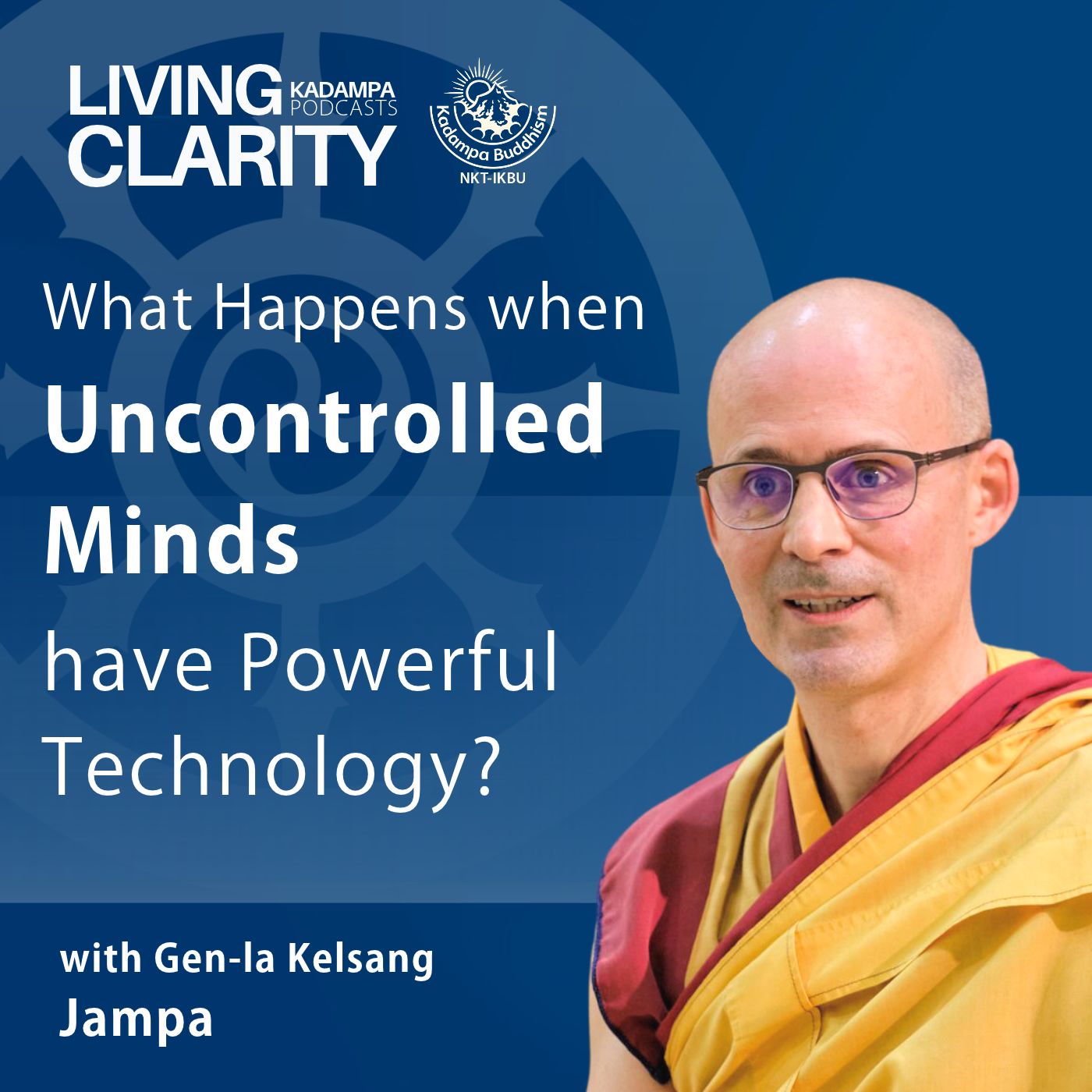
What Happens when Uncontrolled Minds have Powerful Technology?
16 min
Listen through the publisher, then discuss the episode here or arrange an in-person Roundtable. Your city determines where to meet.
Roundtables are designed for groups of four, with a shared subject and room for everyone to speak. Come for discussion, with no dating expectation.
Gen-la Jampa shows why technological progress has not delivered the happiness we hoped for. Through Geshe Kelsang’s teachings and a verse from Shantideva, he traces happiness and suffering back to their real source — the mind itself — and the radical shift that comes when we stop trying to control everything outside us. Further reading in the following book: How to Transform Your Life (https://kadampa.org/book/how-to-transform-your-life)
Episode information is provided by the publisher. Listening takes place on the publisher’s service.
Access the masterclass instantly for free: https://nci.university/learn Uploaded 10-01-26 Your goals don’t fail because you lack discipline — they fail because they were aimed at the wrong system. Optimizing behavior without fixing brain chemistry is like issuing commands to a damaged machine. Until the chemical environment is right, effort just increases friction and burnout. All goals live in the conscious mind — but control does not. Real behavior is governed by the mammalian brain, the ancient systems that decide safety, threat, and energy allocation. Every resolution collapses when those lower systems detect risk, even if you consciously “want” the outcome. Goal-setting ignores this hierarchy — and that’s why it keeps failing. Once you target the parts of the brain actually in charge, change stops feeling like force. Discipline becomes unnecessary when the system itself is aligned. Please note that the content provided in this broadcast is for informational and educational purpose
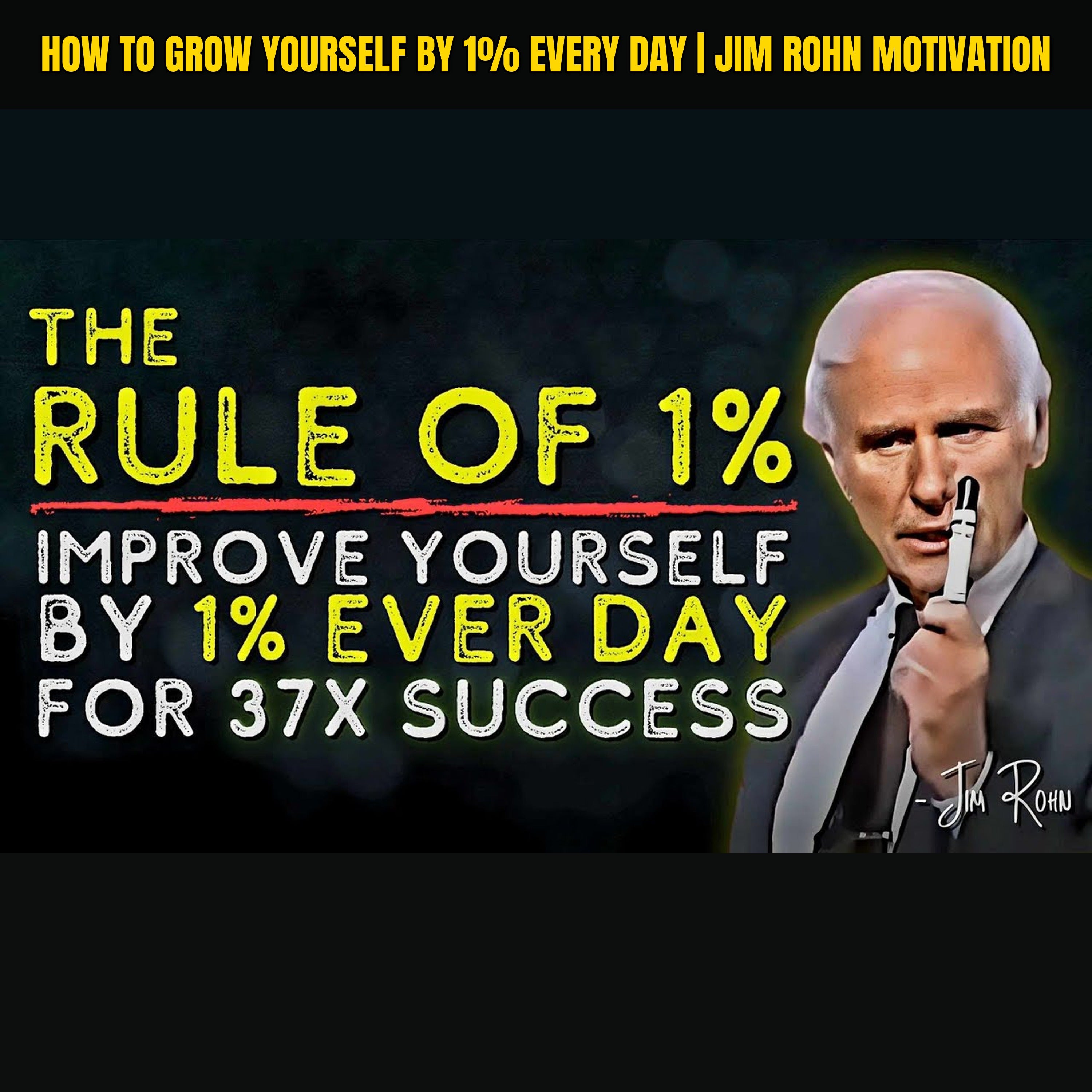
#JimRohnMotivation #JimRohn #JimRohnSpeech Success isn’t about overnight transformations—it’s about small, consistent efforts that compound over time. In this Jim Rohn Motivation video, discover how improving just 1% every day can lead to extraordinary results. Learn why consistency, discipline, and the right mindset are the foundation of long-term success and personal growth.Key Topics From This Motivational Video: The compounding power of small daily improvements Why most people quit too soon and how to stay consistent The role of habits and environment in shaping success How to develop an unstoppable mindset The difference between short-term motivation and long-term discipline Most people believe success comes from a single breakthrough, but that’s not true. Real transformation happens in the tiny moments when no one is watching—the small choices, the daily habits, and the commitment to continuous growth. When you focus on getting just a little better every day, those improvements c
Giouli thought alcohol was the one thing that let her stop being perfect. Hear how a 30-day break she expected to end in January led her to write the first quit lit book in Greece and help change how her country talks about drinking. What happens when a question you ask yourself one January refuses to go away? For Giouli, alcohol started as freedom from perfectionism at university. It followed her through a demanding events career and into motherhood, when wine came home every night and blackouts began to scare her. Rules and moderation only left her feeling guilty. Then, holding a glass of red wine on her balcony, she asked herself who she was without it. That question led her to write two books, become a coach, and help shift the drinking culture in Greece. Why alcohol felt like freedom from perfectionism, not a way to numb The common belief about drinking at home that kept her from questioning alcohol What moderation rules did to her guilt and her sense of control The balcony moment
What if your greatest pain was actually the beginning of your greatest transformation? Tony Robbins shares a powerful reflection on how personal tragedy, extreme stress, and uncertainty can become a doorway to transformation. Uploaded 03-08-25 Watch more videos like this 5 Steps to GUARANTEE More Happiness, No Matter What Happens: https://youtu.be/CQYd3dTDykQ Use 4 "Alter Egos" to BREAK FREE from Limitations: https://youtu.be/zxtFZc8qeug STOP Letting These Beliefs CONTROL Your Life...: https://youtu.be/G0psZhmKGgE 2 KEY SKILLS To Master If You Want An EXTRAORDINARY Life: https://youtu.be/CMF7H9OX5NQ Join "The Edge" - Tony Robbin's FREE weekly newsletter: https://tonyr.co/3YJ0m2L Try Tony AI for just $1: https://tonyr.co/4cr742A Follow Tony Robbins: Facebook: https://www.facebook.com/TonyRobbins Instagram: https://instagram.com/tonyrobbins/ TikTok: https://www.tiktok.com/@tonyrobbins Twitter: https://twitter.com/tonyrobbins LinkedIn: https://www.linkedin.com/in/officialtonyrobbins Websi
AI is here. Now what? Everyone’s talking about artificial intelligence and machine learning. There are lots of names thrown around - OpenAI’s ChatGPT and DALLE-2, Google’s Bard, Meta’s LLaMa 2, Midjourney, AlphaFold… Right now, we’re in this weird moment where lots of smart people agree we’re on the cusp of a truly world-changing technology. But some seem to be saying it's going to lead to human extinction while others are saying it’s “more profound than fire.” But it all feels so VAGUE. I want to know: How specifically would AI kill me? Or totally transform my life for the better? In this video, that’s what I’m going to try to learn. We dive into what the most extreme bad and good AI futures actually look like, so that you and I can get ready. And more importantly, so we can make sure that we get our real future RIGHT. Chapters: 00:00 Why is AI so confusing? 1:13 What is AI? 2:37 Why is everyone talking about AI now? 5:12 Why is AI dangerous? 6:22 How would AI kill me? 8:08 Should we
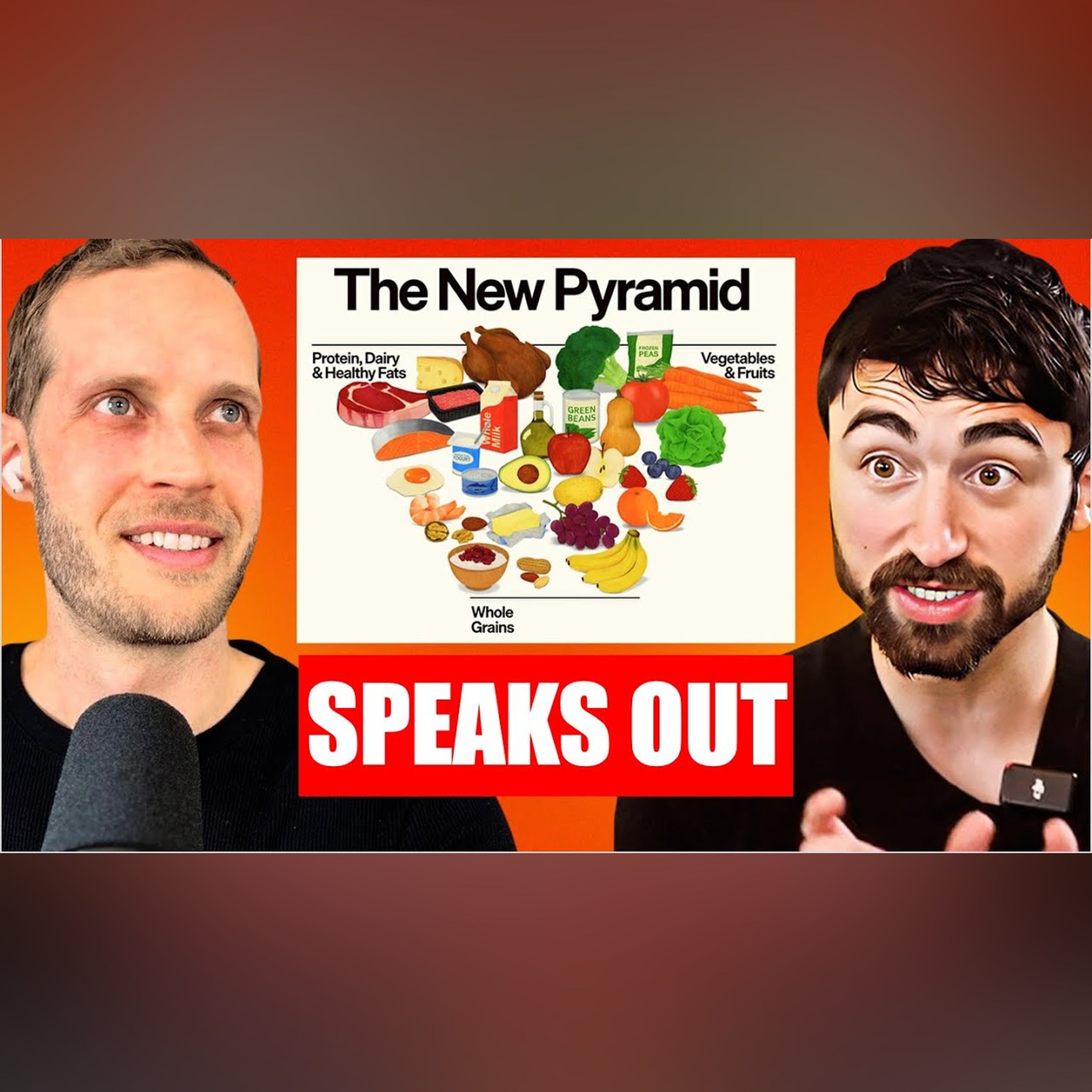
For a written digest on the guidelines, see the StayCurious Metabolism Letter: https://staycuriousmetabolism.substack.com/p/the-new-dietary-guidelines-actually?r=40ekz2 The 2025–2030 Dietary Guidelines are being marketed as a major reset with a simple message: put “real food” back at the center of the American diet. And in a lot of ways, they do represent progress. But when you actually read what’s written, some of the most important details raise real questions. For example, the document still states that saturated fat should not exceed 10% of total daily calories. To separate signal from spin, I’m joined by Dr. Ty Beal PhD, who worked on the evidence review side of the Guidelines process, to explain what the scientific background documents actually say, what happens after scientists submit reviews, and why the final public-facing document can end up with compromises, inconsistencies, or imprecise terminology. If you want a clear, good-faith breakdown—what’s genuinely better, what sti
Gen Gomlam explores Buddha’s transformative teaching that our mind and our world are intimately connected. Discover how purifying our thoughts, reducing delusions and cultivating love and compassion can change our personal experience of life. Through the analogy of a dream, she explains why developing wisdom offers a hopeful path towards lasting happiness and world peace.
Preserving historic places can justify limiting redevelopment.
Share your view, then see how readers voted. No sign-in required. This poll is shared across stories.
Do you agree or disagree?
Common Quandary
A Common Quandary to discuss
Another conversation to explore, separate from this news story.
You love the free sample but will never buy it. How many times may you circle back?
A warehouse store is offering delicious samples. You have no intention of purchasing the product, but the employee seems bored and has trays to spare. After taking two, you consider removing your jacket and returning for a third.
Is exploiting generosity wrong when the giver appears not to care?