English-language podcasts

Gresham College Lectures

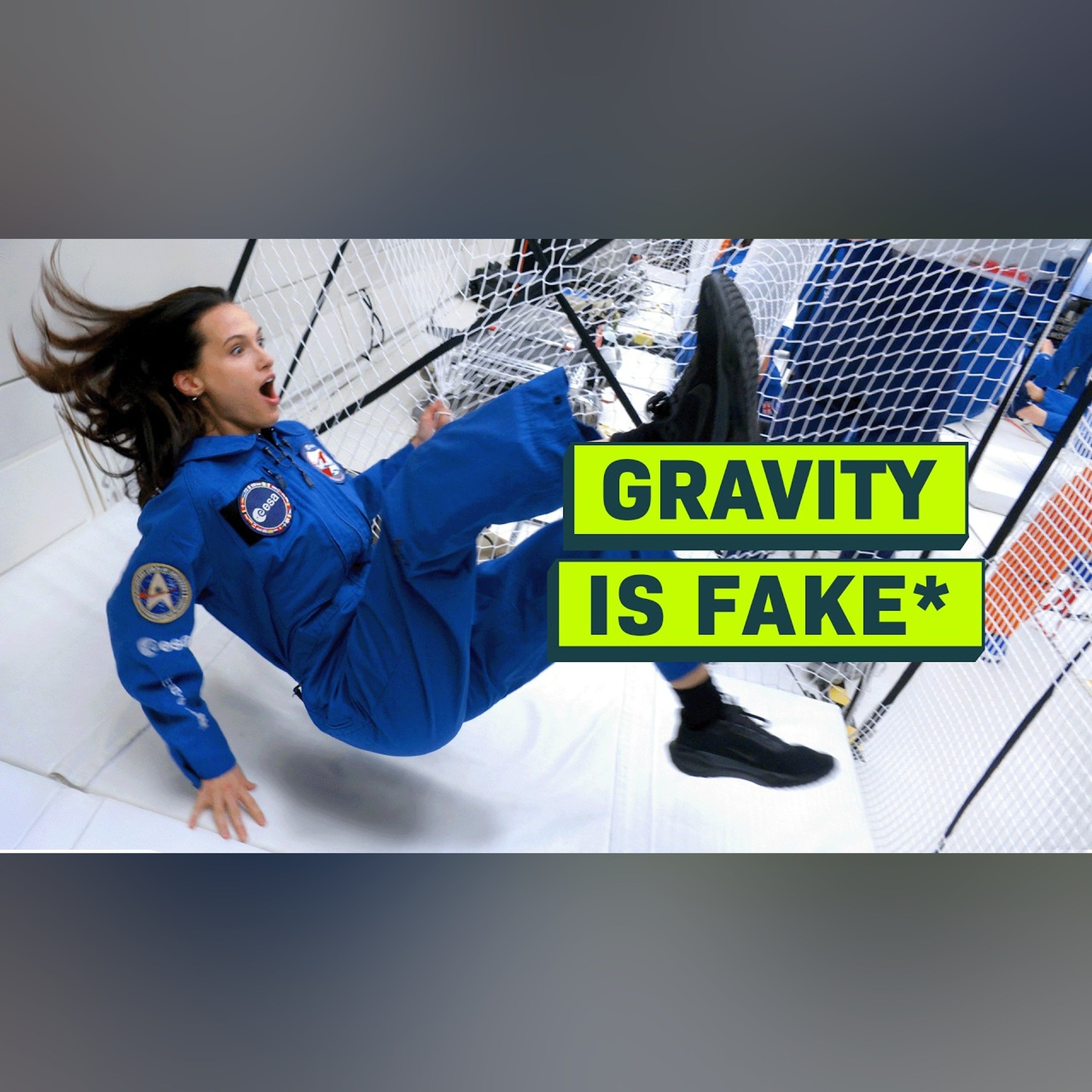
What searching for life tells us about Earth - Helen Czerski

35 min

Listen through the publisher, then discuss the episode here or arrange an in-person Roundtable. Your city determines where to meet.

Roundtables are designed for groups of four, with a shared subject and room for everyone to speak. Come for discussion, with no dating expectation.

Professors Czerski and Lintott investigate how ocean Earth compares and differs from the other planets we’ve found, and how water worlds in many forms may be more common than expected. Using Lovelock’s framing of a biosphere, we consider life on these worlds, and explain what this thinking about the Universe can tell us about our own planet. This lecture was recorded by Professor Helen Czerski and Chris Lintotton 14th of October 2026 at Barnard’s Inn Hall, London. Helen Czerski is a physicist and oceanographer with a passion for science, sport, books, creativity, hot chocolate and investigating the interesting things in life. She is a Professor at the Department of Mechanical Engineering at University College London and her research focus is the physics of breaking waves and bubbles at the ocean surface. These bubbles change underwater sound and light, help transfer gases from ocean to atmosphere (helping the ocean breathe) and also eject ocean material into the air. She has spent months working on research ships in the Antarctic, the Pacific, the North Atlantic and the Arctic, and is an experienced field scientist. Helen has been a regular science presenter on the BBC for 15 years, covering the physics of the natural world in BBC2 landmark documentaries (including ‘Orbit’, ‘Operation iceberg’ and ‘Supersenses’), and the physics of everyday life in a range of BBC4 documentaries (including ‘From ice to fire: The incredible science of temperature’, ‘Sound waves: The symphony of physics’, and ‘Colour: The spectrum of science’, along with many others). She currently co-hosts BBC Radio 4’s flagship climate and environment programme Rare Earth. Helen's first book Storm in a Teacup won the Italian Asimov Prize and the Louis J. Battan Author prize from the American Meteorological Society. Blue Machine won the Wainwright Prize for Conservation Writing. She was awarded the Institute of Physics Gold Medal in 2018 for her work on physics communication, and an Honorary Fellowship of the British Science Association in 2020. She was a Trustee of Royal Museums Greenwich from 2018-2026, and was one of the 2020 Royal Institution Christmas Lecturers, giving her Lecture on the topic of the ocean. Professor Chris Lintott is a Professor of Astrophysics at the University of Oxford, and a Research Fellow at New College. Having been educated at Magdalene College, Cambridge and University College London, his research now ranges from understanding how galaxies form and evolve, to using machine learning to find the most unusual things in the Universe, to predicting the properties of visiting interstellar asteroids. He was the founder of the Zooniverse citizen science platform, which provides opportunities for more than two million online volunteers to contribute to scientific research, and which was the topic of his first book, 'The Crowd and the Cosmos’. His latest book is ‘Our Accidental Universe’. Professor Lintott is best known for presenting the BBC's long-running Sky at Night program, and as an accomplished lecturer. Away from work, he cooks, suffers through being a fan of Torquay United and Somerset cricket, and spends time with a rescued lurcher, Mr Max. He can often be found at the helm of Oxford’s science comedy night, ‘Huh, That’s Funny’. There are currently over 2,500 lectures free to access. Website: https://gresham.ac.uk X: https://x.com/GreshamCollege Facebook: https://facebook.com/greshamcollege Instagram: https://instagram.com/greshamcollege Bluesky: https://bsky.app/profile/greshamcollege.bsky.social TikTok: https://www.tiktok.com/@greshamcollege

Episode information is provided by the publisher. Listening takes place on the publisher’s service.

Listen at the source ↗

Featured places to meet in Palo Alto, CA

Explore these places and arrange a conversation through ThinkMatch.

City guide for Palo Alto, CA

More from Gresham College Lectures

Gresham College Lectures

A History of the World in Four Algorithms - Sarah Hart

49 min

Algorithms are fundamental to the story of mathematics – they’ve been around for over four thousand years. A theorem may prove that a solution to a problem exists, but an algorithm gives you the directions to actually find it. This lecture explores four key algorithms that have not just shaped pure mathematics, but have found unexpected applications in areas as diverse as nuclear physics, film-making, medicine, and music. This lecture was recorded by Sarah Hart on October 15th 2026 at Binks Hall, St John's College, Durham University, Durham. Sarah Hart was the first woman Professor of Geometry at Gresham College, and Acting Provost between March and October 2025. She is also Professor Emerita of Mathematics at Birkbeck, University of London. Professor Hart studied at Oxford and Manchester, gaining her PhD in 2000. Postdoctoral research and teaching followed, including a prestigious Engineering and Physical Sciences Research Council Fellowship, before she was appointed to a lectureship

Discuss this episode

Gresham College Lectures

The End of Mathematics? The AI Crisis - Alain Goriely

56 min

This lecture was recorded by Professor Alain Goriely FRS on 10th of November 2026 at Barnard’s Inn Hall, London. Alain Goriely is a mathematician with broad interests in mathematical methods, mechanics, sciences, and engineering. He is well known for his contributions to dynamical systems, mathematical biology, as well as fundamental and applied mechanics. He is particularly well known for the development of a mathematical theory of biological growth, culminating with his seminal monograph The Mathematics on Mechanics of Biological Growth (2017). The transcript and downloadable versions of the lecture are available from the Gresham College website: https://www.gresham.ac.uk/watch-now/end-maths There are currently over 2,500 lectures free to access. Website: https://gresham.ac.uk X: https://x.com/GreshamCollege Facebook: https://facebook.com/greshamcollege Instagram: https://instagram.com/greshamcollege Bluesky: https://bsky.app/profile/greshamcollege.bsky.social TikTok: https://www.tik

Discuss this episode

Gresham College Lectures

Santa, Elon, and the Interplanetary Internet - Victoria Baines

37 min

Unless it’s Christmas Eve, that chain of lights moving across the sky is probably not Santa’s sleigh but Starlink’s low earth orbit satellites (LEOs). To meet demand for ubiquitous, instantaneous, and uninterrupted communication, our internet infrastructure now extends into outer space. This talk explores who owns it, who has to clean up after it, and its impact on terrestrial politics. We’ll also take a look at how a new interplanetary internet might help shape the future of space exploration, to Mars and beyond. This lecture was recorded by Professor Victoria Baines on 25th of September 2026 at Barnard’s Inn Hall, London. Professor Victoria Baines FBCS is a leading authority in the field of online trust, safety and cybersecurity. She frequently contributes to major broadcast media outlets on digital ethics, cybercrime and the misuse of emerging technologies, including Extended Reality and Artificial Intelligence. Her areas of research include electronic surveillance, cybercrime futur

Discuss this episode

Community Poll

Employers should measure outcomes instead of continuously monitoring workers' activity.

Share your view, then see how readers voted. No sign-in required. This poll is shared across stories.

Do you agree or disagree?

Choose one answer

Common Quandary

A Common Quandary to discuss

Another conversation to explore, separate from this news story.

A private joke from years ago goes public. How long should it follow the person who wrote it?

Someone shares a screenshot of a tasteless joke made years ago in a private friends' chat. The person who wrote it says they were performing for a small audience, have changed, and never agreed to have the message made public.

How private should speech remain when it reveals something troubling?

Explore this quandary