What to Do When You Get a Clinical Scenario in Your Interview
16 min
Listen through the publisher, then discuss the episode here or arrange an in-person Roundtable. Your city determines where to meet.
Roundtables are designed for groups of four, with a shared subject and room for everyone to speak. Come for discussion, with no dating expectation.
Starting to think about your NHS Consultant Interview Prep? Join the waitlist for my Ace Your Consultant Interview Academy. I’ll let you know as soon as the Academy doors open https://medicalinterviewprep.com/waitlist?utm_source=podcast&utm_medium=transistor&utm_content=t-ep65 (https://medicalinterviewprep.com/waitlist) The best examples of working in a multidisciplinary team don’t come from a purely clinical case. They come from showing an appreciation of the MDT within the wider system. Tessa and Becky start with a question from an Academy student: what should you expect if your interview begins with an informal panel of service users? We explain why it’s a golden chance to show who you really are, how to treat it as a conversation rather than a performance, and why not knowing what’s coming is the same for every candidate. We also break down a strong MDT example built around a swarm review after a lipid overdose on a neonatal unit, and why structuring your answer around the themes of why the team worked well beats telling it chronologically. From there we tackle a question that’s coming up more and more, “how does PSIRF improve patient care?”, and a simple trick for understanding it if you’ve never been involved: sit in on your local PSIRF meeting. Finally, our tip of the week is about clinical scenarios. Consultant panels aren’t testing whether you can manage something on the shop floor, so “level it up” and think about the team, the system and the bigger picture. As one very experienced interviewer puts it, answer from the balcony, not the dance floor. Sign up for our free 5-day email course to give you a Crash Course To Ace Your Consultant Interview: https://aceyourconsultantinterview.com/?utm_source=YTPod&utm_medium=text&utm_campaign=1 (https://aceyourconsultantinterview.com/)
Episode information is provided by the publisher. Listening takes place on the publisher’s service.
Happy Sunday! Welcome to Heal Squad’s The Sunday Set Up. Life lessons to help you start the week. How much of success comes down to simply showing up? This week, we talk keeping an open mind, taking chances, and recognizing the doors that open along the way. From Olympic athletes appearing on national television alongside Mercedes Moné to performers who keep showing up week after week hoping for their big break, we explore why success isn't always about talent or luck. Sometimes it's about making connections, putting in the effort, and being willing to try without knowing what we'll get in return. We talk knowing when to stop investing time in people who aren't willing to help themselves, and why even experiences that don't work out can teach us something valuable. The takeaway: don't wait for the perfect moment or expect someone else to make things happen. Be willing to take a chance, walk through the doors that open, and remember that half of life is just showing up. Plus, a little b
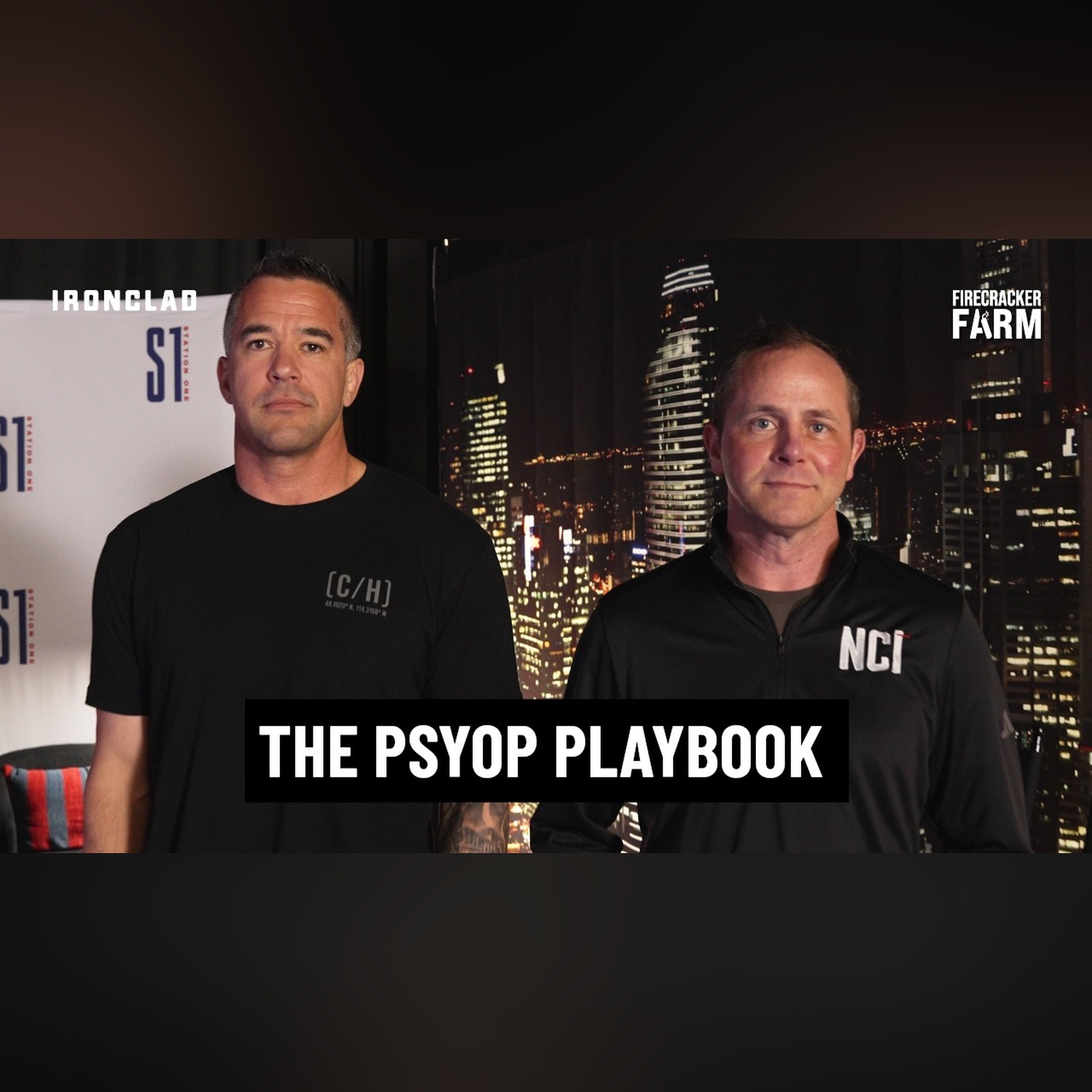
This is a PREVIEW of the upcoming episode of Change Agents. The full episode drops tomorrow at 5pm EST Uploaded 18-06-26 On this week's episode of Change Agents, Andy travels to Chase Hughes' new studio to break down how human behavior is manipulated at scale, from bot farms manufacturing fake consensus to the psychological framework Chase calls WOUND that explains why outrage, fear, and loneliness keep us glued to our phones. They dig into why Chase believes the algorithm is less a sinister mastermind and more an engine optimized purely for ad revenue, how think tanks may shape policy more than most people realize, and why Walter Cronkite and Julia Child both have far stranger backstories than anyone learned in school. Andy also gets a tour of Chase's new independent news studio, Station One, built to show audiences the psyops behind the headlines rather than just the headlines themselves. Change Agents is an IRONCLAD Original Firecracker Farm Norwood Sawmills: Learn more about Norwoo
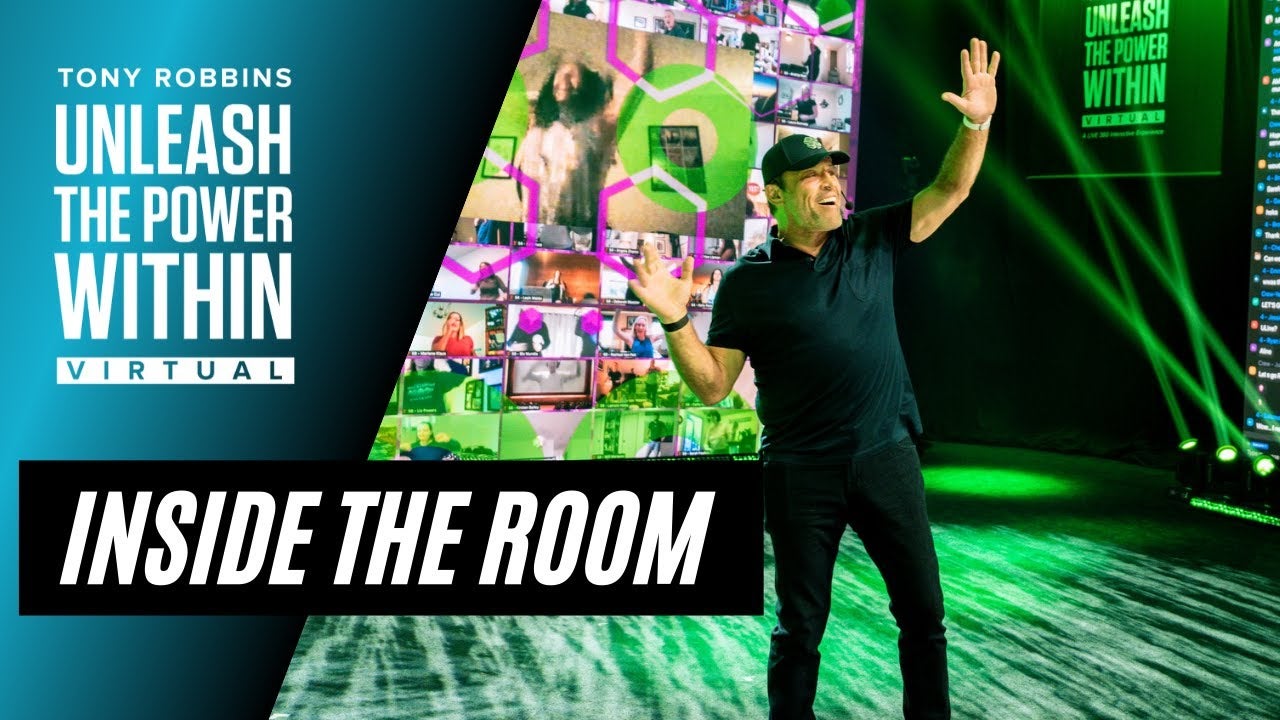
The FIRST Unleash the Power Within of 2022 just wrapped and we had 26,000 households from 151 countries around the world STEP UP and JOIN TOGETHER for one of our largest events in history! Uploaded 23-03-22 Here are some highlights from the week. Enjoy this video for a peek inside our virtual stadium It’s such a privilege to spend time with such DRIVEN, COMMITTED, LOVING SOULS all coming here with a hunger to GROW. For me, getting to hear your goals and witness each of you creating a unique life for yourselves, your loved ones, and your communities is deeply moving. We grow so we have MORE to GIVE, and the truth is, the world is a better, more beautiful and kind place because of people like YOU. If you’ve never experienced an Unleash the Power Within, it can be hard to imagine the HUMAN POTENTIAL and the RAW ENERGY⚡️ that converge over these four days and nights. It's electrifying to feel people from every walk of life, every background, every stage of life UNITE to find a deeper meani
What’s really going on with nuclear fusion?? @simonegiertz and I try to explain... PART 2 COMING SOON. You’ve probably heard about nuclear fusion. Maybe you've heard recent news about the Livermore National Lab achieving a nuclear fusion breakthrough called "ignition" - meaning it produced more energy than it took to start the reaction. That's a huge deal! But it leaves other questions unanswered. I wanted to know more. I started by asking the CEO of the nuclear fusion company Helion all my big questions: What is nuclear fusion, really? I know it happens on the sun, but how can we do it on earth? Are we doing it already? Then, I ask one last question: “I’ve heard about kids building fusion reactors in their moms’ garage… if fusion is so hard… what are THEY doing?” The answer sets off the most fun and ambitious Huge If True episode yet. It turns out that you can actually BUILD a nuclear fusion device. So I team up with my friend Simone Giertz to try. When something goes wrong, it turns
I’m sure you can imagine a few scenarios in which you might have resisted the need to pee in the past. It may have been due to the toilets being unclean or closed. Sometimes, a little more privacy would be appreciated, especially at work, for example. There are a number of factors which influence the number of times we pee over the course of a day. These include age, bladder size, the weather, any medication we’re taking, what we drink and the amount we drink for example. Pregnant women also tend to pee more often. On average though, we go to the toilet between four and seven times a day. What explains urinating very frequently or infrequently? Can holding in pee lead to a urinary tract infection? What should you do when you have difficulty holding in urine? In under 3 minutes, we answer your questions ! To listen to the latest episodes, click here: What is limb lengthening, the cosmetic procedure going viral on social media? (https://originals.bababam.com/do-you-really-know/2023060203
PBS Member Stations rely on viewers like you. To support your local station, go to:http://to.pbs.org/DonateSPACE Sign Up on Patreon to get access to the Space Time Discord! A fun nightmare sci-fi scenario is the sun being consumed by a black hole. Fortunately the chance of a black hole randomly wandering into our solar system is pretty tiny. That’s good news. But what if it’s already here, hiding in the core of the Sun and slowly eating it from the inside out? Hawking Stars Journal Papers: Search the Entire Space Time Library Here: https://search.pbsspacetime.com/ Hosted by Matt O'Dowd Written by Matt Caplan & Matt O'Dowd Post Production by Leonardo Scholzer, Yago Ballarini & Stephanie Faria Directed by Andrew Kornhaber Associate Producer: Bahar Gholipour Executive Producers: Eric Brown & Andrew Kornhaber Executive in Charge for PBS: Maribel Lopez Director of Programming for PBS: Gabrielle Ewing Assistant Director of Programming for PBS: John Campbell Spacetime is produced by Kornhaber
Starting to think about your NHS Consultant Interview Prep? Join the waitlist for my Ace Your Consultant Interview Academy. I’ll let you know as soon as the Academy doors open https://medicalinterviewprep.com/waitlist?utm_source=podcast&utm_medium=transistor&utm_content=t-ep66 (https://medicalinterviewprep.com/waitlist) The best examples of conflict with a colleague are when they were annoyed with you, not the other way around. Tessa and Becky start with a question about applying for a job before you’ve got your CCT, and explain why the rule is about being within six months of CCT by the interview date, not by the application deadline, so you may be eligible when you think you aren’t. We also talk about why the interview prep, not the application form, should be your focus. We also review a golden example about a rota error that upset a trainee, and talk through why it may not be the strongest conflict story: a conflict within your own team, with little real de-escalation to describe.
A merger should be approved only when there is a credible case that customers will benefit.
Share your view, then see how readers voted. No sign-in required. This poll is shared across stories.
Do you agree or disagree?
Common Quandary
A Common Quandary to discuss
Another conversation to explore, separate from this news story.
Your family connection could get your child into their dream school. Do you use it?
A university argues that considering family ties builds loyalty and encourages donations that fund scholarships. Critics say the preference preserves inherited advantage and takes places from stronger applicants.
Can benefits to the whole institution justify an unequal admissions advantage?