English-language podcasts

CrashCourse

White Dwarfs and Planetary Nebulae: Crash Course Astronomy #30

17 min

Listen through the publisher, then discuss the episode here or arrange an in-person Roundtable. Your city determines where to meet.

Roundtables are designed for groups of four, with a shared subject and room for everyone to speak. Come for discussion, with no dating expectation.

Today Phil follows up last week’s look at the death of low mass stars with what comes next: a white dwarf. White dwarfs are incredibly hot and dense objects roughly the size of Earth. They also can form planetary nebulae: huge, intricately detailed objects created when the wind blown from the dying stars is lit up by the central white dwarf. They only last a few millennia. The Sun probably won’t form one, but higher mass stars do. Check out the Crash Course Astronomy solar system poster here: http://store.dftba.com/products/crashcourse-astronomy-poster -- Chapters: Introduction 00:00 White Dwarfs 1:26 Planetary Nebulae 3:59 How Do Planetary Nebulae Get Their Shape? 5:56 Structure and Color of Planetary Nebulae 8:12 Will the Sun Become a Planetary Nebula? 9:35 Review 10:16 -- PBS Digital Studios: http://youtube.com/pbsdigitalstudios Follow Phil on Twitter: https://twitter.com/badastronomer Want to find Crash Course elsewhere on the internet? Facebook - http://www.facebook.com/YouTubeCrashCourse Twitter - http://www.twitter.com/TheCrashCourse Tumblr - http://thecrashcourse.tumblr.com (http://thecrashcourse.tumblr.com/) Support CrashCourse on Patreon: http://www.patreon.com/crashcourse -- PHOTOS/VIDEOS Journey to the center of the Sun http://www.spacetelescope.org/videos/astro_ac/ [credit: ESA/Hubble (M. Kornmesser & L. L. Christensen)] Blowing Bubbles http://chandra.harvard.edu/resources/animations/pne.html [credit: (NASA/CXC/April Jubett)] Artist's impression of the sizes of Sirius B and the Earth http://www.spacetelescope.org/images/heic0516c/ [credit: ESA and NASA] The Dog Star, Sirius A, and its tiny companion http://www.spacetelescope.org/images/heic0516a/ [credit: NASA, ESA, H. Bond (STScI), and M. Barstow (University of Leicester)] The Spirograph Nebula https://www.spacetelescope.org/images/opo0028a/ [credit: NASA/ESA and The Hubble Heritage Team STScI/AURA] M27, NGC6853, Dumbbell Nebula https://www.noao.edu/image_gallery/html/im0688.html [credit: REU program/NOAO/AURA/NSF] Soap Bubble Nebula, PN G75.5+1.7 https://www.noao.edu/image_gallery/html/im1059.html [credit: T. A. Rector/University of Alaska Anchorage, H. Schweiker/WIYN and NOAO/AURA/NSF] Hubble Sees Supersonic Exhaust From Nebula http://www.spacetelescope.org/images/opo9738a/ [credit: Bruce Balick (University of Washington), Vincent Icke (Leiden University, The Netherlands), Garrelt Mellema (Stockholm University), and NASA/ESA] Hubble snaps NGC 5189 http://www.spacetelescope.org/images/heic1220a/ [credit: NASA, ESA and the Hubble Heritage Team (STScI/AURA)] A dying star’s toxic legacy http://www.spacetelescope.org/images/potw1110a/ [credit: ESA/Hubble & NASA] Eskimo Nebula http://www.nasa.gov/multimedia/imagegallery/image_feature_762.html [credit: NASA/Andrew Fruchter (STScI)] Planetary nebula Abell 39 http://www.noao.edu/image_gallery/html/im0636.html [credit: WIYN/NOAO/NSF] The Butterfly Hunter http://chandra.harvard.edu/resources/animations/pne.html [credit: (NASA/CXC/April Jubett)] Red Giant Sun (video) http://www.spacetelescope.org/videos/hst15_red_giant_sun/ [credit: ESA/Hubble (M. Kornmesser & L. L. Christensen)] The planetary nebula Abell 33 captured using ESO's Very Large Telescope https://commons.wikimedia.org/wiki/File:The_planetary_nebula_Abell_33_captured_using_ESO%27s_Very_Large_Telescope.jpg [credit: ESO, Wikimedia Commons] ESO's VLT images the planetary nebula IC 1295 http://www.eso.org/public/usa/images/eso1317a/ [credit: ESO] Looking Down a Barrel of Gas at a Doomed Star http://hubblesite.org/newscenter/archive/releases/1999/01/image/a/ [credit: The Hubble Heritage Team (AURA/STScI/NASA)]

Episode information is provided by the publisher. Listening takes place on the publisher’s service.

Listen at the source ↗

Featured places to meet in Palo Alto, CA

Explore these places and arrange a conversation through ThinkMatch.

City guide for Palo Alto, CA

More from CrashCourse

CrashCourse

Dark Energy, Cosmology part 2: Crash Course Astronomy #43

18 min

The majority of the universe is made up of a currently mysterious entity that pervades space: dark energy. We don’t know exactly what it is, but we do know that dark energy accelerates the expansion of space. We think this means the Universe will expand forever, even as our view of it shrinks while space expands faster all the time. Check out the Crash Course Astronomy solar system poster here: http://store.dftba.com/products/crashcourse-astronomy-poster If you want to learn more about the creation and death of the universe, watch Crash Course Big History here: https://youtube.com/playlist?list=PL8dPuuaLjXtMczXZUmjb3mZSU1Roxnrey -- Chapters: Introduction: The Expanding Universe 00:00 The Expansion of Space is Accelerating 2:17 What is Dark Energy? 4:19 Will the Universe Expand Forever? The Geometry of the Universe 5:20 The Cosmic Horizon of the Observable Universe 6:50 Review 10:20 -- GEOMETRY OF THE UNIVERSE RESOURCES Geometry: Expanding faster than light: General expansion: -- PBS Di

Discuss this episode

CrashCourse

Diazonium Salts and Nucleophilic Aromatic Substitution: Crash Course Organic Chemistry #47

20 min

Have you ever wondered where cured meats like salami or pepperoni get their bright red color? Of course its from organic chemistry! A chemical called nitric acid gives them that bright color, while also increasing their shelf. It's also involved in some other interesting reactions. In this episode of Crash Course Organic Chemistry we'll see how nitrous acid reacts with primary amines to form diazonium salts, we'll learn about alkyldiazonium salts and aryldiazonium salts, and see what conditions are necessary for nucleophilic aromatic substitutions. Series Sources: Brown, W. H., Iverson, B. L., Ansyln, E. V., Foote, C., Organic Chemistry; 8th ed.; Cengage Learning, Boston, 2018. Bruice, P. Y., Organic Chemistry, 7th ed.; Pearson Education, Inc., United States, 2014. Clayden, J., Greeves, N., Warren., S., Organic Chemistry, 2nd ed.; Oxford University Press, New York, 2012. Jones Jr., M.; Fleming, S. A., Organic Chemistry, 5th ed.; W. W. Norton & Company, New York, 2014. Klein., D., Organ

Discuss this episode

CrashCourse

Alkene Addition Reactions: Crash Course Organic Chemistry #16

19 min

Like a trendy dance, a fighting combo, or a secret handshake, organic reactions can be broken down into simpler steps. In this episode of Crash Course Organic Chemistry, we’ll specifically be looking at alkene addition reactions, and with each new reaction ask ourselves three questions to help us puzzle through the mechanism and understand what’s going on. Episode Sources: Le Couteur, P, Burreson, J. Napoleon’s Buttons: 17 molecules that changed history., Penguin, New York, 2004, Chapter 1. Whipps, H., “How the Spice Trade Changed the World,” https://www.livescience.com/7495-spice-trade-changed-world.html Last accessed, 3/28/2020. Henriques, Martha, “How spices changed the ancient world,” http://www.bbc.com/future/bespoke/made-on-earth/the-flavours-that-shaped-the-world/ Last accessed, 3/28/2020. Hashimoto, K., Yaoi, T., Koshiba, H., Yoshida, T., Maoka, T., Fujiwara, Y., Yaamoto, Y, Mori, K., “Photochemical Isomerization of Piperine, a Pungent Constituent of Pepper”, Food Sci. Technol.

Discuss this episode

Community Poll

Businesses should explain substantial price increases to their customers.

Share your view, then see how readers voted. No sign-in required. This poll is shared across stories.

Do you agree or disagree?

Choose one answer

Common Quandary

A Common Quandary to discuss

Another conversation to explore, separate from this news story.

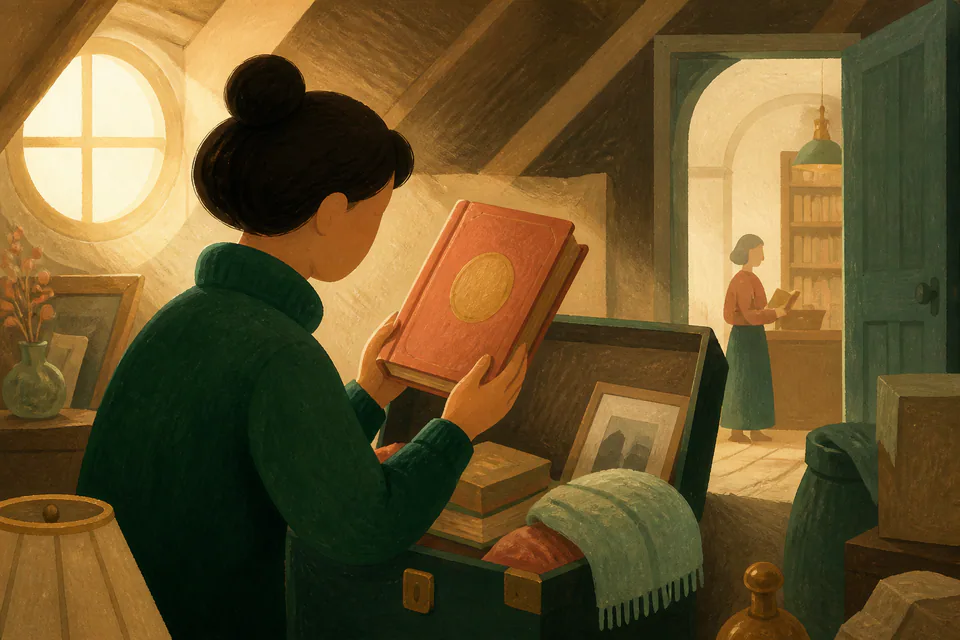
You find a rare library book your father kept for forty years. Do you return it anonymously?

While clearing your father's attic, you find a rare book stamped by the local library and due in 1986. The library would be thrilled to recover it, but returning it openly would expose a secret he apparently kept for decades—and might produce a spectacular overdue fine.

Does making an old wrong right require admitting who did it?

Explore this quandary