Why AI Talent Matters More Than Technology | Dr. Ahmed Gamal Elsharkawy
39 min
Listen through the publisher, then discuss the episode here or arrange an in-person Roundtable. Your city determines where to meet.
Roundtables are designed for groups of four, with a shared subject and room for everyone to speak. Come for discussion, with no dating expectation.
Artificial intelligence is transforming industries and workplaces worldwide, but the growing shortage of skilled talent is making it difficult for organisations to keep up. For the Global South, developing the right skills and infrastructure is becoming increasingly important. In this episode of Global Southing, Dr. Ahmed Gamal Elsharkawy, Regional AI Expert & Head of Training Academy at Tahaluf Al Emarat, discusses how governments, universities and businesses can close the AI talent gap. From workforce training and AI infrastructure to global partnerships and cybersecurity, the conversation explores what it takes to build stronger, more inclusive AI ecosystems across the Global South. Tune in to learn: → Why the global AI talent shortage is growing and how organisations can address it → Why universities are struggling to keep up with rapidly changing AI skills → What skills employers are looking for in an AI-driven workforce → How countries across the Global South can build stronger local AI ecosystems → Why investing in AI talent is just as important as building AI infrastructure → How governments and universities can attract support from global AI companies → Why choosing the right AI providers and protecting sensitive data matters → How AI enablers can help organisations adopt AI effectively → What financial and cybersecurity risks organisations must consider when implementing AI → How governments and businesses can make AI education accessible to everyone Key Moments 0:32 Understanding the global AI talent shortage 3:33 Why universities and employers struggle to develop AI-ready talent 7:44 The human skills needed to succeed in an AI-driven world 11:23 Building AI talent and infrastructure through government and industry cooperation 14:08 Strengthening local AI ecosystems across the Global South 17:13 Attracting global AI companies and technology investments 21:24 Making AI adoption affordable for universities and businesses 24:08 Choosing trusted AI providers and protecting sensitive data 28:22 The role of AI enablers in organisational transformation 30:27 Managing the financial and cybersecurity risks of AI 34:54 Making AI education and technology accessible to everyone Follow Global Southing LinkedIn: https://www.linkedin.com/company/global-southing/ Instagram: https://www.instagram.com/globalsouthing/ TikTok: https://www.tiktok.com/@globalsouthing Listen to the podcast Spotify: https://open.spotify.com/show/0R17ovyZOxFjSrIGM5TjcZ?si=580a700875544cb1 Apple Podcasts: https://podcasts.apple.com/us/podcast/global-southing/id1874600009
Episode information is provided by the publisher. Listening takes place on the publisher’s service.
The recent upheaval in the world economy, driven by unsettling news from the AI tech oligarchy Nvidia scandal, is a wake-up call for all of us. The urgent need to protest against dangerous data centres has never been more critical. In Alberta, we are witnessing a remarkable shift: traditional conservatives are distancing themselves from Premier Danielle Smith and her chaotic MAGA party, creating an unprecedented opportunity for the NDP. This shift highlights the public’s growing concern over unregulated AI and data centres — an issue that affects us all.While PM Mark Carney focuses on attracting investment to Canada’s energy sector, his strategy may be a bluff aimed at outmaneuvering Smith and messaging investors. This landscape is shifting rapidly, and we must stay informed. Join Max Fawcett, Lead Columnist for Canada's National Observer, as he delivers a thought-provoking assessment of Alberta’s state and the risks AI poses. This isn't just another political discussion; it's a rallyi
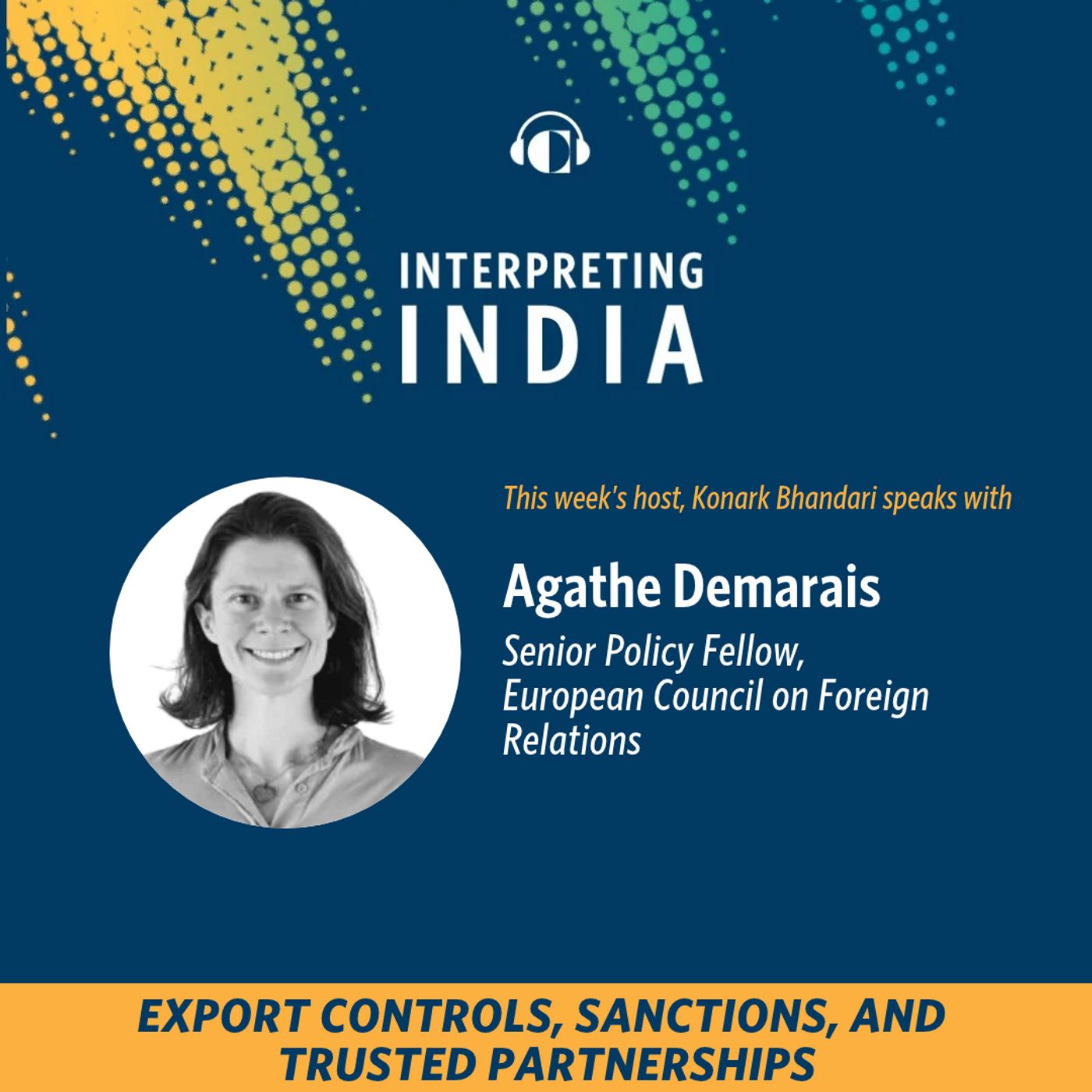
Agathe points to three drivers behind the new technology partnerships: the tech and AI race, the fragmentation of the global economy between a U.S.-led and a China-led bloc, and the difficulties of multilateralism. Middle powers like India are the swing states in that picture, which is why bigger powers want deals with them. On unpredictability, she says export controls on a U.S. frontier AI model showed that closed models come with an off switch, while Chinese models are open weight. Rare earths are a different case, because adaptation is possible, and Norway is now the top provider of rare earth compounds to the EU. Firms hedge and build redundancy, and in tech, reliability could become as important as capability. Export controls inflict short-term pain but fuel the target's push for self-sufficiency, which is why she says coalitions matter. Drawing on ECFR's new report, which tests eight widely held ideas about the global economy against data, Agathe says Europe is not losing the te
Trent and Peaches are tired of watching people celebrate minimum standards like they are excellence. The episode starts with Trent declaring Rudy the worst sports movie ever and immediately turns into a broader conversation about how organizations, teams, and candidates spend enormous amounts of energy supporting the bottom performers while sometimes failing to recognize the people who are actually crushing it. Their argument is not that struggling people deserve no support — it is that finishing last, barely passing, or simply meeting the minimum should not automatically be treated like an exceptional performance. They use athletes like Michael Jordan, Kobe Bryant, and other elite performers to make the point that talent does not eliminate work. Then the conversation comes back to Air Force Special Warfare preparation. Candidates claim they do not have time to train while sometimes putting in only a few hours each week for a pipeline they say is their biggest goal. Trent and Peaches e
Tonight on America At Night, guest host Josh Gilbert fills in for McGraw Milhaven for conversations on technology, international aviation security, and the business of professional football. Kathleen Day, lecturer in financial crisis and corporate governance at Johns Hopkins Carey Business School, examines Nvidia’s declining stock, questions surrounding Jensen Huang’s leadership, and mounting scrutiny from Washington. Dr. Todd Humphreys, Professor of Aerospace Engineering at UT Austin, discusses Russian GPS interference, aviation disruptions across Europe, and growing concerns over flight safety. Plus, DeMaurice Smith, former head of the NFL Players Association, discusses his book Turf Wars: The Fight for the Soul of America’s Game, offering an inside look at the power struggles, labor battles, and business decisions shaping professional football.
If you wanted to open a factory in America today, good luck finding a bank to fund it. Manufacturing takes big money up front, pays off slowly, and competes against countries that have spent fifty years undercutting the US. So most investors do not even bother taking the risk to back home-grown entrepreneurs. The Small Business Administration has two programs designed to change that, and almost nobody in Washington knows they exist. Joshua Carter spent 25 years on Wall Street before Administrator Kelly Loeffler brought him in to run the SBA’s Office of Investment and Innovation. Now he’s using some of the deepest capital markets in the world to steer private money toward the things America forgot how to build — critical minerals, drone supply chains, aluminum smelting, and manufacturing in towns that haven’t seen a new factory in decades. And it hasn’t cost taxpayers a dime. He breaks down how it works, what he’s investing in, and why this might be one of the most underrated jobs in th
This webinar presented outputs from Austroads Research Report AP-R778-26, Stocktake and Roadmap for Vehicle Technology Deployments. The research examined current and emerging issues, gaps and opportunities associated with vehicle connectivity, automation and electrification across Australia and New Zealand. Drawing on a targeted literature review and consultations with government transport agencies and industry experts, the project identified priority areas for future research, coordination, monitoring and exploration to be considered in the development of the Austroads VAT program. The webinar outlined considerations regarding road safety, operations and sustainability, and discussed how transport agencies can remain informed as vehicle technologies, standards, deployment models and market conditions continue to evolve. Webinar participants were introduced to the accompanying navigable roadmap, which brought together relevant Austroads publications, current projects and proposed futur
Global climate negotiations have led to major commitments, but turning them into action remains a challenge, especially for the Global South, where energy security, economic growth and climate finance are closely linked. In this episode of Global Southing, Yasin Kasirga, Former Senior Energy Advisor, COP28 Presidency, shares what happens behind closed doors at COP negotiations and what to expect from COP31. From the breakthroughs at COP27 and COP28 to climate finance, renewable energy and AI, the conversation explores what it takes to turn global climate pledges into real action. Tune in to learn: → What happens behind closed doors at COP negotiations and why reaching consensus is difficult → How hosting COP in the Global South influences climate priorities and international agreements → Why renewable energy projects cost more to finance in developing countries → How AI can improve energy infrastructure and support the energy transition → What COP27 and COP28 achieved on loss and damag
A tradition can remain authentic while changing with the community that practices it.
Share your view, then see how readers voted. No sign-in required. This poll is shared across stories.
Do you agree or disagree?
Common Quandary
A Common Quandary to discuss
Another conversation to explore, separate from this news story.
You make a hilarious deepfake of a friend for their birthday. Must you ask first?
For a private birthday party, someone creates a convincing video of a mutual friend delivering an absurd speech. Everyone, including the subject, will immediately understand that it is fake.
Does obvious fiction eliminate the need for consent?