Why an Event Horizon Is a Point of No Return | Boring Science For Sleep
79 min
Listen through the publisher, then discuss the episode here or arrange an in-person Roundtable. Your city determines where to meet.
Roundtables are designed for groups of four, with a shared subject and room for everyone to speak. Come for discussion, with no dating expectation.
Fall asleep to this quiet science story. A Boring Science For Sleep episode about Why an Event Horizon Is a Point of No Return. Why an Event Horizon Is a Point of No Return Settle in for a quiet exploration of Why an Event Horizon Is a Point of No Return. This episode follows The Camera That Crossed Over; Pencils, Papers and Strange Coordinates; Light Leaning Toward the Centre; Finding a Line Backwards; Looking From the Outside. Listen closely or let the details drift past. If you enjoy this quiet science bedtime pace, you might also like True Crime for Sleep on Spotify — same quiet rhythm, different night. Search Spotify for True Crime for Sleep.
Episode information is provided by the publisher. Listening takes place on the publisher’s service.
In 1620, a small ship called the Mayflower crossed the Atlantic carrying English settlers in search of a new life. Their arrival in North America became one of the most familiar stories in American history, but the reality behind the legend was far more complicated than the traditional Thanksgiving tale suggests. Discover why the Pilgrims left England, what their dangerous voyage was really like, and how they survived their first winter in an unfamiliar land. Explore their encounters with the Wampanoag people, the role of Tisquantum, also known as Squanto, and the assistance that helped the struggling settlers establish their colony. Uncover what happened at the harvest gathering of 1621, who actually attended, what was served, and how this event became connected to the modern Thanksgiving holiday. Follow the history beyond the familiar celebration and discover the people, cultural encounters, and historical realities behind the Mayflower story. Boring History for Sleep — Soft stories
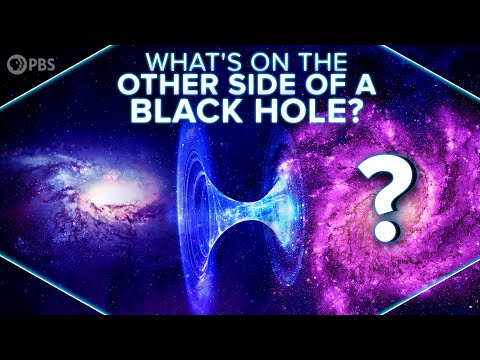
PBS Member Stations rely on viewers like you. To support your local station, go to: http://to.pbs.org/DonateSPACE ↓ More info below ↓ Uploaded 31-03-20 Sign Up on Patreon to get access to the Space Time Discord! Check out the Space Time Merch Store Normal maps are useless inside black holes. At the event horizon - the ultimate point of no return as you approach a black hole - time and space themselves change their character. We need new coordinate systems to trace paths into the black hole interior. But the maps we draw using those coordinates reveal something unexpected - they don’t simply end inside the black hole, but continue beyond. In these maps, black holes become wormholes, and new universes lie on the other side. Hosted by Matt O'Dowd Written by Matt O'Dowd Graphics by Leonardo Scholzer, Yago Ballarini, and Pedro Osinski Directed by: Andrew Kornhaber Executive Producers: Eric Brown and Andrew Kornhaber End Credits Music by J.R.S. Schattenberg: https://www.youtube.com/channel/U
In this calm and sleepy facts episode, we spend eight peaceful hours exploring some of the quietest wonders of the natural world. We begin beneath a gathering thunderstorm, following warm air as it rises into towering clouds and learning how a single flash of lightning can briefly heat the air to several times the temperature of the surface of the Sun. From there we settle into the hidden world of hibernation, where animals slow their breathing and their heartbeats to just a few beats a minute and wait out the long winter in stillness. Next, we wander among the trees, discovering how they lift water hundreds of feet into the air without a single moving part and quietly record each passing year in rings of wood. Finally, we cross the deserts, where the heat of the day gives way to cold, clear nights and some dunes hum softly as the sand slides down their slopes. Each story unfolds slowly and gently, with no sudden sounds, so the whole night can pass in calm and quiet wonder. Let these c
Black holes reveal something astonishing about our universe. Take your personal data back with Incogni. This extended cut is a deep dive into cutting edge research about black holes. It’s an interview with famous physicist Dr. Brian Cox. We start with “what if you fell into a black hole?” and end on the cutting edge research that had me questioning my whole reality. I interviewed Dr. Cox originally for a shorter Huge If True episode all about what would happen if you fell into a black hole. Watch our Huge If True episode about “What If You Fell Into A Black Hole?” here: https://youtu.be/BKIkTKqWMfg?si=bTde4QxUeN6bN1Io But there was SO much weird and mind bending stuff about the cutting edge of black holes that didn't fit into that shorter episode, and we knew you'd want to hear it. So we decided we had to release the full conversation. It's just too cool and I think you'll love it. Now, strap in, because the cutting edge of black holes is absolutely WILD. As always, if you want more op
One evening, a mother was putting her three-year-old son to bed, just as she'd done countless times before. She read him a story, rubbed his back, and waited for him to fall asleep. But for no apparent reason, she suddenly became overwhelmed by sadness. The feeling was so intense that she began to cry. Later that night, she woke to the unmistakable sounds of someone playing with her son's favorite building blocks. When she went to investigate, she found him sound asleep and his toys put away. But something in the room wasn't quite as she'd left it. Over the following nights, that same unexplained sadness returned. It wasn't until she thought about the time of year, and a heartbreaking loss she'd experienced a decade earlier, that she began to wonder whether these strange occurrences might be connected. Could someone she'd lost have found a way to visit? #RealGhostStoriesOnline #TrueGhostStories #SpiritVisitations #AfterDeathCommunication #SignsFromBeyond #ChildSpirit #ParanormalEncount
If you're interested in going deeper, check out our StayCurious Metabolism library on "Peptides and More" https://staycuriousmetabolism.substack.com/p/peptides Referenced Letters Russian Longevity Peptides: https://staycuriousmetabolism.substack.com/p/can-these-longevity-peptides-be-real?r=40ekz2 Pinealon and Sleep: https://staycuriousmetabolism.substack.com/p/why-im-trying-this-peptide-for-sleep?r=40ekz2 To Try Pinealon Thymic Health and Longevity: https://open.substack.com/pub/staycuriousmetabolism/p/the-most-overlooked-organ-in-aging?utm_campaign=post-expanded-share&utm_medium=web (https://open.substack.com/pub/staycuriousmetabolism/p/the-most-overlooked-organ-in-aging) Chapters 0:00 – Are These Russian Longevity Peptides Real?! 1:57 – Part 1, All Roads Lead Back to Russia 6:24 – Part 2, How These Peptides Work 10:20 – Part 3, My Personal Experience 14:28 – Part 4, Looking Towards the Future Can short peptides really influence aging, immunity, sleep, and even mortality? In this vide
Fall asleep to this quiet science story. A Boring Science For Sleep episode about How a Transistor Switches and Amplifies Signals. How a Transistor Switches and Amplifies Signals Settle in for a quiet exploration of How a Transistor Switches and Amplifies Signals. This episode follows Gold Points on Germanium; Crystals, Chemists and Surfaces; Inside the Base Region; Leakage, Heat and Stored Charge; Gates, Pairs and Quiet Logic. Listen closely or let the details drift past. Chapters 00:00:00 How a Transistor Switches and Amplifies Signals 01:38:47 Broom Making and the Binding of Broomcorn 04:09:45 Rubber Erasers and the Mixing of a Soft Compound If you enjoy this quiet science bedtime pace, you might also like Nature Documentary for Sleep (https://open.spotify.com/show/6Jcyoklmz2GdNGdCcNyQes) on Spotify — same quiet rhythm, different night.
Fall asleep to this quiet science story. A Boring Science For Sleep episode about How Mitochondria Power the Cells in Your Body. How Mitochondria Power the Cells in Your Body Settle in for a quiet exploration of How Mitochondria Power the Cells in Your Body. This episode follows The folded inner membrane; Cold sucrose and pigeon muscle; From sugar to spinning rotor; A theory tested in Cornwall; A living restless network. Listen closely or let the details drift past. Chapters 00:00:00 How Mitochondria Power the Cells in Your Body 01:32:12 Broom Making and the Binding of Broomcorn 04:03:10 Rubber Erasers and the Mixing of a Soft Compound If you enjoy this quiet science bedtime pace, you might also like Nature Documentary for Sleep (https://open.spotify.com/show/6Jcyoklmz2GdNGdCcNyQes) on Spotify — same quiet rhythm, different night.
Fall asleep to this quiet science story. A Boring Science For Sleep episode about How Mechanical Clocks Turn Gears Into Time. How Mechanical Clocks Turn Gears Into Time Settle in for a quiet exploration of How Mechanical Clocks Turn Gears Into Time. This episode follows A Bell Without a Face; Iron, Brass, Gut and Oak; Counting Teeth Into Hours; The Swing and the Sea; Towers, Tanks and Long Clocks. Listen closely or let the details drift past. Chapters 00:00:00 How Mechanical Clocks Turn Gears Into Time 01:30:53 Graphite Pencils and the Clay Inside the Core 04:02:09 Wood Screws and the Cutting of Spiral Threads If you enjoy this quiet science bedtime pace, you might also like Psalms for Sleep (https://open.spotify.com/show/7zd2RN8SMTCheFA2ifYK0m) on Spotify — same quiet rhythm, different night.
Patients should be able to compare expected treatment costs before choosing care.
Share your view, then see how readers voted. No sign-in required. This poll is shared across stories.
Do you agree or disagree?
Common Quandary
A Common Quandary to discuss
Another conversation to explore, separate from this news story.
You find a wallet full of cash. Can you take a finder’s fee before returning it?
You find a wallet containing identification and several hundred dollars. Returning it will require a detour and some effort. The owner would probably never know if a small amount were missing.
Can an unrequested good deed entitle someone to compensation?