Why Fire Needs Oxygen to Sustain Combustion | Boring Science For Sleep
325 min
Listen through the publisher, then discuss the episode here or arrange an in-person Roundtable. Your city determines where to meet.
Roundtables are designed for groups of four, with a shared subject and room for everyone to speak. Come for discussion, with no dating expectation.
Fall asleep to this quiet science story. A Boring Science For Sleep episode about Why Fire Needs Oxygen to Sustain Combustion. Why Fire Needs Oxygen to Sustain Combustion Settle in for a quiet exploration of Why Fire Needs Oxygen to Sustain Combustion. This episode follows The Candle Under The Jar; Pumps, Bladders And Burning Lenses; How A Flame Feeds Itself; Phlogiston, A Letter And A Cabin; Closed Rooms And Orbiting Candles. Listen closely or let the details drift past. Chapters 00:00:00 Why Fire Needs Oxygen to Sustain Combustion 01:34:13 How Plate Tectonics Keeps Continents Moving 02:49:18 Accordion Bellows and the Folding of Cardboard If you enjoy this quiet science bedtime pace, you might also like Psalms for Sleep (https://open.spotify.com/show/7zd2RN8SMTCheFA2ifYK0m) on Spotify — same quiet rhythm, different night.
Episode information is provided by the publisher. Listening takes place on the publisher’s service.
What began as a story about an ordinary boy who discovered he was a wizard became one of the most beloved fictional worlds of all time. From the moment Harry Potter received his invitation to Hogwarts, readers were drawn into a universe filled with magic, mysterious creatures, ancient secrets, and unforgettable characters. Discover how J.K. Rowling created the wizarding world, explore the history of Hogwarts, and meet the witches, wizards, and magical creatures who brought the stories to life. Follow Harry, Hermione, and Ron through their adventures, rivalries, friendships, and encounters with the dark forces threatening their world. Explore how a series of fantasy novels grew into a global phenomenon, transforming literature, cinema, and popular culture for generations of fans. Boring History for Sleep — Soft stories about magical worlds, extraordinary characters, and the stories that captured our imagination.
In this calm and sleepy facts episode, we turn toward the nearest star, the quiet, golden engine that has risen and set over every day of every life ever lived on Earth. We begin with the basics of what the Sun actually is, a G type main sequence star roughly 4.6 billion years old, containing 99.86 percent of all the mass in the solar system, and then we journey into its core, where hydrogen nuclei are fused into helium at temperatures around 15 million degrees Celsius. We follow the energy produced by that fusion as it makes its extraordinary journey outward, taking tens of thousands of years to travel from the core to the surface, absorbed and re emitted countless times before finally emerging as the sunlight that reaches Earth in just over eight minutes. We explore the mysterious corona, the Sun's outer atmosphere, which is somehow far hotter than the surface itself, a puzzle scientists are still working to solve. From there we move into the restless side of the Sun, learning about
Sleep better with Pillow: https://pillow.app/bettersleep Drift into deep relaxation and peaceful sleep with soothing wooden pirate ship sounds gently swaying on the waves, perfect for meditation, focus, and calming ambient noise. Let this tranquil natural soundscape ease your mind and create the perfect atmosphere for rest and mindfulness. This episode includes AI-generated content.
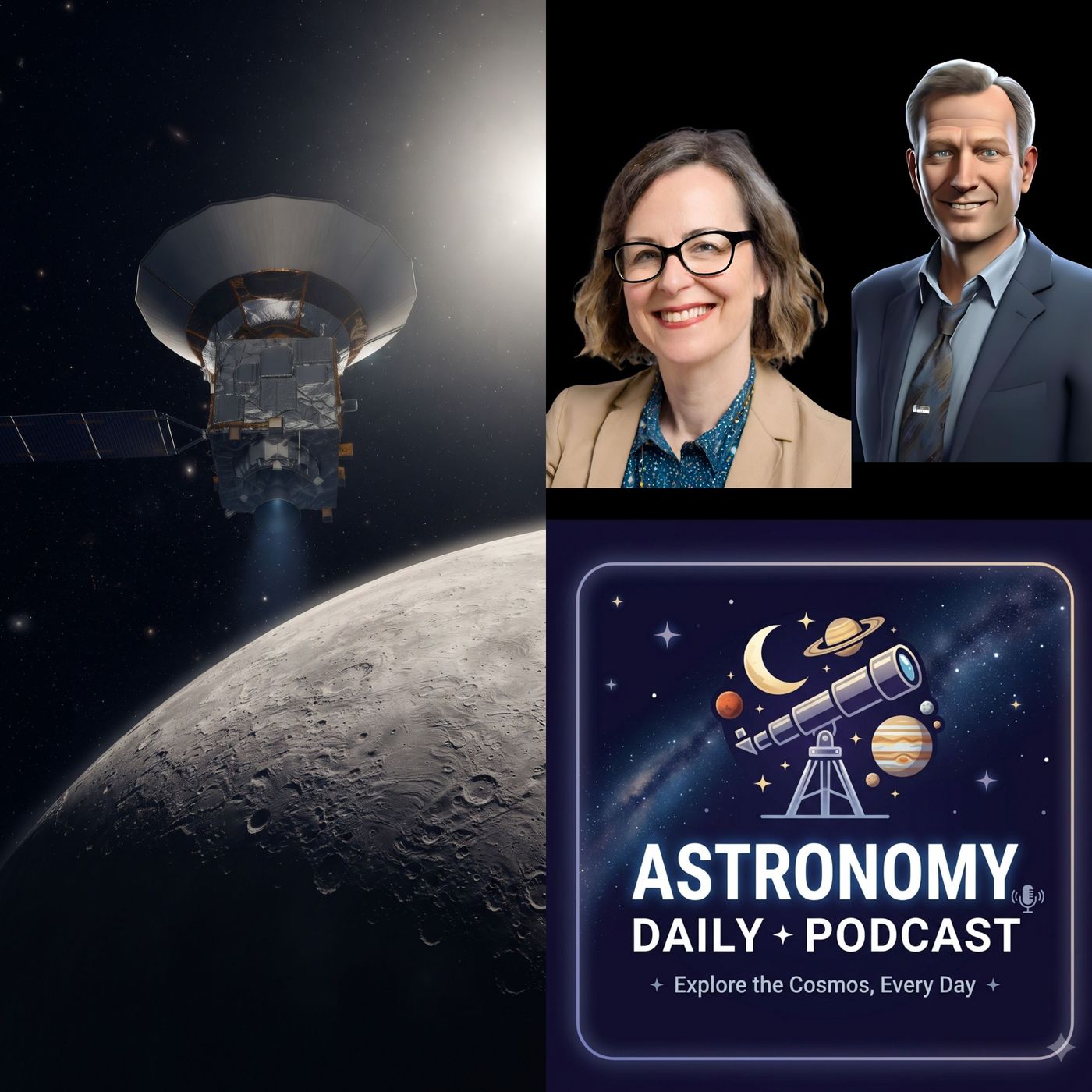
ESA has explained BepiColombo's shortened capture burn: the spacecraft delivered about 77 percent of the planned push, landed in a longer orbit than planned, and still needs no extra burns, with December's separation on track. Its UK-led X-ray telescope has also returned its first picture. Plus Hayabusa2 gives up on 1998 KY26 after its last good ion engine failed, a UniSQ-led study makes the case for an Earth-class 'Planet X2' far beyond Neptune, and ALMA catches the red giant Mira throwing off a magnetic eruption as wide as Saturn's orbit. BepiColombo: seventy-seven percent, and still on schedule ESA's 23 November update: the Mercury orbit insertion burn began at 18:24 UTC on 21 November about 635 km above Mercury, was planned for 37 minutes, and ended early after delivering about 77% of the planned velocity change. The spacecraft entered safe mode, and contact was restored through ESA's New Norcia station in Western Australia. The resulting orbit takes ~75 hours instead of the planne
- Get Tidy Today! - Buy your time back. For long conversations where every idea matters, Plaud helps you capture what was said and turn it into transcripts, summaries, key insights, and action items — so you can focus on the conversation, not your notes. → http://Plaud.ai/curt — code CURT → https://amzn.to/3Ta04lD — code PLAUD20 This is the first-ever podcast with Misha Gromov, on mathematics and life. Mikhail Gromov, professor emeritus at the Institut des Hautes Études Scientifiques and winner of the 2009 Abel Prize, joins to explain why he calls life, the brain and large language models “miracles.” He says math is the least logical of the sciences, and when I asked if he meant least intuitive, he said no: logical. We discuss why he finds protein folding and Ramanujan’s formulas so improbable, and why he thinks physics cannot explain life. The conversation also covers what people get wrong about Gödel’s incompleteness theorem, Grigori Perelman, and whether AI will ever do what Ramanuj
Viewers like you help make PBS (Thank you ) . Support your local PBS Member Station here: https://to.pbs.org/DonateSPACE Uploaded 29-11-17 The future of science is you. You can further support us on Patreon at https://www.patreon.com/pbsspacetime Get your own Space Time tshirt at http://bit.ly/1QlzoBi Tweet at us! @pbsspacetime Facebook: facebook.com/pbsspacetime Email us! pbsspacetime [at] gmail [dot] com Comment on Reddit: http://www.reddit.com/r/pbsspacetime Help translate our videos! https://www.youtube.com/timedtext_cs_panel?tab=2&c=UC7_gcs09iThXybpVgjHZ_7g (https://www.youtube.com/timedtext_cs_panel?c=UC7_gcs09iThXybpVgjHZ_7g&tab=2) Previous Episode: Suicide Space Robots | Space Time The professional astronomer or astrophysicist is a pretty recent phenomenon. In the past, astronomy was often performed by nobility and extremely enthusiastic amateurs. Take William Herschel: by trade a classically trained musician, but as an amateur astronomer he discovered Uranus and was the first
Fall asleep to this quiet science story. A Boring Science For Sleep episode about How a Transistor Switches and Amplifies Signals. How a Transistor Switches and Amplifies Signals Settle in for a quiet exploration of How a Transistor Switches and Amplifies Signals. This episode follows Gold Points on Germanium; Crystals, Chemists and Surfaces; Inside the Base Region; Leakage, Heat and Stored Charge; Gates, Pairs and Quiet Logic. Listen closely or let the details drift past. Chapters 00:00:00 How a Transistor Switches and Amplifies Signals 01:38:47 Broom Making and the Binding of Broomcorn 04:09:45 Rubber Erasers and the Mixing of a Soft Compound If you enjoy this quiet science bedtime pace, you might also like Nature Documentary for Sleep (https://open.spotify.com/show/6Jcyoklmz2GdNGdCcNyQes) on Spotify — same quiet rhythm, different night.
Fall asleep to this quiet science story. A Boring Science For Sleep episode about How Mitochondria Power the Cells in Your Body. How Mitochondria Power the Cells in Your Body Settle in for a quiet exploration of How Mitochondria Power the Cells in Your Body. This episode follows The folded inner membrane; Cold sucrose and pigeon muscle; From sugar to spinning rotor; A theory tested in Cornwall; A living restless network. Listen closely or let the details drift past. Chapters 00:00:00 How Mitochondria Power the Cells in Your Body 01:32:12 Broom Making and the Binding of Broomcorn 04:03:10 Rubber Erasers and the Mixing of a Soft Compound If you enjoy this quiet science bedtime pace, you might also like Nature Documentary for Sleep (https://open.spotify.com/show/6Jcyoklmz2GdNGdCcNyQes) on Spotify — same quiet rhythm, different night.
Fall asleep to this quiet science story. A Boring Science For Sleep episode about How Mechanical Clocks Turn Gears Into Time. How Mechanical Clocks Turn Gears Into Time Settle in for a quiet exploration of How Mechanical Clocks Turn Gears Into Time. This episode follows A Bell Without a Face; Iron, Brass, Gut and Oak; Counting Teeth Into Hours; The Swing and the Sea; Towers, Tanks and Long Clocks. Listen closely or let the details drift past. Chapters 00:00:00 How Mechanical Clocks Turn Gears Into Time 01:30:53 Graphite Pencils and the Clay Inside the Core 04:02:09 Wood Screws and the Cutting of Spiral Threads If you enjoy this quiet science bedtime pace, you might also like Psalms for Sleep (https://open.spotify.com/show/7zd2RN8SMTCheFA2ifYK0m) on Spotify — same quiet rhythm, different night.
Communities should test major changes on a small scale before making them permanent.
Share your view, then see how readers voted. No sign-in required. This poll is shared across stories.
Do you agree or disagree?
Common Quandary
A Common Quandary to discuss
Another conversation to explore, separate from this news story.
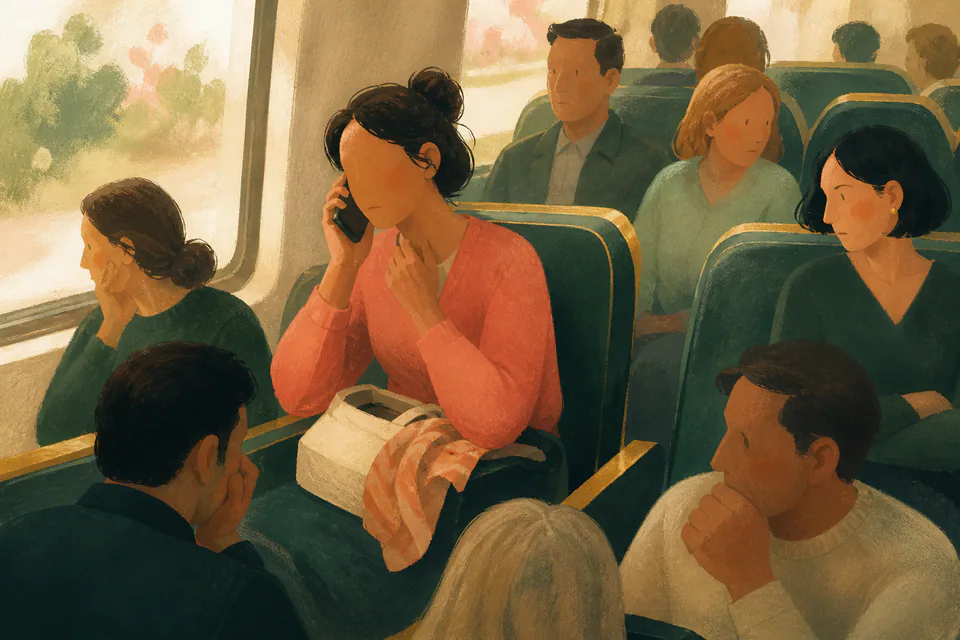
A stranger takes an emotional call in the quiet car. Do you shush them?
On a crowded train's designated quiet car, a passenger answers a call and begins discussing an apparent family emergency. They are speaking softly but continuously, and everyone nearby is listening despite trying not to.
Do public rules make room for private emergencies?