Listen through the publisher, then discuss the episode here or arrange an in-person Roundtable. Your city determines where to meet.
Roundtables are designed for groups of four, with a shared subject and room for everyone to speak. Come for discussion, with no dating expectation.
A friend asked me to investigate the following mystery: why do 5-10% of skulls (https://pmc.ncbi.nlm.nih.gov/articles/PMC4427816/) from 10,000 BC to 3,000 BC, all over the world, have holes in them? Why do bone growth patterns indicate that most skull-hole-havers survived years after their holes were drilled, even though brain surgery today requires careful sterilization (and frequently, prophylactic antibiotics) to prevent fatal infections? And why did everyone stop doing this sometime around the beginning of recorded history?
Episode information is provided by the publisher. Listening takes place on the publisher’s service.
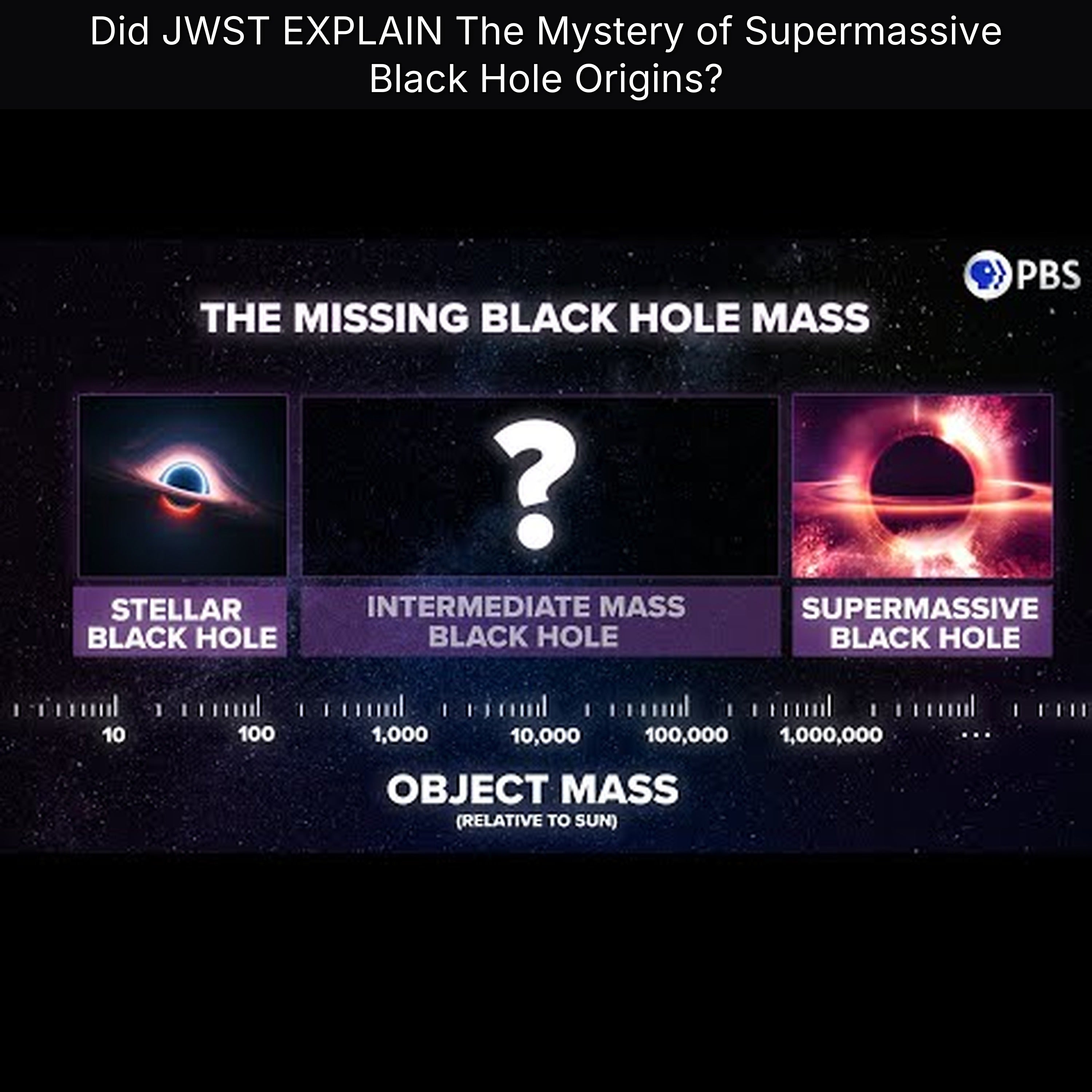
Check Out Fascinating Fails: https://youtu.be/8zMhoj7tFiw?feature=shared Check Out the Space Time Merch Store This is what we astronomers call a blob, or a smudge, if you want to get really technical. It may not look like much from here, but what do you expect for something near the literal edge of the observable universe. If you were there when this light was emitted, you’d A. be at the beginning of time, and B. be looking at an entire galaxy containing an enormous black hole at its heart. It’s the most distant black hole we’ve semi-directly detected. That’s cool enough on its own, but as an added bonus this one smudge may have solved the mystery of the origin of the supermassive black holes in our universe. PBS Member Stations rely on viewers like you. To support your local station, go to:http://to.pbs.org/DonateSPACE Sign Up on Patreon to get access to the Space Time Discord! Sign up for the mailing list to get episode notifications and hear special announcements! Search the Entire
(00:26) - Jensen Returns (33:38) - Ferrari 296 CS Stuns (41:24) - Julia Black, a journalist at Vanity Fair, discusses Jensen Huang’s return to Nvidia and the reporting surrounding his alleged misconduct and ties to Chinese intelligence. She argues that the board acted reasonably, criticizes the market’s dependence on powerful tech leaders, and warns that major economic decisions are increasingly driven by political whims and investor sentiment rather than careful investigation. (55:05) - Bill Gross discusses his career as a lifelong entrepreneur and founder of Idealab, which has launched 175 companies over 30 years. He reflects on lessons from the dot-com era and explains why AI will supercharge entrepreneurship by lowering costs, generating business ideas, and enabling small teams to solve major global problems. (01:22:38) - Jay Jandrain discusses his journey from growing up in the turkey business to serving as Butterball’s president and CEO. He explains Thanksgiving demand, turkey pr
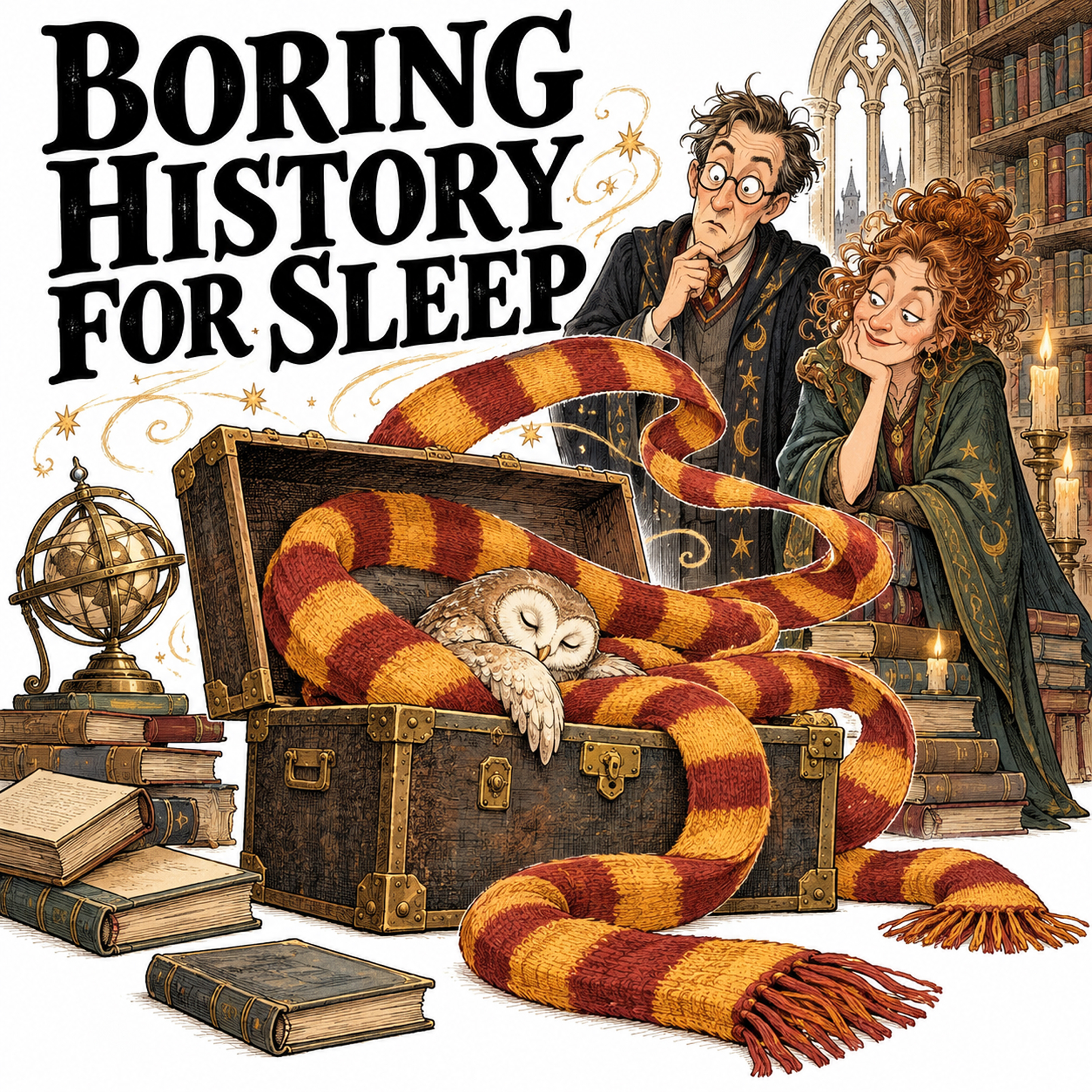
What began as a story about an ordinary boy who discovered he was a wizard became one of the most beloved fictional worlds of all time. From the moment Harry Potter received his invitation to Hogwarts, readers were drawn into a universe filled with magic, mysterious creatures, ancient secrets, and unforgettable characters. Discover how J.K. Rowling created the wizarding world, explore the history of Hogwarts, and meet the witches, wizards, and magical creatures who brought the stories to life. Follow Harry, Hermione, and Ron through their adventures, rivalries, friendships, and encounters with the dark forces threatening their world. Explore how a series of fantasy novels grew into a global phenomenon, transforming literature, cinema, and popular culture for generations of fans. Boring History for Sleep — Soft stories about magical worlds, extraordinary characters, and the stories that captured our imagination.
Dan Doney says tokenized rails can finally give investors around the world the same access to sophisticated finance that has long been reserved for institutions. In this conversation with Andy, the Managing Director and CTO of DTCC Digital Assets argues that shared standards are a foundational breakthrough for moving value, and that peer-to-peer rails can put sophisticated financial products in reach with the same ease as simple ones, at global scale. He makes the case that DTCC-issued tokenized assets can remain the gold standard as market infrastructure modernizes, that instantaneous settlement can change the way institutional finance works, and that a serious privacy model can still keep compliance at the core. Dan Doney is Managing Director and Chief Technology Officer of DTCC Digital Assets. Live from the financial capital of the world. Timestamps: 00:00 Intro 01:14 ERC-20 Might Be Finance’s Best Invention 03:22 A SpaceX Hedge Via Account Abstraction 06:02 Perps Demand Proper Coll
VIew full lesson: http://ed.ted.com/lessons/illuminating-photography-eva-timothy The origins of the cameras we use today were invented in the 19th century. Or were they? A millenia before, Arab scientist Alhazen was using the camera obscura to duplicate images, with Leonardo da Vinci following suit 500 years later and major innovations beginning in the 19th century. Eva Timothy tracks the trajectory from the most rudimentary cameras to the ubiquity of them today. Lesson by Eva Timothy, animation by London Squared Productions.
Frank knew the rural highway well enough that very little along it surprised him. But one cold November night, he passed a woman walking alone along the shoulder, miles from town and nowhere near a parked car or house. Concerned, he turned around to offer her help. She was gone. Frank drove the stretch several times, checking the ditches, driveways, and fields, but found no trace of her. The next morning, he told the story to the same group of friends he had met for coffee for more than twenty years. They teased him, offered explanations, and eventually moved on. A few days later, one of those men brought the story up again. Years earlier, another member of their group had seen a woman walking along that same highway. He had turned around too. And she had disappeared. #GhostStories #RoadsideGhost #VanishingGhost #HauntedHighway #Paranormal #GhostEncounter #LocalLegend #Unexplained #Apparition #Haunting #FullBodiedApparition #Ghosts Love real ghost stories? Want even more? Want even mor
Finalist #13 in the Book Review Contest [This is one of the finalists in the 2026 book review contest, written by an ACX reader who will remain anonymous until after voting is done. I'll be posting about one of these a week for several months. When you've read them all, I'll ask you to vote for a favorite, so remember which ones you liked] In 1999, Professor Clark Elliott is rear-ended by a stranger at a stoplight. He's shaken but figures he's fine, and drives to work. Spoiler: Clark Elliott is not fine. Elliott is severely concussed, and this fact will dictate the next ten years of his life. Elliott's memoir is based on notes he took while concussed. Reading it is like watching someone try to troubleshoot their broken laptop using the broken laptop. In the opening chapter, Elliott describes walking from his office to his car after a long winter workday: "At this point my world had collapsed inward on itself… I looked down at my feet and shouted at myself to walk, but I knew it was hop
The latest bugbear is "AI successionism", the belief that AIs should succeed humans as rulers of Earth. But some critiques fail to distinguish between two different ideas. True successionism says that AIs should take over, killing humans or steamrolling over their interests. This is very bad: a compact description of the thing that AI safety is against. Handoverism says that humans should prioritize their own interests, but that those interests may be well-served by having aligned AIs in positions of control. Some people in AI safety, including me, find this latter position plausible. We are being lumped in with the true successionists as fellow travelers in an anti-human direction (1 (https://www.lesswrong.com/posts/yCTM73n5yqCDzJNB5/alignment-and-succession-toward-a-future-painted-by-human), 2 (https://ai-frontiers.org/articles/suicidal-compassion-how-utilitarianism-at-ai-companies-endangers-humanity), 3 (https://connorsscratchpad.substack.com/p/towards-a-new-humanism-in-a-sci-fi), a
[This is one of the finalists in the 2026 book review contest, written by an ACX reader who will remain anonymous until after voting is done. I'll be posting about one of these a week for several months. When you've read them all, I'll ask you to vote for a favorite, so remember which ones you liked] All Quiet on the Western Front ranks as the definitive anti-war novel of World War I, perhaps for all wars, and to some the most important war novel of all time. It was widely banned in the inter-war period yet went on to sell more than 20 million copies and has three film adaptations, the most recent the acclaimed 2022 version. It's so famous, so prominent, so dominating, that the novel I think is the best war novel ever written can only point back at it from a 'see also' link on Wikipedia. That novel is Storm of Steel, by Ernst Jünger. You may recognize that name from 2023's ACX book review, (https://readscottalexander.com/posts/acx-your-book-review-on-the-marble-cliffs) On the Marble Cl
Adults should generally be free to accept personal risks that do not substantially harm others.
Share your view, then see how readers voted. No sign-in required. This poll is shared across stories.
Do you agree or disagree?
Common Quandary
A Common Quandary to discuss
Another conversation to explore, separate from this news story.
Your friend did the right thing for the wrong reason—and needs an alibi. Do you lie?
A friend skipped an important family obligation to help someone in crisis. They ask you to confirm a harmless false story because telling the truth would expose another person's private emergency and cause a lasting family rupture.
Can loyalty make participating in a lie the most caring choice?