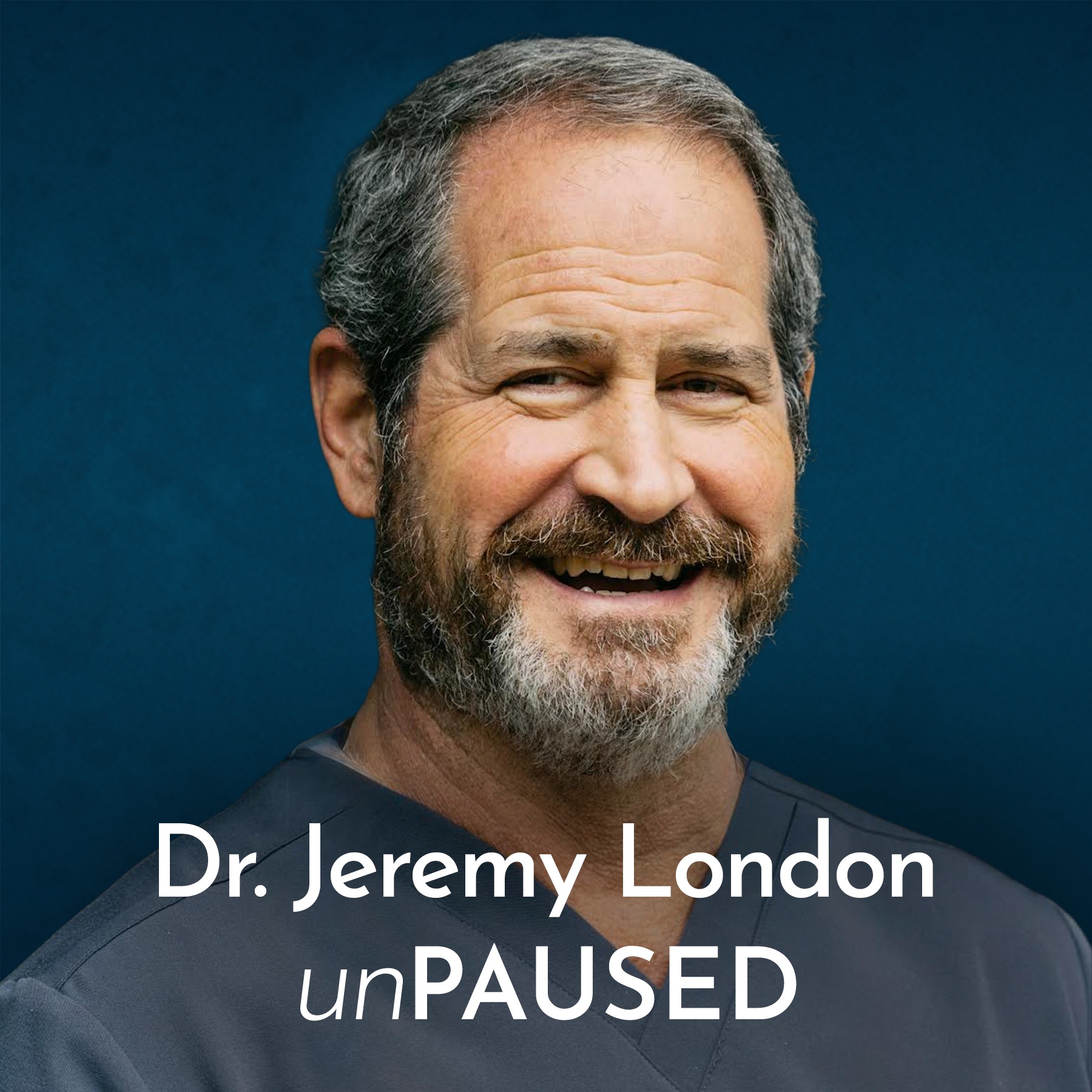
Why Heart Disease Risk Rises in Menopause with Dr. Jeremy London
46 min
Listen through the publisher, then discuss the episode here or arrange an in-person Roundtable. Your city determines where to meet.
Roundtables are designed for groups of four, with a shared subject and room for everyone to speak. Come for discussion, with no dating expectation.
Heart disease is the number one killer of women — not breast cancer — and the window that sets the trajectory opens during perimenopause. Dr. Mary Claire Haver sits down with Dr. Jeremy London, a board-certified cardiovascular surgeon with more than 25 years of experience and thousands of heart surgeries behind him, to put cardiovascular health at the center of the menopause conversation. They break down what heart disease actually is, why 80–90% of it comes down to blockages in the coronary arteries, and what really happens in the transition: LDL cholesterol rising an average of 18%, blood pressure starting to accelerate, and visceral fat appearing — all as estrogen’s lifelong protection of the arteries withdraws. Dr. London explains cholesterol the way no one learns it at the doctor’s office — why ApoB and Lp(a) matter more than your LDL number, and why menopause raises cholesterol because the liver clears less, not makes more. They also cover why women get missed: risk factors that hit women harder than men, the “atypical” heart attack symptoms that delay diagnosis, and the female-specific histories — preeclampsia, gestational diabetes, endometriosis, autoimmune disease — that call for earlier, more aggressive attention. The good news: the transition is inevitable, but the trajectory is modifiable — starting with protein, fiber, strength training and cardio. Guest links: Dr. Jeremy London (Website): https://www.drjeremylondon.com/ Dr. Jeremy London (Instagram): https://www.instagram.com/drjeremylondon Dr. Jeremy London (TikTok): https://www.tiktok.com/@drjeremylondon Dr. Jeremy London (YouTube): https://www.youtube.com/@drjeremylondon Books: The New Menopause: https://www.amazon.com/dp/B0CKBZ4K1Z
Episode information is provided by the publisher. Listening takes place on the publisher’s service.
She doesn't know she's dying. -------------- The Workbook: https://on.bozmd.com/BozWorkbook --------------------- Thanks for checking out the Dr. Boz Channel. See links below resources and recommendations. Tune in Tuesday nights, 4PM Eastern/3PM Central to watch me Live! We improve health - One ketone at a time. --------------------- FREE STUFF 50 Keto Fat-Facts: http://on.bozmd.com/50fat Dr. Boz Ratio Spreadsheet: http://on.bozmd.com/DBR Documentary Playlist: https://on.bozmd.com/AT --------------------- Dr. Boz’s Online Courses: Consistently Keto: http://on.bozmd.com/CK BRAINS: https://on.bozmd.com/BrainsT2R --------------------- WAYS TO SUPPORT THIS CHANNEL: Share Dr. Boz content with people you love. Everyone wins when you share. Buy Dr. Boz Products: Dr. Boz Food Guide: http://on.bozmd.com/FoodGuide Walmart: https://on.bozmd.com/WalmartKetoMap Amazon: https://on.bozmd.com/AmazonAttKetoMap Beginners love this! Dr. Boz K2+D3: https://on.bozmd.com/K2D3 Walmart: https://on.bozmd.com/W
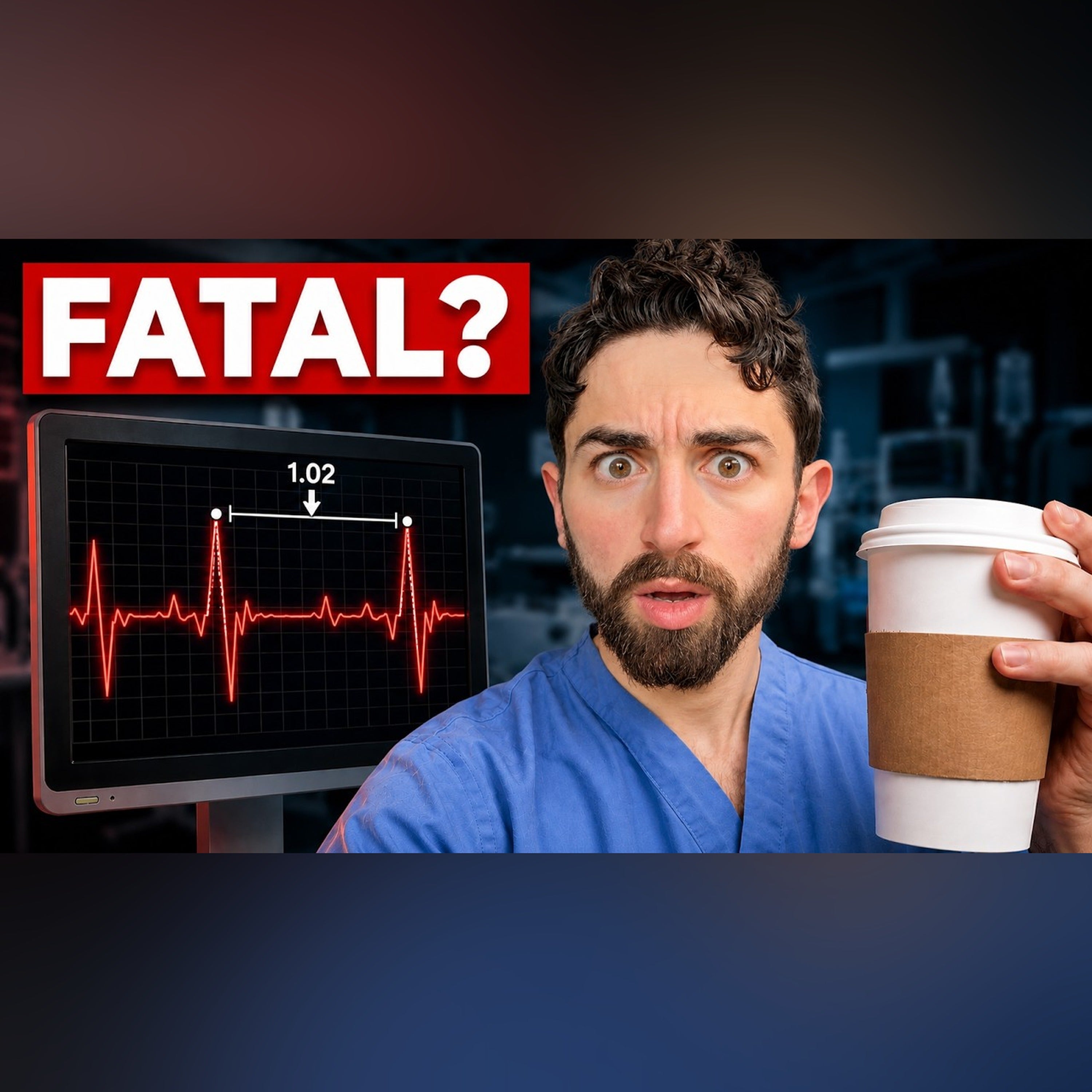
For a written breakdown, early access to content like this, and extra nuances, see the associated StayCurious Metabolism newsletter: https://staycuriousmetabolism.substack.com/p/why-you-need-to-track-your-heart?r=40ekz2 If you want to try the omega supplement I use, Accentrate Omega Max, here’s the link: https://www.fenixhealthscience.com/staycurious Heart rate variability (HRV) is more than just a number, it’s a real-time window into how well your brain, heart, and nervous system are working together. In this video, we break down what HRV actually measures, why it’s such a powerful predictor of mortality and heart attack risk, and how it reflects something deeper: your body’s ability to adapt, recover, and respond to stress. We walk through landmark studies showing that low HRV is associated with significantly higher risk of death and first cardiac events—even after controlling for traditional risk factors. But this isn’t just about risk. HRV is something you can measure today and act
Imagine if every big change in our lives came with a whole community stepping up beside us… In this episode, I sit down with Dr Arne Rubinstein, former GP and emergency doctor, founder of the Rites of Passage Institute, and a man who's spent more than 30 years walking young people across the threshold into adulthood. Arne's work began around a fire at his very first men's gathering, listening to a hundred men wrestle with the same handful of wounds. Then in the Emergency Dpt, he kept meeting teenagers who'd pushed it one step too far... kids trying to become adults with nobody there to hold them. He came to believe every young person will go through a rite of passage either way. The question is whether we leave them to create their own, or gather around and help. We talk about why our culture is so good at turning away from the big moments - from first periods to menopause to death - and what opens up when we turn towards them. We explore: Separation, transformation and integration, an
Alan Milburn wants to scrap Pip for under-25s and replace the Universal Credit health element with a new youth allowance. He says the plan could get 440,000 young people into work within a decade and eventually save £3.6 billion a year. With 981,000 young people not in education, employment or training, nobody disputes the scale of the problem. They disagree about its cause. Milburn insists this is not a generation lacking resilience. Yet his own report finds that benefit claims have outpaced any rise in ill health, and it warns of overdiagnosis of ADHD and autism. Michael Simmons puts that contradiction to Milburn directly. He also asks whether the National Insurance and minimum wage rises are pricing young people out of the jobs they need most. Can welfare reform get a generation back to work – or is the deeper problem a loss of resilience that no policy can fix? This episode is brought to you by Raymond James. Combining deep insights into who you are with our financial expertise, th
Happy Sunday! Welcome to Heal Squad’s The Sunday Set Up. Life lessons to help you start the week. How much of success comes down to simply showing up? This week, we talk keeping an open mind, taking chances, and recognizing the doors that open along the way. From Olympic athletes appearing on national television alongside Mercedes Moné to performers who keep showing up week after week hoping for their big break, we explore why success isn't always about talent or luck. Sometimes it's about making connections, putting in the effort, and being willing to try without knowing what we'll get in return. We talk knowing when to stop investing time in people who aren't willing to help themselves, and why even experiences that don't work out can teach us something valuable. The takeaway: don't wait for the perfect moment or expect someone else to make things happen. Be willing to take a chance, walk through the doors that open, and remember that half of life is just showing up. Plus, a little b
Disclaimer: This is not medical advice. I'm not a doctor. Uploaded 20-09-24 Methylene Blue: https://www.mitozen.club/?ref=JNn9OgsqRy1P_X *this is an affiliate link which will cost you nothing extra *melatonin that I've been using is also in this link ***You can also get these elsewhere and I encourage you to shop around, there's no need to use my link whatsoever. Nine months ago, my brain was falling apart—I was having up to 9 seizures a day and didn’t even recognize my own family at times. Diagnosed with temporal lobe epilepsy, I was losing hope until I discovered something that changed everything: methylene blue. This blue dye from the 1800s, combined with melatonin and psychedelic therapy, helped me reverse my brain damage and regain my life. In this video, I’ll share how these powerful molecules transformed my brain health, stopped my seizures, and might even help someone you know. Dr. John Lieurance’s channel: https://www.youtube.com/@DrJohnLieurance My Neurology Protocol: [screen
Welcome to The We Do Not Care Club Podcast hosted by Melani Sanders, content creator, founding member of the WDNC, and New York Times bestselling author of The Official We Do Not Care Club Handbook. What started as Melani’s hilarious and all-too-true social media declaration that she simply did not care much anymore has become a global movement centered on sisterhood, laughter, honesty, and understanding that we are not alone, and we are enough. From menopause to marriage, motherhood, sex, relationships, changing bodies, mental health, work, money, food, and the everyday chaos of midlife, no topic is off-limits. Available now: link.pscrb.fm/f0281/wdnccfdup-dc41f (https://link.pscrb.fm/f0281/wdnccfdup-dc41f)
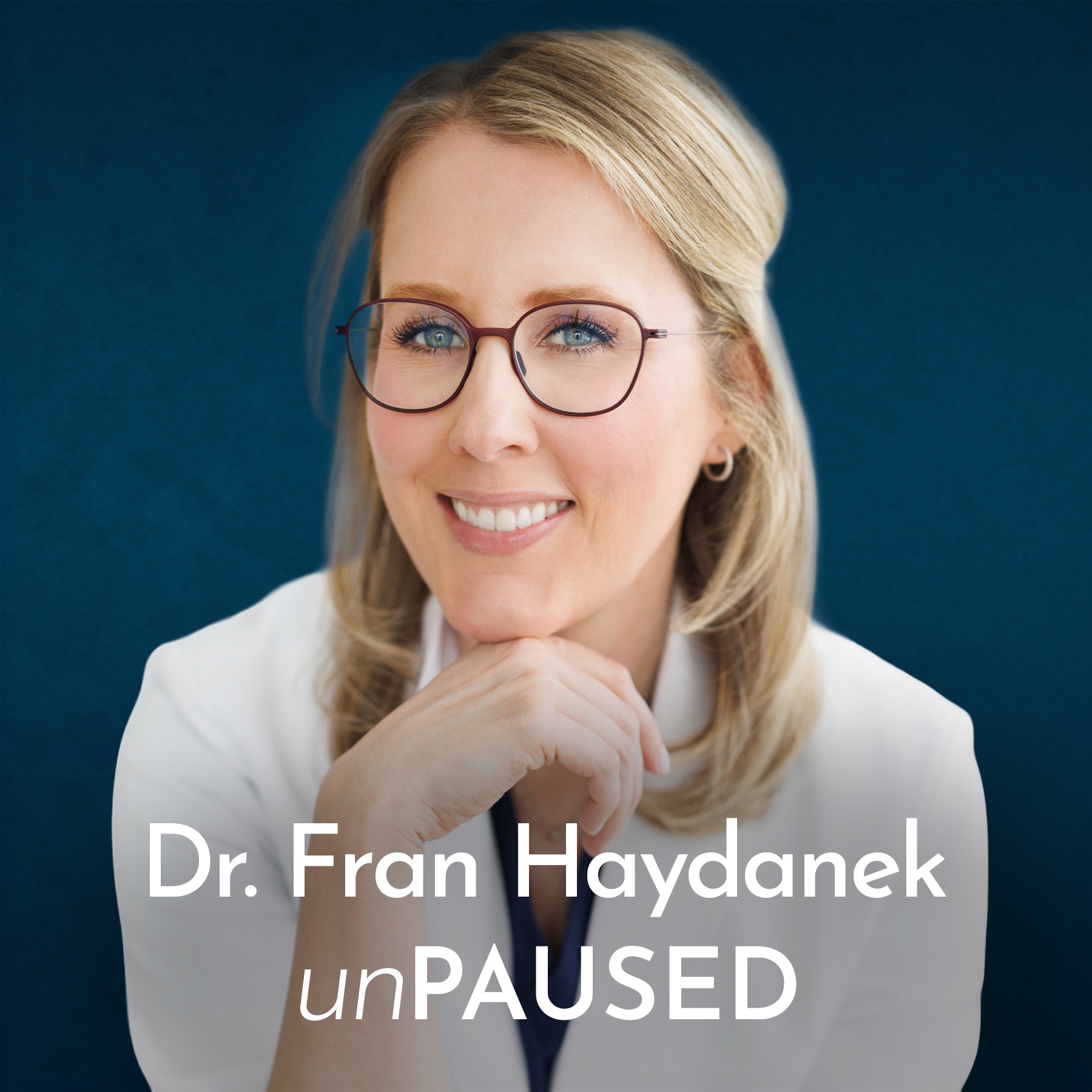
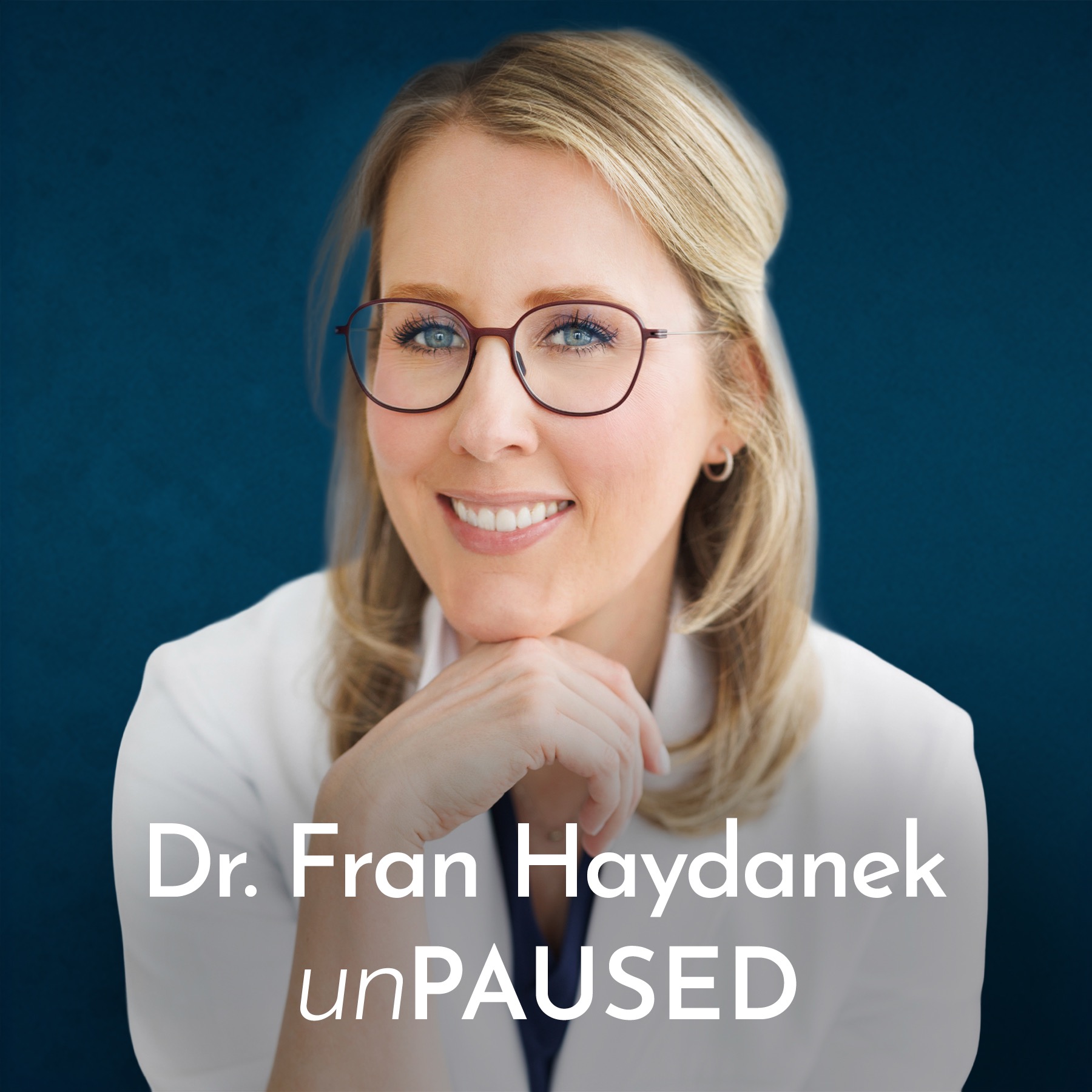
Dr. Mary Claire Haver sits down with Dr. Fran Haydanek — board-certified OB/GYN and the voice behind Paging Dr. Fran — to get practical about perimenopause. They break down what’s normal when your periods change, the bleeding patterns that mean you should get checked — including why PMOS carries a five-times-higher risk of endometrial cancer — the growing overlap of postpartum and perimenopause, and the “just a tired mom” trap that delays diagnosis. Then it’s treatment: birth control vs hormone therapy through the transition (and why Dr. Fran calls the IUD “a three-for-one”), what the guidelines actually recommend, workarounds for the estrogen patch shortage, GLP-1s and PMOS, and the real Women’s Health Initiative numbers behind two decades of fear. They close with the three things every woman in her late 30s and 40s should do for her health right now. Guest links: Dr. Fran Haydanek (Website): https://www.pagingdrfran.com/ Dr. Fran Haydanek (YouTube): https://www.youtube.com/@PagingDrF
What happens in the gap between your last baby and your first hot flash? Dr. Mary Claire Haver sits down with Dr. Fran Haydanek — board-certified OB/GYN and the science communicator behind Paging Dr. Fran — to connect the dots most women are never shown. They unpack “reproductive hormone sensitivity”: why women whose brains react to hormone fluctuations with PMS, PMDD, or postpartum depression face a dramatically higher risk of depression in perimenopause — in the largest study to date, almost 13-fold — and why that history sits unread in your own chart. They also get practical about diagnosis: why there’s no blood test for perimenopause, the conditions that mimic it — iron deficiency (and the new ferritin guidelines), thyroid disease, sleep apnea, diabetes — and what your pregnancy history predicts about your future health, from gestational diabetes to preeclampsia and heart disease. Because knowing your own history means you never have to be blindsided by symptoms that were completel
A majority vote should not override the basic rights of a smaller group.
Share your view, then see how readers voted. No sign-in required. This poll is shared across stories.
Do you agree or disagree?
Common Quandary
A Common Quandary to discuss
Another conversation to explore, separate from this news story.
Would you want a doctor to give you a fake pill if the lie might make you feel better?
A patient has persistent symptoms that have not responded to standard treatments. A harmless placebo may help, but its effect could weaken if the clinician fully explains that it contains no active medicine.
Can a beneficial deception respect the person it helps?