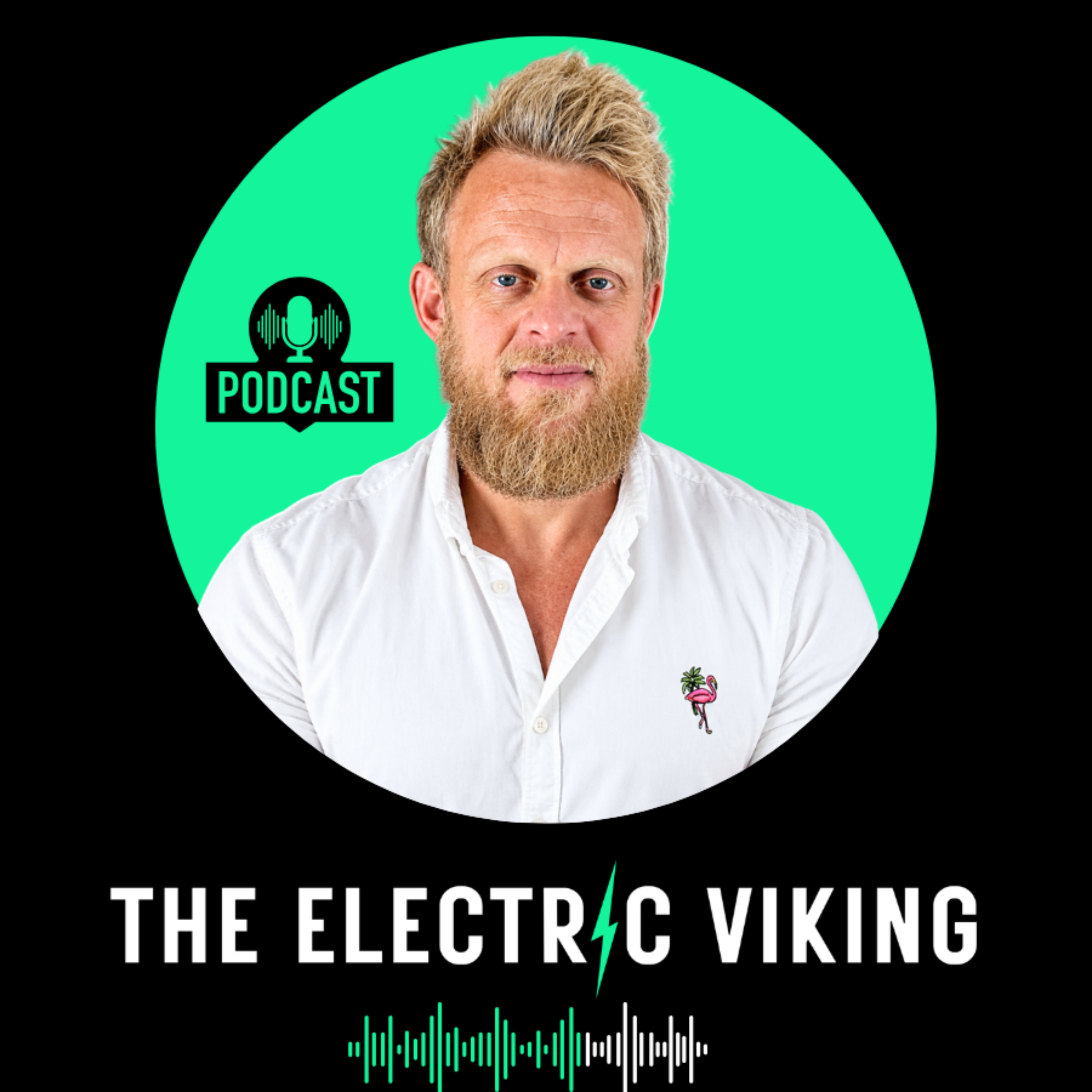
Listen through the publisher, then discuss the episode here or arrange an in-person Roundtable. Your city determines where to meet.
Roundtables are designed for groups of four, with a shared subject and room for everyone to speak. Come for discussion, with no dating expectation.
In 2029, Honda will open an Ohio factory intended mainly for hybrids and petrol cars. I explain why today's American market favours that choice: hybrids are selling well and the electric-car tax credit is gone. Honda says the factory can switch to electric cars later; I think it will need to, because factories last decades and the future is electric.
Episode information is provided by the publisher. Listening takes place on the publisher’s service.
Sila CEO and co-founder Gene Berdichevsky discusses scaling silicon-based anode batteries to replace Chinese graphite in lithium-ion cells, backed by a $1.4 billion Office of Strategic Capital loan and a new Panasonic offtake agreement. He outlines the deployment timeline for drones, satellites, robotics, and EVs, and explains why mass-market manufacturing is essential to untethered physical AI and national defense. MTS chronicles the singularity, live. Monitoring the situation of tech and AI. Follow MTS: Spotify |https://open.spotify.com/show/4HUNNmV1pjV7CW6Lphm1rM Apple |https://podcasts.apple.com/us/podcast/mts/id1891088763 – Brought to you by: Mongo DB - Anyone can prototype an agent. Lovable - Turn ideas into software people love with Lovable. Start today at https://lovable.dev/ Factory - A 24/7 system turning signals into production software. Visithttps://factory.com/ Neon (by Databricks) - Scale your startup on Neon. The Postgres backend for apps and agents. Built by Databricks.
These are more than cars. They’re science experiments. If you enjoy this episode, subscribe to support more optimistic stories about tech! I love Formula 1. This isn’t just a car race, it’s a massive group science competition. Ten teams are all fighting to be first, and on every team there are hundreds of people, spending millions of dollars, all working together to push technology to its limit. In this video, we’re gonna show you what it takes to build and drive some of the fastest and most expensive cars in the world. We’ll give you rare access into a factory in England where they build these cars and into a garage in Bahrain where they race them. This is Formula 1 cars, explained! One note because it’s important to me you never be confused about what is paid for and what isn’t: Oracle comped my flights, but didn’t have any say in the editorial and didn’t see the episode before it went live. The Red Bull F1 Team did not pay me, had no say in the editorial, and didn’t see the episode
Puzzle through this classic ethical dilemma and decide: is community safety more important than individual privacy? -- Your government has introduced a plan to address record-breaking rates of traffic tickets and deadly hovercar accidents. They propose assigning “driver credit scores” to every citizen, but would need to install cameras and microphones in every vehicle. While it would make the roads safer, is this undeniable benefit worth the cost to drivers’ privacy? Michael Vazquez and Sarah Stroud investigate. Lesson by Michael Vazquez and Sarah Stroud, directed by Jeff Le Bars, JetPropulsion.space. This video made possible in collaboration with the Parr Center for Ethics Learn more about how TED-Ed partnerships work: https://bit.ly/TEDEdPartner Support Our Non-Profit Mission ---------------------------------------------- Support us on Patreon: http://bit.ly/TEDEdPatreon Check out our merch: http://bit.ly/TEDEDShop ---------------------------------------------- Connect With Us ------
Now Mark wants to help you become financially free as well. Follow the podcast and turn on notifications! This Podcast is fan-made. No copyright infringement intended. ----------------------------------- -------- Keywords: credit card tips, millionaire secrets, atm fraud, millionaire mindset, money saving, frugal living, business success
Bitwise Head of Research Ryan Rasmussen joins The Rollup at Solana Breakpoint to break down how investors should value SOL, from Solana's 40% share of tokenized stock volume to why tokens without strong tokenomics are set to underperform. We also cover the sharpest stablecoin drawdown Ryan has seen, the CFTC's perps ruling with Backpack, and why Bitwise views today as a buying opportunity. Stabled Up is presented by Frax. Ryan Rasmussen is the Head of Research at Bitwise. Live from the financial capital of the world. Timestamps: 00:00 Intro 00:45 Why Stablecoin AUM Is Falling 02:30 Climbing The Wall Of Worry 04:53 The Genius Act And Payment Stablecoins 05:42 Perps Come To The US Via Backpack 08:20 Tokenization Is Only 0.01% Of The Market 10:24 Who Wins The Tokenization Race 11:09 Do Tokenomics Matter? 13:21 A New Cohort Of Winners 14:57 Why Holding Periods Matter 16:09 Bitwise's Long-Term View On Solana Guest Socials Ryan Rasmussen X: https://x.com/RasterlyRock Bitwise X: https://x.com
Project Synapse: Markets in Freefall, Fragile Infrastructure, and AI's Perfect Storm The hosts banter through the show's intro before focusing on a sense that "things are out of control," citing a WallStreetBets suicide-hotline post amid a market crash and discussing cascading system failures involving Microsoft, the FAA, and a reported NSA internal communications outage. They argue politicians and leadership lack technical competence and clear messaging, increasing panic, while emphasizing that many problems stem from aging, underfunded infrastructure and complex, brittle software (PHP, NGINX, Java), not proven AI attacks—more a "perfect storm" of crises. They debate whether AI should help fix complexity, stressing critical thinking, accountability, and using multiple AIs to verify each other. In a lightning round they cover Anthropic's IPO performance, mixed reactions and token limits with ChatGPT 6.2 (favoring "Sol" over "Astra"), Google's cheaper Neon model and confusing UX, Loblaw
Against the IEA's 45% renewable electricity forecast for 2031, I expect closer to 55% or 60%. I explain why I think the agency continues to underestimate renewable construction, particularly solar farms. For home solar buyers, I also discuss the forecast that more than one in three systems will have a battery by 2031.
A Chinese miner has unveiled a 350-ton battery truck that may be the world's biggest. I explain the ownership-cost comparison in plain terms: purchase, fuel, electricity and maintenance, with diesel's tax credit included. Fortescue already runs electric excavators and is testing battery trucks; I think escaping oil-price swings adds value beyond the modelled savings.
A 2027 Canadian launch is Geely's plan for its first models, not a promise to manufacture locally. I explain the distinction: Chery and BYD are studying Canadian production, while Ottawa wants joint ventures using Canadian suppliers. I think Chinese technology paired with Canada's factories and workers could deliver cheaper EVs and jobs—but the factory arrangements remain unsettled.
An artist's serious misconduct should affect decisions about publicly honoring their work.
Share your view, then see how readers voted. No sign-in required. This poll is shared across stories.
Do you agree or disagree?
Common Quandary
A Common Quandary to discuss
Another conversation to explore, separate from this news story.
You inherit a fortune made in ways you despise. Can you keep it?
You inherit a substantial sum from a relative who accumulated it through practices you consider exploitative. Keeping it would improve your family's security; donating it could support people harmed by similar practices.
Can ownership be morally clean when its history is not?