Listen through the publisher, then discuss the episode here or arrange an in-person Roundtable. Your city determines where to meet.
Roundtables are designed for groups of four, with a shared subject and room for everyone to speak. Come for discussion, with no dating expectation.
Film director and camera nerd Rian Johnson sits down with Vergecast guest host and camera nerd David Imel for an unapologetically nerdy conversation about cameras. They chat about cinematography, Rian's viral Chromagraph Camera app, and check out David's vast collection of quirky equipment. (As of recording, Rian is still waiting for his to be delivered.) Further reading: Rian Johnson explains why he had to build his own iPhone camera app (https://www.theverge.com/tech/1025659/rian-johnson-chromagraph-camera-interview) We love hearing from you!
Episode information is provided by the publisher. Listening takes place on the publisher’s service.
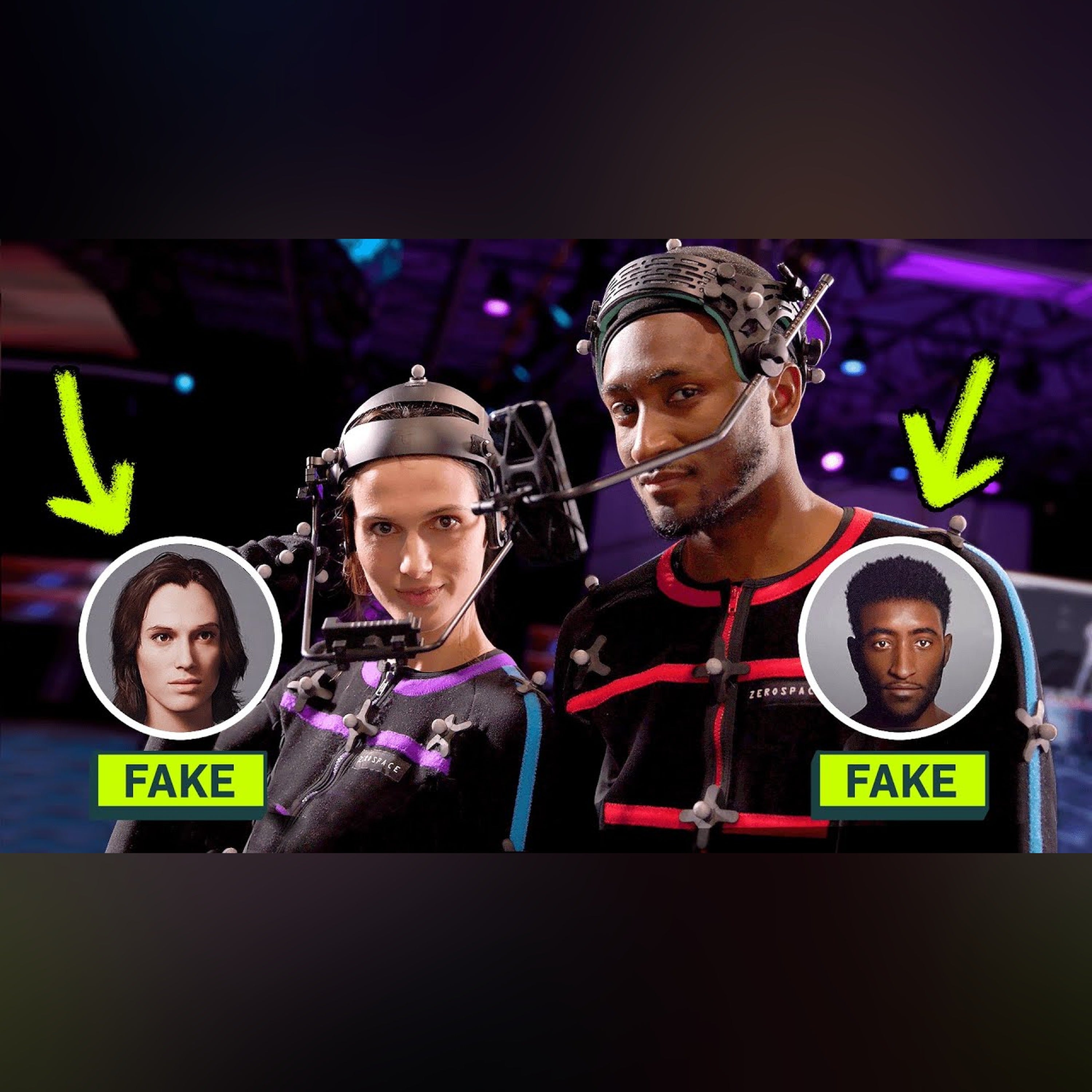
This new tech is changing how movies get made. So @mkbhd and I tested it out... Watch MKBHD's video: https://youtu.be/RM7SobH8ZO0 I’ve been obsessed with sci-fi movies since I was a kid. I love being transported to another world. But lately, I’ve been wondering: How do those worlds look so… REAL? The tech behind movies has exploded in complexity and realism, changing how stories come to life on screen. Luckily, at the same time, those tools are becoming more and more available to more people telling stories. It’s not just blockbusters like Avatar 2 or Avengers or Dune. It’s also smaller budget films like Everything Everywhere All at Once or even… YouTube creators? In this video, Marques Brownlee and I test out 3 movie-making tools that are changing how movies, shows, and maybe even YouTube videos (??) get made. We’re at ZeroSpace Studios in New York to show you how each of these crazy technologies work - and how you might be able to use them. Along the way, we hit big questions like: W
In a controversial broadcast to his millions of YouTube followers, the wife of the convicted rapist Russell Brand read out a letter that he sent her from prison. In it, he protests his innocence. So what is Laura Brand up to and exactly how deluded is she? Times writer Polly Vernon reflects. Guest: Polly Vernon, feature writer, The Times Producer: Sophie McNulty We want to hear from you - email: [email protected] Read more: Brainwashed or complicit: what’s going on with Laura Brand? (https://www.thetimes.com/life-style/celebrity/article/brainwashed-or-complicit-whats-going-on-with-laura-brand-nmwx2pkzn) Further listening: I’m Alice | The Trial of Russell Brand (https://podfollow.com/the-story/episode/23b2347a9044d66b2a18530c8fbaf2ea9c1e6f4d/view) Photo: YouTube - Russell Brand. Hosted on Acast.
After a deluge of speculation, the next James Bond has been chosen: British actor Robert Pattinson will be the next face of the franchise. The public response has been overwhelming, if somewhat divided. To celebrate, we’re revisiting an episode from June, about a behind-the-scenes David and Goliath battle between the family business which has held creative control of the franchise since the 1960s and its new owners, Amazon. It is now up to Jeff Bezos’s tech conglomerate to decide how to run the series. In an era when Hollywood studios are desperate to eke out every last dollar from movie franchises, can James Bond retain its mystique and appeal to a new generation of cinema-goers? We speak to Wall Street Journal enterprise reporter Erich Schwartzel. Producers: Xandra Ellin and Lucy Pawle Video producers: Richard Kenny and Jem Westgate Mixed by: Travis Evans Executive producers: James Shield and Martine Powers Senior news editor: China Collins Photo: Robert Pattinson as James Bond. Jaap
November 20, 2026; 10am: Three weeks after the midterms, and losses for the candidates they funded, Elon Musk says he’s not MAGA and Palantir’s Alex Karp calls himself a progressive. Then, mixed messaging over the Ukraine war. Trump says Russia wants peace, but that’s not exactly what Putin told reporters. Plus, new reporting out of Utah on data centers, and the group chat shares their MVPs to close out the week. David Rohde, Mary Harris, Dan Nathan, Paul Mecurio, Michael McFaul and Josh Einiger join the Group Chat. Hosted by Simplecast, an AdsWizz company.
Travel into a computer chip to explore how these devices are manufactured and what can be done about their environmental impact. -- Globally, we produce more than a trillion computer chips every year. Which means about 20 trillion transistors are built every second— and this process is done in fewer than 500 fabrication plants. How do we build so many tiny, intricately-connected devices, so incredibly fast? George Zaidan and Sajan Saini explore how photolithography helps build these devices and its environmental impact. Lesson by George Zaidan and Sajan Saini, directed by Kozmonot Animation Studio. Support Our Non-Profit Mission ---------------------------------------------- Support us on Patreon: http://bit.ly/TEDEdPatreon Check out our merch: http://bit.ly/TEDEDShop ---------------------------------------------- Connect With Us ---------------------------------------------- Sign up for our newsletter: http://bit.ly/TEDEdNewsletter Find us on Twitter: http://bit.ly/TEDEdTwitter Peep u
The RHOP are still down at Bethany Beach and Robin and Karen bond, Ayan lets us know Wendy paid 5K to be on the cover of a magazine, Ashley wants to spend money and newbie Courtney tells a few lies, sheds a few tears and tells a few more lies all while Karen does everything in her power to stay awake. Meanwhile, over on RHONY, Daisy still thinks she is Martha, Carole wrote a Substack about an onion named Sai, Pavit still hates Jessel, Erin is worried Erika’s billions wont be enough for a team of nannies and Lindsay Hubbard enters the chat to audition for her future role on RHONY once In The City gets cancelled. Last, but not least, Mary and Angie attempt to rebuild their friendship amongst many heated arguments and opinions about the matter both on and off the show. @davidyontef (https://www.instagram.com/behindvelvetrope/?hl=en)
Banks. Planes. Emails. This week, it felt like everything broke just about all at once. Nilay and David try to explain what happened, and whether the relatively mundane truths still add up to something big and scary. Then, they catch up on the latest in the Jensen Huang story, and the China chip smuggling story that might be even bigger. Finally, it's time for Brendan Carr, Google name disasters, and Siri Recap. Further reading: America’s air traffic control system couldn’t handle a single bad router (https://www.theverge.com/transportation/1034039/faa-aviation-glitch-meltdown-ground-stop) Work to replace old copper wire led to the FAA’s ground stop (https://www.theverge.com/transportation/1033898/faa-ground-stop-sean-duffy-faa-copper-wire) United Airlines system outage disrupts departures just days after the big ground stop (https://www.theverge.com/transportation/1035025/united-airlines-outage-down-departures) Inside Microsoft’s giant Outlook outage (https://www.theverge.com/tech/103
Grand Theft Auto VI is out today, and it’s basically a foregone conclusion that it’s going to be an enormous hit. (It’s also just a spectacularly great game.) But what does this one title mean for the rest of the gaming industry? Game File’s Stephen Totilo explains how GTA became so important to the gaming business, why GTA Online might be an even bigger deal, and why we might never see another game quite like this one. Further reading: Grand Theft Auto VI has arrived (https://www.theverge.com/entertainment/1035847/grand-theft-auto-6-launch-review-news) We love hearing from you!
It took 13 years, a reported 10-figure budget, and the weight of the world’s expectations, but Grand Theft Auto VI is here. And it’s fantastic. The Verge’s Andrew Webster takes a break from the game to tell us all about life in Vice City, and why GTA VI’s approach to coffee tells us everything we need to know. Further reading: Grand Theft Auto VI does something impossible — it lives up to the hype (https://www.theverge.com/games/1035801/grand-theft-auto-6-review) We love hearing from you!
Major sporting rule changes should be tested before permanent adoption.
Share your view, then see how readers voted. No sign-in required. This poll is shared across stories.
Do you agree or disagree?
Common Quandary
A Common Quandary to discuss
Another conversation to explore, separate from this news story.
Rich parents want to buy their public-school class an art teacher. Should the school say no?
Parents at a well-resourced public school raise enough money for art teachers and smaller classes. Nearby schools cannot raise comparable amounts, widening differences within the same district.
Can helping your own community become unfair to the larger one?