Listen through the publisher, then discuss the episode here or arrange an in-person Roundtable. Your city determines where to meet.
Roundtables are designed for groups of four, with a shared subject and room for everyone to speak. Come for discussion, with no dating expectation.
Janaline, Luke and Glenn discuss why the Australian government continues to approve extensions and expansions of export coal and gas projects. They look at whether stopping new projects would actually reduce global emissions, or potentially make it harder for Australian governments to persuade their trade partners to decarbonise. Is sovereign risk real or overblown? And what is the best strategy to reduce global emissions? Spoiler alert - decarbonising global heavy industry supply chains might help. Here is a transcript (https://whycanttheyjust.com.au/podcast/coal-and-gas/). We'd love to hear from you. Music: "Insurrection" Written by Pierre Chrétien Performed by the Soul Jazz Orchestra Courtesy of Do Right Music Inc.
Episode information is provided by the publisher. Listening takes place on the publisher’s service.
The D.C. Circuit hears a dispute about who gets room on Colorado's electric grid. Salsa Solar and another renewable-energy developer planned projects to supply CORE Electric Cooperative. To connect to the grid sooner, they sought provisional service from Public Service Company of Colorado, part of Xcel Energy. But the connection studies treated some capacity on the Colorado Power Pathway as reserved for the utility's own future power supplies. The developers complained to the Federal Energy Regulatory Commission, known as FERC. They said the reservation let lower-priority projects jump ahead of them, delaying their access to the grid. The utility said it needed that capacity to keep serving its customers while replacing coal generation under Colorado's clean-energy requirements. FERC rejected the complaint and maintained that result on rehearing. The question is when a utility must identify the particular power plants that will use reserved transmission capacity. The challengers will a
Aaron is Outside The Wire with a quick rundown of three stories that deserve a closer look. First: a forensic expert who reviewed Jeffrey Epstein’s autopsy material says he believes Epstein’s injuries are inconsistent with suicide. But Aaron also highlights the other side of the story: the New York City Medical Examiner continues to stand by its original suicide determination, and the expert’s findings were reportedly rejected by a peer-reviewed journal he approached. The bigger lesson is one Aaron keeps coming back to — stop reading only the headline. Open the underlying source and see what it actually says. Next comes measles. Aaron walks through the loss of measles-elimination status in multiple countries, declining vaccination rates and the political fight over who or what is responsible. He also gives his own personal views and experiences as a parent regarding vaccination. Those portions are presented in the episode as Aaron’s perspective and anecdotal experience rather than medi
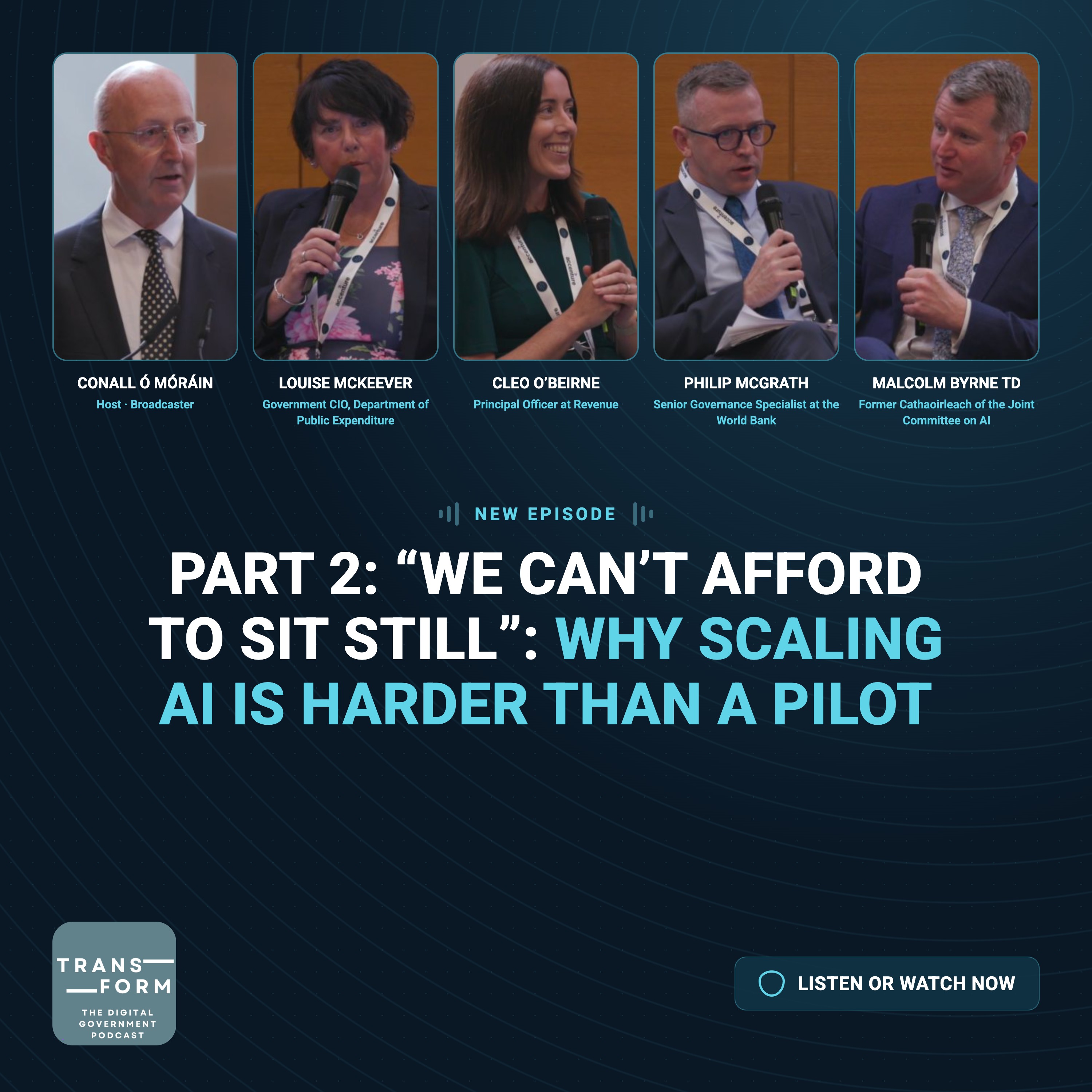
The pilot worked. Now what? In Part 2 of this panel discussion, four leaders explain how they're taking AI from pilot to scale, and what it takes to get data and governance right. This panel discussion took place at the Ireland eGovernment Awards and Leadership Summit 2026 on 24 September 2026 at UCD's O'Reilly Hall. We bring together Louise McKeever, Government CIO; Cleo O'Beirne, Principal Officer at Revenue; Philip McGrath, Senior Governance Specialist at the World Bank; and Malcolm Byrne TD, former Cathaoirleach of the Joint Committee on AI. The panel is chaired by Conall Ó Móráin. If you're taking AI beyond the pilot, here's what to do: Start small, prove it, then scale. Revenue tested agentic AI on a small application first, stage by stage. Redesign the whole process, not one stage. Individual productivity gains only go so far. Plan for lost knowledge, and recovered knowledge. As AI scales, people may know less, but AI can also capture knowledge that has already been lost. Reuse
Who’s in charge of fixing the Palace of Westminster? With projected costs potentially running into tens of billions of pounds and a parliamentary decision still awaited, Conservative Shadow Leader of the House of Commons Jesse Norman MP tells us why he thinks the Restoration and Renewal project needs an urgent rethink. He blames successive failures of political leadership for allowing the scope and costs to grow. He calls for a three-month review to pin down what work is essential, what it should cost and who should be accountable for delivering it. Ruth and Mark press him on what another review would achieve, the Conservatives’ share of responsibility for past delays and whether a project that could span several parliaments needs a government minister to drive it forward. They also discuss why comparisons with the renovation of the Cathedral of Notre Dame and Buckingham Palace only go so far. The conversation also turns to what happens inside the Commons chamber. Norman argues that sp
For review: 1. Iraq has reached a compromise with the powerful Iran-backed militia Kataeb Hezbollah, three senior security officials said, after Prime Minister Ali al-Zaidi readied security forces to move against the group. Reflecting the gravity of the situation, Iraqi Shiite political sources said Esmail Qaani, commander of Iran’s elite Revolutionary Guards’ Quds Force, arrived in Baghdad late on Monday to help defuse tensions with Kataeb Hezbollah, Tehran’s most powerful militia ally in Iraq. 2. Lebanese President Joseph Aoun launched a lengthy rebuke of Iran in an Independence Day address, arguing that the Islamic Republic does not have the right to interfere in Lebanon’s internal affairs, as it long has via support for its local terror proxy, Hezbollah. 3. Yemen’s Houthis launched strikes on the Saudi capital Riyadh on Saturday, after vowing reprisals for a “special operation” by the Saudi-led coalition fighting them. The coalition later said it had “intercepted and destroyed” thr
From July 7, 2025: Winnona Bernsen, nonresident fellow at the Atlantic Council’s Cyber Statecraft Initiative and founder of DistrictCon (https://www.districtcon.org/), joins Lawfare Contributing Editor Justin Sherman to discuss her recently released report "Crash (Exploit) and Burn: Securing the Offensive Cyber Supply Chain to Counter China in Cyberspace (https://www.atlanticcouncil.org/in-depth-research-reports/report/crash-exploit-and-burn/)." They discuss the offensive cyber industry, the private sector and individual players, and the government procurement pipelines in the United States and China. They also discuss the strengths and weaknesses of each country’s offensive cyber procurement ecosystem, what it takes to sell an exploit, Winnona’s findings on the markups that middlemen add to exploit sales, and what it all means for the future of competition and cybersecurity. Hosted on Acast.
Janaline, Luke and Yassine talk about what the gender pay gap is and how women can have more economic power and control over their work. But economic exploitation is not uniquely gendered and maybe the way in which we currently measure productivity just fails to value properly what is really important. Perhaps we should have more philosophy and less statistics in economic measurements… Here is a transcript (https://whycanttheyjust.com.au/podcast/gender-pay/). We'd love to hear from you. Music: "Insurrection" Written by Pierre Chrétien Performed by the Soul Jazz Orchestra Courtesy of Do Right Music Inc.
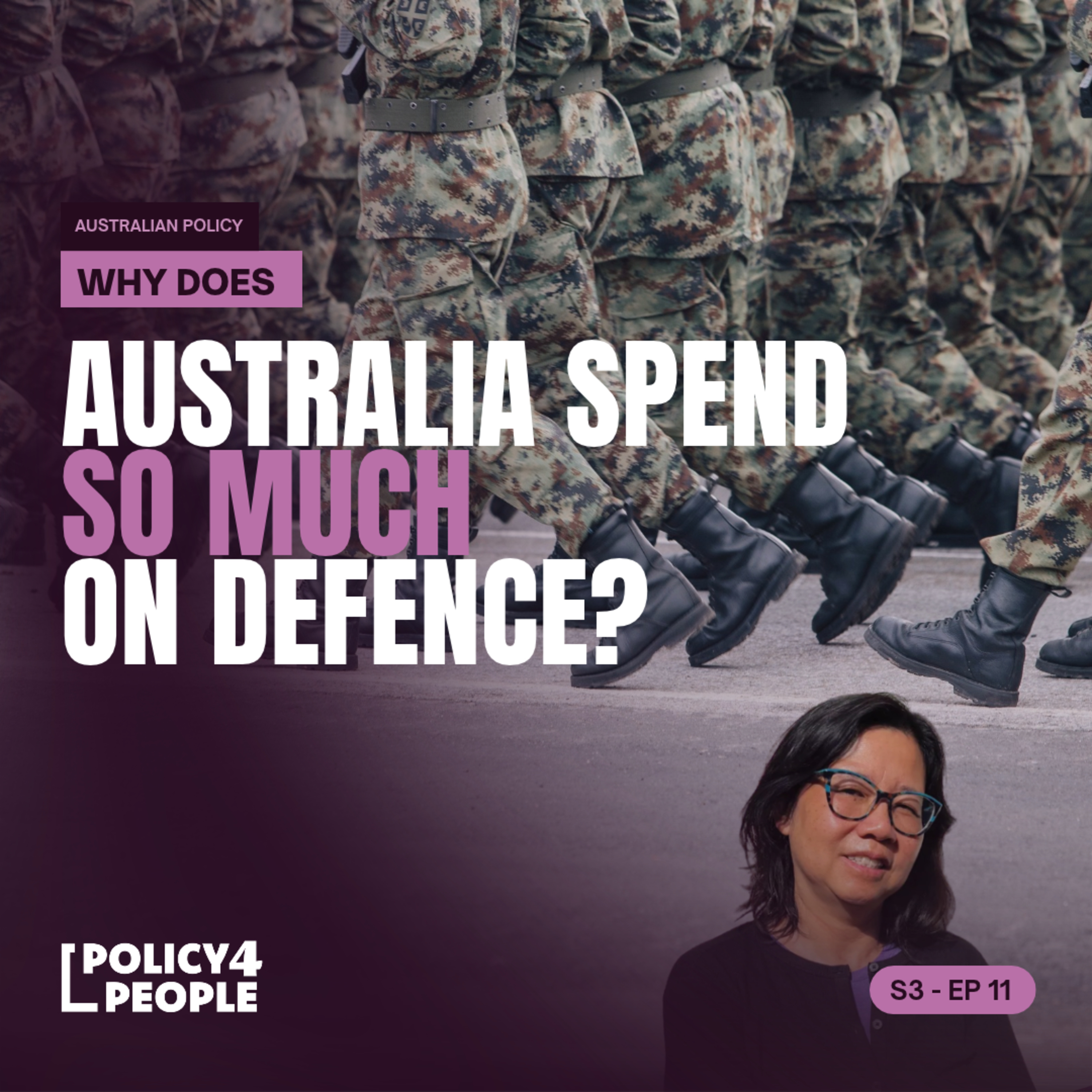
Janaline, Luke and Glenn ask why the Australian government is committing so much of your taxes to defence and whether they are getting value for money. This takes them into questioning what we are getting, from whom and why, and also whether working seamlessly with allies also means giving up sovereignty (spoiler alert - Janaline thinks not). We look at how warfare is changing and whether autonomous drones are an ethical substitute for nuclear powered submarines. And to nobody’s surprise, Janaline thinks we should invest more in diplomacy as a front-line component of our national security strategy. Here is a transcript (https://whycanttheyjust.com.au/podcast/defence-procurement/). We'd love to hear from you. Music: "Insurrection" Written by Pierre Chrétien Performed by the Soul Jazz Orchestra Courtesy of Do Right Music Inc.
An adaptation should be free to depart substantially from the original work.
Share your view, then see how readers voted. No sign-in required. This poll is shared across stories.
Do you agree or disagree?
Common Quandary
A Common Quandary to discuss
Another conversation to explore, separate from this news story.
You cannot stand your friend's partner. Do they still get a wedding invitation?
You are planning a small wedding and strongly dislike the person your longtime friend has been dating. Inviting them would make you uncomfortable, but excluding only that partner would embarrass your friend.
Whose comfort should govern a celebration centered on you?