English-language podcasts

CrashCourse

Women's Suffrage: Crash Course US History #31

20 min

Listen through the publisher, then discuss the episode here or arrange an in-person Roundtable. Your city determines where to meet.

Roundtables are designed for groups of four, with a shared subject and room for everyone to speak. Come for discussion, with no dating expectation.

In which John Green teaches you about American women in the Progressive Era and, well, the progress they made. So the big deal is, of course, the right to vote women gained when the 19th amendment was passed and ratified. But women made a lot of other gains in the 30 years between 1890 and 1920. More women joined the workforce, they acquired lots of other legal rights related to property, and they also became key consumers in the industrial economy. Women also continued to play a vital role in reform movements. Sadly, they got Prohibition enacted in the US, but they did a lot of good stuff, too. The field of social work emerged as women like Jane Addams created settlement houses to assist immigrants in their integration into the United States. Women also began to work to make birth control widely available. You'll learn about famous reformers and activists like Alice Paul, Margaret Sanger, and Emma Goldman, among others. Hey teachers and students - Check out CommonLit's free collection of reading passages and curriculum resources to learn more about the events of this episode. Suffragists faced a decades-long debate on women’s right to vote: https://www.commonlit.org/texts/address-to-congress-on-women-s-suffrage While it was a hard fight to get the vote, women eventually received suffrage in 1920: https://www.commonlit.org/texts/was-hard-fight-to-get-vote Chapters: Introduction: Women in the Progressive Era 00:00 The Women's Era 1:01 The Women's Christian Temperance Union 1:54 The Role of Women in Politics During the Progressive Era 2:52 National Consumers League 3:15 Women Working Outside the Home 4:08 Mystery Document 4:58 Birth Control 5:57 Why Access to Birth Control Matters 7:07 Jane Addams & The Settlement House Movement 7:47 Women and Electoral Politics 8:13 The 19th Amendment 8:42 The Suffrage Movement 9:03 The National Women's Party 9:44 The Equal Rights Amendment 11:03 The Legacy of the Suffragettes 12:13 Credits 13:00 Crash Course is on Patreon! Want to find Crash Course elsewhere on the internet? Facebook - http://www.facebook.com/YouTubeCrashCourse Twitter - http://www.twitter.com/TheCrashCourse Instagram - https://www.instagram.com/thecrashcourse/ CC Kids: http://www.youtube.com/crashcoursekids

Episode information is provided by the publisher. Listening takes place on the publisher’s service.

Listen at the source ↗

Featured places to meet in Palo Alto, CA

Explore these places and arrange a conversation through ThinkMatch.

City guide for Palo Alto, CA

More from CrashCourse

CrashCourse

Dark Energy, Cosmology part 2: Crash Course Astronomy #43

18 min

The majority of the universe is made up of a currently mysterious entity that pervades space: dark energy. We don’t know exactly what it is, but we do know that dark energy accelerates the expansion of space. We think this means the Universe will expand forever, even as our view of it shrinks while space expands faster all the time. Check out the Crash Course Astronomy solar system poster here: http://store.dftba.com/products/crashcourse-astronomy-poster If you want to learn more about the creation and death of the universe, watch Crash Course Big History here: https://youtube.com/playlist?list=PL8dPuuaLjXtMczXZUmjb3mZSU1Roxnrey -- Chapters: Introduction: The Expanding Universe 00:00 The Expansion of Space is Accelerating 2:17 What is Dark Energy? 4:19 Will the Universe Expand Forever? The Geometry of the Universe 5:20 The Cosmic Horizon of the Observable Universe 6:50 Review 10:20 -- GEOMETRY OF THE UNIVERSE RESOURCES Geometry: Expanding faster than light: General expansion: -- PBS Di

Discuss this episode

CrashCourse

Diazonium Salts and Nucleophilic Aromatic Substitution: Crash Course Organic Chemistry #47

20 min

Have you ever wondered where cured meats like salami or pepperoni get their bright red color? Of course its from organic chemistry! A chemical called nitric acid gives them that bright color, while also increasing their shelf. It's also involved in some other interesting reactions. In this episode of Crash Course Organic Chemistry we'll see how nitrous acid reacts with primary amines to form diazonium salts, we'll learn about alkyldiazonium salts and aryldiazonium salts, and see what conditions are necessary for nucleophilic aromatic substitutions. Series Sources: Brown, W. H., Iverson, B. L., Ansyln, E. V., Foote, C., Organic Chemistry; 8th ed.; Cengage Learning, Boston, 2018. Bruice, P. Y., Organic Chemistry, 7th ed.; Pearson Education, Inc., United States, 2014. Clayden, J., Greeves, N., Warren., S., Organic Chemistry, 2nd ed.; Oxford University Press, New York, 2012. Jones Jr., M.; Fleming, S. A., Organic Chemistry, 5th ed.; W. W. Norton & Company, New York, 2014. Klein., D., Organ

Discuss this episode

CrashCourse

Alkene Addition Reactions: Crash Course Organic Chemistry #16

19 min

Like a trendy dance, a fighting combo, or a secret handshake, organic reactions can be broken down into simpler steps. In this episode of Crash Course Organic Chemistry, we’ll specifically be looking at alkene addition reactions, and with each new reaction ask ourselves three questions to help us puzzle through the mechanism and understand what’s going on. Episode Sources: Le Couteur, P, Burreson, J. Napoleon’s Buttons: 17 molecules that changed history., Penguin, New York, 2004, Chapter 1. Whipps, H., “How the Spice Trade Changed the World,” https://www.livescience.com/7495-spice-trade-changed-world.html Last accessed, 3/28/2020. Henriques, Martha, “How spices changed the ancient world,” http://www.bbc.com/future/bespoke/made-on-earth/the-flavours-that-shaped-the-world/ Last accessed, 3/28/2020. Hashimoto, K., Yaoi, T., Koshiba, H., Yoshida, T., Maoka, T., Fujiwara, Y., Yaamoto, Y, Mori, K., “Photochemical Isomerization of Piperine, a Pungent Constituent of Pepper”, Food Sci. Technol.

Discuss this episode

Community Poll

People selling health products should provide evidence for their claimed benefits.

Share your view, then see how readers voted. No sign-in required. This poll is shared across stories.

Do you agree or disagree?

Choose one answer

Common Quandary

A Common Quandary to discuss

Another conversation to explore, separate from this news story.

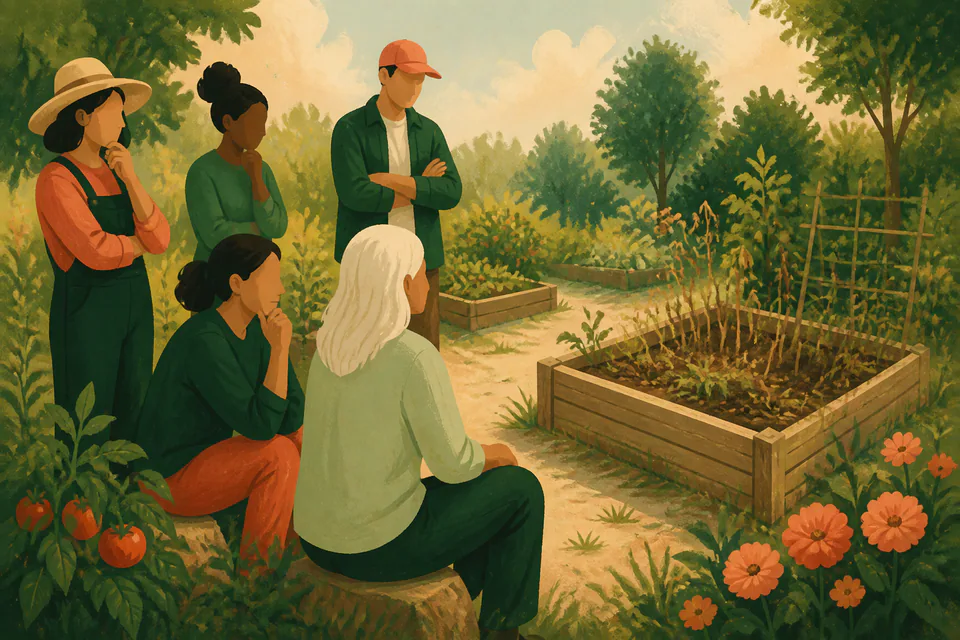
The best garden plot has been abandoned for months. Who gets to take it?

Garden plots have a three-year waiting list. One member's plot has gone untended for months and messages go unanswered, but other gardeners know they recently faced serious health problems.

How long should a shared resource remain reserved out of compassion?

Explore this quandary