You’re Loved. So Why Don’t You Feel It? | Sonja Lyubomirsky
43 min
Listen through the publisher, then discuss the episode here or arrange an in-person Roundtable. Your city determines where to meet.
Roundtables are designed for groups of four, with a shared subject and room for everyone to speak. Come for discussion, with no dating expectation.
You can be loved and still not feel it. A deeper connection may begin with a better conversation. In this episode of The Midlife Chrysalis, happiness researcher and author Sonja Lyubomirsky joins Chip Conley to explore why feeling loved takes more than having people who care about you. Drawing on decades of research, she shares how genuine curiosity and meaningful conversations can bring us closer. Discover: Why being loved and feeling loved are different How moving beyond small talk helps people feel seen and understood Why listening to learn matters more than listening to fix How curiosity helps us connect beyond first impressions and differences Why one real conversation each day is a practice worth making time for Watch the full episode and discover how deeper connection can help make the second half of life the better half. Timestamps: (02:37) Meet Sonja Lyubomirsky (03:11) Can We Become Happier? (04:35) What Happiness Really Means (06:03) Is Midlife Really Our Unhappiest Time? (07:32) Finding a Fresh Start in Midlife (09:35) Can Introverts Be Happier? (12:36) Why Connection Matters for Happiness (14:38) How to Feel More Loved (18:49) Connecting Beyond Our Differences (20:40) How to Be a Better Listener (22:06) What Inspired Sonja’s Happiness Research (24:49) Can Chasing Happiness Backfire? (27:15) What Makes Some Countries Happier? (30:17) Managing Expectations in Midlife (33:17) Living Without Major Regrets (34:41) Dating After Divorce (36:27) Skip Small Talk and Build Real Connection Learn more about MEA at https://www.meawisdom.com/ #SonjaLyubomirsky #ChipConley #TheMidlifeChrysalis #HowToFeelLoved #Happiness #MeaningfulConversations #SocialConnection #MidlifeRelationships #BeyondSmallTalk #ActiveListening #GenuineCuriosity #EmotionalConnection #HealthyRelationships #MidlifeWisdom #FeelingLoved
Episode information is provided by the publisher. Listening takes place on the publisher’s service.
The FIRST Unleash the Power Within of 2022 just wrapped and we had 26,000 households from 151 countries around the world STEP UP and JOIN TOGETHER for one of our largest events in history! Uploaded 23-03-22 Here are some highlights from the week. Enjoy this video for a peek inside our virtual stadium It’s such a privilege to spend time with such DRIVEN, COMMITTED, LOVING SOULS all coming here with a hunger to GROW. For me, getting to hear your goals and witness each of you creating a unique life for yourselves, your loved ones, and your communities is deeply moving. We grow so we have MORE to GIVE, and the truth is, the world is a better, more beautiful and kind place because of people like YOU. If you’ve never experienced an Unleash the Power Within, it can be hard to imagine the HUMAN POTENTIAL and the RAW ENERGY⚡️ that converge over these four days and nights. It's electrifying to feel people from every walk of life, every background, every stage of life UNITE to find a deeper meani
To check the transcript: https://www.buzzsprout.com/2379282 Somewhere along the way Have you ever had a friend who used to be such a big part of your life that you couldn't imagine a day without talking to them? You shared ordinary moments, private jokes, and conversations that lasted until midnight. You were the first people each other turned to, whether something wonderful happened or the world felt a little too heavy. But years passed, and life took you in different directions. Then one day, you meet again. You're happy to see each other, and there's still affection between you, but something feels different. You remember each other beautifully, yet you realize you no longer know the people you've become. “We still know so much about who we used to be, but somewhere along the way, we stopped getting to know who we were becoming.” Hello everyone, and welcome to Daily English. Today's expression is “somewhere along the way.” We use this expression when something happens or changes dur
You think you're hearing wisdom. You're hearing fear that spent a lifetime learning to sound like wisdom. Uploaded 11-05-26 When you were a kid afraid of the water, fear was honest about being fear. Somewhere along the way it got promoted — started speaking in complete sentences, making cases, passing for the smart move. This seminar breaks down the 4 disguises fear puts on so it can pass for common sense — and the practice that lets you catch each one in the act. CHAPTERS: 0:33 When You Were a Kid, Fear Was Honest 5:27 Disguise #1 — The Timing Argument 6:28 Disguise #2 — The Inadequacy Argument 7:40 Disguise #3 — The Consequence Argument 8:52 Disguise #4 — The Responsibility Argument 10:20 The Invisible Cost of Listening to Fear 14:39 The Slow Drift Into Spectator Life 16:27 How to Catch Fear in the Act (4 Tests) 21:54 The Practice of Deciding on Purpose 24:09 Name the Fear Before It Names the Decision THE 4 DISGUISES ▸ TIMING — "Not the right moment. Need a little more prep first." W
Sometimes, all it takes is one powerful Islamic reminder to bring your heart closer to Allah ﷻ and change the way you see your life. In a world filled with distractions, taking even a few moments to remember Allah can help us reconnect with our faith, reflect on our purpose, and find peace through the beautiful teachings of Islam. These short but meaningful Islamic reminders share timeless lessons inspired by the Holy Quran and the Sunnah of Prophet Muhammad ﷺ, offering spiritual motivation, wisdom, and encouragement in less than a minute. Whether you are searching for inner peace, struggling with life's challenges, or simply looking to strengthen your Iman, these reminders invite you to reflect on what truly matters. Discover the beauty of trusting Allah, practising Sabr, expressing gratitude, seeking forgiveness, and living each day with greater faith and purpose. Every reminder is an opportunity to pause, reflect, and remember that our ultimate success lies in pleasing Allah and pre
Get the 200+ Page Optimal Living Daily Workbook (PDF) - Free. Want to turn today's episode into an actionable plan? Episode 4233: Kate Galliett explains three reasons we make health, fitness and life harder than they need to be: ignoring how the body works as a connected system, trusting only extreme intensity, and leaking the energy that fuels motivation and discipline. She makes the case that appropriate effort, not maximum effort, is the only sustainable path to lasting results. Read along with the original article(s) here: https://fitforreallife.substack.com/p/why-you-make-everything-harder-than Quotes to ponder: "The better way is to give appropriate effort and get appropriate results. This is the only sustainable way." "If you try and live at the extremes, you will constantly ping-pong back and forth from one extreme to the other." "Just imagine - you might not actually lack discipline after all, you just might be leaking energy that feeds your ability to be disciplined." We spen
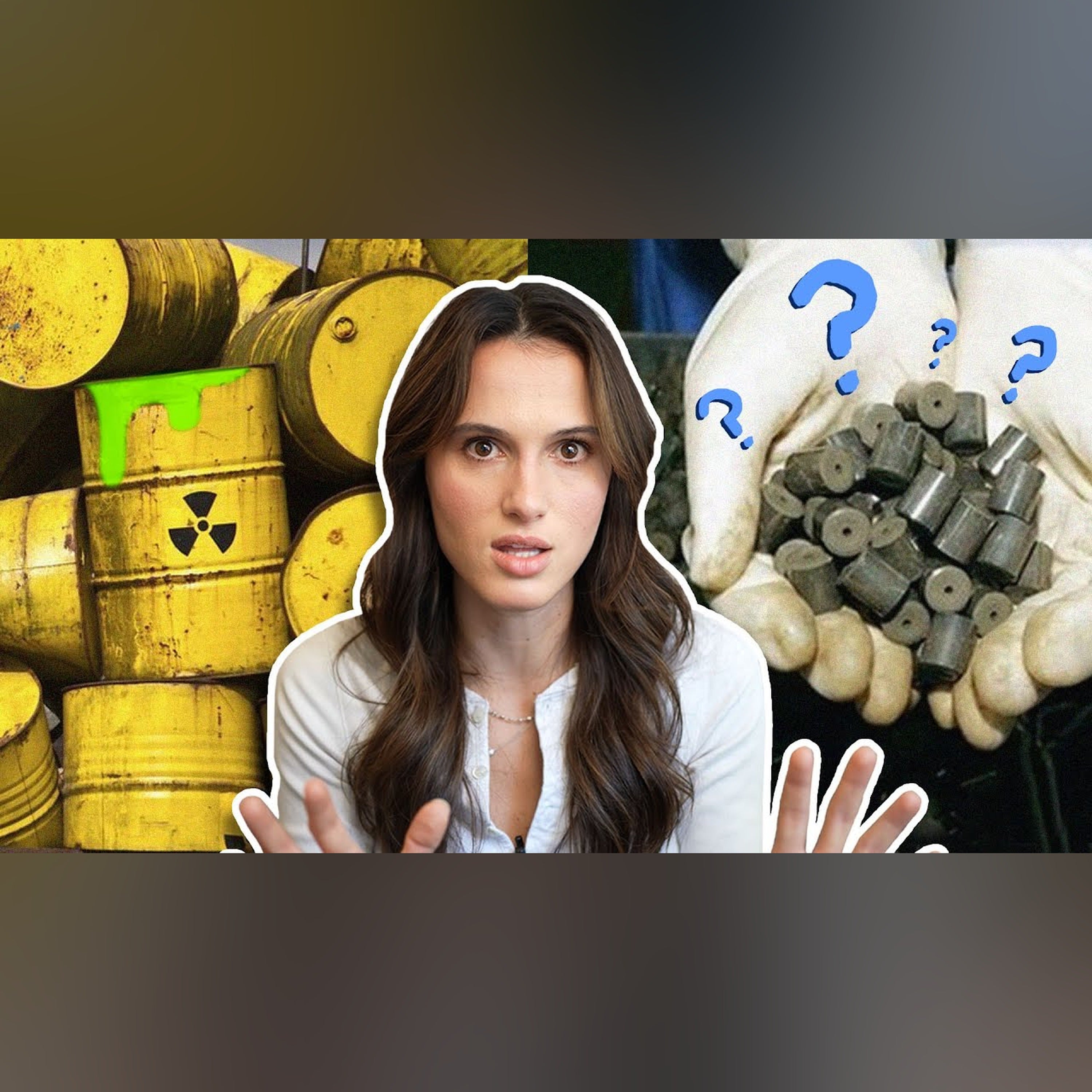
What if we could actually USE nuclear waste? Watch Johnny’s explainer on nuclear power here - and subscribe to his channel! https://youtu.be/QzTgZ6kOEM8 Nuclear waste is scary. Maybe you’ve seen it as glowing green goop in The Simpsons, or as a radioactive threat on the news. Either way, you likely know it has been a major block to the use and improvement of nuclear power. Over the last few decades, experts, politicians and the public have had heated debates over what to do with this radioactive material created by nuclear power plants. But what if there were a way to not just store nuclear waste, but actually USE it? This video is about the effort to make electricity out of nuclear waste. Really. It turns out, we developed the tools to do this decades ago. This story is about a technology we left behind and the people who want to bring it back. For this video, I had the privilege of visiting one of the largest and oldest research centers in the US, the Argonne National Laboratory. I’m
Ian Lopatin thought his partners were the problem. At 51, he began to see how stress was shaping every decision he made. In this episode of The Midlife Chrysalis, the Spiritual Gangster cofounder opens up about watching the brand he built begin to fall apart and recognizing his own part in the upheaval. He shares what it means to become “stress sober” and why noticing your state can change how you respond to the people and problems in front of you. Ian explores: How stress can shape your decisions without you noticing The difference between a suffering state and a beautiful state Why recognizing your own patterns matters when relationships get difficult How to notice and shift your state before a crisis forces you to Watch the full episode to learn how to recognize the state you’re in before you let it decide your next move. Timestamps: (02:24) What It Means to Be Stress Sober (03:52) The Way of the Spiritual Gangster (07:12) Josh’s Journey from Stress to Joy (10:47) Ian’s Midlife Turn
Your brain may be forgetting names, but it still has plenty to offer. In this Wisdom Wednesday episode of The Midlife Chrysalis, MEA founder Chip Conley joins Derek Gehl to explore how our thinking changes with age and why experience can sharpen our judgment, deepen our connections, and strengthen our leadership. Chip shares insights on: Why seeing the bigger picture becomes a valuable strength as we age How pausing before reacting can lead to wiser decisions The question he asked Airbnb’s founders that helped them anticipate future challenges Why teams benefit from combining younger and older perspectives How to build a meaningful connection even when someone’s name escapes you Watch the full episode to discover the strengths you may be overlooking in your own aging brain. Timestamps: (00:00) Introduction (00:41) Forgetting Names and Losing Keys (01:44) How Intelligence Changes with Age (05:45) When Crystallized Intelligence Peaks (06:17) The Value of Older Workers (08:03) Rethinking
Getting older doesn’t automatically make you wiser. How you meet change matters more. In this episode of The Midlife Chrysalis, bestselling author Diego Perez, known as Yung Pueblo, joins Chip Conley to explore how we cultivate wisdom at any age. From growing up in poverty to hitting rock bottom at 23, Diego shares how meditation changed his relationship with himself and the world. Drawing on those experiences and his new book, Journey, he explores: Why inner peace takes more than getting your circumstances right How fighting change creates stress and keeps us stuck What silence can teach us about our emotions and patterns How accepting impermanence helps us appreciate the people we love Why personal growth takes practice, patience, and time Watch the full episode for a thoughtful conversation about growing wiser, finding peace, and meeting life with greater openness. Timestamps: (00:00) Introduction (03:16) Cultivating Wisdom Through Meditation (04:36) Growing Up in Poverty (06:26) Ac
Retraining programs should provide financial support as well as new skills.
Share your view, then see how readers voted. No sign-in required. This poll is shared across stories.
Do you agree or disagree?
Common Quandary
A Common Quandary to discuss
Another conversation to explore, separate from this news story.
You wear an expensive outfit once and return it spotless. Clever or dishonest?
You buy an expensive outfit for a single event, keep it spotless, and return it the next day. The store's generous policy allows returns without asking whether an item was worn.
Does exploiting a policy differ from breaking a rule?