Listen through the publisher, then discuss the episode here or arrange an in-person Roundtable. Your city determines where to meet.
Roundtables are designed for groups of four, with a shared subject and room for everyone to speak. Come for discussion, with no dating expectation.
Viewers like you help make PBS (Thank you ) . Support your local PBS Member Station here: https://to.pbs.org/DonateSPACE Uploaded 08-11-17 Let’s talk about the mysterious zero-point energy and what it really can, and really can’t do. You can further support us on Patreon at https://www.patreon.com/pbsspacetime Get your own Space Time tshirt at http://bit.ly/1QlzoBi Tweet at us! @pbsspacetime Facebook: facebook.com/pbsspacetime Email us! pbsspacetime [at] gmail [dot] com Comment on Reddit: http://www.reddit.com/r/pbsspacetime Help translate our videos! https://www.youtube.com/timedtext_cs_panel?tab=2&c=UC7_gcs09iThXybpVgjHZ_7g (https://www.youtube.com/timedtext_cs_panel?c=UC7_gcs09iThXybpVgjHZ_7g&tab=2) Previous Episode: The Vacuum Challenge | Space Time The quantum field theory predicts that there exists an energy of the vacuum resulting from the non-zero zero-point energies of the quantum fields that fill our universe. As we discussed in our last episode on the vacuum catastrophe, this mismatch between the measured and theoretical values of vacuum energy is one of the greatest unsolved problems in physics. Written and Hosted by Matt O'Dowd Produced by Rusty Ward Graphics by Kurt Ross Assistant Editing and Sound Design by Mike Petrow Made by Kornhaber Brown (www.kornhaberbrown.com) Special thanks to our Patreon Big Bang, Quasar and Hypernova Supporters: Big Bang BITISM CoolAsCats David Nicklas Quasar Tambe Barsbay Mayank M. Mehrota Mars Yentur Mark Rosenthal Dean Fuqua Y2 Justin Lloyd Hypernova Edmund Fokschaner Max Levine Matthew O’Connor Eugene Lawson Barry Hatfield Martha Hunt Joseph Salomone Chuck Zegar Craig Peterson Jordan Young Ratfeast John Hofmann Thanks to our Patreon Gamma Ray Burst Supporters: Denys Ivanov Nick Virtue Alexey Eromenko Nicholas Rose Scott Gossett Mark Dykstra Chris Hicks Mark Vasile Patrick Murray Sultan Alkhulaifi Alex Seto Michal-Peanut Karmi Erik Stein Daniel Lyons Kevin Warne JJ Bagnell J Rejc Amy Jie Avi Goldfinger John Pettit Shannan Catalano Florian Stiglmayr Yubo Du Benoit Pagé-Guitard Nathan Leniz Jessica Fraley Loro Lukic Brandon Labonte David Crane Greg Weiss
Episode information is provided by the publisher. Listening takes place on the publisher’s service.
Discover how scientists developed atomic clocks, which use the vibrations of atoms to measure and maintain a globally consistent time. Uploaded 19-01-21 -- In 1967, researchers gathered to answer a long-running scientific question: just how long is a second? It might seem obvious at first. A second is the tick of a clock, the swing of a pendulum, the time it takes to count to one. But how precise are those measurements? And what is that length based on? John Kitching digs into how we scientifically define this fundamental unit of time. Lesson by John Kitching, directed by Tjoff Koong. Support Our Non-Profit Mission ---------------------------------------------- Support us on Patreon: http://bit.ly/TEDEdPatreon Check out our merch: http://bit.ly/TEDEDShop ---------------------------------------------- Connect With Us ---------------------------------------------- Sign up for our newsletter: http://bit.ly/TEDEdNewsletter Find us on Twitter: http://bit.ly/TEDEdTwitter Peep us on Instagram
Scientists are rethinking how particles behave when moving at extreme speeds through matter. New research into quark-gluon plasma, the exotic fluid that existed moments after the Big Bang, reveals unexpected patterns in particle motion that challenge traditional physical models. The findings could offer a powerful new way to investigate the properties of the universe’s earliest matter. This episode includes AI-generated content.
In some cultures, being well at home is all about making sure that others feel well when visiting, by welcoming them in the right way. In Japan, for example, hospitality is like an art form, and even has a name: omotenashi. You can’t really translate the concept into English; the meaning of the term goes a lot deeper than “hospitality”. It also has connotations of mindfulness. In Japanese culture, knowing how to welcome others and being totally focused on your guest go hand in hand. So you could say omotenashi is the ability to anticipate a guest’s needs before they can even think of them themselves. Hence the idea of being fully available for your guest, right from the moment they arrive. The most obvious example in Japanese culture is serving tea. Where does omotenashi come from? So you’re saying it’s not limited to the home environment, are you? In under 3 minutes, we answer your questions! To listen to the last episodes, you can click here: How can I beat my smartphone addiction? (
If you enjoyed this video and want access to all the references, deeper nuance, and additional context behind everything we discussed, consider joining StayCurious Metabolism, an overall top best-selling science newsletter: https://staycuriousmetabolism.com (https://staycuriousmetabolism.com/) The companion article for this video is here: https://staycuriousmetabolism.substack.com/p/the-heart-supplements-i-recommend?r=40ekz2 Find out why Stay Curious Metabolism became one of the fastest-growing science publications on Substack and reached the top two globally in just one year. Referenced Videos Heart Rate Variability: https://youtu.be/bdxYexIpYjo Berberine: https://youtu.be/KMVsg9EnbcE Vitamin C: https://youtu.be/0p0cld4RmDo Chapters 0:00 – 2,000 Hours of Heart Health in 20 Minutes 1:50 – Our Mystery Box of Heart Health Tools 2:15 – The Scoop, Nattokinase 5:12 – The Ice Pack, TUDCA 9:24 – The Charger, Heart Rate Variability 13:24 – The Straw, Berberine 16:00 – The Ducted Tape, Vitamin
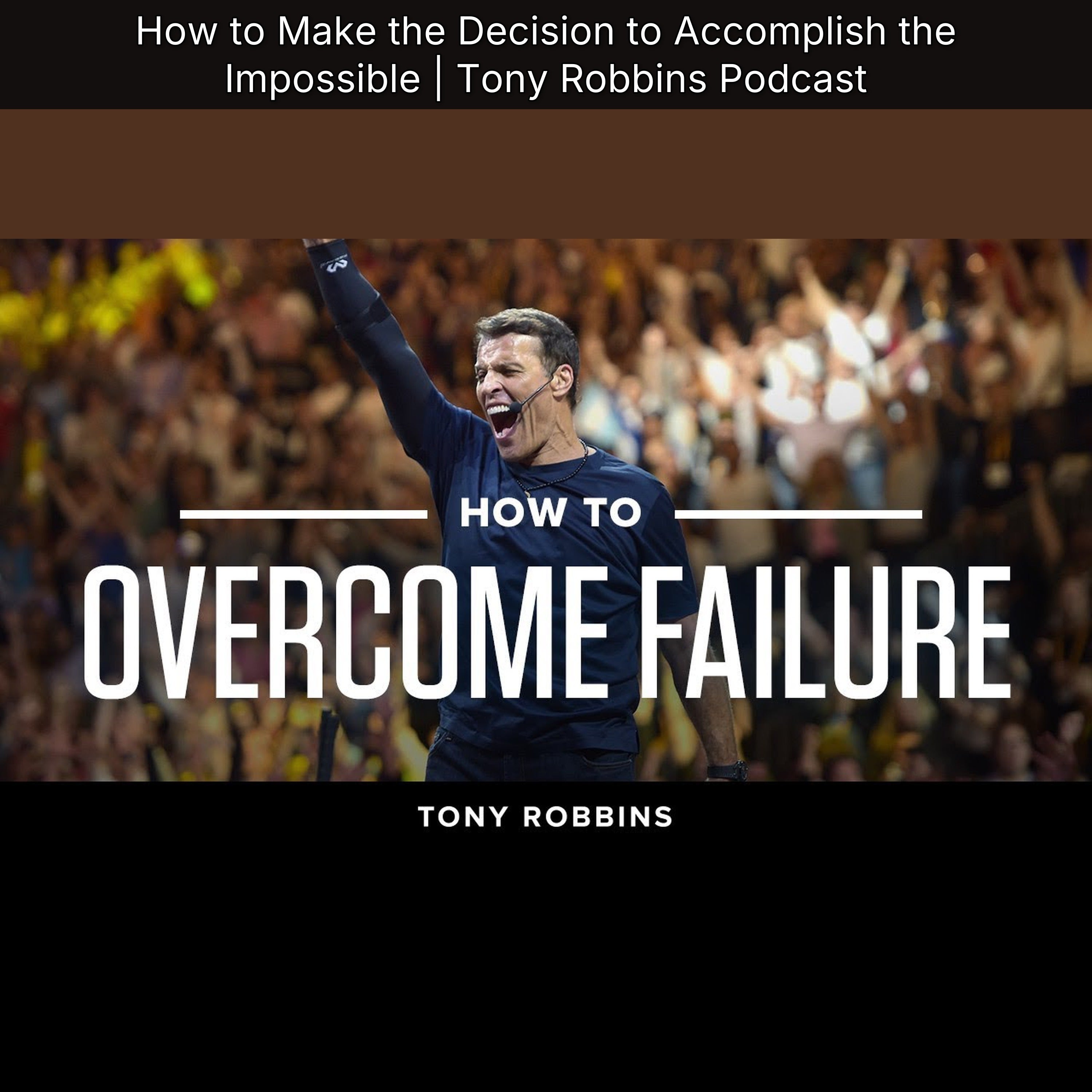
How to Make the Decision to do the Impossible - Tony Robbins Podcast The fear of failure affects millions of people around the world – whether they admit it or not! Many people have big dreams, but they fail to act because they’re so afraid of disappointment. In this episode of the Tony Robbins podcast, Tony, Mary Buckheit and Siri Lindley discuss how to overcome fear of failure to pursue your greatest passion. Siri Lindley is a top-tier athlete who graduated from Brown University. After playing three collegiate sports, she graduated and became the number one triathlete on the planet. Top athletes can be a prime example of overcoming fear of failure. Olympians decide from a young age that they are willing to compete with people from across the globe to be the best in their sport. What drives these people to pursue excellence? What’s their mindset like? Whether you’re an athlete or a business owner, you have to learn how to overcome failure. Because no matter what, you will fail. You mi
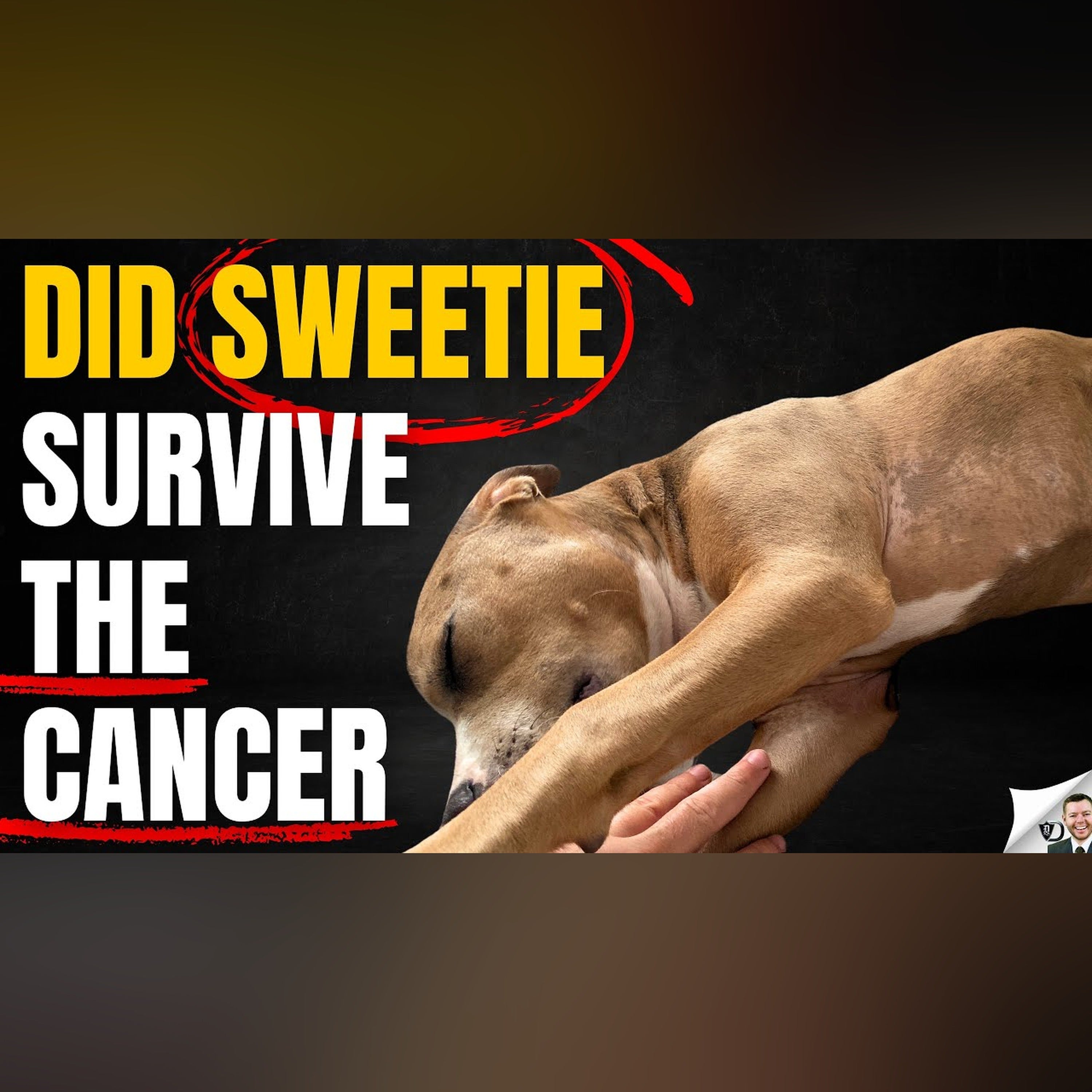
In this video, Disability Attorney Walter Hnot of the Disability Resolution Law Firm goes over Sweetie's uplifting story, and the three surgeries that she underwent. Sweetie is the fluffy monkey monster snuggle cuddle puff dog of Disability Lawyer Walter Hnot. Please watch the journey of Sweetie, as it may one day save your dog's life. America’s Most Viewed Social Security Disability Attorney Like the content? Review us here: https://g.page/r/CcwyektC7nCPEAg/review . If the link does not work, Google: Disability Resolution, P.A. Welcome to the largest Social Security Disability Tutorial Video Library On Earth. PRIVATE ONE HOUR SESSION PHONE CALL THIS IS HOW YOU CAN GIVE BACK TO HELP GROW THE CAUSE: Option 1: Leave 5 |==================5 STAR REVIEWS==================| Google (Search Disability Resolution Orlando, FL)- https://www.google.com/search?authuse... (https://www.google.com/search?authuse...=) AVVO (Search Walter Hnot) - https://www.avvo.com/attorneys/32817-... BBB (Search Disa
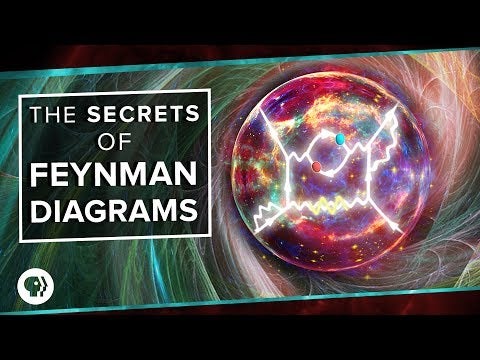
Viewers like you help make PBS (Thank you ) . Support your local PBS Member Station here: https://to.pbs.org/DonateSPACE Uploaded 26-07-17 Unlock the secrets of Feynman Diagrams. Part 5 in our Quantum Field Theory series. And if you're submitting an answer to our challenge question email your answer by August 2nd to pbsspacetime [AT] gmail.com with the subject line "Feynman Diagram Challenge." You can further support us on Patreon at https://www.patreon.com/pbsspacetime Get your own Space Time tshirt at http://bit.ly/1QlzoBi Tweet at us! @pbsspacetime Facebook: facebook.com/pbsspacetime Email us! pbsspacetime [at] gmail [dot] com Comment on Reddit: http://www.reddit.com/r/pbsspacetime Help translate our videos! https://www.youtube.com/timedtext_cs_... Previous Episode: The Real Star Wars Feynman’s path integral shows us that, to properly calculate the probability of a particle traveling from point A to point B, we need to add up the contributions from all conceivable paths between tho
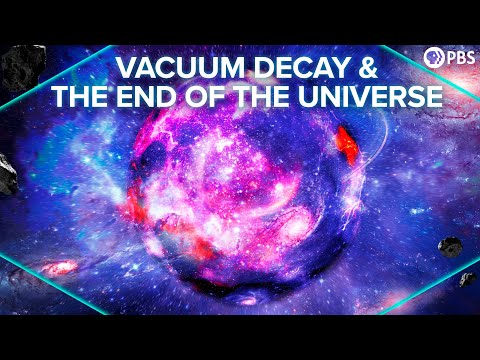
Sign Up on Patreon to get access to the Space Time Discord! Uploaded 18-08-21 The universe is going to end. But of all the possible ends of the universe vacuum decay would have to be the most thorough - because it could totally rewrite the laws of physics. Today I hope to help you understand exactly how terrified you should be. Check out the Space Time Merch Store Sign up for the mailing list to get episode notifications and hear special announcements! Hosted by Matt O'Dowd Written by Matt O'Dowd Graphics by Leonardo Scholzer, Yago Ballarini, Pedro Osinski, Adriano Leal and Stephanie Faria GFX Visualizations: Ajay Manuel Directed by Andrew Kornhaber Assistant Producer: Setare Gholipour Executive Producers: Eric Brown and Andrew Kornhaber End Credits Music by J.R.S. Schattenberg: https://www.youtube.com/user/MultiDroideka Special thanks to Our Patreon Sponsors Big Bang Supporters Ari Paul Kyle Bulloch Charlie Mrs. Tiffany Poindexter Leo Koguan Sandy Wu Matthew Miller Scott Gray Ahmad Jo
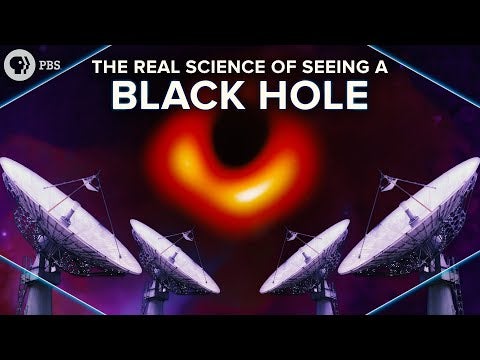
You can learn more about CuriosityStream at https://curiositystream.com/spacetime Uploaded 01-05-19 PBS Member Stations rely on viewers like you. To support your local station, go to: http://to.pbs.org/DonateSPACE How do you take a picture of a black hole and what can we learn from it? Our first ever actual bona fide photo of a black hole, made by the Event Horizon Telescope and revealed to the world in a press conference on April 10th. Since then it’s got plenty of coverage, because … I mean look at it. It’s a freaking black hole. It’s black, it’s holey, it’s everything we hoped it would be. Now that the giddiness has subsided and I personally have stopped spending hours on end staring at a black spot, we can take a breath and actually look at the real science here and discuss exactly how a picture like this could be taken and what we can learn from it. Check out the new Space Time Merch Store! Support Space Time on Patreon Need a Black Hole Refresher #Blackhole #astrophysics #spaceti
Teams owe supporters honest explanations during long periods of poor results.
Share your view, then see how readers voted. No sign-in required. This poll is shared across stories.
Do you agree or disagree?
Common Quandary
A Common Quandary to discuss
Another conversation to explore, separate from this news story.
You scratched a borrowed heirloom and repaired it perfectly. Do you confess?
You borrow a family heirloom for an event and accidentally leave a small scratch. A careful repair makes it almost invisible, and its owner happily accepts it back without noticing anything.
What is confession for when the harm has already been repaired?