English-language podcasts

99% Invisible

Zone Zero

38 min

Listen through the publisher, then discuss the episode here or arrange an in-person Roundtable. Your city determines where to meet.

Roundtables are designed for groups of four, with a shared subject and room for everyone to speak. Come for discussion, with no dating expectation.

Across the West, there's a contentious debate playing out over how to adapt homes and neighborhoods to this era of increasingly extreme wildfire risk. In Berkeley, California, it's become a particularly emotional fight because of a very specific architectural history that began all the way back in the 1890s. Emmett Fitzgerald reports on the new rules about what plants you can grow around your house. Check out our previous episode on defensible space: Built to Burn (https://99percentinvisible.org/episode/built-to-burn/) Hosted by Simplecast, an AdsWizz company.

Episode information is provided by the publisher. Listening takes place on the publisher’s service.

Listen at the source ↗

Featured places to meet in Palo Alto, CA

Explore these places and arrange a conversation through ThinkMatch.

City guide for Palo Alto, CA

More from 99% Invisible

99% Invisible

Know the Score

38 min

A credit score is essentially a three digit number that here in the US usually ranges from 300-850. It's a metric that lenders can use to predict your ability to pay back a loan. The higher the number, the more likely you are to be approved for lines of credit. In the United States, your credit score decides where you can live, what car you can drive and whether you can get a loan. It’s supposed to be objective—a precise, omniscient accounting of your financial health, but what started as a simple tool for lenders ended up embedding itself in the lives of most Americans, and feeding the same bias it claimed to solve. Hosted by Simplecast, an AdsWizz company.

Discuss this episode

99% Invisible

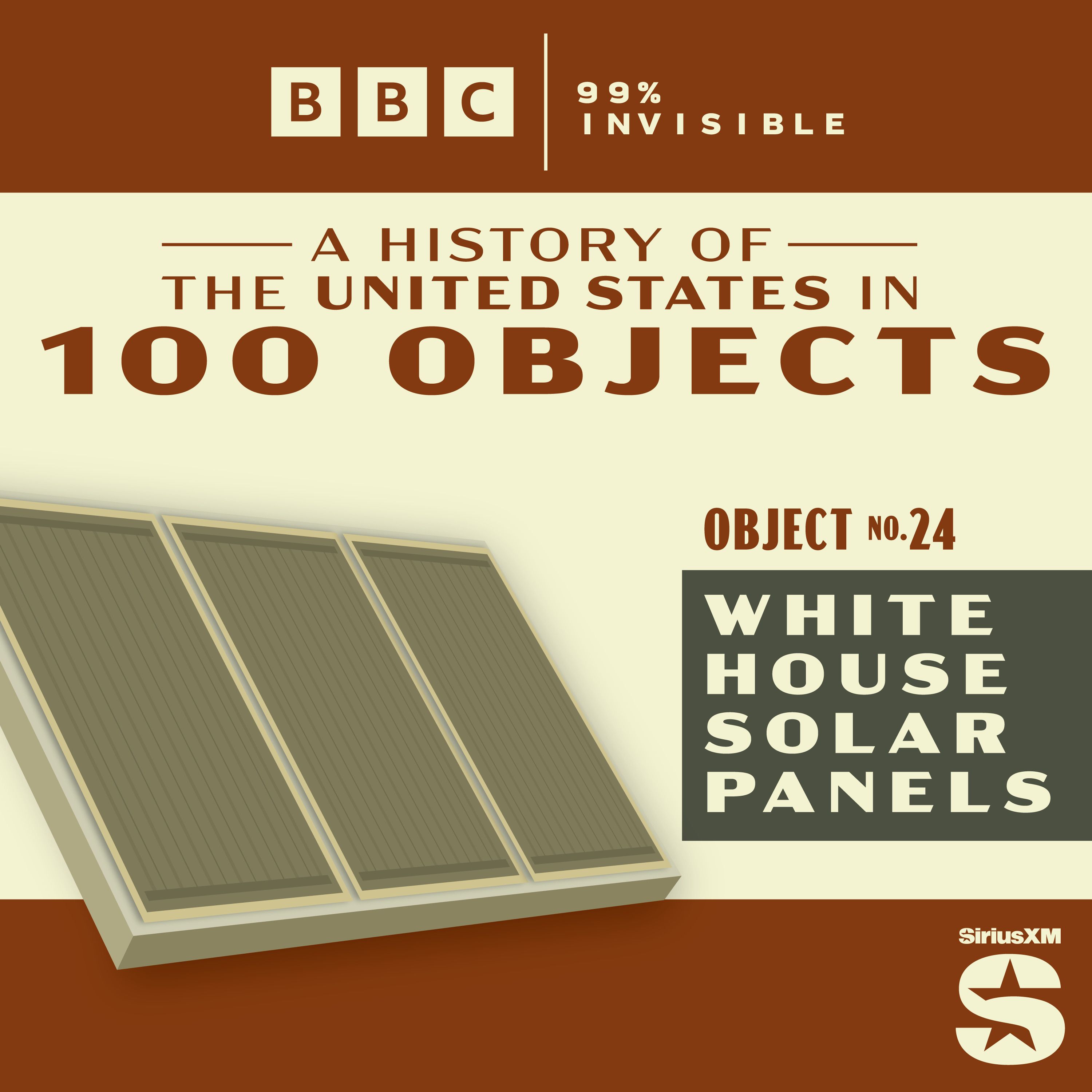
100 Objects #24: White House Solar Panels

40 min

In 1979, President Jimmy Carter took to the roof of the White House to announce the installation of 32 solar panels. In that speech, he outlined all the things that they could become: a curiosity, a museum piece, one of our nation's most potent and enduring symbols of a road not taken, or the start of a great adventure. They would become all but the last of those things…but why? Journalist and environmental activist Bill McKibben (https://billmckibben.com/) takes Roman Mars through the story of how a president showed the American people a powerful new technology promising abundant cheap energy and why Americans shrugged. A History of the United States in 100 Objects (https://99pi.org/100) is a production of 99% Invisible (https://99percentinvisible.org/) and BBC Studios (https://www.bbcstudios.com/). Hosted by Simplecast, an AdsWizz company.

Discuss this episode

99% Invisible

Perfectly Leveraged for the Squat

36 min

Jan Todd was considered by many to be the strongest woman in the world back in the 1970s. She set world records, lifted the Dinnie Stones in Scotland, and wrote the first rulebook for women's powerlifting. Then she became a historian, and uncovered a lost generation of strong women who came before her. For more, check out Bonnie Tsui (https://www.bonnietsui.com/)'s book, On Muscle (https://bookshop.org/p/books/on-muscle-the-stuff-that-moves-us-and-why-it-matters-bonnie-tsui/f4c7ee52390cb056?affiliate=1882&ean=9781643753089). Hosted by Simplecast, an AdsWizz company.

Discuss this episode

Community Poll

Organizations should help affected people recover after a personal-data breach.

Share your view, then see how readers voted. No sign-in required. This poll is shared across stories.

Do you agree or disagree?

Choose one answer

Common Quandary

A Common Quandary to discuss

Another conversation to explore, separate from this news story.

A pricey AI tutor can turn B students into A students. Should schools let them use it?

An effective AI tutor adapts to each student and dramatically improves performance, but its subscription is expensive. A public school cannot provide it to everyone and worries that allowing its use will deepen existing inequality.

Should access be limited when a beneficial tool cannot yet be shared fairly?

Explore this quandary