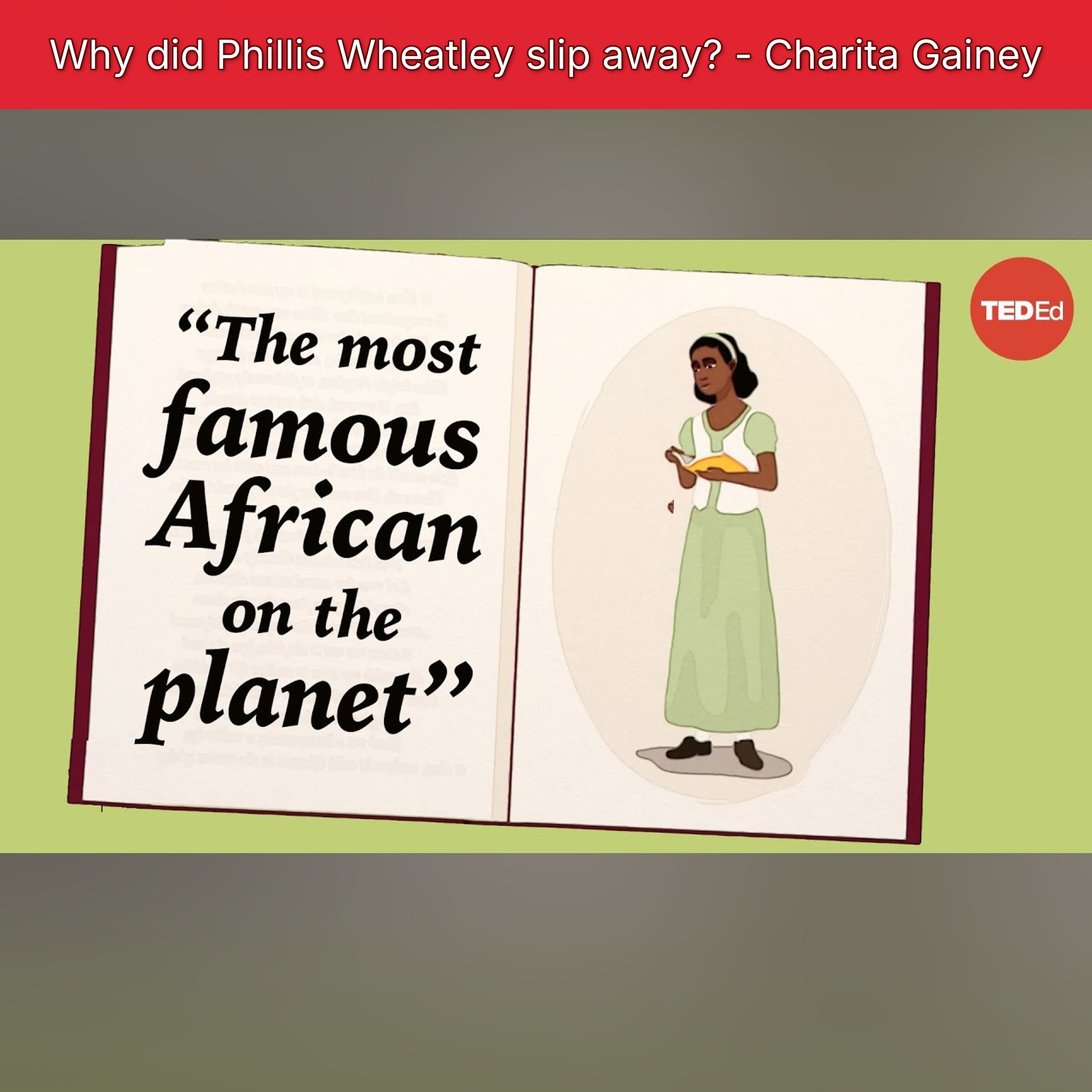
Get to know the life and works of poet Phillis Wheatley, an enslaved woman who became one of colonial America’s most famous writers. -- In 1775, General George Washington received a poem from one of colonial America’s most famous writers. Its verses praised the burgeoning revolution, invoking the goddess of their new nation to aid the general’s cause. But this ode to liberty wasn’t written by some aloof aristocratic admirer. Its author was a young enslaved Black woman. Charita Gainey details the works of poet Phillis Wheatley. Lesson by Charita Gainey, directed by Gavin Edwards, Movult. Support Our Non-Profit Mission ---------------------------------------------- Support us on Patreon: http://bit.ly/TEDEdPatreon Check out our merch: http://bit.ly/TEDEDShop ---------------------------------------------- Connect With Us ---------------------------------------------- Sign up for our newsletter: http://bit.ly/TEDEdNewsletter Find us on Twitter: http://bit.ly/TEDEdTwitter Peep us on Instagr
View full lesson: http://ed.ted.com/lessons/how-atoms-bond-george-zaidan-and-charles-morton Uploaded 15-10-13 Atoms can (and do) bond constantly; it's how they form molecules. Sometimes, in an atomic tug-of-war, one atom pulls electrons from another, forming an ionic bond. Atoms can also play nicely and share electrons in a covalent bond. From simple oxygen to complex human chromosome 13, George Zaidan and Charles Morton break down the humble chemical bond. Lesson by George Zaidan and Charles Morton, animation by Bevan Lynch.
Why do our muscles get tired and sore after exercise? Explore how our muscles function, and how you can exercise longer without experiencing muscle fatigue. Uploaded 18-04-19 -- You're lifting weights. The first time feels easy, but each lift takes more and more effort until you can’t continue. Inside your arms, the muscles responsible for the lifting have become unable to contract. What’s going on? Christian Moro explains how exactly our muscles operate, and what causes them to become fatigued. Lesson by Christian Moro, directed by Nichola Latzgo. Sign up for our newsletter: http://bit.ly/TEDEdNewsletter Support us on Patreon: http://bit.ly/TEDEdPatreon Find us on Twitter: http://bit.ly/TEDEdTwitter Peep us on Instagram: http://bit.ly/TEDEdInstagram View full lesson: https://ed.ted.com/lessons/the-surprising-reason-our-muscles-get-tired-christian-moro Thank you so much to our patrons for your support! Without you this video would not be possible! Felipe Hoff, Kyanta Yap, Lewis Westbur
View full lesson: http://ed.ted.com/lessons/making-a-ted-ed-lesson-animation Ever wondered how a TED-Ed animation is made? Go behind-the-scenes of "How do cancer cells behave differently from healthy ones" with educator George Zaidan, animation director Biljana Labovic, and animator Lisa LaBracio.
Download a free audiobook version of "The Boys on the Boat" and support TED-Ed's nonprofit mission: https://adbl.co/2Lf9Pa2 Uploaded 21-05-18 Check out our full book recommendation: http://bit.ly/2IDVLsY View full lesson: https://ed.ted.com/lessons/how-to-avoid-choking-under-pressure-noa-kageyama-and-pen-pen-chen Your favorite athlete closes in for a win; the crowd holds its breath, and at the crucial moment ... she misses the shot. That competitor just experienced the phenomenon known as “choking,” where despite months, even years, of practice, a person fails right when it matters most. Why does this happen, and what can we do to avoid it? Noa Kageyama and Pen-Pen Chen explain why we choke under pressure. Lesson by Noa Kageyama and Pen-Pen Chen, animation by Olesya Shchukina. Thank you so much to our patrons for your support! Without you this video would not be possible! Mehmet Sencer KARADAYI, Christian Kurch, SungGyeong Bae, Luis Felipe Ruiz Langenscheidt, Joe Huang, Rohan Gupta, Se
Join #TeamSeas! Together, we're going to raise $30M to remove 30M pounds of plastic and trash from our ocean, rivers and beaches. Learn more and get involved here: https://bit.ly/3mrdV3J Uploaded 10-09-20 Trace the history of the invention of plastic, and how the material ushered in what became known as the plastics century. -- For centuries, billiard balls were made of ivory from elephant tusks. But when excessive hunting caused elephant populations to decline, they began to look for alternatives. John Wesley Hyatt took up the challenge. In five years, he invented a new material called celluloid, which would become known as the first plastic. Trace the history of the material that ushered in the “plastics century.” Directed by Sharon Colman. Animator's website: http://www.sharoncolman.com/ Sign up for our newsletter: http://bit.ly/TEDEdNewsletter Support us on Patreon: http://bit.ly/TEDEdPatreon Find us on Twitter: http://bit.ly/TEDEdTwitter Peep us on Instagram: http://bit.ly/TEDEdIn
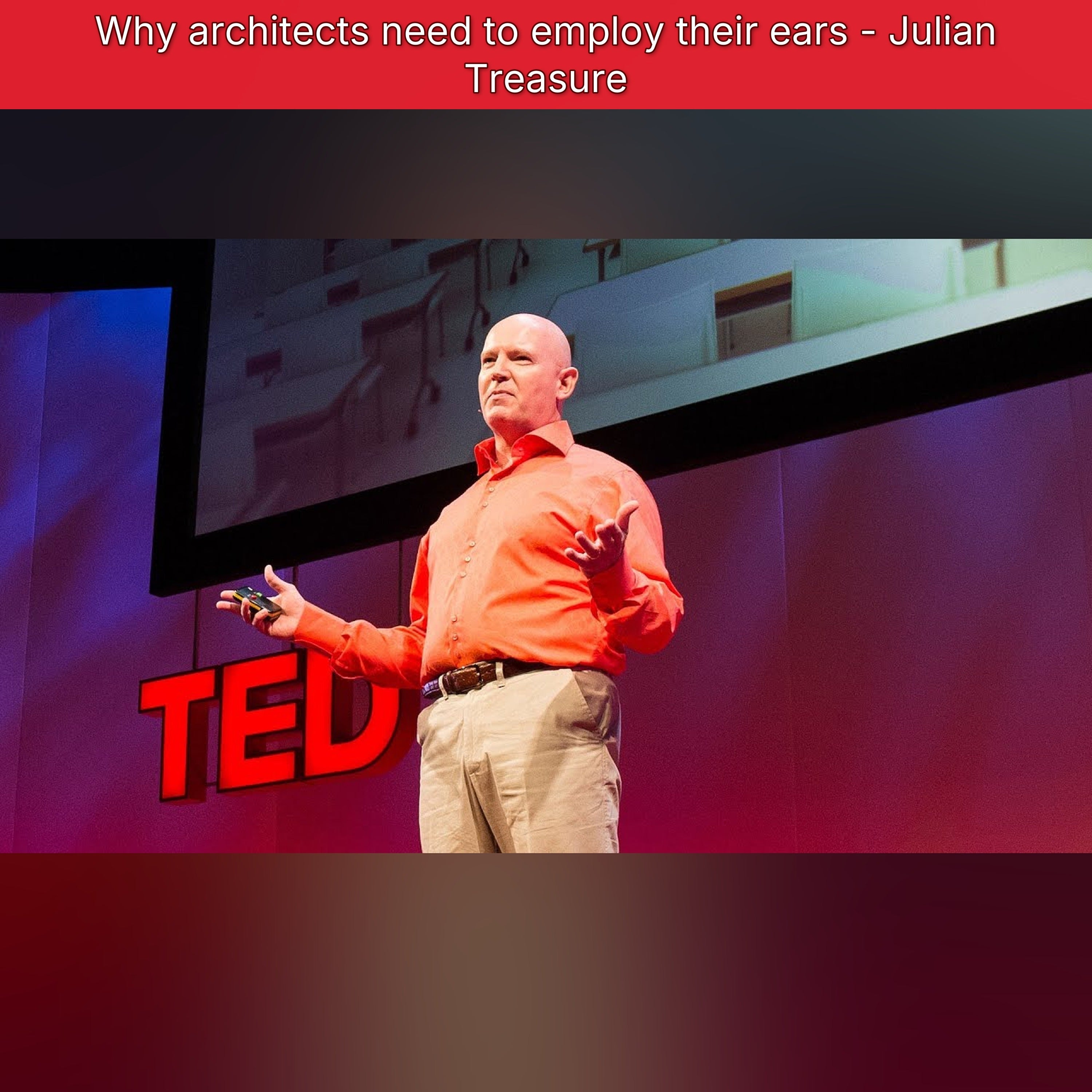
Because of poor acoustics, students in classrooms miss 50 percent of what their teachers say and patients in hospitals have trouble sleeping because they continually feel stressed. Julian Treasure sounds a call to action for designers to pay attention to the "invisible architecture" of sound. Talk by Julian Treasure.
Dig into Agatha Christie’s writing style to find out how she crafted her mystery novels and how to employ these strategies in your own work. -- With almost 100 mystery novels, each one a cleverly constructed puzzle box of clues, misdirection, and human drama, Agatha Christie is the best-selling novelist of all time. Her eccentric detectives, clever clues, and simplified suspects have stumped countless readers over the last century. So, how did she craft these perfect crimes? Jamie Bernthal dissects the writing of Agatha Christie. Lesson by Jamie Bernthal, directed by Totem Creative. Support Our Non-Profit Mission ---------------------------------------------- Support us on Patreon: http://bit.ly/TEDEdPatreon Check out our merch: http://bit.ly/TEDEDShop ---------------------------------------------- Connect With Us ---------------------------------------------- Sign up for our newsletter: http://bit.ly/TEDEdNewsletter Find us on Twitter: http://bit.ly/TEDEdTwitter Peep us on Instagram:
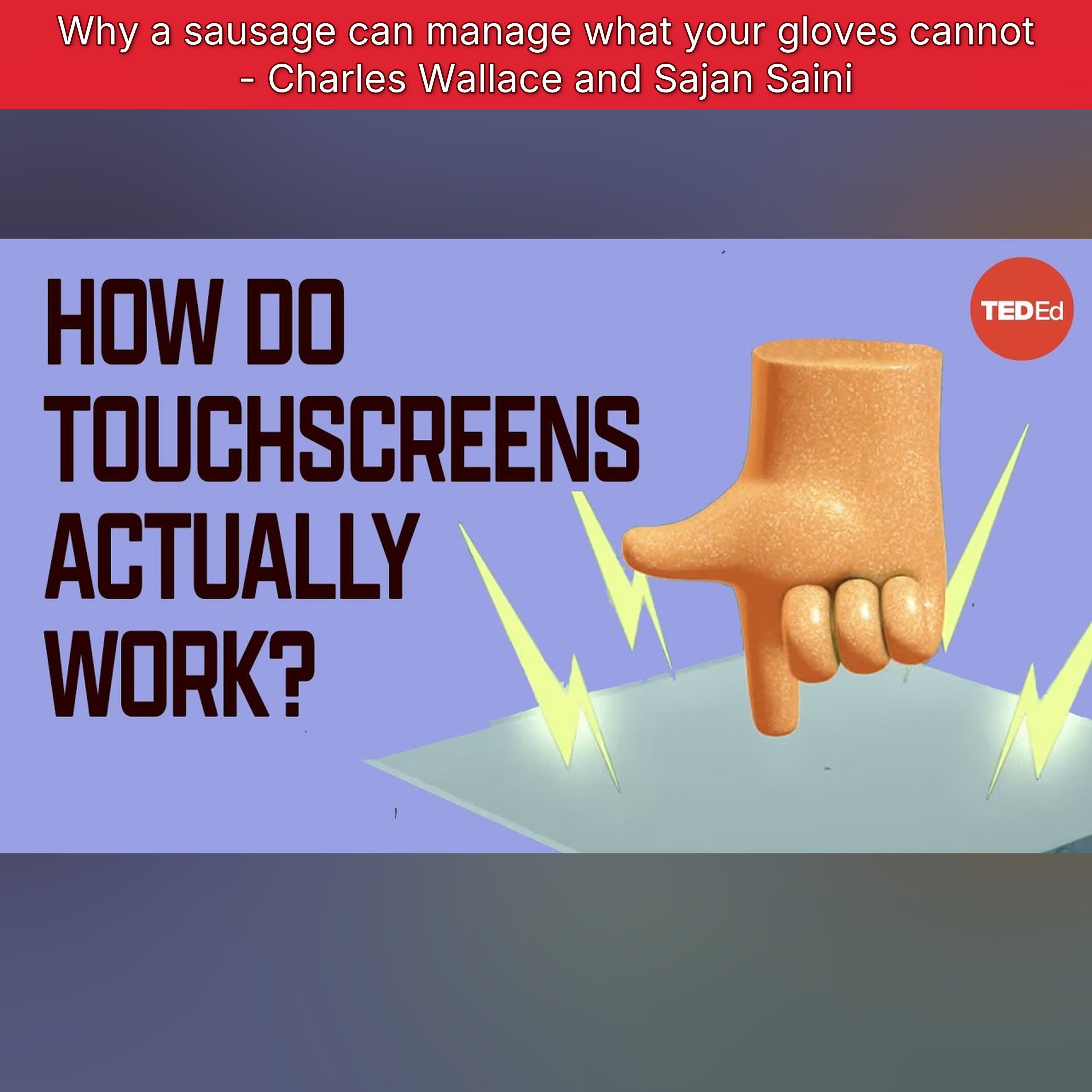
Dig into the science of touchscreens, and find out the difference between the two most common types: capacitive and resistive. -- In 2010, South Korea experienced a particularly cold winter. People couldn’t activate their smartphones while wearing gloves, so they began wielding snack sausages— causing one company to see a 40% rise in sausage sales. So, what could sausages do that gloves couldn’t? In other words, how do touchscreens actually work? Charles Wallace and Sajan Saini dig into the science of touchscreens. Lesson by Charles Wallace and Sajan Saini, directed by Luis Torres, Mr. Flama. Support Our Non-Profit Mission ---------------------------------------------- Support us on Patreon: http://bit.ly/TEDEdPatreon Check out our merch: http://bit.ly/TEDEDShop ---------------------------------------------- Connect With Us ---------------------------------------------- Sign up for our newsletter: http://bit.ly/TEDEdNewsletter Find us on Twitter: http://bit.ly/TEDEdTwitter Peep us on I
View full lesson: http://ed.ted.com/lessons/can-robots-be-creative-gil-weinberg Uploaded 19-03-15 People have been grappling with the question of artificial creativity -- alongside the question of artificial intelligence -- for over 170 years. For instance, could we program machines to create high quality original music? And if we do, is it the machine or the programmer that exhibits creativity? Gil Weinberg investigates this creative conundrum. Lesson by Gil Weinberg, animation by TOGETHER.
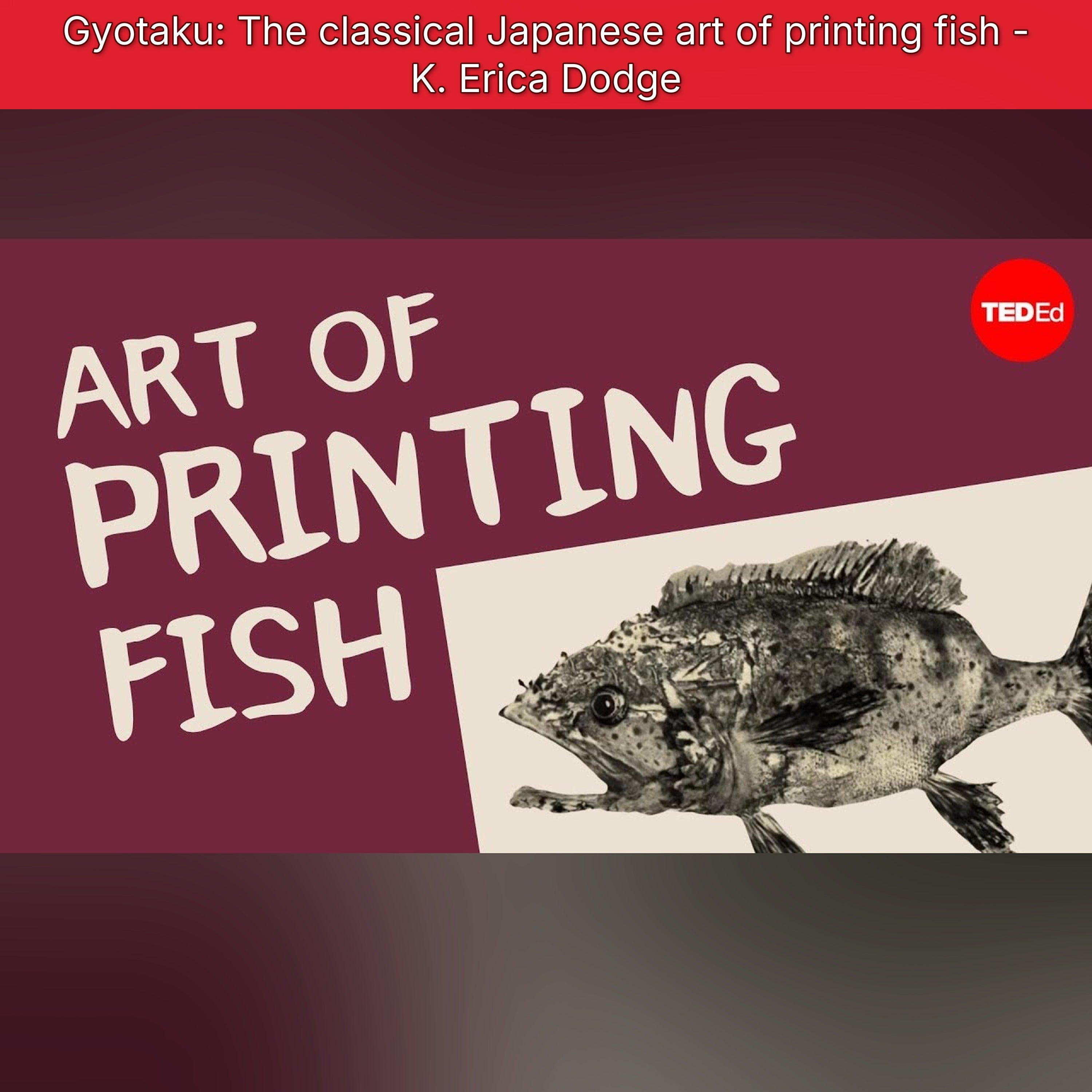
View full lesson: http://ed.ted.com/lessons/gyotaku-the-ancient-japanese-art-of-printing-fish-k-erica-dodge How did fishermen record their trophy catches before the invention of photography? In 19th century Japan, fishing boats were equipped with rice paper, sumi-e ink, and brushes in order to create gyoktaku: elaborate rubbings of freshly caught fish. K. Erica Dodge recounts the story of this competitive fishing culture, plus some tips on how to make your very own etchings. Lesson by K. Erica Dodge, animation by Franco Barroeta.
Explore the history of the Merriam-Webster Dictionary and find out how old words get redefined and how new words are added. Uploaded 04-05-21 -- While the concept of a dictionary dates back to ancient civilizations, the first English dictionary wasn’t published until 1604. In the centuries that followed, many more dictionaries were written by individual authors who chose what to include or exclude, with most quickly becoming outdated. One 19th century lexicon had a different fate. Ilan Stavans digs into the history of Webster's Dictionary. Lesson by Ilan Stavans, directed by Lisa LaBracio. Support Our Non-Profit Mission ---------------------------------------------- Support us on Patreon: http://bit.ly/TEDEdPatreon Check out our merch: http://bit.ly/TEDEDShop ---------------------------------------------- Connect With Us ---------------------------------------------- Sign up for our newsletter: http://bit.ly/TEDEdNewsletter Find us on Twitter: http://bit.ly/TEDEdTwitter Peep us on Inst
View full lesson: http://ed.ted.com/lessons/the-sweaty-teacher-s-lament-justin-lamb Uploaded 06-05-14 Justin Lamb would love to be the compassionate teacher. Or the tough but fair teacher. He'd even settle for the wacky teacher, if it meant he could shake his current, less flattering alias: the sweaty teacher. In "Sweaty Teacher," a lively spoken word performance, Lamb defends the "geysers he calls armpits," reminding us that sweat isn't just a product of humidity -- but of hard work, too. Talk by Justin Lamb.
Practice more problem-solving at https://brilliant.org/TedEd/ Sign up to be emailed the solution to the bonus riddle: https://brilliant.org/tededpoisonapples/ Uploaded 22-05-18 You’ve been chosen as a champion to represent your wizarding house in a deadly duel against two rival magic schools. Your opponents are a powerful sorcerer who wields a wand that can turn people into fish, and a powerful enchantress who wields a wand that turns people into statues. Can you choose a wand and devise a strategy that ensures you will win the duel? Dan Finkel shows how. Lesson by Dan Finkel, animation by Artrake Studio. Thank you so much to our patrons for supporting us on Patreon! Without you this video would not be possible! Chris Adriaensen, Lowell Fleming, Amir Ghandeharioon, Anuj Tomar, Sunny Patel, Vijayalakshmi , Devesh Kumar, Uday Kishore, Aidan Forero, Leen Mshasha, Allan Hayes, Thomas Bahrman, Alexander Baltadzhiev, Vaibhav Mirjolkar, Tony, Michelle, Katie and Josh Pedretti, Erik Biemans, G
Enter the mind of a bored teenager to discover what happens in the brain when we daydream and find out what purpose it serves. -- On a daily basis, you spend between a third and half of your waking hours daydreaming. That may sound like a huge waste of time, but scientists think it must have some purpose, or humans wouldn’t have evolved to do so much of it. So, what exactly happens in the brain while you daydream? Elizabeth Cox takes a closer look at the science of daydreaming through the mind of a teenager. Lesson by Elizabeth Cox, directed by Biljana Labović. This video made possible in collaboration with Bezos Family Foundation Learn more about how TED-Ed partnerships work: https://bit.ly/TEDEdPartners Support Our Non-Profit Mission ---------------------------------------------- Support us on Patreon: http://bit.ly/TEDEdPatreon Check out our merch: http://bit.ly/TEDEDShop ---------------------------------------------- Connect With Us ---------------------------------------------- Si
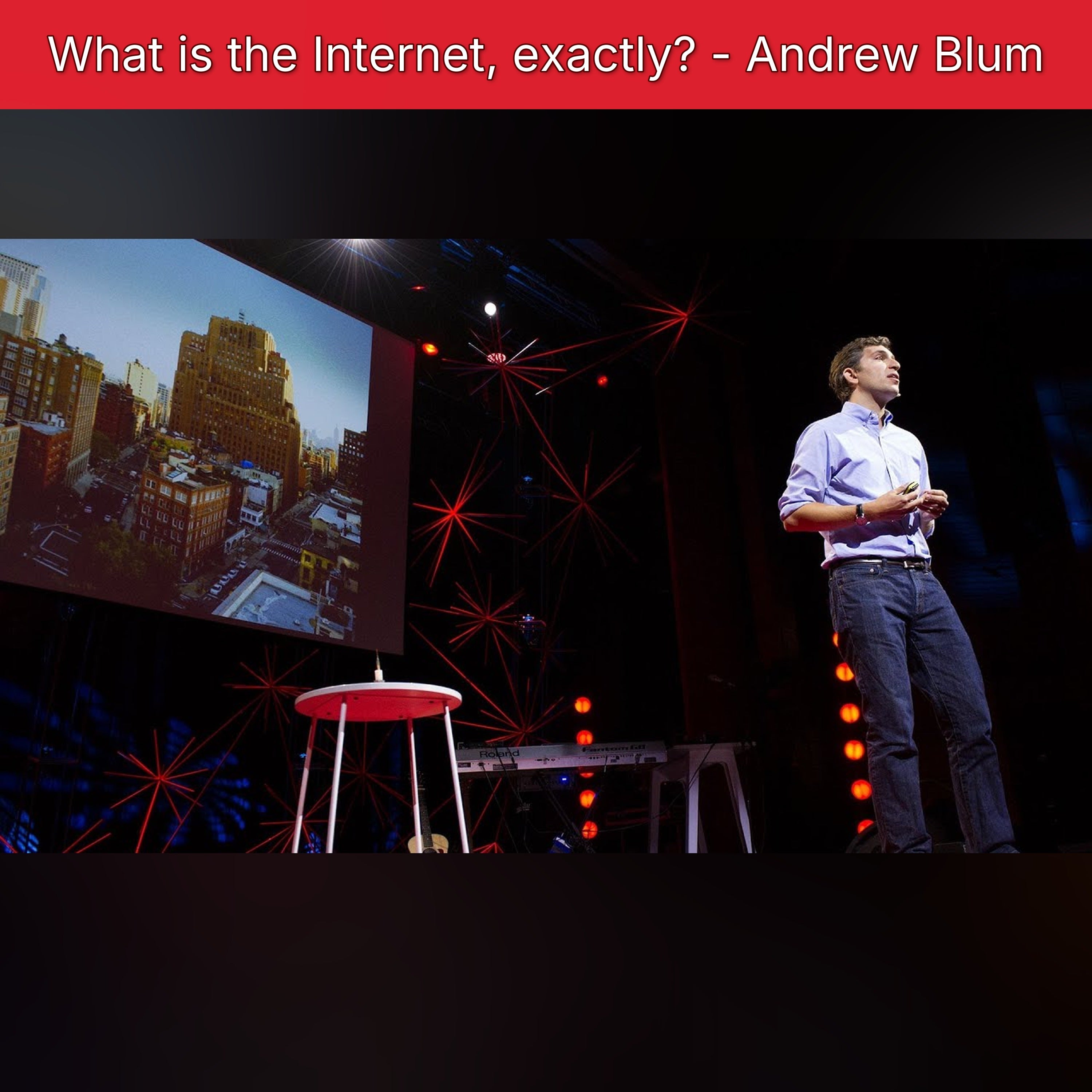
When a squirrel chewed through a cable and knocked him offline, journalist Andrew Blum started wondering what the Internet was really made of. So he set out to go see it -- the underwater cables, secret switches and other physical bits that make up the net. Talk by Andrew Blum.
View full lesson: http://ed.ted.com/lessons/why-don-t-oil-and-water-mix-john-pollard Uploaded 10-10-13 Salt dissolves in water; oil does not. But why? You can think of that glass of water as a big, bumpin' dance party where the water molecules are always switching dance partners -- and they'd much rather dance with a salt ion. John Pollard explains how two chemistry principles, energetics and entropy, rule the dance floor. Lesson by John Pollard, animation by Andrew Foerster.
Take a look inside the conehead termite colony as a queen begins her reign as one of the longest living insects in the animal kingdom. -- A single determined termite braves countless threats to participate in the only flight of her lifetime. She evades the onslaught of predators as she lands, flips off her wings, secretes pheromones, and attracts a mate. But she's not alone. Unlike most termite species, conehead termite colonies can have multiple queens and kings. Barbara L. Thorne details the reign and duties of termite royalty. Lesson by Barbara L. Thorne, directed by Thomas Johnson Volda. Support Our Non-Profit Mission ---------------------------------------------- Support us on Patreon: http://bit.ly/TEDEdPatreon Check out our merch: http://bit.ly/TEDEDShop ---------------------------------------------- Connect With Us ---------------------------------------------- Sign up for our newsletter: http://bit.ly/TEDEdNewsletter Find us on Twitter: http://bit.ly/TEDEdTwitter Peep us on In
View full lesson: http://ed.ted.com/lessons/plato-s-allegory-of-the-cave-alex-gendler Uploaded 17-03-15 Twenty four hundred years ago, Plato, one of history’s most famous thinkers, said life is like being chained up in a cave forced to watch shadows flitting across a stone wall. Beyond sounding quite morbid, what exactly did he mean? Alex Gendler unravels Plato's Allegory of the Cave, found in Book VII of "The Republic." Lesson by Alex Gendler, animation by Stretch Films, Inc.
In her talk, Melinda Gates makes a provocative case for nonprofits taking a cue from corporations such as Coca-Cola, whose plugged-in, global network of marketers and distributors ensures that every remote village wants -- and can get -- a Coke. Why shouldn't this work for condoms, sanitation, vaccinations too? (Filmed at TEDxChange.) Uploaded 15-08-13 Talk by Melinda French Gates.
Download a free audiobook version of “The 7 1/2 Deaths of Evelyn Hardcastle“ and support TED-Ed's nonprofit mission: https://www.audible.com/ted-ed -- How do you know you’re a person who has lived your life, rather than a just-formed brain full of artificial memories, momentarily hallucinating a reality that doesn’t actually exist? That may sound absurd, but it’s kept several generations of top cosmologists up at night. They call it: the Boltzmann brain paradox. Fabio Pacucci explores this mind-numbing thought experiment. Lesson by Fabio Pacucci, directed by Skirmanta Jakaitė, Art Shot. Learn more about how TED-Ed partnerships work: https://bit.ly/TEDEdPartners Support Our Non-Profit Mission ---------------------------------------------- Support us on Patreon: http://bit.ly/TEDEdPatreon Check out our merch: http://bit.ly/TEDEDShop ---------------------------------------------- Connect With Us ---------------------------------------------- Sign up for our newsletter: http://bit.ly/TEDEd
Discover Frank Herbert’s science fiction classic, “Dune,” which tells the story of a man catapulted into the middle of a planetary revolution. Uploaded 17-12-19 -- A mother and son trek across an endless desert. Wearing special suits to dissipate heat and recycle moisture, the travelers aren’t worried about dying of thirst. Their fears are much greater. Soon, the sound of the desert is drowned out by a hissing: a mound of sand 400 meters long bursts from the desert floor and races towards them. This is the world of “Dune.” Dan Kwartler dives into the epic story. Lesson by Dan Kwartler, directed by Recircle. Animator's website: https://www.recircle.net (https://www.recircle.net/) Sign up for our newsletter: http://bit.ly/TEDEdNewsletter Support us on Patreon: http://bit.ly/TEDEdPatreon Find us on Twitter: http://bit.ly/TEDEdTwitter Peep us on Instagram: http://bit.ly/TEDEdInstagram View full lesson: https://ed.ted.com/lessons/why-should-you-read-dune-by-frank-herbert-dan-kwartler #bookt
Explore how fiber optics uses light to transmit data over long distances, and with integrated photonics, expands our virtual world beyond the internet. Uploaded 22-04-19 -- In 2012, a team of researchers set a world record, transmitting 1 petabit of data— that’s 10,000 hours of high-def video— over a fifty-kilometer cable, in a second. This wasn’t just any cable. It was a souped-up version of fiber optics, the hidden network that links our planet and makes the internet possible. What is fiber optics and how does it work? Sajan Saini explores the vital technology. Lesson by Sajan Saini, directed by Artrake Studio. Learn more about integrated photonics: https://aimphotonics.academy (https://aimphotonics.academy/) Learn how integrated photonic chips are made: https://www.aimphotonics.com (https://www.aimphotonics.com/) Sign up for our newsletter: http://bit.ly/TEDEdNewsletter Support us on Patreon: http://bit.ly/TEDEdPatreon Find us on Twitter: http://bit.ly/TEDEdTwitter Peep us on Instag
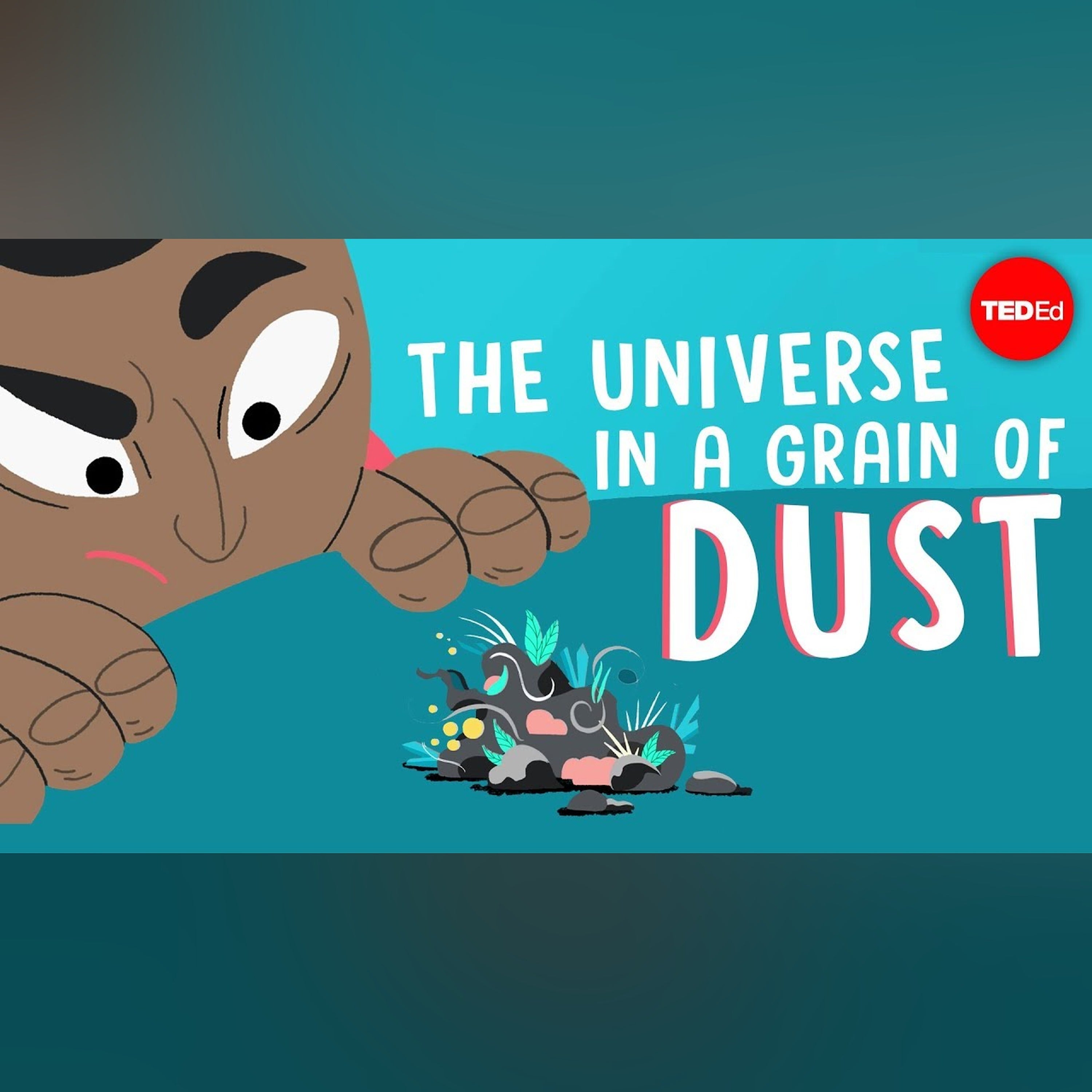
Uploaded 24-05-18 View full lesson: https://ed.ted.com/lessons/what-is-dust-made-of-michael-marder Less than a tenth the size of an ant, a dust mite’s whole world is contained in the dusty film under a bed or in a forgotten corner. This realm is right under our noses, but from our perspective, the tiny specks of brilliant color blend together into a nondescript grey. What are these colorful microscopic particles? Michael Marder explores the science of dust. Lesson by Michael Marder, animation by Mette Ilene Holmriis. Thank you so much to our patrons for your support! Without you this video would not be possible! Irindany Sandoval, William Bravante, Elizabeth Parker, Sai Krishna Koyoda, Therapist Gus, Samuel Barbas, Betsy Feathers, Maxwell Ingram, Ajinkya Deshmukh, Victoria Soler-Roig, Abdulmateen Aderinto, Pavel Maksimov, Barbara Younker, Cyrus Garay, Yvette Mocete, Mike Azarkman, Valeria Sloan Vasquez, Patricia Alves Panagides, William Biersdorf, Michael Aquilina, Vinamr L. Sachdeva,