The HSA is a great account to spend and a terrible account to leave behind. If your spouse inherits your HSA, no problem. It becomes their HSA, and they keep all the same tax benefits. But if anyone other than your spouse inherits it, like your kids, the account stops being an HSA the day you pass away. The whole balance gets added to their income in that one year, and they pay tax on all of it. We will cover this with an article from Christine Benz at Morningstar titled "Your HSA Needs a Succession Plan." Our Listener Question is loosely related to the headline topic, with a message from a listener with about $20,000 invested in her husband's old HSA wants to know if she should spend it before the Roth, and whether it can cover her health insurance premiums before Medicare. Then we close it out with some inspiration from Diane in New Jersey for our Retire To Something segment. Resource: Christine Benz article in Morningstar: Your HSA Needs a Succession Plan (https://www.morningstar.co
Paul Enright is a private investor managing his own capital under single family office, Krainos Capital. Paul opened Krainos after a dozen years at Viking Global Investors, the multi-billion dollar long-short equity hedge fund that also has been one of the most successful breeding grounds for talent in the industry. He has a deep understanding of intricacies of long-short equity investing and a knack for explaining it well. Our conversation covers Paul's career path to Viking, training while there, and advice to early-career investors. We dive into the distinction between business analysis and stock picking, and the importance of portfolio management to investment success. In the process, we discuss liquidity, shorting, portfolio rebalancing, incentive compensation, and market structure. We close with Paul's approach to managing his own money and his answers to a terrific set of questions sourced from his Twitter feed before the show. Learn More Follow Ted on Twitter at @tseides (https
Financial Planner Luke Smith joined 2CC Talking Canberra in Money Matters, that aired live on Friday 11 November 2026 with 2CC’s Leon Delaney. The topic is: Understanding your asset allocation & your personal risk profile. This show takes at risk and how much you’re prepared to take in your superannuation, your retirement portfolio and how you can manage risk, so it doesn’t keep you awake at night, but also still helps you get the returns or income you need. Thank you for joining us live on 2CC, YouTube, Spotify or your favourite podcast streaming service for ‘The Strategy Stacker – Luke Talks Money’. Key topics covered include: We’ve seen volatility in a number of areas of the market which have moved positively and negatively. Do you know what you’re invested in? Don’t just look at the label of your portfolio. The differences between growth assets, which include Australian and international shares, property, and infrastructure, and defensive assets like fixed interest and cash. A fall
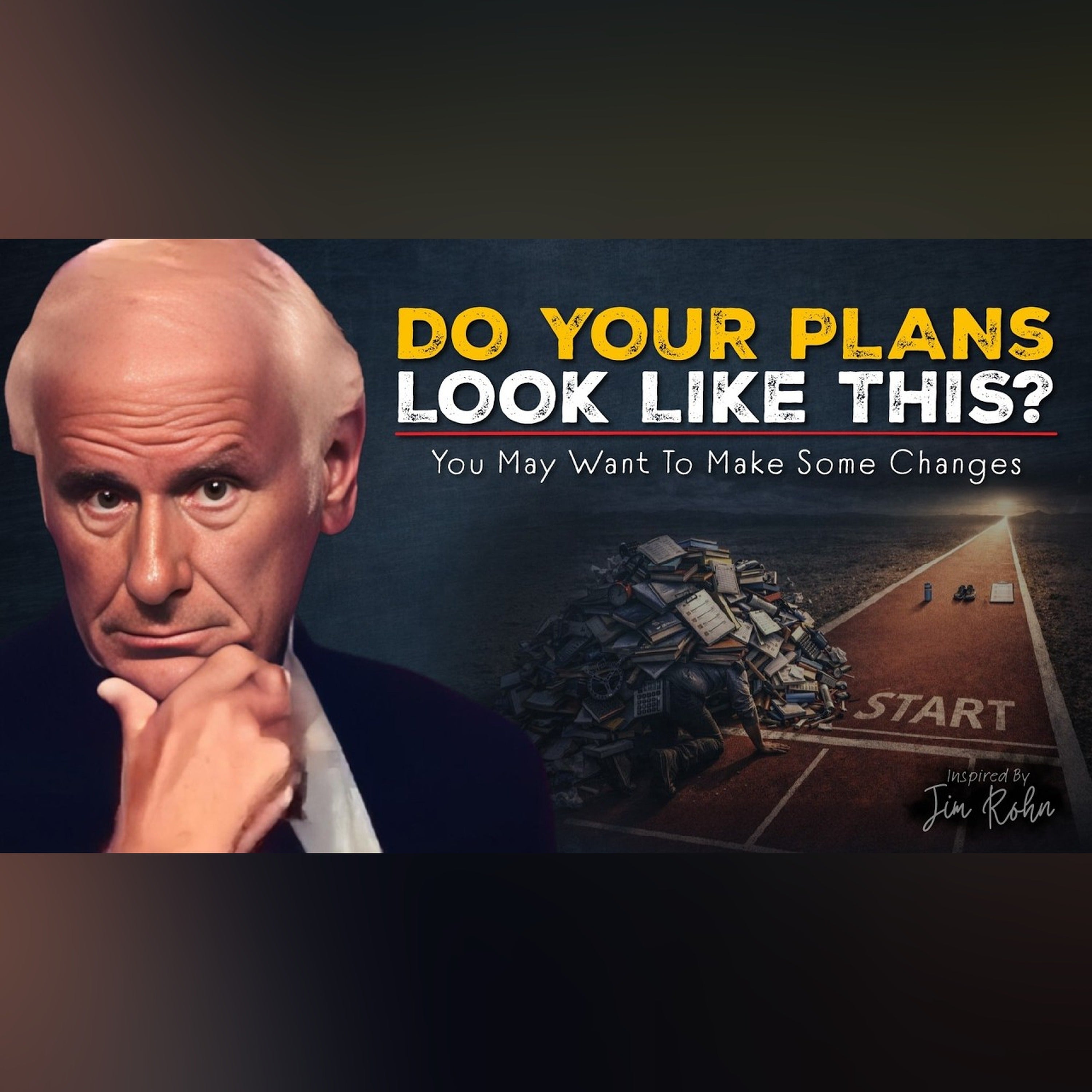
ACTION GUIDE — START HERE Uploaded 27-01-26 Most plans fail because they never leave the page. This Action Guide is not theory, motivation, or “ideas to think about.” It’s a practical breakdown of how to turn a written plan into something that actually reshapes your days, habits, and decisions. It walks you through: -Identifying where your plan is still just a wish -Forcing proof into your daily behavior -Cutting complexity until action becomes unavoidable -Replacing excitement with evidence -Building accountability so your plan survives reality ️ This video walks through what actually makes a plan real — and why most plans collapse long before results ever appear. It shows how people confuse writing, organizing, and imagining with progress, and why detailed notebooks, timelines, and “clear intentions” often become a substitute for action instead of a trigger for it. You’ll see: -- How plans fail when they don’t demand change in daily behavior - Why motivation feels powerful but disapp
To mark 10 years of Meet the Farmers, Ben looks back with journalist and Just Farmers founder Anna Jones at a decade that transformed farming and the way it is discussed. They explore how Brexit, the pandemic, the cost-of-living crisis and extreme weather affected farmers and public attitudes; how Clarkson’s Farm and social media brought farming to a wider audience; and why divisions within agriculture matter. Looking ahead, they consider the pressures facing family farms, the role AI might play, and what it will take to keep different kinds of farms—and the communities around them—thriving. Please note that this podcast does not constitute advice. Our podcast disclaimer can be found below. Disclaimer This Podcast should not be considered professional advice. Contact
So if everybody has a plan, why do so few people end up living the life the plan describes? That's the question I want to sit with tonight. Because the gap between the people who get there and the people who don't isn't talent. It isn't luck. It isn't who started with money and who didn't. Uploaded 22-10-26 The gap is something much quieter than that. Most people work on their plan a little, and then they set it down. They pick it up when they feel inspired, and they set it down when life gets heavy. And because they keep picking it up and setting it down, the plan never gets a chance to do the one thing it was designed to do. Here is the truth: there is a second stage almost nobody reaches, where the direction reverses — where the thing you've been building starts building you. Where the discipline you've been forcing becomes the person you are. This seminar walks through what it actually takes to stay with a plan long enough for that reversal to happen. CHAPTERS 0:00 Intro — the quie
Jesse Merrill wanted to make movies. Instead, he made cottage cheese cool—and built a business with more than $200 million in annual sales. Jesse got his start fetching coffee on the set of Jackass and handing out product samples for extra cash. After helping build Moby’s tea brand and grow Honest Tea, he teamed up with cofounder Anders Eisner to reinvent cottage cheese. But Good Culture got off to a rocky start. The first batch came out soupy. Shoppers mistook it for yogurt. And Jesse had just 30 days to sell his inventory at Whole Foods or risk paying for what didn't sell. Then a cottage cheese ice cream recipe went viral on TikTok, introducing millions of people to a food they'd long overlooked. What You’ll Learn How Jesse's early marketing gigs prepared him to build a consumer brand Why he bet on a category with aging customers and declining sales How Good Culture's early packaging confused shoppers How Jesse tackled a manufacturing crisis as demand soared What he looked for in an
Jensen Huang resigns as Nvidia CEO after admitting to an affair with a suspected Chinese spy, followed by reports of a second affair with an employee. We break down the shareholder backlash, the theories behind the timing of the leak, and why we think Jensen is coming back. Anthropic gets ready to go public at a valuation of up to $1.4 trillion. We get into the prospectus, the fear around AI taking every job, and why the hype doesn't match how people actually use AI today. The November 17th doomsday rumor, why everyone makes content about whatever topic is trending, and how you and your neighbor can now live in totally different realities. Card grading has its biggest month ever, with a record 3.87 million cards graded in October and PSA alone grading 2.79 million, as Pokemon and trading cards keep booming. Upper middle class in LA, and why most businesses still have no idea what an AI agent is. Plus a Trove pack battle on air. Group Chat News, every week. It helps more than you know.
00:00 — Are military-style toughness retreats worth the money? 17:45 — Should you leave a jiu-jitsu academy after your instructor injures you? 42:48 — Should you give up financial success to pursue your true calling? 47:27 — How do you avoid burnout and maintain work-life balance when running your own business? 56:12 — Should you pursue your dreams even when your family doesn't support your decision?
Most retirement plans quietly assume a shorter, simpler retirement than many of us may actually get. Joe Saul-Sehy, OG, and Doug start with a new national index that measures how ready Americans are for longer lives, then ask a friendlier question than “do you have enough?” The question is what breaks first if retirement runs long: your money, your home, your health plan, your family, or your social life. Along the way they play a round of “ready or fantasy” and finish with five simple questions that can reshape your plan. What You’ll Walk Away With Why retirement year two and a much later year feel nothing alike, and why your plan should cover both What breaks first when retirement runs longer than expected, and how to find out before it does Why “my kids will take care of me” is worth a real conversation, not a joke How to game-plan care and health the way you already game-plan market drops The home details that sound minor until mobility changes Why a long retirement can make growth
What happens when the apology you receive from someone you love was actually written by ChatGPT? Or when your boss, coworker, or partner uses AI to communicate feelings and ideas that aren't entirely their own? Artificial intelligence is making communication faster and easier than ever. But is that convenience coming at the expense of honesty, trust, and genuine human connection? In this episode of The Art of Charm, AJ Harbinger welcomes back Christian B. Miller, philosopher and author of The Honesty Crisis, to explore how AI-generated communication is changing our relationships, reshaping workplace interactions, and raising difficult questions about authenticity. From AI-written apologies and job interview preparation to artificial intelligence companions and the growing temptation to outsource our thinking, Christian examines where helpful technology crosses the line into dishonesty—and why that distinction matters for our personal and professional lives. You'll discover how to use A
In 1994, Terry and Gwen Sherman bought a cattle ranch in Utah, and eighteen months later they sold it and left. They described lights in the sky, cattle cut open and drained, and a wolf that shrugged off three point-blank gunshots. In Navajo tradition a skinwalker is a witch who takes animal form, a word most Navajo will not say aloud, and that is what people called the place. A billionaire named Robert Bigelow bought it to find out if any of it was real, put scientists and cameras on it, and got nothing. In 2008 the Pentagon put $22 million into studying the ranch and handed the contract to Bigelow's own company. Today it is a History Channel series. In this episode of Conspiracy Theories, Cults, & Crimes, Vanessa Richardson examines the tradition nobody will name, the thirty years of investigation that has produced testimony and nothing else, and the strangest fact in the whole story: somebody in Washington took it seriously enough to write a check. For more, follow Conspiracy Theori
It’s been the year of the brand reboot, from Universal Genève and Gallet to Ebel and now Zenith. So we held a draft. Each of us picked three watch brands we’d reboot, with one rule: the brand has to be active today. No bringing back dormant names. Asher opens with Glashütte Original, a brand whose watches are much better than its branding, and argues it needs a full brand refresh to match the work coming out of its workshop. Next is Hermès, one of the strongest brands in the world, whose watchmaking has been watered down by too many H08 variants. His last pick is Roger Dubuis, which has the simplest fix of the three: go back to the ’90s designs, just as Daniel Roth did. He also makes a call for Watches and Wonders. Gabe picks Minerva, which needs smaller cases, a time-only entry point built on the Pythagore, and retailers who know how to sell high horology. Then Ralph Lauren, whose shaped and dress watches showed up ten years before the market wanted them. He ends with Timex Ironman, w
(Job 42:16-17) In this special week-long video edition of Enjoying the Journey, Scott Pauley teaches from Stephen’s Studio in the Compass House and leads a focused study on making the end of each season and even life better than the beginning. By studying the last chapter of the book of Job, we learn to see the life of Job not merely as a story of suffering, but as a revelation of who God is and how God completes the story. (10274261116) Continue your study of Job with ourStudy Job page (https://enjoyingthejourney.org/study-job/) at https://enjoyingthejourney.org/study-job/ Part 1 of Scott's study: How to Make the End Better than the Beginning. FOLLOW, COMMENT, SHARE Would you take a moment to share this podcast with others? Explore now at ETJ.Bible (https://enjoyingthejourney.org/). Extend the Work
In Episode 508 (https://hiddenforces.io/podcasts/why-nothing-looks-cool-anymore-john-mauriello) of Hidden Forces, Demetri Kofinas speaks with industrial designer and Design Theory founder John Mauriello about how design shapes our culture and behavior, why contemporary products from cars to phones increasingly fail to evoke our deepest desires, and the perceptual principles behind a well-executed scam. The conversation covers John's path as a self-taught designer who built an audience of millions on YouTube, and his theory that contemporary design, from Apple's minimalist products to modern hypercars, has been stripped of the humanist philosophy that once gave rise to it and replaced by the single-minded pursuit of efficiency and profit. They also examine the design elements of a successful scam, using Theranos, Silicon Valley exit culture, and the broader collapse of institutional trust to map the principles that distinguish ambitious risk-taking from outright fraud, and what those sa
Tyrese Gibson delivers a raw, unfiltered wake-up call about chasing the look of success instead of the real thing. In this fired-up message, he calls out the bottle-service balling, the new phone you can't afford, and the pressure to prove you're doing it big. This episode will challenge you to stop fronting and get focused on the work. Source: Tyrese Gibson: If You Want It, Go Get It (https://youtu.be/2R0J-ADAIQI?si=QGAhECYY5cY8IOb5) Hosted by Sean Croxton (https://seancroxton.com/) Follow me on Instagram (https://www.instagram.com/seancroxton/)
In this episode Ato sits down with Chantelle Kelly is an investor and financial educator with 13 years of experience in the finance industry. She has built an investment portfolio worth approximately £450,000 in under three years and is now working towards her next milestone of £1 million. Connect with Chantelle: Instagram: https://www.instagram.com/_by.chantelle/ --- ️ Read Savvy Wallet: The Wealth Edit: ---
In this week’s First $1,000 segment, we hear from a college-aged reseller of MacBooks. He’s got it down to a science and is pulling in more than a thousand dollars a week part-time! Show notes:SideHustleSchool.com (http://sidehustleschool.com/) Email: [email protected] Be on the show: SideHustleSchool.com/questions Connect on Instagram: @193countries Visit Chris's main site: ChrisGuillebeau.com Read A Year of Mental Health: yearofmentalhealth.com If you're enjoying the show, please pass it along! Hosted on Acast.
Get the 200+ Page Optimal Living Daily Workbook (PDF) - Free. Want to turn today's episode into an actionable plan? Episode 3772: Paula Pant explains why the 'any benefit' mindset, chasing every small saving or opportunity because you never know where it might lead, keeps people stuck. She makes the case for 10x thinking instead: cut what is unnecessary, write a specific five-year goal, and judge every activity by whether it is the most important step toward that goal, such as learning about investing rather than clipping coupons. Read along with the original article(s) here: https://affordanything.com/any-benefit Quotes to ponder: "But the potential for any benefit is not a sufficient reason to devote yourself to an activity." "You can do anything, but not everything. Every decision is a trade-off against something else." "By letting go of tiny tweaking, you leave space in your life for mind-blowing results." Airwallex is a financial technology company, not a bank. Services in the US
Your beliefs can lower your blood pressure even when nothing else about your day changes. Dr. Alia Crum, a Stanford psychology professor who runs the Stanford Mind & Body Lab, sat down with Lewis to explain how what you believe about stress and about your own body shapes your health. In one study, 84 hotel housekeepers heard that their work already met the Surgeon General’s exercise guidelines. Four weeks later, the women who got that message had lost about two pounds, and their systolic blood pressure had dropped by roughly 10 points. In another, people drank the same milkshake twice, and their hunger hormone fell more sharply when they were told it was the indulgent one. Alia also argues that stress shows up because you care about something, and that seeing it as a teacher changes both your cortisol and your focus. She talks about her own eating disorder as an athlete and about enoughness, the core belief behind her book Believe: The Mind’s Power to Create Reality. Then Lewis asked w
What if the life you want isn't about changing your circumstances, but about changing who you are? In this episode, I walk you through a powerful exercise to visualize your ideal life ten years from now, identify the person you need to become, and use the Stop, Start, Continue method to close the gap between who you are today and who you want to be. I'll show you how to stop self-sabotaging, build self-awareness, and start making daily decisions as the best version of yourself so you can create the life you've always wanted. break through what’s keeping you from your next level. Get $100 off your ticket: direction, and focus in life. Rich Roll, and Dr. Steven Gundry. Hosted by Simplecast, an AdsWizz company. See https://pcm.adswizz.com advertising.
I don’t call a lot of people a master dresser, but Laurel Pantin is one of the few who have earned the title. Laurel has lived about five lives in fashion. A former market editor at Glamour, Lucky, and InStyle (by way of assisting Eva Chen at Teen Vogue), she went on to launch her Substack, Earl, and became fashion director at large for By George, the Austin store where she first fell in love with fashion as a kid. Now Laurel owns her own store in Beverly Hills, Earl IRL, which is perfectly curated, but somehow still feels like walking into her living room. Laurel walks us through how she’s reinvented herself so many times, and why it pays to have a point of view not everyone will like. She breaks down gestural dressing (which totally changed how I approach getting dressed), why fashion loves a wrinkle right now, and how she’s getting out of her own style rut. Plus, her trick for styling a button-down so it never looks boxy, the archival Celine and Dries she’s always hunting for, and t
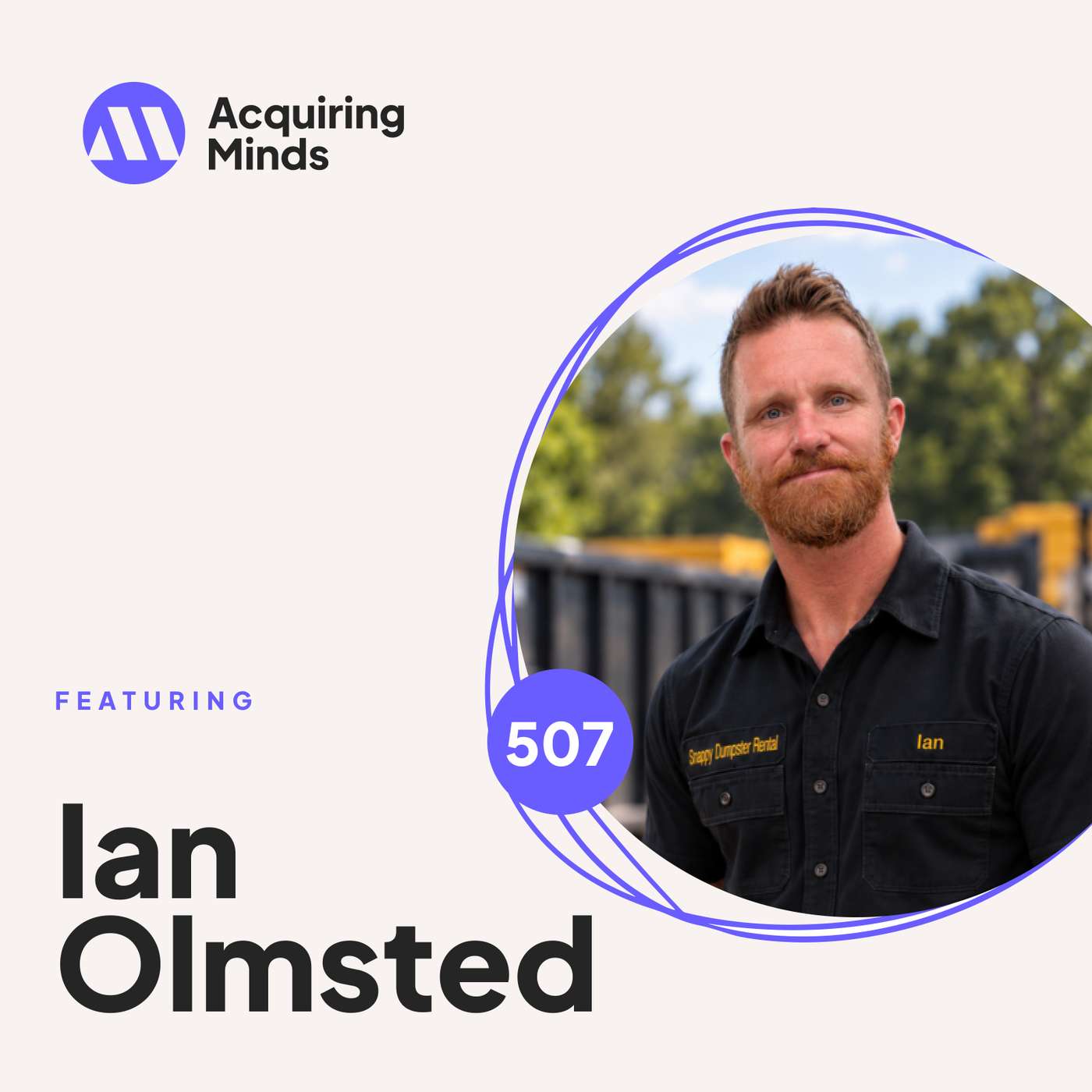
Ian Olmsted grew his dumpster rental one unit at a time, until a competitor’s offer changed how he thought about growth. Register for the webinars: Personal Guarantee Insurance: What You Need to Know (https://bit.ly/4ePMcEL) - TOMORROW!! - https://bit.ly/4ePMcEL Partnership Agreements: Governance, Breakups & Rollover Sellers (https://bit.ly/4zKl0j5)- Thu, Nov 19 - https://bit.ly/4zKl0j5 Topics in Ian’s interview: Transition from scientist to entrepreneur Starting a dumpster rental business while employed Securing initial customers before launching the business The true costs of dumpster rental operations Where do you store the dumpsters? Acquiring a 3x larger competitor Losing recurring customers after closing Merging 2 competing business brands Marketing agency messed up his website Comparing build-first with buy-first References and how to contact Ian: LinkedIn (https://www.linkedin.com/in/ian-olmsted-253707a2/) Snappy Dumpster Rental (https://www.snappydumpsterrental.com/) The Acqui
Nvidia's earnings late tomorrow highlight a busy week, kicked off with opening comments from Fed Chairman Kevin Warsh at a conference at noon today. Retail sales bow Tuesday. Important Disclosures Each investor needs to review an investment strategy for his or her own particular situation before making any investment decisions. For illustrative purpose(s) only. Investing involves risk, including loss of principal, and for some products and strategies, loss of more than your initial investment. Past performance is no guarantee of future results. For more information on indexes, please see schwab.com/indexdefinitions (https://www.schwab.com/resource/index-and-investment-term-definitions). All expressions of opinion are subject to change without notice in reaction to shifting market, economic or political conditions. (0130-1126) Hosted by Simplecast, an AdsWizz company.