Katie and Sam speak to Professor Peter Fonagy, who led the recent independent review of mental health, autism and ADHD services in England. The headlines have been written, the dust has settled but how does the man behind the government commissioned review into ADHD think we can make life better for ADHDers? In this detailed discussion, Professor Fonagy explains how a 'needs led' system of support could reduce what he calls the 'distress' of those people who are currently waiting for an ADHD diagnosis before they can access help. They discuss, the need to take ADHD seriously and the proposal to better regulate all providers of ADHD diagnoses. Professor Fonagy also explains what the report meant when it said we are facing the risk of over diagnosis of ADHD. If recent headlines have been destabilising or you just want to know more about what ADHD actually is, then this episode has answers from the expert. Send us your questions and stories: Instagram: @yourewrongaboutadhd TikTok: @ywaadh
Diamonds are a girl’s best friend. But they’re so much more than that. They’re sources of power, wealth, and conflict. They’re tickets into Earth’s deep, ancient past. (And they’re super duper cursed. Well, some of them. Maybe.) Join us to learn more about where these strange gems come from, and the hold they’ve had over us for thousands of years. Learn more with these resources: International Gem Society: Conflict-Free Diamonds: What Does it Mean? https://www.gemsociety.org/article/conflict-free-diamonds/ Human Rights Watch: The Hidden Cost of Jewelry https://www.hrw.org/report/2018/02/08/hidden-cost-jewelry/human-rights-supply-chains-and-responsibility-jewelry Time: Blood Diamonds https://time.com/blood-diamonds/ Introduction - Curse of the Hope Diamond 00:00 How a Diamond Forms 0:38 Diamonds Aren't that Rare 3:28 Lab-Grown Diamonds 6:01 Blood Diamonds 7:49 Review & Credits 9:10 Sources: https://docs.google.com/document/d/1RpwM8ZQPFk_DkzMJjMdtRrNGrJSNJ7FbgmQybSZ2Cqo/edit?tab=t.0 Chec
I’m having trouble with this. I mean I’m really struggling with it. Like, I'm trying, but I can’t seem to figure it out. When something is difficult, there are a lot of natural ways to talk about what you’re experiencing. Some expressions focus on the problem, some focus on your effort, and one of them shows that things are finally starting to improve. So today, we’re going to look at five natural ways to talk about something difficult in everyday English. The Happy English Podcast Helping people speak English better since 2014 Over 1,000 episodes • 8 million downloads Learn more about my English lessons and courses https://www.myhappyenglish.com (https://www.myhappyenglish.com/)
View full lesson: http://ed.ted.com/lessons/how-to-detect-a-supernova-samantha-kuula Uploaded 09-06-15 Just now, somewhere in the universe, a star exploded. In fact, a supernova occurs every second or so in the observable universe. Yet, we’ve never actually been able to watch a supernova in its first violent moments. Is early detection possible? Samantha Kuula details the science behind an early supernova warning system. Lesson by Samantha Kuula, animation by Nick Hilditch.
We just got back from our 3-night naming cruise on Legend of the Seas, where we saw the champagne bottle smash against her and experienced so many cool things. This is the sister ship to Icon of the Seas and Star of the Seas and we couldn’t wait to explore all of the changes and improvements Royal Caribbean made with the largest cruise ship in the world. We loved so many things about Legend of the Seas. Today we’re talking all about everything we experienced and everything we are looking forward to trying the next time we sail on her, from the amazing spaces and wonderful entertainment, to the service and food. Enjoy! We also have Addicted to the Mouse Merchandise! Thanks so much for listening! Please also connect with us here: Youtube – https://www.youtube.com/@AddictedtotheMouse Facebook – https://www.facebook.com/AddictedtotheMouse/ Instagram – https://instagram.com/addictedtothemouse/ The post Legend of the Seas Naming Cruise | 3 Nights Aboard Royal Caribbean’s Newest Ship (https:/
There is increasing evidence that many operating theatre crises result from breakdowns in communication, and that running high fidelity simulations in real theatres can identify problems before they occur, and improve teamwork in high stress situations. Dr Heidi Thies joins us to talk about why so many operating theatre crises come down to communication and teamwork rather than a lack of knowledge or skill, and how running simulations in real theatres can identify problems before they arise. Chapters 00:00 Introduction 00:36 The arrest nobody heard: why communication matters 03:48 What [program name] is and how it works 06:56 Why theatre crises are almost never a knowledge problem 09:40 Latent safety threats and testing new systems 14:14 Getting buy-in and keeping it psychologically safe 19:03 Funding, where to start, and the fixes that stuck
It's Anti‑Bullying Week, and I want to help you navigate one of the toughest parenting challenges there is: the moment you suspect your child is being bullied. In today’s bucket-emptying episode, I explain why the word "bullying" can sometimes make it harder for us to respond effectively. As parents, we often feel like we’re always getting it wrong: dismissing something that needs attention or escalating something that needs a different kind of response. So I am going to help you understand the difference between a one‑off friendship conflict, unkind behaviour, social exclusion, and true bullying, so you can respond in the best way for your child. I'll also walk you through five practical things that help children feel safe enough to open up, empower them to understand what's happening, and really help them to advocate for themselves. If you're worried about bullying, friendship problems, school anxiety, playground conflict, social exclusion, or a child who insists they're "fine" when
The end of the Napoleonic Wars left the great powers of Europe shaken. Judging from the destruction that had been wrought across the continent, it seemed to the powers that be that the Enlightenment had liberated the people, and led to disaster. So, everybody got together in Vienna to have a Congress, and to try to put Europe "right" again. By "right" I mean they wanted to go back to the old days of kings, queens, and nobles running the show. But this new yearning for the past pervaded the continent. Roomanticism arose at the same time, looking back at (imagined) golden age of Medieval Times. Today we'll talk about the Congress of Vienna, The Holy Alliance, and the Romantic movement across the arts. Sources -Blanning, Tim. The Romantic Revolution: A History. London: Weidenfeld and Nicolson, 2011. -Hunt, Lynn. Making of the West: Peoples and Cultures. Boston: Bedford St Martin’s, 2019. -Vick, Brian E. Congress of Vienna: Power and Politics after Napoleon. Cambridge: Harvard University P
Literature doesn’t begin and end when a writer puts words on a page. In our final episode of Crash Course Latin American Literature, we’ll explore how literature is shaped by readers and translators, too. Introduction: A Mysterious Library 00:00 "La Biblioteca de Babel" 0:39 Roberto Bolaño 3:14 Translation 5:20 Review & Credits 8:56 Sources: https://docs.google.com/document/d/1eE7g4-k6PD7C6wNBzeJIO8GCDHpoJl8ldDjKyq_2yYg/edit?tab=t.0 To learn more, check out these videos: Check out our CC Latin America Extra Curricular Playlist here: *** Support us for $5/month on Patreon to keep Crash Course free for everyone forever! https://www.patreon.com/crashcourse Or support us directly: https://complexly.com/support Join our Crash Course email list to get the latest news and highlights: https://mailchi.mp/crashcourse/email Get our special Crash Course Educators newsletter: http://eepurl.com/iBgMhY Thanks to the following patrons for their generous monthly contributions that help keep Crash Cours
Learn Spanish through today’s real news. In this episode: Trump, Xi Jinping and Vladimir Putin meet at the APEC summit in China, where trade, technology, green energy and regional security are key topics. Also: Australia, Canada, Italy and the UK urge Israel to allow immediate humanitarian aid, including tents and other supplies, into Gaza. Hoy: Trump, Xi y Putin se reúnen en China · Cuatro países piden ayuda para Gaza. Today’s Spanish focus: pedir = to ask for. Vocabulary: tienda (tent), refugio (shelter), colchón (mattress). Learn more from today’s episode with the full podcast transcript, English translation, vocabulary explanations, and extra learning materials: https://linguawire.com/episodes/spanish-a1-2026-11-16 Hosted on Acast.
Ready for your next chapter? ________________________________________ You know that feeling when you’ve spent years somehow keeping everything going… and then suddenly the things that used to help you cope just don’t seem to work anymore? You’re more forgetful. More overwhelmed. More anxious. Your tolerance is lower. You don’t quite trust your brain in the same way. And you’re wondering whether it’s ADHD, perimenopause, burnout… or all of it at once. This is one of those conversations that puts words to so many things women have been feeling for years without necessarily knowing why. ________________________________________ All orders include a Welcome Kit. Study results are held by AG1, 2023. ________________________________________ There are so many moments in this episode where you might hear something and think, Oh my God… that’s me. In today’s More Yourself episode of The ADHD Women’s Wellbeing Podcast, I’m sharing a conversation I had with my friends Nicole Goodman and Lauren Mis
During a dinner at Bethany, a woman entered carrying an alabaster jar of expensive perfume. Without hesitation, she broke it open and poured the perfume over Jesus' head. Some people at the table became furious, questioning why such an expensive item had been wasted instead of being sold and the money given to the poor. But Jesus defended her. He explained that she had done something beautiful and that her actions would be remembered wherever the gospel was preached. Every contribution counts. Thank you for being part of our journey!
Don't let the difficulties of today convince you that tomorrow has no possibilities. Jerusalem was under siege, the Babylonian army was closing in, and the future looked hopeless. Jeremiah himself was imprisoned because of his prophecies. Why buy property in a city about to fall? But Jeremiah obeyed, completed the transaction and carefully preserved the documents as evidence. The purchase was a prophetic sign that houses, fields and vineyards would one day exist again in the land. What looked like a terrible time to invest was actually a declaration that the future was not over. Every contribution counts. Thank you for being part of our journey!
Bernie Sanders wants to raise Social Security benefits. What could his Social Security Expansion Act mean for your monthly check, and can he get it through Congress? For a Medicare plan review, call Chapter Medicare at (352) 841-0632 or visit https://24help.org/chapter. I’m Dr. Ed Weir, a former Social Security district manager. I’ll walk you through how Sanders wants to change the way benefits are calculated, how he proposes to pay for it, and what Congress would have to do before your payment could change. What’s the first thing you’d ask Congress to do to protect Social Security? Tell me in the comments. Free Social Security and Medicare guides at https://24help.org/ Read the Social Security Expansion Act at https://www.govinfo.gov/app/details/BILLS-119s770is Thumbnail photo by Gage Skidmore, cropped and composited. https://commons.wikimedia.org/wiki/File:Bernie_Sanders_(54402493648).jpg CC BY-SA 2.0 https://creativecommons.org/licenses/by-sa/2.0/ Originally recorded live with Restr
Eleazar was an elderly and respected Jewish teacher who was ordered to eat pork against his religious convictions. Even when offered a private way to pretend to obey and escape death, he refused. He believed that compromising his principles, even secretly, would send the wrong message to younger generations who trusted him. Seven brothers and their mother were arrested and brutally tortured for refusing to abandon their faith and eat forbidden food. One after another, the brothers stood firm despite knowing what awaited them. Their mother encouraged them to remain courageous, reminding them of their hope in God and the resurrection Every contribution counts. Thank you for being part of our journey!
LSE Gender is delighted to welcome influential scholar Marquis Bey and distinguished journalist Sandip Roy, who will offer international perspectives on nonbinary lived experiences through their respective new books Nonbinary Life: An Autotheory and Chapal Rani, the Last Queen of Bengal.
This week I'm joined by the incredible Lexi Linnane, the 2026 Cork Rose. At just 15 years of age, Lexi's world was turned upside down when her mother, Tracey, died suddenly from a stroke at just 37, leaving behind three children, including Lexi's little sister, who was only two at the time. In this deeply emotional and honest conversation, Lexi recalls the heartbreaking night her mother died, the reality of growing up without her and the moments she wishes her mother could still be here for. At just 19, Lexi went on to represent Cork at the Rose of Tralee, an experience she had always dreamed of sharing with her mother. I am genuinely in awe of Lexi's strength, maturity and outlook on life. She doesn't want to be known as the Rose with a sob story, but as someone who is optimistic, resilient and determined to live life to the fullest. ️ If Lexi's story resonates with you, please follow, rate and share The Comeback. Proudly sponsored by ADHD Now. For ADHD assessments and support, visit
There is a particular kind of grief in watching your own life remain hypothetical. You can see it so clearly sometimes. The thing you would make. The place you would go. The version of yourself you keep speaking about as if she lives just slightly ahead of you, somewhere you will eventually arrive. And then somehow you don’t. Months pass. Years pass. The idea stays pristine. That is what this episode is really about. Not laziness. Not motivation in the usual sense. More the strange ways we protect ourselves from finding out what would happen if we actually tried. Because as long as something stays imaginary, it cannot fail. The book in your head is still brilliant. The business could still work. You could still be extraordinary at the thing you have never fully attempted. The horse is still behind the gate, untouched by the possibility of refusing the jump. So I wanted to look at what lives underneath that delay. Perfectionism. Procrastination. Tying your worth to achievement. Leaving
A pupil who's struggled with school attendance is finally coming in every day. Their attendance figures are improving, and the reintegration plan appears to be working. But their parents say they're becoming increasingly distressed at home, and teachers are noticing they're struggling to engage in lessons. So is the plan really working? And how should school leaders decide whether to increase expectations, maintain support or make further adjustments? In this episode of School Behaviour Secrets, you'll learn how to look beyond attendance percentages to judge whether a pupil is making meaningful, sustainable progress. You'll discover: Four areas to review alongside attendance, including access to learning, relationships and emotional wellbeing. How to recognise the difference between manageable anxiety that a pupil can gradually learn to cope with and distress that suggests they need more support. Three practical steps SENCOs and school leaders can take when reviewing reintegration plan
View full lesson: http://ed.ted.com/lessons/victor-wooten-music-as-a-language Music is a powerful communication tool--it causes us to laugh, cry, think and question. Bassist and five-time Grammy winner, Victor Wooten, asks us to approach music the same way we learn verbal language--by embracing mistakes and playing as often as possible. Lesson by Victor Wooten, produced by TED-Ed.
There's a small thing you didn't do today, and you already know what it is. You felt the tug when the moment came, and you turned away from it. It wasn't dramatic. It was a quiet choice made in half a second, and you moved on so fast you barely registered it as a choice at all. Uploaded 22-09-26 But it was a choice. And over many years of watching people rise and fall, I've become convinced that the entire shape of a life is decided in those small, forgettable moments — the ones nobody applauds, the ones you forget by dinner. The big moments are just the accumulation of ten thousand small ones you thought didn't matter. Here is the truth: the discipline you skip today does not disappear. It changes shape. It becomes something heavier, something that waits for you down the road with your name on it. This seminar unpacks the single mechanic behind how a skipped discipline becomes a carried regret — and how to reverse it before the debt comes due. CHAPTERS 0:00 Intro — the half-second you
In which John Green explores exactly when Rome went from being the Roman Republic to the Roman Empire. Here's a hint: it had something to do with Julius Caesar, but maybe less than you think. Find out how Caesar came to rule the empire, what led to him getting stabbed 23 times on the floor of the senate, and what happened in the scramble for power after his assassination. John covers Rome's transition from city-state to dominant force in the Mediterranean in less than 12 minutes. Well, Rome's expansion took hundreds of years, he just explains it in under 12 minutes. The senate, the people, Rome, the caesarian section, the Julian calendar, and our old friend Pompey all make appearances, but NOT the Caesar Salad, as Julius had nothing to do with it. Chapters: Introduction: SPQR 00:00 The Roman Republic 0:41 The Roman Senate 1:15 Cincinnatus 2:14 Gaius Julius Caesar 2:49 The First Triumvirate: Pompey, Crassus, and Caesar 3:40 The End of Caesar's Reign 5:22 The Second Triumvirate: Octavian
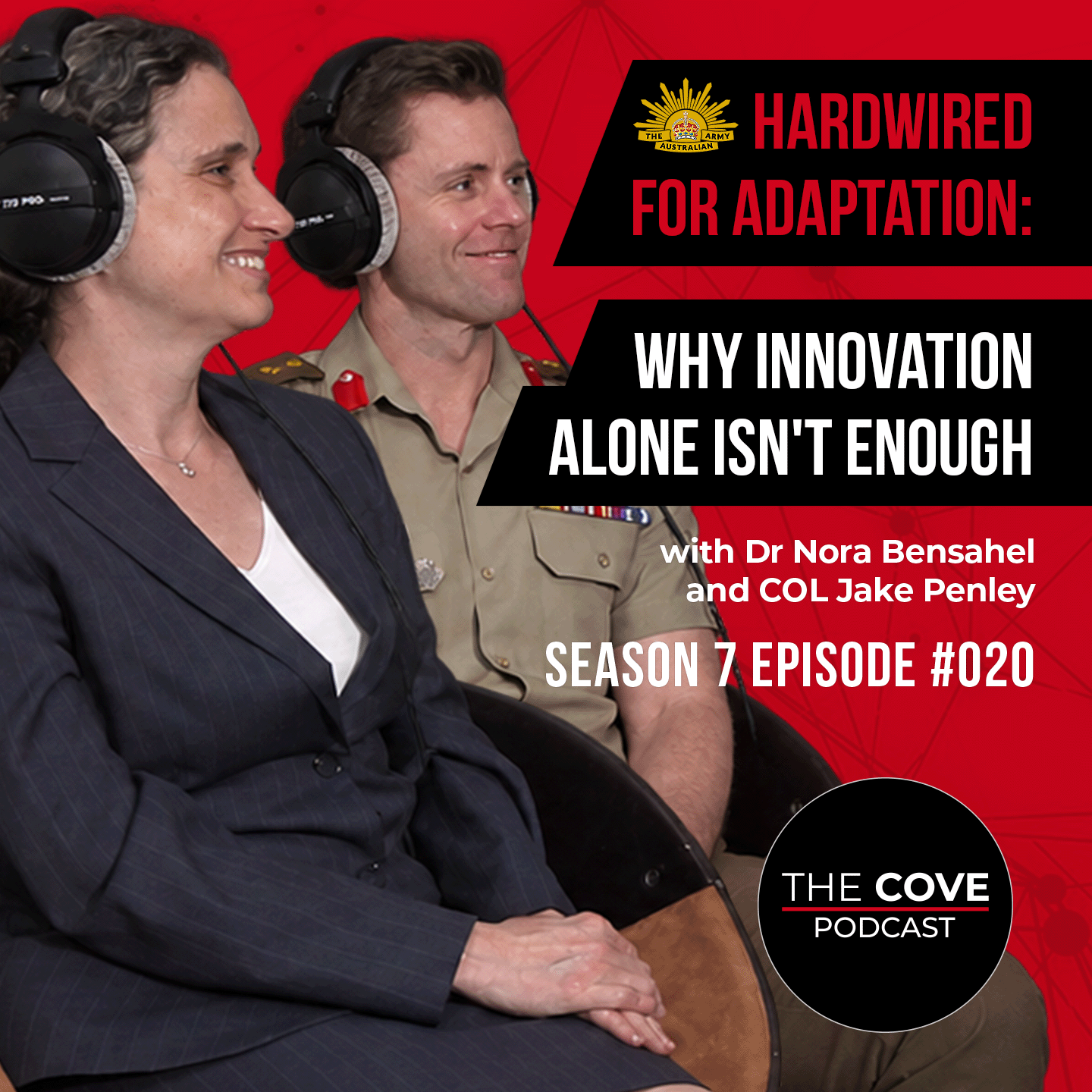
Recorded at the 2026 Chief of Army Symposium, this episode of The Cove Podcast explores what it takes to build an Army that can adapt faster than its adversaries. Professor Nora Bensahel from Johns Hopkins University joins Colonel Jake Penley, to discuss the challenges of military adaptation, drawing on lessons from contemporary conflicts and Army's own experimentation activities. The conversation examines why innovation on the battlefield does not always translate into organisational change, how bureaucracy and risk aversion can slow progress, and why commanders must be prepared to challenge established doctrine and ways of operating. From the rapid adaptation cycles seen in Ukraine to the unique demands of warfare in the Indo-Pacific, the discussion considers how Army can better connect battlefield lessons, experimentation, training and capability development. At its core, the episode asks a critical question: How does Army prepare for a war it cannot predict, and ensure it can adapt
This week we answer skeptics like Descartes with empiricism. Hank explains John Locke’s primary and secondary qualities and why George Berkeley doesn’t think that distinction works -- leaving us with literally nothing but our minds, ideas, and perceptions. -- Images and video via VideoBlocks or Wikimedia Commons, licensed under Creative Commons by 4.0: https://creativecommons.org/licenses/by/4.0/ -- Produced in collaboration with PBS Digital Studios: http://youtube.com/pbsdigitalstudios Crash Course Philosophy is sponsored by Squarespace. -- Want to find Crash Course elsewhere on the internet? Facebook - http://www.facebook.com/YouTubeCrashC... Twitter - http://www.twitter.com/TheCrashCourse Tumblr - http://thecrashcourse.tumblr.com (http://thecrashcourse.tumblr.com/) Support CrashCourse on Patreon: http://www.patreon.com/crashcourse CC Kids: http://www.youtube.com/crashcoursekids