We talk a lot about Keynesian economics on this show, pretty much because the real world currently runs on Keynesian principles. That said, there are some other economic ideas out there, and today we're going to talk about a few of them. So, if you've been aching to hear about socialism, communism, the Chicago School, or the Austrian School, this episode is for you. Crash Course is on Patreon! Thanks to the following Patrons for their generous monthly contributions that help keep Crash Course free for everyone forever: Fatima Iqbal, Penelope Flagg, Eugenia Karlson, Alex S, Jirat, Tim Curwick, Christy Huddleston, Eric Kitchen, Moritz Schmidt, Today I Found Out, Avi Yashchin, Chris Peters, Eric Knight, Jacob Ash, Simun Niclasen, Jan Schmid, Elliot Beter, Sandra Aft, SR Foxley, Ian Dundore, Daniel Baulig, Jason A Saslow, Robert Kunz, Jessica Wode, Steve Marshall, Anna-Ester Volozh, Christian, Caleb Weeks, Jeffrey Thompson, James Craver, and Markus Persson Want to find Crash Course elsewhe
A biologist’s natural habitat is anywhere questions about life are being asked—whether the subject is a nematode or a narwhal, a single cell, or a whole ecosystem. In this episode of Crash Course Biology, we’re flipping the microscope around to show how biologists’ work goes down. Along the way, we’ll learn why zebrafish and fruit flies are some of biology’s next top models. Chapters: Studying Life 00:00 Your Local Biologist 1:20 Biologists At Work 3:05 Real Life Biologists 5:17 Model Organisms 8:49 Review & Credits 11:10 This series was produced in collaboration with HHMI BioInteractive, committed to empowering educators and inspiring students with engaging, accessible, and quality classroom resources. Visit https://BioInteractive.org/CrashCourse (https://biointeractive.org/CrashCourse) for more information. Are you an educator looking for what NGSS Standards are covered in this episode? Check out our Educator Standards Database for Biology here: https://www.thecrashcourse.com/biology
英語学習などにご活用を!リンク先の英文記事を見ながら、聴いていただけます。 ▼01.Japan Inc. finds ways around China's export and travel curbs( https://www.asahi.com/ajw/articles/17041770 (https://www.asahi.com/ajw/articles/17041770?ref=arukiki) ) ▼02.Awa mayor arrested over personal accident costs billed to city( https://www.asahi.com/ajw/articles/17041657 (https://www.asahi.com/ajw/articles/17041657?ref=arukiki) ) ▼03.Crackdowns, visa rules could lead to loss of vital foreigners( https://www.asahi.com/ajw/articles/17040931 (https://www.asahi.com/ajw/articles/17040931?ref=arukiki) ) ▼04.Collect less, lose less: Companies rethink customer data policies( https://www.asahi.com/ajw/articles/17040941 (https://www.asahi.com/ajw/articles/17040941?ref=arukiki) ) ▼05.Japan to delve into acquiring nuclear subs in security review( https://www.asahi.com/ajw/articles/17040995 (https://www.asahi.com/ajw/articles/17040995?ref=arukiki) ) このエピソードは音声合成システムにより、全自動で作成しています。
What if the behaviors that helped you survive childhood are the same patterns holding you back as an adult? Maybe you learned to stay quiet, avoid conflict, please everyone, or always appear strong. Those behaviors may have helped you feel safe growing up, but what happens when they begin affecting your relationships, decisions, and personal growth? In Episode 65 of The Influence Exchange, J.V. sits down with transformational life strategist Tori Janae for an honest and deeply personal conversation about childhood survival patterns, emotional safety, people-pleasing, relationships, and breaking cycles that no longer serve us. Tori shares her experience growing up in an unstable environment, how those experiences shaped her approach to life, and what she learned about recognizing the patterns she carried into adulthood. J.V. also opens up about his own childhood experiences, creating a meaningful conversation about how our past can influence who we become. In this episode, we explore: H
Can folding a piece of paper 45 times get you to the moon? By seeing what happens when folding just one piece of paper, we see the unbelievable potential of exponential growth. This lesson will leave you wanting to grab a piece of paper to see how many times you can fold it! Lesson by Adrian Paenza, animation by TED-Ed.
Year-end planning brings plenty of decisions to work through, and Roth conversions are one of them. Should you convert in 2026, or is it better to wait? This week, Roger walks through a practical framework for evaluating Roth conversions, including the factors to consider, potential tax implications, and how to make a decision that fits your retirement plan. He also answers listener questions about simplifying investment portfolios, IRMAA surcharges, Roth conversion strategies, and asset location for early retirees. OUTLINE OF THIS EPISODE OF THE RETIREMENT ANSWER MAN (00:00) Introduction and why it's time to close the loop on Roth conversion decisions for 2026 PRACTICAL PLANNING SEGMENT (01:05) Roger walks through a framework for deciding whether a Roth conversion makes sense in 2026. He covers the factors to weigh, including current and future tax brackets, required minimum distributions, tax implications, and potential impacts on healthcare costs. The goal is to evaluate your option
The job market is changing, so what are employers ACTUALLY looking for? This week, I'm joined by Becca Mintz, President of Capital One Canada, to get an inside look at what it takes to stand out in today's job market. We're talking about what hiring managers want to see, how AI is changing the workplace, why soft skills matter more than ever, and how to set yourself up for long-term career success. Plus, how to find an employer that doesn't just hire you, but actually invests in your growth. Whether you're a new grad, looking for your next opportunity, or just trying to figure out how to stay competitive, this conversation is for you! Ready for your next career move? Explore job opportunities at Capital One Canada and find a role where you can learn, grow, and build your career: https://www.capitalonecareers.ca/ (https://can01.safelinks.protection.outlook.com/?data=05%7C02%7CMaria.Kestane2%40rci.rogers.com%7C0cdbfc049cd340d7f00a08df3ea7fa62%7C0ab4cbbf4bc74826b52ca14fed5286b9%7C0%7C0%7C
Is it even possible to find true inner peace these days? My guest today says yes. Diego Perez, otherwise known as Yung Pueblo, has sold over two million books, has millions of followers on social media, has spent over 10,000 hours in meditation, and spent a tremendous amount of time studying inner peace. In this episode, he shares how to find calm from within yourself and not let the chaos around you dictate your one precious life. What you’ll learn: • The 7 things you need for inner peace • How to connect with yourself more • How to feel secure when change feels terrifying • How to break old emotional patterns For more from Yung Pueblo: • Book, Journey: The Year That Changes Everything (https://yungpueblo.com/journey) • Book Tour Schedule (https://yungpueblo.com/events) • Instagram (https://www.instagram.com/yung_pueblo/) Ready to uplevel every part of your life? • LMNT: head to DrinkLMNT.com/Liz (http://drinklmnt.com/Liz) to get a FREE 8-count sample pack with any order. The Liz Mood
Reza Satchu was born in Mombasa, Kenya and landed in Scarborough as a kid with an accent and a skipped grade, the scrawny Indian kid in a class full of older boys. His parents cut the family off from their own community so the kids would sink or swim. They moved seven times in seven years. At 11, in a small apartment on the edge of Toronto, his mother told him he was going to Harvard. He sent 200 resumes to Wall Street and got nothing. So he cold called the McGill grads who worked there at 5:30 so they would pick up their own phones, told Merrill Lynch he was in New York when he was in Montreal, drove all night, bombed the interview and admitted he had lied. They gave him a shot. Harvard Business School came next, then a run of companies: supply chain software, self storage he sold for $110 million, a mental health network he sold for $200 million, and the student housing business he almost shut down during Covid and sold in 2024 for over a billion and a half. This week I sat down with
What should you do once you reach Coast FI? Keep investing and move closer to full financial independence, spend more and enjoy life now, or use that financial security to take a career risk? BiggerPockets Money co-host Scott Trench and Evan Lawler break down what Coast FI actually makes possible and why reaching your number doesn't mean you should stop thinking about your financial future. They explore how entrepreneurship, buying a home, taxes, employer matches, and access to your investments should influence your next move. Plus, they discuss the trade-offs between tax-advantaged retirement accounts and liquid investments, and why the best Coast FI plan leaves room for life to change. To go beyond the podcast: Interested in working with Nectarine? Go to https://biggerpocketsmoney.com/ (https://biggerpocketsmoney.com/fipro/)nectarine Interested in Learning More About Buying a Franchise? Want to better protect your personal identity? Go to: https://incogni.com/bpmoney, code BPMONEY Co
Take another breather from all the anatomy and physiology terminology to watch Hank struggle with words. Music: Kevin MacLeod - "Run Amok" http://incompetech.com/ *** Crash Course is on Patreon! Want to find Crash Course elsewhere on the internet? Facebook - http://www.facebook.com/YouTubeCrashCourse Twitter - http://www.twitter.com/TheCrashCourse Instagram - https://www.instagram.com/thecrashcourse/ CC Kids: http://www.youtube.com/crashcoursekids
View full lesson: http://ed.ted.com/lessons/why-do-your-knuckles-pop-eleanor-nelsen Uploaded 05-05-15 Some people love the feeling of cracking their knuckles, while others cringe at the sound. But what causes that trademark pop? And is it dangerous? Eleanor Nelsen gives the facts behind joint popping. Lesson by Eleanor Nelsen, animation by Steve Belfer Creative.
In 1959, the WHO set out to eradicate smallpox, an ambitious goal that was achieved by 1980. But this goal wouldn't have been possible without coordination on all levels of society. In this episode of Crash Course Outbreak Science, we'll look at cooperation on the individual, community, and national scale and see how by working together we can improve outcomes during an outbreak, prevent future outbreaks, and even eradicate disease. This episode of Crash Course Outbreak Science was produced by Complexly in partnership with Operation Outbreak and the Sabeti Lab at the Broad Institute of MIT and Harvard—with generous support from the Gordon and Betty Moore Foundation. Episode Sources: https://journals.plos.org/plosone/article?id=10.1371/journal.pone.0016085 (https://journals.plos.org/plosone/article?id=10.1371%2Fjournal.pone.0016085) *** Watch our videos and review your learning with the Crash Course App! Download here for Apple Devices: https://apple.co/3d4eyZo Download here for Android
Does whole food meal planning seem like another complicated thing to do? Need an easy healthy meals dinner plan anyone can follow? Today, I will share my 2 tried & true meal plans that I’ve used over the years to make preparing wholesome meals easier and more manageable. Perfect meal planning for beginners or anyone for that matter. Whether you prefer a little more structure or need flexibility throughout the week, I’ll walk you through 2 practical ways to organize your meals while making from-scratch whole-food cooking, a little easier. In this episode, you'll discover: Week-Day-Meals Plan: Assigning a cuisine or type of meat to each day of the week to simplify meal decisions. Meals-for-the-Week Plan: Planning your meals ahead but choosing which meal to prepare as your schedule and appetite change. The Master Grocery & Supply List: How to create a running shopping list that keeps your pantry, household supplies, and weekly groceries organized. Putting It All Together: Simple steps for
Have you ever missed someone so much that it actually hurt? Sr. Katie Flanagan reflects on St. Teresa of Ávila's description of a soul that longs so deeply for God that being apart from Him becomes painful. Even in that longing, God is drawing the soul closer to Himself. Today, we read The Sixth Dwelling Places: Chapter 2.
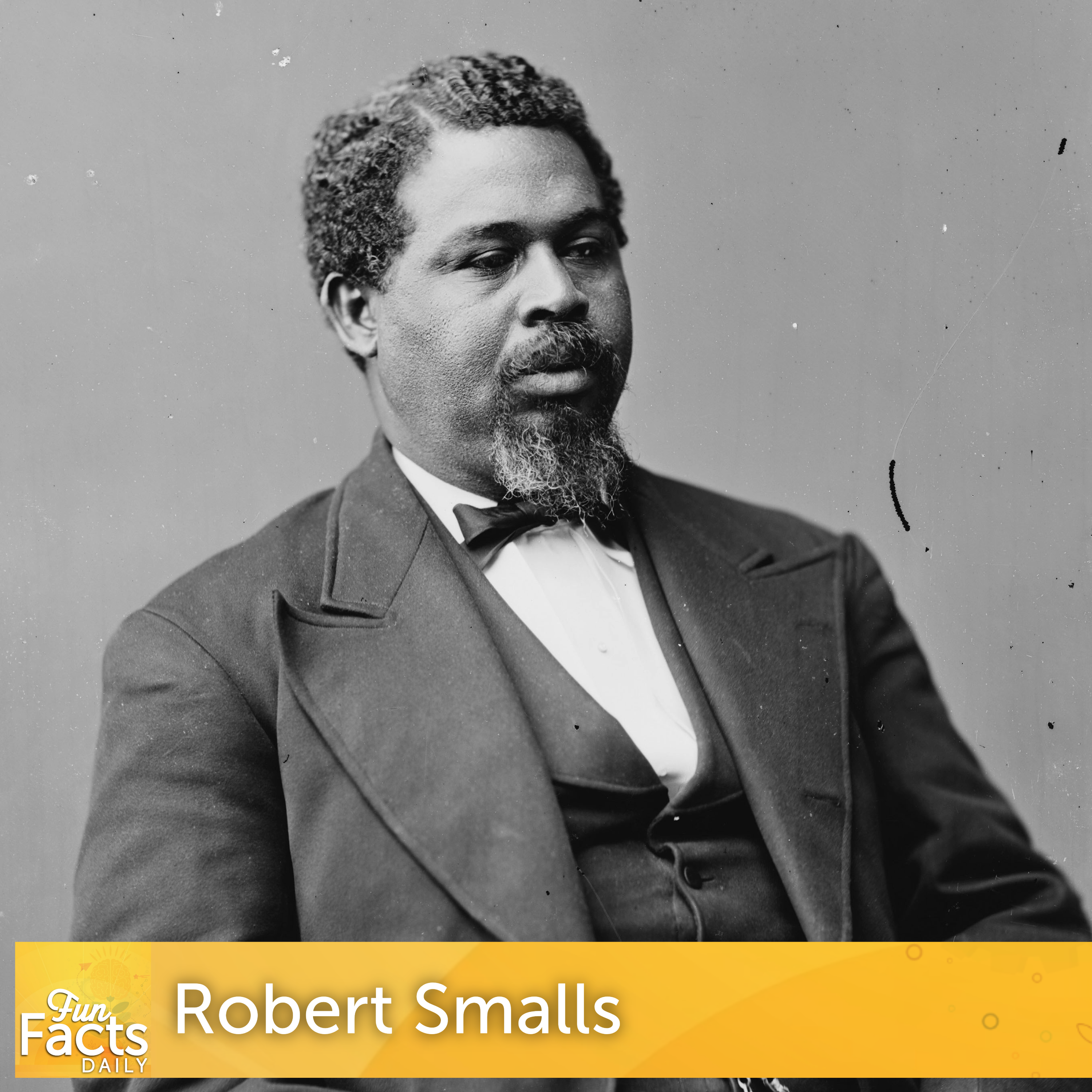
Robert Smalls was an amazing hero of the American Civil War. He gained his freedom and helped the war effort by orchestrating a daring escape aboard the Confederate steamer CSS Planter in May 1862. Working as an enslaved wheelman aboard the ship the twenty-three-year-old Smalls took advantage of the ship's white officers sleeping ashore, disguised himself in the captain’s wide-brimmed straw hat, picked up his family and fellow crew members, and navigated past five Confederate checkpoints in Charleston Harbor to surrender the ship and valuable military intelligence to the Union naval blockade. Classified legally as a "contraband of war," Smalls received congressional prize money, met with President Abraham Lincoln to advocate for the enlistment of Black soldiers, and went on to pilot armed Union vessels. In December 1863, after refusing to surrender under heavy artillery fire in Folly Island Creek, he was appointed captain of the Planter, becoming the first African American to command a
What do finance professionals say to their own relatives when nobody is paying them to say it? Joe Saul-Sehy, OG, and Doug sit down with Jenny Harrington, co-author of Investment Wisdom for Our Friends and Loved Ones, to find out. Jenny helped gather lessons from top finance experts, and she shares what she’d tell the people she loves. The conversation then turns to a Stacker’s question about an orphaned retirement account and whether an advisor is worth keeping. You’ll get a practical way to judge the advice you’re getting, minus the jargon and the guilt. What You’ll Walk Away With The one question that shows whether an advisor’s guidance is built for you or for their business Why the advice pros give their own families tends to be simpler than you’d expect A quick “must know versus nice to know” game that sorts the money basics from the trivia What to do about an old workplace retirement account that’s been sitting with no one watching it Why treating your advisor like an investment
Does 10 minutes really work when your whole house is a disaster? This week I'm trying something new and answering your questions about 10-minute tidying. In this episode: What my home looked like before, with weekend marathon cleaning sessions Why I really do want you to stop when the timer goes off How I clean a bathroom in two 10-minute chores Why a 30-minute Mighty Tidy beats a whole weekend of decluttering The leaky boat, and why decluttering doesn't stick Tidying when you're exhausted, working full time or raising toddlers and teens Why I built Sm'ores, the small chores dealt out like cards What 10 minutes a night adds up to (about 5 hours a month) The one thing to do tonight Want the reminder and the timer done for you? Try Tindy free at https://tindy.app (https://tindy.app/) Have a question I didn't answer? Email me at [email protected]. Show notes: wannabeclutterfree.com/335 (http://wannabeclutterfree.com/335) Check out BetterHelp and use my code betterhelp.com (htt
The third in a series on sound insulation. In our second episode (https://seatacnoise.info/ep-45-the-incredibly-high-cost-of-free-windows-sound-insulation-part-2/), we rushed through a history of airport planning, items covered in far more detail in previous episodes. For most of commercial aviation history, noise abatement meant distance. Everyone agrees that keeping airports away from people is a good idea. The question is: who should move, you or the airplanes? This episode is about the details of sound insulation. Mitigation. The second-choice for people living under the flight path. Most of it is organized by the Part 150 section of the federal code and funded by the FAA. But sound insulation isn't one program. It's not one even one program for each airport. It's a series of voluntary programs and grants at each airport, sometimes one after the other, sometimes overlapping. The Port of Seattle has one of the largest and longest running set of sound insulation programs in the Unite
“I want to tell him so much, but I just can’t.” A listener sent me that, and so many of you asked for the same thing: an episode you could share with your partner, your best friend, the person you love, to help explain what living with complex trauma is actually like when the words won’t come. So this one’s built to be shared. Listen on your own first, then send it to your person, or play it together. We get into what’s happening in the body during emotional flashbacks, shutdown, fawning, big feelings that go from zero to a hundred, and why closeness can feel both wanted and scary. Then we talk about how to actually start the conversation, using words that describe what your body does, not your whole story. If you grew up with abuse, emotional neglect, or both, I hope this helps you feel a little more understood, and helps the people who love you understand you too. This episode is sponsored by Cozy Earth! Their biggest sale of the year ends December 3. Resources National Domestic Viol
Get the 200+ Page Optimal Living Daily Workbook (PDF) - Free. Want to turn today's episode into an actionable plan? Episode 3766: Jen Hayes shares three unconventional ways she and her husband are saving money while paying off $117,000 of student loan debt in three years on entry-level salaries. She explains why she gets her hair cut just once a year, why skipping dental insurance can cost less than paying the premiums, and how a complete spending ban on outings with friends led her to plenty of free fun. Read along with the original article(s) here: https://www.jenhayes.me/3-bizarre-ways-to-save-over-2000-year/ Quotes to ponder: "I may not like the way my hair looks, but paying off my debt is way more important than having nice hair." "You are not saving money with dental insurance if you only get one cleaning per year!" "The problem is that we live in a society that teaches us that having fun requires spending money."
Learn how to identify, develop, and share your best ideas with TED Masterclass: http://bit.ly/tedmasterclass Uploaded 23-07-20 -- The average 20-year-old knows between 27,000 and 52,000 different words. Spoken out loud, most of these words last less than a second. With every word, the brain has a quick decision to make: which of those thousands of options matches the signal? And about 98% of the time, the brain chooses the correct word. How is this possible? Gareth Gaskell digs into the complexities of speech comprehension. Lesson by Gareth Gaskell, directed by Art Shot. Sign up for our newsletter: http://bit.ly/TEDEdNewsletter Support us on Patreon: http://bit.ly/TEDEdPatreon Find us on Twitter: http://bit.ly/TEDEdTwitter Peep us on Instagram: http://bit.ly/TEDEdInstagram View full lesson: https://ed.ted.com/lessons/how-do-our-brains-process-speech-gareth-gaskell Thank you so much to our patrons for your support! Without you this video would not be possible! Sydney Evans, Latora Slyde
Manifestation only works when you stop doubting, and sometimes what you end up manifesting is peace. Lil Jon, the award-winning producer behind Yeah and Turn Down for What, sat down with Lewis to talk about turning 50 and realizing he could not name a single thing that made him happy except doing things for other people. He shares how his daily affirmations inside a copper pyramid carried him through a divorce after 18 years, and why he finally called his old mentor Paul Lewis to apologize 25 years too late. He goes deeper in his book I Only Shout So You Can Hear Me, along with the meditation and gratitude habits that rebuilt his happiness. You also hear how his album Crunk Rock flopped without a single song landing. He kept producing anyway, and the next thing he made was Turn Down for What. After a therapy session helped him see his son's side of a tense call, Lil Jon phoned him back and said, “I'm sorry. I hear you and I see you.” His son was gone the next morning. Pre-Order:I Only
What if the key to building the life you want is learning to make decisions for the person you’re becoming, not the person you are today? In this episode, I’ll show you how to build a relationship with your future self, delay instant gratification, and use four simple steps to make better decisions every single day. Because your future self is counting on the choices you make today, and I want to help you build a life that you’ll be proud to look back on. break through what’s keeping you from your next level. Get $100 off your ticket: direction, and focus in life. Rich Roll, and Dr. Steven Gundry. Hosted by Simplecast, an AdsWizz company. See https://pcm.adswizz.com advertising.