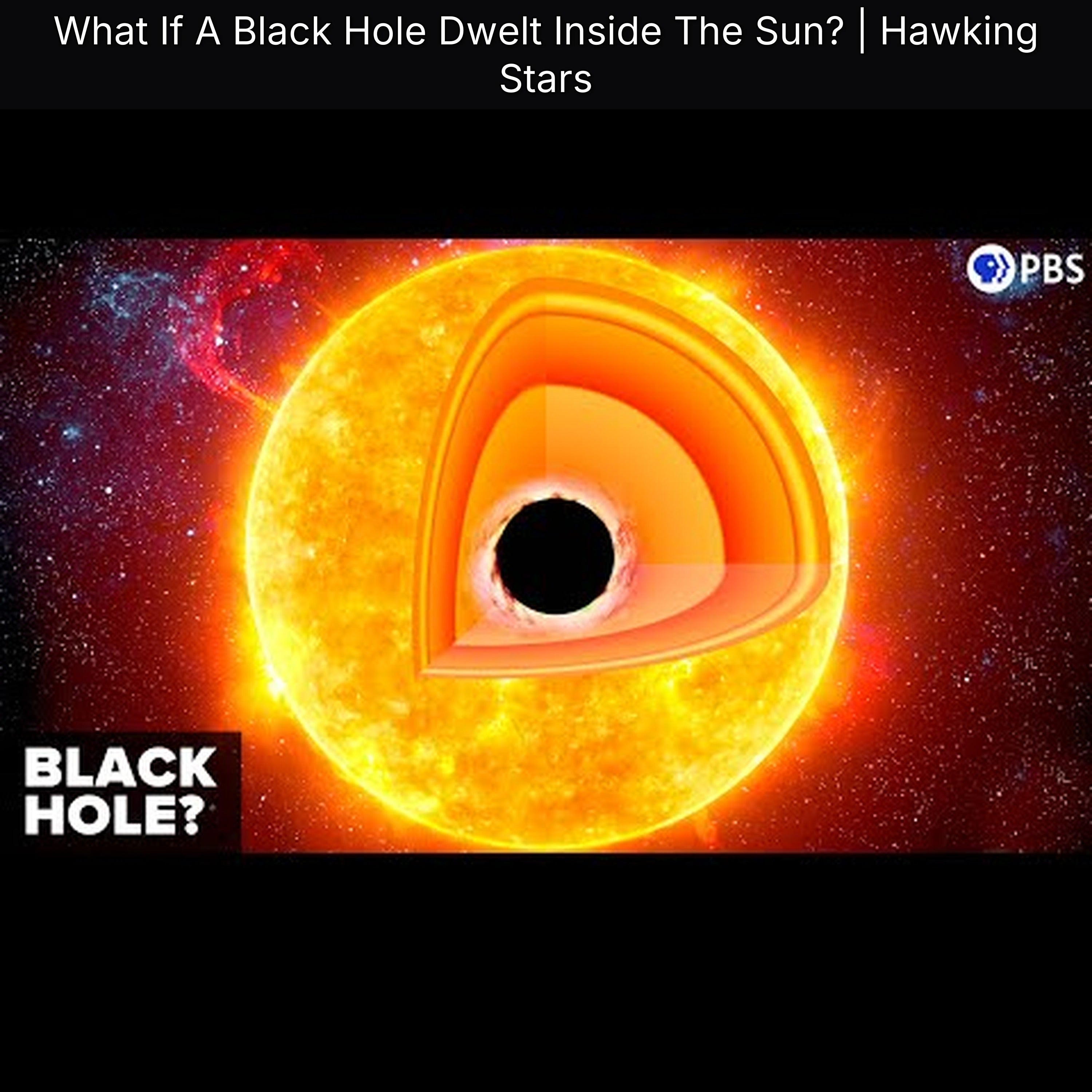
PBS Member Stations rely on viewers like you. To support your local station, go to:http://to.pbs.org/DonateSPACE Sign Up on Patreon to get access to the Space Time Discord! A fun nightmare sci-fi scenario is the sun being consumed by a black hole. Fortunately the chance of a black hole randomly wandering into our solar system is pretty tiny. That’s good news. But what if it’s already here, hiding in the core of the Sun and slowly eating it from the inside out? Hawking Stars Journal Papers: Search the Entire Space Time Library Here: https://search.pbsspacetime.com/ Hosted by Matt O'Dowd Written by Matt Caplan & Matt O'Dowd Post Production by Leonardo Scholzer, Yago Ballarini & Stephanie Faria Directed by Andrew Kornhaber Associate Producer: Bahar Gholipour Executive Producers: Eric Brown & Andrew Kornhaber Executive in Charge for PBS: Maribel Lopez Director of Programming for PBS: Gabrielle Ewing Assistant Director of Programming for PBS: John Campbell Spacetime is produced by Kornhaber
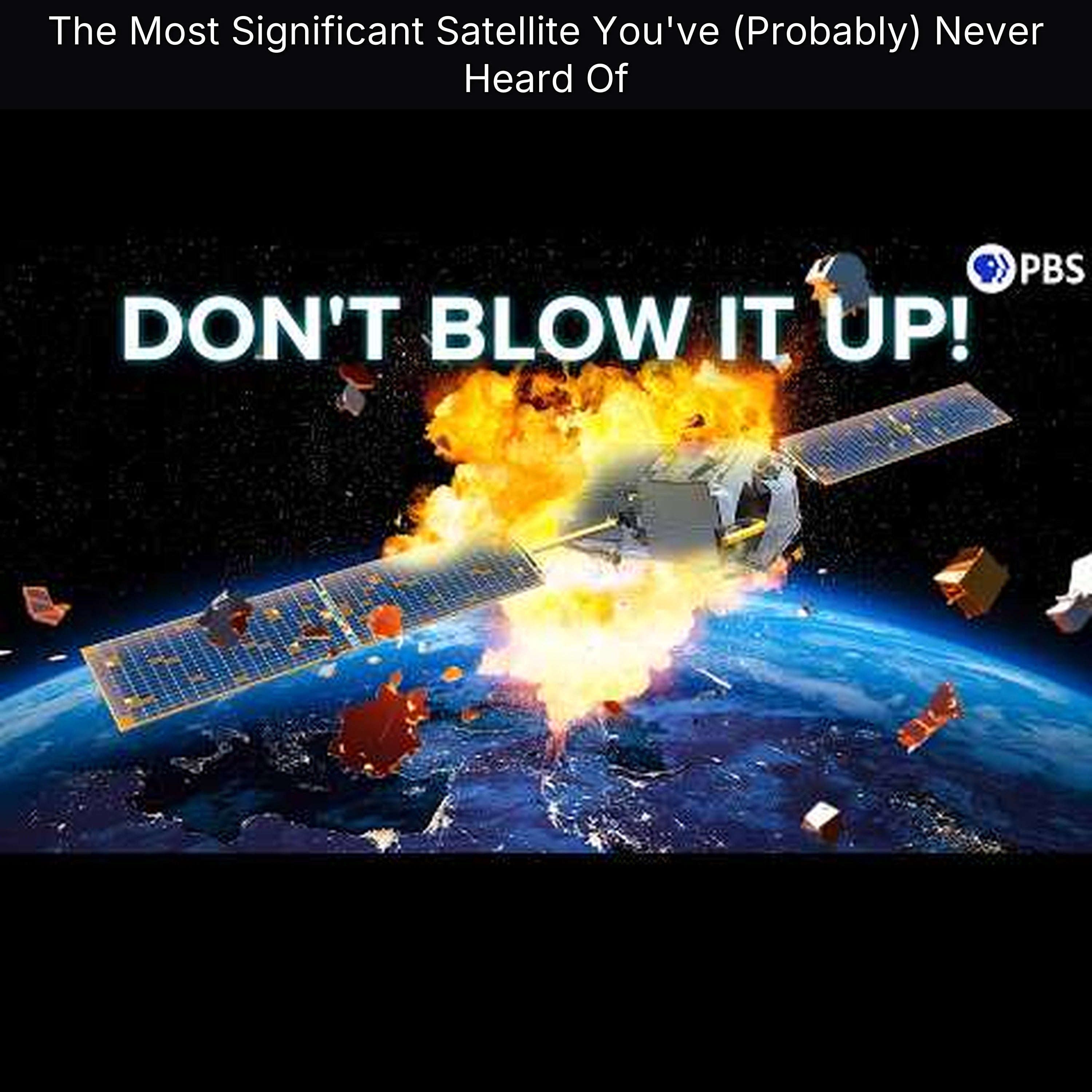
Remove your personal information from the web at https://joindeleteme.com/SPACETIME One of the most important reasons we go to space is to know our own planet better. Today I'm going to tell you about an orbiting facility that literally watches Earth's biosphere breath and grow and die with incredible resolution. I'll talk about its profound existential and economic importance, and about why it's in danger of being lost. PBS Member Stations rely on viewers like you. To support your local station, go to:http://to.pbs.org/DonateSPACE Sign Up on Patreon to get access to the Space Time Discord! Check out the Space Time Merch Store Pale Blue Dot By Carl Sagan Search the Entire Space Time Library Here: https://search.pbsspacetime.com/ Hosted by Matt O'Dowd Written by Fernando Franco Félix & Matt O'Dowd Post Production by Leonardo Scholzer, Yago Ballarini & Stephanie Faria Directed by Andrew Kornhaber Associate Producer: Bahar Gholipour Executive Producer: Andrew Kornhaber Executive in Charge
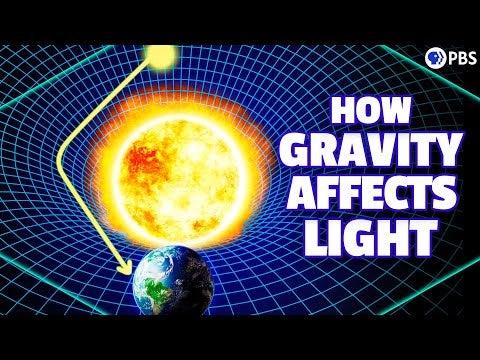
PBS Member Stations rely on viewers like you. To support your local station, go to: http://to.pbs.org/DonateSPACE ↓ More info below ↓ Uploaded 09-03-21 We know that gravity exerts its pull on light, and we have an explanation for why. Actually, we have multiple explanations that all predict the same thing. And at first glance, these explanations seem to describe completely different causes. So what is the true connection between light and gravity, or is truth, in fact, entirely relative? Sabine Hossenfelder's episode "Do we travel through time at the speed of light?" Check out the Space Time Merch Store Hosted by Matt O'Dowd Written by Matt O'Dowd Graphics by Leonardo Scholzer, Yago Ballarini, Pedro Osinski, Adriano Leal and Stephanie Faria GFX Visualizations: Katherine Kornei Directed by Andrew Kornhaber Assistant Producer: Setare Gholipour Executive Producers: Eric Brown and Andrew Kornhaber "FREE GMC Motorhome reimagined low poly" (https://skfb.ly/6XxAN) by Karol Miklas is licensed
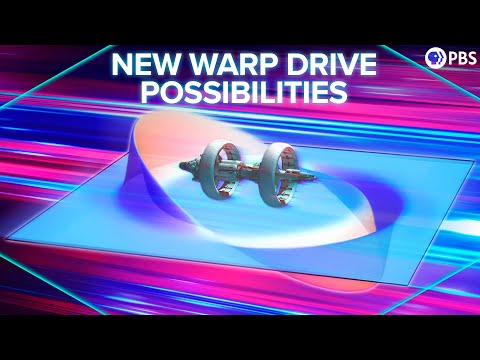
PBS Member Stations rely on viewers like you. To support your local station, go to: http://to.pbs.org/DonateSPACE ↓ More info below ↓ Uploaded 21-04-21 Sign Up on Patreon to get access to the Space Time Discord! That Einstein guy was a real bummer for our hopes of a star-hopping, science-fiction-y future. His whole “nothing travels faster than light” rule seems to ensure that exploration of even the local part of our galaxy will be an excruciating slow. But Einstein also gave us a glimmer of hope. He showed us that space and time can be warped - and so the warp drive was conceived. Just recently, a couple of papers contend that these are not pure science fiction. Check Out Our Previous Warp Drive Episode Warp Drive Papers Introducing Physical Warp Drive Breaking the Warp Barrier Check out the Space Time Merch Store Hosted by Matt O'Dowd Written by Matt Caplan and Matt O'Dowd Graphics by Leonardo Scholzer, Yago Ballarini, Pedro Osinski, Adriano Leal and Stephanie Faria GFX Visualization
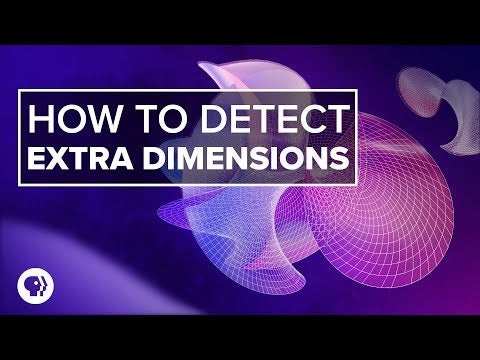
Viewers like you help make PBS (Thank you ) . Support your local PBS Member Station here: https://to.pbs.org/DonateSPACE Uploaded 03-10-18 On this Space Time Journal Club we look at how gravitational waves can be used to search for extra dimensions of space! To learn more about CuriosityStream you can go to: https://www.curiositystream.com/space... and use the code "spacetime" during the sign-up process. "Limits on the number of spacetime dimensions from GW170817" Pardo, Fishbach, Holz and Spergel 2018 You can further support us on Patreon at https://www.patreon.com/pbsspacetime Get your own Space Time t-shirt at http://bit.ly/1QlzoBi Tweet at us! @pbsspacetime Facebook: facebook.com/pbsspacetime Email us! pbsspacetime [at] gmail [dot] com Comment on Reddit: http://www.reddit.com/r/pbsspacetime Help translate our videos! Previous Episode: Quantum Gravity and the Hardest Problem in Physics Hosted by Matt O'Dowd Written by Matt O'Dowd Graphics by Luke Maroldi Assistant Editing and Sound
View full lesson: http://ed.ted.com/lessons/surviving-a-nuclear-attack-irwin-redlener The face of nuclear terror has changed since the Cold War, but disaster-medicine expert Irwin Redlener reminds us the threat is still real. He looks at some of history's farcical countermeasures and offers practical advice on how to survive an attack. Talk by Irwin Redlener.
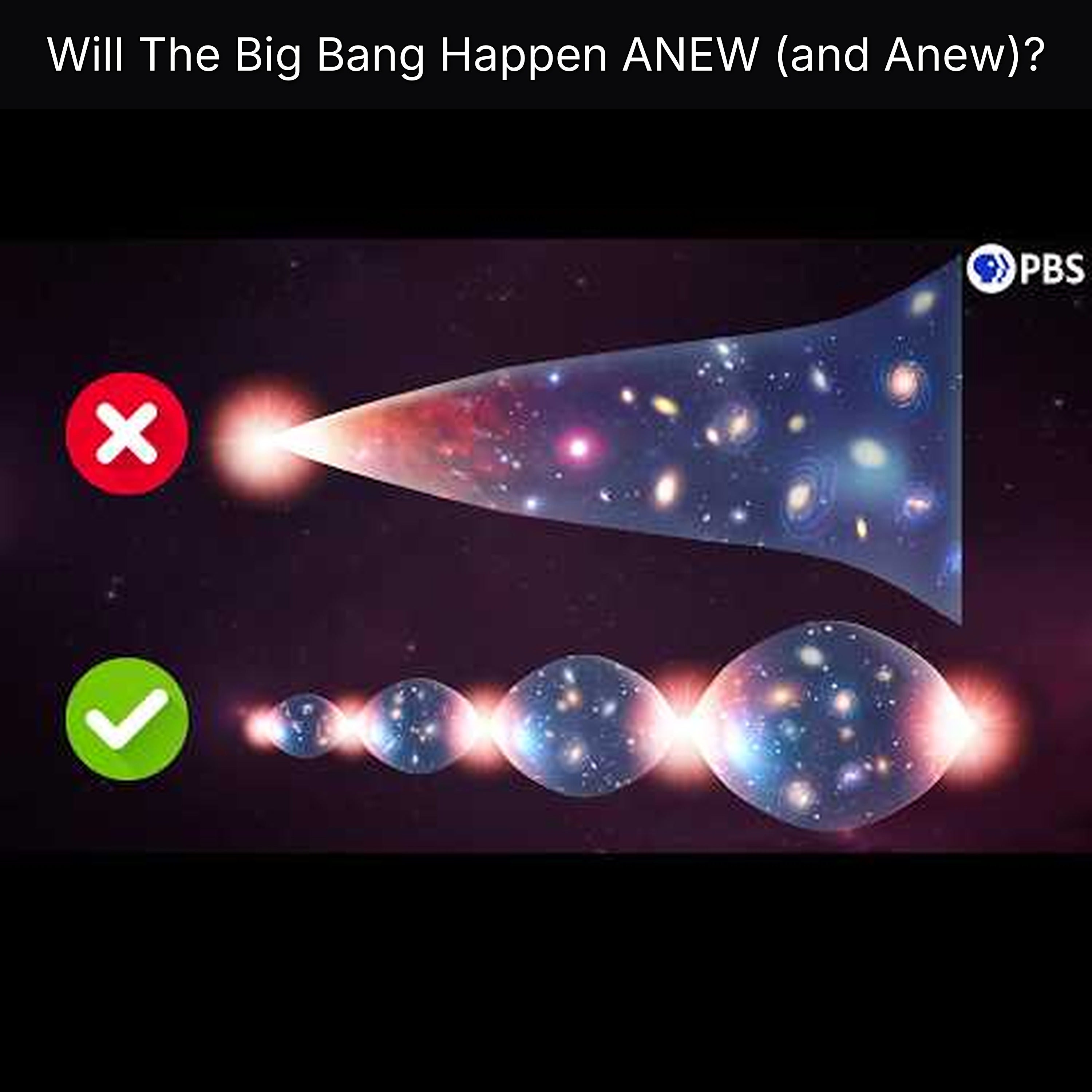
Sign Up on Patreon to get access to the Space Time Discord! How did the universe begin? How can something come from nothing? One way to “solve” this most difficult of philosophical conundrums is to avoid it altogether. Maybe the universe didn’t begin. Maybe the Big Bang was just one in an endless cycle. Check out the Space Time Merch Store PBS Member Stations rely on viewers like you. To support your local station, go to:http://to.pbs.org/DonateSPACE Search the Entire Space Time Library Here: https://search.pbsspacetime.com/ Hosted by Matt O'Dowd Written by Richard Dyer & Matt O'Dowd Post Production by Leonardo Scholzer, Yago Ballarini & Stephanie Faria Directed by Andrew Kornhaber Associate Producer: Bahar Gholipour Executive Producer: Andrew Kornhaber Executive in Charge for PBS: Maribel Lopez Director of Programming for PBS: Gabrielle Ewing Assistant Director of Programming for PBS: John Campbell Spacetime is a production of Kornhaber Brown for PBS Digital Studios. This program is p
Explore what makes polio so dangerous, what is causing the 21st century resurgence of cases, and how we can eradicate the disease. -- In 1952, polio was everywhere: killing or paralyzing roughly half a million people annually. Yet just 10 years later, paralytic polio cases in the US dropped by 96% and we were on track to get rid of polio for good. But in recent years, the virus started striking back. So, what’s behind these recent spikes? Explore the dangers of poliovirus and the possibility of eradicating this deadly disease. Directed by Anton Bogaty. This video made possible in collaboration with Gates Ventures Learn more about how TED-Ed partnerships work: https://bit.ly/TEDEdPartner A special thanks to Ananda Bandyopadhyay, Amber Zeddies, and Kathleen O'Reilly who provided information and insights for the development of this video. Support Our Non-Profit Mission ---------------------------------------------- Support us on Patreon: http://bit.ly/TEDEdPatreon Check out our merch: htt
PBS Member Stations rely on viewers like you. To support your local station, go to: http://to.pbs.org/DonateSPACE ↓ More info below ↓ Uploaded 24-02-21 Sign Up on Patreon to get access to the Space Time Discord! We know that gravity must cause clocks to run slow on the basis of logical consistency. And we know that gravity DOES cause clocks to run slow based on many brilliant experiments. But I never explained WHY or HOW gravity causes the flow of time to slow down. And I’m not going to explain it now - because in a sense it’s not true. Gravity does NOT warp the flow of time. It’s the other way around - the warping of time causes gravity. Check out the Space Time Merch Store https://pbsspacetime.com (https://pbsspacetime.com/) Hosted by Matt O'Dowd Written by Matt O'Dowd Graphics by Leonardo Scholzer, Yago Ballarini, Pedro Osinski, Adriano Leal and Stephanie Faria GFX Visualizations: Katherine Kornei Directed by Andrew Kornhaber Assistant Producer: Setare Gholipour Executive Producers:
Todd Humphreys forecasts the near-future of geolocation when millimeter-accurate GPS "dots" will enable you to find pin-point locations, index-search your physical possessions ... or to track people without their knowledge. And the response to the sinister side of this technology may have unintended consequences of its own. (Filmed at TEDxAustin.) Uploaded 26-06-13 Talk by Todd Humphreys.
In today's livestream you'll be able to Ask Matt O'Dowd, a PhD in astrophysics, anything. Tune in to ask your own question or see some of the great questions our audience has for Matt! #space #astrophysics #astronomy
Explore how the Right to Repair movement is pushing back against companies which don’t want consumers fixing their products. -- Today, some companies are working hard to prevent consumers from repairing products on their own. In many cases, repair can only be done by the original manufacturer, if at all. With limited repair options available, we end up buying new and throwing more items out. So, how exactly do companies prevent repair? And what can consumers do about it? Aaron Perzanowski investigates. Lesson by Aaron Perzanowski, directed by Nick Hilditch. Support Our Non-Profit Mission ---------------------------------------------- Support us on Patreon: http://bit.ly/TEDEdPatreon Check out our merch: http://bit.ly/TEDEDShop ---------------------------------------------- Connect With Us ---------------------------------------------- Sign up for our newsletter: http://bit.ly/TEDEdNewsletter Find us on Twitter: http://bit.ly/TEDEdTwitter Peep us on Instagram: http://bit.ly/TEDEdInstagr
PBS Member Stations rely on viewers like you. To support your local station, go to:http://to.pbs.org/DonateSPACE Sign Up on Patreon to get access to the Space Time Discord! Superconductive materials seem miraculous. Their resistanceless flow of electricity has been exploited in some powerful ways—from super-strong magnets used in MRIs, particle accelerators and fusion plants. And then there’s, their bizarre ability to levitate in magnetic fields. But the broader use of superconductors is limited because they need to be cooled to extremely low temperatures to work. But what if we could produce superconductivity at room temperature? It would change the world. Check out the Space Time Merch Store Search the Entire Space Time Library Here: https://search.pbsspacetime.com/ Hosted by Matt O'Dowd Written by Matt O'Dowd Post Production by Leonardo Scholzer, Yago Ballarini, Adriano Leal & Stephanie Faria Directed by Andrew Kornhaber Associate Producer: Bahar Gholipour Executive Producers: Eric
The commentary running under your day is rarely something you chose. By morning, this track has traded that running critique for a voice that speaks to you the way an ally would. Unwind now with our positive sleep affirmations podcast. Hit play, and drift into Good Sleep... Spotify: https://open.spotify.com/show/3OuJvYoprqh7nPK44ZsdKE And start your morning with Optimal Living Daily!
There were some awesome and endearing clues in today's crossword, a Saturday debut for Zhou Zhang, and her twelfth overall. However, both cohosts did thrash about a bit in the top-left corner, wherein lurked clues like 3D, Hammy neighbor, QUAD (ooh, nice one!); 1A, Muslim or Hindu holy person, FAQIR (with a Q??); and 17A, Chinese buns prepared in a bamboo steamer, XIAOLONGBAO (yowser!!); Still, all's fair in love, war, and epic Saturday NYTimes crosswords like today's. Show note imagery: Vegan XIAOLONGBAO, yum! We love feedback! Contact Info: We love listener mail! Drop us a line, [email protected].
They're the second largest fish in the world, they're almost extinct, and we know almost nothing about them. In this talk, Simon Berrow describes the fascinating basking shark ("Great Fish of the Sun" in Irish), and the exceptional -- and wonderfully low-tech -- ways he's learning enough to save them. (Filmed at TEDxDublin.) Uploaded 26-06-13 Talk by Simon Berrow.
Viewers like you help make PBS (Thank you ) . Support your local PBS Member Station here: https://to.pbs.org/DonateSPACE Uploaded 21-02-18 What exactly will happen when the sun dies? You can further support us on Patreon at https://www.patreon.com/pbsspacetime Get your own Space Time tshirt at http://bit.ly/1QlzoBi Tweet at us! @pbsspacetime Facebook: facebook.com/pbsspacetime Email us! pbsspacetime [at] gmail [dot] com Comment on Reddit: http://www.reddit.com/r/pbsspacetime Help translate our videos! Previous Episode: What is Energy? https://www.youtube.com/watch?v=PUn2izowBkw&t=25s (https://www.youtube.com/watch?t=25s&v=PUn2izowBkw) Like living things, stars have a life cycle. They’re born inside of a cloud of gas and dust, they live their lives fusing hydrogen into helium in their cores, shining bright and stable for as long as that hydrogen lasts. Then they die, each going out in its own beautiful way. How a star dies depends on its mass. The bigger they are, the shorter their liv
View full lesson: http://ed.ted.com/lessons/biodiesel-the-afterlife-of-oil-natascia-radice Uploaded 23-01-14 How could you dispose of your cooking oil when you're done cooking? The easiest thing to do might be to pour it down your drain -- but if you save it up and send it to a processing plant, it can gain useful new life as biodiesel, a biodegradable energy source which can run in diesel engines instead of refined petroleum. Natascia Radice describes the process of turning goop into good. Lesson by Natascia Radice, animation by Lippy.
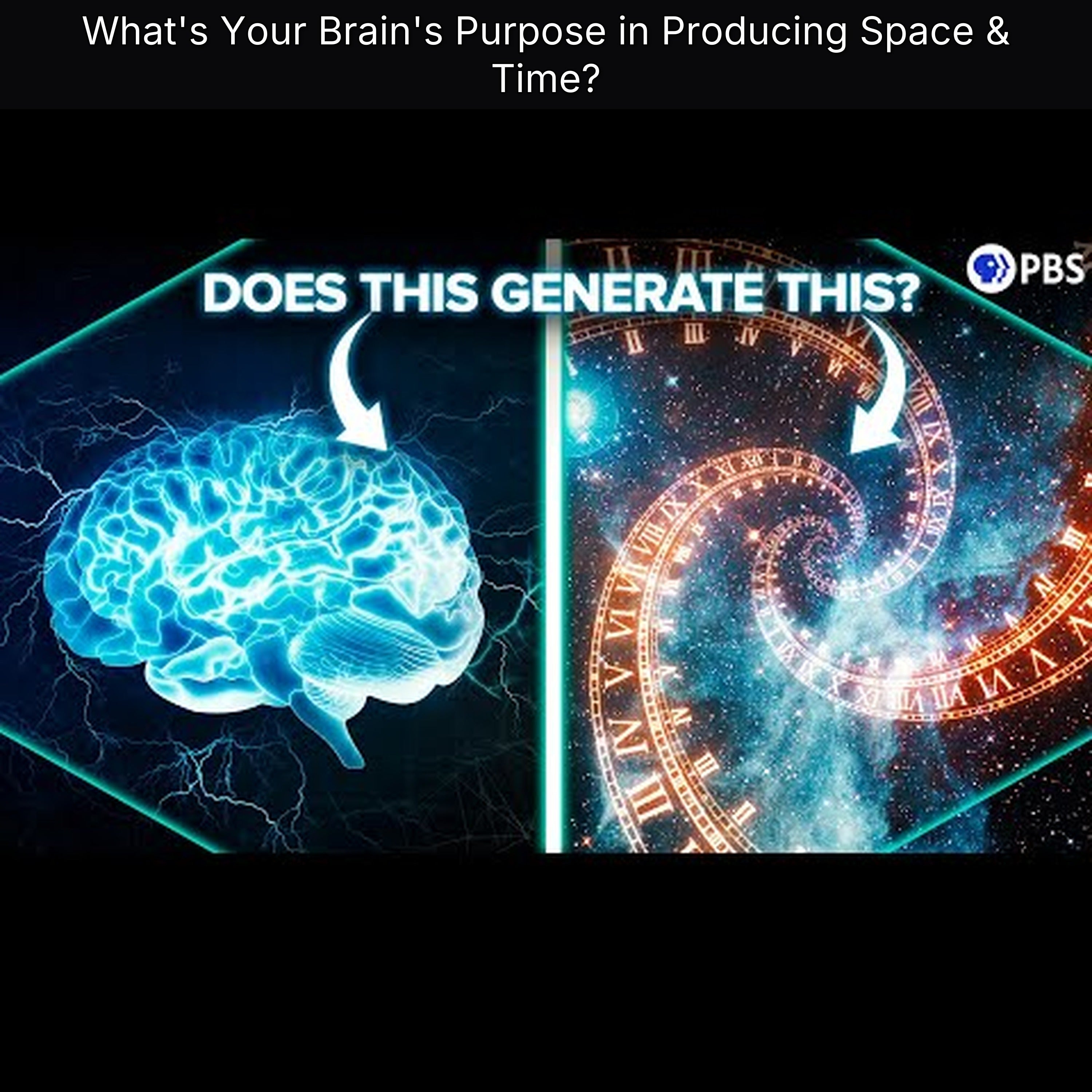
PBS Member Stations rely on viewers like you. To support your local station, go to:http://to.pbs.org/DonateSPACE Sign Up on Patreon to get access to the Space Time Discord! Physics is the business of figuring out the structure of the world. So are our brains. But sometimes physics comes to conclusions that are in direct conflict with concepts fundamental to our minds, such as the realness of space and time. How do we tell who’s correct? Are time and space objective realities or human-invented concepts? Episode Companion Playlist Check out the Space Time Merch Store Search the Entire Space Time Library Here: https://search.pbsspacetime.com/ Hosted by Matt O'Dowd Written by Bahar Gholipour & Matt O'Dowd Post Production by Leonardo Scholzer, Yago Ballarini, Pedro Osinski, Caique Oliveira, Adriano Leal & Stephanie Faria Directed by Andrew Kornhaber Associate Producer: Bahar Gholipour Executive Producers: Eric Brown & Andrew Kornhaber Executive in Charge for PBS: Maribel Lopez Director of P
Sign up for our newsletter and never miss an animation: http://bit.ly/TEDEdNewsletter Uploaded 10-01-19 View full lesson: https://ed.ted.com/lessons/can-you-solve-the-multiplying-rabbits-riddle-alex-gendler After years of experiments, you’ve finally created the pets of the future – nano-rabbits! They’re tiny, they’re fuzzy ... and they multiply faster than the eye can see. But a rival lab has sabotaged you, threatening the survival of your new friends. Can you figure out how to avert this hare-raising catastrophe? Alex Gendler shows how. Lesson by Alex Gendler, directed by Artrake Studio. Thank you so much to our patrons for your support! Without you this video would not be possible! Dan Paterniti, Jerome Froelich, Tyler Yoshizumi, Martin Stephen, Justin Carpani, Faiza Imtiaz, Khalifa Alhulail, Tejas Dc, Benjamin and Shannon Pinder, Srikote Naewchampa, Sage Curie, Exal Enrique Cisneros Tuch, Ana Maria, Vignan Velivela, Ahmad Hyari, eden sher, Travis Wehrman, Louisa Lee, Kiara Taylor, А
PBS Member Stations rely on viewers like you. To support your local station, go to: http://to.pbs.org/DonateSPACE ↓ More info below ↓ Uploaded 11-11-20 Sign Up on Patreon to get access to the Space Time Discord! Physicists have a long history of sticking our noses where they don’t belong - and one of our favorite places to step beyond our expertise is the question of consciousness and free will. Sometimes our musings are insightful, sometimes incoherent, and usually at least somewhat naive. Which a fair description of this show, so of course Space Time needs to weigh in physics and free will.. Check out the Space Time Merch Store Hosted by Matt O'Dowd Written by Matt O'Dowd and Bahar Gholipour Graphics by Leonardo Scholzer, Yago Ballarini, and Pedro Osinski Directed by: Andrew Kornhaber Assistant Producer: Setare Gholipour Executive Producers: Eric Brown and Andrew Kornhaber End Credits Music by J.R.S. Schattenberg: https://www.youtube.com/channel/UCRl6-nb4iOnsij-vnpAjp0Q Special Thank
View full lesson: http://ed.ted.com/lessons/history-vs-andrew-jackson-james-fester Uploaded 21-01-14 Andrew Jackson was both beloved and loathed during his presidency. In this imaginary courtroom, you get to be the jury, considering and weighing Jackson's part in the spoils system, economic depression, and the Indian Removal Act, as well as his patriotism and the pressures of the presidency. James Fester explores how time shapes our relationship to controversial historical figures. Lesson by James Fester, animation by Brett Underhill.
Thanks to Brilliant for supporting PBS. Learn more at: https://www.brilliant.org/spacetime Uploaded 02-12-19 PBS Member Stations rely on viewers like you. To support your local station, go to: http://to.pbs.org/DonateSPACE The universe is big, really, really big. Although according to a new paper, it may literally be infinitely smaller than we previously thought. Sign Up on Patreon to get access to the Space Time Discord! Check out the Space Time Merch Store Hosted by Matt O'Dowd Written by Matt O'Dowd Graphics by Leonardo Scholzer and Adriano Leal Directed by: Andrew Kornhaber Executive Producers: Eric Brown and Andrew Kornhaber End Credits Music by J.R.S. Schattenberg: https://www.youtube.com/channel/UCRl6-nb4iOnsij-vnpAjp0Q Every time you walk out the door, light from the Big Bang strikes your face, enters your eyes. This is the cosmic microwave background radiation - the left-over heat-glow from the very early universe. We can’t see this microwave light with our eyes, but we can ca
Puzzle through this classic ethical dilemma and decide: is community safety more important than individual privacy? -- Your government has introduced a plan to address record-breaking rates of traffic tickets and deadly hovercar accidents. They propose assigning “driver credit scores” to every citizen, but would need to install cameras and microphones in every vehicle. While it would make the roads safer, is this undeniable benefit worth the cost to drivers’ privacy? Michael Vazquez and Sarah Stroud investigate. Lesson by Michael Vazquez and Sarah Stroud, directed by Jeff Le Bars, JetPropulsion.space. This video made possible in collaboration with the Parr Center for Ethics Learn more about how TED-Ed partnerships work: https://bit.ly/TEDEdPartner Support Our Non-Profit Mission ---------------------------------------------- Support us on Patreon: http://bit.ly/TEDEdPatreon Check out our merch: http://bit.ly/TEDEDShop ---------------------------------------------- Connect With Us ------