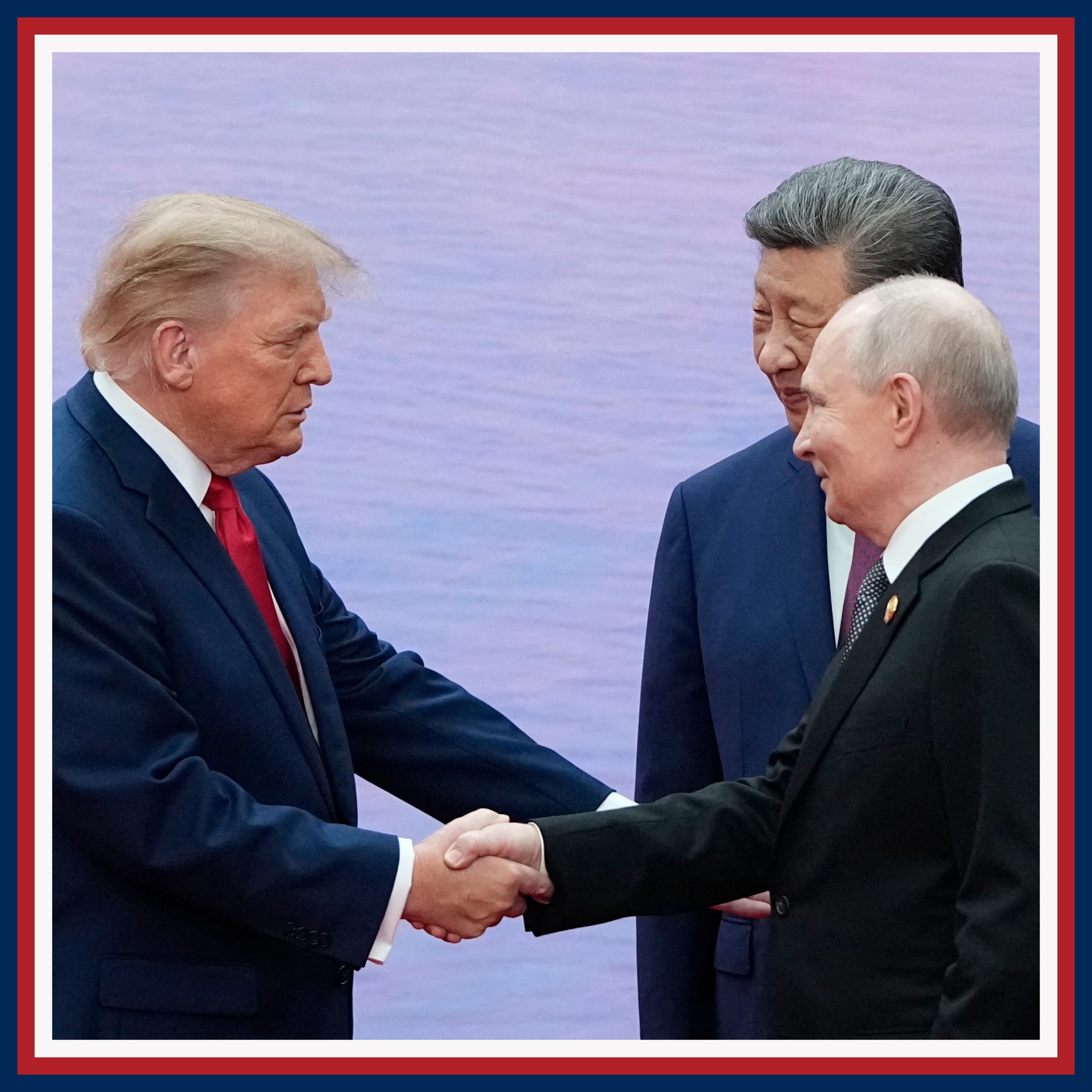
Xi Jinping, Vladimir Putin and Donald Trump are meeting at the APEC summit in Shenzhen, China. This is an unprecedented trilateral meeting, but are all three leaders approaching it with the same expectations? What will actually be discussed at the summit, and more importantly, will anything of value actually be accomplished? Jessica Chen-Weiss and Max Boot join David Rothkopf to discuss the APEC summit in China.
Amanda Eskenasi from HR Canada Charitable Organization joins Stephen Staley to discuss the alarming rise of antisemitism in Canadian workplaces. She explains her organization's new practical toolkit designed to help employers and Jewish employees identify and respond to discrimination. The conversation explores how progressive DEI programs often exclude Jews, the challenge of addressing subtle antisemitism disguised as antizionism, and why combating workplace discrimination requires unpacking broader institutional biases that cast antisemitism as politically acceptable. This episode is a part of The Hub's new Fault Lines initiative, which examines the pressures pulling Canadian society apart and the principles that can hold it together. Click here to learn more: https://thehub.ca/fault-lines/ The Hub is Canada’s fastest growing independent digital news outlet. https://tinyurl.com/3a7zpd7e (Apple) https://tinyurl.com/y8akmfn7 (Spotify) Watch a video version on YouTube: https://www.youtu
November 18, 2026; 4pm: Nicolle Wallace examines rolling cyber and infrastructure outages, warnings about autonomous AI attacks and questions over Trump administration readiness as experts call for rebuilding cybersecurity talent. The hour also covers House Oversight Democrats’ corruption investigations into Trump family business dealings and a Nike pledge for Mississippi valedictorians. Hosted by Simplecast, an AdsWizz company.
A six-year-old girl calls 911 with a terrifying message: "My mom isn't waking up." She's sitting in a vehicle on the side of the road, her mother is unresponsive, and she needs help. But there's one major problem. The 911 dispatcher doesn't know where she is. In this powerful story from Episode 677 of Within the Trenches, Arizona 911 dispatcher Anthony shares the moment he found himself trying to locate a frightened six-year-old with limited location information. After the call was transferred to his dispatch center, Anthony didn't have the wireless location data he needed. He attempted to send the child a location-sharing link, but that didn't work either. This is more than a story about emergency technology. It's about the people answering the calls and finding solutions when the answers aren't immediately available. ️ From Within the Trenches, Episode 677
In this monologue of the 2 Worlds Collide Podcast, I break down the Victorian leaders’ debate featuring Ben Carroll, Jess Wilson, Warren Pickering and Ellen Sandell. I go through the exchanges on trust in government, access to official records and political donations. I explain why Warren Pickering stood out to me and where I thought the other leaders fell short. Then I pull apart the debate over gas, net zero and power bills, before looking at what each side had to say about youth crime, bail and sentencing. I finish with my take on what the debate left unanswered and what I want to see from Victoria’s next government. We appreciate your ongoing support! Support independent voices Merch: https://www.2worldscollide.com.au/category/all-products Stay Connected YouTube: @2worldscollidepodcast YouTube Clips page: @2WCClips Instagram: @2worldscollidepodcast X: @2worldsPodcast Website: www.2worldscollide.com.au (http://www.2worldscollide.com.au/) #2WorldsCollide #SamBamford #VictorianElectio
The Second Circuit hears an immigration case about an application for citizenship and the consequences of disputed identity information. During the citizenship process, officials questioned the applicant about whether he had previously used a different name to seek entry into the United States. The resulting criminal case concerned a false statement on an immigration document. An admission-related misrepresentation is different from a later criminal conviction. A fraud waiver can address certain admission-related grounds for removal, while cancellation of removal is a separate form of relief with its own eligibility rules. The question you will hear is whether a fraud waiver can first clear the way for cancellation of removal. Listen separately for that legal eligibility question and the procedural question of what was raised before the immigration agency. Ali v. Blanche (No. 23-6093) — U.S. Court of Appeals for the Second Circuit, argued November 9, 2026. Sources: Official Second Circ
Join Commander Silas Vance on Project Disclosure as we explore the intriguing world of extraterrestrial lore within Grand Theft Auto. Discover player-reported UFO sightings, strange occurrences, and the possible deeper significance behind these alien references. Are we alone, or is there something lurking in the skies of Los Santos? Tune in to find out what Rockstar might be hinting at with these fascinating in-game mysteries. For more from Project Disclosure click the link below.
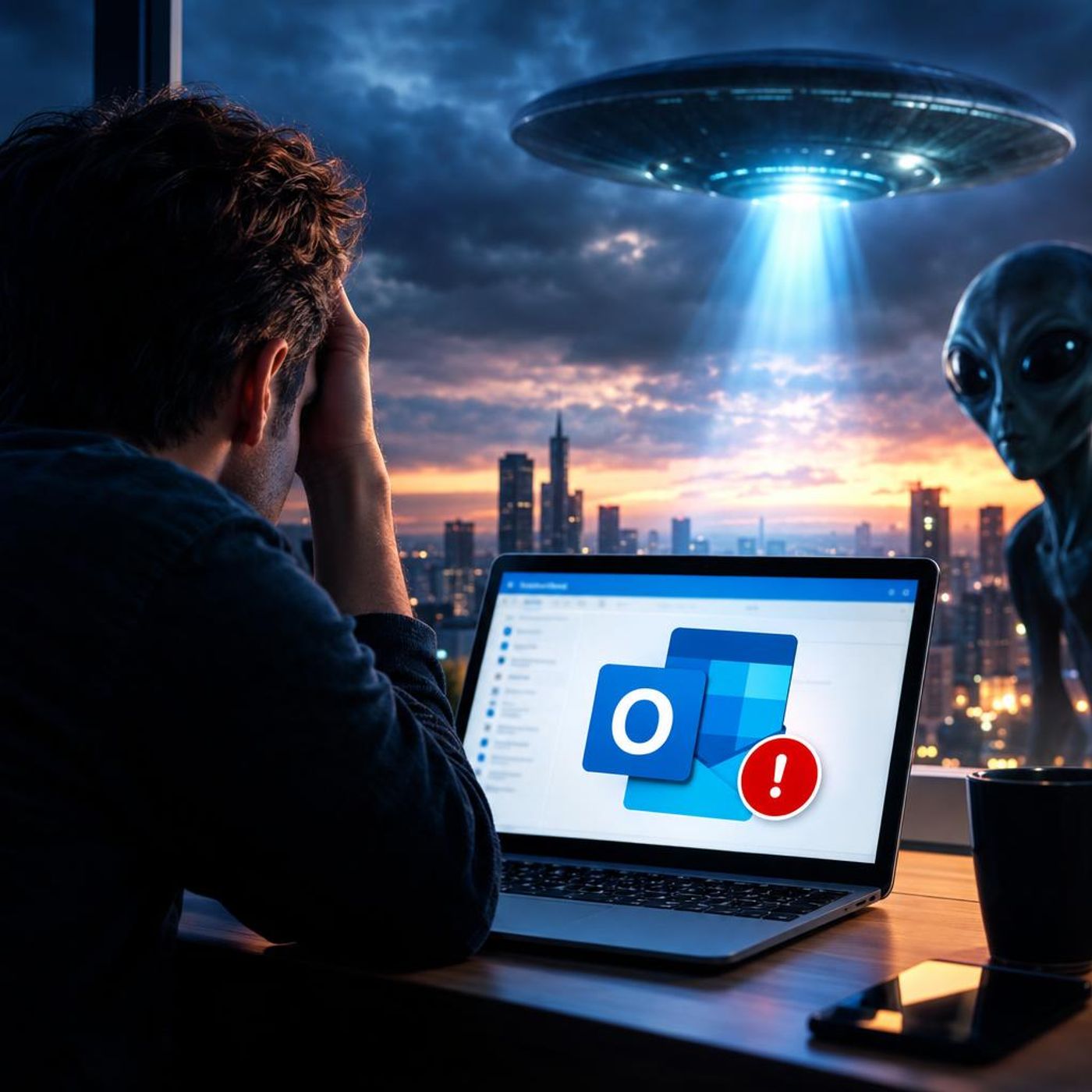
Explore the intriguing possibility of alien involvement in the recent Outlook outage. Commander Silas Vance dives deep into this unexpected tech conundrum, examining the theories and evidence that have conspiracy buffs and tech enthusiasts buzzing. Tune into Project Disclosure to unravel the truth behind the mysterious disruption and its potential extraterrestrial connections. For more from Project Disclosure click the link below.
In a moment when global leadership is under intense scrutiny, Prime Minister Mark Carney is seizing the opportunity to assert Canada’s position as a moral beacon on the world stage. As the Triad of the Tyrants—Xi, Trump, and Putin—gathers, Carney's bold denunciation of their actions sends a powerful message: Canada stands for democratic values and human rights amidst rising authoritarianism. In this must-listen episode, featuring insights from Bob Pickard and Laura Babcock, we delve into the implications of the meetings in China and how these dynamics affect our world. The chaos unfolding in America serves as a critical reminder of the fragility of democracy, and we explore actionable strategies to ensure that democratic values prevail over tyranny. Join us in this compelling discussion that not only informs but empowers. Together, we can ensure that democracies rise and flourish against the threats posed by fascism and dictatorship. Don't miss out on this critical conversation; the fu
The Ninth Circuit hears a dispute over employee benefits after a union leaves the bargaining relationship. Garcia's employer wanted to keep paying into union benefit funds after its collective bargaining agreement expired. But the funds refused further contributions, and Garcia says employees were denied benefits. The union had formally given up representing those workers, and the National Labor Relations Board found that withdrawal lawful. Garcia sued under ERISA, the federal employee-benefits law, relying on a contract provision that continued contributions until a lawful bargaining impasse or a new agreement. The district court dismissed his case, treating the dispute as a union-representation issue for the labor board. His lawyer will argue that ending union representation does not necessarily end the separate benefits obligation. The funds' lawyer will defend the dismissal and argue that the lawful withdrawal ended the relevant obligation. Listen for two different questions: wheth
Putting data centers in space once seemed like science fiction. Today, a growing number of companies are seriously exploring doing so. Last week, host David Sandalow and a team of coauthors released a major report on Space-Based Data Centers: The Case for Caution. The report explores a range of topics related to space-based data centers, including technical issues, risks and impacts, and governance challenges. In this episode of the AI, Energy and Climate Podcast, David talks about the report with four of its lead authors: Alexis Abramson, Dean of the Columbia Climate School; Julio Friedmann, Chief Scientist at Relae; Colin McCormick, Chief Innovation Office at Relae; and Hari Osofsky, Founding Director of the Energy Innovation Lab and former Dean, Northwestern Law School.
Ahead of Donald Trump’s highly anticipated meeting with Xi Jinping and Vladimir Putin, questions remain over Nvidia CEO Jensen Huang’s relationship with an alleged Chinese spy. Did the company’s prized H200 AI chips end up in China despite US export restrictions? And, after a week of cyber-related issues across many of America’s key industries, the secretary of state has sought to reassure the world that the US is not under attack from cyber criminals or “malign actors of any kind.” Is his statement enough to dismiss widespread concerns about a series of recent tech outages that have grounded planes and disrupted services at some of America’s biggest banks? Plus, Justin and Sarah discuss the latest and final Democrat victory in this year’s midterm elections. After a long delay, Mary Peltola has finally been confirmed as the winner in the Alaska Senate race and seals a 56-44 Senate majority. What can the party do with their majority in Congress? HOSTS: • Sarah Smith, North America Edito
The Second Circuit considers which hospital legal bills can be charged to a criminal defendant. The case began when Yale New Haven Hospital found signs of tampering with medication vials. Hospital investigators searched a nurse's belongings before the police arrived, and a federal tampering prosecution followed. The court later ordered the nurse to pay restitution. Much of this argument concerns the hospital's outside lawyers and which of their bills belong in that award. His lawyer will argue that work undertaken for the hospital's own purposes does not necessarily qualify as help with the government's case. The government will defend the expenses as part of the prosecution. Listen for which legal bills qualify, and how an agreement over an amount can affect what an appeals court may review. United States v. Falzarano (No. 25-1965) — U.S. Court of Appeals for the Second Circuit, argued November 17, 2026. Sources: Official Second Circuit oral argument: Official argument listing: Crimin
The Fair Work Tribunals edition of Tuesday 17 November 2026: 129 decisions, one with a headnote: a Full Bench on redundancy pay reduced to nil where the employer itself found other acceptable employment, and what a reasons gap is worth on appeal. Fair Work Desk: redundancy pay, the job on offer and the reasons gap (opening story). Phuong Nam (Kenny) Ha v Asuria People Services Pty Limited [2026] FWCFB 289 (https://jade.io/article/1297741) - Asbury VP, Wright and Butler DP, 6 November 2026. Signal Practice & Procedure. Fair Work Act 2009 (Cth) ss 119(1)(a), 120(1)(b)(i), 120(2), 604. Whether other acceptable employment was obtained under s 120(1)(b)(i), and the s 120(2) discretion, attract the deferential House v The King standard; acceptability is assessed objectively against the employee's current role, not a withdrawn or alternative offer (those go to s 120(2)); the duty to give reasons extends to remedy, and a move to a nil reduction without disclosed reasoning is a gap in the path
Ten decisions from five appellate courts in the Court of Appeal edition of Wednesday 18 November 2026, with the New South Wales, Victoria, Queensland, Western Australia, South Australia and Northern Territory editions of the same day folded in, and three decisions from the Victoria and South Australia collections of 17 November. Sexual offences are reported as legal doctrine only. Criminal Law Desk (opening story; doctrine only). Givens v R [2026] NSWCCA 191 - unreasonable verdict and the jury's advantage; post offence conduct not judged by preconceived notions; no fixed 'Ewen direction'; a warning resting only on lack of corroboration is barred by s 294AA(2) Criminal Procedure Act 1986 (NSW); r 4.15 leave; s 165B(2) Evidence Act only on application. Appeal dismissed (Hamill, Rigg and Coleman JJ). JADE (https://jade.io/article/1304217) Practice and Procedure Desk (the murder trial is yet to be held; the accused is presumed innocent). Woollard (a pseudonym) v The King [2026] VSCA 277 -
Six decisions in the Federal Courts edition for Wednesday 18 November 2026: one from the Full Court of the Federal Court and five from the Federal Court of Australia. The opening story: a contract claim founded on the same agreement as Fair Work Act claims is part of the same matter, and the Federal Court has no general discretion to decline it. Then the Full Court on particulars, directors' declarations and audit opinions in a securities class action, a company that wanted to run its case without a lawyer, a lease and the consumer law, and the registry. The Full Court ruling also features in today's Courts of Appeal brief. Practice and Procedure Desk (opening story). Liebovitz v Golden Steel International Pty Ltd t/a Ariston Wire [2026] FCA 1739 (Goodman J, 18 November 2026) - Signal: Practice and Procedure. A breach of contract claim for restraint payments joined with Fair Work Act 2009 (Cth) claims (alleged sham contracting and employee entitlements, accepted as bona fide for the ap
Fourteen decisions from tribunals in South Australia, New South Wales, Victoria and Queensland in the Tribunals edition of Wednesday 18 November 2026, three with headnotes and seven more with synopses. Whether the limitation statute governs a South Australian tenancy compensation claim, and whether the tribunal can extend time; extensions for late discrimination complaints; what a heritage listing does to site value; costs after a withdrawn case in NCAT; suppression orders and open justice; and repeat planning reviews and preferred heights in Victoria. Tribunals Desk: limitation and the tribunal's power to extend time (lead; Signal Doctrine; headnoted). Morris v Housing Choices [2026] SACAT 107 - the Limitation of Actions Act 1936 (SA) applies to a compensation proceeding under the Residential Tenancies Act 1995 (SA), whether framed in contract or under the Act; "court" in s 48 preferably means an adjudicative body finally determining disputes judicially (tentatively; Taylor v Marveggi
The Eleventh Circuit hears a dispute over who pays for extra policing in downtown Orlando. Some bars, clubs, and concert venues must obtain a permit to sell alcohol after midnight and pay toward additional police officers. The rules distinguish among venues by their permitted capacity and type of business. The businesses say a limited group is being forced to shoulder public safety costs while other venues are exempt. A trial judge dismissed their constitutional lawsuit, and they appealed. Their lawyer will argue that the fees are an unconstitutional taking of property and an irrational form of unequal treatment. The city will defend the scheme as a permissible way to regulate late-night alcohol sales and protect the public. Listen for what property is actually at stake, how much leeway the city gets, and whether the complaint alleges enough for the lawsuit to continue. 6064 NOA, LLC, et al. v. City of Orlando, et al. (No. 25-13271) — U.S. Court of Appeals for the Eleventh Circuit, arg
Donald Trump is in China for a high-stakes summit alongside Xi Jinping and Vladimir Putin. But he enters the talks in a far weaker political position than Franklin D Roosevelt held in 1945. Could this be the bargain of the century for Xi and Putin? The fallout continues from the Nvidia scandal. Amid deepening administration divisions over microchip exports to China, the commerce secretary, Howard Lutnick, faces growing scrutiny from Republicans and an incoming Democratic majority. Meanwhile, a wave of unexplained nationwide outages has grounded flights and disrupted major banks and tech systems. Is this the beginning of a broader breakdown in US cybersecurity? And finally, after claiming another Senate seat in Alaska, Democrats are preparing to wield sweeping majorities on Capitol Hill. What does the party's return to power mean for the next two years? Katy Balls, Washington editor and columnist at The Times and The Sunday Times Producers: Euan Dawtrey, Harry Kitson Executive producer:
The Ninth Circuit hears a dispute between players of social casino games and Apple, Google, and Meta. These games imitate slot machines: players spend virtual chips to spin and can win more chips, but cannot cash them out for real money. When chips run out, players can pay real money to keep playing. The players say the platforms process these purchases and keep a share, so they should be responsible for transactions that the players call illegal gambling. A trial judge allowed some payment-related claims to proceed without deciding that the companies were actually liable. The companies will argue that collecting payment is part of providing access to games created by others, and that Section 230 protects them from these lawsuits. The players' lawyer will counter that processing a transaction is different from publishing a game. Listen for the line between distributing online content and participating in financial transactions, and whether enforcing that line requires platforms to moni
The Government Accountability Office unearthed that the four leading artificial intelligence platforms (e.g. Grok, Claude, Gemini, and ChatGPT) were able to be used to create plans for attacks in the United States. Senator Maggie Hassan, who will lead the Senate Homeland Security Committee, pledges to hold hearings on regulating AI. The Sekulow team discusses whether the U.S. government should regulate AI, the ACLJ's legal work – and much more.
November 18, 2026; 10am: The Nvidia crisis follows Trump to Beijing with the SEC now reportedly investigating whether the company misled shareholders, a rift growing between Scott Bessent and Howard Lutnick, and Jensen Huang offering to return as CEO. Then, House Democrats nominate Hakeem Jeffries as the next speaker. Plus, DHS Secretary Markwayne Mullin testifies before a House committee on the nationwide ground stop. Philip Bump, Brian Bennett, Nikki McCann Ramírez and Ayman Mohyeldin join the Group Chat. Hosted by Simplecast, an AdsWizz company.
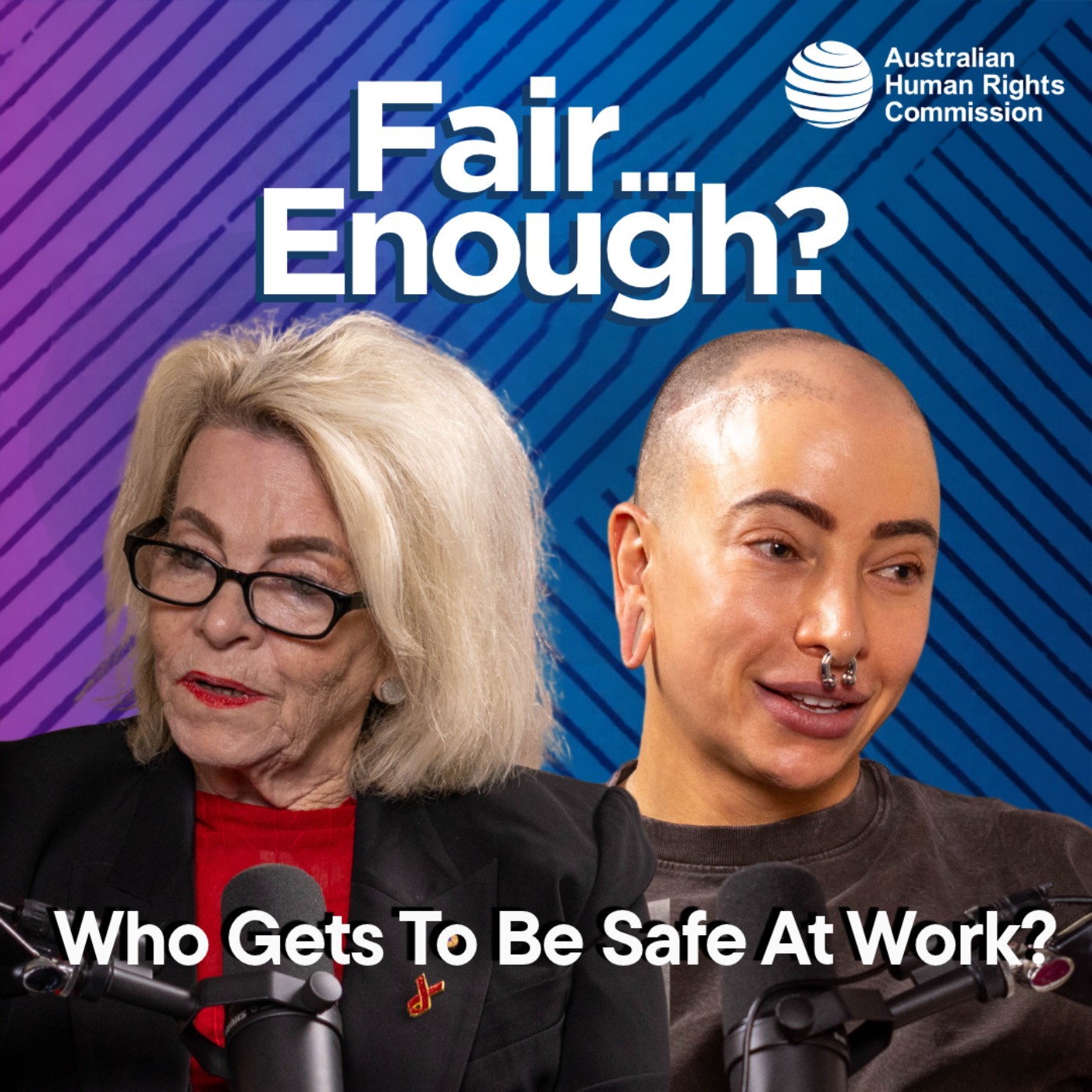
We often talk about workplace safety as a universal right. So why do some workers find it harder than others to access the protections many of us take for granted? In this episode, host Dr Anna Cody explores how recognition, stigma and social attitudes influence who gets protected, who gets heard, and whose safety concerns are taken seriously. Dr Cody speaks to sex worker and rights advocate Julie Bates AO and Mish Pony, former CEO of Scarlet Alliance. The episode asks a simple question: if everyone deserves safety at work, what happens when recognition becomes a condition of protection? Guests: Julie Bates AO and Mish Pony Host: Dr Anna Cody Produced: Jay Gasser & SoSo Media Editors Note: This episode was recorded while Mish Pony was still in the role of Scarlet Alliance CEO. Hosted on Acast.
We often talk about workplace safety as a universal right. So why do some workers find it harder than others to access the protections many of us take for granted? In this episode, host Dr Anna Cody explores how recognition, stigma and social attitudes influence who gets protected, who gets heard, and whose safety concerns are taken seriously. Dr Cody speaks to sex worker and rights advocate Julie Bates AO and Mish Pony, former CEO of Scarlet Alliance. The episode asks a simple question: if everyone deserves safety at work, what happens when recognition becomes a condition of protection? Guests: Julie Bates AO and Mish Pony Host: Dr Anna Cody Produced: Jay Gasser & SoSo Media Editors Note: This episode was recorded while Mish Pony was still in the role of Scarlet Alliance CEO. Hosted on Acast.