In this episode, Pete and Kristin sit down with not one but two FBI profilers, Sean Scanlon and Greg Thomas, from the FBI’s famed BAU to discuss the psychology of online behavior and online disinhibition.
The Seventh Circuit hears McKenzie Jones's dispute with Unum over long-term disability benefits. Jones worked for Whole Foods and stopped working, reporting back pain. He sought benefits through his employer's insurance plan, but Unum ended his long-term payments. The plan did not ask only whether he could work. It also said he must be under the regular care of a physician. That requirement became decisive in court. A district judge found that Jones had not shown the required care and ruled for Unum, without deciding which occupation applied or whether Jones could perform its duties. Jones says Unum did not clearly identify the regular-care requirement as a separate reason for denying benefits until litigation. References to treatment in a denial letter, he argues, are not the same as giving timely, specific notice of that reason. Unum disagrees and argues that the judge had to make a fresh, independent decision about entitlement under the plan. Listen for the difference between adding
Today’s Digest covers fridge cyberattacks, Russian diesel diversions, Venezuelan oil, the Africa Energy Bank, Texas transition of power, a Honduran caravan, CIA Ukraine activity, Paraguay’s bank seizure, Outback’s bankruptcy, Google AI in schools, orbital data centers, and nanotech claims. Click Here for Peak Prosperity (https://peakprosperity.com/cyberattacks-target-blood-banks-as-nj-refuses-russian-diesel-and-a-honduran-caravan-marches-on-texas/)
Following a trial before judge and jury in the Supreme Court of British Columbia, the appellant was convicted of attempted murder, aggravated assault and using a firearm to commit an indictable offence. A man wearing a police-style vest knocked on the door of the home of the victims, a father and his adult son. The father opened the door and the man drew a handgun and opened fire. The bullets struck both the father and son. The main issue at trial was the identity of the shooter. The father testified, but was not asked to identify the shooter in the courtroom. Parts of his description of the shooter did not match the appellant. In finding the appellant guilty, the jury must have concluded beyond a reasonable doubt that the appellant was the person at the front door. The appellant appealed his convictions, arguing there were errors in the trial judge’s instructions to the jury on eyewitness identification evidence. The Court of Appeal unanimously dismissed the appeal. Argued Date 2026-1
Following a trial before judge and jury in the Supreme Court of British Columbia, the appellant was convicted of attempted murder, aggravated assault and using a firearm to commit an indictable offence. A man wearing a police-style vest knocked on the door of the home of the victims, a father and his adult son. The father opened the door and the man drew a handgun and opened fire. The bullets struck both the father and son. The main issue at trial was the identity of the shooter. The father testified, but was not asked to identify the shooter in the courtroom. Parts of his description of the shooter did not match the appellant. In finding the appellant guilty, the jury must have concluded beyond a reasonable doubt that the appellant was the person at the front door. The appellant appealed his convictions, arguing there were errors in the trial judge’s instructions to the jury on eyewitness identification evidence. The Court of Appeal unanimously dismissed the appeal. Argued Date 2026-1
The political map has been redrawn in America after the Democrats won control of both houses in the midterm elections and left Donald Trump badly weakened. We're discussing what the results mean for British politics - is there a lesson for Andy Burnham about overpromising and underdelivering, and will Nigel Farage and Reform UK be damaged by his close association with the occupant of the White House? We also look at the prime minister's 10-year plan. Will it be a big moment, or a damp squib? Send your questions, comments and voicenotes to [email protected] Video Editor: Kim McCarthy Executive Producer: Andrew Alexander Picture: Getty Images Hosted on Acast. See acast.com/privacy (https://acast.com/privacy) for more information.
The Fifth Circuit considers a federal demand for Rhode Island Hospital's records about treatment of young people with gender dysphoria. The Justice Department says it is investigating possible drug misbranding and health-care fraud involving puberty blockers and hormone treatments. Its subpoena sought patient records, billing information, personnel files, and communications with drug makers. The hospital and the government discussed production for months. Then the government asked a federal judge in Texas to enforce the demand. The judge entered an enforcement order that same evening, before the hospital had an opportunity to respond in court. The hospital appealed, arguing that it should have been heard before a binding judgment was entered. Later filings and requests to pause enforcement became part of the dispute. A separate Rhode Island proceeding added another complication: a judge there quashed the same subpoena and restricted the government's receipt of patient information. That
Jeremy Bearer-Friend and Sarah Polcz discuss their proposal to require leading AI firms to pay taxes in equity, reshaping how the gains from AI are distributed ---- Artificial intelligence is rapidly reshaping the economy, but two Stanford Law alumni argue that existing tax frameworks are failing to capture—or fairly distribute—the value it generates. Jeremy Bearer-Friend, JD '14, a professor at George Washington University Law School, and Sarah Polcz, JSM '12, JSD '20, a professor at UC Davis School of Law, join co-host Professor Richard Thompson Ford to discuss a proposal that would require leading AI companies to pay a portion of their taxes in equity rather than cash, with those shares placed into a public trust, and their work with U.S. Senate members to make this happen. The conversation explores a central question: If AI was built on vast amounts of human-generated text, images, and creative work, who is entitled to share in the wealth it produces? Bearer-Friend and Polcz connec
The Fifth Circuit hears Gary Haynes's challenge to his federal convictions. Haynes was an assistant district attorney who oversaw a pretrial intervention program in Louisiana. The program offered some people facing criminal charges a way to complete classes and other requirements instead of going through ordinary prosecution. Successful completion could lead to dismissal of their charges. Prosecutors alleged that Haynes and a colleague steered participants to a private vendor's paid courses in exchange for promised kickbacks. A federal jury convicted Haynes of bribery-related offenses, conspiracy to commit money laundering, and obstruction of justice. The argument you are about to hear concerns the fairness of that trial and the evidence the jury was allowed to consider. When does evidence of other alleged wrongdoing help explain a defendant's knowledge or intent, and when does it invite guilt by association? Keep the referral scheme actually charged separate from the other allegations
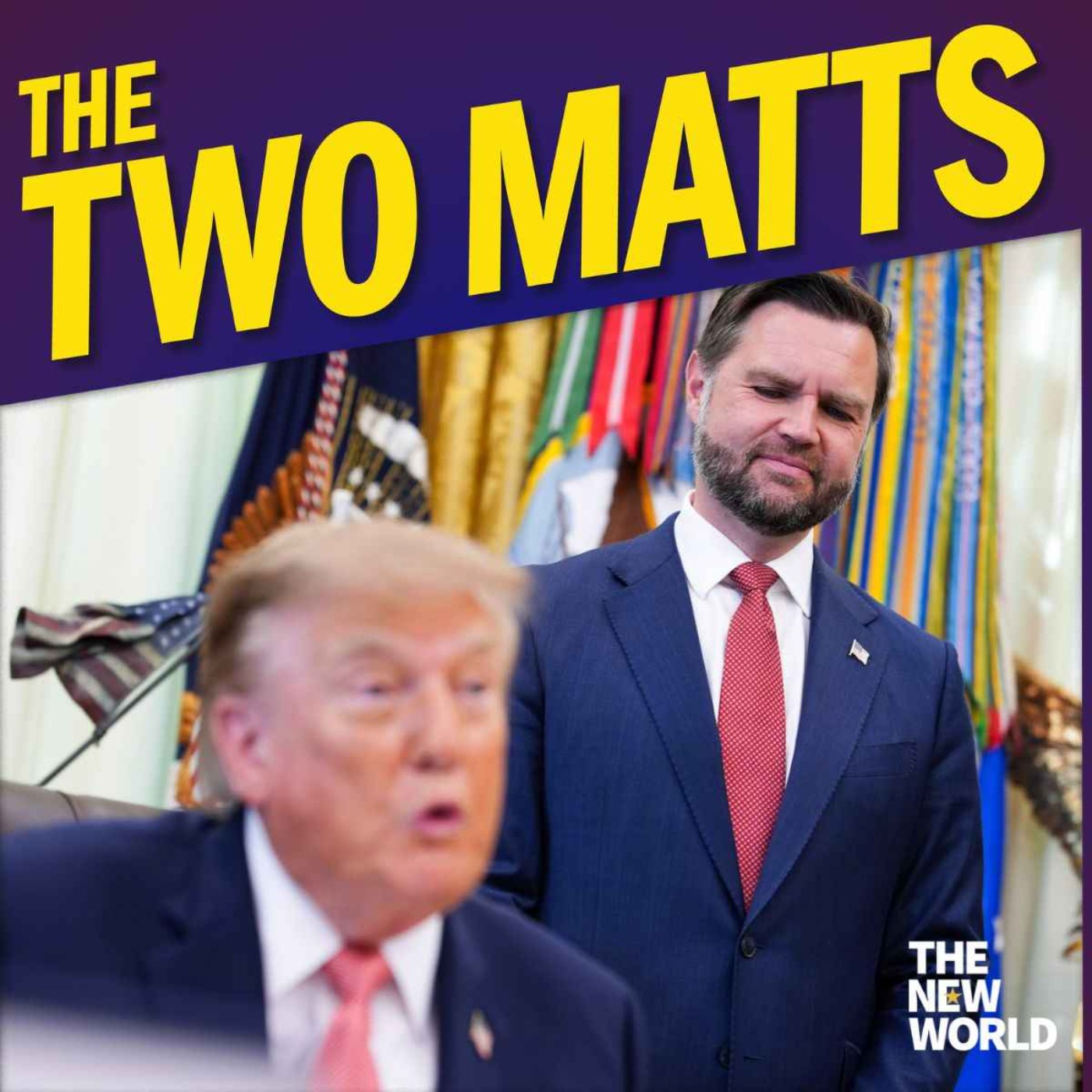
It's a special edition for you this Thursday as the Matts analyse the incredible rout of the Republicans in the US mid-term elections. PLUS the author of one of our favourite books of the year, Sophia Smith Galer, discusses the extraordinary impact language has in our communities, why so many are at risk of extinction, and what we can/should do about it. It's fascinating stuff. Enjoy! Produced by Matt Withers Go to https://www.thenewworld.co.uk/subscribe/ Hosted on Acast.
The Fifth Circuit considers Nathan Reis's sentence for pandemic-relief loan fraud. Reis co-founded Blueacorn, a service provider that helped applicants obtain loans through the federal Paycheck Protection Program. The company earned money as loans were funded. Reis and others used false applications to obtain money for borrowers who did not qualify. He pleaded guilty to joining the fraud conspiracy. The district judge sentenced him to ten years in prison and ordered more than sixty-six million dollars in restitution. The argument you are about to hear concerns the loss calculation behind that punishment, not whether Reis participated in fraud. How much loan money was actually lost through conduct for which he can be held responsible? Listen for the difference between a warning sign that a loan might be fraudulent and evidence that it was fraudulent. The lawyers will discuss loan spreadsheets, individual applications and the scale of the wider scheme. Keep two consequences in mind: the
Federal employees who automatically renew their benefits may be overlooking changes that will affect their households throughout the next year. Greg Klingler, President & CEO of GEBA, says open season should begin with a deliberate review of coverage, costs, and family needs. In his conversation with Francis Rose on Fed Gov Today, Klingler describes inertia as a major influence on plan selection. A familiar plan may feel like a safe choice, especially when it has worked well during the current year. But satisfaction with past coverage does not establish whether next year's benefits will offer the same value.
The U.S. Space Force now has a formal component inside U.S. Special Operations Command, and Aaron, Trent and Peaches break down what that actually means for SOF. The new relationship is not about creating “Space Force commandos.” It is about putting Guardians who understand satellite communications, ISR, navigation, electronic warfare and space effects directly alongside the people planning and executing special operations. Instead of SOCOM requesting support from outside the organization every time a problem appears, the expertise is already inside the command and looking at the mission from the beginning. That integration could matter more than most people realize. Aaron argues that simply having Guardians in the room allows them to recognize problems other components may not even know can be solved with space capabilities. The guys also discuss the growing Space Force budget, commercial innovation from companies like SpaceX and Anduril, and why space and cyber are becoming increasin
In this episode, Major General Joseph “Solo” Kunkel, military deputy to the Defense Innovation Unit, discusses how operational problems in the Pacific are driving a new approach to force design and acquisition. He explains the Mission Area 1/2/3 framework (and the emerging “Edge force”), why Collaborative Combat Aircraft are better understood as extensions of the traditional force rather than pure Edge capabilities, and how smaller, posturable systems change basing and partner relationships. Solo outlines the thinking behind an Autonomous Warfare command focused on rapid adaptation cycles measured in days and weeks rather than years, its nesting relationship with the Direct Reporting Program Manager for Unmanned Systems and DIU, and why decisive mass requires deep integration with the services rather than a pure SOCOM-style model. He also covers DIU’s deliberate shift to carry promising capabilities past the prototype stage into LRIP—until a service can absorb them in its own budget—an
The Seventh Circuit hears Brandon Johnson's challenge to a police search of his girlfriend's home. In January 2020, Chicago officers were investigating a woman's report that Johnson had threatened her with a gun. His girlfriend let them into the home, where children were present, and gestured toward the stairs while discussing whom they could speak to. Some officers went upstairs with her; others went to a rear room on the first floor and found Johnson. A gun was recovered during a later patdown. Johnson asked that the gun evidence be excluded from his federal prosecution, but the district judge refused. The key question here is whether officers could enter that downstairs room in the first place. Johnson's lawyer will argue that the permission covered going upstairs to speak with people there, not searching the first floor. The government's lawyer will argue that she gave broader permission, and that the gun report and music from the back room justified a limited officer-safety sweep.
Back-and-forth arguments over the Agriculture Department’s mass reorganization plans are intensifying. The American Federation of Government Employees is seeking to stay a pending appeal motion from USDA. That’s as USDA is attempting to reverse a court injunction that’s been blocking the reorganization effort. Despite a federal judge ordering USDA to halt its plans, Agriculture Secretary Brooke Rollins says USDA is “full-bore ahead” on the reorganization. AFGE has been suing USDA over the plans, calling them an unlawful attempt at a reduction in force.
The Seventh Circuit considers where Elizabeth Coffey's securities-fraud suit against Kerrisdale Capital Management can be heard. Coffey and another investor sold shares of C3.ai after reading a letter from Kerrisdale, a short-selling investment fund, accusing the company of deceptive accounting. Short sellers can profit when a stock's price falls. The investors accuse the fund and its chief of deliberately misleading the market for profit. Those are allegations, not findings of fraud. The letter appeared online, and the fund's chief discussed it on television. Coffey received the letter in Illinois, and the investors sued there. But the district judge dismissed the case for improper venue: the rules about which federal district is a proper place to bring a lawsuit. The judge did not decide whether the letter was fraudulent. The investors' lawyer will argue that the report's broad distribution and an investor's receipt and reliance in Illinois connect the alleged violation to that distr
Technology has long been the one part of the economy that never hit a wall. No society has ever run out of ideas. Joel Mokyr, the Northwestern economic historian who won the 2025 Nobel Prize for identifying what makes growth self-sustaining, believes all of that and is frightened anyway. What worries Mokyr is not new technology like AI, but the social and political institutions it sits inside of: the tolerance for heretical ideas that invention depends on, the contestability that keeps dominant firms honest, and the public bodies that decide which claims about the world are established and which are not. Mokyr’s prescription is not caution. He thinks the money going into AI looks like a bubble, that a reckoning is likely, and that the right response is to move faster anyway, because demography and climate are not waiting for anyone. Connect with us: Follow Capitalisn’t on Instagram (https://www.instagram.com/capital_isnt/) & TikTok (https://www.tiktok.com/@capital_isnt) ️ Email your qu
Andrew and Joe dissect the historic 2026 midterms, including what to expect in the outstanding Senate races in Alaska and (shockingly) Mississippi; what it all means; why winning state legislatures and governorships may be as important as winning the House and Senate; and how we can start to forge a new way forward. Show Links: BlueSky: @LawAndChaosPod Threads: @LawAndChaosPod Twitter: @LawAndChaosPod
The Eleventh Circuit hears an appeal by two overseas online sellers in a trademark case brought by Adidas. Adidas accused the websites of selling counterfeit products bearing its marks. The district court authorized Adidas to serve the lawsuit by email and by posting documents on a notice website. The sellers' lawyer appeared before judgment, but they did not defend the claims before the court entered a default judgment. About five months later, they asked to set it aside, challenging service and offering settlement negotiations as a reason for the delay. The district judge upheld service and refused to reopen the judgment. Their lawyer will argue that the Hague Service Convention, which governs delivery of lawsuit papers abroad, did not permit this method and left the court without jurisdiction. He will say their settlement efforts justify the time they took to challenge the judgment. The lawyer for Adidas will argue that the electronic service was permissible and that the sellers wai
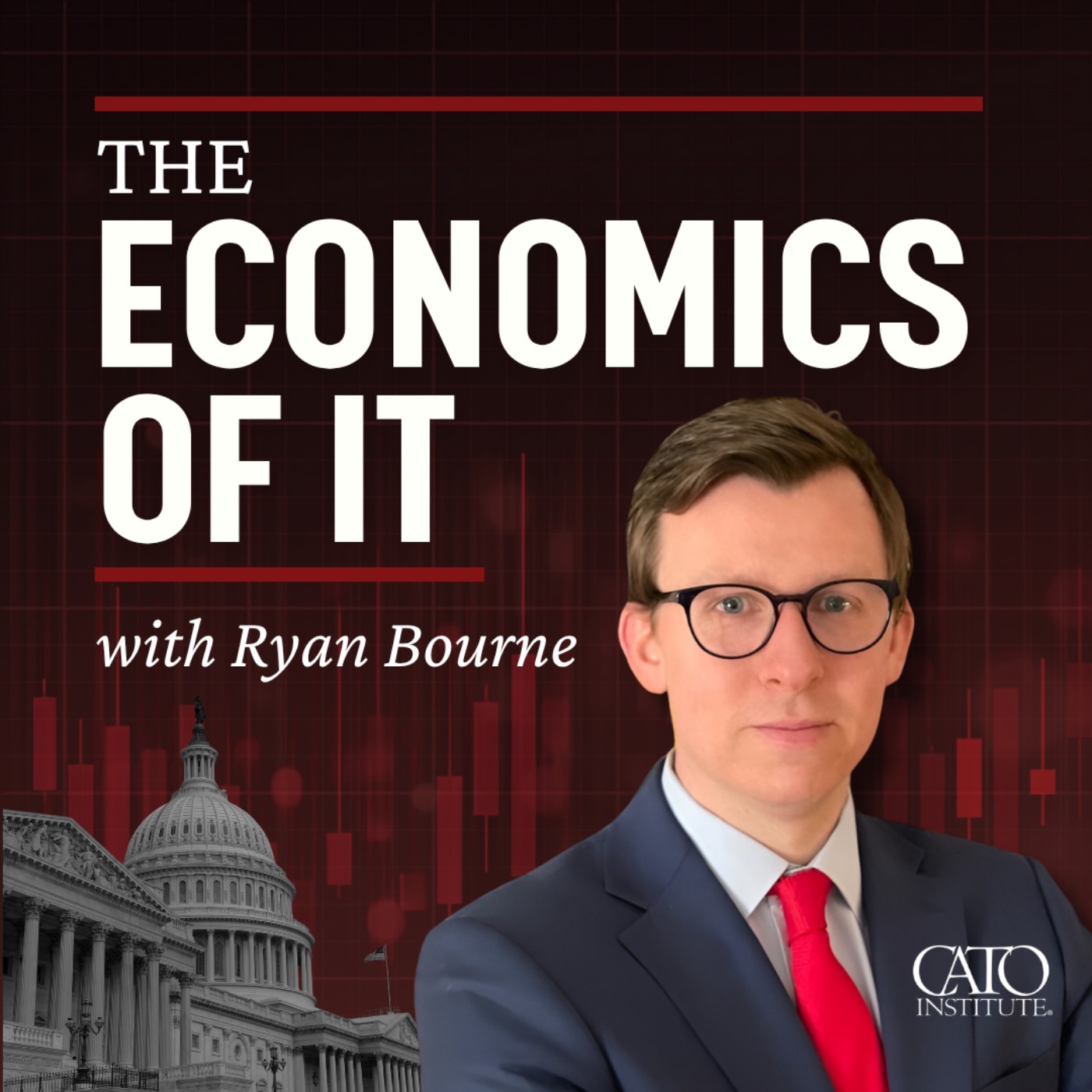
Who are the rich in America? Tech billionaires and Wall Street financiers dominate the headlines, but roughly three million private-business owners are worth at least $5 million each, scattered right across the country. Economists Eric Zwick and Owen Zidar, the authors of The Everywhere Millionaire, join host Ryan Bourne to explain who these “Main Street Millionaires” are, how they got rich, and what their stories tell us about the health of the American Dream. More on this topic: Angus Deaton Inadvertently Shows Why We Shouldn’t Care about Economic Inequality Stats: https://www.cato.org/commentary/angus-deaton-inadvertently-shows-why-we-shouldnt-care-about-economic-inequality-stats Failures of Wealth Taxation: https://www.cato.org/policy-analysis/failures-wealth-taxation Exploring Wealth Inequality: https://www.cato.org/policy-analysis/exploring-wealth-inequality Host & Producer: Ryan Bourne Senior Producer: Barbara Galletti Video Editor: Lena Popilieva Audio Engineer: Sedona LaMarre
Can a company charge you half of your remaining payments to cancel a subscription you thought was monthly? That is the question behind the legal fight over Adobe's Creative Cloud plans, which include Photoshop. In March 2026, Adobe agreed to pay $150 million, half in penalties and half in free services, to settle claims brought by the federal government that it hid an early termination fee and made cancellation hard. This week, a federal judge revived a separate class action over the same kind of subscription terms. This episode explains the 2010 online shopping law behind the FTC case, what the 50 percent fee was alleged to be, what the settlement means for customers, and what comes next. Nothing in these cases ends Photoshop. The fight is over how it is sold and canceled. General information only, not legal advice. Based on public records and news reports. Thanks for listening to Gavel & Gazette. Legal news, explained. General information only, not legal advice. This episode includes
The Seventh Circuit hears Michael Melgaard's retaliation case against Wisconsin's Department of Natural Resources and two supervisors. Melgaard was a conservation warden who supported a colleague's discrimination complaint against the department. He says supervisors then singled him out for sharing a work vehicle with another warden, contrary to pandemic safety rules. The department investigated, decided no formal discipline was needed, then issued a letter of expectations and a partly negative performance review. Melgaard says those actions, taken together, were retaliation for supporting the complaint. He sued the department under federal employment law and the supervisors personally for alleged First Amendment violations. The district judge dismissed the constitutional claims on sovereign-immunity grounds, treating them as effectively against the state. The judge also rejected the employment claim because the conduct was not sufficiently severe or pervasive to change working conditi
The Seventh Circuit hears TK Elevator challenge Church Mutual over who must defend it in lawsuits arising from an elevator accident. An employee at an Illinois senior-living facility alleged that she was injured when an elevator fell while she was riding it. She sued the elevator maintenance company, TK Elevator. The maintenance contract called for the property's insurance to cover TK first, without drawing on the company's own insurance. But TK was not named on Church Mutual's primary liability policy. It qualified for coverage under Church Mutual's umbrella policy, which generally sits above other insurance. TK also had coverage from HDI. The district judge held that the remaining HDI coverage had to be exhausted before Church Mutual had a duty to defend TK. The company's lawyer will argue that an endorsement in the HDI policy, read with the maintenance agreement, reverses that order and puts Church Mutual first. Church Mutual's lawyer will argue that a promise to obtain insurance do