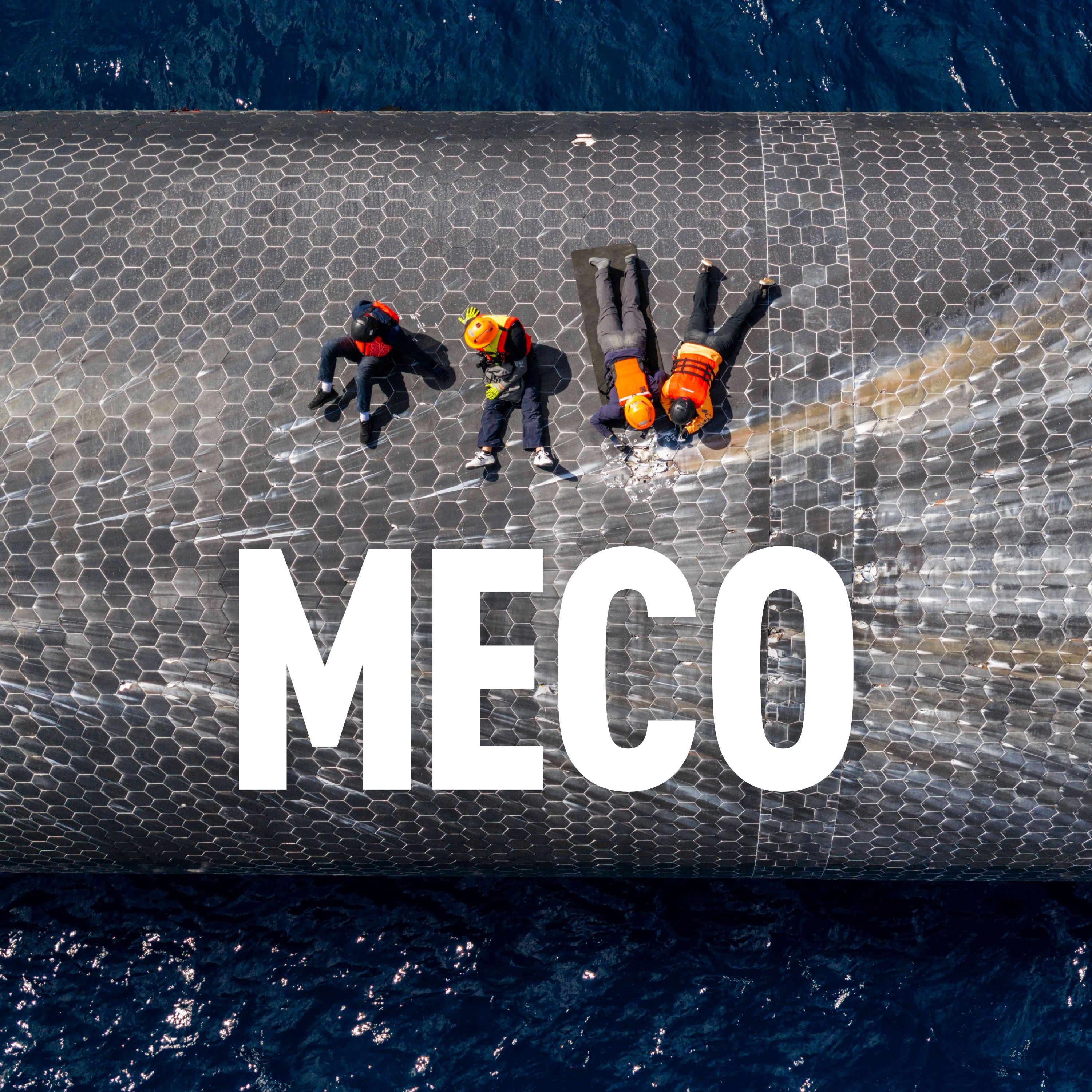
SpaceX caught Starship returning from orbit for the first time, while Vulcan’s return to flight was ULA’s first total mission failure. I talk through the inflection point Starship has reached, Blue Origin’s decision to focus on New Glenn and the Moon, and how NASA and the Space Force are building out lunar infrastructure. This episode of Main Engine Cut Off is brought to you by 33 executive producers—JC, Will and Lars from Agile, Frank, Joakim, Matt from Built, Tim Dodd (the Everyday Astronaut!), Joonas, Lee, Ryan, Donald, Russell, Theo and Violet, Josh from Impulse, Jan, Steve, Matt, Pat, Natasha Tsakos, Miles O’Brien, David, Heiko, Fred, Warren, Joel, Stealth Julian, Kris, The Astrogators at SEE, and four anonymous—and hundreds of supporters (https://mainenginecutoff.com/support). Topics Starship flight 15 powers to orbit — Ars Technica (https://arstechnica.com/space/2026/11/starship-flight-15-powers-to-orbit-setting-up-a-possible-catch-on-saturday/) SpaceX returned its Starship rock
What I liked: I like the concept of 'bringing the viewer along with the science.' I agree with the fact that the SAD eating pattern is problematic and that it would be an improvement to eat a whole food-based diet. I also (very much) acknowledge there are non-health related issues about food that we should have adult discussions about. What I didn't like: (1) This series wasn't really about the twin study. Data were only presented, a bit, in the last of the 4 episodes. (2) The advertised foods (fake meat, fake cheese, fake eggs) are cast as similar/identical, but simply aren't, nor were they the basis of the participant's diets. (3) The data presented were, I think, not all that impressive. And some data presented in the documentary could not be found in the paper, e.g. body composition. For more on the topic of Data Misrepresentation, see our new paper: https://www.sciencedirect.com/science/article/pii/S002231662372806X?via%3Dihub (https://www.sciencedirect.com/science/article/pii/S00
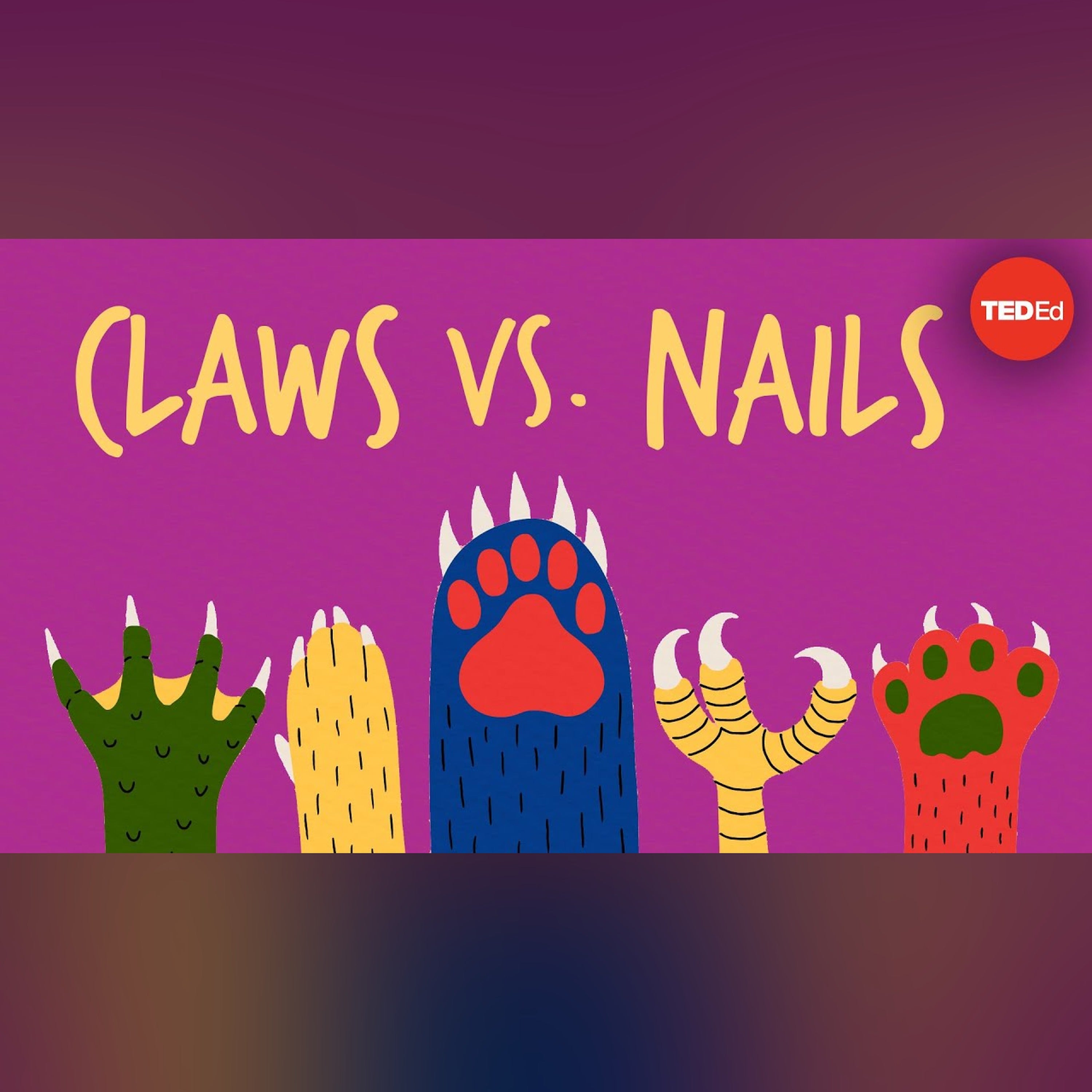
Discover the evolutionary purpose of nails, and explore the theories of why they evolved from claws over 55 million years ago. Uploaded 29-10-19 -- Consider the claw. Frequently found on animals around the world, it’s one of nature’s most versatile tools. Bears use claws for digging as well as defense. An eagle’s needle-like talons can pierce the skulls of their prey. Even the ancestors of primates used to wield these impressive appendages, until their claws evolved into nails. So what caused this adaptation? Matthew Borths investigates. Lesson by Matthew Borths, directed by Augenblick Studios. Animator's website: https://www.augenblickstudios.com (https://www.augenblickstudios.com/) Sign up for our newsletter: http://bit.ly/TEDEdNewsletter Support us on Patreon: http://bit.ly/TEDEdPatreon Find us on Twitter: http://bit.ly/TEDEdTwitter Peep us on Instagram: http://bit.ly/TEDEdInstagram View full lesson: https://ed.ted.com/lessons/claws-vs-nails-matthew-borths Thank you so much to our p
Why does Taiwan matter to the United States, and what would it take to prevent a war with China? Eyck Freymann, a Hoover Fellow and the author of Defending Taiwan: A Strategy to Prevent War with China (https://www.hoover.org/research/defending-taiwan-strategy-prevent-war-china), joins Peter Robinson to discuss Taiwan’s indispensable semiconductor industry, its strategic importance in the Pacific, and Beijing’s options for bringing the island under its control. Drawing on his book, Freymann explains how military readiness, economic resilience, and careful diplomacy can deter both an invasion and the quieter forms of coercion that threaten Taiwan’s future.
RAVEN Dream Sequence - Memory Consolidation and Insight Extraction for AGI or cognitive architecture Episode release date: 31 Jan 2023 Core Ideas: Metamodernism: Narratives and emergence view of reality - Reduce suffering - Increase prosperity - Increase understanding mantra: Seek knowledge. DISCLAIMER: This is a community-driven show. --------------- Keywords: ai safety, ai podcast, ai education, machine autonomy, superintelligence, ai innovation, david shapiro
In which John Green teaches you about the Vereenigde Oostindische Compagnie, doing business as the VOC, also known as the Dutch East India Company. In the 16th and 17th centuries, the Dutch managed to dominate world trade, and they did all through the pioneering use of corporations and finance. Well, they did also use some traditional methods like violently enforced monopolies, unfair trade agreements, and plain old warfare. You'll learn how the Dutch invented stuff like joint stock corporations, maritime insurance, and futures trading. Basically, how the Dutch East India Company crashed the US economy in 2008. I'm kidding. Or am I? Citation 1: William J. Bernstein, A Splendid Exchange: How Trade Shaped the World. Grove Press. 2008. p. 218 Citation 2: Stephen R. Bown. Merchant Kings: When Companies Ruled the World, 1600-1900. New York. St. Martin’s Press. 2009. p. 28 Citation 3: Bernstein p. 223 Citation 4: Bernstein p. 228 Citation 5: Bown p. 53 Crash Course is on Patreon! Want to fin
In this episode of The Origins Podcast, Sabine and I happily didn’t discuss AI at all! A first in awhile. Instead, the topics we discussedd spanned science in three different ways. First we just discussed topics that were simply really cool.. in one case literally. We discussed a new result that showed that White Dwarfs come in all colors! Even Green (beware Superman!). Then a result from China on the coldest temperature ever produced: 8 trillionths of a degree above absolute zero. Next we discuss how in science we sometimes explore things to illuminate ideas that are really ill-defined, hoping that nature will guide our thinking. The two examples we discussed are an effort to Reverse Physics, to try and find mathematical principles that are consistent and fundamental across all of physics in order to explore where aspects of physics, like quantum mechanics, might be incomplete. The second involves trying to understand consciousness by exploring how neurons react to oscillating images
Dr Richard Cobb is a forest ecologist and researcher at California Polytechnic State University, specialising in forest health, invasive pathogens and the ecological consequences of disease outbreaks. His research has helped scientists understand how microscopic organisms can kill millions of trees, transform entire ecosystems and intensify the impacts of devastating wildfires. Brought to Western Australia as a visiting scholar by the Harry Butler Institute at Murdoch University, Richard joins Kurt Krispyn to explore Sudden Oak Death, a disease estimated to have killed around 50 million trees across California. Caused by the introduced pathogen Phytophthora ramorum, the disease shares similarities with the dieback threatening Western Australia's native forests, yet spreads in remarkably different ways. The conversation explores how pathogens invade new environments, why trees are particularly vulnerable to unfamiliar diseases, and the extraordinary ecological consequences of losing ent
Download a free audiobook version of "The Pillars of the Earth" and support TED-Ed's nonprofit mission: https://www.audible.com/ted-ed Uploaded 31-10-19 Check out our full book recommendation: https://shop.ed.ted.com/collections/ted-ed-book-recommendations/products/illuminati -- The year was 1776. In Bavaria, new ideals of rationalism, religious freedom and universal human rights competed with the Catholic church’s heavy influence over public affairs. Adam Weishaupt, a law professor frustrated with the Church’s ideology, decided to spread his ideas through a secret society: the Illuminati. Chip Berlet dives into the history, ideals and rituals of the infamous group. Lesson by Chip Berlet, directed by Brett Underhill. Animator's website: https://www.porkchopbob.com (https://www.porkchopbob.com/) Sign up for our newsletter: http://bit.ly/TEDEdNewsletter Support us on Patreon: http://bit.ly/TEDEdPatreon Find us on Twitter: http://bit.ly/TEDEdTwitter Peep us on Instagram: http://bit.ly/TED
Fixing "goldfish memory" with GPT-3 and external sources of information in a chatbot - part 2 Episode release date: 1 Jul 2022 Core Ideas: Metamodernism: Narratives and emergence view of reality - Reduce suffering - Increase prosperity - Increase understanding mantra: Seek knowledge. DISCLAIMER: This is a community-driven show. --------------- Keywords: david shapiro, openai, ai innovation, deep learning, chatbots
Families are personal—but they can also be political. In this episode of Crash Course Latin American Literature, we’ll take a look at a 19th-century romance novel and poems about motherhood. But we’ll also compare two contemporary novels about growing up—and relating to the people who raised you. Introduction: Mi Pueblito 00:00 Romance Novels 0:34 "Iracema" 1:14 Gabriela Mistral 3:18 "I Am Not Your Perfect Mexican Daughter" 5:29 "We the Animals" 7:57 Review & Credits 10:15 Sources: https://docs.google.com/document/d/1eE7g4-k6PD7C6wNBzeJIO8GCDHpoJl8ldDjKyq_2yYg/edit?tab=t.0 To learn more, check out these videos: Check out our CC Latin America Extra Curricular Playlist here: *** Support us for $5/month on Patreon to keep Crash Course free for everyone forever! https://www.patreon.com/crashcourse Or support us directly: https://complexly.com/support Join our Crash Course email list to get the latest news and highlights: https://mailchi.mp/crashcourse/email Get our special Crash Course Edu
CALCULUS! Today we take our first steps into the language of Physics; mathematics. Every branch of science has its own way to describe the things that it investigates. And, with Physics, that's math. In this episode, Shini talks us through derivatives and how calculus helps us to understand the world around us. -- Produced in collaboration with PBS Digital Studios: http://youtube.com/pbsdigitalstudios -- Want to find Crash Course elsewhere on the internet? Facebook - https://www.facebook.com/YouTubeCrashCourse/ Twitter - http://www.twitter.com/TheCrashCourse Tumblr - http://thecrashcourse.tumblr.com (http://thecrashcourse.tumblr.com/) CC Kids: http://www.youtube.com/crashcoursekids Support CrashCourse on Patreon: http://www.patreon.com/crashcourse
Ego, placebo and a $9,000 leather jacket. Plus Moderna’s cancer vaccine, Calley Means on Rogan, and why Washington is basically undrainable. Another live episode of VPZD! (https://www.youtube.com/live/ifLpO2DdMss) Topics (in chronological order): Two middle-aged men in leather jackets, creatine and the renal failure myth Creatinine vs GFR, and why creatine raises one but not the other The Jensen Huang scandal: Nvidia, an alleged Chinese spy and chip export controls Why this one is a national security story, not just a scandal Placebo, suggestion and the pharma drug dinner Jensen’s ego unraveling and the leather jacket as identity What a Jensen collapse could mean for Nvidia, the S&P and the economy Congressional stock trading, nepotism and Zuck’s control of Meta California’s billionaire tax and why it failed The Prop 38 immunotherapy bond measure Brian Johnson, castration, vocal range and the Denny’s where Nvidia began Moderna’s cancer vaccine: preventive vs therapeutic vaccines Melano
In her New Orleans neighborhood, artist and TED Fellow Candy Chang turned an abandoned house into a giant chalkboard asking a fill-in-the-blank question: "Before I die I want to ___." Her neighbors' answers -- surprising, poignant, funny -- became an unexpected mirror for the community. (What's your answer?) Talk by Candy Chang.
John Green teaches you about the so-called Dark Ages, which it turns out weren't as uniformly dark as you may have been led to believe. While Europe was indeed having some issues, many other parts of the world were thriving and relatively enlightened. John covers European Feudalism, the cultural blossoming of the Islamic world, and the scientific and artistic advances in China, all during these "Dark Ages." Along the way, John will raise questions about the validity of Europe's status as a continent, reveal the best and worst years of his life, and frankly state that science and religion were once able to coexist. Chapters: Introduction: Europe 00:00 Why are they called The Dark Ages? 0:50 Feudalism in Medieval Europe 1:34 Dar al Islam and the Umayyad Dynasty 3:55 The Abbasids 4:42 An Open Letter to Science and Religion 7:17 Spanish Muslims in Cordoba 8:15 China's Golden Age 9:12 Credits 10:52 Crash Course is on Patreon! Want to find Crash Course elsewhere on the internet? Facebook - h
When someone doubts our abilities, it can shake our confidence and make us question ourselves. But sometimes, being underestimated can motivate us to work harder and accomplish things others thought were impossible. Organizational scientist Samir Nurmohamed (https://mgmt.wharton.upenn.edu/profile/nurmo/) studies what he calls the "underdog effect." He explains why criticism and rejection can sometimes become powerful sources of motivation, and how we can harness this effect in our own lives. Then, on Your Questions Answered, social scientist Ben Rogers (https://www.bc.edu/bc-web/schools/carroll-school/faculty-research/faculty-directory/benjamin-rogers.html) returns to respond to listeners' comments about the stories we tell about our lives, and how these narratives shape our sense of meaning. How should we handle criticism that comes not from strangers and bosses, but from our own friends and family? And how can we offer feedback to friends and family in a way that motivates rather tha
Explore the intertwined histories and cultures of the major religions: Hinduism, Judaism, Buddhism, Christianity and Islam. Uploaded 14-11-13 -- It's perfectly human to grapple with questions, like 'Where do we come from?' and 'How do I live a life of meaning?' These existential questions are central to the five major world religions -- and that's not all that connects these faiths. John Bellaimey explains the intertwined histories and cultures of Hinduism, Judaism, Buddhism, Christianity and Islam. Lesson by John Bellaimey, animation by TED-Ed. Sign up for our newsletter: http://bit.ly/TEDEdNewsletter Support us on Patreon: http://bit.ly/TEDEdPatreon Find us on Twitter: http://bit.ly/TEDEdTwitter Peep us on Instagram: http://bit.ly/TEDEdInstagram View full lesson: http://ed.ted.com/lessons/the-five-major-world-religions-john-bellaimey
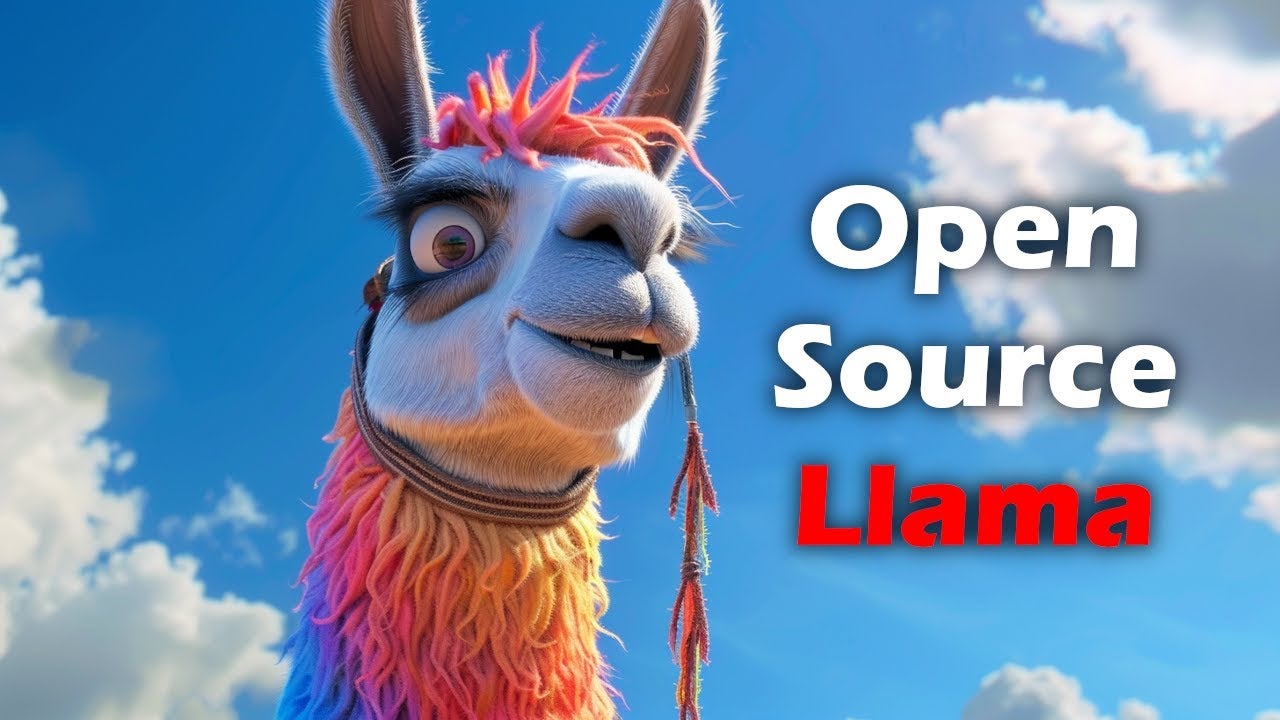
Meta Open Sources Llama 3.1 - Should Llama 4, 5, and 6 be Open Source Too? Episode release date: 5 Aug 2024 Core Ideas: Metamodernism: Narratives and emergence view of reality - Reduce suffering - Increase prosperity - Increase understanding mantra: Seek knowledge. DISCLAIMER: This is a community-driven show. -------------- Keywords: tech singularity, ai future, post labor economics, ai education
In which John relates a condensed history of India, post-Indus Valley Civilization. John explores Hinduism and the origins of Buddhism. He also gets into the reign of Ashoka, the Buddhist emperor who, in spite of Buddhism's structural disapproval of violence, managed to win a bunch of battles. Chapters: Introduction 00:00 The Vedas 0:55 The Caste System 1:33 Dharma 2:40 Samsara, Moksha, and Karma 3:33 Buddhism 5:18 Chutes and Ladders 8:04 Ashoka 9:18 Hinduism 11:04 Credits 11:47 Resources: India: A History by John Keay: https://bit.ly/3uEgVxE The Bhagavad Gita: https://bit.ly/3O8A96l The Bhagavad Gita, Upanishads, and Rig Veda, all-in-one edition: https://bit.ly/3xqP85N Credits: Executive Producer: John Green Producer: Stan Muller Writer and historian: Raoul Meyer Script Supervisor: Danica Johnson Music: Jason Weidner Thought Bubble is a product of the Smart Bubble Society: http://dft.ba/-smartbubble the Smart Bubble Society is: Suzanna Brusikiewicz Jonathon Corbiere Nick Counter Allan
In 1789, the French Monarchy's habit of supporting democratic popular revolutions in North America backfired. Today, we're talking about the French Revolution. Across the world, people were rising up to throw off monarchies, and Louis didn't see the writing on the wall until it was too late. Today we'll talk about how the French Revolution unfolded, and what (if anything) was really accomplished. You'll learn about stuff like the National Assembly, the Tennis Court Oath, the Declaration of the Rights of Man and the Citizen, the guillotine, Robespierre, and a bunch of other kind of unbelievable details. Hatian Revolutions - CC World History: https://youtu.be/5A_o-nU5s2U Sources Hunt, Lynn et al. Making of the West: Peoples and Cultures. 6th ed. Boston: Bedford St. Martin’s, 2019. Crash Course is on Patreon! Thanks to the following patrons for their generous monthly contributions that help keep Crash Course free for everyone forever: Eric Prestemon, Sam Buck, Mark Brouwer, Indika Siriwar
In Libya, Zahra' Langhi was part of the "days of rage" movement that helped topple the dictator Gaddafi. But -- then what? In their first elections, Libyans tried an innovative slate of candidates, the "zipper ballot," that ensured equal representation from men and women of both sides. Yet the same gridlocked politics of dominance and exclusion won out. What Libya needs now, Langhi suggests, is collaboration, not competition; compassion, not rage. Talk by Zahra' Langhi.
Is Q* leaked as SUS-COLUMN-R? Did OpenAI achieve Level 2 or not? Strawberry might be rotten! Episode release date: 8 Aug 2024 Core Ideas: Metamodernism: Narratives and emergence view of reality - Reduce suffering - Increase prosperity - Increase understanding mantra: Seek knowledge. DISCLAIMER: This is a community-driven show. ------ ---------- Keywords: ai future, ai development, david shapiro, deep learning
We’ve talked about benzene a bit already in this series, but did you know that benzene rings are present in all kinds of familiar substances? The styrofoam packaging that comes with new appliances, some pharmaceuticals, pesticides, and even some explosives contain benzene. In this episode of Crash Course Organic Chemistry, we’ll see how we can use electrophilic aromatic substitution to attach stuff to benzene rings like halogens, carbons, and more! Episode Sources: Rocke, A.J., 1985. Hypothesis and experiment in the early development of Kekule's benzene theory. Annals of Science, 42(4), pp.355-381. Martín, N. and Scott, L.T., 2015. Challenges in aromaticity: 150 years after Kekulé's benzene. Chemical Society Reviews, 44(18), pp.6397-6400. Stuttgart, G., 2018. Charles Friedel (1832–1899) And James Mason Crafts (1839–1917): The Friedel–Crafts Alkylation And Acylation Reactions. [online] Thieme.de. Available at: https://www.thieme.de/statics/bilder/thieme/final/en/bilder/tw_chemistry/CFZ-