Nearly 450 million people are affected by mental illness worldwide. In wealthy nations, just half receive appropriate care, but in developing countries, close to 90 percent go untreated because psychiatrists are in such short supply. Vikram Patel outlines a highly promising approach -- training members of communities to give mental health interventions, empowering ordinary people to care for others. Talk by Vikram Patel.
This week I'm talking to Steve Neill about his book 'But Something is There' and his YouTube channel 'Breaking the silence'. 'But Something is There' is Steve Neill's journey through a life time of dealing with the unknown. Some call the experience "The Visitors" some call it abduction by aliens. The truth is we don't know what it is, But Something is There. Bio Steve Neill is a special effects makeup artist, filmmaker, puppeteer, model maker and visual effects (VFX) artist in film and television with a career spanning over 35 years. Steve started in the Industry at American Zoetrope just after high school where he produced his first film, Arthur. He was mentored by Francis Coppola and became good friends. Moving to Hollywood, Steve met Joe Blasco where he apprenticed for a short while before becoming friends with Rick Baker who gave him his start in Hollywood. Later he met Bob Schieffer who was head of Disney make-up and then became friends with Fred B. Phillips as a result of being f
From the flu to COVID-19, viruses are a major threat in our everyday lives. In today’s episode of Crash Course Biology, we’ll learn why viruses are like genes in a box, and how they invade and spread between cells. We’ll also discover how vaccines and medicines help our bodies fight back. Introduction: Discovering Viruses 00:00 What We Have in Common With Viruses 1:24 Evolutionary Theories of Viruses 2:49 Hosts & Infection 3:55 Retroviruses 6:49 Vaccines 8:11 Dr. Quarraisha Abdool Karim & Antivirals 9:41 Review & Credits 11:39 This series was produced in collaboration with HHMI BioInteractive, committed to empowering educators and inspiring students with engaging, accessible, and quality classroom resources. Visit https://BioInteractive.org/CrashCourse (https://biointeractive.org/CrashCourse) for more information. Are you an educator looking for what NGSS Standards are covered in this episode? Check out our Educator Standards Database for Biology here: https://www.thecrashcourse.com/bi
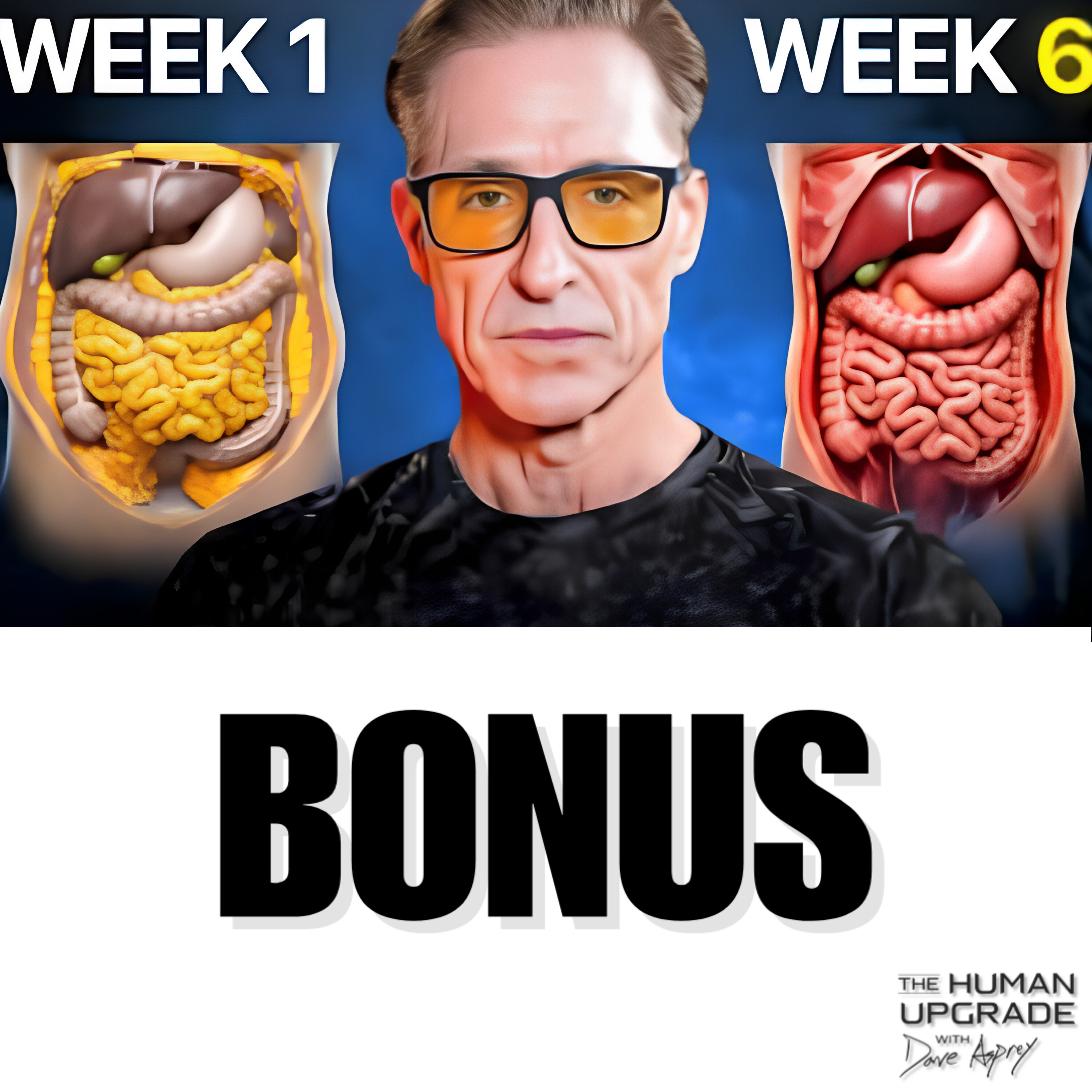
There's a 15 minute habit you can do every morning that kills insulin belly. That's the fat packed around your organs. It drains into your liver, forces your body to make more insulin, and insulin locks your fat cells shut so nothing can get out. I know because 20 years ago I was 31, weighed 300 pounds, and my doctor told me my blood looked like sludge and I was headed for a heart attack. So I did exactly what he said. I trained six days a week, 90 minutes a day, for 18 months. My waist stayed at 46 inches. Today that waist is gone. So is my arthritis, my brain fog, and my pre-diabetes. And it didn't start with a diet or a workout. It started with light. In this video I'll show you two ways to test whether you have insulin belly (one takes 10 seconds and costs nothing), why a standard blood sugar test misses it for years, and the three levers that reversed mine. You'll Learn: What “insulin belly” is and why visceral fat poses different risks than fat under your skin Why you can be “thi
If you're like us, you love the sound of a brunch buffet. But not everything you eat at that glorious buffet is going to be turned into energy. Your body has to work with different forms of food in different ways. In this episode of Crash Course Anatomy & Physiology, Hank takes us through more about our metabolism including cellular respiration, ATP, glycogenesis, and how insulin regulates our blood sugar levels. Looking for a refresher on ATP and Celluar Respiration? Check out this video from Crash Course Biology: https://youtu.be/00jbG_cfGuQ Pssst... we made flashcards to help you review the content in this episode! Find them on the free Crash Course App! Download it here for Apple Devices: https://apple.co/3d4eyZo Download it here for Android Devices: https://bit.ly/2SrDulJ -- Chapters: Introduction: Brunch Buffets 00:00 Cellular Respiration 2:03 Absorptive State 3:26 Basal Metabolic Rate 4:18 Insulin Regulates Blood Glucose Levels 4:40 Lipoproteins: LDL and HDL Cholesterol 6:17 Pos
In this episode, Hank goes over Reversible Reactions, the water dissociation constant, what pH and pOH actually mean, Acids, Bases, and Neutral Substances as well as the not-so-terrifying Logarithms, strong acids, weak acids, and how to calculate pH and pOH. Oh, and litmus paper! Pssst... we made flashcards to help you review the content in this episode! Find them on the free Crash Course App! Download it here for Apple Devices: https://apple.co/3d4eyZo Download it here for Android Devices: https://bit.ly/2SrDulJ -- Table of Contents Reversible Reactions 3:40 Water Dissociation Constant 5:00 Acids, Bases, & Neutral Substances 6:38 Strong and Weak Acids 7:43 Logarithms 1:46 Calculating pH and pOH 8:45 Cool Mathematical Connections 9:54 Crash Course is on Patreon! Want to find Crash Course elsewhere on the internet? Facebook - http://www.facebook.com/YouTubeCrashCourse Twitter - http://www.twitter.com/TheCrashCourse Instagram - https://www.instagram.com/thecrashcourse/ CC Kids: http://ww
Scientists are using artificial intelligence to uncover the hidden details of neutrino interactions. A new machine-learning program called SPINE can reconstruct complex particle tracks inside liquid argon detectors, helping researchers extract more useful data from experiments. Successfully tested with the ICARUS detector, this technology could also support the upcoming DUNE experiment, bringing scientists closer to understanding one of physics’ biggest questions: why does the universe contain more matter than antimatter? This episode includes AI-generated content.
Scientists at the University of Washington have created a simulation of a lifeless Earth spanning five billion years, offering a new way to study how planets evolve without biology. The model could help researchers interpret the atmospheres of distant rocky worlds and investigate whether their chemical signatures might point to something more. This episode includes AI-generated content.
Why the red grouse always scares the life out of broadcaster and musician Tom McKinney. Produced by Sophie Anton for BBC Audio in Bristol. This programme features audio from Xeno-Canto by Patrik Åberg and Simon Elliott (XC145653 and XC591863 - Lagopus lagopus scotica)
Learn more at https://brilliant.org/TedEd -- Scanning the crime scene, Officer Stone sees a disorderly room, visible red-brown stains and a partial shoe track— all hinting at a bloody struggle. After calling in a team to inspect, photograph, sketch, measure, and collect all the evidence, the investigators apply Luminol. So, what is Luminol and why is it used at crime scenes? Theodore E. Yeshion shines a light on the investigative tool. Lesson by Theodore E. Yeshion, directed by Raghav Arumugam, Jagriti Khirwar. This video made possible in collaboration with Brilliant Learn more about how TED-Ed partnerships work: https://bit.ly/TEDEdPartner Support Our Non-Profit Mission ---------------------------------------------- Support us on Patreon: http://bit.ly/TEDEdPatreon Check out our merch: http://bit.ly/TEDEDShop ---------------------------------------------- Connect With Us ---------------------------------------------- Sign up for our newsletter: http://bit.ly/TEDEdNewsletter Find us on
Dr Mark Kinet (MD) discusses Psychoanalysis and the Struggle for Love: A Kaleidoscopic View (https://bookshop.org/a/12343/9781041217329) (Routledge, 2026), published by Routledge in 2026. This book is a psychoanalytic foray into the rhetorics of struggle which shape love, desire and their production. Through readings of Freud, Lacan, Winnicott and Klein, it explores how the psyche is shaped by the complexities involved in coming to love and be loved. Later chapters examine how aspects of modern culture have introduced new modes of desire and new theatres for loving encounters. The book’s form, ‘a topography of [love’s] tensions,’ enacts the ambivalence and contradictions inherent in love, its idiosyncrasies, whilst also paying homage to the endurance of every generation’s fascination with love’s struggles. This conversation with Mark covers Lacan’s conception of desire, AI intimacy and the relationship between psychoanalysis and poetry. Hosted by Simplecast, an AdsWizz company.
Dr Mark Kinet (MD) discusses Psychoanalysis and the Struggle for Love: A Kaleidoscopic View (https://bookshop.org/a/12343/9781041217329) (Routledge, 2026), published by Routledge in 2026. This book is a psychoanalytic foray into the rhetorics of struggle which shape love, desire and their production. Through readings of Freud, Lacan, Winnicott and Klein, it explores how the psyche is shaped by the complexities involved in coming to love and be loved. Later chapters examine how aspects of modern culture have introduced new modes of desire and new theatres for loving encounters. The book’s form, ‘a topography of [love’s] tensions,’ enacts the ambivalence and contradictions inherent in love, its idiosyncrasies, whilst also paying homage to the endurance of every generation’s fascination with love’s struggles. This conversation with Mark covers Lacan’s conception of desire, AI intimacy and the relationship between psychoanalysis and poetry.
Introducing the very first Crash Course Podcast! Over the next 11 episodes, John Green and Katie Mack will walk through the entire history of the universe… even the parts that aren’t written yet. Episode 1 premieres April 24th and can be streamed here on the Crash Course channel and wherever else you get your podcasts. Thank you to the Perimeter institute for letting us use some of their footage here. You can find those videos featured here: Introducing: Quantum 101 with Katie Mack https://youtu.be/Xt1hO7YvNx0?si=PPxFf0sfndSRynkt Katie Mack is coming to Perimeter Institute https://youtu.be/fa4cLiAwgVA?si=3dzM_79AU42wUy1L Additional footage provided by NASA. *** Crash Course is on Patreon! Thanks to the following patrons for their generous monthly contributions that help keep Crash Course free for everyone forever: Leah H., David Fanska, Andrew Woods, DL Singfield, Ken Davidian, Stephen Akuffo, Toni Miles, Steve Segreto, Kyle & Katherine Callahan, Laurel Stevens, Burt Humburg, Perry Joy
View full lesson: http://ed.ted.com/lessons/what-s-the-difference-between-accuracy-and-precision-matt-anticole Uploaded 14-04-15 When we measure things, most people are only worried about how accurate, or how close to the actual value, they are. Looking at the process of measurement more carefully, you will see that there is another important consideration: precision. Matt Anticole explains what exactly precision is and how can help us to measure things better. Lesson by Matt Anticole, animation by Anton Bogaty.
Welcome to Crash Course Geography hosted by Alizé Carrère! This 50-episode course will be split into two parts. In the first half, we will focus on physical geography or the processes and phenomena of the physical world both above and below the Earth's surface. We'll ask questions like, "why is the seafloor so young when the Earth is so old?" or try to identify why winds and ocean currents are so important to life on Earth. Then we'll turn our focus to human geography and explore the ways people occupy the Earth's surface. Like how we've moved, settled, and used the land, resources, and space. Join us as we tell the story of the Earth. Follow Alizé! Twitter: https://twitter.com/alizecarrere Instagram: https://www.instagram.com/alizecarrere/ Facebook: https://www.facebook.com/alizecarrere/ Website: https://www.alizecarrere.com/ Sources Watch our videos and review your learning with the Crash Course App! Download here for Apple Devices: https://apple.co/3d4eyZo Download here for Android
Jupiter is the biggest planet in our solar system. The gas giant is NOT a failed star, but a really successful planet! It has a dynamic atmosphere with belts and zones, as well as an enormous red spot that’s actually a persistent hurricane. Jupiter is still warm from its formation, has an interior that’s mostly metallic hydrogen, and may not even have a core. Check out the Crash Course Astronomy solar system poster here: http://store.dftba.com/products/crashcourse-astronomy-poster -- Chapters: Introduction: Jupiter 00:00 Jupiter's Clouds: Zones & Belts 1:26 Jupiter's Great Red Spot 2:24 Jupiter's Structure 3:32 Is Jupiter a Failed Star? 6:17 Jupiter Radiates Heat 7:13 Jupiter's Strong Magnetic Field 8:10 Jupiter's Gravity 8:40 Review 9:50 -- PBS Digital Studios: http://youtube.com/pbsdigitalstudios Follow Phil on Twitter: https://twitter.com/badastronomer Crash Course is on Patreon! Want to find Crash Course elsewhere on the internet? Facebook - http://www.facebook.com/YouTubeCrashCour
Thanks to the fossil record, we know that pterosaurs had wings with elongated hand bones, just like every other flying vertebrate. But simply having wings doesn’t mean you can actually fly.. If you’re too heavy for the size of those wings – or if you can't flap them fast enough – you’ll never get anywhere. But, despite this giant pterosaur’s wingspan, scientists estimate that it was only about as heavy as a large pig. Now with the wing-to-mass ratio looking more decent, giant pterosaurs still needed to be strong enough to flap them. So it’s reasonable to believe their wing muscles were pretty brawny. On top of that, pterosaurs had mostly hollow bones that increased the volume of their respiratory system – just like modern flying birds – which allowed them to deliver tons of oxygen to all those flight muscles! All this likely helped a Quetzalcoatlus’s big body stay aloft once it was in the air. But getting into the air in the first place is the hardest and most energy-intensive part of
Physicists have proposed a fascinating new concept called gravitational reconnection, in which gravitational fields could break apart and reconnect, potentially releasing energy. This theoretical framework may offer a new way to understand extreme cosmic events, including merging black holes, and could eventually help scientists predict the signals these interactions leave in gravitational waves. This episode includes AI-generated content.
NASA's Perseverance rover is helping scientists understand how Martian dust could affect future astronauts and their spacesuits. Although less abrasive than lunar dust, the tiny particles present other unexpected challenges that engineers must overcome before humans can safely explore the Red Planet. This episode includes AI-generated content.
In this week's Podcast: It’s the time of year when I start to look at our honey crop in terms of what we have for our customers, the type of honey we have and importantly, what water content is has. This last question is easily determined using a refractometer, listen in to my guide on how to get the most from one, and how best to use it for your honey crop. Hi, I’m Stewart Spinks, welcome to Episode 416 of my podcast, Beekeeping Short and Sweet. Optical Refractometer (https://link.amazon/B0di9yLuh) Digital Brix Refractometer (https://link.amazon/B04EGIYjL) National Honey Show 2026 (https://honeyshow.co.uk/) Thorne Beehives Sale Days (https://www.thorne.co.uk/) Some of my Favourite Microscopy Books: Rex Sawyer's Pollen Identification (https://amzn.to/4iFk4Vb) The Pollen Landscape (https://amzn.to/3MkjyjB) by Joss Bartlett Pollen Microscopy (https://amzn.to/4pLHgU5) by Norman Chapman The Beekeeper's Dictionary website (https://mellifica.com/) Get one slightly larger than the other to fi
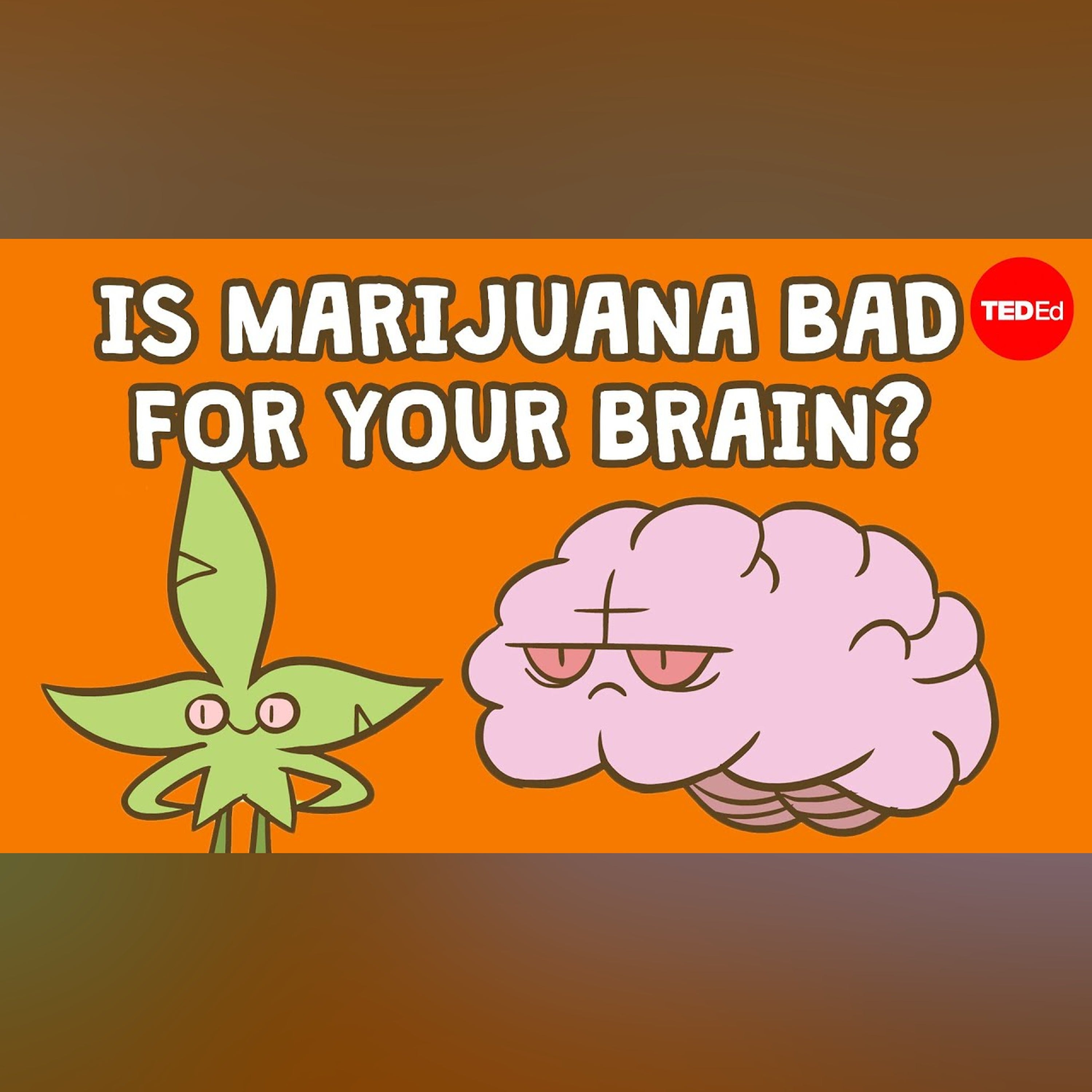
Explore how marijuana’s two main active compounds, THC and CBD, affect your brain and body, and what risk factors to watch out for. Uploaded 02-12-19 -- In 1970, marijuana was classified as a schedule 1 drug in the United States: the strictest designation possible, meaning it was completely illegal and had no recognized medical uses. Today, marijuana’s therapeutic benefits are widely acknowledged, but a growing recognition for its medical value doesn’t answer the question: is recreational marijuana use bad for your brain? Anees Bahji investigates. Lesson by Anees Bahji, directed by Anton Bogaty. Animator's website: https://www.antonbogaty.com (https://www.antonbogaty.com/) Sign up for our newsletter: http://bit.ly/TEDEdNewsletter Support us on Patreon: http://bit.ly/TEDEdPatreon Find us on Twitter: http://bit.ly/TEDEdTwitter Peep us on Instagram: http://bit.ly/TEDEdInstagram View full lesson: https://ed.ted.com/lessons/is-marijuana-bad-for-your-brain-anees-bahji Thank you so much to ou
On a still winter afternoon, you may hear Common Goldeneyes flying low across the water. Whistlers, their wings sibilant, make the sound – as Ernest Hemingway wrote – of ripping silk. Common Goldeneyes nest in cavities, in northern boreal forests. More info and transcript at BirdNote.org (https://www.birdnote.org/podcasts/birdnote-daily/goldeneyes-and-whistling-wings). Want more BirdNote? BirdNote is a nonprofit. Hosted by Simplecast, an AdsWizz company.
NASA reuses Curiosity rover parts for its PROMISE lunar south-pole mission, lowering risk for sustained outpost operations. Top News NASA books PROMISE rover to lunar south pole on Blue Origin’s Blue Moon Mark 1 The mission targets late 2028 with an 18-month prime mission near the lunar south pole. PROMISE draws its electronics, body structure, and mobility system from Curiosity’s Earth-bound test bed, supplemented by flight spares from both Curiosity and Perseverance. ... Sources: nasaspaceflight.com (https://www.nasaspaceflight.com/2026/11/nasas-moon-base-promise/) · rnz.co.nz (https://www.rnz.co.nz/news/politics/2441234/starshield-or-nothing-nzdf-moves-closer-to-buying-into-musk-s-satellite-network-for-secrets) · reddit.com (https://www.reddit.com/r/SpaceXLounge/comments/1xql80c/ship_40_has_been_moved_into_the_gigabayyes_you/) · teslanorth.com (https://teslanorth.com/2026/11/07/spacex-raptor-4-outer-ring/) · 247wallst.com (https://247wallst.com/investing/2026/11/07/googles-man-on-sp
It was a pretty momentous week in US politics this week with a historic midterm election outcome that inspired us to sit down and discuss our media consumption on election night, including the Kornacki Cam and the Giant Bombification of the Internet, plus algorithmic social media bubbles and more. We also caught up on some recent news we've been meaning to get to, like the touchscreen MacBook Pros, (minor) problems with the iPhone Duo, Reddit moving to a logged-in-only site, and the end of the Cybertruck. Lastly, we touch on some low-cost 10 gigabit network hardware and Steam Frame insert optics that we've been hands-on testing. It's a pretty packed podcast! Notes 'n links: https://tinyurl.com/techpod-364-kornacki Support the Pod! Contribute to the Tech Pod Patreon and get access to our booming Discord, a monthly bonus episode, your name in the credits, and other great benefits! You can support the show at: https://patreon.com/techpod