Today we're going to talk about rivers and how these dynamic, delicate, yet powerful systems are able to constantly change the landscape. We'll focus on the Zambezi River in Southeast Africa following its main features from the tributaries that feed into it in the upper course, to the deafening wonder that is Mosi-oa-Tunya waterfall (also called as Victoria Falls) in the middle course, all the way to the delta as the river flows into the Indian Ocean. Along the way, we'll teach you all about why rivers meander, why some rivers have rapids and others are calm, and how we talk about classify and river systems more broadly. Watch our videos and review your learning with the Crash Course App! Download here for Apple Devices: https://apple.co/3d4eyZo Download here for Android Devices: https://bit.ly/2SrDulJ Crash Course is on Patreon! Thanks to the following patrons for their generous monthly contributions that help keep Crash Course free for everyone forever: Toni Miles, Oscar Pinto-Reyes,
In this creepy episode we cover a pair of Bigfoot encounters from two different groups in NC in two different locales. In cryptids in the news and other oddities, KJ reviews an historic cryptic legend known as the Hodag in Northern Wisconsin. And some great listener mail from many of you so please join us! Thank you for listening! Produced by: "Bigfoot Terror in the Woods L.L.C."
Using newts, coyotes and mice, Jason Munshi-South shows how animals develop genetic differences in evolution, even within an urban city. "Evolution in a Big City" was animated by the TED-Ed Animation Team (Jeremiah Dickey, Biljana Labovic, Celeste Lai, Kari Mulholland and Franz Palomares) View the full lesson: http://ed.ted.com/lessons/evolution-in-a-big-city
It’s not nature versus nurture—it’s both! In this episode of Crash Course Biology, we’ll explore how complex interactions between genes and the environment shape all sorts of traits, from human skin color to honeybees’ “royal jelly.” Chapters: Nature vs. Nurture 00:00 Polygenic Traits 1:24 Complex Traits 3:31 Epigenetics & Dr. Folami Ideraabdullah 7:11 Heritability 9:14 Phenotypic Plasticity 10:10 Review & Credits 11:22 This series was produced in collaboration with HHMI BioInteractive, committed to empowering educators and inspiring students with engaging, accessible, and quality classroom resources. Visit https://BioInteractive.org/CrashCourse (https://biointeractive.org/CrashCourse) for more information. Are you an educator looking for what NGSS Standards are covered in this episode? Check out our Educator Standards Database for Biology here: https://www.thecrashcourse.com/biologystandards Check out our Biology playlist here: https://www.youtube.com/playlist?list=PL8dPuuaLjXtPW_ofbx
In this wide-ranging, thought-provoking talk, Kevin Kelly muses on what technology means in our lives -- from its impact at the personal level to its place in the cosmos. (Filmed at TEDxAmsterdam.) Uploaded 25-07-13 Talk by Kevin Kelly.
A young woman was making the long drive home to visit her fiancé when she realized she'd accidentally thrown away her engagement ring during a stop at a gas station. Devastated, she turned around and drove back, hoping it hadn't been lost forever. By the time she returned, the trash had already been emptied. She began searching through bags of garbage, growing increasingly desperate. Just as she was about to give up, an elderly woman wearing what appeared to be a store uniform approached and offered to help. Within minutes, the stranger found the missing ring. But when the young woman looked up to thank her, she was gone. Even more puzzling was what the store clerk told her afterward. Who was the mysterious woman who appeared at exactly the right moment? Was she simply a helpful stranger—or had someone been watching over her? #RealGhostStoriesOnline #TrueGhostStories #GuardianAngel #SpiritEncounters #GhostlyEncounters #ParanormalExperiences #MysteriousStranger #UnexplainedEncounters #S
The basement of her friend's house had always made her uneasy, especially after hearing a strange story from the friend's mother. While doing laundry one day, the woman had spotted an unfamiliar black dog out of the corner of her eye. But the family's two border collies were outside, and neither looked anything like the animal she'd seen. Years later, while following one of her friends down those same basement stairs, she saw it too. A large black dog suddenly raced across the bottom of the staircase and seemed to disappear into another room—or possibly straight through a wall. She fled upstairs, only to find both family dogs resting in the living room. Had she encountered the same mysterious animal the mother had seen years earlier? And what exactly was haunting that basement? #RealGhostStoriesOnline #GhostDog #PhantomBlackDog #AnimalSpirits #HauntedBasement #ParanormalEncounters #GhostlyAnimals #UnexplainedApparitions #HauntedHouse #TrueGhostStories Love real ghost stories? Want even
Monday SpaceTime 20261109 Series 29 Episode 134 Growing hints of volcanic activity on Mars The European Space Agency’s ExoMars Trace Gas Orbiter has detected signs of volcanic activity on the red planet. NASA’s Swift Space Telescope destroyed NASA’s Swift gamma space telescope has re-entered the Earth’s atmosphere in an uncontrolled descent, burning up in the skies above the Pacific Ocean. China details its manned Moon program China has released details of its manned Moon program, confirming that it expects to have taikonauts walking on the lunar surface before 2030. The Science Report Study shows patients with female doctors do better in hospitals. El Niño to strengthen to unprecedented levels over the next three months. Claims kids who eat more ultra-processed foods may respond to food differently. Palaeontologists find fossilised dinosaur red blood cells and amino acids. Skeptics guide to rebranding the fake science of homeopathy. Our Guests This Week Swift Program Scientist Ilana H
As we promised last week, we're not quite done talking about your pee yet. Today Hank explains how the urinary system regulates the production of urine, by maintaining a study glomerular flow rate. He'll also cover the anatomy of storing and excreting urine -- from the ureters to the urethra -- and the nervous system’s role in controlling the act of urination. Pssst... we made flashcards to help you review the content in this episode! Find them on the free Crash Course App! Download it here for Apple Devices: https://apple.co/3d4eyZo Download it here for Android Devices: https://bit.ly/2SrDulJ Chapters: Introduction: Urination 00:00 Glomerular Filtration Rate 2:16 Antidiuretic Hormones (ADH) 3:39 The Bladder 5:02 The Urethra 6:28 Urination 6:53 The Nervous System's Role in Controlling Urination 7:47 Review 8:41 Anatomy & Physiology posters: http://store.dftba.com/products/crashcourse-anatomy-and-physiology-poster *** Crash Course is on Patreon! Thanks to the following Patrons for their
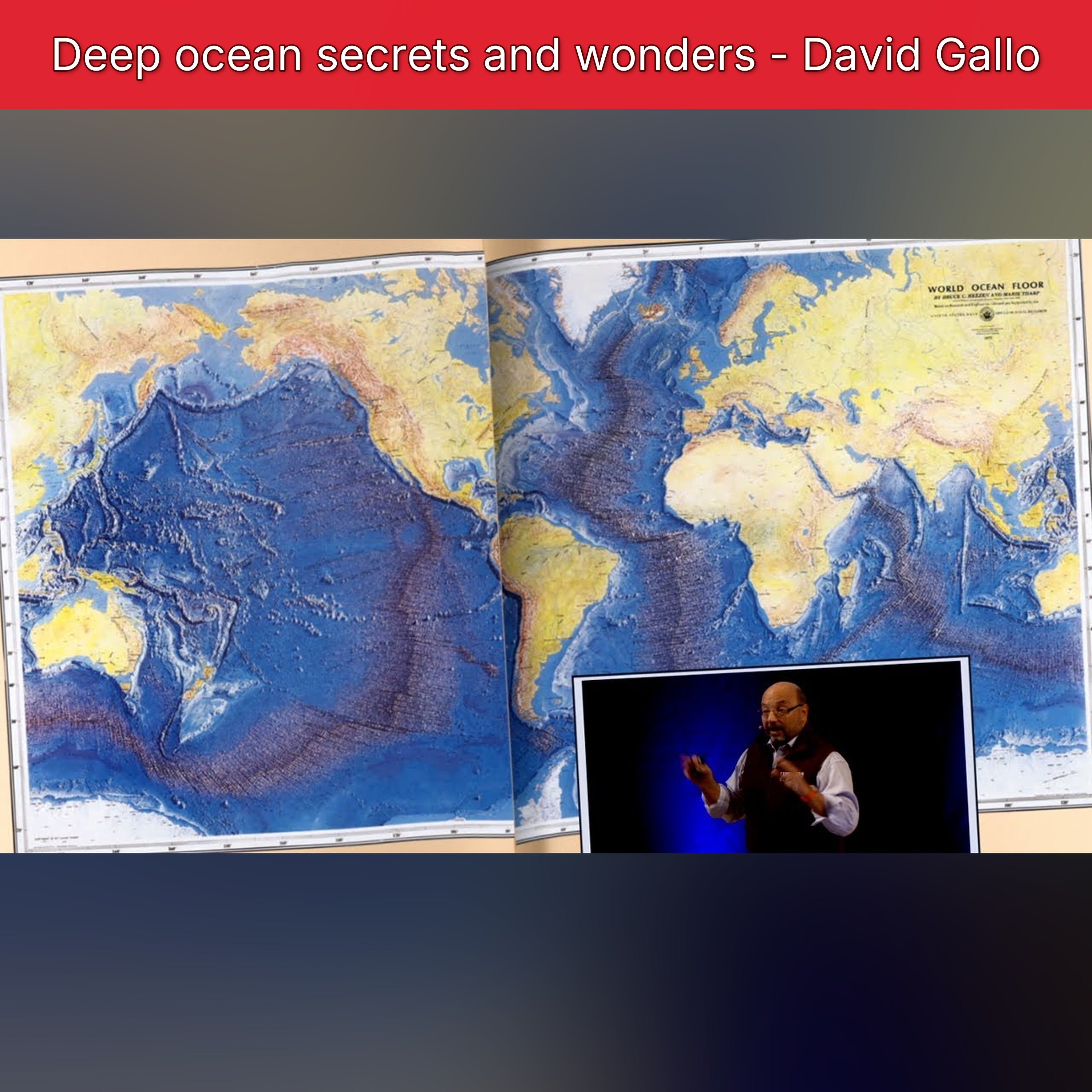
In the deepest, darkest parts of the oceans are ecosystems with more diversity than a tropical rainforest. Taking us on a voyage into the ocean -- from the deepest trenches to the remains of the Titanic -- marine biologist David Gallo explores the wonder and beauty of marine life.
What does the future of UFO disclosure look like in the wake of the U.S. midterm elections? Ryan breaks down how shifting political power in Washington could impact congressional UFO hearings, whistleblower protections, and Trump's PURSUE initiative. Then, Ryan shares extraordinary firsthand UFO encounters from his bestselling book, Stories from Somewhere in the Skies. From a mysterious spinning craft over Scotland and a black triangle in England to unexplained lights over El Salvador and a massive diamond-shaped UFO witnessed by a former sheriff near North Dakota's nuclear installations, these accounts challenge what we think we know about our skies. ByMeACoffee: http://www.buymeacoffee.com/UFxzyzHOaQ Substack: https://ryansprague.substack.com/ All socials and books: https://linktr.ee/somewhereskiespod Email: [email protected] Email: [email protected] "Tempest" by Punch Deck: https://www.youtube.com/watch?v=8ETKHElu6ww&list=RD8ETKHElu6ww&start_radio=1 (https://www.youtube.c
In this episode, Hank talks about Network solids and Carbon and how you can actually create a Diamond from plain old Carbon... well, YOU probably can't unless you own a bunch of elephants. It's a long story. BUT, within you will learn about Solid Networks, Diamond and Graphite Network Structures, as well as Sheet and 3D Networks. It's not making diamonds from scratch, but it's still pretty cool! Pssst... we made flashcards to help you review the content in this episode! Find them on the free Crash Course App! Download it here for Apple Devices: https://apple.co/3d4eyZo Download it here for Android Devices: https://bit.ly/2SrDulJ -- Table of Contents Solid Networks 1:54 Diamond and Graphite Network Structures 3:03 Sheet and 3D Networks 0:48 Crash Course is on Patreon! Want to find Crash Course elsewhere on the internet? Facebook - http://www.facebook.com/YouTubeCrashCourse Twitter - http://www.twitter.com/TheCrashCourse Instagram - https://www.instagram.com/thecrashcourse/ CC Kids: http
To get some of the old episodes heard. ~~~ Tonight’s guest is Guy calling from the state of Michigan, and Guy will share for us an encounter from back on March 18th, 1994. He witnessed a gigantic, silent, triangular UFO above US23, and it was an experience that was witnessed by hundreds of people all over the state. And some of the strange encounters and synchronicities that followed Guy's sighting. MORE ON THIS EPISODE SHARE YOUR ENCOUNTER Apply to be a guest: Record Your Encounter: SUPPORT UFO CHRONICLES PODCAST Ko-fi: Podcast Merchandise: Follow and subscribe on X: All podcast links: Keep Watching The Skies.
Long before written language, people were already making music. A rhythm tapped against stone, a melody carried across a village, or a simple instrument fashioned from bone could bring people together, mark important ceremonies, and give shape to feelings that words could not express. Music has accompanied humanity through nearly every stage of its history. Travel through thousands of years of musical evolution, from prehistoric instruments and ancient Egyptian ceremonies to the songs of Greece and Rome. Discover how music developed in medieval churches and royal courts, how the Renaissance transformed composition, and how the Baroque and Classical eras produced some of the most influential forms in Western musical tradition. Continue into the age of opera, symphonies, folk traditions, and the great musical changes of the nineteenth century. Follow the rise of jazz, blues, rock and roll, hip-hop, electronic music, and modern pop, exploring how new technologies and cultural exchanges tr
The Sun is a 4.6-billion-year-old star that quietly keeps nearly everything on Earth in business. This episode explores how the Sun formed, what happens inside its intensely hot core, how nuclear fusion produces its enormous supply of energy, and how that energy eventually reaches Earth. Along the way, you’ll learn about sunspots, solar flares, the Sun’s layered structure, and its rather important role at the center of the Solar System. Happy sleeping! Read with permission from Sun, Wikipedia, licensed under CC BY-SA 4.0: https://en.wikipedia.org/wiki/Sun
Fall asleep to this quiet science story. A Boring Science For Sleep episode about Why Superconductors Have No Electrical Resistance. Why Superconductors Have No Electrical Resistance Settle in for a quiet exploration of Why Superconductors Have No Electrical Resistance. This episode follows A cold room in Leiden; Mercury, tin and heavier atoms; Pairs that move together; Testing where zero ends; Magnets, volts and warmer materials. Listen closely or let the details drift past. If you enjoy this quiet science bedtime pace, you might also like Psalms for Sleep (https://open.spotify.com/show/7zd2RN8SMTCheFA2ifYK0m) on Spotify — same quiet rhythm, different night.
This is a long collection of terrifying Bigfoot stories for anyone who enjoys spending hours deep inside the mystery of the wilderness. Two hours of encounters, sightings, strange activity, and frightening moments await. Every story takes us somewhere different, but the fear begins the moment the witnesses realize they are not alone.
The clip was produced by a third party stemming from the following original link: https://www.youtube.com/live/6jdaXp0iwtw _______________________________________ To order Suicidal Empathy: https://lnk.to/SuicidalEmpathy _______________________________________ If you appreciate my work and would like to support it: _______________________________________ This clip was posted on November 8, 2026 on my YouTube channel as THE SAAD TRUTH_2122: https://youtu.be/bxU9wK1IDVQ _______________________________________ I count on my fans to support my efforts. You can donate via Patreon, PayPal, and/or SubscribeStar. _______________________________________ Dr. In addition to his scientific work, Dr. _______________________________________
Anatomy & Physiology continues with a look at your biggest organ - your skin. Pssst... we made flashcards to help you review the content in this episode! Find them on the free Crash Course App! Download it here for Apple Devices: https://apple.co/3d4eyZo Download it here for Android Devices: https://bit.ly/2SrDulJ Chapters: Introduction: All About Skin 00:00 Skin Layers: Epidermis, Dermis, & Hypodermis 1:30 Types of Epidermal Cells: Keratinocytes, Melanocytes, Langerhans Cells, and Merkel Cells 2:15 Layers of Skin: Stratum Corneum, Stratum Lucidum, Stratum Granulosum, Stratum Spinosum, and Stratum Basale 4:15 Layers of the Dermis: Papillary, Reticular, and Hypodermis 6:59 Review 8:48 Credits 9:18 Crash Course is on Patreon! Want to find Crash Course elsewhere on the internet? Facebook - http://www.facebook.com/YouTubeCrashCourse Twitter - http://www.twitter.com/TheCrashCourse Instagram - https://www.instagram.com/thecrashcourse/ CC Kids: http://www.youtube.com/crashcoursekids
View full lesson: http://ed.ted.com/lessons/why-is-biodiversity-so-important-kim-preshoff Uploaded 20-04-15 Our planet’s diverse, thriving ecosystems may seem like permanent fixtures, but they’re actually vulnerable to collapse. Jungles can become deserts, and reefs can become lifeless rocks. What makes one ecosystem strong and another weak in the face of change? Kim Preshoff details why the answer, to a large extent, is biodiversity. Lesson by Kim Preshoff, animation by TED-Ed.
Does your teenager seem more withdrawn? Are they coming home from school and disappearing straight to their room? Does something feel not quite right? In today’s bucket emptying episode, I'm talking about something that often flies under the radar: teenage loneliness. Not the obvious kind, where a young person has no friends, but the quieter kind that can exist even when their phone is buzzing, their group chats are active, and they're surrounded by people all day. Because loneliness is often about feeling unseen, disconnected, or unable to be yourself. I explain why loneliness can become more noticeable at this time of year, how social media can create the illusion of connection while making teenagers feel more isolated, and why so many young people struggle with the vulnerability needed to build deep, meaningful friendships. Most importantly, I share five practical ways you can support your teenager without pressuring them, fixing it for them, or making them feel like something is wr
Your DNA contains all the instructions your body needs to function. In this episode of Crash Course Biology, we’ll figure out what this giant instruction manual looks like and how this three-billion-letter code gets copied into your trillions of cells through DNA replication. Introduction: DNA & The Human Genome 00:00 The Structure of DNA 1:36 Chromosomes 3:51 DNA Replication 4:16 How DNA Replication Works 6:06 Mutations 7:51 The Okazakis 10:04 Review & Credits 11:23 This series was produced in collaboration with HHMI BioInteractive, committed to empowering educators and inspiring students with engaging, accessible, and quality classroom resources. Visit https://BioInteractive.org/CrashCourse (https://biointeractive.org/CrashCourse) for more information. Are you an educator looking for what NGSS Standards are covered in this episode? Check out our Educator Standards Database for Biology here: https://www.thecrashcourse.com/biologystandards Check out our Biology playlist here: https://w
In this episode of The Carbon Removal Scoop, Eve Tamme and Sebastian Manhart sit down with Sara Vicca, Associate Professor at the University of Antwerp and a lead author on the IPCC's forthcoming methodology report on carbon dioxide removal technologies, carbon capture, utilisation and storage for national greenhouse gas inventories. For years, stakeholders have argued that governments cannot properly count novel removals without updated rules from the IPCC. Those rules are now being written, and the first draft has just opened for expert review. Sara explains why guidance inn the 2006 IPCC Guidelines needs an update for direct air capture, direct ocean capture and enhanced weathering, and walks through the road from first draft to approval in late 2027. Because the draft itself is confidential, the conversation stays on the principles rather than the text, and Sara is clear about who the authors most want to hear from before the review window closes. Eve and Sebastian then dig into en
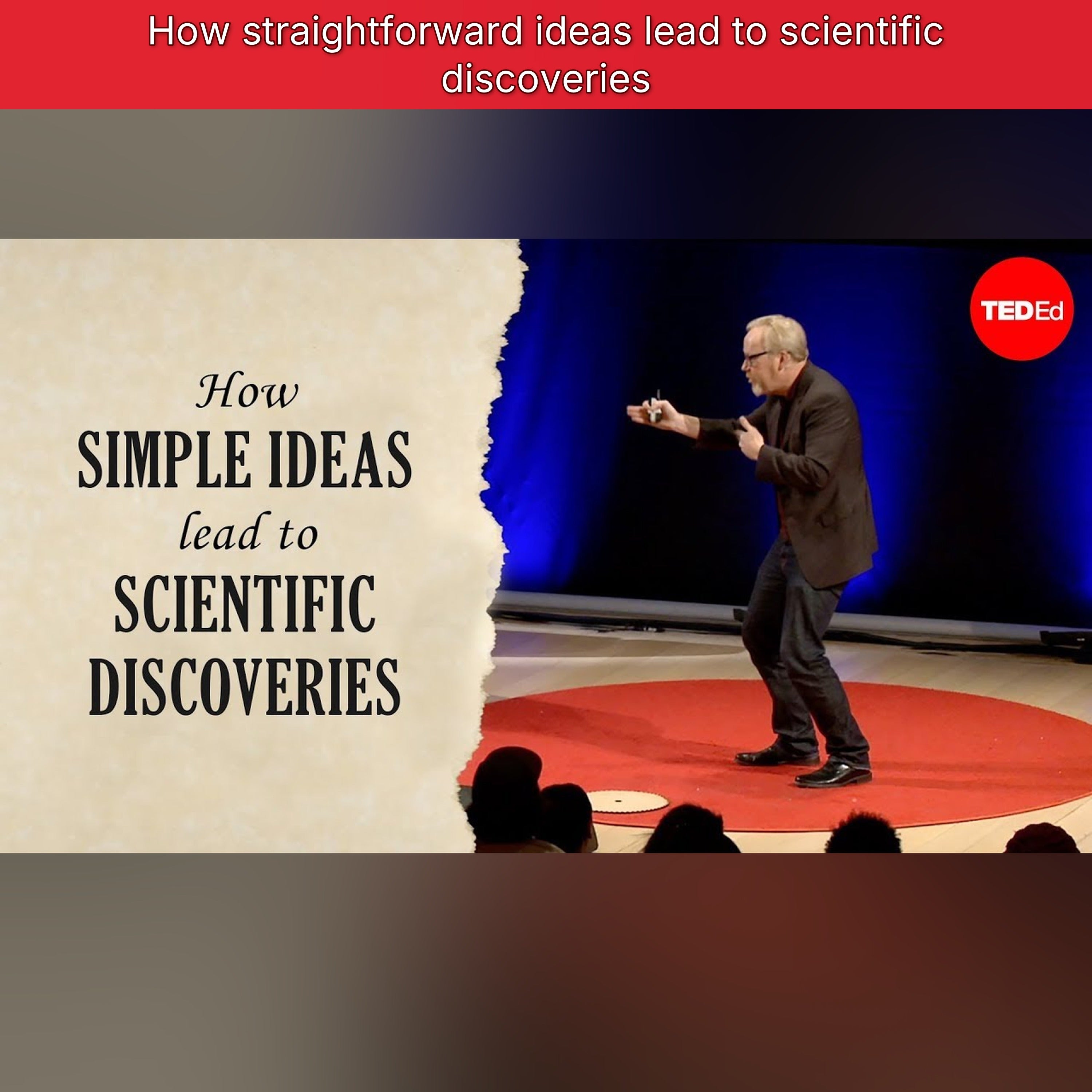
Adam Savage walks through two spectacular examples of profound scientific discoveries that came from simple, creative methods anyone could have followed -- Eratosthenes' calculation of the Earth's circumference around 200 BC and Hippolyte Fizeau's measurement of the speed of light in 1849.