As we construct more complex organic molecules, it can start to feel like decrypting a complex code. Organic synthesis takes simple starting materials, and turns them into complex structures, and reverse engineering can help us figure out the steps in between. In this episode of Crash Course Organic Chemistry, we’ll practice multistep synthesis problems, learn about how we can use retro synthesis to make more complex molecules, and use liquid-liquid extraction to separate solvents. As always, we’ll work through examples and connect everything back to our Mold Medicine Map! Music: Plucky Daisy by Kevin MacLeod Link: https://incompetech.filmmusic.io/song/4226-plucky-daisy License: https://filmmusic.io/standard-license Series Penicillin References: Nicolaou, K. C., & Sorensen, E. J. (1996). Classics in total synthesis: targets, strategies, methods. John Wiley & Sons. Sheehan, J. C. (1982). The enchanted ring: the untold story of penicillin. Primary literature for Sheehan’s penicillin synt
Why do animals do what they do? It’s a huge question, and in this episode, we’ll learn how scientists break it down. We’ll talk about the proximate and ultimate studies they use to understand animal behavior, and some of what they’ve learned along the way — including how much decision-making other animals are really doing. Introduction: Animal Behavior 00:00 Proximate Level 02:01 Ultimate Level 03:06 Innate Behaviors 04:30 Complex Behaviors 06:34 Review & Credits 09:35 This series was produced in collaboration with HHMI BioInteractive, committed to empowering educators and inspiring students with engaging, accessible, and quality classroom resources. Visit https://BioInteractive.org/CrashCourse (https://biointeractive.org/CrashCourse) for more information. Are you an educator looking for what NGSS Standards are covered in this episode? Check out our Educator Standards Database for Biology here: https://www.thecrashcourse.com/biologystandards Check out our Biology playlist here: https:/
Explore 3 strategies to control the flow of lava, and how scientists are using them to protect communities from future eruptions. -- In December 2023, Icelandic citizens experienced their worst nightmare: a volcanic fissure opened and began spewing lava fountains 100 meters tall. While the molten rock narrowly avoided a small town, Iceland wasn’t willing to leave anyone's fate to chance again and began preparing for future eruptions. Arianna Soldati explores 3 potential strategies to control these red-hot rivers of destruction. Lesson by Arianna Soldati, directed by Anastasiia Falileieva, Studio Plastic Bag. Support Our Non-Profit Mission ---------------------------------------------- Support us on Patreon: http://bit.ly/TEDEdPatreon Check out our merch: http://bit.ly/TEDEDShop ---------------------------------------------- Connect With Us ---------------------------------------------- Sign up for our newsletter: http://bit.ly/TEDEdNewsletter Find us on Twitter: http://bit.ly/TEDEdTwit
Just like many great duos throughout history, Bulgaria and Germany have a fascinating (though uneven) relationship. In today’s episode, we’re going to take a closer look at the impact of politics on economies as we trace this history of Bulgaria and Germany following World War II, and examine the ways capitalism, and communism, impacted their economic strength today. SOURCES General Getis, Bjelland, and Getis. Introduction to Geography, 15 ed. McGraw-Hill Education. 2017. ISBN: 978-1-259-57000-1 Gregory, Derek, Ron Johnston, Geraldine Pratt, Michael Watts, and Sarah Whatmore, eds. 2009. The Dictionary of Human Geography. 5th ed. Willey-Blackwell. ISBN: 978-1-4051-3288-6 For a free and open source option for Intro to Human Geography, see: https://humangeography.pressbooks.com/ For a free and open source option for World Regional Geography, see: https://worldgeography.pressbooks.com/front-matter/introduction/ Cracking the AP Human Geography Exam: 2020 edition. The Princeton Review. Sofia
Grumpy Professor Hank admits to being wrong about how everything is chemicals. But he now wants you to listen as he blows your mind with a new sweeping statement: everything (yes, really everything this time) is energy. What?! This week, Hank takes us on a quick tour of how thermodynamics is applied in chemistry using his toy trebuchet as an example because he is a proud nerd. Pssst... we made flashcards to help you review the content in this episode! Find them on the free Crash Course App! Download it here for Apple Devices: https://apple.co/3d4eyZo Download it here for Android Devices: https://bit.ly/2SrDulJ -- Table of Contents Everything Is Energy 0:00 Forms of Energy 1:07 Potential Energy 2:11 Chemical Energy 1:55 Energy Is Constant & Law of Thermodynamics 2:49 System & Surroundings 5:03 Energy Transfer 4:57 Work 3:25 Heat 4:05 Trebuchets 0:48 Crash Course is on Patreon! Want to find Crash Course elsewhere on the internet? Facebook - http://www.facebook.com/YouTubeCrashCourse Twit
Check out the science of biohacking, where biologists go into a patient’s genetic code and reprogram their immune system to recognize and fight cancer cells. Uploaded 09-04-19 -- The human body is made up of about 30 trillion cells that carry a code which has been duplicated over and over for billions of years - with varying degrees of accuracy. So what happens when the system breaks down and the machinery turns on itself, leading to cancer? Greg Foot dives into the science of how biologists are biohacking the human body to try to fix the seemingly unfixable. Lesson by Greg Foot, directed by Pierangelo Pirak. Produced for TED-Ed by https://www.sciencemedia.studio (https://www.sciencemedia.studio/) and NIHR University College London Hospitals Biomedical Research Centre. Sign up for our newsletter: http://bit.ly/TEDEdNewsletter Support us on Patreon: http://bit.ly/TEDEdPatreon Find us on Twitter: http://bit.ly/TEDEdTwitter Peep us on Instagram: http://bit.ly/TEDEdInstagram View full less
A young man and his friends had a habit of hanging out near a local cemetery late at night. Although he enjoyed spending time with his friends, something about being there never felt quite right. He couldn't shake the feeling that they were being disrespectful to the people buried nearby. After their first visit, his television and gaming console mysteriously turned on by themselves. Following another visit, a friend's car began behaving strangely, with its locks repeatedly engaging and disengaging. But the third experience was enough to convince him that something more might be happening. Back at home, an unexplained noise caught his dog's attention. Then a plate shattered in the kitchen, and the dog began barking at something near a mirror. Were these simply unrelated coincidences, or had their visits to the cemetery attracted some unwanted attention? #RealGhostStoriesOnline #TrueGhostStories #HauntedCemetery #CemeteryGhosts #ParanormalEncounters #SpiritAttachment #UnexplainedActivit
For nearly twenty years, a childhood jewelry box sat untouched, its little ballerina and familiar melody long forgotten. The wind-up mechanism hadn't been used in decades, and there was no reason for it to make a sound. Then one afternoon, music began playing from the closed box. Nobody had touched it, nobody had wound the key, and after a few seconds, it stopped. Four nights later, the exact same thing happened, only this time her husband heard it too. They searched for a mechanical explanation, but the mystery remained. Why would a music box suddenly begin playing after so many silent years? And if it was simply an old mechanism releasing stored tension, why did it happen twice in a matter of days—and never again? #RealGhostStoriesOnline #HauntedMusicBox #HauntedObjects #ParanormalEncounters #UnexplainedMusic #ChildhoodMemories #GhostlyMessages #UnexplainedPhenomena #ParanormalMystery #TrueGhostStories Love real ghost stories? Want even more? Want even more? Stay connected with us on
In this episode of Crash Course Art History, we’ll hold a mirror to our bodies…in art, anyway. We’ll learn what portraits and self-portraits can tell us about the people they represent and about artists who’ve used bodies to critique their societies. Introduction: We All Have Bodies 00:00 Portraits & Self-Portraits 00:56 European Art & the Nude Figure 04:10 "Becoming an Image" 07:18 "Olympia" 08:46 Review & Credits 11:54 Image Descriptions: https://docs.google.com/document/d/1ETiCxe4GrVzFii7dBhF42oHx1EUCCh5y12wbtUjsH8A/edit Sources: https://docs.google.com/document/d/1GW2NKzhpMNMmRyAFJVhFJG9cSfUOMRL-QrcWuHcWcIA/edit?usp=sharing *** Support us for $5/month on Patreon to keep Crash Course free for everyone forever! https://www.patreon.com/crashcourse Or support us directly: https://complexly.com/support Join our Crash Course email list to get the latest news and highlights: https://mailchi.mp/crashcourse/email Get our special Crash Course Educators newsletter: http://eepurl.com/iBgMhY Th
In which John Green teaches you about the Mexican-American War in the late 1840s and the expansion of the United States into the western end of North America. In this episode of Crash Course, US territory finally reaches from the Atlantic coast to the Pacific Ocean. After Oregon was secured from the UK and the southwest was ceded by Mexico, that is. Famous Americans abound in this episode, including James K Polk (Young Hickory, Napoleon of the Stump), Martin Van Buren, Zachary Taylor, and Winfield Scott. You'll also learn about the California Gold Rush of 1848, and California's admission as a state, which necessitated the Compromise of 1850. Once more slavery is a crucial issue. Something is going to have to be done about slavery, I think. Maybe it will come to a head next week. Support CrashCourse on Patreon: https://www.patreon.com/crashcourse Hey teachers and students - Check out CommonLit's free collection of reading passages and curriculum resources to learn more about the events
On tonight's episode of My Bigfoot Sighting, Wayne Stapleton returns to share more of the extraordinary experiences he didn't have time to talk about when he appeared on Episode 233. One summer night in 1979, while staying at his family's cottage near Michigan's Manistee National Forest, Wayne was awakened by the frantic sounds of wild turkeys outside his bedroom window. When he looked outside, he was shocked to see an enormous, dog-like creature standing on its hind legs, killing the turkeys his mother had been feeding. The creature stood approximately 7 feet tall, had a long snout, pointed ears, and enormous, glowing yellow eyes. Even after Wayne's stepfather fired warning shots, the creature calmly walked away on two legs, carrying two dead turkeys in its mouth. That's just one of the remarkable experiences Wayne shares tonight. He also recounts a frightening incident along the Manistee River, a return trip to Mount St. Helens with his sons that resulted in another unsettling Sasqua
Tonight’s guest, Bill Dodd, is an 81-year-old great-great-grandfather who spent much of his life hunting, fishing, and enjoying the outdoors. For most of his life, Bill didn't believe in Sasquatch. In fact, he used to make jokes about people who claimed to have seen them. That all changed one October morning in 2005, when he had an encounter that left him with no doubt that they exist. At the time, Bill was living in a travel trailer near the Mississippi River, just across the bridge from Memphis, Tennessee, on the Arkansas side. While driving down a gravel road on his way to work, he spotted an enormous, reddish-brown, hair-covered creature standing near an intersection. Bill stopped his truck about 60 yards from it and watched as the creature casually walked across the road before disappearing into a thicket. He estimates that it stood between 7 and 8 feet tall, with massive shoulders, unusually long arms, and a distinctive way of walking. What makes Bill's encounter particularly int
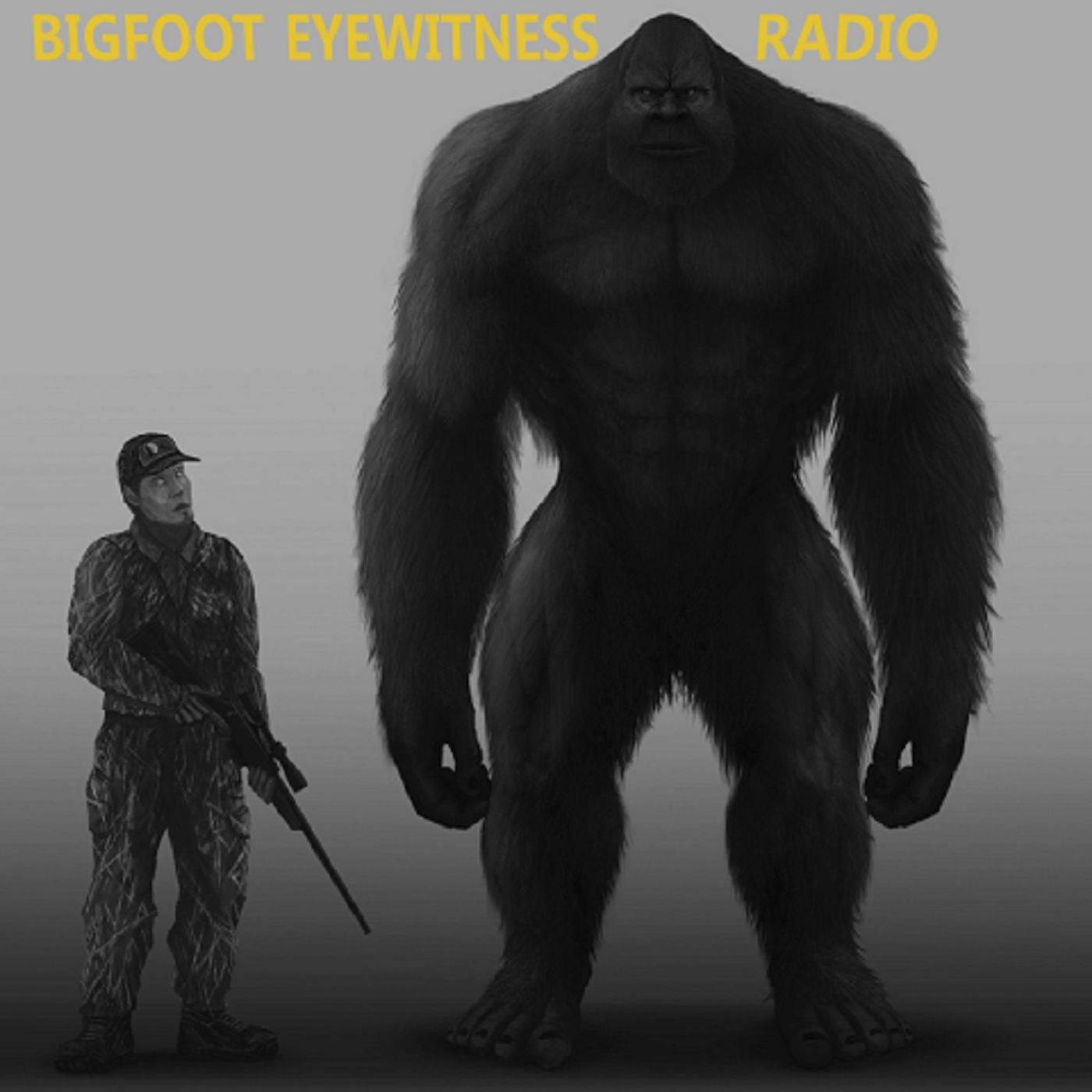
On last week's show, Episode 676, Jeff shared several frightening encounters he's had with Dogmen and other mysterious creatures over the years. Unfortunately, we ran out of time before I could ask him many of the questions I had prepared. Tonight, Jeff has returned to answer those questions and reveal additional details about his experiences. During tonight's show, Jeff goes into greater detail about the terrifying night he came face-to-face with an enormous Dogman while parked in his semi at a facility in Wisconsin. He describes the creature's unusual physical features, its incredible size and muscular build, and the chilling experience of looking directly into its eyes as it stood outside his truck. Jeff also revisits a disturbing experience he had while camping in Wyoming, when something so massive stepped onto his Suburban's running board that it caused the entire vehicle to tilt. Even more unsettling was what happened afterward, when a mysterious armed man appeared, followed by s
View full lesson: http://ed.ted.com/lessons/tracking-grizzly-bears-from-space-david-laskin Grizzly bears have adapted cleverly to their diminishing habitat by developing a mostly vegetarian diet in sync with plant growing seasons. Using NASA satellites, scientists track the shifting, interrelated patterns of grizzlies and plants. David Laskin explains how this data can help protect the threatened bears. Lesson by David Laskin, animation by TED-Ed.
Biology connects all of life—all of YOUR life. In the final episode of Crash Course Biology, Dr. Sammy is taking your questions. No matter how big, small, or personal, biology is in them all! He’ll show us how biology can help us solve problems and understand everyday life. Introduction: Biology and You 00:00 Stress Response 01:27 Ecological Niches 3:15 Water Solvency 4:34 Unity of Life 6:16 Biology as a Career 7:50 Evolution 9:13 Final Review & Credits 10:47 This series was produced in collaboration with HHMI BioInteractive, committed to empowering educators and inspiring students with engaging, accessible, and quality classroom resources. Visit https://BioInteractive.org/CrashCourse (https://biointeractive.org/CrashCourse) for more information. Are you an educator looking for what NGSS Standards are covered in this episode? Check out our Educator Standards Database for Biology here: https://www.thecrashcourse.com/biologystandards Check out our Biology playlist here: https://www.youtu
Today, Craig is going to talk about employment discrimination, and we're going to focus primarily on women in the workforce. Discrimination against women tends to be handled somewhat differently in the courts as they are not a minority. Even so, the courts need a method for challenging issues to help further important government interests - this is called intermediate scrutiny. (If you'll remember, strict scrutiny is the most rigorous form of judicial review and rational basis review is the least rigorous.) So we'll talk about things like disparate impact and sexual harassment in the workplace and how these cases are handled in the courts. Produced in collaboration with PBS Digital Studios: http://youtube.com/pbsdigitalstudios Support is provided by Voqal: http://www.voqal.org (http://www.voqal.org/) All attributed images are licensed under Creative Commons by Attribution 2.0 Want to find Crash Course elsewhere on the internet? Facebook - http://www.facebook.com/YouTubeCrashC... Twitte
This week Craig Benzine talks about how the President gets things done. Filling the role of the Executive Branch is a pretty big job - much too big for just one person. It's so big that the President employs an entire federal bureaucracy! Today, we’re just going to focus on those closest to the President, like the Vice President, the Cabinet, and the Executive Office of the President. We’ll figure out which strategy is most useful in helping the President make things happen and we’ll discuss the controversy around the President’s gradual increase in power. Oh, and as many of you noticed - last episode eagle got off too easy. Let’s see if we can make it up to you. Support is provided by Voqal: http://www.voqal.org (http://www.voqal.org/) Chapters: Introduction: Governing 00:00 Who makes up the Executive Branch? 0:36 Who makes up the Executive Office of the President? 1:36 Independent agencies & government corporations 2:35 How the President can use party leadership to govern 3:57 How th
Rising first-in-class innovation, faster IND reviews and deep patient pools are drawing global biotechs to China, even as U.S. outbound investment restrictions loom. In a special edition of the BioCentury This Week podcast recorded live at the 13th BioCentury-BayHelix China Healthcare Summit in Shanghai, BioCentury’s Jeff Cranmer, Simone Fishburn and Josh Berlin are joined by Kali Therapeutics CEO Weihao Xu, Charles River’s Matthew Hewitt and Aerska CEO Jack O’Meara to discuss key themes from the event. The panel assesses what the COINS Act could mean for U.S. investment in China biotech and how investors may adapt, how China’s 30-day IND review and new investigator-initiated trial rules are reshaping clinical strategy, and what dealmaking reveals about the country’s growing first-in-class pipeline. They also preview BioCentury’s East-West Summit in Seoul (https://conferences.biocentury.com/east-west-summit), March 15-17. View full story: https://www.biocentury.com/article/661483 #Chin
What can governments learn from the open-data revolution? In this stirring talk, Beth Noveck, the former deputy CTO at the White House, shares a vision of practical openness -- connecting bureaucracies to citizens, sharing data, creating a truly participatory democracy. Imagine the "writable society." Talk by Beth Noveck.
Marilyn Monroe became one of the most recognizable faces in the world, a Hollywood star whose beauty, screen presence, and unforgettable smile helped define an era. Yet behind the glamorous photographs and celebrated performances was a woman whose life was far more complicated than the image presented to the public. Travel back to the early years of Norma Jeane Mortenson, long before the world knew her as Marilyn Monroe. Discover how her childhood, first steps into modeling, and determination to build a different future led her into the film industry, where she gradually became one of the most famous actresses of the twentieth century. Explore her rise through Hollywood, from early supporting roles to performances that captivated audiences around the world. Follow her marriages, relationships, professional struggles, and efforts to gain greater control over her career in an industry that often focused on her appearance rather than her talent. Then turn to the unanswered questions surro
Fall asleep to this quiet science story. A Boring Science For Sleep episode about Why an Event Horizon Is a Point of No Return. Why an Event Horizon Is a Point of No Return Settle in for a quiet exploration of Why an Event Horizon Is a Point of No Return. This episode follows The Camera That Crossed Over; Pencils, Papers and Strange Coordinates; Light Leaning Toward the Centre; Finding a Line Backwards; Looking From the Outside. Listen closely or let the details drift past. If you enjoy this quiet science bedtime pace, you might also like True Crime for Sleep on Spotify — same quiet rhythm, different night. Search Spotify for True Crime for Sleep.
We have learned over the past few weeks that gases have real-life constraints on how they move here in the non-ideal world. As with most things in chemistry (and also in life), how a gas moves is more complex than it seems at first. In this episode, Hank describes what it means when we talk about the velocity of a gas - to understand gas velocity, we have to know what factors affect it, and how. Hank also teaches you about effusion, diffusion, and concentration gradients, before showing off a cool experiment that physically demonstrates the things you have just learned. Sound exciting enough for you? Let's get started. *Special Thanks to Matt Young at the University of Montana (Geosciences Department, Environmental Biogeochemistry Lab) who helped with the chemical demonstrations.* Pssst... we made flashcards to help you review the content in this episode! Find them on the free Crash Course App! Download it here for Apple Devices: https://apple.co/3d4eyZo Download it here for Android De
Explore the similarities and differences between how your eyes see and how a video camera “sees.” Uploaded 06-04-15 -- Your eyes don’t always capture the world exactly as a video camera would. But the eyes are remarkably efficient organs, the result of hundreds of millions of years of coevolution with our brains. Michael Mauser outlines the similarities and differences between your eye and a video camera. Lesson by Michael Mauser, animation by Nick Hilditch. Support Our Non-Profit Mission ---------------------------------------------- Support us on Patreon: http://bit.ly/TEDEdPatreon Check out our merch: http://bit.ly/TEDEDShop ---------------------------------------------- Connect With Us ---------------------------------------------- Sign up for our newsletter: http://bit.ly/TEDEdNewsletter Find us on Twitter: http://bit.ly/TEDEdTwitter Peep us on Instagram: http://bit.ly/TEDEdInstagram ---------------------------------------------- Keep Learning -------------------------------------
Today, we're going to talk about how the Earth moves, but to do that, we're going to have to go way back to the early days of the galaxy! Processes that happened before the Earth even formed have led us to the geographic patterns and processes that create Earth's environments and support all living things. We'll talk about how the Earth rotates, the effects of it being slightly tilted, how events like sea ice melting impact how the Earth wobbles, and of course talk about how our elliptical orbit gives us seasons. So many of our life decisions are influenced by the motion of Earth. It guides where we decide to live, what food we eat, or even what weather we experience - which we'll talk about more next time. Watch our videos and review your learning with the Crash Course App! Download here for Apple Devices: https://apple.co/3d4eyZo Download here for Android Devices: https://bit.ly/2SrDulJ Crash Course is on Patreon! Thanks to the following patrons for their generous monthly contributio