In this episode, Katie Mack and John Green discuss the wonder keeping the stars apart... dark energy. Head to https://policygenius.com/crashcourse to get your free life insurance quotes and see how much you could save. This show is a production of Complexly. If you want to help keep Crash Course free for everyone, forever, you can join our community on Patreon at http://www.patreon.com/crashcourse Chapters 0:00 - Introduction 1:25 - Reviewing our Timeline 6:05 - Reviewing Redshift & Introducing the Hubble Tension 19:14 - Cosmic Noon & Galactic Archaeology 32:30 - The Universe's Rate of Expansion 40:29 - Dark Energy & The Cosmological Constant 55:58 - Poetry in the Astrophysics Podcast 58:07 - Outro *** Support us for $5/month on Patreon to keep Crash Course free for everyone forever! https://www.patreon.com/crashcourse Or support us directly: https://complexly.com/support Join our Crash Course email list to get the latest news and highlights: https://mailchi.mp/crashcourse/email Get ou
The International Space Station is 250 miles above Earth and travels at roughly 17,500 mph as it orbits our planet. Since 2000, scientists have conducted experiments on everything from cancer to botany to fundamental questions about our universe. Horizons moderator William Brangham explores life aboard the ISS with two astronauts who worked there, Karen Nyberg and Don Pettit. Hosted on Acast. See acast.com/privacy
View full lesson: http://ed.ted.com/lessons/the-science-of-symmetry-colm-kelleher Uploaded 13-05-14 When you hear the word symmetry, you might think generally of triangles, butterflies, or even ballerinas. But defined scientifically, symmetry is "a transformation that leaves an object unchanged." Huh? Colm Kelleher unpacks this abstract term and explains how animal's distinct symmetries can tell us more about them -- and ourselves. Lesson by Colm Kelleher, animation by Andrew Foerster.
View full lesson: https://ed.ted.com/lessons/if-molecules-were-people-george-zaidan-and-charles-morton Uploaded 23-07-13 When molecules collide, chemical reactions can occur -- causing major structural changes akin to getting a new arm on your face! George Zaidan and Charles Morton playfully imagine chemical systems as busy city streets, and the colliding molecules within them as your average, limb-swapping joes. Lesson by George Zaidan and Charles Morton, animation by Neighbor.
An old Victorian house with a disturbing reputation seemed like the perfect setting for a Halloween party. There were already stories of unexplained activity, frightening encounters, and a troubled history. But one guest seemed particularly out of place. Nobody appeared to know who he was or how he'd gotten there. When someone suggested bringing out a Ouija board, the stranger eagerly joined in. Then he announced that he intended to summon a demon. As the session began, the planchette moved with startling speed, and the atmosphere grew increasingly uncomfortable. Several guests began backing away. One young woman had felt uneasy about the stranger from the beginning and decided it was time to leave. But even after returning home, she couldn't shake the feeling that something was watching her. Had the group contacted something they shouldn't have—or was the stranger's presence enough to explain the fear that followed? #RealGhostStoriesOnline #TrueGhostStories #OuijaBoard #OuijaBoardStor
This is a Grave Talks CLASSIC EPISODE! PART TWO For Cathryn Rogers, the paranormal wasn’t something discovered on an investigation—it arrived uninvited. Long before she spent years exploring reportedly haunted locations, Cathryn’s first encounters with the unexplained began inside her own home, where a series of frightening events forced her to confront a presence she couldn’t ignore. Now a seasoned paranormal investigator with more than a decade of experience, Cathryn has encountered spirits, unexplained phenomena, and situations that defy easy explanation. But it was those early, deeply personal experiences that shaped how she approaches the paranormal today. Cathryn shares the story that set her on this path, the unsettling encounters that followed, and how her understanding of spirit guides became part of making sense of what she experienced. It’s a conversation about fear, discovery, and what happens when the unexplained becomes personal. #TheGraveTalks #ParanormalPodcast #Haunted
Ranjan Roy from Margins is back for our weekly discussion of the latest tech news. We cover: 1) The midterms impact on AI 2) Why the market struggles to trade AI in a normal way 3) Will the AI vision ever be realized as planned after this week? 4) A simple theory of the case on the AI trade 5) If datacenters are banned, do AI labs make tradeoffs in training, inference, or safety? 6) Will Anthropic's IPO still go on as planned? 7) Can the AI labs help turn around datacenter unpopularity 8) Is Anthropic getting close to RSI? 9) Who did better: The polls or prediction markets 10) An homage to Alex's special, temporary red chair --- Enjoying Big Technology Podcast? Please rate us five stars ⭐⭐⭐⭐⭐ in your podcast app of choice. Want a discount for Big Technology on Substack + Discord?
In which Craig Benzine teaches you about the United States Congress, why it's bicameral, and what bicameral means. Craig tells you what the Senate and House of Representatives are for, talks about some of the histories of the institutions, and reveals to you just how you can become a representative. It's not that easy. But an eagle gets punched, so there's that. Produced in collaboration with PBS Digital Studios: http://youtube.com/pbsdigitalstudios Support is provided by Voqal: http://www.voqal.org (http://www.voqal.org/) Chapters: Introduction: What is Congress? 00:00 Who makes up the House of Representatives? 1:09 Who makes up the Senate? 1:38 What does Congress do? 1:58 Powers of the House of Representatives 2:13 Powers of the Senate 3:13 Why is Congress bicameral? 3:52 What's the difference between the Senate and the House? 6:00 Credits 8:32 Crash Course is on Patreon! Want to find Crash Course elsewhere on the internet? Facebook - http://www.facebook.com/YouTubeCrashCourse Twitte
Rolex is well-known the world over for crafting high-quality, innovative time-pieces. But did you know they also award funds to people with innovative ideas in science and technology? On this classic ID The Future out of the vault, Texan engineer, writer, and self-taught scientist Forrest M. Mims recounts his experience of winning a Rolex Award for Enterprise in 1993 for his innovative proposal to track the ozone layer through a worldwide ground-based network that utilized his own homemade ozone instruments. Mims discusses the work that led to the honor, the memorable trip to Switzerland to collect the award, and how the Rolex Award propelled his career in science. Source (https://idthefuture.com/2287/)
Today we're taking a break for another round of "Bad Astronomy" Crash Course Astronomy posters available at DFTBA.com music: "Batty McFaddin" - Kevin MacLeod http://incompetech.com/ -- PBS Digital Studios: http://youtube.com/pbsdigitalstudios Follow Phil on Twitter: https://twitter.com/badastronomer Want to find Crash Course elsewhere on the internet? Facebook - http://www.facebook.com/YouTubeCrashCourse Twitter - http://www.twitter.com/TheCrashCourse Tumblr - http://thecrashcourse.tumblr.com (http://thecrashcourse.tumblr.com/) Support CrashCourse on Patreon: http://www.patreon.com/crashcourse
In which John Green teaches you that things don't always go as planned on the Crash Course set. Here we have outtakes from our Crash Course in Literature and some of the early US History episodes. Warning: there is some censored profanity in this video. It's pretty mild, you can probably handle it. Crash Course is on Patreon! Want to find Crash Course elsewhere on the internet? Facebook - http://www.facebook.com/YouTubeCrashCourse Twitter - http://www.twitter.com/TheCrashCourse Instagram - https://www.instagram.com/thecrashcourse/ CC Kids: http://www.youtube.com/crashcoursekids
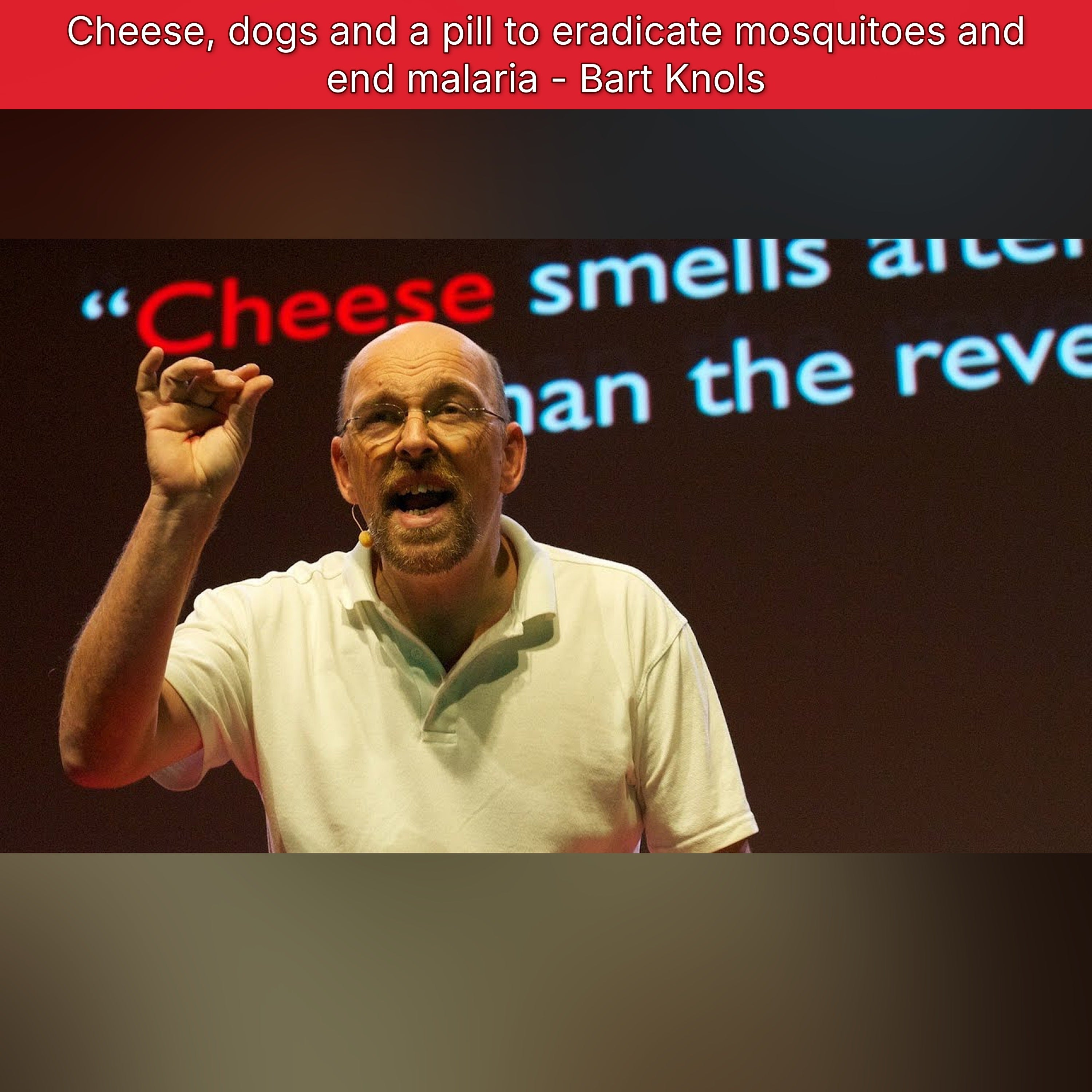
View full lesson: http://ed.ted.com/lessons/cheese-dogs-and-a-pill-to-kill-mosquitoes-and-end-malaria-bart-knols We can use a mosquito's own instincts against her. At TEDxMaastricht speaker Bart Knols demos the imaginative solutions his team is developing to fight malaria -- including limburger cheese and a deadly pill. (Filmed at TEDxMaastricht.) Talk by Bart Knols.
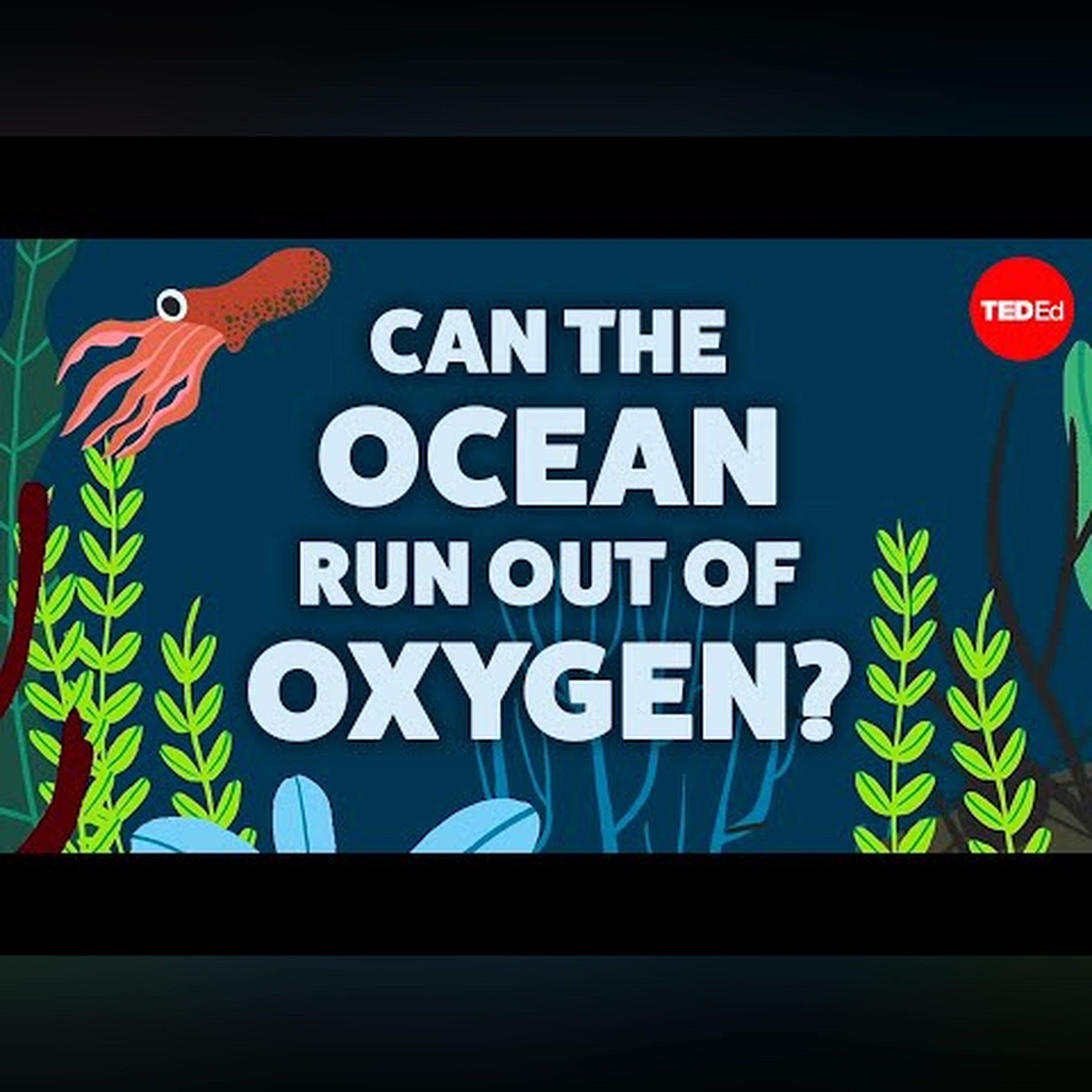
Get to know how a healthy marine ecosystem functions, and what creates the lethal conditions that lead to dead zones. Uploaded 18-08-20 -- For most of the year, the Gulf of Mexico is teeming with marine life, from tiny crustaceans to massive whales. But every summer, disaster strikes. Around May, animals begin to flee the area. And soon, creatures that can’t swim or can’t swim fast enough begin to suffocate and die off in massive numbers. What's going on? Kate Slabosky dives into the lethal conditions that create dead zones. Lesson by Kate Slabosky, directed by Mette Ilene Holmriis. Animator's website: http://metteilene.com/ Producer's website: https://animationworkshop.via.dk/ Sign up for our newsletter: http://bit.ly/TEDEdNewsletter Support us on Patreon: http://bit.ly/TEDEdPatreon Find us on Twitter: http://bit.ly/TEDEdTwitter Peep us on Instagram: http://bit.ly/TEDEdInstagram View full lesson: https://ed.ted.com/lessons/can-the-ocean-run-out-of-oxygen-kate-slabosky Thank you so muc
Elon Musk says we see no sign of aliens, but Anna Paulina Luna and Dylan Borland are pushing back. Andy breaks down their responses, the confirmation that Jake Barber has joined Congressman Eric Burlison’s staff, and the proposed Reality Transparency Act. Check out - https://opensourcereality.org/ Spotify: https://open.spotify.com/show/7wnXUAQ3vwdsX1BoyaEvjZ Buy Me a Coffee: https://www.buymeacoffee.com/ThatUFOPodcast Connect with the show: Twitter: @UFOUAPAM Facebook, Instagram & YouTube: That UFO Podcast Email: [email protected] All links: https://linktr.ee/ufouapam Official Website: ThatUFOPodcast.com (http://thatufopodcast.com/) Thanks for listening, Andy
It's one of the most powerful ideas in the history of science. That a brain is, in essence, a computer. That we can look past its gelatinous flesh and see through to its underlying workings. That these workings are best described in the language of programs and computations, algorithms and representations. There's no question that this "brain as computer" analogy has been—in many ways—enormously generative. But in other ways could it be leading us astray? My guest today is Dr. Mazviita Chirimuuta (https://outsidecolour.net/). Mazviita is a Philosopher of Mind and Neuroscience at the University of Edinburgh, in Scotland. She's the author of the widely acclaimed and widely discussed 2024 book, The Brain Abstracted: Simplification in the History and Philosophy of Neuroscience (https://direct.mit.edu/books/oa-monograph/5741/The-Brain-AbstractedSimplification-in-the-History). Here, Mazviita and I talk about the early days of her career spent trying to build computational models of cells in
How can the color “red” be a global commodity? How can the way a statue stands be a sign of cultural exchange? In this episode of Crash Course Art History, we’ll explore how trade networks have moved both materials and ideas — and how art reflects a multi-directional flow of influences. Introduction: Bugs & Red Dye 00:00 The Silk Road 01:10 The Crusades 04:15 The Conquistadors 07:42 Review & Credits 09:09 Image Descriptions: https://docs.google.com/document/d/1ETiCxe4GrVzFii7dBhF42oHx1EUCCh5y12wbtUjsH8A/edit Sources: https://docs.google.com/document/d/1GW2NKzhpMNMmRyAFJVhFJG9cSfUOMRL-QrcWuHcWcIA/edit?usp=sharing *** Support us for $5/month on Patreon to keep Crash Course free for everyone forever! https://www.patreon.com/crashcourse Or support us directly: https://complexly.com/support Join our Crash Course email list to get the latest news and highlights: https://mailchi.mp/crashcourse/email Get our special Crash Course Educators newsletter: http://eepurl.com/iBgMhY Thanks to the foll
On this week’s episode, Brian Skorney, Paul Matteis, Yaron Werber, and Adam Feuerstein opened with a look at what the midterm results could mean for biotech, covering the macro backdrop, the FDA, and drug pricing. The conversation then turned to Vertex’s povetacicept ahead of a potential IgAN approval at the end of November, and the competitive landscape as Vertex enters a market with two formidable competitors. In earnings news, the group discussed Revolution Medicines’ strong Q3 launch sales for Rasonque, which doubled market predictions, and the safety questions and possible label changes facing Neurocrine’s Vykat. The group also covered the race for the first FDA approval of a psilocybin depression treatment, with Compass nearing NDA completion and a reported filing from the Usona Institute, as well as Novartis’ update on tumor cases in Zolgensma-treated patients. The episode closed with the Phase 3 miss for Novartis and Ionis’ pelacarsen despite significant Lp(a) reduction, and wh
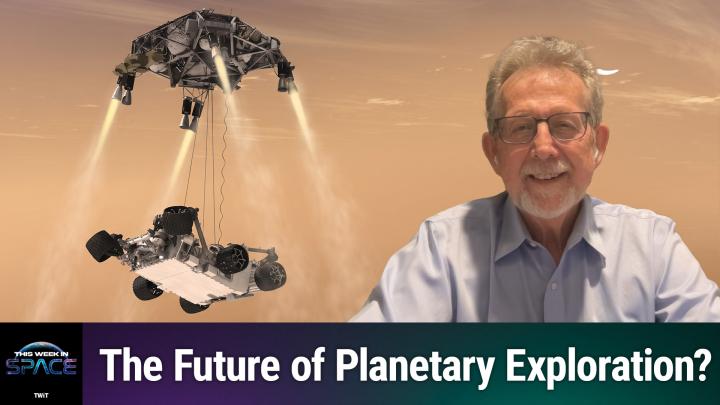
Robots have, and always will, be the first to go to the dark and scary places in space. For many years, Dr. Jim Green oversaw these missions for NASA as their Chief Scientist. He joins us to talk about the past, present, and future of planetary exploration. Jim has always been passionate about NASA's science programs and believes we're quite likely to find life off-Earth in the near future. Join us! Headlines: NASA Unveils New X-70 Fractal X-Plane with Reconfigurable Tech Earth Gains Temporary "Mini Moon" Asteroid 2026 QQ8 NASA Hosts First-Ever Max Power Air Show Highlighting Space Innovation Deep Space Nine's Iconic "Trials and Tribble-ations" Episode Turns 30 Main Topic: Planetary Exploration, Science Funding, and Planetary Defense With Dr. Jim Green Top Unexplored Targets: Sending a Submarine to Europa's Ocean How Political Changes Affect NASA's Budget and Science Programs Mars Sample Return: Obstacles, Funding Challenges, and Possible Human Exploration Synergy Science Communication
Much like a cell membrane, our atmosphere forms a protective boundary between outer space and the biosphere that allows for all life to exist on Earth’s surface. Today, we’re going to talk about its composition and layers (the troposphere, stratosphere, mesosphere, and thermosphere), follow the path of a sunbeam of light as it travels through space and (potentially) reaches Earth’s surface, and discuss how the greenhouse effect can be both a good and bad thing! Sources Bryant, R.H. 1990. Physical Geography. Rupa and Co. Christopherson, R.W. 2010: Elemental Geosystems. Prentice Hall Watch our videos and review your learning with the Crash Course App! Download here for Apple Devices: https://apple.co/3d4eyZo Download here for Android Devices: https://bit.ly/2SrDulJ Crash Course is on Patreon! Thanks to the following patrons for their generous monthly contributions that help keep Crash Course free for everyone forever: Christine Phelan, Nick, DAVID MORTON HUDSON, Perry Joyce, Scott Harris
This week we continue to spend quality time with gases, more deeply investigating some principles regarding pressure - including John Dalton's Law of Partial Pressures, vapor pressure - and demonstrating the method for collecting gas over water. Pssst... we made flashcards to help you review the content in this episode! Find them on the free Crash Course App! Download it here for Apple Devices: https://apple.co/3d4eyZo Download it here for Android Devices: https://bit.ly/2SrDulJ Table of Contents Theory of the Atom 1:48 Adding up the Pressures 2:34 Mixing Vinegar & Baking Soda 7:15 Collecting Gas Over Water 8:54 Crash Course is on Patreon! Want to find Crash Course elsewhere on the internet? Facebook - http://www.facebook.com/YouTubeCrashCourse Twitter - http://www.twitter.com/TheCrashCourse Instagram - https://www.instagram.com/thecrashcourse/ CC Kids: http://www.youtube.com/crashcoursekids
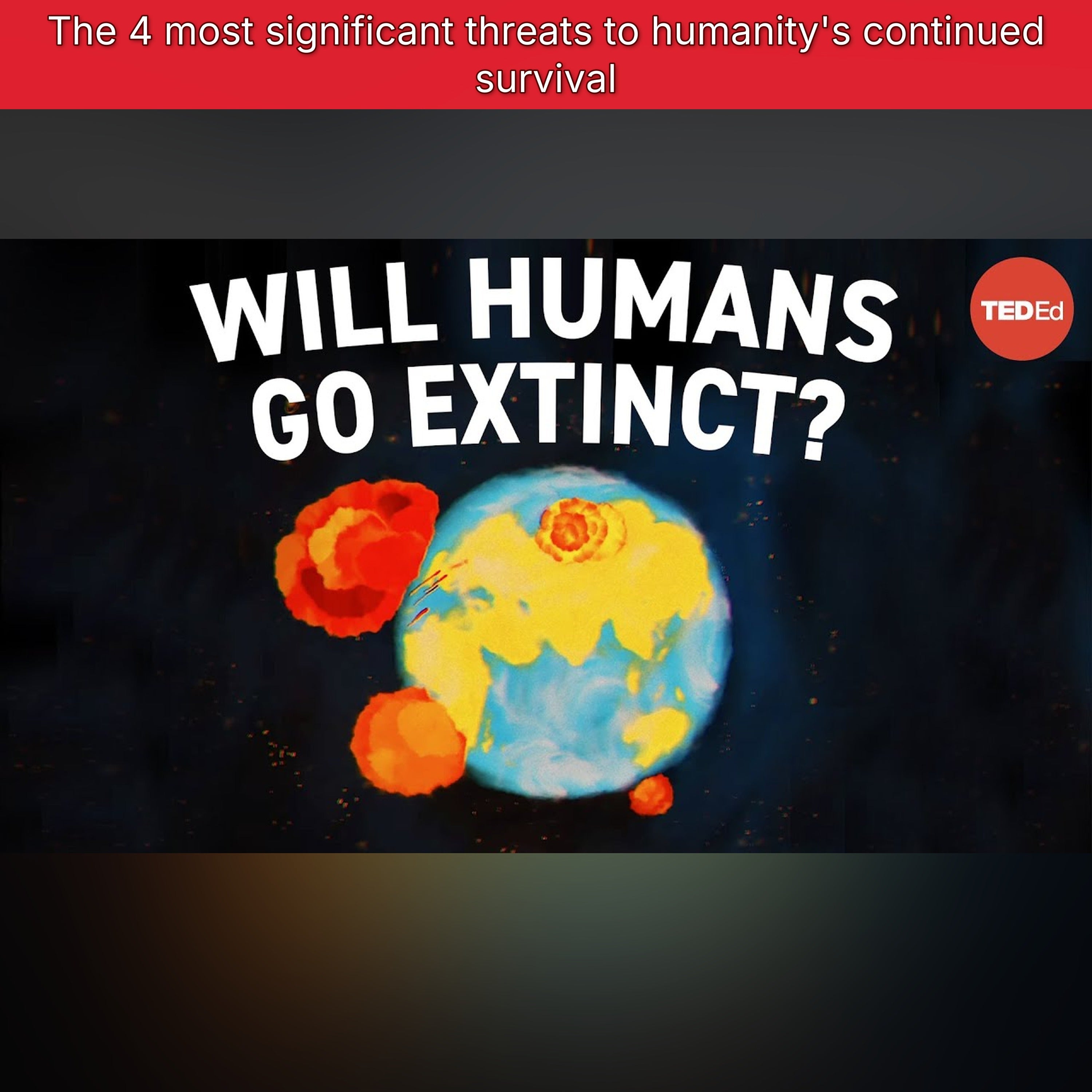
Dig into the 4 biggest existential risks that threaten the survival of humanity, and explore how we can safeguard our future. -- With the invention of the atomic bomb, humanity gained the power to destroy itself for the first time in our history. Since then, our risk of either extinction or the collapse of civilization has steadily increased. Just how likely are we to destroy ourselves? And what poses the greatest threat to our survival? Dig into four existential threats and explore how we can safeguard our future. Directed by Reza Riahi. Support Our Non-Profit Mission ---------------------------------------------- Support us on Patreon: http://bit.ly/TEDEdPatreon Check out our merch: http://bit.ly/TEDEDShop ---------------------------------------------- Connect With Us ---------------------------------------------- Sign up for our newsletter: http://bit.ly/TEDEdNewsletter Find us on Twitter: http://bit.ly/TEDEdTwitter Peep us on Instagram: http://bit.ly/TEDEdInstagram ----------------
View full lesson: http://ed.ted.com/lessons/the-science-of-macaroni-salad-what-s-in-a-molecule-josh-kurz Uploaded 16-08-13 What do macaroni salad and gasoline have in common? They are made of exactly the same stuff -- specifically, the same atoms, just rearranged. So, while we put the former in our mouths and the latter in our cars, they are really just variations on the same atomic theme. Josh Kurz breaks macaroni salad down to its smallest chemical components. Lesson and animation by Josh Kurz.
For centuries, “official” art spaces have shaped whose work gets taken seriously. But there are no required qualifications for making art! In this episode of Crash Course Art History, we’ll explore amateurs and outsiders. We’ll learn how the line separating who’s in and who’s out has shifted over time — and how influences have drifted across it. Introduction: What Is an Amateur? 00:00 The Origins of "Amateur" 01:05 "Amateur" Women Artists 03:31 Wohaw's Drawings 04:53 Outsider Art & Art Brut 07:05 Review & Credits 09:40 Image Descriptions: https://docs.google.com/document/d/1ETiCxe4GrVzFii7dBhF42oHx1EUCCh5y12wbtUjsH8A/edit Sources: https://docs.google.com/document/d/1GW2NKzhpMNMmRyAFJVhFJG9cSfUOMRL-QrcWuHcWcIA/edit?usp=sharing *** Support us for $5/month on Patreon to keep Crash Course free for everyone forever! https://www.patreon.com/crashcourse Or support us directly: https://complexly.com/support Join our Crash Course email list to get the latest news and highlights: https://mailchi
Can a paper bag really help you when you are hyperventilating? It turns out that it can. In part 2 of our look at your respiratory system, Hank explains how your blood cells exchange oxygen and CO2 to maintain homeostasis. We'll dive into partial pressure gradients, and how they, along with changes in blood temperature, acidity, and CO2 concentrations, change how hemoglobin binds to gases in your blood. (And yes, we'll explain the paper bag thing too!) Pssst... we made flashcards to help you review the content in this episode! Find them on the free Crash Course App! Download it here for Apple Devices: https://apple.co/3d4eyZo Download it here for Android Devices: https://bit.ly/2SrDulJ Chapters: Introduction: Hyperventilation 00:00 How Blood Cells Exchange Oxygen and CO2 2:09 Partial Pressure Gradients 2:41 How Hemoglobin Binds to Gases in the Blood 4:40 Why Breathing into a Paper Bag Works 7:58 Review 9:25 Credits 9:58 *** Crash Course is on Patreon! Thanks to the following Patrons fo