Astronauts reflect on living aboard the International Space Station
25 min
Listen through the publisher, then discuss the episode here or arrange an in-person Roundtable. Your city determines where to meet.
Roundtables are designed for groups of four, with a shared subject and room for everyone to speak. Come for discussion, with no dating expectation.
The International Space Station is 250 miles above Earth and travels at roughly 17,500 mph as it orbits our planet. Since 2000, scientists have conducted experiments on everything from cancer to botany to fundamental questions about our universe. Horizons moderator William Brangham explores life aboard the ISS with two astronauts who worked there, Karen Nyberg and Don Pettit. Hosted on Acast. See acast.com/privacy
Episode information is provided by the publisher. Listening takes place on the publisher’s service.
Viewers like you help make PBS (Thank you ) . Support your local PBS Member Station here: https://to.pbs.org/DonateSPACE Uploaded 21-02-18 What exactly will happen when the sun dies? You can further support us on Patreon at https://www.patreon.com/pbsspacetime Get your own Space Time tshirt at http://bit.ly/1QlzoBi Tweet at us! @pbsspacetime Facebook: facebook.com/pbsspacetime Email us! pbsspacetime [at] gmail [dot] com Comment on Reddit: http://www.reddit.com/r/pbsspacetime Help translate our videos! Previous Episode: What is Energy? https://www.youtube.com/watch?v=PUn2izowBkw&t=25s (https://www.youtube.com/watch?t=25s&v=PUn2izowBkw) Like living things, stars have a life cycle. They’re born inside of a cloud of gas and dust, they live their lives fusing hydrogen into helium in their cores, shining bright and stable for as long as that hydrogen lasts. Then they die, each going out in its own beautiful way. How a star dies depends on its mass. The bigger they are, the shorter their liv
Where on Earth did life begin? Explore the hydrothermal vents in Earth’s crust as simple compounds gave way to complex life. Uploaded 26-08-19 -- Billions of years ago, simple organic compounds assembled into more complex coalitions that could grow and reproduce. At the time, Earth had widespread volcanic activity and a hostile atmosphere that made it almost devoid of a suitable environment for living things. So where did life begin? Luka Wright searches for the cradle of life that gave rise to the billions of species that inhabit our planet. Lesson by Luka Seamus Wright, directed by Nick Hilditch. Sign up for our newsletter: http://bit.ly/TEDEdNewsletter Support us on Patreon: http://bit.ly/TEDEdPatreon Find us on Twitter: http://bit.ly/TEDEdTwitter Peep us on Instagram: http://bit.ly/TEDEdInstagram View full lesson: https://ed.ted.com/lessons/the-mysterious-origins-of-life-on-earth-luka-seamus-wright Thank you so much to our patrons for your support! Without you this video would not
Explore how the Hubble Space Telescope reveals the Universe, from iconic images to major discoveries, and how it complements the James Webb Space Telescope. "ASTROMAN: the Dark Sky Guardian" is a podcast channel that aims to explore popular science in multiple disciplines and research on interdisciplinary approaches, such as sustainability, dark-sky protection, astrophotography, space exploration, astronomy innovation, inclusive science communication, and STEAM Education by integrating science and arts. Exodus Chun-Long Sit, also known as the ASTROMAN, is a transmedia astronomy educator, popular science author, STEAM educator, and science communicator in Hong Kong. He is recently the National Astronomy Education Coordinator (Chair of Hong Kong, China) of the International Astronomical Union and President of Starrix. He was also an International Committee Member of the Dark Sky International, regularly organizing public lectures at the Hong Kong Space Museum and the Hong Kong Science Mu
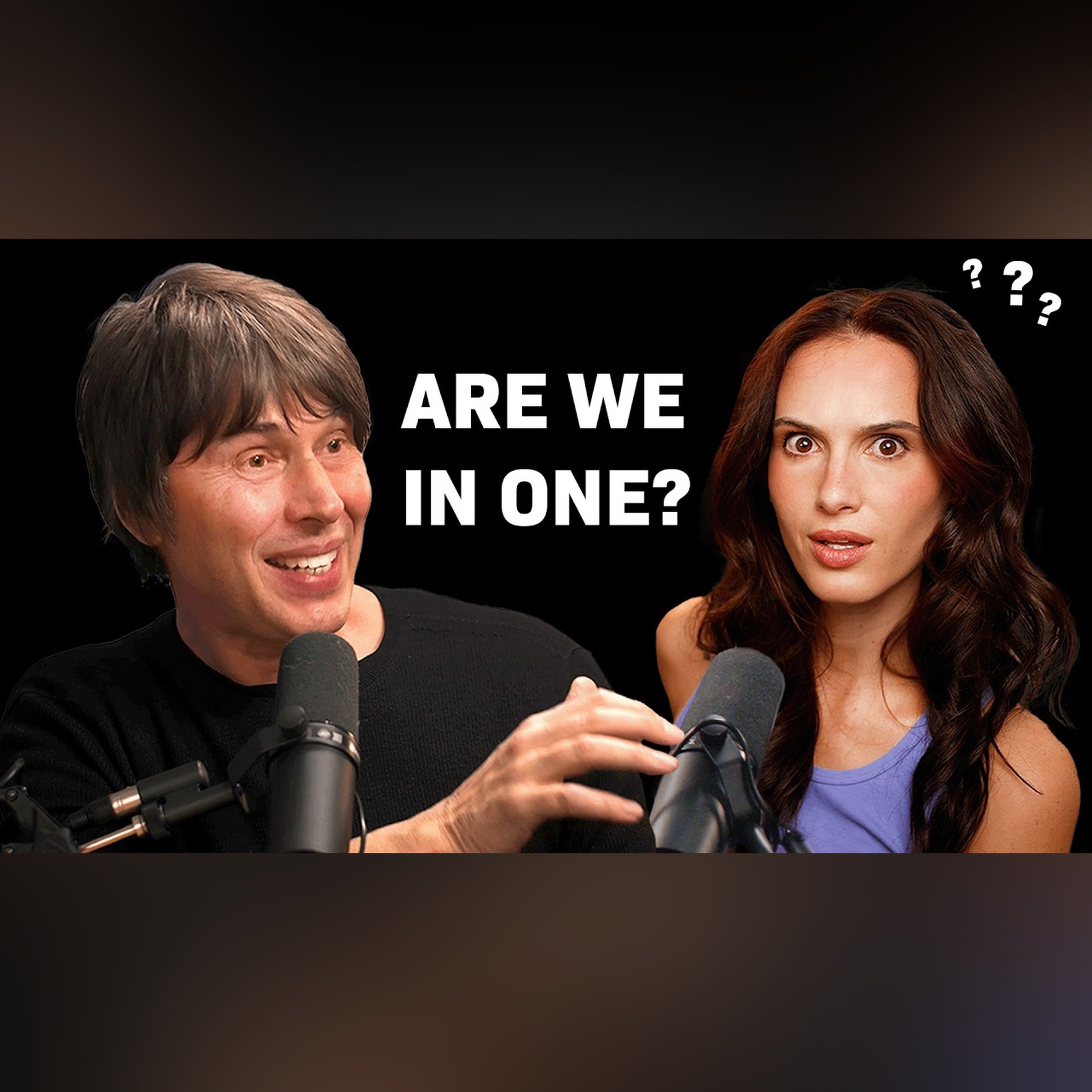
Black holes reveal something astonishing about our universe. Take your personal data back with Incogni. This extended cut is a deep dive into cutting edge research about black holes. It’s an interview with famous physicist Dr. Brian Cox. We start with “what if you fell into a black hole?” and end on the cutting edge research that had me questioning my whole reality. I interviewed Dr. Cox originally for a shorter Huge If True episode all about what would happen if you fell into a black hole. Watch our Huge If True episode about “What If You Fell Into A Black Hole?” here: https://youtu.be/BKIkTKqWMfg?si=bTde4QxUeN6bN1Io But there was SO much weird and mind bending stuff about the cutting edge of black holes that didn't fit into that shorter episode, and we knew you'd want to hear it. So we decided we had to release the full conversation. It's just too cool and I think you'll love it. Now, strap in, because the cutting edge of black holes is absolutely WILD. As always, if you want more op
This is a Grave Talks CLASSIC EPISODE! For Melissa Clevenger, the spirit world has never been a distant mystery—it has been a lifelong reality. Since the age of five, Melissa has been able to see and hear spirits. But her early encounters weren’t comforting or controlled. The voices didn’t ask permission. The apparitions didn’t wait for understanding. What began as terrifying childhood experiences slowly evolved into something she could manage—and eventually embrace. As she matured, the chaos of those early years transformed into meaningful communication, guiding her toward a deeper understanding of her abilities and the messages coming through. Today, Melissa shares her journey from fear to purpose, reflecting on what it means to live with heightened sensitivity and dedicate her life to connecting the living with those who have passed on. On this episode of The Grave Talks, we explore the reality of growing up with psychic abilities, the challenges of navigating unseen energies, and t
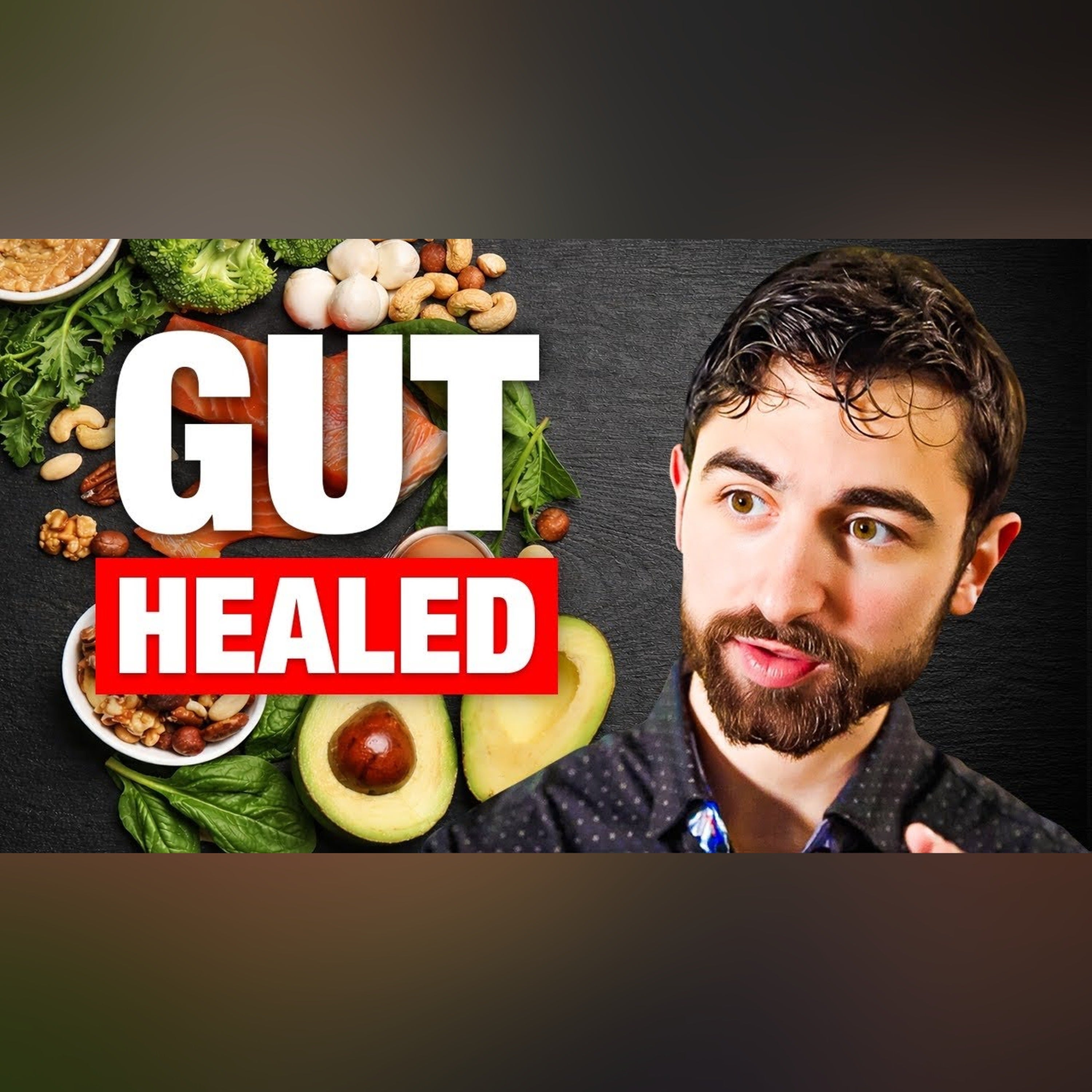
For extra details and all references, see this newsletter: https://staycuriousmetabolism.substack.com/p/a-keto-diet-cured-my-inflammatory?r=40ekz2 Description: There was a time when I was dying from inflammatory bowel disease. It was my rock bottom. Out of desperation, I tried a ketogenic diet—and within a week, everything changed. My symptoms stopped, inflammation markers dropped, and follow-up testing showed no active disease. In this video, I unpack what may have happened biologically. We walk through human and animal data showing how a ketogenic diet reshapes the gut microbiome, suppresses inflammatory TH17 immune cells, and reduces inflammation not just in the intestines, but system-wide. We even look at fecal transplant experiments demonstrating that the ketogenic microbiome itself can transfer anti-inflammatory effects. This isn’t a promise or a prescription. It’s a personal story, grounded in real data, that explores the tension between lived biology and what medicine has—or ha
Artificial intelligence giant Anthropic completed the largest initial public offering of all time. Even as CEO Dario Amodei celebrated the huge launch, he reiterated his commitment to developing artificial intelligence responsibly. William Brangham discussed more with Jessica Lessin, the editor-in-chief of the technology website The Information. Hosted on Acast. See acast.com/privacy
NASA's Voyager 1 spacecraft has reached an extraordinary milestone — traveling so far from Earth that it now takes a full day for light, or a radio signal, to reach it. Launched nearly 50 years ago, Voyager 1 is the farthest any human-made object has ever traveled, and the first spacecraft to enter interstellar space. Miles O'Brien puts this achievement in perspective and explains what comes next. Hosted on Acast. See acast.com/privacy
When it comes to measles, the U.S. is going backwards. Our country, once a global leader in our ability to contain this virus, is now seeing measles surge back. Horizons moderator William Brangham explores how we got here, and where we go now with Dr. William Schaffner and Jessica Malaty Rivera. Hosted on Acast. See acast.com/privacy
Governments should remove practical barriers to voting, even when doing so costs more.
Share your view, then see how readers voted. No sign-in required. This poll is shared across stories.
Do you agree or disagree?
Common Quandary
A Common Quandary to discuss
Another conversation to explore, separate from this news story.
You find a rare library book your father kept for forty years. Do you return it anonymously?
While clearing your father's attic, you find a rare book stamped by the local library and due in 1986. The library would be thrilled to recover it, but returning it openly would expose a secret he apparently kept for decades—and might produce a spectacular overdue fine.
Does making an old wrong right require admitting who did it?