Listen through the publisher, then discuss the episode here or arrange an in-person Roundtable. Your city determines where to meet.
Roundtables are designed for groups of four, with a shared subject and room for everyone to speak. Come for discussion, with no dating expectation.
On this week’s episode, Brian Skorney, Paul Matteis, Yaron Werber, and Adam Feuerstein opened with a look at what the midterm results could mean for biotech, covering the macro backdrop, the FDA, and drug pricing. The conversation then turned to Vertex’s povetacicept ahead of a potential IgAN approval at the end of November, and the competitive landscape as Vertex enters a market with two formidable competitors. In earnings news, the group discussed Revolution Medicines’ strong Q3 launch sales for Rasonque, which doubled market predictions, and the safety questions and possible label changes facing Neurocrine’s Vykat. The group also covered the race for the first FDA approval of a psilocybin depression treatment, with Compass nearing NDA completion and a reported filing from the Usona Institute, as well as Novartis’ update on tumor cases in Zolgensma-treated patients. The episode closed with the Phase 3 miss for Novartis and Ionis’ pelacarsen despite significant Lp(a) reduction, and what to watch for at AHA 2026 and ASH 2026. This episode aired on November 6, 2026.
Episode information is provided by the publisher. Listening takes place on the publisher’s service.
PBS Member Stations rely on viewers like you. To support your local station, go to: http://to.pbs.org/DonateSPACE ↓ More info below ↓ Uploaded 10-08-20 The second in our two event series about Theories of Everything! Watch the first one: https://www.youtube.com/watch?v=_izocEgArtQ Please subscribe to Brian Keating's YouTube Channel to watch one-on-one interviews with the guest speakers and more: https://www.youtube.com/DrBrianKeating Existing Theories of Everything have not yet produced experimental evidence that solves the fundamental challenges facing physics. That lack of progress has opened up a sea of controversy, from disagreements about the very necessity of TOEs, to questioning the cost/benefit of mega-billion dollar particle accelerators in search of them, to the emergence of competing TOEs from physicists outside of the academic community. In this 90 minute chat we dive into the existential questions around TOEs. Special thanks to Brian Keating, Lee Smolin, Sabine Hossenfelde
Sign up for our newsletter and never miss an animation: http://bit.ly/TEDEdNewsletter Uploaded 14-01-19 View full lesson: https://ed.ted.com/lessons/the-truth-about-electroconvulsive-therapy-ect-helen-m-farrell In 1982, a young nurse was suffering from severe, unrelenting depression. She couldn’t work, socialize or concentrate. One controversial treatment changed everything: after two courses of electroconvulsive therapy (ECT) her symptoms lifted. So what exactly is electroconvulsive therapy and why is it so stigmatized? Helen M. Farrell details the history and evolution of ECT. Lesson by Helen Farrell, directed by Artrake Studio. Thank you so much to our patrons for your support! Without you this video would not be possible! Dan Paterniti, Jerome Froelich, Tyler Yoshizumi, Martin Stephen, Justin Carpani, Faiza Imtiaz, Khalifa Alhulail, Tejas Dc, Benjamin and Shannon Pinder, Srikote Naewchampa, Sage Curie, Exal Enrique Cisneros Tuch, Ana Maria, Vignan Velivela, Ahmad Hyari, eden sher,
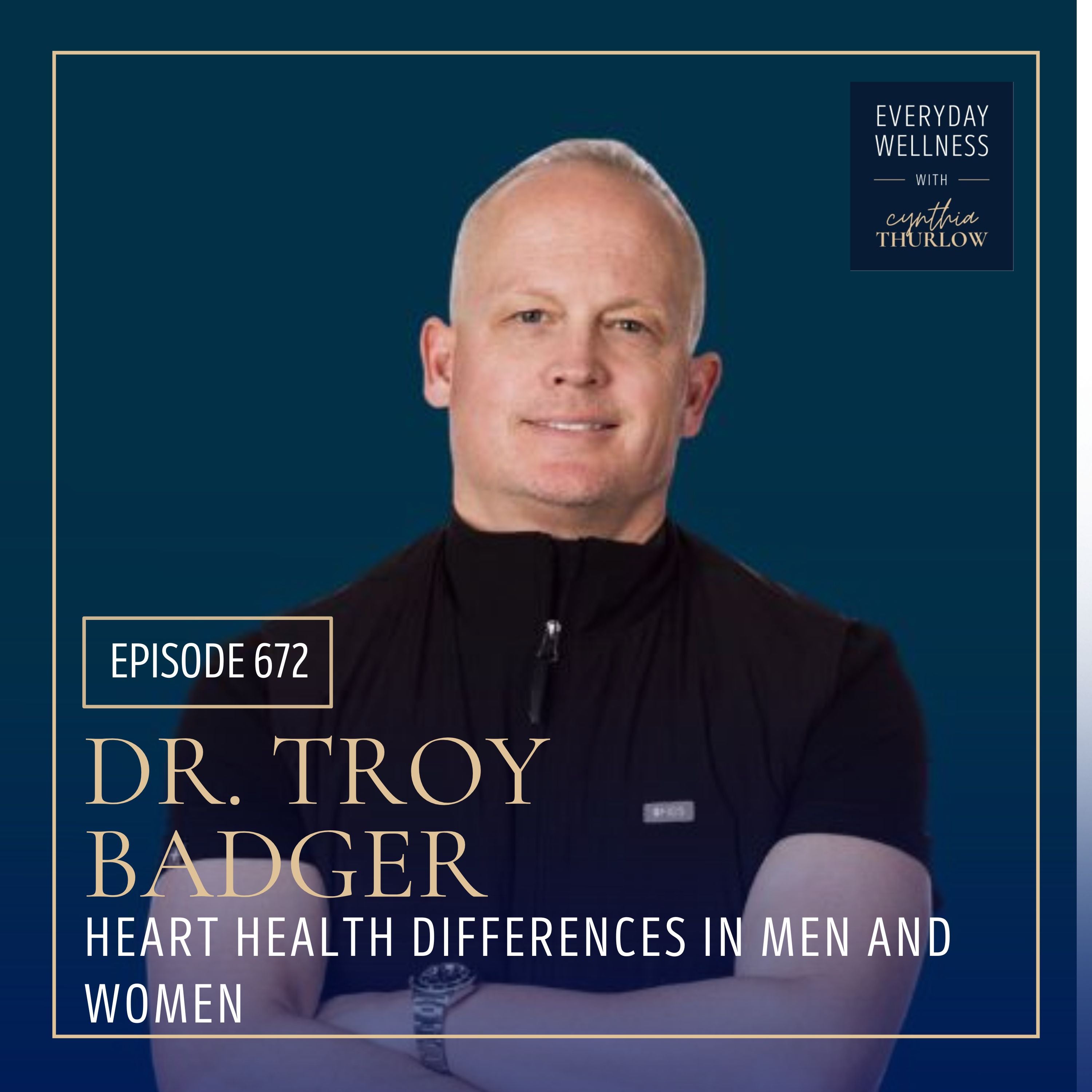
Today, I’m honored to connect with Dr. Troy Badger. He is a board-certified cardiologist and interventionalist and the founder of Cardiostrong, a concierge preventive cardiology clinic in Provo, Utah, focused on reducing cardiovascular risk, optimizing metabolic health, and improving strength and cardiorespiratory fitness for executives and athletes. In today’s conversation, we discuss Dr. Badger’s gender- and age-specific approach to heart health, including treatment differences for men and women, and diagnoses such as INOCA, SCAD, vasospastic disease, and Takotsubo. We examine emotions and their influence on heart health, coronary ischemia and cardiomyopathies, labs and diagnostics, how Dr. Badger assesses risk in his patients, and the differences between a CAC and a CCTA. Dr. Badger also shares the labs he finds essential for all patients and discusses the role of VO2 Max, cardiovascular training, and lifestyle—specifically nutrition, the use of GLP-1 drugs, and a multidisciplinary
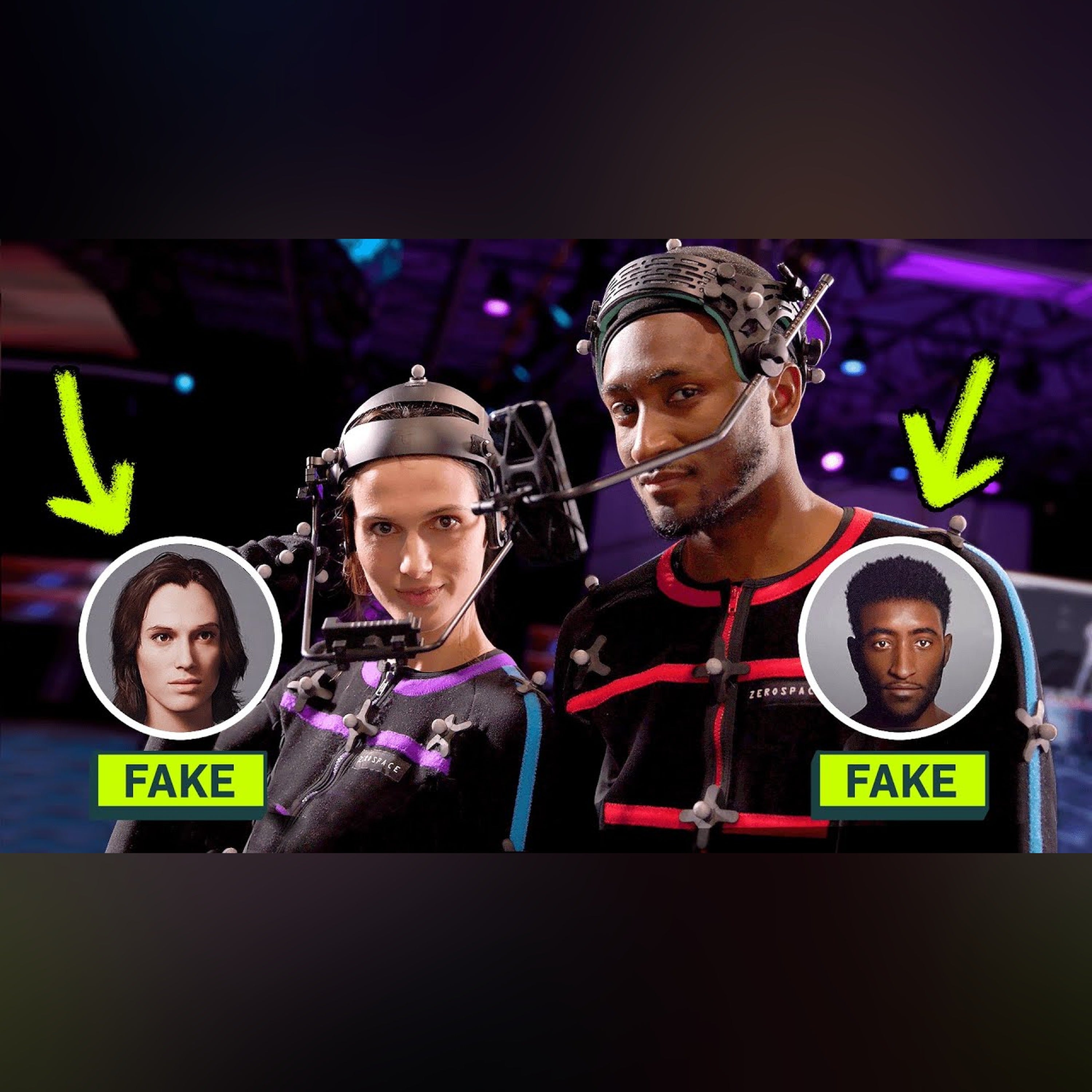
This new tech is changing how movies get made. So @mkbhd and I tested it out... Watch MKBHD's video: https://youtu.be/RM7SobH8ZO0 I’ve been obsessed with sci-fi movies since I was a kid. I love being transported to another world. But lately, I’ve been wondering: How do those worlds look so… REAL? The tech behind movies has exploded in complexity and realism, changing how stories come to life on screen. Luckily, at the same time, those tools are becoming more and more available to more people telling stories. It’s not just blockbusters like Avatar 2 or Avengers or Dune. It’s also smaller budget films like Everything Everywhere All at Once or even… YouTube creators? In this video, Marques Brownlee and I test out 3 movie-making tools that are changing how movies, shows, and maybe even YouTube videos (??) get made. We’re at ZeroSpace Studios in New York to show you how each of these crazy technologies work - and how you might be able to use them. Along the way, we hit big questions like: W
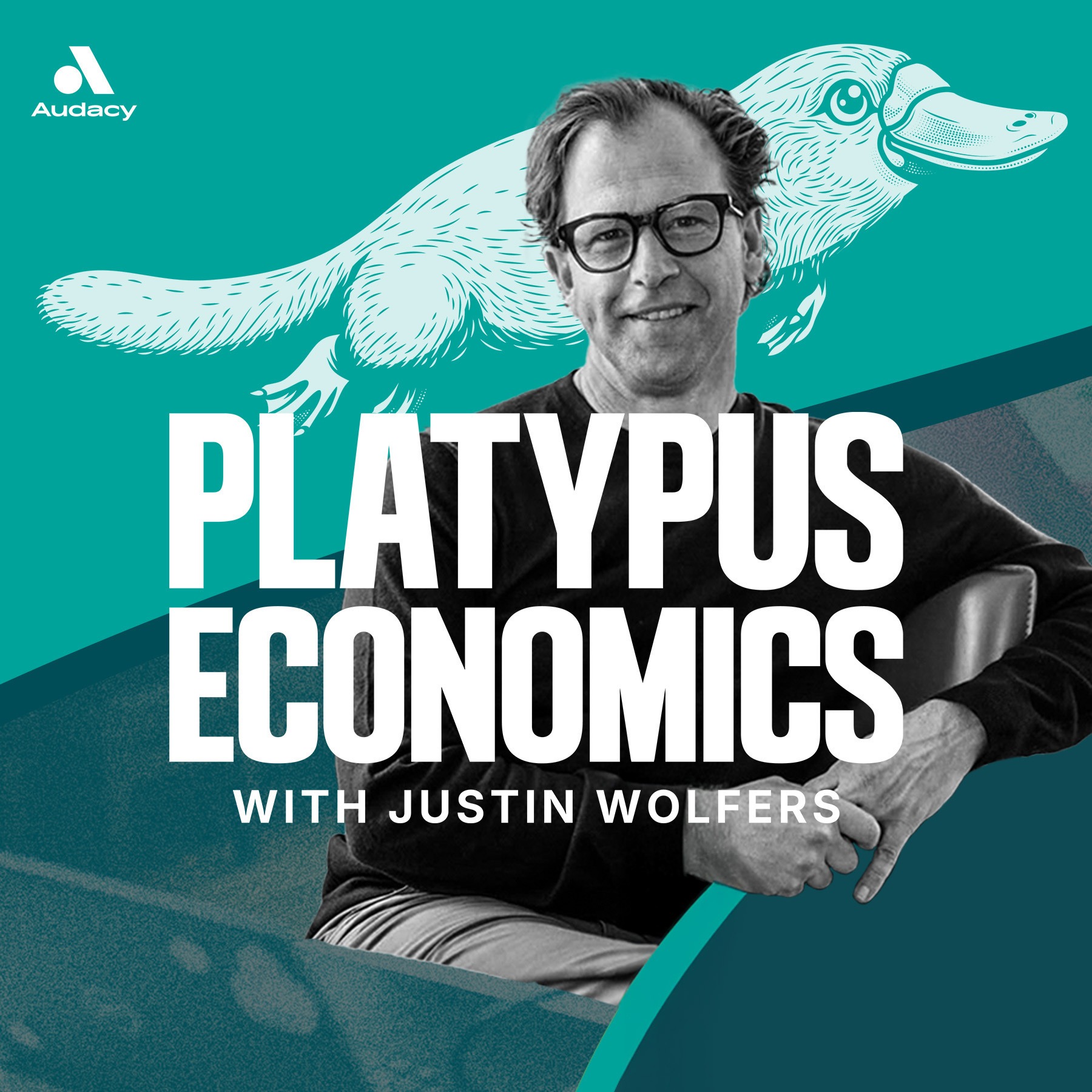
Are we in an AI stock bubble, or are investors betting on a genuinely bigger economy? Justin Wolfers examines AI stock valuations with Stacey Vanek Smith, separating what the technology could do for the economy from what investors might actually earn. A deliberately hypothetical valuation exercise shows why a trillion-dollar company isn't automatically absurd—but a breakthrough for society doesn't guarantee profits for shareholders. Competition can give you powerful tools at low prices while squeezing the companies selling them. The Thanksgiving turkey problem illustrates why a long run of good news can hide rare, severe risks. Justin connects that analogy to fat tails and the peso problem, then explains why spotting a bubble and successfully betting against it are different challenges. He also unpacks what the CAPE ratio can—and can't—tell you about whether stocks are overpriced. The stakes are your savings, not just Wall Street's scoreboard: Justin discusses an S&P 500 decline of 7.5
Run Your Agency on Autopilot – White Label CRM, Funnels, and Automations in One Platform for Success. Claim 2-week free trail now www.gohighlevel.com/protrial?fp_ref=fg (https://www.gohighlevel.com/protrial?fp_ref=fg) How does OpenAI just keep winning? Here's OpenAI's secret behind Deep Research...Spreading awareness about the works of some of the leading educators in the AI revolution. Core Ideas: Metamodernism: Narratives and emergence view of reality - Reduce suffering - Increase prosperity - Increase understanding mantra: Seek knowledge. DISCLAIMER: This is a community-driven show.
On this week’s episode, Graig Suvannavejh, Tim Opler, BrianSkorney, Chris Garabedian, and Matt Gline opened with a look at the biotech market, with the XBI up roughly 17% to 18% year to date, though the group noted that AI-driven demand for capital and the possibility of an AI bubble are weighing on sentiment. The co-hosts then discussed expectations for 2027 as a significant M&A year, following conversations with pharma M&A leaders at the Jefferies Global Healthcare Conference. The group also covered the withdrawal of Heidi Overton’s FDA Commissioner nomination and what the uncertainty could mean for agency stability and volatility. Next, they discussed market rumors of a potential Sanofi acquisition of Insmed, including Brinsupri’s performance and raised guidance, and what a deal of that size could signal for the broader M&A landscape. The group also covered Lilly’s oncology deals with Stipple Bio and Calytrix, and the growing opacity of biobucks headlines and undisclosed upfront pay
On this week’s episode, Eric Schmidt, Yaron Werber, Paul Matteis, and Kate Haviland opened with a look at the biotech market, with the XBI up roughly 25% year to date, though it feels much worse to many buy-side clients. The group discussed the midterm elections, weighing a potential blue wave against a market pricing in two more rate hikes. They also previewed next week’s Senate vote on Dr. Heidi Overton’s nomination as FDA commissioner, with Paul sharing his conversation with former FDA Commissioner Scott Gottlieb at the Stifel Healthcare Conference, where Gottlieb expressed optimism about her confirmation and her grasp of the agency’s need to rehire and rebuild expertise. The co-hosts then discussed the longer-term future of MFN deals, including sunset provisions and the question of whether the policy returns. The conversation turned to drug launches, covering how companies set expectations through pre-launch conversations with clinicians, office staff, and patients, and whether exp
Communities should actively welcome newcomers even when local services must adapt.
Share your view, then see how readers voted. No sign-in required. This poll is shared across stories.
Do you agree or disagree?
Common Quandary
A Common Quandary to discuss
Another conversation to explore, separate from this news story.
A disgraced billionaire's name is on the beloved campus library. Does it come down?
A major donor funded a beloved public building decades ago. New evidence shows they also caused serious harm that was legal and accepted by many peers at the time. Removing the name may jeopardize future donations.
What does an institution owe the truth when its history funded the present?