Escape was one of the many ways that enslaved people resisted their captivity in the system of American slavery. The Underground Railroad was not literally a railroad. It was a network of people, routes, and safe houses that helped people escape from slavery in the south to freedom in the north. Today we'll talk about the origins of the Underground Railroad, the systems that helped people escape, and the people who helped along the route. Clint's book, How the Word is Passed is available now! https://bookshop.org/a/3859/9780316492935 SOURCES Watch our videos and review your learning with the Crash Course App! Download here for Apple Devices: https://apple.co/3d4eyZo Download here for Android Devices: https://bit.ly/2SrDulJ Crash Course is on Patreon! Thanks to the following patrons for their generous monthly contributions that help keep Crash Course free for everyone forever: Toni Miles, Oscar Pinto-Reyes, Erin Nicole, Steve Segreto, Michael M. Varughese, Kyle & Katherine Callahan, Lau
Featuring an interview with Dr Matthew Lunning, including the following topics: Bispecific antibody/antibody-drug conjugate combinations (0:00) A man in his late 90s with mantle cell lymphoma — Ann LaCasce, MD, MMSc (8:07) CME information and select publications (https://researchtopractice.com/ASCO2026/NHL/Micro/2)
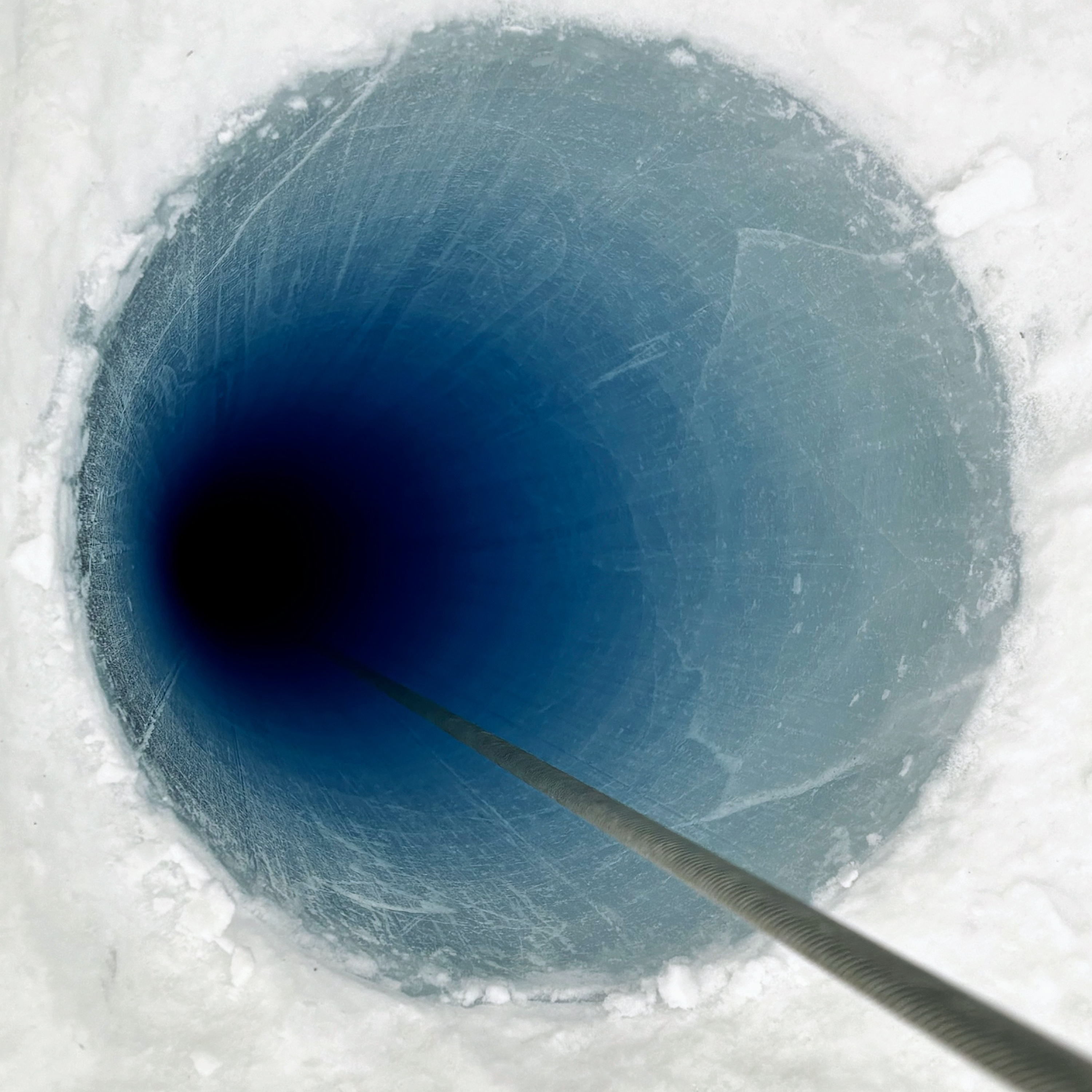
Tiny bubbles of air trapped in Antarctic ice are samples of the ancient atmosphere itself, one of the few direct records of how greenhouse gases and climate have changed together. Until recently, the oldest ice known was 2.7 million years old. Now researchers in the Allan Hills, where ice from the interior stalls against the mountains and fierce winds strip away its surface, have found ice about 6 million years old. Ed Brook explains how such old ice survives, how it can be dated with no layers to count, and how noble gases in its bubbles take the temperature of the entire ocean. And he describes a puzzle: over three million years in which the ocean cooled and the ice ages deepened, carbon dioxide fell only modestly. What does that say about how sensitive the climate is to greenhouse gases? Brook directs COLDEX, the US center set up to find and study the oldest ice, and is University Distinguished Professor of Earth, Ocean, and Atmospheric Sciences at Oregon State University.For photos
Explore the specialized anatomy that allows parrots to talk, scream, curse, and recite facts like humans. -- Whether they’re belting Beyoncé, head-banging to classic rock, or rattling off curse words at zoo-goers, parrots are constantly astounding us. They are among the only animals that produce human speech, and some parrots do it almost uncannily well. How is this possible? Grace Smith-Vidaurre and Tim Wright dig into the anatomy that allows parrots to talk, scream, curse, and recite facts. Lesson by Grace Smith-Vidaurre and Tim Wright, directed by Anton Bogaty. Support Our Non-Profit Mission ---------------------------------------------- Support us on Patreon: http://bit.ly/TEDEdPatreon Check out our merch: http://bit.ly/TEDEDShop ---------------------------------------------- Connect With Us ---------------------------------------------- Sign up for our newsletter: http://bit.ly/TEDEdNewsletter Find us on Twitter: http://bit.ly/TEDEdTwitter Peep us on Instagram: http://bit.ly/TEDEd
Explore how wind turbines convert wind into electricity, and the challenges of powering the world entirely with wind energy. Uploaded 22-04-21 -- Every 24 hours, wind generates enough kinetic energy to produce roughly 35 times more electricity than humanity uses each day. And unlike coal or oil, this resource is totally renewed each day. So how can we harness this incredible amount of energy, and is it possible to create a world powered entirely by wind? Rebecca Barthelmie and Sara Pryor dig into the science of wind turbine technology. Lesson by Rebecca J. Barthelmie and Sara C. Pryor, directed by Gavin Edwards, Movult. Support Our Non-Profit Mission ---------------------------------------------- Support us on Patreon: http://bit.ly/TEDEdPatreon Check out our merch: http://bit.ly/TEDEDShop ---------------------------------------------- Connect With Us ---------------------------------------------- Sign up for our newsletter: http://bit.ly/TEDEdNewsletter Find us on Twitter: http://bit.
In which John Green finally gets around to talking about some women's history. In the 19th Century, the United States was changing rapidly, as we noted in the recent Market Revolution and Reform Movements episodes. Things were also in a state of flux for women. The reform movements, which were in large part driven by women, gave these self-same women the idea that they could work on their own behalf, and radically improve the state of their own lives. So, while these women were working on prison reform, education reform, and abolition, they also started talking about equal rights, universal suffrage, temperance, and fair pay. Women like Susan B. Anthony, Carry Nation, Elizabeth Cady Stanton, the Grimkés, and Lucretia Mott strove tirelessly to improve the lot of American women, and it worked, eventually. John will teach you about the Christian Temperance Union, the Seneca Falls Convention, the Declaration of Sentiments, and a whole bunch of other stuff that made life better for women. H
In November 2016 the BBC World Service launched a brand new show in which listeners would send in their science questions, and a team of fearless presenters would find answers. Ten years on, CrowdScience is still going strong. We’ve answered over five hundred questions from our listeners, spoken with thousands of scientists and covered subjects from the mundane to the profound. Our audience’s insatiable curiosity has taken us to the bottom of the ocean, to the top of volcanoes and to the edge of a hurricane. We’ve been on adventures in audio that have been surprising, fascinating and breathtaking, all to find answers to questions sent in by CrowdScience listeners. In true CrowdScience fashion, we wanted to celebrate our tenth anniversary with our listeners. We asked the audience for their CrowdScience stories, and to pick some of their favourite moments from the last decade. As a result we’re revisiting some incredible episodes, including butterflies that migrate thousands of kilometre
Our American Alchemists this week are current and former Japanese government officials and lawmakers including: Yasukazu Hamada, former Japanese Defense Minister and chairman of Japan's parliamentary UAP caucus Yoshiharu Asakawa, former Congressman and founding organizer of the caucus Teruo Minobe, sitting member of Japan's House of Representatives Atsushi Hayasaka, former Congressman Chiaki Hayasaka, Sendai City Council member --------------------- Dose: Support your liver health with Dose! Ridge: One thing to pack, five ways to power! --------------------- Japan's UFO investigation is reaching the highest levels of government, and these politicians are speaking openly about what they've discovered. Hamada explains why non-human intelligence deserves serious consideration, while Asakawa and Minobe discuss mysterious objects over Japanese nuclear facilities, government transparency, and the push for official UAP reporting. Jesse also investigates the famous Japan Airlines Flight 1628 e
5-hour Patreon Q&A show: https://www.patreon.com/universetoday/posts/patreon-q-2026-174012731 Rubin finds Neptune’s trojans and two new companions to the Milky Way, China reveals more of its plans to send humans to the Moon, finding the seeds of supermassive black holes. And on Space Bites+, how Mars has microclimates near its North Pole. Vote for the best story here: https://www.youtube.com/@frasercain/posts 00:00 Intro 00:18 Rubin finds Neptune's trojans https://www.universetoday.com/articles/queens-university-belfast-students-find-neptunes-elusive-trojan-asteroids 02:40 Vera Rubin finds Milky Way's neighbours https://www.universetoday.com/articles/the-vera-rubin-has-found-two-more-of-the-milky-ways-dim-satellites 03:58 China unveils its Moon plans https://www.universetoday.com/articles/china-unveils-their-plan-for-a-crewed-moon-landing 05:45 Splitting a black hole https://www.universetoday.com/articles/what-could-split-a-black-hole-in-two 07:29 Seeds of supermassive black holes 10:0
Uploaded 07-05-18 View full lesson: https://ed.ted.com/lessons/what-causes-constipation-heba-shaheed Visiting the bathroom is part of the daily human experience. But occasionally, constipation, a condition that causes a backup in your digestive system, strikes. In some especially uncomfortable cases, the food you eat can take several days to exit your body. What's behind this unsettling phenomenon? Heba Shaheed takes us into the digestive system to find out. Lesson by Heba Shaheed, animation by Augenblick Studios. Thank you so much to our patrons for your support! Without you this video would not be possible! Jordan Tang, Christopher Jimenez, Juan, Tracey Tobkin, Sid, emily lam, Kathryn J Hammond, Elliot Poulin, Noel Situ, Oyuntsengel Tseyen-Oidov, Latora Slydell, Sydney Evans, Victor E Karhel, Bernardo Paulo, Eysteinn Guðnason, Andrea Feliz, Natalia Rico, Josh Engel, Bárbara Nazaré, Gustavo Mendoza, Zhexi Shan, Hugo Legorreta, PnDAA, Sandra Tersluisen, Ellen Spertus, Fabian Amels, sam
We’ve already learned a bit about substitution reactions in organic chemistry and the two different paths they can follow: SN1 and SN2. In order to better predict the products of a substitution reaction and understand how they work, we need to be able to figure out which mechanism a reaction is likely to follow. In this episode of Crash Course Organic Chemistry, we’ll deepen our knowledge of substitution reactions by looking at factors like substrate structure and reaction conditions to determine whether SN1 or SN2 is the more likely mechanism. Episode Sources: Brookes, P., Lawley, P.D. “The Reaction of Mono-and Di-Functional Alkylating Agents with Nucleic Acids,” , Biochem. J., 1961, 80, 496-503. Copley, Shelley, D., “Microbial dehalogenases: Enzymes recruited to convert xenobiotic substrates,” Current opinion in Chemical Biology, 1998, 2, 613-617. Janssen, D. B., Scheper, A., Dijkhuizen, L, Witholt, B., “Degradation of halogenated aliphatic compounds by Xanthobacter autotrophicus GJ1
Over the course of this series, we've seen that outbreak science is actually MANY sciences, including biology, epidemiology, sociology, and even economics! Because outbreak science is an interdisciplinary field, everyone has a role to play in ending outbreaks, including you! In this final episode of Crash Course Outbreak Science, we'll take a look at how different fields come together to prepare for and prevent outbreaks. This episode of Crash Course Outbreak Science was produced by Complexly in partnership with Operation Outbreak and the Sabeti Lab at the Broad Institute of MIT and Harvard—with generous support from the Gordon and Betty Moore Foundation. Episode Sources: https://journals.plos.org/plosmedicine/article?id=10.1371/journal.pmed.1001413 (https://journals.plos.org/plosmedicine/article?id=10.1371%2Fjournal.pmed.1001413) https://pubmed.ncbi.nlm.nih.gov/25960093/#:~:text=The%20disease%20infects%20humans%20through,died%20of%20Ebola%20virus%20disease. (https://pubmed.ncbi.nlm.ni
In this calm and sleepy facts episode, we spend eight peaceful hours exploring some of the most beautiful and soothing places on Planet Earth. We begin with the gentle science of rain, following a single drop from a rising cloud to a quiet rooftop, and discovering why the soft sound of rainfall has comforted people for thousands of years. From there we travel south to Antarctica, the coldest, driest, and windiest continent on Earth, where ice sheets miles thick hold most of the world’s fresh water and penguins gather beneath the long polar night. Next, we sink beneath the waves into the world of ocean life, from tiny glowing plankton drifting near the surface to great whales gliding through the deep blue. Finally, we wander into the rainforests, where towering trees, misty canopies, and countless creatures form some of the richest ecosystems on the planet. Each story unfolds slowly and gently, carrying us from falling rain to frozen ice, from open ocean to green forest. Let these calm
Explore what happens in your body when you don’t acclimate to higher altitudes and the dangers of altitude sickness. -- If you teleported from sea level to the top of Mount Everest, things would go bad fast. At an altitude of 8,848 meters, you would likely suffocate in minutes. However, for people that make this journey over the course of a month, it’s possible to survive at the peak for hours. So what happens in our bodies that allows us to endure this incredible altitude? Andrew Lovering investigates. Lesson by Andrew Lovering, directed by Vitalii Nebelskyi, and action creative agency. Designed by Alexandra Bolotova Animated by Volodymyr Boyko Support Our Non-Profit Mission ---------------------------------------------- Support us on Patreon: http://bit.ly/TEDEdPatreon Check out our merch: http://bit.ly/TEDEDShop ---------------------------------------------- Connect With Us ---------------------------------------------- Sign up for our newsletter: http://bit.ly/TEDEdNewsletter Find
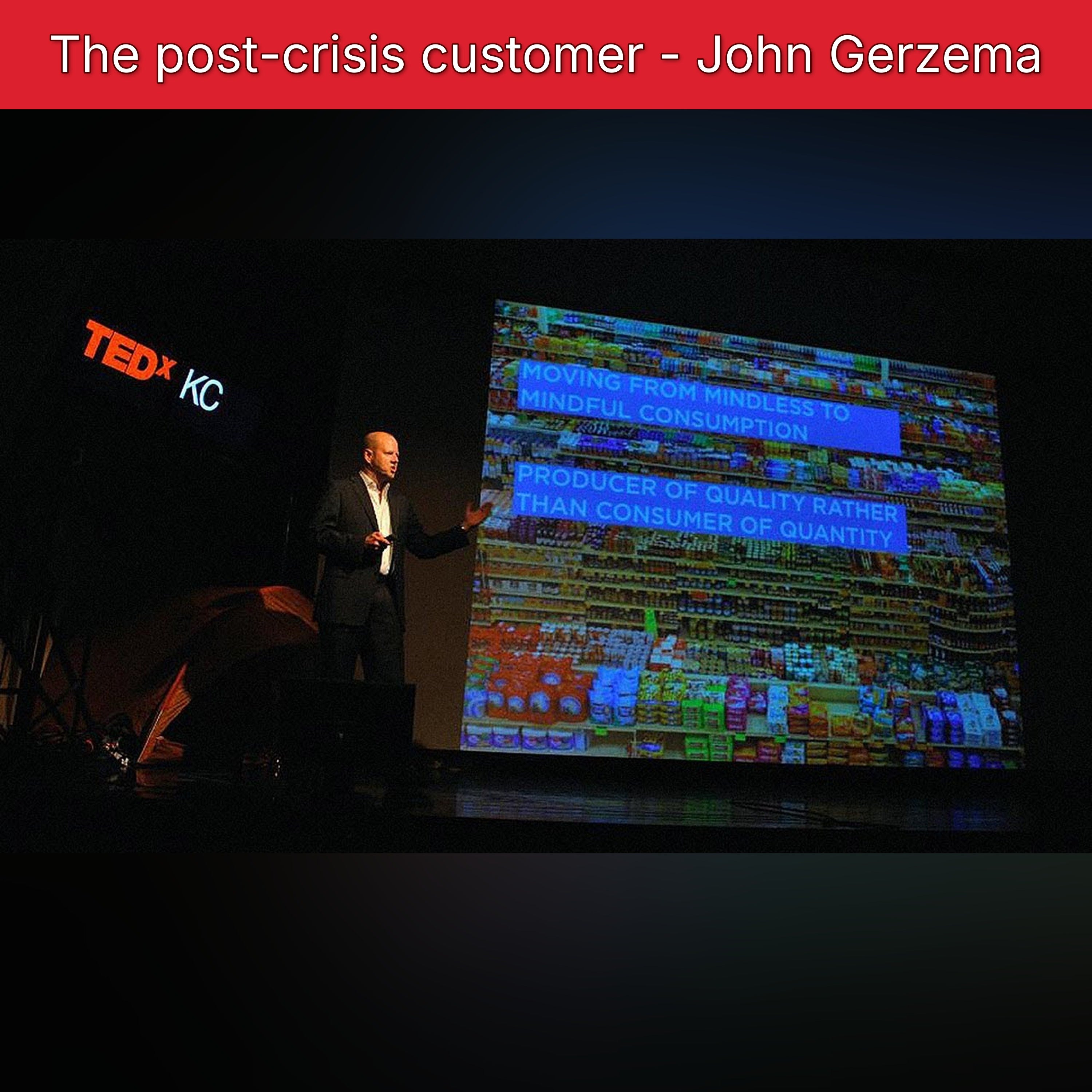
John Gerzema says there's an upside to the recent financial crisis -- the opportunity for positive change. In this talk, he identifies four major cultural shifts driving new consumer behavior and shows how businesses are evolving to connect with thoughtful spending. (Filmed at TEDxKC.) Talk by John Gerzema.
Listening to Real Ghost Stories Online can be creepy enough. But what happens when the unexplained activity seems to start the moment our podcast stops playing? One listener was relaxing in his bedroom when the show suddenly paused. At that exact moment, his mattress creaked as though someone had sat down beside him. Nobody was there, and a few seconds later, the podcast resumed. Then it happened again, this time while he was cleaning a restroom at work. The show abruptly stopped, followed by mysterious knocks from the other side of a wall. Twice, our podcast mysteriously paused just as something strange happened nearby. Was it an extraordinary coincidence, or was something else listening to Real Ghost Stories Online? #RealGhostStoriesOnline #GhostStories #ParanormalPodcast #UnexplainedActivity #GhostlyEncounters #UnseenPresence #ParanormalExperiences #MysteriousKnocking #GhostlyInterruptions #TrueGhostStories Love real ghost stories? Want even more? Want even more? Stay connected with
Kelly didn’t put much faith in psychics, so a twenty-minute reading during a weekend trip with friends was supposed to be nothing more than entertainment. Then the psychic told her something strangely specific: her mother was going to come across an old green box, believe there was nothing worth keeping inside, and throw it away. Kelly’s mother really was downsizing after more than thirty years in the same house, and they had already spent weeks sorting through closets, cabinets, and boxes of forgotten belongings. Still, Kelly eventually dismissed the warning as one of those odd coincidences that sounded more meaningful than it probably was. Then they finally started cleaning out the basement. And buried behind years of clutter was a faded green metal box her mother was seconds away from throwing away. #PsychicReading #Paranormal #Premonition #PsychicMessage #TheGreenBox #SignsFromBeyond #FamilyStory #Unexplained #Intuition #MessagesFromLovedOnes Love real ghost stories? Want even more
In this episode, Katie Mack and John Green discuss why life was able to happen. Head to https://policygenius.com/crashcourse to get your free life insurance quotes and see how much you could save. This show is a production of Complexly. If you want to help keep Crash Course free for everyone, forever, you can join our community on Patreon at http://www.patreon.com/crashcourse Chapters 0:00 Introduction 2:10 The Elements We're Made Of 25:25 Our Solar System Forms 31:04 Life on Earth 41:32 Life on Other Planets 55:33 The Human Pursuit of Understanding *** Support us for $5/month on Patreon to keep Crash Course free for everyone forever! https://www.patreon.com/crashcourse Or support us directly: https://complexly.com/support Join our Crash Course email list to get the latest news and highlights: https://mailchi.mp/crashcourse/email Get our special Crash Course Educators newsletter: http://eepurl.com/iBgMhY Thanks to the following patrons for their generous monthly contributions that help
Today, Craig is going to talk about the most important part of the Constitution - the Fourteenth Amendment. In particular, we're going to discuss the "equal protection" clause and how it relates to our civil rights. So we've spent the last few episodes talking about civil liberties , or our protections from the government, but civil rights are different as they involve how some groups of citizens are able to treat other groups (usually minorities) under existing laws. We'll talk about the process the Supreme Court follows in equal protection cases, called strict scrutiny, and look at one landmark case, Brown v Board of Education, and explain its role in starting the Civil Rights Movement of the 1960s. Produced in collaboration with PBS Digital Studios: http://youtube.com/pbsdigitalstudios Support is provided by Voqal: http://www.voqal.org (http://www.voqal.org/) All attributed images are licensed under Creative Commons by Attribution 2.0 Want to find Crash Course elsewhere on the inter
Hank bursts our ideal gas law bubble, er, balloon, and brings us back to reality, explaining how the constants in the gas law aren't all that constant; how the ideal gas law we've spent the past two weeks with has to be corrected for volume because atoms and molecules take up space and for pressure because they're attracted to each other; that Einstein was behind a lot more of what we know today than most people realize; and how a Dutch scientist named Johannes van der Waals figured out those correction factors in the late 19th century and earned a Nobel Prize for his efforts. Pssst... we made flashcards to help you review the content in this episode! Find them on the free Crash Course App! Download it here for Apple Devices: https://apple.co/3d4eyZo Download it here for Android Devices: https://bit.ly/2SrDulJ Table of Contents Constants in the Gas Laws Aren't all that Constant 1:20 The Ideal Gas Law has to be Corrected for Volume and Pressure 3:26 Einstein was the Bomb 5:02 Van Der Wa
View full lesson: http://ed.ted.com/lessons/mysteries-of-vernacular-ukulele-jessica-oreck-and-rachael-teel Uploaded 18-10-13 When 19th century Portuguese travelers landed in Hawaii with a small four-stringed guitar, a member of the king's court, nicknamed Jumping Flea, or ukulele in Hawaiian, took to the instrument. Jessica Oreck and Rachael Teel explain how an affinity for the ukulele gave the instrument its name. Lesson by Jessica Oreck and Rachael Teel, animation by Jessica Oreck.
Dig into the 800 year history and architecture of the Leaning Tower of Pisa and find out what gives the tower its infamous tilt. Uploaded 03-12-19 -- In 1990, the Italian government enlisted top engineers to stabilize Pisa’s famous Leaning Tower. There’d been many attempts during its 800 year history, but computer models revealed the urgency of their situation. The tower would topple if it reached an angle of 5.44 degrees— and it was currently leaning at 5.5. What gives the tower its infamous tilt? Alex Gendler explores the monument's history. Lesson by Alex Gendler, directed by Aim Creative Studios. Animator's website: http://aimcreativestudios.com/ Sign up for our newsletter: http://bit.ly/TEDEdNewsletter Support us on Patreon: http://bit.ly/TEDEdPatreon Find us on Twitter: http://bit.ly/TEDEdTwitter Peep us on Instagram: http://bit.ly/TEDEdInstagram View full lesson: https://ed.ted.com/lessons/why-doesn-t-the-leaning-tower-of-pisa-fall-over-alex-gendler Thank you so much to our patr
In this deeply personal episode of Let’s Get Freaky, we welcome Karen Holton—author, E.T. and angelic experiencer, and host of the Quantum Guides Show and Aliens & Angels podcast—to share the extraordinary experiences that shaped her life. To the outside world, Karen’s mother was a respected member of the community: warm, helpful, and trusted by local families. Behind closed doors, Karen describes a childhood marked by fear and trauma, including terrifying moments when her mother’s face appeared to contort and transform into something unrecognisable. Opening up about memories she kept private for decades, Karen explores her upbringing, the lasting impact of trauma across generations, and why she describes her childhood as being “raised by demons.” She also reflects on the connection between these early experiences and her later encounters with interdimensional beings. Join us for a conversation about survival, extraordinary encounters, and Karen’s journey towards claiming her voice and
The moderate aortic stenosis TAVR trial, blinded withdrawal in the DECISION digoxin trial, CTO-PCI vs no CTO-PCI 10-year results, and the P4 trial are the topics John Mandrola, MD, discusses in this week’s podcast. This podcast is intended for healthcare professionals only. To read a partial transcript or to comment, visit: I PROGRESS Trial PROGRESS Trial https://www.nejm.org/doi/full/10.1056/NEJMoa2607326 PROGRESS Trial Editorial https://www.nejm.org/doi/full/10.1056/NEJMe2613400 Genereux Classification https://academic.oup.com/eurheartj/article/38/45/3351/4002776 II Withdrawing Digoxin in the DECISION trial DECISION Trial Substudy https://academic.oup.com/eurheartj/article/47/38/5545/8674856 DECISION Trial - Main Trial https://www.nature.com/articles/s41591-026-04406-6 Efficacy and Safety of Digitalis Glycosides in HF: Meta-analysis https://jamanetwork.com/journals/jama/fullarticle/2848972 RADIANCE trial https://www.nejm.org/doi/full/10.1056/NEJM199307013290101 PROVED trial https://w