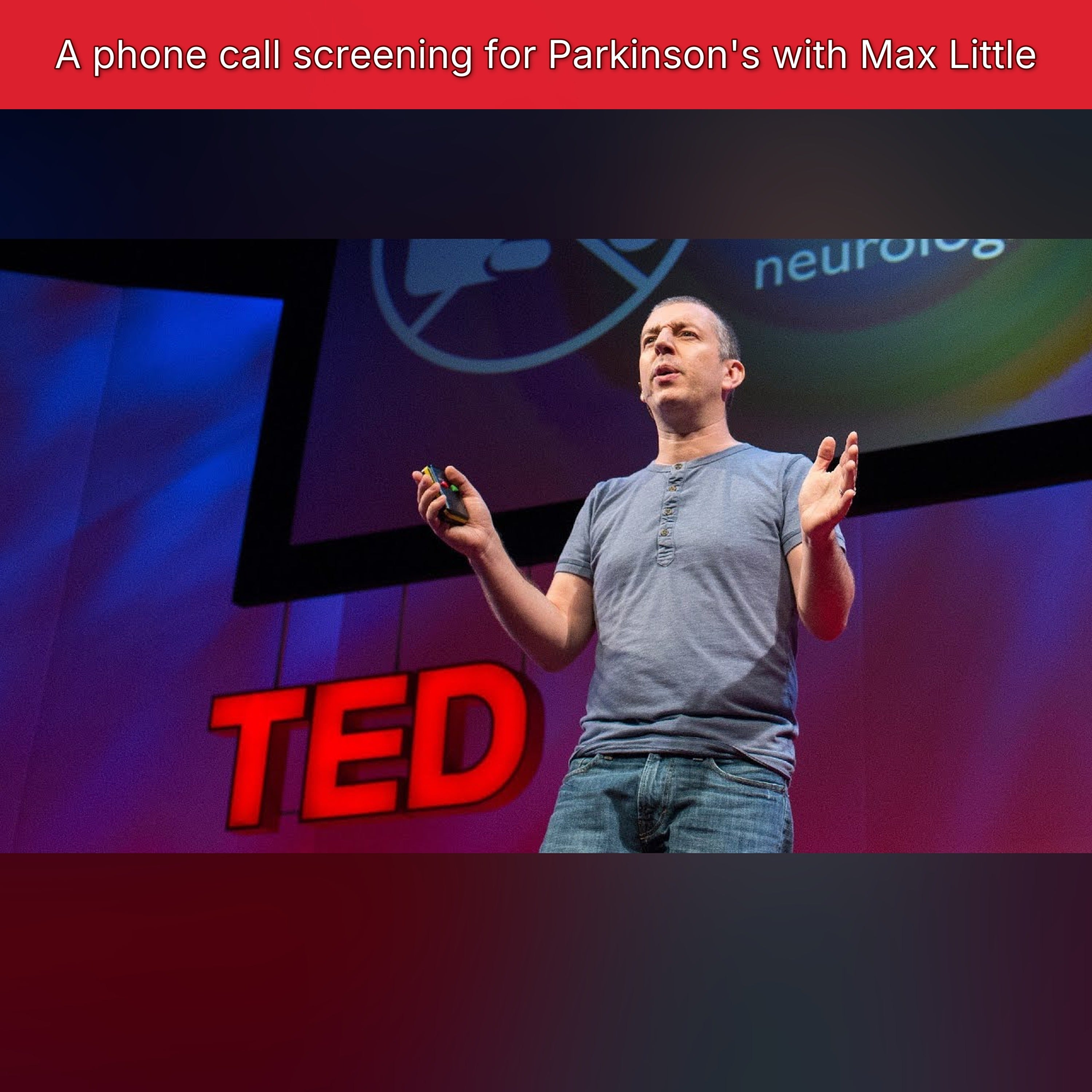
Parkinson's disease affects 6.3 million people worldwide, causing weakness and tremors, but there's no objective way to detect it early on. Yet. Applied mathematician and TED Fellow Max Little is testing a simple, cheap tool that in trials is able to detect Parkinson's with 99 percent accuracy -- in a 30-second phone call. Talk by Max Little.
Escaped Sapiens: David Shapiro on AI alignment, safety, and the future of humanity Episode release date: 26 May 2023 Core Ideas: Metamodernism: Narratives and emergence view of reality - Reduce suffering - Increase prosperity - Increase understanding mantra: Seek knowledge. DISCLAIMER: This is a community-driven show. ------------- Keywords: chatbots, ai development, ai podcast, ai consciousness, heuristic imperatives, singularity
Today we're taking a short break from exploring deep philosophical questions to reflect on some of the simpler challenges of philosophy. Like using our words. Music: "Batty McFaddin", "Lively Lumpsucker" Kevin MacLeod (incompetech.com) Licensed under Creative Commons: By Attribution 3.0 *** Produced in collaboration with PBS Digital Studios: http://youtube.com/pbsdigitalstudios Help PBSDS win a Webby Award by voting here: https://pv.webbyawards.com/2016/online-film-video/video-channels-and-networks/science-education Crash Course Philosophy is sponsored by Squarespace. -- Crash Course is on Patreon! Thanks to the following Patrons for their generous monthly contributions that help keep Crash Course free for everyone forever: Mark, Eric Kitchen, Jessica Wode, Jeffrey Thompson, Steve Marshall, Moritz Schmidt, Robert Kunz, Tim Curwick, Jason A Saslow, SR Foxley, Elliot Beter, Jacob Ash, Christian, Jan Schmid, Jirat, Christy Huddleston, Daniel Baulig, Chris Peters, Anna-Ester Volozh, Ian Du
View full lesson: http://ed.ted.com/lessons/how-do-nerves-work At any moment, there is an electrical storm coursing through your body. Discover how chemical reactions create an electric current that drives our responses to everything from hot pans to a mother's caress. Lesson by Elliot Krane, animation by TED-Ed.
How do you honor the memory of something… that you don’t fully remember? In this episode of Crash Course Latin American Literature, we’ll explore how writers who grew up in the shadow of dictatorships, civil war, and armed conflicts wrestle with the memory of violence, and the challenges of memory itself. Introduction: Being a Kid 00:00 Literatura de los Hijos 0:54 "Formas de volver a casa" 1:51 Félix Bruzzone 4:18 "Roza, tumba, quema" 5:57 "La sangre de la aurora" 8:21 Review & Credits 10:47 Sources: https://docs.google.com/document/d/1eE7g4-k6PD7C6wNBzeJIO8GCDHpoJl8ldDjKyq_2yYg/edit?tab=t.0 To learn more, check out these videos: Geopolitical history of Latin America: War and Nation Building in Latin America: Crash Course World History 225 https://youtu.be/v6xi8_7Fy6Y?si=paRg7m_G3tMAX4vW , Latin American Revolutions: Crash Course World History #31 https://youtu.be/ZBw35Ze3bg8?si=P4HnEqr1_rEP2YGv *** Support us for $5/month on Patreon to keep Crash Course free for everyone forever! htt
Write an entire blog post with GPT-3 fully automatically Episode release date: 24 Sep 2022 Core Ideas: Metamodernism: Narratives and emergence view of reality - Reduce suffering - Increase prosperity - Increase understanding mantra: Seek knowledge. DISCLAIMER: This is a community-driven show. ----- Keywords: singularity, ai education, superintelligence, david shapiro, prompt engineering, artificial intelligence, cognitive ai, ai development
When a family moved out of a house they'd inherited from deceased relatives, they brought along several beautiful pieces of antique furniture. They had no reason to believe anything unusual would come with them. But after settling into their new home, a visiting relative abruptly cut her stay short and refused to return. Nobody understood why. Months later, a child walking through the house encountered a frightening shadow figure. It was unlike anyone he'd ever seen, and the experience stayed with him. But when he finally told his mother what had happened, her reaction suggested there might be more to the story. Other family members had experienced unusual things, too, and they had a theory about who might be responsible. Had someone from the family's past followed them into their new home? Or was the mysterious figure something far more unsettling? #RealGhostStoriesOnline #TrueGhostStories #TheHatMan #ShadowPeople #ShadowFigures #HauntedAntiques #SpiritAttachments #FamilyGhostStories
The Plodcast heads to Dartmoor to meet storyteller Lisa Schneidau for a wander in enchanted Yarner Wood. Lisa's new book Tree Folk explores old tales of trees woven into Britain and Ireland's folklore and, along the way, she tells some of these magical stories to this week's Plodcast host Annabel Ross. Lisa's book Tree Folk: Tree Folk Tales, Songs and Lore from Britain and Ireland is published by The History Press. Get in touch on Facebook! Search "BBC Countryfile Magazine - Plodcast Community" or join the discussion here: https://www.facebook.com/groups/countryfilemagazineplodcast/?ref=share The BBC Countryfile Magazine Plodcast is the Publishers Podcast Awards Special Interest Podcast of the Year 2024 & 2025 and the PPA Podcast of the Year 2022. If you've enjoyed the plodcast, don't forget to leave likes and positive reviews. Contact the Plodcast team and send your sound recordings of the countryside to: [email protected]. If your letter, email or message is read out on the
In 1878, a quiet household in Amherst, Nova Scotia, became the center of one of the nineteenth century's most extraordinary alleged hauntings. It began with strange scratching sounds and unexplained knocking. But soon, furniture was reportedly moving on its own, objects were flying through rooms, and a threatening message appeared on a wall. At the center of it all was eighteen-year-old Esther Cox. As the disturbances grew increasingly violent, witnesses came forward, a physician became involved, and an investigator arrived determined to uncover the truth. But the most troubling detail was that the activity seemed to follow Esther wherever she went. Was she the victim of a terrifying poltergeist, the center of an elaborate deception, or someone experiencing something that couldn't be explained? And why, after months of increasingly dangerous incidents, did it all suddenly stop? #RealGhostStoriesOnline #TheGreatAmherstMystery #EstherCox #AmherstPoltergeist #TrueHauntings #HistoricalHaun
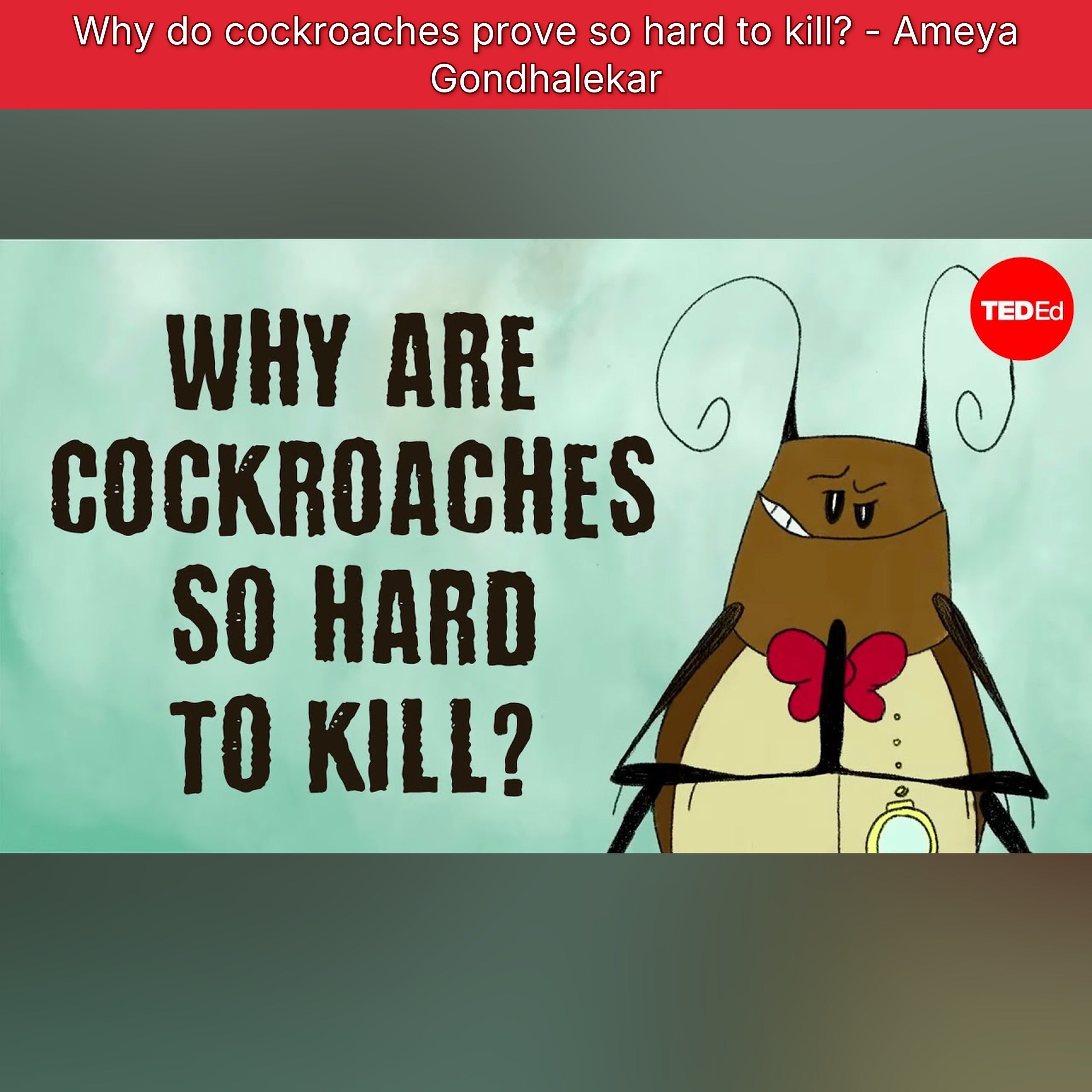
Dig into the genetic adaptations of cockroaches, and find out what makes it so hard to get rid of these tenacious creatures. -- In ancient Egypt, there was a spell that declared, “Be far from me, O vile cockroach.” Thousands of years later, we’re still trying to oust these insects. But from poison traps to brandished slippers, cockroaches seem to weather just about everything we throw at them. So, what makes cockroaches so hard to kill? Ameya Gondhalekar digs into the genetic wonders of this troublingly tenacious creature. Lesson by Ameya Gondhalekar, directed by Irida Zhonga. In order to visualize and dramatize the lives of these fascinating creatures, the artists have chosen to playfully anthropomorphize cockroaches. In real life cockroaches don’t dine like humans, go shopping for organic matter, and most unfortunately, don’t wear lederhosen (at least, to the best of our knowledge). Support Our Non-Profit Mission ---------------------------------------------- Support us on Patreon: h
ChatGPT was lobotomized for coding and GitHub Copilot is broken... So I made my own! Episode release date: 9 Jun 2023 Core Ideas: Metamodernism: Narratives and emergence view of reality - Reduce suffering - Increase prosperity - Increase understanding mantra: Seek knowledge. DISCLAIMER: This is a community-driven show. ---------- Keywords: ai consciousness, heuristic imperatives, ai philosophy, cognitive ai
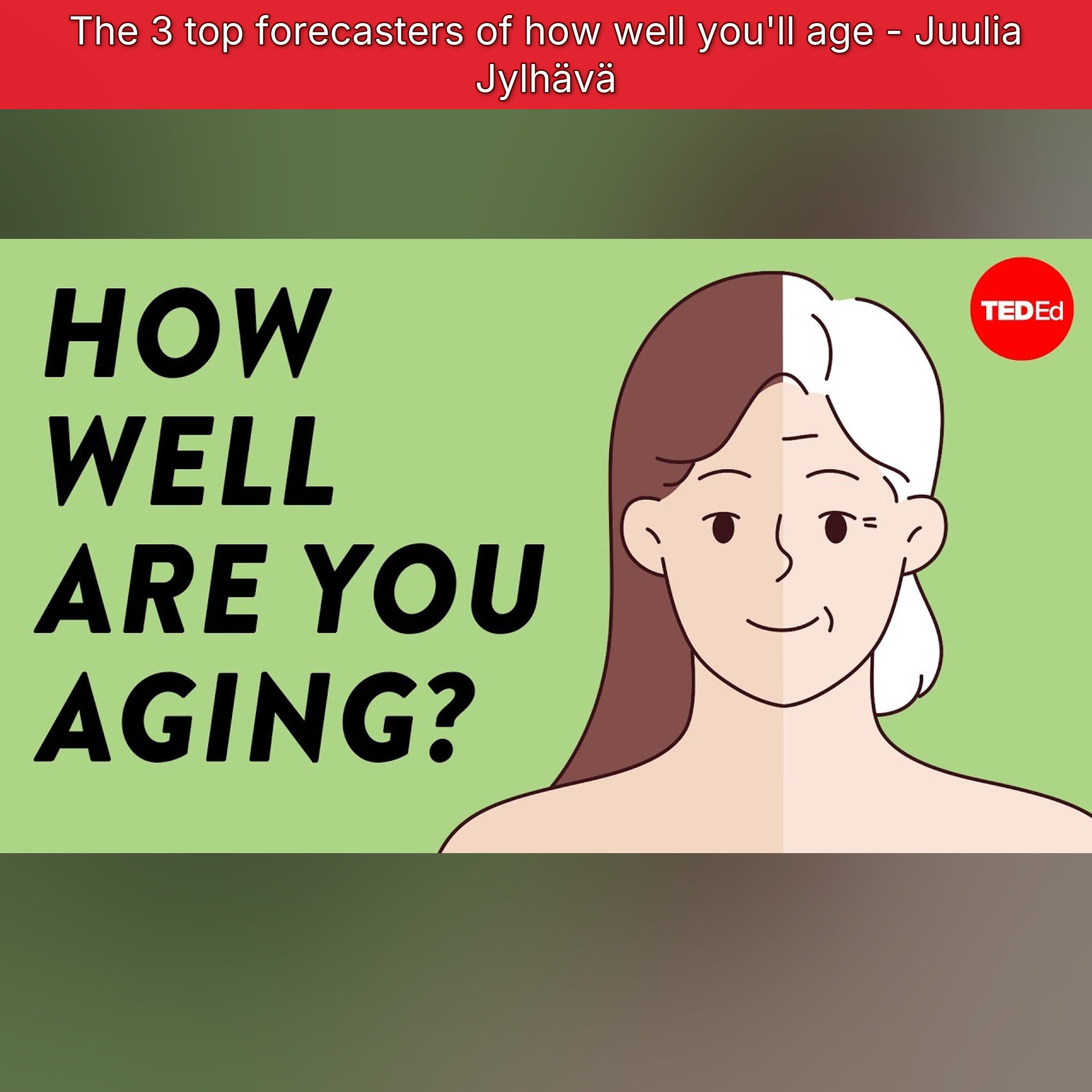
Explore how our bodies change and age over time, and the three common markers scientists use to measure aging. -- If you want to learn a tree’s age, you can count their rings. When it comes to humans, scientists have yet to find any visible traits that mark our age with the same specificity. But in the past few decades, they’ve discovered small, invisible markers hidden within the body that do change over time. Juulia Jylhävä shares what these markers can tell us about our health, history, and future. Lesson by Juulia Jylhävä, directed by Flaka Kokolli, Diellza Franca, Flammorum Animation Studio. Support Our Non-Profit Mission ---------------------------------------------- Support us on Patreon: http://bit.ly/TEDEdPatreon Check out our merch: http://bit.ly/TEDEDShop ---------------------------------------------- Connect With Us ---------------------------------------------- Sign up for our newsletter: http://bit.ly/TEDEdNewsletter Find us on Twitter: http://bit.ly/TEDEdTwitter Peep us
For more information go to https://wix.com/go/CRASHCOURSE Today, we’re moving on from artificial intelligence that needs training labels, called Supervised Learning, to Unsupervised Learning which is learning by finding patterns in the world. We’ll focus on the performing unsupervised clustering, specifically K-means clustering, and show you how we can extract meaningful patterns from data even when you don't know where those patterns are. Crash Course AI is produced in association with PBS Digital Studios https://www.youtube.com/watch?v=_NMLz042NHk&list=PL1mtdjDVOoOqKjV9WNrIXRphDssM4gu0J (https://www.youtube.com/watch?list=PL1mtdjDVOoOqKjV9WNrIXRphDssM4gu0J&v=_NMLz042NHk) Crash Course is on Patreon! Thanks to the following patrons for their generous monthly contributions that help keep Crash Course free for everyone forever: Eric Prestemon, Sam Buck, Mark Brouwer, Indika Siriwardena, Avi Yashchin, Timothy J Kwist, Brian Thomas Gossett, Haixiang N/A Liu, Jonathan Zbikowski, Siobhan Sab
This episode is brought to you by Alma. In this episode, Shane talks with Micah Salaberrios about The Art of Nonviolent Communication (NVC). Micah Salaberrios is the Author of 2 books on Nonviolent Communication, and the Host of The Art of NVC podcast. Hear how to help your clients practice Nonviolent Communication, how brief these conversations should be, how to help your clients avoid being judgmental, how to navigate the session if both partners are triggered, and how to define success with Nonviolent Communication. To learn more about Micah Salaberrios, From Conflict to Connection, and The Art of Nonviolent Communication, visit: ArtOfNVC.com (https://www.artofnvc.com/)
In which John Green teaches you, at long last, about the most exceptional bunch of empire-building nomads in the history of the world, the Mongols! How did the Mongols go from being a relatively small band of herders who occasionally engaged in some light hunting-gathering to being one of the most formidable fighting forces in the world? It turns out Genghis Khan was a pretty big part of it, but you probably already knew that. The more interesting questions might be, what kind of rulers were they, and what effect did their empire have on the world we know today? Find out, as John FINALLY teaches you about the Mongols. Chapters: Introduction: Wait for it...The Mongols! 00:00 What does it mean to be a nomad? 1:13 Genghis Khan 2:39 An Open Letter to Genghis Khan's Descendants 4:45 The Mongols After Genghis Khan 5:30 Five Reasons the Mongols Were Awesome 6:54 Five Reasons the Mongols Weren't Awesome 8:30 Credits 10:34 Crash Course is on Patreon! Want to find Crash Course elsewhere on the i
PSA on Social Anxiety - How I worked through mine (also I messed up) Episode release date: 30 Jan 2024 Core Ideas: Metamodernism: Narratives and emergence view of reality - Reduce suffering - Increase prosperity - Increase understanding mantra: Seek knowledge. DISCLAIMER: This is a community-driven show. ----- Keywords: future technology, ai consciousness, openai, ai agents, ai podcast, ai masterclass
Dig into the history of comic books and graphic novels in education, and explore their potential for helping kids learn. -- In the 1940s, comic books became a mass medium, with millions of copies selling every month. Teachers even began experimenting by bringing comics into their classrooms. So, can comic books and graphic novels really help you learn? Gene Luen Yang explores the history of comics in American education, and reveals some unexpected insights about their potential for helping kids learn. Directed by Vicente Numpaque, Hernando Bahamon, Globizco Studios. This is an animated adaptation of a TEDx Talk given by Gene Luen Yang. You can watch the talk in full here: https://www.youtube.com/watch?v=xjvTIP7pV20 Education is the ultimate idea worth spreading. That’s why we’ve launched InnovaTED — a program that helps educators develop their brightest ideas and share them with the world. Learn more: https://ed.ted.com/edtalks Support Our Non-Profit Mission ---------------------------
J&J will pay $2.2 billion upfront to acquire Ollin (https://www.biocentury.com/article/661621), a Texas-based NewCo with China-sourced assets, gaining a late-stage VEGF x Ang2 bispecific for wet AMD and diabetic macular edema. On the latest BioCentury This Week podcast, BioCentury’s analysts discuss the terms of the deal, what it says about NewCos as an exit path and Blackstone Life Sciences’ role in funding Phase III. The analysts also assess how a growing neoantigen vaccine pipeline (https://www.biocentury.com/article/661439) is testing the modality’s reach after Merck and Moderna’s Phase III win in melanoma, and the White House push (https://www.biocentury.com/article/661564) that has put Heidi Overton back in play ahead of the Nov. 18 Senate HELP Committee vote on her nomination as FDA commissioner. This episode of the BioCentury This Week podcast has been brought to you by Tigermed (https://www.tigermedgrp.com/). View full story: https://www.biocentury.com/article/661638 #NewCos #
What does climate change mean for our gardens, and how can we adapt? In this episode, Monty Don shares how changing weather patterns are already transforming Longmeadow and explains why flexibility is now one of a gardener's greatest strengths. From choosing resilient plants and coping with drought to rethinking how we grow and protect tender favourites, Monty offers practical advice for gardening in an unpredictable climate. He also reflects on the opportunities climate change presents, why change isn't something to fear, and how embracing nature's rhythms can help us create beautiful, resilient gardens for the future.
Explore the three major methods of machine learning, which allows computers to write their own rules to problem solve and process data. Uploaded 11-03-21 -- Today, artificial intelligence helps doctors diagnose patients, pilots fly commercial aircraft, and city planners predict traffic. These AIs are often self-taught, working off a simple set of instructions to create a unique array of rules and strategies. So how exactly does a machine learn? Briana Brownell digs into the three basic ways machines investigate, negotiate, and communicate. Lesson by Briana Brownell, directed by Champ Panupong Techawongthawon. Support Our Non-Profit Mission ---------------------------------------------- Support us on Patreon: http://bit.ly/TEDEdPatreon Check out our merch: http://bit.ly/TEDEDShop ---------------------------------------------- Connect With Us ---------------------------------------------- Sign up for our newsletter: http://bit.ly/TEDEdNewsletter Find us on Twitter: http://bit.ly/TEDEdTwi
Could a robot dedicated to a good cause end up destroying the world? Well, maybe. In this episode, we explore how powerful AI could end up causing us harm, regardless of what it’s programmed for. Between misuse by humans, alignment problems, and instrumental goals, even AI built with good intentions could end up breaking bad…unless we do something about it. About This Series: AI is changing FAST so rather than doing a full Crash Course series of 12+ episodes, we’ve prepared a mini-series of just the basics. Crash Course will never tell you what to think and we’re not the type of organization that responds to breaking news in real time. Instead, we’re here to offer a zoomed-out foundation upon which to base your own opinions as you continue to learn from other outlets about the world that’s changing around us. Crash Course: Futures of AI will cover: -What even is AI? What’s the history of this thing and how quickly has it evolved to what exists today? -How could AI transform society? Wi
In July 2019, Colin Dowler, a 45-year-old father from Campbell River, British Columbia, met a grizzly while riding a mountain bike through the backcountry. This episode breaks down the attack, the two-inch pocketknife his father had given him two weeks earlier, the seven-kilometre ride to a logging camp, and the five camp workers who stabilized him before an air ambulance arrived. Calm, measured narration, great for background listening or falling asleep to.
We need to have a talk about your future. You're going to die. We all are. And it's probably going to be expensive. This week on CC Econ, Adriene is talking about the economics of death. Some of the expense is tied to the cost of end-of-life health care, but funerals are a big business, too. Jacob lives on here: http://www.youtube.com/acdcleadership Crash Course is on Patreon! Thanks to the following Patrons for their generous monthly contributions that help keep Crash Course free for everyone forever: Mark, Eric Kitchen, Jessica Wode, Jeffrey Thompson, Steve Marshall, Moritz Schmidt, Robert Kunz, Tim Curwick, Jason A Saslow, SR Foxley, Elliot Beter, Jacob Ash, Christian, Jan Schmid, Jirat, Christy Huddleston, Daniel Baulig, Chris Peters, Anna-Ester Volozh, Ian Dundore, Caleb Weeks -- Want to find Crash Course elsewhere on the internet? Facebook - http://www.facebook.com/YouTubeCrashCourse Twitter - http://www.twitter.com/TheCrashCourse Tumblr - http://thecrashcourse.tumblr.com (http:/