Wait For It...The Mongols!: Crash Course World History #17
18 min
Listen through the publisher, then discuss the episode here or arrange an in-person Roundtable. Your city determines where to meet.
Roundtables are designed for groups of four, with a shared subject and room for everyone to speak. Come for discussion, with no dating expectation.
In which John Green teaches you, at long last, about the most exceptional bunch of empire-building nomads in the history of the world, the Mongols! How did the Mongols go from being a relatively small band of herders who occasionally engaged in some light hunting-gathering to being one of the most formidable fighting forces in the world? It turns out Genghis Khan was a pretty big part of it, but you probably already knew that. The more interesting questions might be, what kind of rulers were they, and what effect did their empire have on the world we know today? Find out, as John FINALLY teaches you about the Mongols. Chapters: Introduction: Wait for it...The Mongols! 00:00 What does it mean to be a nomad? 1:13 Genghis Khan 2:39 An Open Letter to Genghis Khan's Descendants 4:45 The Mongols After Genghis Khan 5:30 Five Reasons the Mongols Were Awesome 6:54 Five Reasons the Mongols Weren't Awesome 8:30 Credits 10:34 Crash Course is on Patreon! Want to find Crash Course elsewhere on the internet? Facebook - http://www.facebook.com/YouTubeCrashCourse Twitter - http://www.twitter.com/TheCrashCourse Instagram - https://www.instagram.com/thecrashcourse/ CC Kids: http://www.youtube.com/crashcoursekids
Episode information is provided by the publisher. Listening takes place on the publisher’s service.
Best books for Prompt Engineering with GPT-3 and LLMs - Crash Course in AGIEpisode release date: 27 Dec 2022Spreading awareness about the works of some of the leading educators in the AI revolution. Core Ideas: Metamodernism: Narratives and emergence view of reality - Reduce suffering - Increase prosperity - Increase understanding mantra: Seek knowledge. ELABORATE: Add depth and detail to understanding, weaving comprehensive and nuanced explanations.DISCLAIMER: This is a community-driven show. ----------------Best books for Prompt Engineering with GPT-3 and LLMs - Crash Course in AGIEpisode release date: 27 Dec 2022Spreading awareness about the works of some of the leading educators in the AI revolution. Core Ideas: Metamodernism: Narratives and emergence view of reality - Reduce suffering - Increase prosperity - Increase understanding mantra: Seek knowledge. ELABORATE: Add depth and detail to understanding, weaving comprehensive and nuanced explanations.DISCLAIMER: This is a community
Join NCI University today to master human behavior and influence: Uploaded 20-10-22 What if we were made to believe something so strange that it would change the fabric of society? These two lies are the two most powerful forces that marketing and medicine....and even politics seem to sell us. 1️⃣ LIE ONE: Focus on symptoms and not causes. 2️⃣ LIE TWO: Pleasure is the same as happiness. In this video, I'll explore with you, the causes of some of these deceptions, and I hope you'll come to see that our culture is almost rooted in these two deceptions. From marketing and sales to medicine and politics, these LIES seem to be interwoven in the fabric of our culture as a whole. Knowing them and being aware of them will make you start seeing these EVERYWHERE you look. DOWNLOAD THE APP: https://team.chasehughes.com/share/Sxaxa8CW58Q_4sKk?utm_source=manual (https://team.chasehughes.com/share/Sxaxa8CW58Q_4sKk) THE FATE MODEL: https://www.youtube.com/watch?v=PbEJ_y7tscY&feature=share&utm_source=
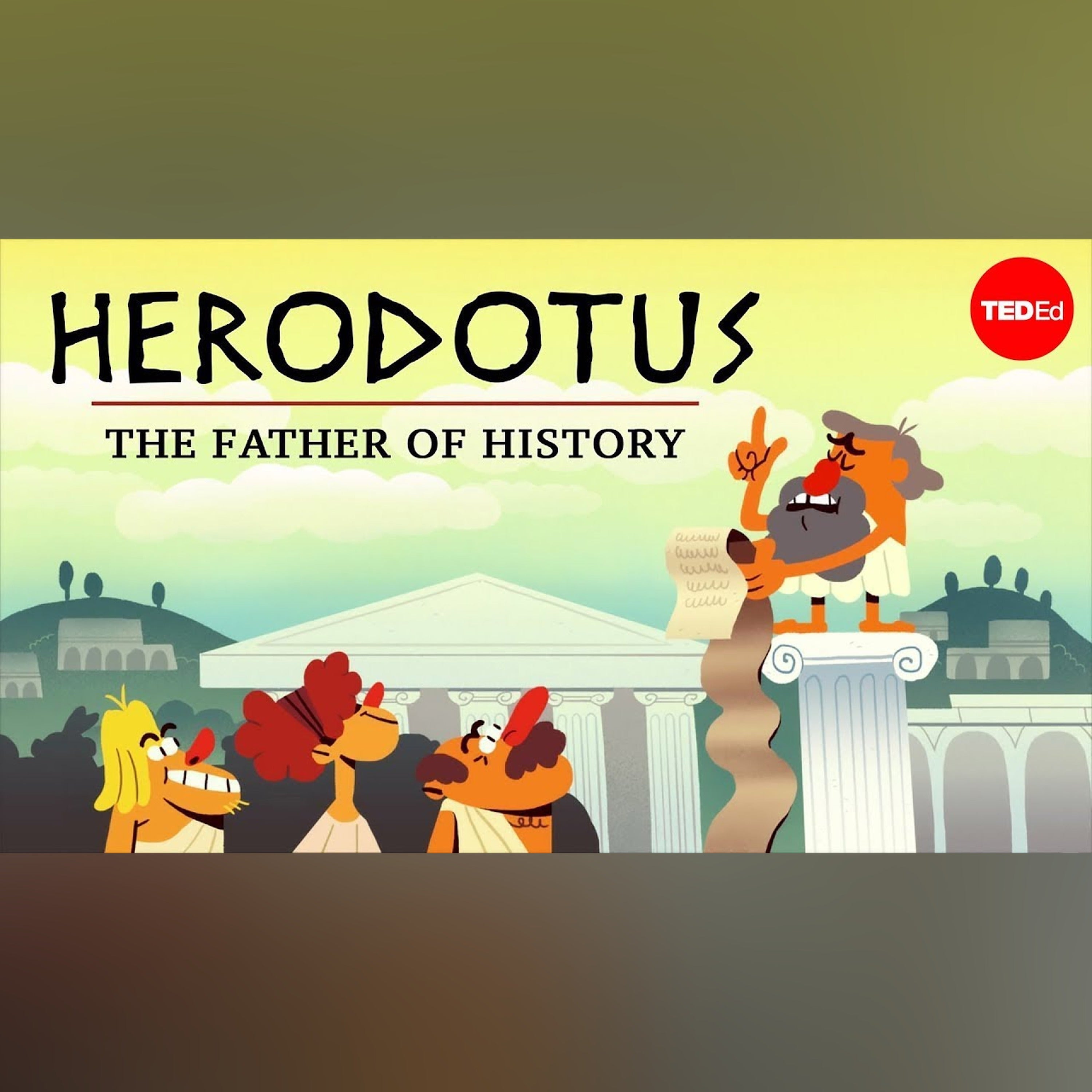
Uploaded 11-12-17 View full lesson: https://ed.ted.com/lessons/why-is-herodotus-called-the-father-of-history-mark-robinson 2,500 years ago, the writing of history as we know it didn’t exist. The past was recorded as a list of events, with little explanation for their causes beyond accepting things as the will of the gods. Herodotus wanted a deeper understanding, so he took a new approach: looking at events from both sides to understand the reasons for them. Mark Robinson explains how “history” came into being. Lesson by Mark Robinson, directed by Remus and Kiki Thank you so much to our patrons for your support! Without you this video would not be possible! Daniel Day, Nick Johnson, Bruno Pinho, Javier Aldavaz, Rodrigo Carballo, Marc Veale, Boytsov Ilya, Bozhidar Karaargirov, Darren Toh, ilya bondarik, maxi kobi einy, Runarm , Misaki Sato, Peter Koebel, Levi Cook, Alex Kongkeo, Craig Sheldon, Andrew Bosco, Catherine Sverko, Nik Maier, Robert Sukosd, Mark Morris, Tamás Drávai, Adi V, Pet
PBS Member Stations rely on viewers like you. To support your local station, go to: http://to.pbs.org/DonateSPACE ↓ More info below ↓ Uploaded 11-11-20 Sign Up on Patreon to get access to the Space Time Discord! Physicists have a long history of sticking our noses where they don’t belong - and one of our favorite places to step beyond our expertise is the question of consciousness and free will. Sometimes our musings are insightful, sometimes incoherent, and usually at least somewhat naive. Which a fair description of this show, so of course Space Time needs to weigh in physics and free will.. Check out the Space Time Merch Store Hosted by Matt O'Dowd Written by Matt O'Dowd and Bahar Gholipour Graphics by Leonardo Scholzer, Yago Ballarini, and Pedro Osinski Directed by: Andrew Kornhaber Assistant Producer: Setare Gholipour Executive Producers: Eric Brown and Andrew Kornhaber End Credits Music by J.R.S. Schattenberg: https://www.youtube.com/channel/UCRl6-nb4iOnsij-vnpAjp0Q Special Thank
Think you can’t get the same Tony Robbins experience when you attend a virtual event? Think again. Uploaded 29-09-20 Never one to let an outside situation affect his movement forward, Tony Robbins took the same energy he puts into his live, in-person events and packaged it for the screen. When he hosted Unleash the Power Within VIRTUAL Australia in 2020, it was jam-packed with the same nonstop energy, strong transformations and interactive activities that his events are famous for. Over 11,000 people in 68 countries in the South Pacific, including Australia, joined together to attend a life-changing virtual event. In the midst of a global pandemic full of uncertainty and fear, thousands of people took a chance on themselves and started the steps necessary to change their lives and outlook for the better. Surrounded by their families, partners, kids and pets, thousands of people connected virtually to learn that decisions change our lives more than situations. Over the course of four po
You went back. Maybe not to the same person, but to the idea of them. You rehearsed the conversation again in your mind. You thought of better words, sharper examples, a clearer way to say the thing you'd already said. You kept trying to win an argument that was already over, with a person who had already walked away. Uploaded 13-10-26 That hunger to be understood is one of the most natural things in the world. And it is also one of the quietest thieves of a person's peace that I know of. You explain yourself to one person, feel relief for a day, and then someone else shakes their head, and you're back building the case for your own life all over again. Here is the truth: it is not another person's job to understand you. It is your job to understand yourself. And once you've done that interior work, the opinions of people who don't understand you go from feeling like a verdict to feeling like weather. This seminar unpacks the single mechanic behind why you keep over-explaining your lif
The majority of the universe is made up of a currently mysterious entity that pervades space: dark energy. We don’t know exactly what it is, but we do know that dark energy accelerates the expansion of space. We think this means the Universe will expand forever, even as our view of it shrinks while space expands faster all the time. Check out the Crash Course Astronomy solar system poster here: http://store.dftba.com/products/crashcourse-astronomy-poster If you want to learn more about the creation and death of the universe, watch Crash Course Big History here: https://youtube.com/playlist?list=PL8dPuuaLjXtMczXZUmjb3mZSU1Roxnrey -- Chapters: Introduction: The Expanding Universe 00:00 The Expansion of Space is Accelerating 2:17 What is Dark Energy? 4:19 Will the Universe Expand Forever? The Geometry of the Universe 5:20 The Cosmic Horizon of the Observable Universe 6:50 Review 10:20 -- GEOMETRY OF THE UNIVERSE RESOURCES Geometry: Expanding faster than light: General expansion: -- PBS Di
Have you ever wondered where cured meats like salami or pepperoni get their bright red color? Of course its from organic chemistry! A chemical called nitric acid gives them that bright color, while also increasing their shelf. It's also involved in some other interesting reactions. In this episode of Crash Course Organic Chemistry we'll see how nitrous acid reacts with primary amines to form diazonium salts, we'll learn about alkyldiazonium salts and aryldiazonium salts, and see what conditions are necessary for nucleophilic aromatic substitutions. Series Sources: Brown, W. H., Iverson, B. L., Ansyln, E. V., Foote, C., Organic Chemistry; 8th ed.; Cengage Learning, Boston, 2018. Bruice, P. Y., Organic Chemistry, 7th ed.; Pearson Education, Inc., United States, 2014. Clayden, J., Greeves, N., Warren., S., Organic Chemistry, 2nd ed.; Oxford University Press, New York, 2012. Jones Jr., M.; Fleming, S. A., Organic Chemistry, 5th ed.; W. W. Norton & Company, New York, 2014. Klein., D., Organ
Like a trendy dance, a fighting combo, or a secret handshake, organic reactions can be broken down into simpler steps. In this episode of Crash Course Organic Chemistry, we’ll specifically be looking at alkene addition reactions, and with each new reaction ask ourselves three questions to help us puzzle through the mechanism and understand what’s going on. Episode Sources: Le Couteur, P, Burreson, J. Napoleon’s Buttons: 17 molecules that changed history., Penguin, New York, 2004, Chapter 1. Whipps, H., “How the Spice Trade Changed the World,” https://www.livescience.com/7495-spice-trade-changed-world.html Last accessed, 3/28/2020. Henriques, Martha, “How spices changed the ancient world,” http://www.bbc.com/future/bespoke/made-on-earth/the-flavours-that-shaped-the-world/ Last accessed, 3/28/2020. Hashimoto, K., Yaoi, T., Koshiba, H., Yoshida, T., Maoka, T., Fujiwara, Y., Yaamoto, Y, Mori, K., “Photochemical Isomerization of Piperine, a Pungent Constituent of Pepper”, Food Sci. Technol.
Police should involve affected communities in rebuilding trust after serious failures.
Share your view, then see how readers voted. No sign-in required. This poll is shared across stories.
Do you agree or disagree?
Common Quandary
A Common Quandary to discuss
Another conversation to explore, separate from this news story.
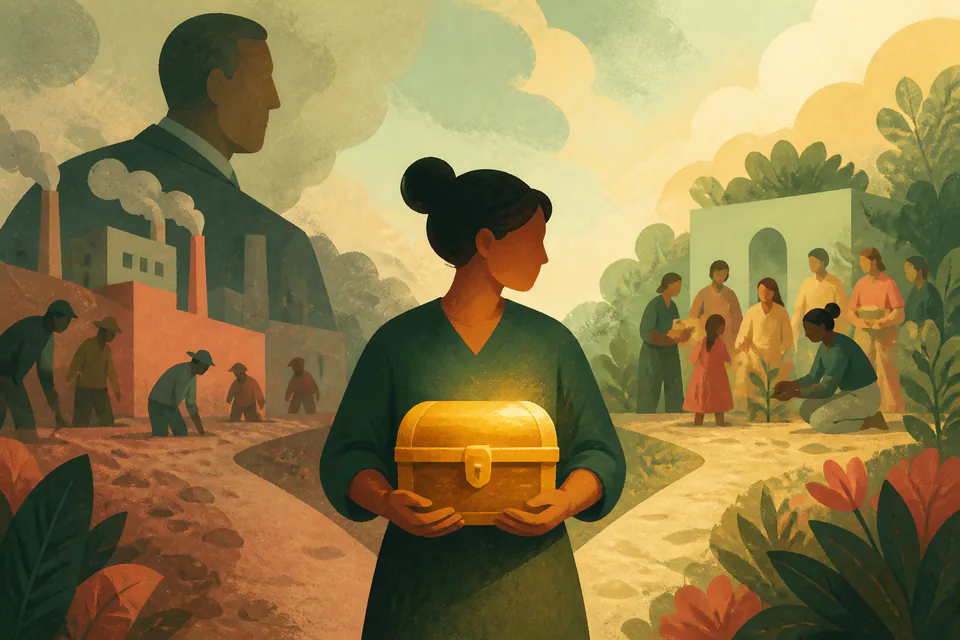
You inherit a fortune made in ways you despise. Can you keep it?
You inherit a substantial sum from a relative who accumulated it through practices you consider exploitative. Keeping it would improve your family's security; donating it could support people harmed by similar practices.
Can ownership be morally clean when its history is not?