The Huge Conversation with Mark Zuckerberg... I interviewed Meta CEO Mark Zuckerberg before Connect. There are not many people with more power over our future. Right now, Mark Zuckerberg and his team are imagining the future billions of people might live in, soon, and building towards it. So, in this conversation, my goal is to figure out what that future looks like. To paint a picture of the future Mark Zuckerberg is trying to build, so that you can decide for yourself what you think of it. We talked about the Meta's new Orion prototype AR glasses, creating holograms and the Star Trek universal translator, generative AI changing social media, big trends in human connection, open sourced AI, Ray Ban Meta glasses and Quest 3S, the biggest genuine question on his mind right now, and more... Welcome to the first episode of our new series, Huge Conversations… Special thanks to Derek Thompson, for his generous guidance on my first long-form interview! Chapters: 0:00 What is Mark Zuckerberg
Drummers Tony Succar, Matt Flynn, Matt Tong, and Matt Johnson share what it takes to improve your skills and find your rhythm. -- "Think Like A Musician" connects you with working musicians who want to help the music-curious and music-passionate hone and share the gift of music with the world. Part interview, part animated course, our first season "Think Like A Performer" features artists sharing their insight on the ins and outs of fine-tuning your instrument and crafting a great performance. Each episode features free supplemental learning materials developed by Education Through Music (https://etmonline.org) (https://etmonline.org)/) — a nonprofit with over 30 years of experience developing classroom-adaptable curriculum for music educators. Directed by Kozmonot Animation Studio. A special thanks to the musicians who provided their insights and expertise for this video. You can check out their pages here: Support Our Non-Profit Mission ----------------------------------------------
The Future of UBI: How AI, Quantum Computing, and Energy Abundance Could Pay for It All Episode release date: 28 Jun 2023 Core Ideas: Metamodernism: Narratives and emergence view of reality - Reduce suffering - Increase prosperity - Increase understanding mantra: Seek knowledge. DISCLAIMER: This is a community-driven show. --------- Keywords: ai education, gpt, ai consciousness, ai development, prompt engineering, ai agents, machine learning, deep learning
Dive into four different voting systems: plurality, instant runoff, tactical, and the Condorcet method, and find out which is fairest. Uploaded 11-06-20 -- Imagine we want to build a new space port at one of four recently settled Martian bases, and are holding a vote to choose its location. Of the 100 colonists on Mars, 42 live on West Base, 26 on North Base, 15 on South Base, and 17 on East Base. Assuming that everyone wants the port to be closest to their home base, what is the fairest way to conduct the vote? Alex Gendler digs into voting systems. Lesson by Alex Gendler, directed by Biljana Labovic. Sign up for our newsletter: http://bit.ly/TEDEdNewsletter Support us on Patreon: http://bit.ly/TEDEdPatreon Find us on Twitter: http://bit.ly/TEDEdTwitter Peep us on Instagram: http://bit.ly/TEDEdInstagram View full lesson: https://ed.ted.com/lessons/which-voting-system-is-the-best-alex-gendler Thank you so much to our patrons for your support! Without you this video would not be possibl
Annabelle may be the most famous haunted doll in the world. But how much of her story do we actually know? According to the familiar account, a Raggedy Ann doll given to a young nursing student began moving around her apartment, appearing in unexpected places, and leaving behind mysterious handwritten messages. Eventually, reports of blood appearing on the doll led to the involvement of paranormal investigators Ed and Lorraine Warren. Their conclusion helped turn an ordinary-looking doll into one of the most recognizable objects in paranormal history. But there are questions that rarely get as much attention as the haunting itself. What evidence exists for the original encounters? Can the people involved be independently identified? And how did a story told by the Warrens become accepted by so many as established history? We explore Annabelle's origins, the accounts that made her infamous, the Warrens' influence on her reputation, and the unsettling stories that continue to surround th
During a two-week military training exercise at Fort Hood, Texas, a group of soldiers found a secluded area in the woods where they could set up camp for the night. Their only responsibility was to maintain regular radio contact with the rest of their battalion. In the early morning hours, two soldiers were keeping watch when they noticed a lone figure walking across a nearby field. Believing it might be their commanding officer checking up on them, they decided to investigate. But as they approached the mysterious figure, something happened that neither soldier could explain. They searched the surrounding area, unable to understand what they'd just witnessed. It wasn't until the following morning, as they were leaving, that they noticed something about their campsite that changed how they remembered the entire encounter. Who had they really seen walking through those woods? #RealGhostStoriesOnline #TrueGhostStories #FortHoodGhost #MilitaryGhostStories #HauntedMilitaryBases #GhostlyApp
In which John Green looks at Europe's attempts to recover from the devastation of World War I and forge a lasting peace. The peace did not last. Today we're talking about the economic cultural recovery of the 1920s, and the economic depression of the 1930s, and the fragile state of Europe after the Great War. We'll also look at the rise of fascism via the auspices of populist leaders like Adolf Hitler and Benito Mussolini, and we'll set the stage for the war to come. Sources -Smith, Bonnie G. Europe in the Contemporary World since 1900, 2nd ed. London: Bloomsbury, 2020. Crash Course is on Patreon! Thanks to the following patrons for their generous monthly contributions that help keep Crash Course free for everyone forever: Eric Prestemon, Sam Buck, Mark Brouwer, William McGraw, Siobhan Sabino, Jason Saslow, Jennifer Killen, David Noe, Jonathan Zbikowski, Shawn Arnold, Trevin Beattie, Matthew Curls, Rachel Bright, Khaled El Shalakany, Efrain R. Pedroza, Ian Dundore, Kenneth F Penttinen,
View full lesson: http://ed.ted.com/lessons/describing-the-invisible-properties-of-gas-brian-bennett How do you explain the properties of something we can't see? See how scientists use scientific principles, such as gravity, to observe gases. This lesson explores gases and how we have come to know what we know about them. Lesson by Brian Bennett, animation by Cognitive Media.
Alaska and Hawai'i didn’t become U.S. states until 1959—so what did that mean for the Native people who were living there first? In this episode of Crash Course Native American History, we’ll learn how Alaska Natives’ and Native Hawaiians’ history with the U.S. has taken its own distinct course. Introduction: Something Weird 00:00 Alaska Natives 0:51 Alaskan Colonization 1:49 Alaskan Statehood 3:48 The Kanaka Maoli 6:02 Hawaiian Colonization 7:06 Hawaiian Statehood 8:37 Review & Credits 10:30 Sources: Want to know more about how this series was made? Learn more here: https://docs.google.com/document/d/17yp3u28s40TdjyrJniIf4U9YA8wPtvQ1g1B-HSHQ2Q4/edit?tab=t.0#heading=h.6vtzps565m2 (https://docs.google.com/document/d/17yp3u28s40TdjyrJniIf4U9YA8wPtvQ1g1B-HSHQ2Q4/edit?tab=t.0) *** Support us for $5/month on Patreon to keep Crash Course free for everyone forever! https://www.patreon.com/crashcourse Or support us directly: https://complexly.com/support Join our Crash Course email list to get
Fixing "goldfish memory" with GPT-3 and external sources of information in a chatbot - part 1Episode release date: 29 Jun 2022Spreading awareness about the works of some of the leading educators in the AI revolution. Core Ideas: Metamodernism: Narratives and emergence view of reality - Reduce suffering - Increase prosperity - Increase understanding mantra: Seek knowledge. ELABORATE: Add depth and detail to understanding, weaving comprehensive and nuanced explanations.DISCLAIMER: This is a community-driven show. ---------- Keywords: ai innovation, david shapiro, machine autonomy
So far in this series, we've covered a lot of war, disease, climate disaster, and some more war. Well, prepare yourself for something a little more positive. This week, we're talking about the Enlightenment. In this video, you'll learn about the ideas of Voltaire, Rousseau, Montesquieu, Kant, Smith, Hume, and a bunch of other people whose ideas have been so impactful, they still influence the way we think about the world today. Sources Hunt, Lynn et al. Making of the West: Peoples and Cultures. Boston: Bedford St. Martin’s, 2019. Smith, Bonnie G. et al. World in the Making: A History. Vol. 2. New York: Oxford University Press, 2019. Crash Course is on Patreon! Thanks to the following patrons for their generous monthly contributions that help keep Crash Course free for everyone forever: Eric Prestemon, Sam Buck, Mark Brouwer, Indika Siriwardena, Avi Yashchin, Timothy J Kwist, Brian Thomas Gossett, Haixiang N/A Liu, Jonathan Zbikowski, Siobhan Sabino, Zach Van Stanley, Jennifer Killen, N
Active galaxies pour out lots of energy, due to their central supermassive black holes gobbling down matter. Galaxies tend not to be loners but instead exist in smaller groups and larger clusters. Our Milky Way is part of the Local Group, and will one day collide with the Andromeda galaxy. Clusters of galaxies also clump together to form superclusters, the largest structures in the Universe. In total, there are hundreds of billions of galaxies in the Universe. Check out the Crash Course Astronomy solar system poster here: http://store.dftba.com/products/crashcourse-astronomy-poster -- Chapters: Introduction: Active Galaxies 00:00 Active Galaxy Structure: Central Black Hole 2:26 Active Galaxy Structure: Accretion Disks 3:42 The Milky Way's Supermassive Black Hole 5:38 The Local Group 6:45 Miklomeda: Andromeda and the Milky Way Collide! 7:29 Galaxy Clusters 9:47 Superclusters 11:19 How Many Galaxies Are There? 12:32 Review 14:25 -- PBS Digital Studios: http://youtube.com/pbsdigitalstudio
Puzzle through this classic ethical dilemma and decide: should parents be able to choose genetic traits for their children? -- Andre and Leslie are a deaf couple who have decided to have a child, and they’re considering using a process to ensure deafness in their child. As deaf parents, they feel they could provide better guidance to a child that would share their lived experience and grow up immersed in deaf culture. But is this genetic intervention ethical? Michael Vazquez and Raye Ploeger explore this classic dilemma. Lesson by Michael Vazquez and Raye Ploeger, directed by Luisa Holanda. This video was produced in collaboration with the Parr Center for Ethics, housed within the renowned Philosophy Department at the University of North Carolina at Chapel Hill. The Parr Center is committed to integrating abstract work in ethical theory with the informed discussion of practical ethical issues, and prides itself on the development of innovative and inclusive approaches to moral and civi
Hank introduces us to ourselves by taking us on a journey through the fascinatingly diverse phyla known as chordata. And the next time someone asks you who you are, you can give them the facts: you're a mammalian amniotic tetrapodal sarcopterygian osteichthyen gnathostomal vertebrate cranial chordate. Table of Contents: 1) Chordate Synapomorphies 1:04 2) Cephalachordata 1:20 3) Urochordata 3:16 4) Vertebrata 3:49 a) Myxini 4:30 b) Petromyzontida 4:51 c) Chondrichthyes 5:32 d) Osteichthyes 6:05 5) Biolography 7:29 6) Amphibia 9:02 7) Reptilia 9:47 8) Mammalia 10:57 References: This video contains the following sounds from Freesound.org: "Moog_woodenBlocks.aiff" by Feenixx Crash Course is on Patreon! Want to find Crash Course elsewhere on the internet? Facebook - http://www.facebook.com/YouTubeCrashCourse Twitter - http://www.twitter.com/TheCrashCourse Instagram - https://www.instagram.com/thecrashcourse/ CC Kids: http://www.youtube.com/crashcoursekids
Singularity Crisis: The Death of Human Meaning (Because of AI) Episode release date: 19 Jul 2023 Core Ideas: Metamodernism: Narratives and emergence view of reality - Reduce suffering - Increase prosperity - Increase understanding mantra: Seek knowledge. DISCLAIMER: This is a community-driven show. ------------ Keywords: ai research, ai podcast, gpt, agi
Paper: Ketogenic diet induces p53-dependent cellular senescence in multiple organs, https://www.science.org/doi/10.1126/sciadv.ado1463 Chapters 0:00 – Media Mayhem about New Study 1:02 – Background: Conflicting Data 2:00 – The Diets (Crisco and Cocoa Butter) 3:07 – Biomarker of Aging Increased in Organs of Keto Mice 3:42 – Ketogenic Diets extend Lifespan and Health-span in Mice 4:36 – Oddities in the Data 5:16 – Are my Cytokines Elevated? 7:39 – Summary Clinical Trials ID: NCT05071287 Paper: A Ketogenic Diet Extends Longevity and Healthspan in Adult Mice, Like My “Stay Curious” Shirt? https://metabolismshirts.myspreadshop.com (https://metabolismshirts.myspreadshop.com/)
Online voting is not like online banking… Get your Henson razor (with 100 extra blades): http://hensonshaving.com/cleo This year, more people will likely vote than ever before in history. It’s being called the “The Ultimate Election Year”, when countries with half the world’s population can vote for their leaders. This big test of democracy requires millions of polling stations and billions of ballots. But voting’s not always easy! People might deal with long lines or need to travel far distances. In the US, we vote on a Tuesday, so people often need to take time off work… I’m really excited to vote! And I’ve also been wondering… wouldn’t it be easier if I could just… hit a button on my phone? Why can’t I vote online? And what would happen if I could? Over the past two months, I called up a bunch of voting and security experts to try to answer that question. And the answer I found is more controversial, complicated, and high stakes than I could have ever imagined… Chapters: 0:00 Why ca
For foreigners, learning to speak Chinese is a hard task. But learning to read the beautiful, often complex characters of the Chinese written language may be less difficult. ShaoLan walks through a simple lesson in recognizing the ideas behind the characters and their meaning -- building from a few simple forms to more complex concepts. Call it Chineasy. Uploaded 03-12-13 Talk by ShaoLan.
In which John Green teaches you about the poetry of Langston Hughes. Langston Hughes was a poet and playwright in the first half of the 20th century, and he was involved in the Harlem Renaissance, which was a cultural movement among African Americans of the time that produced all kinds of great works in literature, poetry, painting, sculpture, music, and other areas. The Harlem Renaissance mainly happened in Harlem, the traditionally black neighborhood in upper Manhattan in New York City. Langston Hughes was primarily known as a poet, but he was involved deeply in the movement itself as well. John will teach you a bit about Hughes's background, and he'll examine a few of his best-known poems. Learn more about Langston Hughes and the Harlem Renaissance in Episode #26 of Crash Course Black American History: https://www.youtube.com/watch?v=vKaegbtcE00 Consider supporting local bookstores by purchasing your books through our Bookshop affiliate link https://bookshop.org/shop/complexly or at
What can economists learn from linguists? Behavioral economist Keith Chen introduces a fascinating pattern from his research: that languages without a concept for the future -- "It rain tomorrow," instead of "It will rain tomorrow" -- correlate strongly with high savings rates. Uploaded 03-12-13 Talk by Keith Chen.
Women have always played important roles in Native societies. In this episode of Crash Course Native American History, Lily Gladstone helps us unpack the ways Native women have shown up, as war heroes and peacemakers, and as matriarchs and activists. Introduction: Divine Women 00:00 Matriarchal Societies 0:37 Native Women at War 2:01 Jikonsaseh 3:05 Ideas about Gender 4:48 Effects of Colonization 5:53 Violence Against Women Today 8:08 Native Activism 9:24 Review & Credits 12:42 Special thanks to "100 Years: One Woman's Fight for Justice" for use of their footage of Elouise Cobell / https://www.videoproject.org/100-Years.html Sources: Want to know more about how this series was made? Learn more here: https://docs.google.com/document/d/17yp3u28s40TdjyrJniIf4U9YA8wPtvQ1g1B-HSHQ2Q4/edit?tab=t.0#heading=h.6vtzps565m2 (https://docs.google.com/document/d/17yp3u28s40TdjyrJniIf4U9YA8wPtvQ1g1B-HSHQ2Q4/edit?tab=t.0) *** Support us for $5/month on Patreon to keep Crash Course free for everyone for
Life and Education After Work Core Ideas: Metamodernism: Narratives and emergence view of reality - Reduce suffering - Increase prosperity - Increase understanding mantra: Seek knowledge. DISCLAIMER: This is a community-driven show. ----------- Keywords: ai research, ai masterclass, ai ethics, ai podcast, ai education, superintelligence, artificial general intelligence, agi
In this episode of The We Society, Will Hutton is joined by Professor Nasar Meer and Sunder Katwala to discuss their latest social research on race, UK identity and belonging. A report by British Future, funded by the Nuffield Foundation, Race and Fairness in Fractious Times (2026), explores growing pessimism about race relations in the UK. Sunder Katwala, director of British Future, examines how political rhetoric, social media and negative media coverage are contributing to tensions. But he also points to research suggesting that, away from the headlines, everyday experiences of multiculturalism are often much more positive. Nasar Meer, Professor of Social and Political Sciences at the University of Glasgow, discusses his Nuffield-funded research, Racial Equality Since Devolution: Divergences, Outcomes and Frontiers. He explores how race equality policies have developed in Scotland and Wales over the past 30 years, finding that devolution has opened the way for different, and sometim
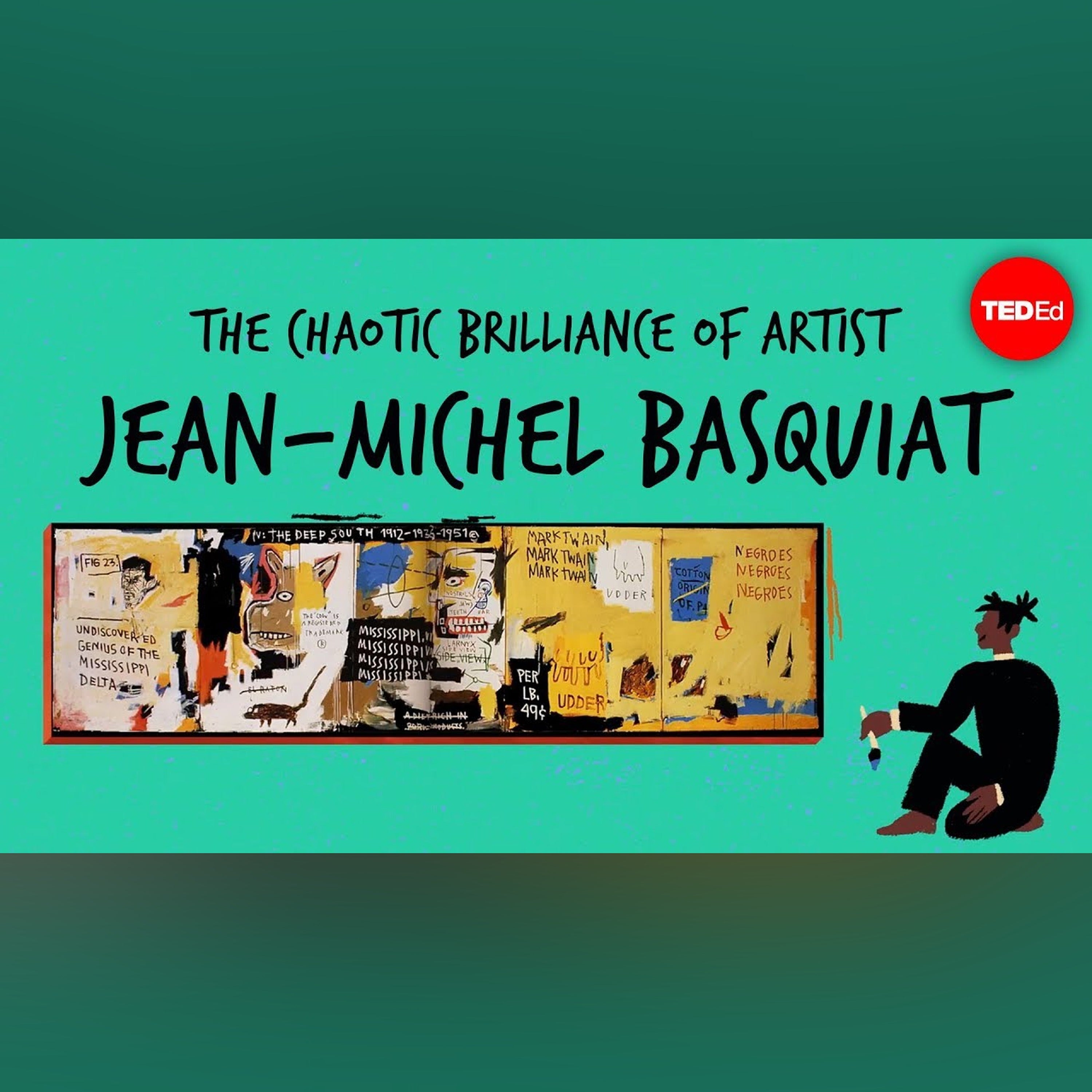
Learn about the life of American artist Jean-Michel Basquiat, from his start as part of graffiti duo SAMO to his rise as an internationally renowned painter. Uploaded 28-02-19 -- Like Beat writers who composed their work by shredding and reassembling scraps of writing, artist Jean-Michel Basquiat used similar techniques to remix his materials. Pulling in splintered anatomy, reimagined historical scenes and skulls, he repurposed present day experiences and art history into an inventive visual language. Jordana Moore Saggese explores the chaotic and prolific art of Basquiat. Lesson by Jordana Moore Saggese, directed by Héloïse Dorsan Rachet. Sign up for our newsletter: http://bit.ly/TEDEdNewsletter Support us on Patreon: http://bit.ly/TEDEdPatreon Find us on Twitter: http://bit.ly/TEDEdTwitter Peep us on Instagram: http://bit.ly/TEDEdInstagram View full lesson: https://ed.ted.com/lessons/the-chaotic-brilliance-of-artist-jean-michel-basquiat-jordana-moore-saggese Thank you so much to our