The majority of the universe is made up of a currently mysterious entity that pervades space: dark energy. We don’t know exactly what it is, but we do know that dark energy accelerates the expansion of space. We think this means the Universe will expand forever, even as our view of it shrinks while space expands faster all the time. Check out the Crash Course Astronomy solar system poster here: http://store.dftba.com/products/crashcourse-astronomy-poster If you want to learn more about the creation and death of the universe, watch Crash Course Big History here: https://youtube.com/playlist?list=PL8dPuuaLjXtMczXZUmjb3mZSU1Roxnrey -- Chapters: Introduction: The Expanding Universe 00:00 The Expansion of Space is Accelerating 2:17 What is Dark Energy? 4:19 Will the Universe Expand Forever? The Geometry of the Universe 5:20 The Cosmic Horizon of the Observable Universe 6:50 Review 10:20 -- GEOMETRY OF THE UNIVERSE RESOURCES Geometry: Expanding faster than light: General expansion: -- PBS Di
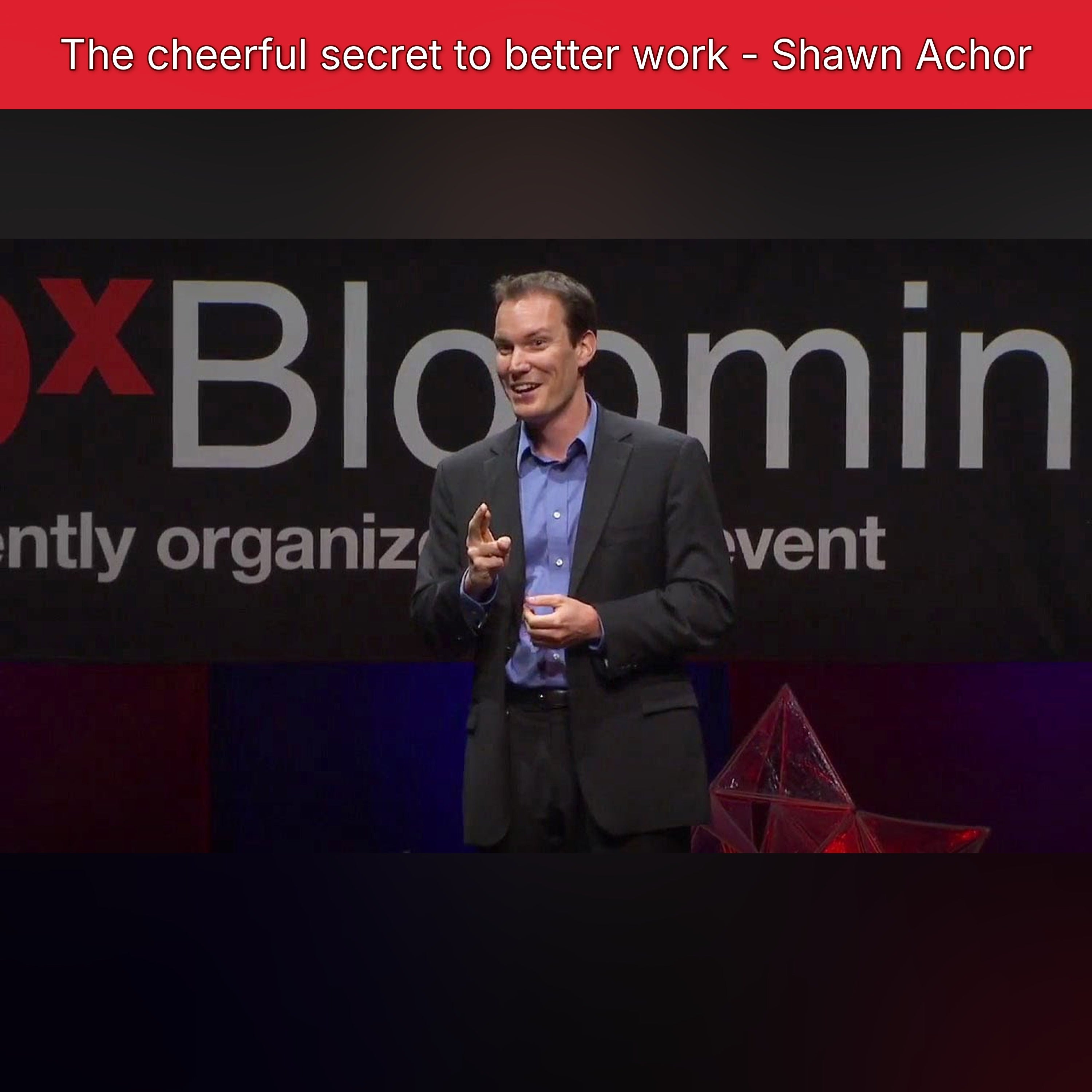
View full lesson: http://ed.ted.com/lessons/the-happy-secret-to-better-work-shawn-achor We believe that we should work to be happy, but could that be backwards? In this fast-moving and entertaining talk, psychologist Shawn Achor argues that actually happiness inspires productivity. (Filmed at TEDxBloomington.) Talk by Shawn Achor.
View pictures and support us at Patreonhttps://www.patreon.com/user?u=73787379Episode Excerpt: Trevor and Patricia were just about to the last hairpin in the trail and were looking forward to the flatter portion. Just before the turn, Trevor commented on an overwhelming aroma of death, and Patricia agreed as she arrived at his side. They paused as he looked around to find the source of the smell and noticed bones protruding from a pile of duff. The carcass belonged to a Rocky Mountain Bighorn Sheep and lay about 25 yards off the trail. After investigating the carcass for a few moments, the two departed, fleeing the smell of death. Trevor sang to himself as he pulled ahead of Patricia by several yards, making the last turn, and disappeared from her view. As she made the final steps in the turn, a confusing scene filled Patricia’s eyes. She hadn’t heard any growls or roars but could see an angry grizzly biting onto her husband’s leg. As the grizzly took Trevor to the ground, Patricia scr
On YouTube, it's easy to dismiss an argument with a clever insult or a confident declaration. But in science, the real test is whether your claims stand up to the evidence. Dave Farina, better known online as “Professor Dave,” has made a name for himself challenging intelligent design proponents, including biochemist Michael Behe. But has he really answered their scientific arguments? On today's ID The Future, host Andrew McDiarmid welcomes biologist Dr. Jonathan McLatchie to examine Farina's criticisms, correct some serious misunderstandings, and explore what the evidence actually tells us about the creative power—and limits—of Darwinian evolution. Source (https://idthefuture.com/2292/)
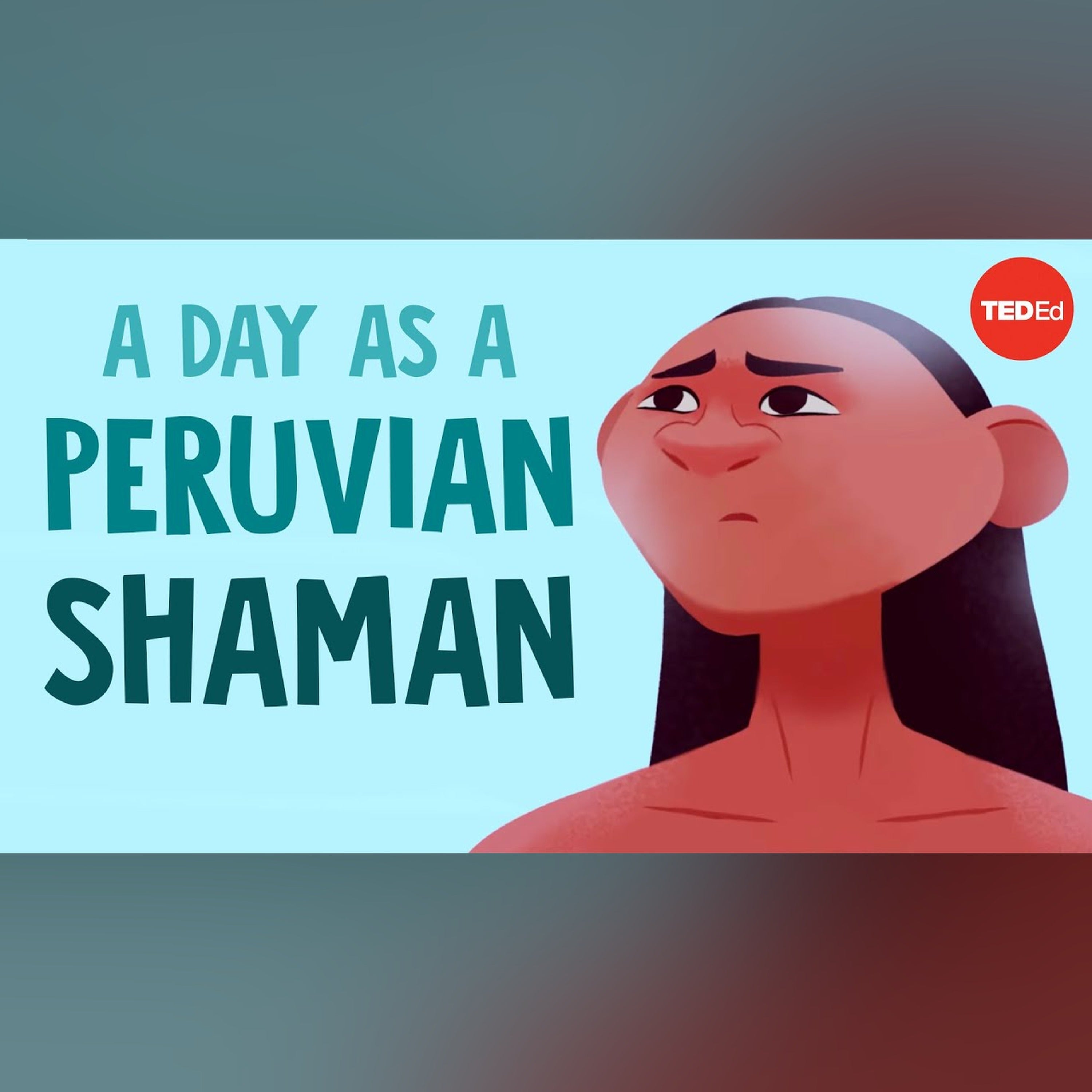
Follow Quexo, a Peruvian shaman, as he searches for cinnabar to complete a special ritual that will protect his village from winter storms. Uploaded 04-06-20 -- The year is 1400 BCE. At the temple of the fisherman, the morning is unusually still and this is just the latest in a series of troubling signs for Quexo, the village shaman. The villagers live off the sea, but this year the winds have died and the fish have dwindled. He’s seen this before— his only hope to fix it is a special ritual. Gabriel Prieto outlines a day in the life of a Peruvian shaman. Lesson by Gabriel Prieto, directed by Globizco Studios. Animator's website: http://www.globizcostudios.com (http://www.globizcostudios.com/) Sign up for our newsletter: http://bit.ly/TEDEdNewsletter Support us on Patreon: http://bit.ly/TEDEdPatreon Find us on Twitter: http://bit.ly/TEDEdTwitter Peep us on Instagram: http://bit.ly/TEDEdInstagram View full lesson: https://ed.ted.com/lessons/a-day-in-the-life-of-an-ancient-peruvian-shama
Have you ever wondered where cured meats like salami or pepperoni get their bright red color? Of course its from organic chemistry! A chemical called nitric acid gives them that bright color, while also increasing their shelf. It's also involved in some other interesting reactions. In this episode of Crash Course Organic Chemistry we'll see how nitrous acid reacts with primary amines to form diazonium salts, we'll learn about alkyldiazonium salts and aryldiazonium salts, and see what conditions are necessary for nucleophilic aromatic substitutions. Series Sources: Brown, W. H., Iverson, B. L., Ansyln, E. V., Foote, C., Organic Chemistry; 8th ed.; Cengage Learning, Boston, 2018. Bruice, P. Y., Organic Chemistry, 7th ed.; Pearson Education, Inc., United States, 2014. Clayden, J., Greeves, N., Warren., S., Organic Chemistry, 2nd ed.; Oxford University Press, New York, 2012. Jones Jr., M.; Fleming, S. A., Organic Chemistry, 5th ed.; W. W. Norton & Company, New York, 2014. Klein., D., Organ
Like a trendy dance, a fighting combo, or a secret handshake, organic reactions can be broken down into simpler steps. In this episode of Crash Course Organic Chemistry, we’ll specifically be looking at alkene addition reactions, and with each new reaction ask ourselves three questions to help us puzzle through the mechanism and understand what’s going on. Episode Sources: Le Couteur, P, Burreson, J. Napoleon’s Buttons: 17 molecules that changed history., Penguin, New York, 2004, Chapter 1. Whipps, H., “How the Spice Trade Changed the World,” https://www.livescience.com/7495-spice-trade-changed-world.html Last accessed, 3/28/2020. Henriques, Martha, “How spices changed the ancient world,” http://www.bbc.com/future/bespoke/made-on-earth/the-flavours-that-shaped-the-world/ Last accessed, 3/28/2020. Hashimoto, K., Yaoi, T., Koshiba, H., Yoshida, T., Maoka, T., Fujiwara, Y., Yaamoto, Y, Mori, K., “Photochemical Isomerization of Piperine, a Pungent Constituent of Pepper”, Food Sci. Technol.
View pictures and Support us at Patreonhttps://www.patreon.com/user?u=73787379These three bear attacks will keep you on the edge of your seat. The relay how dangerous grizzly bears can be and why you should learn how to avoid an attack. This episode is longer than other Scary Bear Attacks episodes so you can download it and listen to it at bedtime to help you sleep as ASMR or while you drive on road trips or on your commute. For more informative videos like this follow us @scarybearattacks (https://studio.youtube.com/channel/UCm_Ri4aJNzJ5w7c3g_FRfdw)
Examine the myth of the Lost Cause: a campaign created by pro-Confederates after the Civil War to promote the lie that they seceded for state's rights. Uploaded 25-02-21 -- In the 1860’s, 11 southern states withdrew from the United States and formed the Confederacy. They seceded in response to the growing movement for the nationwide abolition of slavery. Yet barely a year after the Civil War ended, southern sources began claiming the conflict was about state’s rights. How did this revisionist history come about? Karen L. Cox examines the cultural myth of the Lost Cause. Lesson by Karen L. Cox, directed by Anton Bogaty. Support Our Non-Profit Mission ---------------------------------------------- Support us on Patreon: http://bit.ly/TEDEdPatreon Check out our merch: http://bit.ly/TEDEDShop ---------------------------------------------- Connect With Us ---------------------------------------------- Sign up for our newsletter: http://bit.ly/TEDEdNewsletter Find us on Twitter: http://bit.l
I WANT TO DELETE THIS VIDEO. HOPEFULLY, I WILL GET THE CHANCE... Chapters 0:00 – Introduction: A Case Study in Marketing Pseudoscience 1:14 – Call for concern among doctors 1:26 – I WANT TO DELETE THIS VIDEO 1:39 – Satiety Per Calorie, Steel Man Case 2:44 – Decent Idea Turns to Deception 3:24 – First 4 Reasons SPC is Pseudoscientific 5:00 – This is CRAZY 7:10 – Playbook Point 1: Virtue Signaling 7:55 – Playbook Point 2: Directionally Correct? Logical Fallacy 8:31 – Playbook Point 3: Vague Appeal to Evidence 9:00 – Playbook Point 4: Shifting the Burden of Proof 10:43 – Playbook Point 5: Distraction Humor 10:56 – Why should you care? 11:59 – I WILL DELETE THE VIDEO WHEN… SPC company CEO had mentioned one study they use, which is problematic and inconsistent with their claims that their system would facilitate long-term optimal weight management or "metabolic health" JN reanalysis mentioned in the video: https://jn.nutrition.org/article/S0022-3166(23)72806-X/fulltext An associated video:
Human DNA editing is finally here. Check out the new WHOOP here! https://join.whoop.com/cleo There is a microscopic technology that now gives us the power to edit our own genes while we’re alive. To cure certain diseases, possibly prevent others, or boost what our bodies can do… or maybe, one day give our kids abilities no one has ever had before… effectively putting evolution into our hands. This is not some sci-fi future! We’re already using this technology in real medical treatments in plants to grow new crops and in animals to create new species! Just yesterday, news broke that a baby’s life was saved using personalized gene editing that fixed one tiny error in its DNA. This is truly “huge if true.” Deciding how we use this new superpower may be the biggest challenge we have ever faced - and the biggest opportunity to reduce human suffering. This tool is called CRISPR. Dr. Jennifer Doudna won the Nobel Prize for discovering it. So, in this third episode of Huge Conversations, Dr. D
The scientific method isn’t the only way to gain knowledge—Native people have been learning and innovating in their own ways for millennia. In this episode of Crash Course Native American History, we’ll discover the ways Western science and Indigenous knowledge can braid together to create a better world. Introduction: Trees Talk 00:00 Ways of Knowing 0:42 Medicine Wheels 2:18 Native Innovations 3:27 Braiding Knowledge 4:49 Native Ecology 6:32 Review & Credits 7:49 Sources: Want to know more about how this series was made? Learn more here: https://docs.google.com/document/d/17yp3u28s40TdjyrJniIf4U9YA8wPtvQ1g1B-HSHQ2Q4/edit?tab=t.0#heading=h.6vtzps565m2 (https://docs.google.com/document/d/17yp3u28s40TdjyrJniIf4U9YA8wPtvQ1g1B-HSHQ2Q4/edit?tab=t.0) *** Support us for $5/month on Patreon to keep Crash Course free for everyone forever! https://www.patreon.com/crashcourse Or support us directly: https://complexly.com/support Join our Crash Course email list to get the latest news and highlig
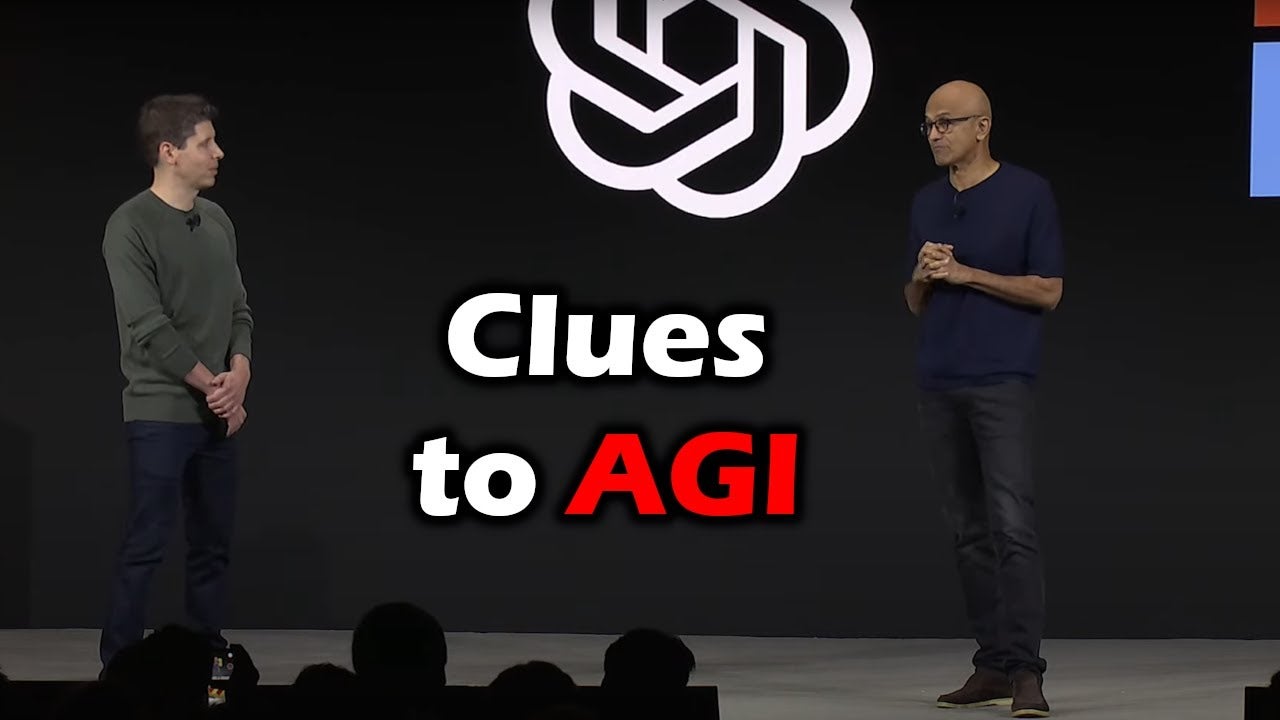
OpenAI Dev Day: Sam Altman teases the path to AGI - next step is AGENT SWARMS. Let me explain... Episode release date: 7 Nov 2023 Core Ideas: Metamodernism: Narratives and emergence view of reality - Reduce suffering - Increase prosperity - Increase understanding mantra: Seek knowledge. DISCLAIMER: This is a community-driven show. ------------- Keywords: chatbots, ai education, ai development, ai podcast, ai future, gpt
From a sealed vault behind Mount Rushmore to a black pyramid buried under Alaska, Dougie Corrado tours the corners of America that never made it onto the map. Tunnels, lost cities and missing travelers are waiting at every stop, and each one is hiding more than it lets on.
Do pigeons navigate with their livers? A surprising study proposes that iron-rich immune cells help homing pigeons sense Earth's magnetic field. But other researchers argue that the mechanism does not hold up. Lester Nare and Krishna Choudhary unpack the experiments, the physics and the scientific debate. Jump to 36:19 for the pigeon deep dive. We explore macrophages, magnetite, quantum biology, classic magnetic-coil experiments, and why changing an animal's behavior does not automatically prove how its compass works. First, we examine what the midterms mean for science: how Congress funds research, the difference between authorizing programs and appropriating money, and why committee assignments matter for NASA, the NSF, national labs and university research. What experiment would convince you that the liver really is part of a pigeon's compass? And what science stories should we cover before the end of the year? CHAPTERS 00:00 Science funding and a compass in the liver? 00:23 Hello I
Dig into how bed bugs establish a colony in your home, and find out what makes it so hard to prevent these itchy invasions. -- Bed bugs have tormented humans for millennia, so detested that their mere mention can make hearts race and arms itch. There are approximately 100 species of bed bugs, but thankfully only three of them feed on humans. So, why are these unwelcome houseguests so difficult to defeat? And is there any way to get rid of them for good? Gale E. Ridge investigates the tremendous staying power of bed bugs. Lesson by Gale E. Ridge, directed by Devin Clark, Augenblick Studios. Support Our Non-Profit Mission ---------------------------------------------- Support us on Patreon: http://bit.ly/TEDEdPatreon Check out our merch: http://bit.ly/TEDEDShop ---------------------------------------------- Connect With Us ---------------------------------------------- Sign up for our newsletter: http://bit.ly/TEDEdNewsletter Find us on Twitter: http://bit.ly/TEDEdTwitter Peep us on Inst
This is a Grave Talks CLASSIC EPISODE! PART TWO Octagon Hall Museum in Franklin stands as one of the most distinctive historic homes in the South. Built between 1847 and 1859 by Andrew Jackson Caldwell, its striking octagonal design is matched by a history shaped by war, division, and loss. During the Civil War, both Union and Confederate forces occupied the property, leaving behind stories that still echo through its halls. Reports of unexplained footsteps, shadow figures, voices, and direct encounters have been tied to members of the Caldwell family, enslaved individuals who once lived and worked on the land, and soldiers who passed through during one of America’s most turbulent eras. Museum Director Bear Gaunt discusses the documented history of the property, the paranormal activity reported by staff and investigators, and how the museum balances preservation with its reputation as one of the most haunted buildings in Kentucky. Is the activity residual energy from a divided nation,
This is a Grave Talks CLASSIC EPISODE! Step inside The Bell Mansion, one of Fort Wayne, Indiana’s most historic — and most haunted — landmarks. Built in 1893 by state senator and attorney Robert Bell and his wife Clara, the Romanesque-style mansion was once a symbol of culture and prosperity. Clara co-founded the Fort Wayne Museum of Art, and the Bells were pillars of the community. But after the family sold the home to William K. Nobel, its story took a chilling turn. For 93 years, the house served as the Klaehn Funeral Home, where it’s believed 300,000 to 500,000 bodies passed through its doors. Many say countless spirits linger there to this day — and some believe Robert and Clara Bell never left. Now a popular haunted venue, the mansion has become a hub for paranormal investigators and history buffs alike. In this episode of The Grave Talks, we sit down with event coordinator Lindsay Crouch to hear firsthand accounts of the building’s ghostly residents, unexplained voices, and the
In which John Green, Hank Green, and Emily Graslie teach you about what happened in the Universe after the big bang. They'll teach you about cosmic background radiation, how a bunch of hydrogen and helium turned into stars, formed galaxies, created heavy elements, and eventually created planets. For more information, visit http://www.bighistoryproject.com (http://www.bighistoryproject.com/) Crash Course is on Patreon! Want to find Crash Course elsewhere on the internet? Facebook - http://www.facebook.com/YouTubeCrashCourse Twitter - http://www.twitter.com/TheCrashCourse Instagram - https://www.instagram.com/thecrashcourse/ CC Kids: http://www.youtube.com/crashcoursekids
View pictures and support us at Patreonhttps://www.patreon.com/user?u=73787379Episode Excerpt: In the midnight hours of Saturday, September 17th, nineteen forty seven, sixty five year old shepherd, Josif Chincisian, was sleeping in his portable shelter watching over his sheep herds. Josif was a wiry, incredibly tough man of Romanian descent who had immigrated to the United States and spent twenty-four years working faithfully as a trusted sheep herder for the Mosher family ranch. He was an uncommonly disciplined individual who, instead of spending his hard-earned wages on temporary entertainment, carefully saved his money over decades to purchase a personal farm located in Minnesota. He had no wife or children mentioned in local accounts, and his entire life revolved around his connection to the livestock and the rugged outdoors.Interestingly, friends later recalled that Josif had spent the prior year giving away significant gifts of money and personal items, calmly telling his protest
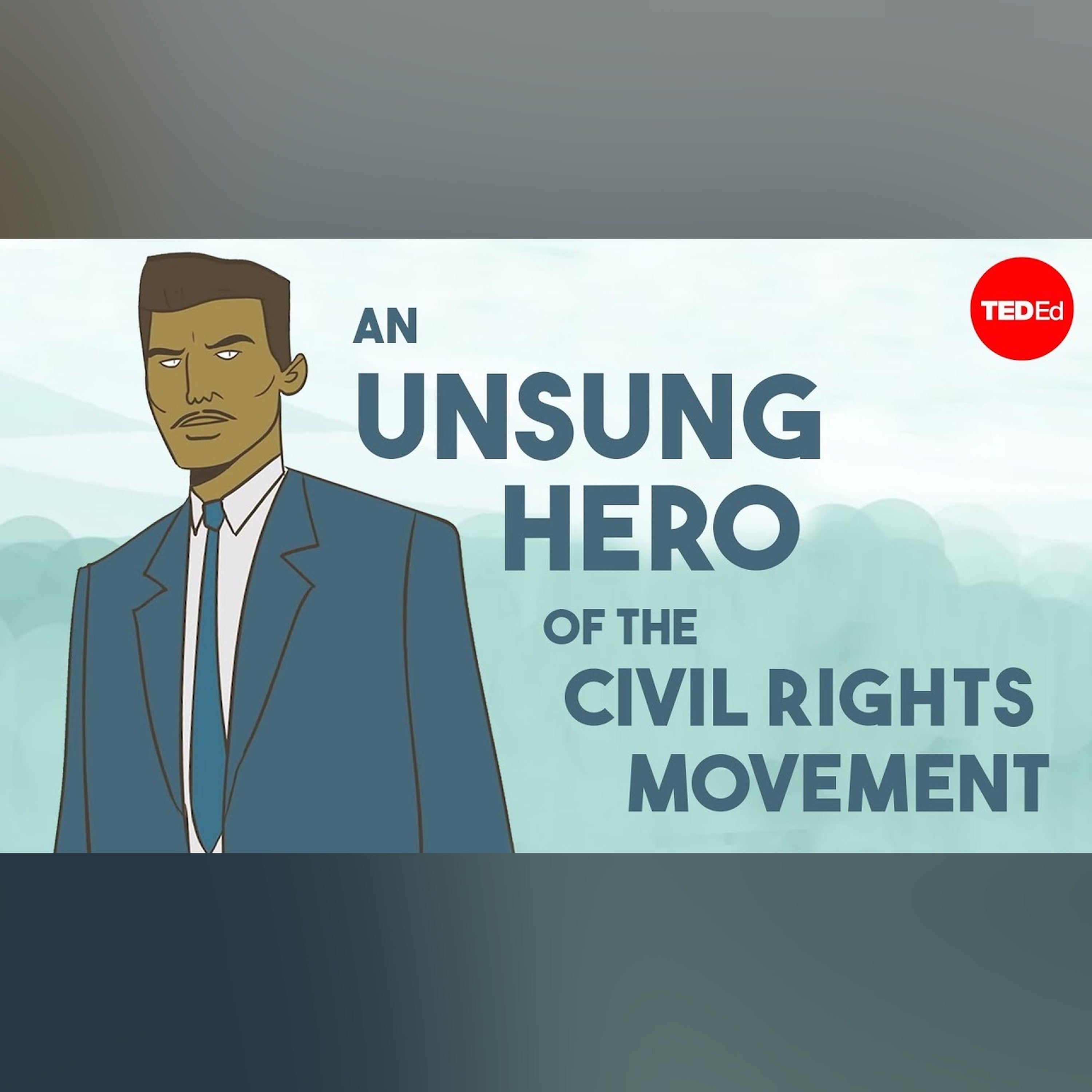
Learn about the life of Bayard Rustin, a leader in the Civil Rights Movement, a gay rights activist, and one of Martin Luther King’s closest advisors. Uploaded 21-02-19 -- In 1963, Martin Luther King Jr. delivered his “I Have a Dream” speech at the March on Washington to nearly a quarter million people. None of it would have been possible without the march’s chief organizer – a man named Bayard Rustin. Christina Greer details his life of advocacy as a leader in the Civil Rights Movement, and the challenges he faced as an openly gay Black man. Lesson by Christina Greer, directed by Anton Bogaty. Sign up for our newsletter: http://bit.ly/TEDEdNewsletter Support us on Patreon: http://bit.ly/TEDEdPatreon Find us on Twitter: http://bit.ly/TEDEdTwitter Peep us on Instagram: http://bit.ly/TEDEdInstagram View full lesson: https://ed.ted.com/lessons/an-unsung-hero-of-the-civil-rights-movement-christina-greer Thank you so much to our patrons for your support! Without you this video would not be
For the next half of this series, we will be discussing Human Geography — so we’ll still be looking at the Earth, but specifically, how human activity affects and is influenced by the Earth. Naturally, we thought the best place to start was to discuss how we name things in the first place! As it turns out, a name carries so much history of a place but also represents the political power and evolving perception of that space. So today, we’re going to tell the story of the highest point in North America - a mountain known by many names including Mount McKinley and Denali. Watch our videos and review your learning with the Crash Course App! Download here for Apple Devices: https://apple.co/3d4eyZo Download here for Android Devices: https://bit.ly/2SrDulJ Crash Course is on Patreon! Thanks to the following patrons for their generous monthly contributions that help keep Crash Course free for everyone forever: Shannon McCone, Amelia Ryczek, Ken Davidian, Brian Zachariah, Stephen Akuffo, Toni
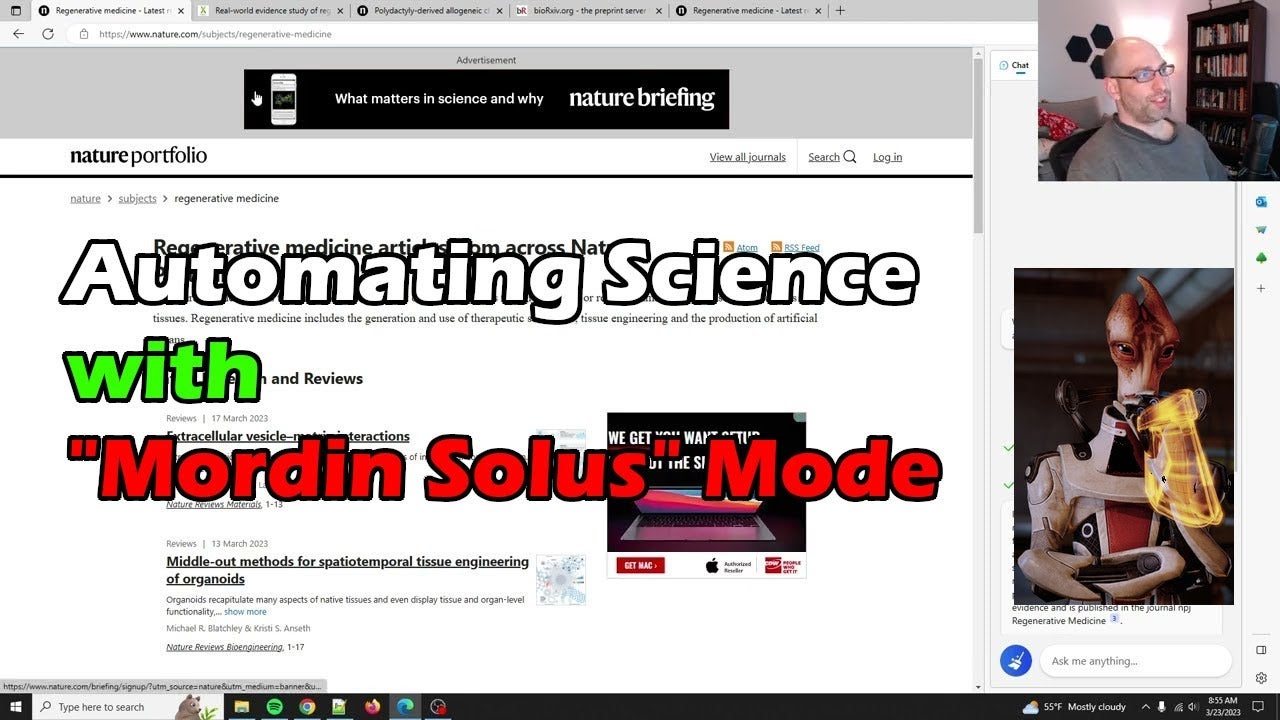
Automating Science with GPT-4 - attempting (and failing) to perform autonomous literature review Episode release date: 23 Mar 2023 Core Ideas: Metamodernism: Narratives and emergence view of reality - Reduce suffering - Increase prosperity - Increase understanding mantra: Seek knowledge. DISCLAIMER: This is a community-driven show. ----------- Keywords: ai development, ai consciousness, cognitive ai, superintelligence, ai education
As we approach the end of Crash Course Astronomy, it’s time now to acknowledge that our Universe’s days are numbered. Stars will die out after a few trillion years, protons will decay and matter will dissolve after a thousand trillion trillion trillion years, black holes will evaporate after 10^92 years, and then all will be dark. But there is still hope that a new Universe will be born from it. Check out the Crash Course Astronomy solar system poster here: http://store.dftba.com/products/crashcourse-astronomy-poster If you want to learn more about the creation and death of the universe, watch Crash Course Big History here: https://youtube.com/playlist?list=PL8dPuuaLjXtMczXZUmjb3mZSU1Roxnrey -- Chapters: Introduction: The End of the Universe 00:00 Scientific Notation 1:34 The Five Ages of the Universe 2:20 The Primordial Era 2:52 The Stelliferous Era (You Are Here!) 3:05 The Degenerate Era 4:48 The Black Hole Era 7:42 The Dark Era 9:39 The Big Rip 10:20 Other Possibilities: Multiverses