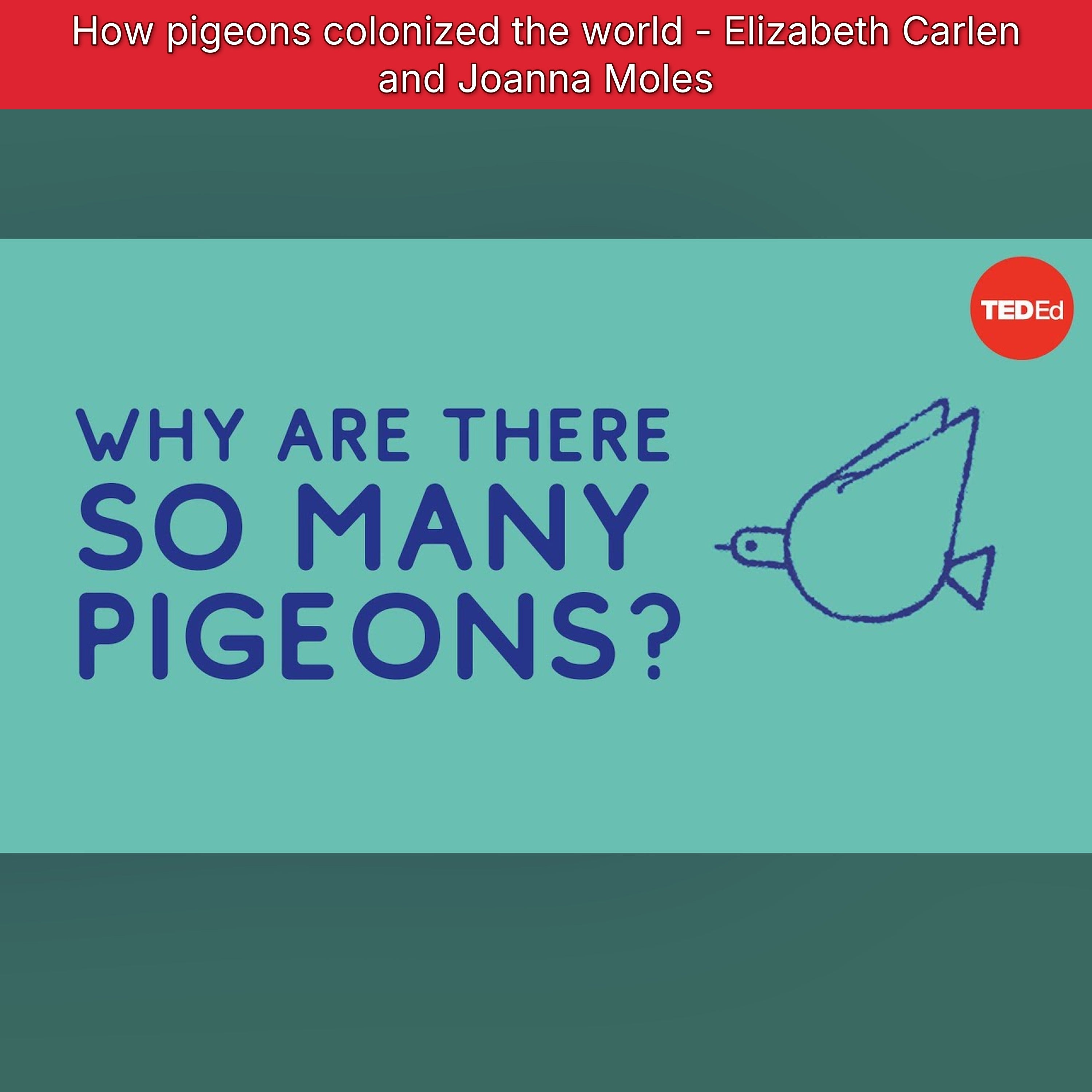
Trace the ancient history of the pigeon, and discover how these birds became one of the most abundant species on the planet. -- Seeing their meat as a protein source and their poop as the perfect fertilizer, humans brought pigeons into captivity as far back as 10,000 years ago. As we carried pigeons around the world, they formed the wild urban flocks we're familiar with today and became one of the most abundant species on the planet. Elizabeth Carlen and Joanna Moles track the feathery flier's rise to world domination. Lesson by Elizabeth Carlen and Joanna Moles, directed by Joseph Clark, Oh Studio. Support Our Non-Profit Mission ---------------------------------------------- Support us on Patreon: http://bit.ly/TEDEdPatreon Check out our merch: http://bit.ly/TEDEDShop ---------------------------------------------- Connect With Us ---------------------------------------------- Sign up for our newsletter: http://bit.ly/TEDEdNewsletter Find us on Twitter: http://bit.ly/TEDEdTwitter Peep
Chapters 0:00 – Intro, 2 New Studies 1:02 -- Study 1: Fish and All Cause Mortality 4:42 -- Study 2: Fish and Cognition 7:20 – Limitations and Closing Paper 1 (Feb 2024): https://www.sciencedirect.com/science/article/abs/pii/S0002916523663038 Paper 2 (April 2024): https://www.mayoclinicproceedings.org/article/S0025-6196(23)00603-1/fulltext Se/Hg Ratio in Fish: https://link.springer.com/article/10.1007/s12011-007-8004-8 Brazil-Macadamia Butter: https://ketodietapp.com/Blog/lchf/macadamia-and-brazil-butter House of Macadamia: http://partner.houseofmacadamias.com/nick-norwitz Benefits of Omega-7 in Macadamia: https://youtu.be/Vngn6i-rmZI
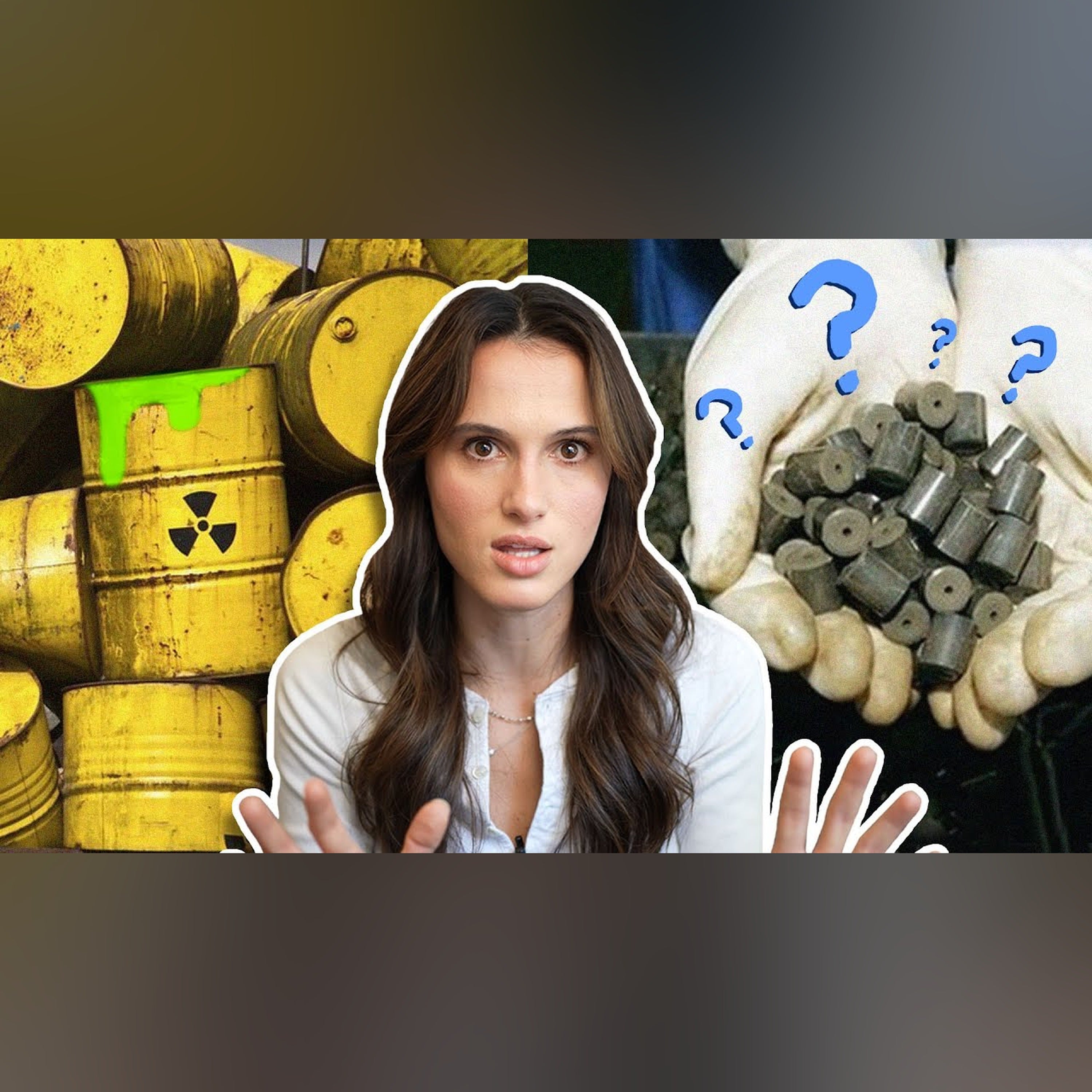
What if we could actually USE nuclear waste? Watch Johnny’s explainer on nuclear power here - and subscribe to his channel! https://youtu.be/QzTgZ6kOEM8 Nuclear waste is scary. Maybe you’ve seen it as glowing green goop in The Simpsons, or as a radioactive threat on the news. Either way, you likely know it has been a major block to the use and improvement of nuclear power. Over the last few decades, experts, politicians and the public have had heated debates over what to do with this radioactive material created by nuclear power plants. But what if there were a way to not just store nuclear waste, but actually USE it? This video is about the effort to make electricity out of nuclear waste. Really. It turns out, we developed the tools to do this decades ago. This story is about a technology we left behind and the people who want to bring it back. For this video, I had the privilege of visiting one of the largest and oldest research centers in the US, the Argonne National Laboratory. I’m
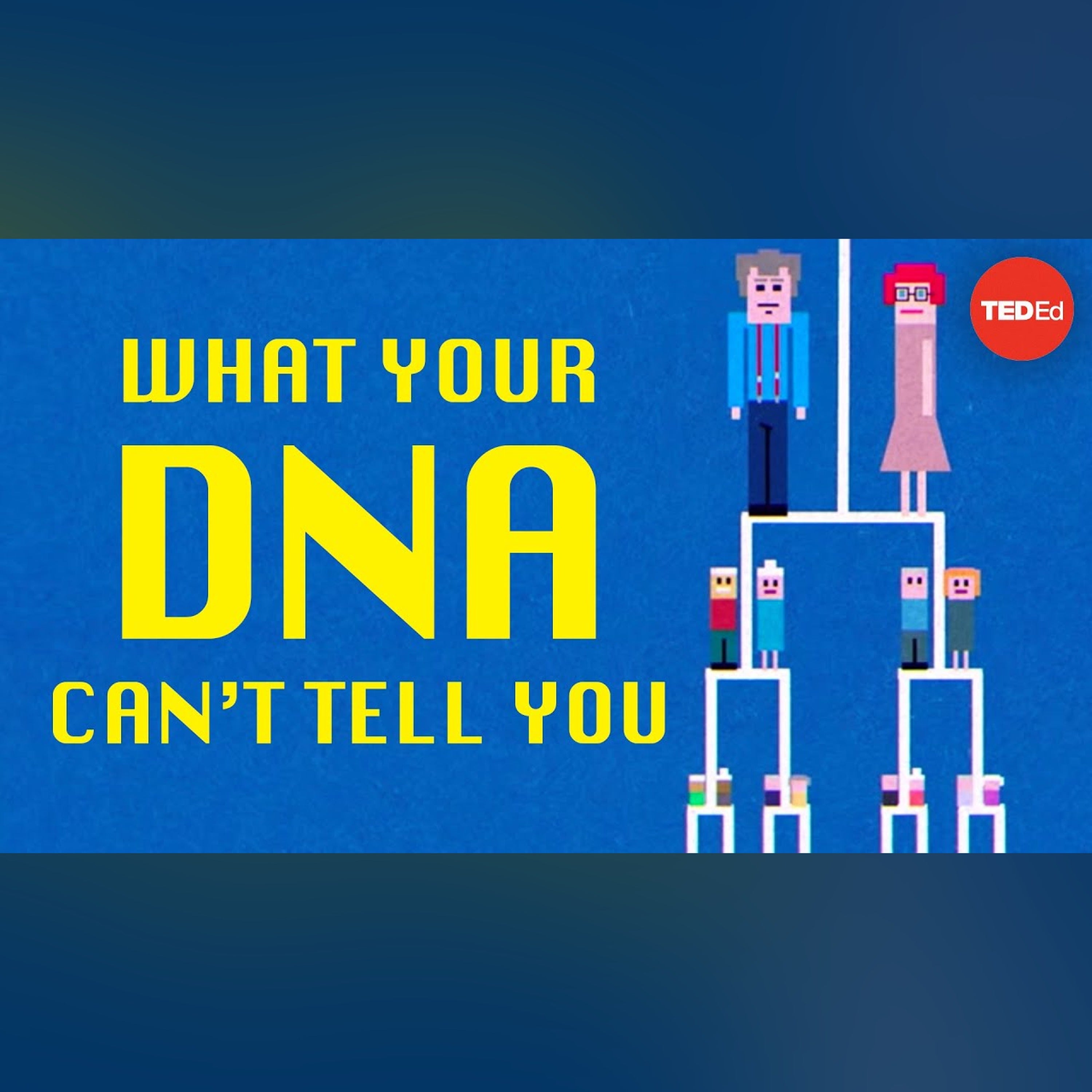
Dig into the science of how ancestry DNA tests work, their accuracy, and why tracing ancestry is so complicated. Uploaded 09-06-20 -- Two sisters take the same DNA test. The results show that one sister is 10% French, the other 0%. Both sisters share the same two parents, and therefore the same set of ancestors. So how can one be 10% more French than the other? Tests like these rely on our DNA to answer questions about our ancestry, but DNA actually can’t tell us everything. Prosanta Chakrabarty explores the accuracy of DNA tests. Lesson by Prosanta Chakrabarty, directed by Artrake Studio. Animator's website: https://www.artrake.com/ Sign up for our newsletter: http://bit.ly/TEDEdNewsletter Support us on Patreon: http://bit.ly/TEDEdPatreon Find us on Twitter: http://bit.ly/TEDEdTwitter Peep us on Instagram: http://bit.ly/TEDEdInstagram View full lesson: https://ed.ted.com/lessons/what-can-dna-tests-really-tell-us-about-our-ancestry-prosanta-chakrabarty Thank you so much to our patrons
Ideas like liberty, freedom, and self-determination were hot stuff in the late 18th century, as evidenced by our recent revolutionary videos. Although freedom was breaking out all over, many of the societies that were touting these ideas relied on slave labor. Few places in the world relied so heavily on slave labor as Saint-Domingue, France's most profitable colony. Slaves made up nearly 90% of Saint-Domingue's population, and in 1789 they couldn't help but hear about the revolution underway in France. All the talk of liberty, equality, and fraternity sounded pretty good to a person in bondage, and so the slaves rebelled. This led to not one but two revolutions and ended up with France, the rebels, Britain, and Spain all fighting in the territory. Spoiler alert: the slaves won. So how did the slaves of what would become Haiti throw off the yoke of one of the world's great empires? John Green tells how they did it, and what it has meant in Haiti and in the rest of the world. Chapters:
Finetuning GPT-3 101: Synthesizing Training Data Episode release date: 16 Jul 2022 Core Ideas: Metamodernism: Narratives and emergence view of reality - Reduce suffering - Increase prosperity - Increase understanding mantra: Seek knowledge. DISCLAIMER: This is a community-driven show. ------ Keywords: artificial general intelligence, chatbots, tech singularity, ai ethics, ai development, artificial intelligence, david shapiro, ai podcast
At the end of our journey through modern European history, we're taking an episode to look back at how the practice of history developed and what the aim and goals and purpose of history have been. We'll also take time to consider how we should approach history research and writing going forward. Watch our videos and review your learning with the Crash Course App! Download here for Apple Devices: https://apple.co/3d4eyZo Download here for Android Devices: https://bit.ly/2SrDulJ Crash Course is on Patreon! Thanks to the following patrons for their generous monthly contributions that help keep Crash Course free for everyone forever: Phil Simmons, Alexander Thomson, Mark & Susan Billian, Eric Z, Alan Bridgeman, Jennifer Smith, Matt Curls, Tim Kwist, Ron Lin, Jonathan Zbikowski, Jennifer Killen, Sarah & Nathan Catchings, Brandon Westmoreland, dorsey, Trevin Beattie, Eric Prestemon, Yasenia Cruz, Eric Koslow, Indika Siriwardena, Khaled El, Shalakany, Shawn Arnold, Tom Trval, Siobhán, Ken Pe
View pictures and support us at Patreonhttps://www.patreon.com/user?u=73787379Episode Excerpt: As the three fishermen chatted, they watched the dark water in the ice hole they had carved out. The winter gusted often and lifted clouds of snow, which obscured their vision and shortened their ability to see to only a few yards. Consuming food kept their spirits up and warmed their bodies, chasing away the chill until the next gust of wind.Like a harbinger of things to come, a particularly strong wind blew across the bay, whipping the snow into a cloud and blinding their view. As the wind died down and the snow settled, a ghostly shape emerged from the cloud, headed directly for the group.A few facts about polar bears will convey the predicament the fishermen found themselves in. Polar bears are designed to swim in icy Arctic waters with a dense layer of fur surrounding a thick layer of buoyant blubber. They are not efficient running across land or ice, as the insulating layer of blubber a
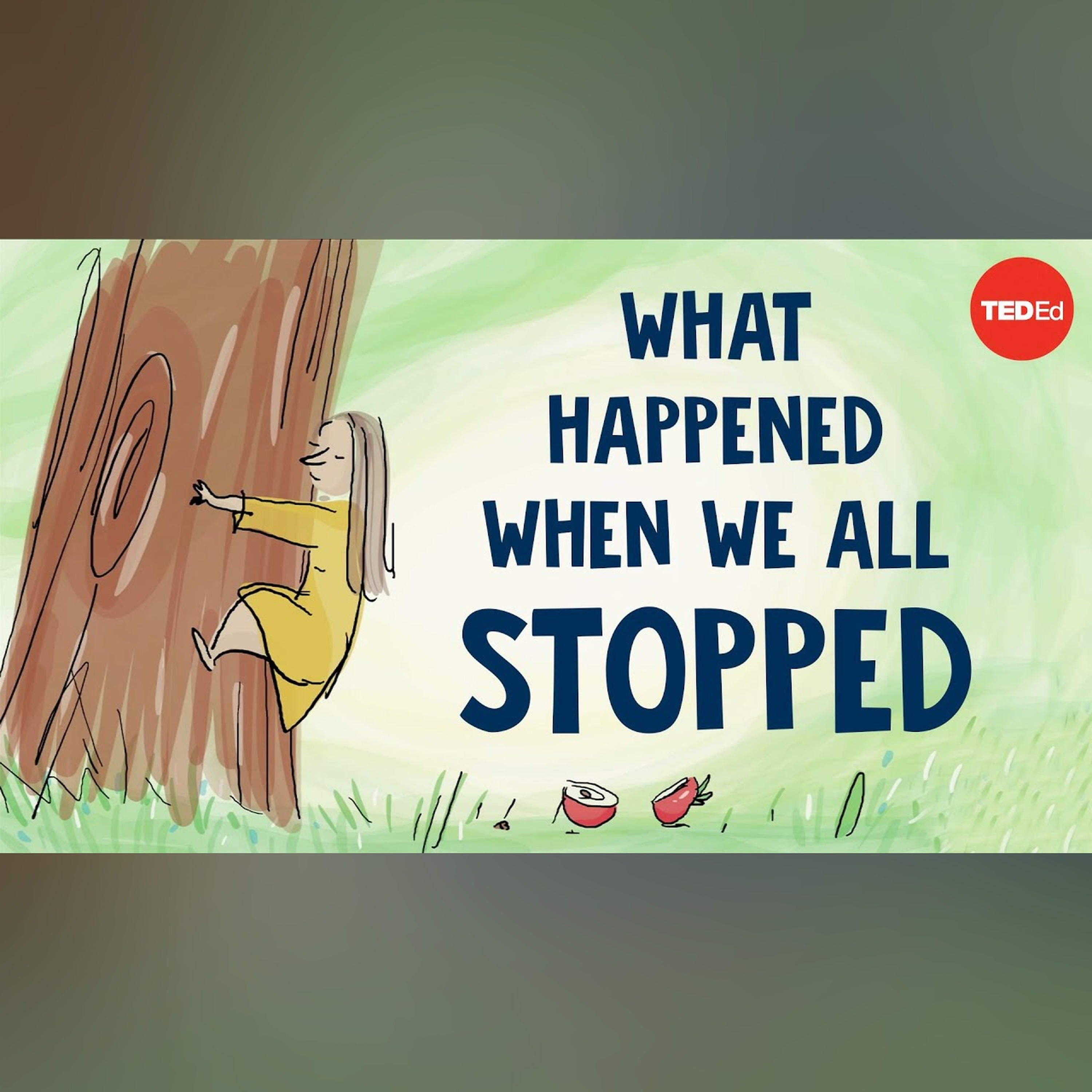
An animated poem exploring how the Covid-19 pandemic has reminded us of the importance of living in harmony with nature. Uploaded 04-06-20 #WorldEnvironmentDay -- As millions around the world shelter at home, the smog melts away, the birds sing, and the waters run clear. What if we used this moment in our lives and in history as an opportunity to jumpstart the rebirth and rewilding of our planet when we go back to work and school? This moment can lead us to a healthier, cleaner, greener future, if only we grasp it. Tom Rivett-Carnac tells the story of what happened when we all stopped. Written by Tom Rivett-Carnac, directed by Avi Ofer. Narrated by Dr. Jane Goodall, DBE. Founder - the Jane Goodall Institute and UN Messenger of Peace Created in partnership with https://www.janegoodall.org.uk/ and https://www.rootsnshoots.org.uk/ Animator's website: https://aviofer.com/ Sign up for our newsletter: http://bit.ly/TEDEdNewsletter Support us on Patreon: http://bit.ly/TEDEdPatreon Find us on
Dig into the 4 main blood types — A, B, AB, and O — and find out why some bloods can mix while others cannot. Uploaded 29-06-15 -- It’s often said that despite humanity’s many conflicts, we all bleed the same blood. It’s a nice thought, but not quite accurate. In fact, our blood comes in a few different varieties. Natalie S. Hodge defines the four major blood types and sheds light on why some bloods can mix while others cannot. Lesson by Natalie S. Hodge, animation by Brad Purnell. Support Our Non-Profit Mission ---------------------------------------------- Support us on Patreon: http://bit.ly/TEDEdPatreon Check out our merch: http://bit.ly/TEDEDShop ---------------------------------------------- Connect With Us ---------------------------------------------- Sign up for our newsletter: http://bit.ly/TEDEdNewsletter Find us on Twitter: http://bit.ly/TEDEdTwitter Peep us on Instagram: http://bit.ly/TEDEdInstagram ---------------------------------------------- Keep Learning -------------
In which John Green teaches you about World War II, and some of the causes behind the war. In a lot of ways, WWII was about resources, especially food. The expansionist aggression of both Germany and Japan was in a lot of ways about resources. There were other reasons, to be sure, but the idea that the Axis needed more food can't be ignored. Citation 1: Lizzie Collingham. The Taste of War: World War II and the Battle for Food. Penguin. New York. 2011. p 30 Citation 2: Collingham. p 102 --- Learn more about WWII in these other Crash Course videos: Crash Course World History: World War II (#38): https://www.youtube.com/watch?v=Q78COTwT7nE Crash Course US History: World War II Part 1 (#35): https://www.youtube.com/watch?v=Objoad6rG6U World War II Part 2 (#36): https://www.youtube.com/watch?v=HofnGQwPgqs Crash Course European History: World War II (#38): https://www.youtube.com/watch?v=Hs_JMydrxZM World War II Civilians and Soldiers (#39): https://www.youtube.com/watch?v=rlx6ur_D51s The Ho
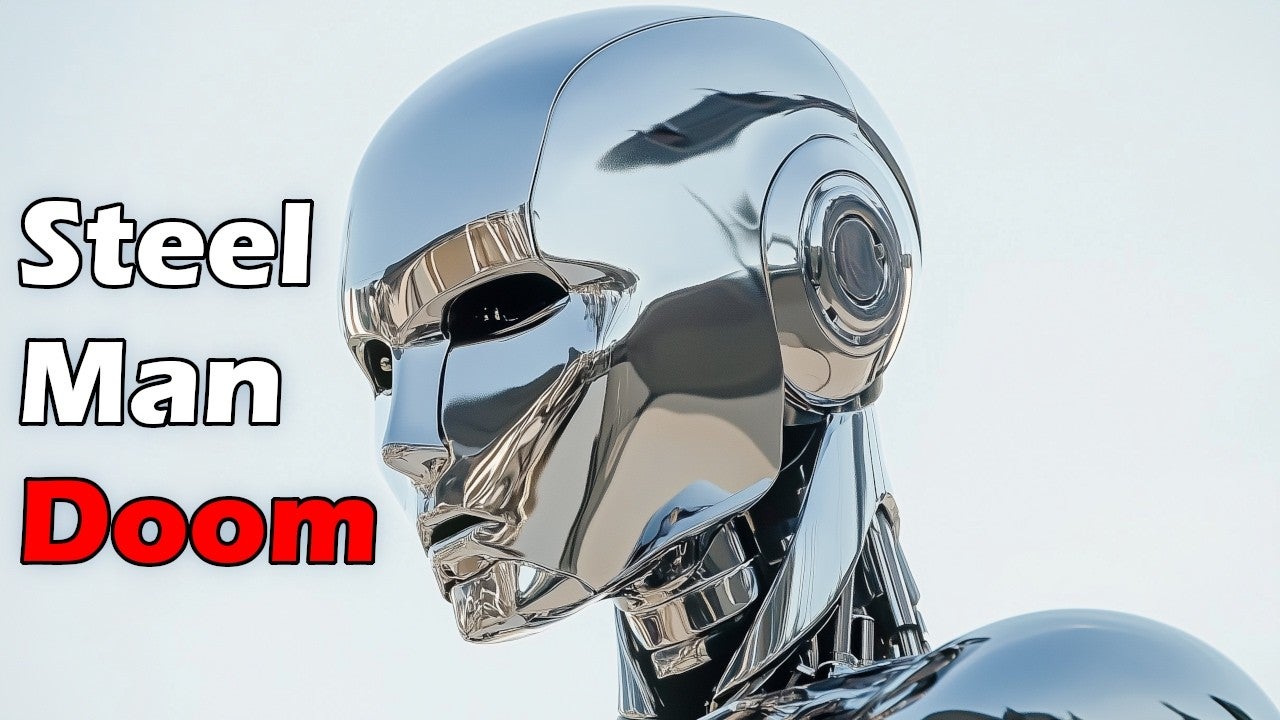
Steelmanning the "Doomer" Argument: How Uncontrollable Super Intelligence (USI) could kill everyone Episode release date: 23 Aug 2024 Core Ideas: Metamodernism: Narratives and emergence view of reality - Reduce suffering - Increase prosperity - Increase understanding mantra: Seek knowledge. DISCLAIMER: This is a community-driven show. ----------- Keywords: agi, heuristic imperatives, ai agents, ai ethics, chatbots, gpt, machine autonomy
View full lesson: http://ed.ted.com/lessons/diagnosing-a-zombie-tim-verstynen-brad-voytek Zombies eat brains. They are also, like all of us, driven by brain functions. What is happening in their brains to make them act as they do? In this intriguing dialogue, Tim Verstynen & Brad Voytek apply the various human medical possibilities that make zombies...zombies. Lesson by Tim Verstynen & Brad Voytek, animation by TED-Ed.
I'm sure you've heard of Isaac Newton and maybe of some of his laws. Like, that thing about "equal and opposite reactions" and such. But what do his laws mean? And how do they help us understand the world around us? In this episode of Crash Course Physics, Shini talks to us about just that. *** Produced in collaboration with PBS Digital Studios: http://youtube.com/pbsdigitalstudios Crash Course is on Patreon! Thanks to the following Patrons for their generous monthly contributions that help keep Crash Course free for everyone forever: Mark, Eric Kitchen, Jessica Wode, Jeffrey Thompson, Steve Marshall, Moritz Schmidt, Robert Kunz, Tim Curwick, Jason A Saslow, SR Foxley, Elliot Beter, Jacob Ash, Christian, Jan Schmid, Jirat, Christy Huddleston, Daniel Baulig, Chris Peters, Anna-Ester Volozh, Ian Dundore, Caleb Weeks -- Want to find Crash Course elsewhere on the internet? Facebook - http://www.facebook.com/YouTubeCrashC... Twitter - http://www.twitter.com/TheCrashCourse Tumblr - http://th
Alkanes are kind of the wallflowers of organic chemistry, but they still have important functions in the world around us. In this episode of Crash Course Organic Chemistry we’re building our knowledge of organic molecules by learning all about these so called couch potatoes from how they are separated from crude oil to how to use Newman projections to predict torsional strain and steric hinderance. We’ll also learn the names of some common conformers and get an introduction to cycloalkanes. Episode Sources: M. Faraday and W. Crooks, The Chemical History of a Candle, a Course of Lectures Delivered Before a Juvenile Audience at the Royal Institution, 1908. https://archive.org/details/chemicalhistoryo00faraiala/page/158 Series Sources: Brown, W. H., Iverson, B. L., Ansyln, E. V., Foote, C., Organic Chemistry; 8th ed.; Cengage Learning, Boston, 2018. Bruice, P. Y., Organic Chemistry, 7th ed.; Pearson Education, Inc., United States, 2014. Clayden, J., Greeves, N., Warren., S., Organic Chemi
Explore the role concrete plays in global warming and how scientists are working to create a cleaner, more sustainable concrete. Uploaded 01-03-21 -- Today roads, sidewalks, bridges, and skyscrapers are made of a material called concrete. There’s three tons of it for every person on Earth. It’s also played a surprisingly large role in rising global temperatures over the last century. So, what exactly makes concrete problematic, and what can we do to fix it? Explore how scientists are working to create a cleaner, more sustainable concrete. Directed by Lisa LaBracio. Animation and art direction by Luísa M H Copetti and Hype CG In partnership with Bill Gates, inspired by his book "How To Avoid A Climate Disaster": http://bit.ly/PlanForZero Check out the videos in this series: http://bit.ly/TEDEdClimate Support Our Non-Profit Mission ---------------------------------------------- Support us on Patreon: http://bit.ly/TEDEdPatreon Check out our merch: http://bit.ly/TEDEDShop ----------------
What does food sovereignty mean—and why does it matter? In this episode of Crash Course Native American History, we’ll explore how Native peoples’ deep ties to their traditional foods splintered under colonization, and why many Native people are fighting to keep those foods in their communities or bring them back. Introduction: Billy Frank Jr. 00:00 Traditional Foods 01:00 Food & Colonization 02:46 The Fish Wars 04:36 Frybread & Food Sovereignty 06:55 Food Sovereignty Today 08:27 Review & Credits 09:27 Sources: Want to know more about how this series was made? Learn more here: https://docs.google.com/document/d/17yp3u28s40TdjyrJniIf4U9YA8wPtvQ1g1B-HSHQ2Q4/edit?tab=t.0#heading=h.6vtzps565m2 (https://docs.google.com/document/d/17yp3u28s40TdjyrJniIf4U9YA8wPtvQ1g1B-HSHQ2Q4/edit?tab=t.0) *** Support us for $5/month on Patreon to keep Crash Course free for everyone forever! https://www.patreon.com/crashcourse Or support us directly: https://complexly.com/support Join our Crash Course email l
OpenAI's "Democratic Inputs to AI" - My universal survey chatbot is complete. Here's how it works! Episode release date: 10 Jun 2023 Core Ideas: Metamodernism: Narratives and emergence view of reality - Reduce suffering - Increase prosperity - Increase understanding mantra: Seek knowledge. DISCLAIMER: This is a community-driven show. ------------ Keywords: post labor economics, prompt engineering, future technology
Dr Michael Yong, a rhinologist and surgeon at Pacfic Neuroscience Institute has long known that the senses of smell and taste have a deep relationship with brain function and healthy aging. Smell dysfunction came into the spotlight during the COVID-19 pandemic when many people experienced this problematic issue. In today’s podcast, Dr. Yong tells us how problems with one’s sense of smell can profoundly impact other parts of people’s lives, including their psychological health, emotional health, the ability to form and recall memories, and can even lead to an elevated risk of mortality. Dr. Yong has many tools at his disposal to help restore people’s sense of smell—and he explains why Ear, Nose and Throat, or ENT, doctors are an important specialty at a neuroscience institute like PNI. Call: 310-582-7640 Enjoying the show? It helps other listeners find us.
Finding provides new insights into what happens within stellar mergers — plus, using quantum physics to securely pinpoint someone’s location. 00:46 What happens when a star engulfs its neighbour Research Article: Karambelkar et al. (https://www.nature.com/articles/s41586-026-11221-z) 10:15 Research Highlights Nature: Microplastics change the colour of the sea near the Great Pacific Garbage Patch (https://www.nature.com/articles/d41586-026-03637-4) Nature: Rattlesnakes have personalities too — to venomous effect (https://www.nature.com/articles/d41586-026-03536-8) 12:56 How quantum technology could help defeat fraud Research Article: Kavuri et al. (https://www.nature.com/articles/s41586-026-11247-3) Hosted on Acast.
Sometimes, friendship isn't forever. At the conclusion of World War II, the old structures of power were a shambles. The traditional European powers were greatly weakened by years of total war and widespread destruction. The USSR was looking to expand its sphere of influence in Eastern Europe, and at the same time, the United States was assisting with the rebuilding of Western Europe (with some hegemonic strings attached). As two nuclear-armed superpowers emerged, the world entered the Cold War. Sources -Anslover, Nicole L. Harry Truman: The Coming of the Cold War. New York: Routledge, 2014. -Burleigh, Michael. Small Wars, Faraway Places: Global Insurrection and the Making of the Modern World, 1945–1965. New York: Viking, 2013. -Feinberg, Melissa. Curtain of Lies: The Battle over Truth in Stalinist Eastern Europe. New York: Oxford University Press, 2017 -Smith, Bonnie G. Europe in the Contemporary World, 1900 to the Present. 2nd ed. London: Bloomsbury, 2020. -Westad, Odd Arne. The Glob
The world’s most astonishing science experiment, simply explained. On the border between France and Switzerland is the biggest science experiment humanity has ever built. Over a 100 meters underground, there’s a tunnel 27 kilometers long in a big loop under nearby homes, businesses, and farms. Inside that tunnel, scientists built a blue tube big enough to crawl through, and inside that tube, they put two pipes that they keep colder and emptier than outer space. Down those pipes, they fire particles smaller than atoms in opposite directions…. and push them faster and faster… until when they’re almost at the speed of light… they SMASH TOGETHER. This underground particle-smasher is also known as the Large Hadron Collider at CERN. It took thousands of scientists from over nearly 100 different countries $5 billion dollars and 30 years to plan and build. My question is: Why? Why did they do that??? Why spend so much money and time to smash particles underground? And now… why do so many scien
Learn more at https://brilliant.org/TedEd -- In one of Aesop’s fables, a crow is searching for water. It spies a pitcher— but the water inside is beyond its reach. So, the crow begins dropping in pebbles. One-by-one, they displace the water, and the crow quenches its thirst. This is just one of many fascinating displays of intelligence from corvids. Katharina Brecht digs into what makes this bold, brainy family of songbirds so smart. Lesson by Katharina Brecht, directed by Irida Zhonga. This video made possible in collaboration with Brilliant Learn more about how TED-Ed partnerships work: https://bit.ly/TEDEdPartner Support Our Non-Profit Mission ---------------------------------------------- Support us on Patreon: http://bit.ly/TEDEdPatreon Check out our merch: http://bit.ly/TEDEDShop ---------------------------------------------- Connect With Us ---------------------------------------------- Sign up for our newsletter: http://bit.ly/TEDEdNewsletter Find us on Twitter: http://bit.ly/T
To order Suicidal Empathy: https://lnk.to/SuicidalEmpathy _______________________________________ If you appreciate my work and would like to support it: _______________________________________ This clip was posted on November 18, 2026 on my YouTube channel as THE SAAD TRUTH_2130: https://youtu.be/sshXrsM32tI _______________________________________ I count on my fans to support my efforts. You can donate via Patreon, PayPal, and/or SubscribeStar. _______________________________________ Dr. In addition to his scientific work, Dr. _______________________________________