She'd never believed in ghosts. In fact, the idea that a house could be haunted had never crossed her mind. So when a coworker asked her to housesit and care for two dogs while the family was away, she happily agreed. What could possibly go wrong? But over the next four nights, strange things began happening. Doors wouldn't stay closed, lights seemed to turn themselves on and off, and the dogs became increasingly interested in something she couldn't see. She was convinced there had to be a reasonable explanation, even wondering whether someone had gotten into the house. When the homeowners returned, she told them everything, expecting them to be just as concerned as she was. Instead, their reaction caught her completely off guard. Had this lifelong skeptic just spent four nights in a haunted house without knowing it? #RealGhostStoriesOnline #TrueGhostStories #HauntedHouse #HauntedHousesitting #DogsAndGhosts #ParanormalEncounters #AnimalIntuition #UnexplainedActivity #GhostStories #Skep
In this calm and sleepy facts episode, we journey far beyond our own solar system to explore the thousands of worlds orbiting distant stars, places we have only recently learned to find and are only just beginning to understand. We start with the basics of what an exoplanet is and how astronomers detect them, from the gentle dimming of a star as a planet passes in front of it to the tiny gravitational wobble a hidden world imprints on its sun. We visit the extraordinary harvest of the Kepler space telescope, which revealed that planets are not rare exceptions but the rule, scattered across nearly every star in the Milky Way. Along the way we encounter strange and extreme worlds, gas giants so close to their stars that they complete an orbit in mere days, tidally locked planets with one face locked in permanent daylight and the other in endless night, and rogue planets drifting alone through interstellar space with no star to call home. We explore the habitable zone, the narrow region a
View full lesson: http://ed.ted.com/lessons/sylvia-earle-s-ted-prize-wish-to-protect-our-oceans Legendary ocean researcher Sylvia Earle shares astonishing images of the ocean -- and shocking stats about its rapid decline -- as she makes her TED Prize wish: that we will join her in protecting the vital blue heart of the planet. Sylvia Earle has been at the frontier of deep ocean exploration for four decades. She's led more than 50 undersea expeditions, and she's been an equally tireless advocate for our oceans and the creatures who live in them. Talk by Sylvia Earle.
PBS Member Stations rely on viewers like you. To support your local station, go to: http://to.pbs.org/DonateSPACE ↓ More info below ↓ Uploaded 18-11-20 Sign Up on Patreon to get access to the Space Time Discord! Ever wish you could travel backward in time and do things differently? Good news: the laws of physics seem to say traveling backward in time is the same as traveling forwards. So why do we seem to be stuck in this inexorable flow towards the future? It's time to begin our journey towards really understanding time. Check out the Space Time Merch Store Sign up for the mailing list to get episode notifications and hear special announcements! Hosted by Matt O'Dowd Written by Matt O'Dowd Graphics by Leonardo Scholzer, Yago Ballarini, and Pedro Osinski Directed by: Andrew Kornhaber Assistant Producer: Setare Gholipour Executive Producers: Eric Brown and Andrew Kornhaber End Credits Music by J.R.S. Schattenberg: https://www.youtube.com/channel/UCRl6-nb4iOnsij-vnpAjp0Q Special Thanks t
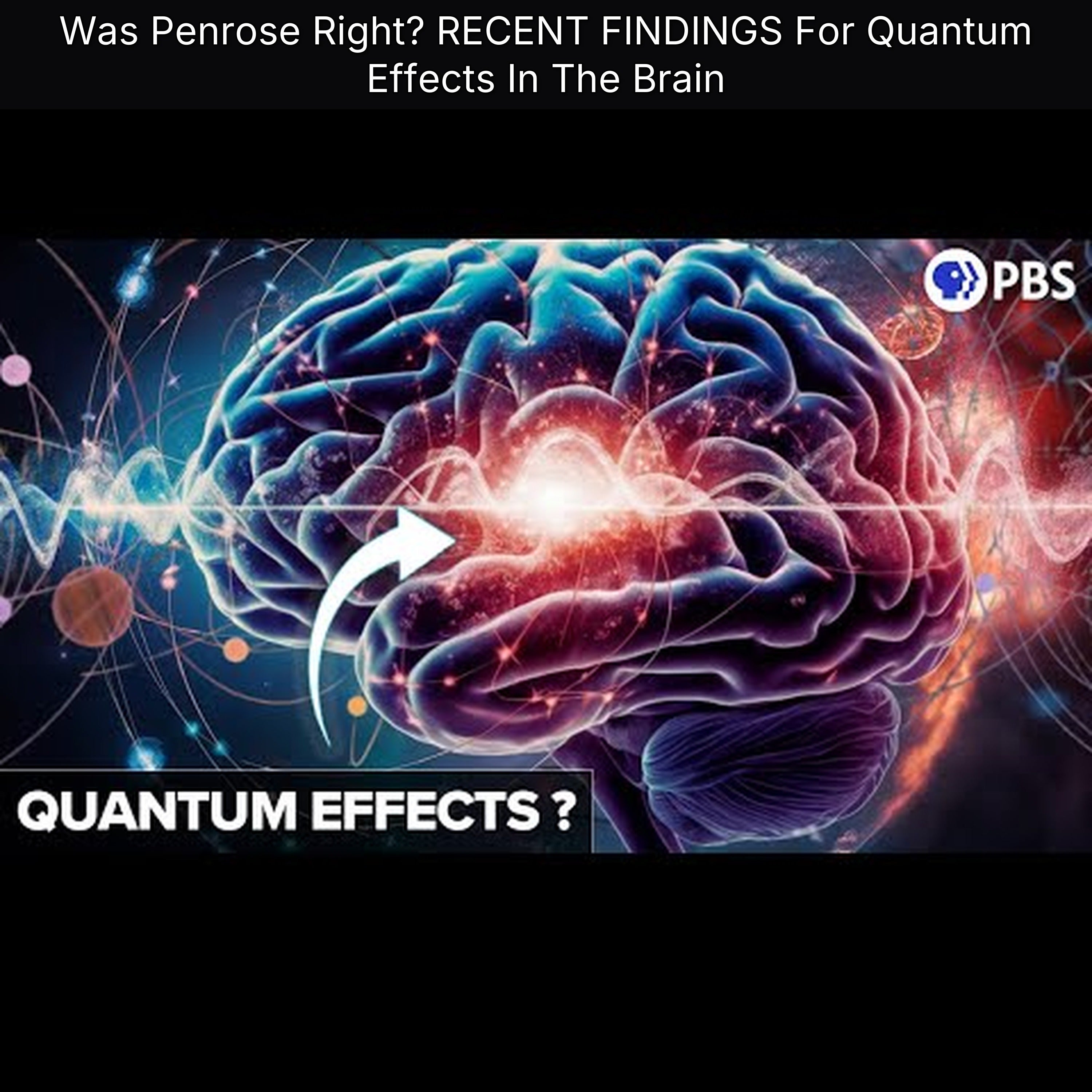
Check out the Space Time Merch Store Sign Up on Patreon to get access to the Space Time Discord! Nobel laureate Roger Penrose is widely held to be one of the most brilliant living physicists for his wide-ranging work from black holes to cosmology. And then there’s his idea about how consciousness is caused by quantum processes. Most scientists have dismissed this as a cute eccentricity—a guy like Roger gets to have at least one crazy theory without being demoted from the supersmartypants club. The most common argument for this dismissal is that quantum effects can’t survive long enough in an environment as warm and chaotic as the brain. Well, a new study has revealed that Penrose’s prime candidate molecule for this quantum activity does indeed exhibit large scale quantum activity. So was Penrose right after all? Are you a quantum entity? PBS Member Stations rely on viewers like you. To support your local station, go to:http://to.pbs.org/DonateSPACE Sign up for the mailing list to get e
Can we do AI both FAST and SAFE? [Win-Win with AI] Anti-Moloch Policy (Build More Pylons!) Episode release date: 20 Apr 2024 Core Ideas: Metamodernism: Narratives and emergence view of reality - Reduce suffering - Increase prosperity - Increase understanding mantra: Seek knowledge. DISCLAIMER: This is a community-driven show. --- Keywords: ai education, gpt, ai development, agi, ai research, ai agents, post labor economics, heuristic imperatives
View full lesson: http://ed.ted.com/lessons/erin-mckean-redefines-the-dictionary Is the beloved paper dictionary doomed to extinction? In this infectiously exuberant talk, leading lexicographer Erin McKean looks at the many ways today's print dictionary is poised for transformation. As the CEO and co-founder of new online dictionary Wordnik, Erin McKean is reshaping not just dictionaries but how we interact with language itself. Talk by Erin McKean.
Dig into the monetary value of the Sun and how important it is as our energy source as Daedalus contemplates buying it. -- Daedalus hasn’t been the same since losing Icarus. Suddenly, he begins expressing interest in buying the Sun from Helios. Rumors say Daedalus is aspiring to destroy it to avenge Icarus — or channel its immense power towards other imprudent aims. He summons a divine accountant and asks: how much would it cost to buy the Sun? Cella Wright conducts a financial analysis of our star’s worth. Lesson by Cella Wright, directed by Igor Ćorić, Artrake Studio. This video made possible in collaboration with Speed & Scale Learn more about how TED-Ed partnerships work: https://bit.ly/TEDEdPartner A special thanks to Galen Barbose who provided information and insights for the development of this video. Support Our Non-Profit Mission ---------------------------------------------- Support us on Patreon: http://bit.ly/TEDEdPatreon Check out our merch: http://bit.ly/TEDEDShop -------
Viewers like you help make PBS (Thank you ) . Support your local PBS Member Station here: https://to.pbs.org/DonateSPACE Uploaded 25-07-18 Can a demon defeat the 2nd Law of Thermodynamics? You can further support us on Patreon at https://www.patreon.com/pbsspacetime Get your own Space Time t-shirt at http://bit.ly/1QlzoBi Tweet at us! @pbsspacetime Facebook: facebook.com/pbsspacetime Email us! pbsspacetime [at] gmail [dot] com Comment on Reddit: http://www.reddit.com/r/pbsspacetime Help translate our videos! Previous Episode: The Misunderstood Nature of Entropy Entropy is sometimes described as a measure of disorder or randomness. The second law of thermodynamics – the law that entropy must, on average, increase – has been interpreted as the inevitability of the decay of structure. This is … misleading. As we saw in our episode on the physics of life, structure can develop in one region even as the entropy of the universe rises. Ultimately, entropy is a measure of the availability of
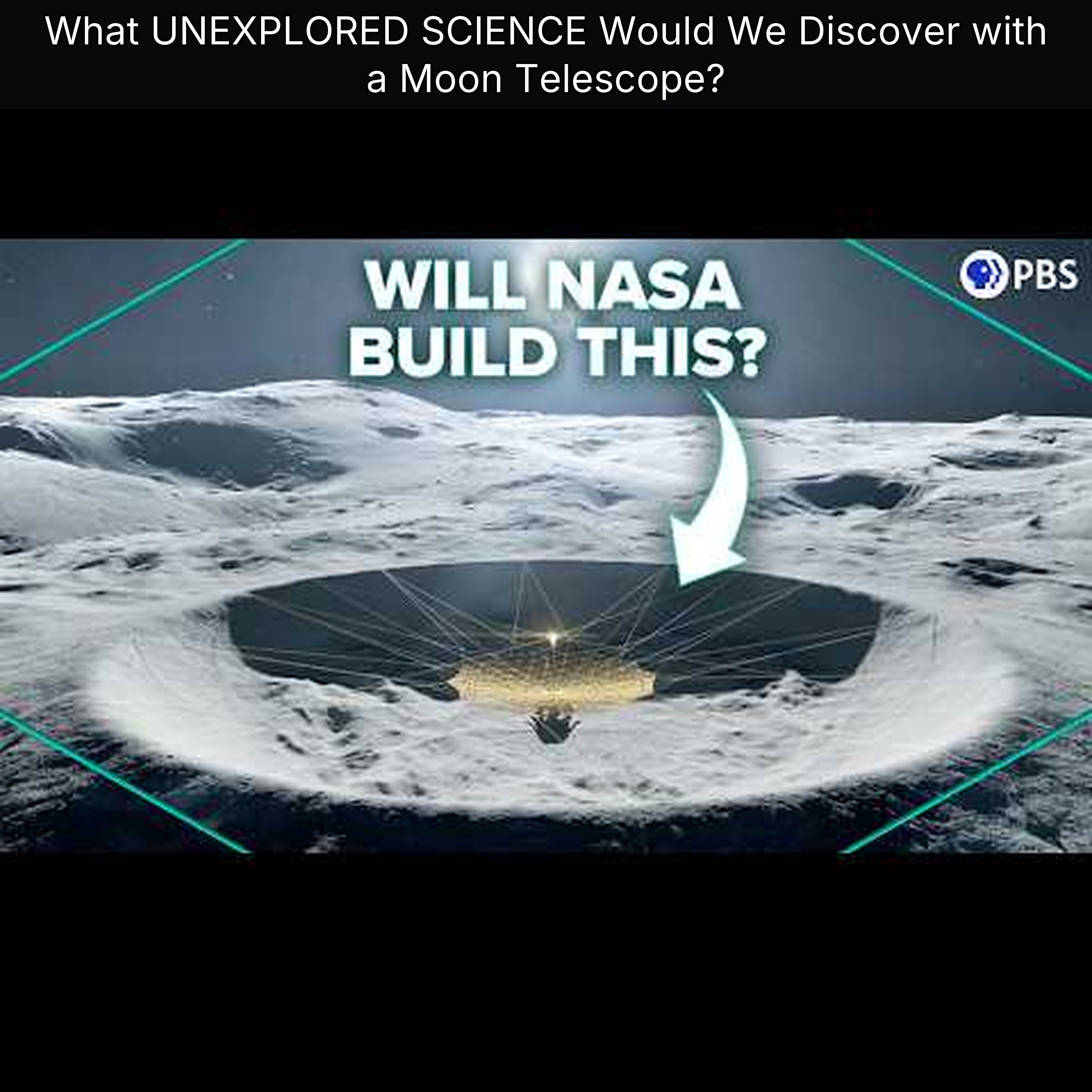
PBS Member Stations rely on viewers like you. To support your local station, go to:http://to.pbs.org/DonateSPACE Sign Up on Patreon to get access to the Space Time Discord! In order to see the faint light from objects in deepest space, astronomers go to the darkest places on the planet. In order to listen to their quite radio signals, they head as far from any radio-noisy humans as possible. But there’s nowhere on the earth, or even orbiting the Earth, that’s far enough to hear to the faint radio hum from the time before stars. In fact, we may need to build a giant radio telescope in the quietest place in the solar system—the far side of the moon. Check out the Space Time Merch Store Sign up for the mailing list to get episode notifications and hear special announcements! Search the Entire Space Time Library Here: https://search.pbsspacetime.com/ Hosted by Matt O'Dowd Written by Matt Caplan & Matt O'Dowd Post Production by Leonardo Scholzer, Yago Ballarini, Adriano Leal & Stephanie Far
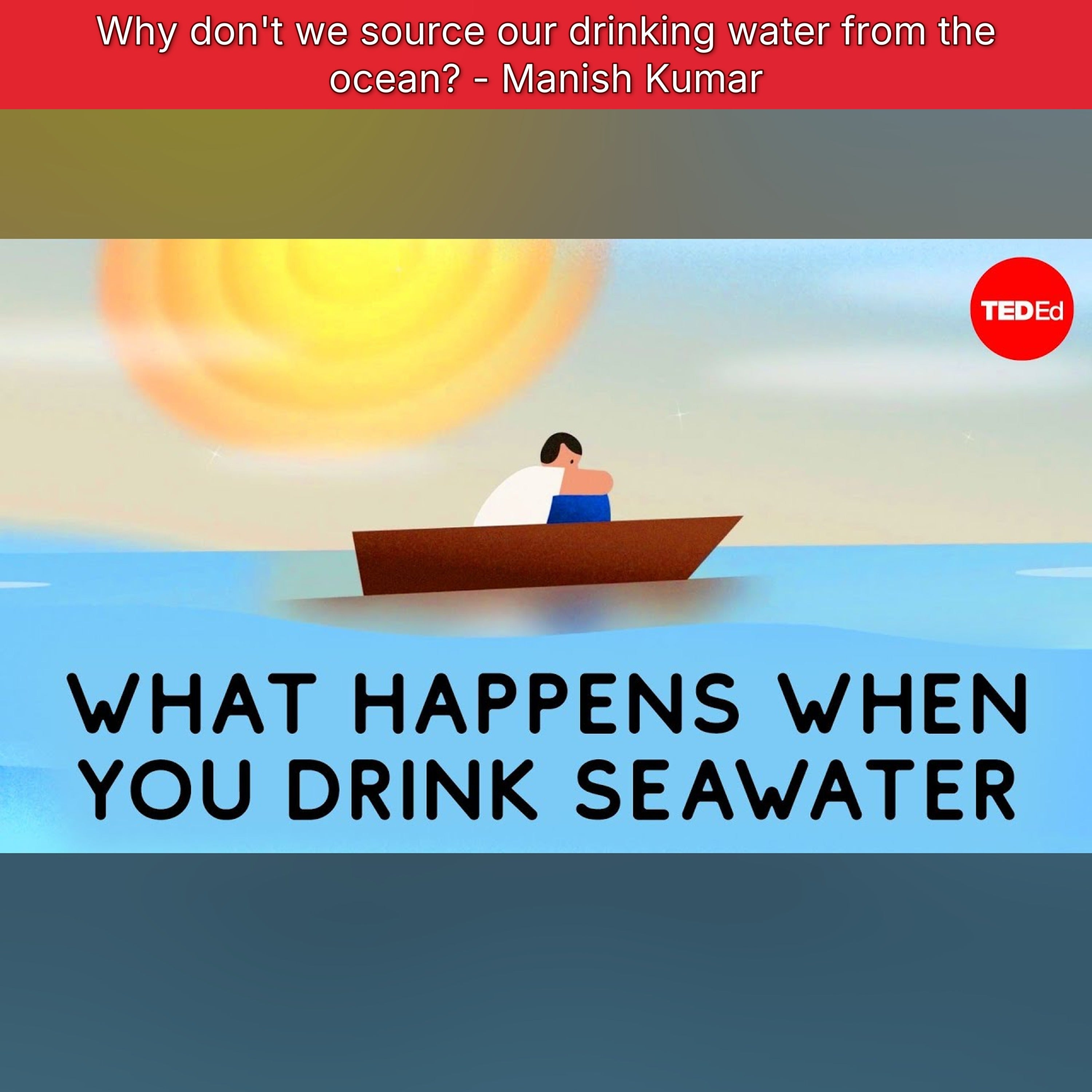
Explore how seawater desalination methods transform saltwater into potable freshwater, and what drawbacks this technology has. -- Humans have been transforming seawater into potable freshwater for millennia. Today, billions of people can’t access clean drinking water, and 87 different countries are projected to be “water-scarce” by 2050. So, how can we use seawater desalination to combat water scarcity? And can we do it without further harming the environment? Manish Kumar digs into how scientists are creating freshwater. Lesson by Manish Kumar, directed by Vitalii Nebelskyi, and action creative agency. Support Our Non-Profit Mission ---------------------------------------------- Support us on Patreon: http://bit.ly/TEDEdPatreon Check out our merch: http://bit.ly/TEDEDShop ---------------------------------------------- Connect With Us ---------------------------------------------- Sign up for our newsletter: http://bit.ly/TEDEdNewsletter Find us on Twitter: http://bit.ly/TEDEdTwitter P
PBS Member Stations rely on viewers like you. To support your local station, go to: http://to.pbs.org/DonateSPACE ↓ More info below ↓ Uploaded 20-10-20 Einstein’s special theory of relativity combines space and time into one dynamic, unified entity - spacetime. But if time is connected to space, could the universe be anything but deterministic? And does that mean that the future is predestined? Sign Up on Patreon to get access to the Space Time Discord! Check out the Space Time Merch Store Sign up for the mailing list to get episode notifications and hear special announcements! Hosted by Matt O'Dowd Written by Matt O'Dowd Graphics by Leonardo Scholzer, Yago Ballarini, and Pedro Osinski Directed by: Andrew Kornhaber Camera Operator: Setare Gholipour Executive Producers: Eric Brown and Andrew Kornhaber End Credits Music by J.R.S. Schattenberg: https://www.youtube.com/channel/UCRl6-nb4iOnsij-vnpAjp0Q Special Thanks to Our Patreon Sponsors! Big Bang Supporters Sean Maddox Marty Yudkovitz B
Would you like to ‘Have your Brownie and Eat it Too?’ Well, maybe you can do even better. In this video, I speak about some of the science framing the invention of a new Anti-Sugar Brownie, which can reproducibly drop my blood glucose (and insulin), and do the same in friends and colleagues, including those with diabetes. This is a sales pitch for science and curiosity. If you don’t need this tool in your life, good on you and you’ll still learn. For those looking for such a tool for friends and loved ones, well, let’s get innovative and fight Big Food in their own domain. Chapters 0:00 – An Anti-Sugar Brownie 0:53 – I Won’t Eat Sucralose and Aspartame 3:17 – I am Curious about Allulose 5:59 – Adding an unexpected Member to the Metabolic Health Army Levels Affiliate Link, 2 Free Months (Copy and Paste): https://levels.link/nicknorwitz Metabolic Loophole: https://youtu.be/fyERqDgSiMg Cure Metabolic Syndrome: https://youtu.be/hiCxpHDAlbs Continuous Glucose Monitors: https://youtu.be/vLD_
Wyoming’s wide-open landscapes have long been shared with grizzly bears and black bears — and history shows that not every encounter ended peacefully. In this episode of Scary Bear Attacks, we explore some of the most infamous bear attacks ever recorded in Wyoming, from early frontier encounters to modern-day incidents. These are true stories of hunters, hikers, settlers, and travelers who crossed paths with powerful predators in remote terrain. You’ll hear how these attacks unfolded, what triggered them, and what lessons can still be learned today from Wyoming’s long history of human-bear conflict. This episode focuses on real, documented bear attacks, told in a narrated, fireside storytelling style designed for listeners who enjoy educational yet chilling wildlife history — whether you’re watching closely or listening while you relax. Support the channel and view exclusive photos and early releases on Patreon: https://www.patreon.com/user?u=73787379 Watch more true bear attack storie
Watch the whole lesson on http://ed.ted.com/lessons/how-do-we-see-color-colm-kelleher Have you ever wondered what color is? In this first installment of a series on light, Colm Kelleher describes the physics behind colors-- why the colors we see are related to the period of motion and the frequency of waves. Lesson by Colm Kelleher, animation by Vitreous.
AGI-Proof Jobs: Navigating the Impending Obsolescence of Human Labor in the Age of AGIEpisode release date: 25 Jun 2023Spreading awareness about the works of some of the leading educators in the AI revolution. Core Ideas: Metamodernism: Narratives and emergence view of reality - Reduce suffering - Increase prosperity - Increase understanding mantra: Seek knowledge. ELABORATE: Add depth and detail to understanding, weaving comprehensive and nuanced explanations.DISCLAIMER: This is a community-driven show. ----------------------------------AGI-Proof Jobs: Navigating the Impending Obsolescence of Human Labor in the Age of AGIEpisode release date: 25 Jun 2023Spreading awareness about the works of some of the leading educators in the AI revolution. Core Ideas: Metamodernism: Narratives and emergence view of reality - Reduce suffering - Increase prosperity - Increase understanding mantra: Seek knowledge. ELABORATE: Add depth and detail to understanding, weaving comprehensive and nuanced expl
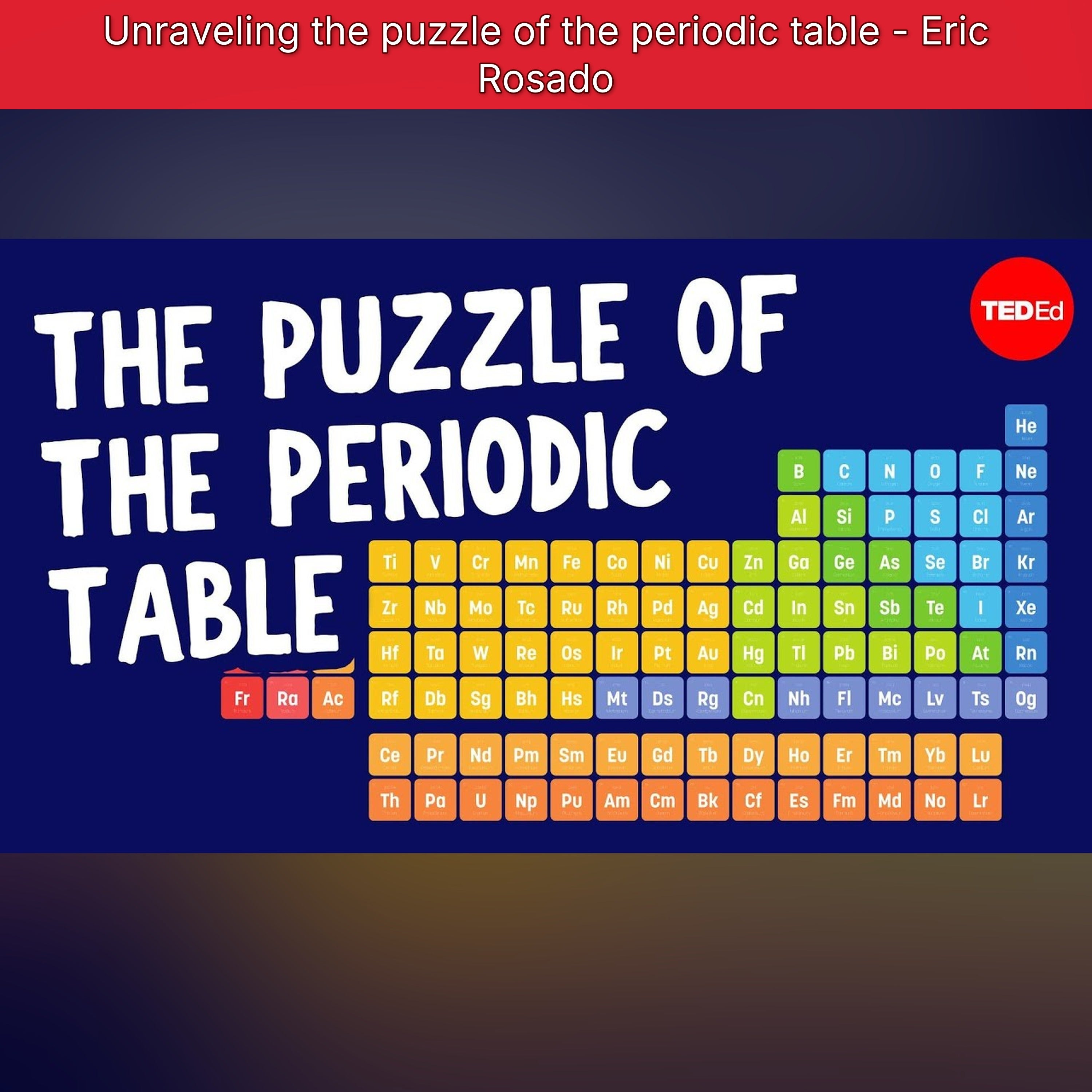
View full lesson: http://ed.ted.com/lessons/solving-the-puzzle-of-the-periodic-table-eric-rosado How did the periodic table of elements revolutionize our understanding of the world? What scientists contributed to the table we have today? Eric Rosado discusses the key people and discoveries that have molded our understanding of chemistry today. Lesson by Eric Rosado, animation by Other Scientist Productions.
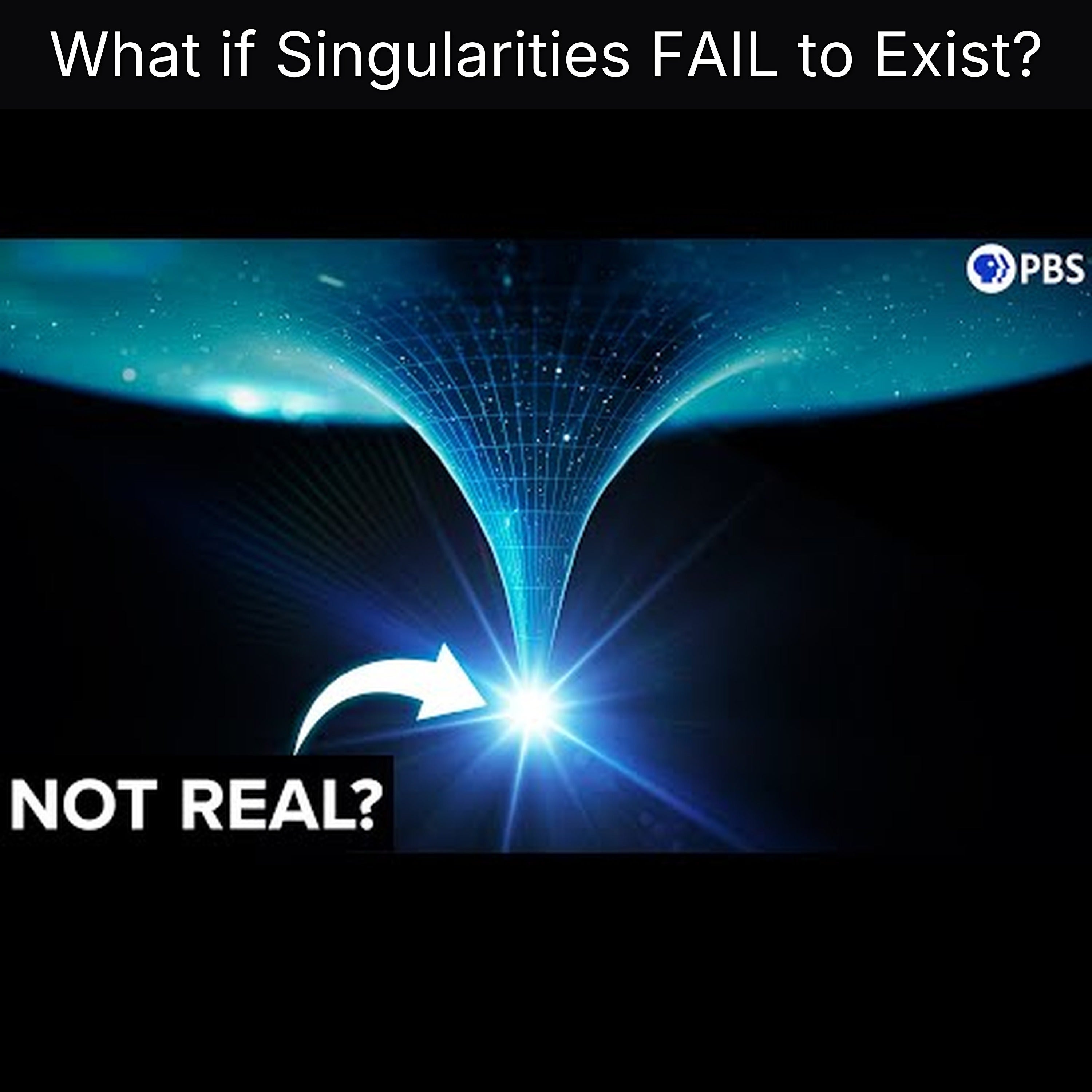
It's not too often that a giant of physics threatens to overturn an idea held to be self-evident by generations of physicists. Well, that may be the fate of the famous Penrose Singularity Theorem if we're to believe a recent paper by Roy Kerr. Long story short, the terrible singularity at the heart of the black hole may be no more. Roy Kerr Paper: Do Black Holes have Singularities? Check out the Space Time Merch Store PBS Member Stations rely on viewers like you. To support your local station, go to:http://to.pbs.org/DonateSPACE Sign up for the mailing list to get episode notifications and hear special announcements! Search the Entire Space Time Library Here: https://search.pbsspacetime.com/ Hosted by Matt O'Dowd Written by Christopher Pollack & Matt O'Dowd Post Production by Leonardo Scholzer, Yago Ballarini & Stephanie Faria Directed by Andrew Kornhaber Associate Producer: Bahar Gholipour Executive Producers: Eric Brown & Andrew Kornhaber Executive in Charge for PBS: Maribel Lopez Di
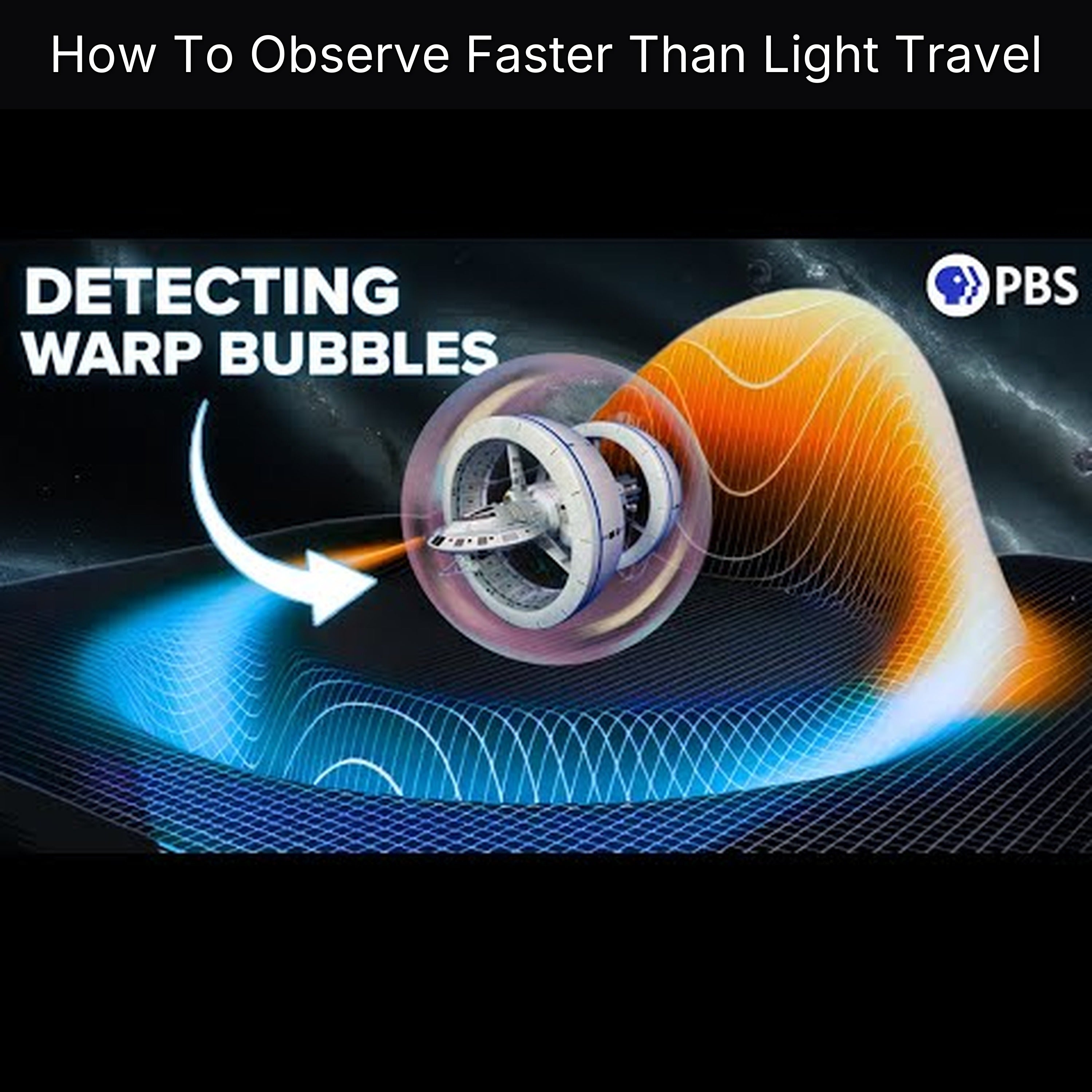
Check out the Space Time Merch Store Sign Up on Patreon to get access to the Space Time Discord! Warp drives may or may not be possible, but if they are then could a distant alien civilization’s warp fields produce gravitational waves that we could see here on Earth? According to a recent study.. Actually maybe, at least eventually. And we now know just what to look for and how to look for it. PBS Member Stations rely on viewers like you. To support your local station, go to:http://to.pbs.org/DonateSPACE Sign up for the mailing list to get episode notifications and hear special announcements! Search the Entire Space Time Library Here: https://search.pbsspacetime.com/ Space Pod 3d model: futaba@blender What no one has seen before: gravitational waveforms from warp drive collapse: https://arxiv.org/pdf/2406.02466 Hosted by Matt O'Dowd Written by Richard Dyer & Matt O'Dowd Post Production by Leonardo Scholzer, Yago Ballarini & Stephanie Faria Directed by Andrew Kornhaber Associate Produce
Thank you, Vox, for the best job I ever had. Here’s what’s next. Be featured in an episode - upload questions for me to answer! https://www.dropbox.com/request/Edocsb2kErpueQ7F9T1Q I tell different stories in different places: You can find me on TikTok here for short, fun explainers: https://www.tiktok.com/@cleoabram You can find me on Instagram here for more personal stories: https://www.instagram.com/cleoabram You can find me on Twitter here for thoughts and curated news: https://twitter.com/cleoabram Credits: (After the trailer, these will be at the end of each episode.) Produced and edited by: Cleo Abram Animated by: Whitney Theis Bio: Cleo Abram is an Emmy-nominated video producer and journalist. Cleo produces detailed explainer stories about technology and economics. She wrote the Coding and Diamonds episodes of Vox’s Netflix show, Explained, was the host and a senior producer of Vox’s first ever daily show, Answered, as well as a host and producer of Vox’s YouTube Originals show
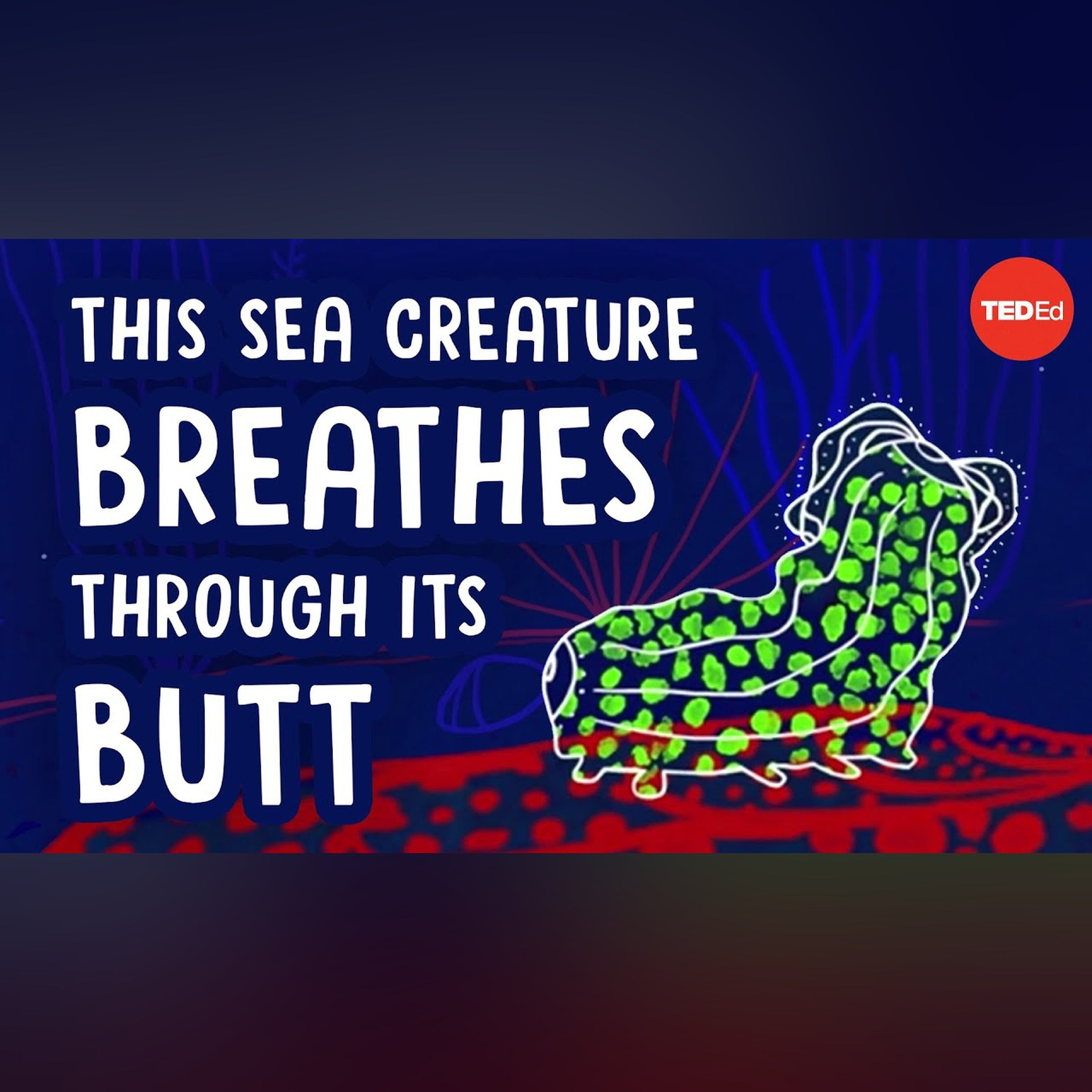
Explore the wonderfully bizarre life of the sea cucumber, and discover the essential role they play in keeping ocean ecosystems healthy. Uploaded 30-04-20 -- Is it a fuzzy sock? An overripe banana? A moldy tube of toothpaste? No! In fact, it’s a humble sea cucumber: a brainless, fleshy form surrounding a digestive tract, and bookended by a mouth and an anus. And while it might look odd, its daily toil paves the way for entire ecosystems to thrive. Cella Wright journeys to the bottom of the ocean to explore the lives of these sausage-shaped wonders. Lesson by Cella Wright, directed by Guto BR, Flávia Godoy and Lívia Serri Francoio. Sign up for our newsletter: http://bit.ly/TEDEdNewsletter Support us on Patreon: http://bit.ly/TEDEdPatreon Find us on Twitter: http://bit.ly/TEDEdTwitter Peep us on Instagram: http://bit.ly/TEDEdInstagram View full lesson: https://ed.ted.com/lessons/the-most-important-anus-in-the-ocean-cella-wright Thank you so much to our patrons for your support! Without y
Dig into the system that helps scientists distinguish trees from other varieties of plants, and what characteristics make a tree. -- Plants assume a variety of forms, and trees are just one of them. What makes or breaks a tree can come down to some pretty specific characteristics, based on how the plant develops as a result of how it evolved. Trees don’t all comprise one closely related group, like insects or mammals. So, how exactly do trees get classified as trees? Max G. Levy explains what distinguishes these woody plants. Lesson by Max G. Levy, directed by Evandro D'Hipolito. Support Our Non-Profit Mission ---------------------------------------------- Support us on Patreon: http://bit.ly/TEDEdPatreon Check out our merch: http://bit.ly/TEDEDShop ---------------------------------------------- Connect With Us ---------------------------------------------- Sign up for our newsletter: http://bit.ly/TEDEdNewsletter Find us on Twitter: http://bit.ly/TEDEdTwitter Peep us on Instagram: htt