Welcome to Crash Course Psychology! Want more videos about psychology? Check out our sister channel SciShow Psych at https://www.youtube.com/scishowpsych! Crash Course is on Patreon! Want to find Crash Course elsewhere on the internet? Facebook - http://www.facebook.com/YouTubeCrashCourse Twitter - http://www.twitter.com/TheCrashCourse Instagram - https://www.instagram.com/thecrashcourse/ CC Kids: http://www.youtube.com/crashcoursekids
The big question in the comments last week was, "BUT WHAT ABOUT ECLIPSES?" Today, Phil breaks 'em down for you. This episode is sponsored by Squarespace: http://www.squarespace.com/crashcourse Check out the Crash Course Astronomy solar system poster here: http://store.dftba.com/products/crashcourse-astronomy-poster -- As promised, Phil's sun spotting recommendations: Astronomers Without Borders (charitable org): http://store.astronomerswithoutborders.org/index.php?main_page=product_info&cPath=8&products_id=3 (http://store.astronomerswithoutborders.org/index.php?cPath=8&main_page=product_info&products_id=3) Rainbow Symphony glasses: http://www.rainbowsymphony.com/soleclipse.html Wide variety of viewers from Rainbow Symphony: http://www.eclipseglasses2017.com/buy-eclipse-glasses -- Chapters: Introduction 00:00 How Do Solar Eclipses Work? 0:52 Umbra & Penumbra 2:04 The Sun's Corona 3:17 Solar Eclipse Totality 4:14 Annular Eclipse 5:09 Can You Look at a Solar Eclipse? 5:32 Lunar Eclipses 6
In this episode of Crash Course Psychology, we get to meet the brain. Hank talks us through the Central Nervous System, the ancestral structures of the brain, the limbic system, and new structures of the brain. Plus, what does Phineas Gage have to do with all of this? Want more videos about psychology? Check out our sister channel SciShow Psych at https://www.youtube.com/scishowpsych! -- Chapters: Introduction: Phrenology 00:00 Localized Parts of the Brain Control Different Functions 1:01 Basics of the Central Nervous System 2:15 The Curious Case of Phineas Gage 2:50 Brain Structures 5:15 Ancestral Structures of the Brain 5:37 "Old Brain" - Brain Stem, Medulla, Pons, Thalamus, Reticular Formation, Cerebellum 6:17 Limbic System - Amygdala, Hypothalamus, Hippocampus, Pituitary Gland 7:31 Gray Matter & Brain Hemispheres 8:32 Cerebral Cortex 9:31 Frontal, Parietal, Occipital, and Temporal Lobes 10:06 Specialized Regions: Motor Cortex, Somatosensory Cortex, & Association Areas 10:32 Review
Explore why zero-carbon technologies are vulnerable to the valley of death in product development and how we can change it. Uploaded 06-04-21 -- All new products must pass through the "valley of death" before they reach the market. Many never make it out, and sometimes that’s ok— if they don’t work, don’t fill a need, or for any number of reasons. One of the fields where this problem is most pressing is zero-carbon technologies. Why is it vulnerable to this trap, and can we change it? Explore how to break the cycle of the funding gap. Directed by Lisa LaBracio Animation and art direction by Luísa M H Copetti, Hype CG In partnership with Bill Gates, inspired by his book "How To Avoid A Climate Disaster": http://bit.ly/PlanForZero Support Our Non-Profit Mission ---------------------------------------------- Support us on Patreon: http://bit.ly/TEDEdPatreon Check out our merch: http://bit.ly/TEDEDShop ---------------------------------------------- Connect With Us -------------------------
You couldn’t go a day without interacting with gymnosperms and angiosperms, the two most prominent groups of plants on the planet. We rely on them for food, clothing, and shelter — but why are they so common? In this episode of Crash Course Botany, we’ll find out how their seeds and flowers propelled them to evolutionary success. Chapters: How Plants Move 00:00 How Seeds Evolved 1:23 Types of Gymnosperms 5:17 Angiosperms 6:25 Dr. Else Marie Friis 8:00 Flower Structure 10:00 Why Angiosperms Thrived 10:39 Review & Credits 12:59 Sources: https://docs.google.com/document/d/1PB6WdUJcABAccO-U-t6ic7WbfP2z0Pr5P9a8HMr6zh4/edit?usp=sharing *** Crash Course is on Patreon! Thanks to the following patrons for their generous monthly contributions that help keep Crash Course free for everyone forever: Tawny Whaley, Sean Saunders, DL Singfield, Ken Davidian, Stephen Akuffo, Toni Miles, Steve Segreto, Kyle & Katherine Callahan, Laurel Stevens, Burt Humburg, Aziz Y, Perry Joyce, Scott Harrison, Mark & S
From Melbourne to Munich, Lombardy to Wuhan and all the way back again: this episode is about what happened when we faced those first coronavirus cases. Where things went well, where they didn’t — and whether there’s anything we could have done to stop it.Guests:Rhonda StuartHead of infection prevention at Monash HealthMerle BöhmerInfectious disease epidemiologist at the Bavarian Health and Food Safety AuthorityRaina MacIntyreProfessor of Biosecurity at the Kirby Institute, University of New South WalesFabrizio CarinciBiostatistician at the University of BolognaCarl ZimmerScience journalist and columnist for The New York TimesHost:Olivia WillisProducers:Cheyne Anderson, James BullenExecutive Producer:Joel WernerSound Design:Tim Jenkins
Three transplant patients die within a week of each other and alarm bells start ringing.Guests:Fiona PepperActor, playing the part of Rae MoranDr Mike CattonDeputy Director, Doherty Institute for Infection and ImmunityDr Dominique MartinAssociate Professor in Bioethics, Deakin UniversityHost:Olivia WillisProducers:James Bullen, Cheyne AndersonExecutive Producer:Joel WernerSound Design:Tim Jenkins
A junior doctor uncovers a mystery that rewrites the story of a famous epidemic — and we learn the troubling origins of 'patient zero' as a concept.Guests: Dr John GerrardDirector of Infectious Diseases and Immunology, Gold Coast University Hospital Professor Sharon LewinDirector, Peter Doherty Institute for Infection and Immunity Phil CarswellFounding president, Victorian AIDS Council Bill BowtellAdjunct professor, University of New South Wales Host:Olivia WillisProducers:Cheyne Anderson, James BullenExecutive Producer:Joel WernerSound Design:Tim Jenkins
Disease is spreading in the wake of a natural disaster on the Caribbean nation of Haiti — and everyone thinks they know where it's coming from. Spoiler: they don't. Guests: Jonathan M. KatzFreelance journalist and author, The Big Truck That Went By Dr Louise IversExecutive Director, Massachusetts General Hospital Center for Global Health; Associate Professor of Global Health and Social Medicine, Harvard Medical School Nelson Junior CeranorHost:Olivia WillisProducers:James Bullen, Cheyne AndersonExecutive Producer:Joel WernerSound Design:Tim Jenkins
Esters have a wide range of uses, from giving perfumes and colognes their fragrances, to preventing diseases like scurvy. Vitamin C, that scurvy preventing antioxidant, is derived from carboxylic acids, a class of organic compounds we’ve already learned a lot about! In this episode of Crash Course Organic Chemistry, we’ll look at four different carboxylic acid derivatives and their reactivities, react them with nucleophiles, and learn some hydrolysis reaction mechanisms that we can use in our synthesis of penicillin! Music: Vegas Glitz by Kevin MacLeod Link: https://incompetech.filmmusic.io/song/4580-vegas-glitz License: https://filmmusic.io/standard-license Episode Sources: Kennedy, J: Common names of carboxylic acids https://jameskennedymonash.wordpress.com/2014/11/26/common-names-of-carboxylic-acids/ Series Penicillin References Nicolaou, K. C., & Sorensen, E. J. (1996). Classics in total synthesis: targets, strategies, methods. John Wiley & Sons. Sheehan, J. C. (1982). The enchante
Ethan Mollick is an Associate Professor at Wharton, University of Pennsylvania, head of their Generative AI Lab, and author of the new book CO-EXISTENCE, just released, and on the NY Times bestseller list right away. His prior book CO-INTELLIGENCE was also huge hit, NYT bestseller. He writes ONE USEFUL THING (https://www.oneusefulthing.org/) on Substack, which is one of the most insightful and popular series of essays on AI on the platform. Let me highlight that Ethan evaluates all of the new models independently and is not funded by any of the AI companies, which puts him in a singular or rarified group of experts. Here are some of the topics we discussed: * The Jagged Frontier (the term Ethan came up with that has been adopted by all) * The end of Prompting * The Next-Token Train * The Bitter Lesson * Deskilling and Never Skilling * Hyperscaling and Recursive Self-Improvement (RSI) * Data Centers * Claude Table 5.2 (his new essay with a mind blowing video not to miss) (https://www.on
Today we’re rounding out our planetary tour with ice giants Uranus and Neptune. Both have small rocky cores, thick mantles of ammonia, water, and methane, and atmospheres that make them look greenish and blue. Uranus has a truly weird rotation and relatively dull weather, while Neptune has clouds and storms whipped by tremendous winds. Both have rings and moons, with Neptune’s Triton probably being a captured iceball that has active geology. This episode was brought to you by Squarespace http://www.squarespace.com/crashcourse Check out the Crash Course Astronomy solar system poster here: http://store.dftba.com/products/crashcourse-astronomy-poster -- Chapters: Introduction: Uranus 00:00 Uranus's Structure 1:35 Uranus's Atmosphere 2:53 Uranus's Weird Tilt 3:55 Uranus's Moons 5:12 Uranus's Rings 6:00 Neptune's Structure 6:35 Neptune's Atmosphere 7:02 Neptune's Magnetic Field & Rings 8:10 Triton: Neptune's Largest Moon 8:36 The Discovery of Neptune 9:52 Review 11:27 -- PBS Digital Studios
View full lesson: http://ed.ted.com/lessons/mysteries-of-vernacular-robot-jessica-oreck-and-rachael-teel Uploaded 31-10-13 In 1920, Czech writer Karel Čapek wrote a play about human-like machines, thereby inventing the term robot from the Central European word for forced labor. Jessica Oreck and Rachael Teel explain how the science fiction staple earned its name. Lesson by Jessica Oreck and Rachael Teel, animation by Jessica Oreck.
On this, our 351st Evolutionary Lens livestream, we discuss Russell Brand: his history, his character, his recent convictions and sentencing. What does consent mean in the modern era—is it a concept that can possibly do what it needs to do? Other concepts under discussion are rape, statute of limitations, charisma, and redemption. Then: how a story of a failed co-op reveals deep divides. ***** Our sponsors: Sundays for Dogs: Dog food so tasty and healthy, even husbands swear by it. It’s way better. ***** Join us on Locals! Check out our store! Epic tabby, digital book burning, saddle up the dire wolves, and more: https://darkhorsestore.org Music: "Marble Machine" by Wintergatan Thumbnail: Getty Images News/Getty Images Europe ***** Mentioned in this episode: Sentencing by judge: https://x.com/Bounce_BackLoan/status/2119798409658023943?a=sNUbvoX2MuMzDIjETSQ&s=20 Piers Morgan interview: https://x.com/heisdenji/status/2119196517680439299?a=mzvOhnz_7WKIIWdhXxw HEH on Substack: https://natu
One of the most important New Testament scholars alive returns to Blurry Creatures, bearing a rebuke straight from Isaiah: your God is far too small. N.T. Wright joins Luke and Nate to walk through the heart of Isaiah, chapters 40 to 55, and the message the prophet delivered to exiles who were convinced their God had lost. Stand back, Isaiah says, and remember who actually made the nations, the One before whom empires are a drop in a bucket. Wright shows how that ancient call to a bigger imagination runs straight through the Gospels, because the whole story of Jesus is the story of Yahweh finally coming home. From there the conversation opens wide. Wright explains his three focal lengths for reading prophecy, why Isaiah may be the fifth gospel, and the day God’s glory abandoned the temple and left a centuries-long ache that only the suffering servant would answer. He also turns the knife on the present, naming the three idols he says the modern West still bows to: Mars, Mammon, and Aph
Ben White from GRDC’s Grain Storage Extension team and Peter Newman from Planfarm share a simple message: run harvesters at full capacity, and if they can't operate at full capacity, consider parking them. Drawing on insights from a recent series of harvester setup workshops, the discussion explores how machinery capacity, grain handling logistics and storage options can work together to improve harvest efficiency. This project is a GRDC investment led by Planfarm and delivered in collaboration with the GRDC Harvester Setup Workshops. Contacts: Ben White Grain Storage Extension team [email protected] Peter Newman Planfarm [email protected] More Information: GRDC video: https://www.youtube.com/watch?v=GDFwGz5muZc Project/Investment Code: PLN2603-001SAX (https://grdc.com.au/grdc-investments/investments/investment?code=PLN2603-001SAX)
In which John Green mispronounces words, asks if jokes are appropriate, and struggles to use the teleprompter. Crash Course is on Patreon! Want to find Crash Course elsewhere on the internet? Facebook - http://www.facebook.com/YouTubeCrashCourse Twitter - http://www.twitter.com/TheCrashCourse Instagram - https://www.instagram.com/thecrashcourse/ CC Kids: http://www.youtube.com/crashcoursekids
MICHAEL JACO welcomes LARRY BALLARD for an explosive conversation examining allegations surrounding the 2026 midterm elections and what Larry believes could happen next. ELECTION FRAUD & THE 2026 MIDTERMS Larry questions reported voting patterns, raises concerns about election security, and discusses his belief that voter fraud could be exposed on a massive scale. ⚠️ VOTING MACHINES & ELECTION CERTIFICATION Could disputed election results lead to a certification crisis? Larry shares his theories about electronic voting systems, potential manipulation, and the possibility of major challenges to the election process. MILITARY INTERVENTION, EMERGENCY BROADCASTS & MARTIAL LAW Larry makes dramatic predictions about possible military involvement, emergency broadcasts, and sweeping political consequences if election disputes escalate. 🇺🇸 WHAT COMES NEXT FOR AMERICA? Michael and Larry explore the potential implications of these scenarios, including Larry's predictions about President Trump's
If this spoke to you and you want to keep learning with me, subscribe here and join me at https://staycuriousmetabolism.com, (https://staycuriousmetabolism.com,/) our #1 top-rising science newsletter. #StayCurious. I hope to see you there. Description I spent most of my life preparing to become a practicing doctor. I was valedictorian at Dartmouth, completed my PhD at Oxford, earned my MD at Harvard Medical School, and grew up in a family where medicine was practically the family business. But I was also a patient. In my early twenties, severe inflammatory bowel disease took me from the laboratory to hospital beds, intensive care, and some of the darkest moments of my life. An unconventional dietary intervention ultimately healed me and changed how I thought about medicine. This is the most personal story I’ve shared here. It’s about why I stepped away from the traditional medical path, what chronic illness taught me about the gap between evidence and individual experience, and why I c
Today Craig is going to talk about a topic that makes voters and politicians alike ANGRY! We're going to talk about Gerrymandering - that is the process in which voting districts are redrawn in a way to favor one party during elections. As you'll see, this is why election outcomes on Census years (which tend to be when districts are redrawn) are a really big deal. So we'll talk about how some of these cockamamie voting districts come to be and explain how Gerrymandering can affect the outcomes (and misrepresent voters) during elections. But even with all these rage-inducing and bizarre district maps, it's important to remember that it isn't ALL political scheming, but also a reflection of the tendency for Democrats to live in urban areas. Produced in collaboration with PBS Digital Studios: http://youtube.com/pbsdigitalstudios Support is provided by Voqal: http://www.voqal.org (http://www.voqal.org/) All attributed images are licensed under Creative Commons by Attribution 4.0 Want to fi
Climate change shakes up all of Earth’s systems, including the living ones. In this episode of Crash Course Biology, we’ll see how climate change’s effects rattle the entire chain of life. Changes felt in one population ripple out to affect entire communities and ecosystems—whether they’re composed of pine trees, puffins, or people. Chapters: A Changing Climate 00:00 Ecosystem Effects 2:21 Ecosystem Responses 4:38 Increased Carbon Dioxide 7:04 Effects on Society 8:46 Review & Credits 10:53 Special thanks to Linus Obenhaus for additional video editing support on this episode! This series was produced in collaboration with HHMI BioInteractive, committed to empowering educators and inspiring students with engaging, accessible, and quality classroom resources. Visit https://BioInteractive.org/CrashCourse (https://biointeractive.org/CrashCourse) for more information. Are you an educator looking for what NGSS Standards are covered in this episode? Check out our Educator Standards Database fo
View full lesson: http://ed.ted.com/lessons/the-deadly-irony-of-gunpowder-eric-rosado Uploaded 04-11-13 In the mid-ninth century, Chinese chemists, hard at work on an immortality potion, instead invented gunpowder. They soon found that this highly inflammable powder was far from an elixir of life -- they put it to use in bombs against Mongol invaders, and the rest was history. Eric Rosado details how gunpowder has caused devastation around the world, despite the incandescent beauty of fireworks. Lesson by Eric Rosado, animation by Zedem Media.
Today Phil explains how telescopes work and offers up some astronomical shopping advice. Check out the Crash Course Astronomy solar system poster here: http://store.dftba.com/products/crashcourse-astronomy-poster -- Chapters: Introduction 00:00 How do Telescopes Work? 0:47 Refraction 2:50 Magnification 3:48 Resolution 4:28 Reflectors 5:19 What Kind of Telescope Should You Buy? 6:19 Technology and the Light Spectrum 7:45 Review 11:14 -- Crash Course is on Patreon! -- PBS Digital Studios: http://youtube.com/pbsdigitalstudios Follow Phil on Twitter: https://twitter.com/badastronomer Crash Course is on Patreon! Want to find Crash Course elsewhere on the internet? Facebook - http://www.facebook.com/YouTubeCrashCourse Twitter - http://www.twitter.com/TheCrashCourse Instagram - https://www.instagram.com/thecrashcourse/ CC Kids: http://www.youtube.com/crashcoursekids -- PHOTOS/VIDEOS http://en.wikipedia.org/wiki/Galileo_Galilei#mediaviewer/File:Justus_Sustermans_-_Portrait_of_Galileo_Galilei,_
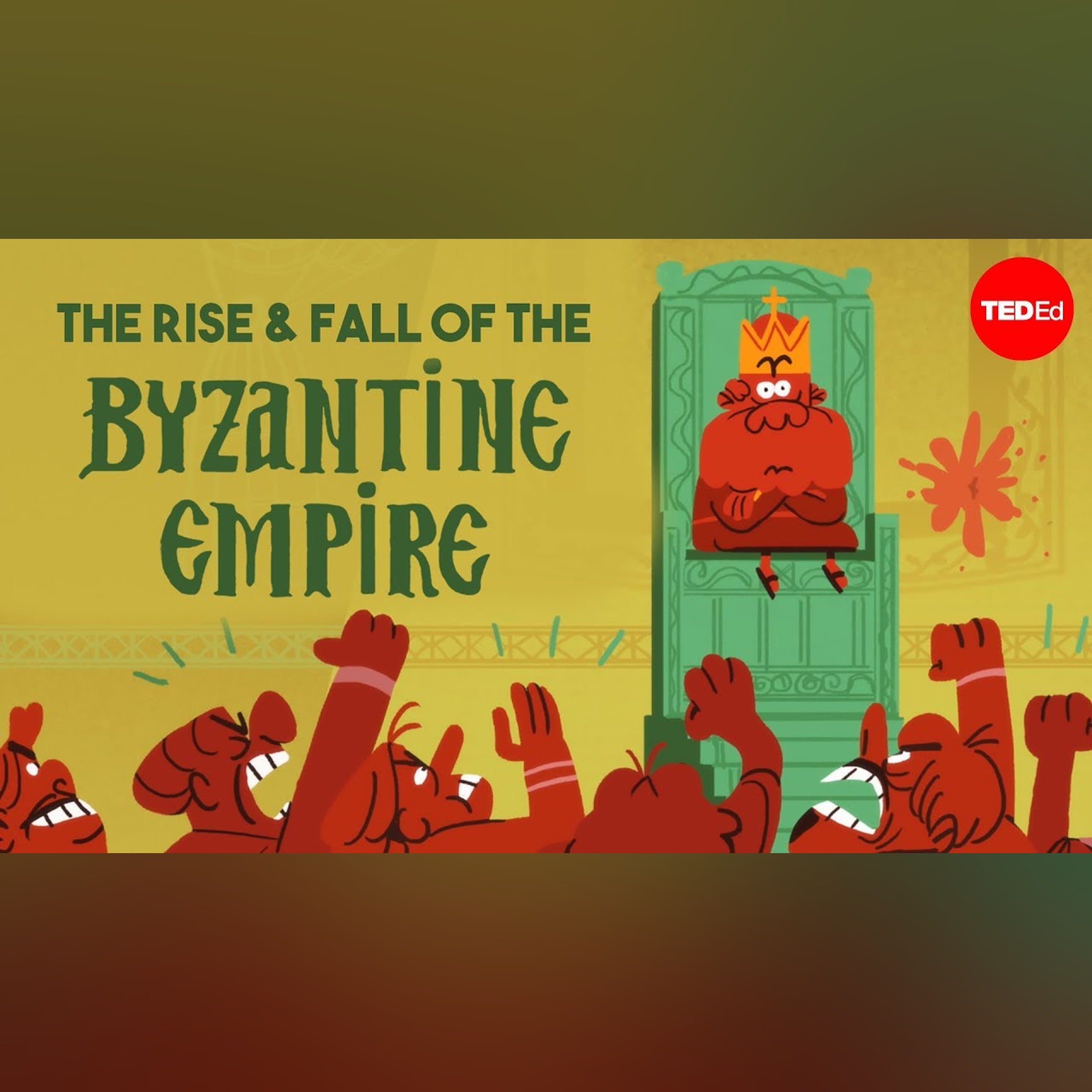
Uploaded 09-04-18 View full lesson: https://ed.ted.com/lessons/the-rise-and-fall-of-the-byzantine-empire-leonora-neville Most history books will tell you that the Roman Empire fell in the fifth century CE, but this would’ve come as a surprise to the millions who lived in the Roman Empire through the Middle Ages. This Medieval Roman Empire, today called the Byzantine Empire, began when Constantine, the first Christian emperor, moved Rome's capital. Leonora Neville details the rise and fall of the Byzantine Empire. Lesson by Leonora Neville, animation by Remus and Kiki. Thank you so much to our patrons for your support! Without you this video would not be possible! Abhijit Kiran Valluri, Mandeep Singh, Sama aafghani, Vinicius Lhullier, Connor Wytko, Marylise CHAUFFETON, Marvin Vizuett, Jayant Sahewal, Quinn Shen, Caleb ross, Elnathan Joshua Bangayan, Gaurav Rana, Mullaiarasu Sundaramurthy, Jose Henrique Leopoldo e Silva, Dan Paterniti, Jose Schroeder, Jerome Froelich, Tyler Yoshizumi, Ma