Listen through the publisher, then discuss the episode here or arrange an in-person Roundtable. Your city determines where to meet.
Roundtables are designed for groups of four, with a shared subject and room for everyone to speak. Come for discussion, with no dating expectation.
Disease is spreading in the wake of a natural disaster on the Caribbean nation of Haiti — and everyone thinks they know where it's coming from. Spoiler: they don't. Guests: Jonathan M. KatzFreelance journalist and author, The Big Truck That Went By Dr Louise IversExecutive Director, Massachusetts General Hospital Center for Global Health; Associate Professor of Global Health and Social Medicine, Harvard Medical School Nelson Junior CeranorHost:Olivia WillisProducers:James Bullen, Cheyne AndersonExecutive Producer:Joel WernerSound Design:Tim Jenkins
Episode information is provided by the publisher. Listening takes place on the publisher’s service.
A kiss can be wonderful. It can create an instant connection, spark romance, or make you feel closer to someone. But a kiss can also have the opposite effect — and sometimes ruin everything. So what makes kissing so powerful, and why can one kiss make such a difference? There's some fascinating science behind it. https://www.scientificamerican.com/article/why-we-kiss/ We spend an enormous amount of time worrying about what's going to change. What's next? What's coming? How do we prepare? But what if we're paying attention to the wrong things? Some of the most important forces shaping our lives never change, and understanding them may be far more valuable than trying to predict the future — something humans are notoriously bad at. Morgan Housel, partner at The Collaborative Fund and author of Same as Ever: A Guide to What Never Changes (https://amzn.to/3SwWn6u) (https://amzn.to/3SwWn6u)), joins me to explain why the things that stay the same may be the most important things to understan
If you enjoyed this video and want access to all the references, deeper nuance, and additional context behind everything we discussed, consider joining StayCurious Metabolism, an overall top best-selling science newsletter: https://staycuriousmetabolism.com (https://staycuriousmetabolism.com/) The companion article for this video is here: https://staycuriousmetabolism.substack.com/p/the-heart-supplements-i-recommend?r=40ekz2 Find out why Stay Curious Metabolism became one of the fastest-growing science publications on Substack and reached the top two globally in just one year. Referenced Videos Heart Rate Variability: https://youtu.be/bdxYexIpYjo Berberine: https://youtu.be/KMVsg9EnbcE Vitamin C: https://youtu.be/0p0cld4RmDo Chapters 0:00 – 2,000 Hours of Heart Health in 20 Minutes 1:50 – Our Mystery Box of Heart Health Tools 2:15 – The Scoop, Nattokinase 5:12 – The Ice Pack, TUDCA 9:24 – The Charger, Heart Rate Variability 13:24 – The Straw, Berberine 16:00 – The Ducted Tape, Vitamin
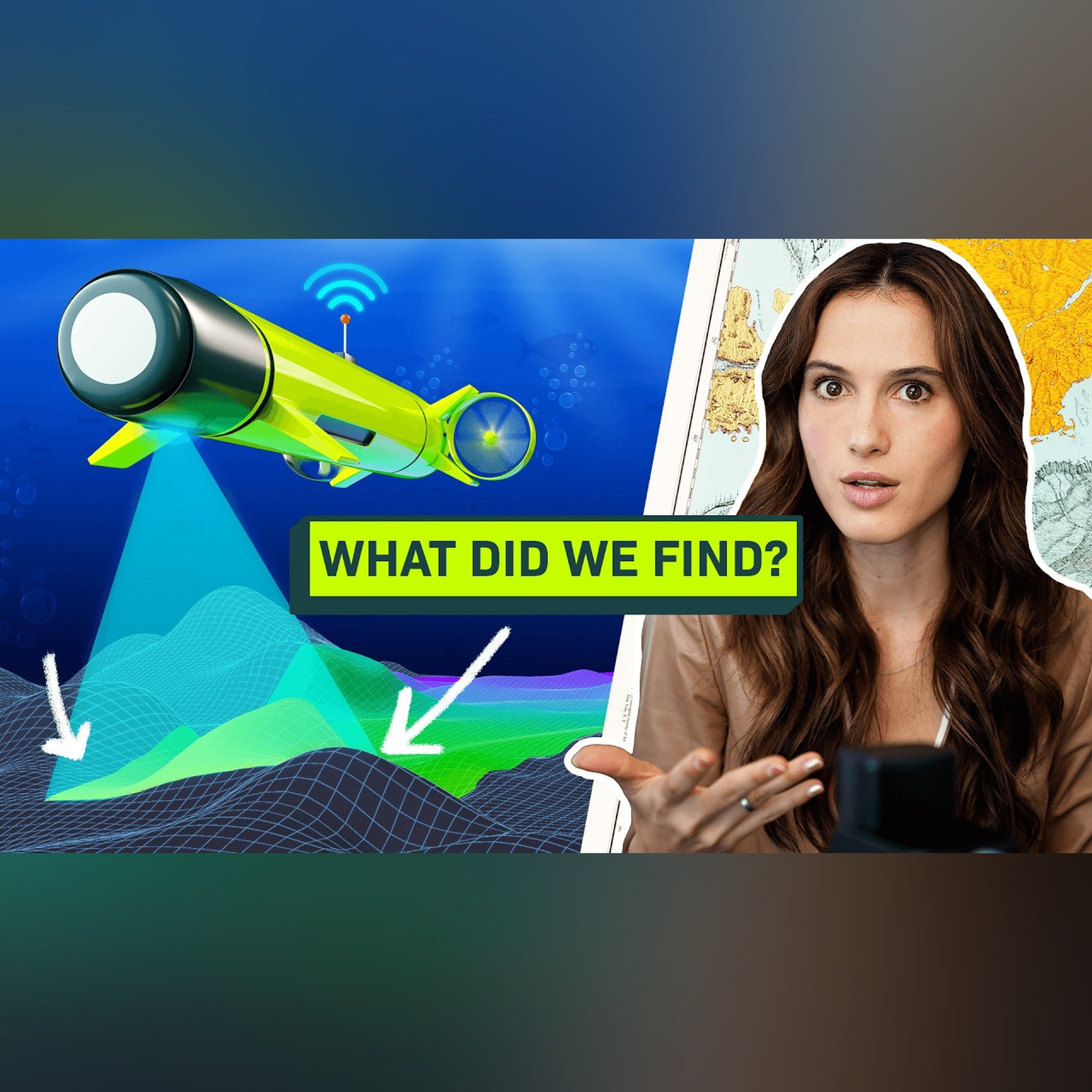
Why deep sea maps are SO BAD (and how to fix it)... Our maps of the ocean are surprisingly bad! On Google Maps it looks like we know so much… but we know less about the ocean floor than we do the surface of Mars. And that’s a big problem, because we are using the ocean all the time: We’re laying internet cables across it, we fight wars in it, we search it during a crisis - like the imploded OceanGate Titan submersible or the missing Malaysia Airlines Flight 370. 71% of the surface of the Earth is water! And yet we have a surprisingly limited view of what’s below it. But that’s also understandable. Because cartographically speaking, water sucks. For Mars or Earth’s surface, we can take pictures. But light doesn’t get to the ocean floor, so we need other ways to see it. The good news is, we’re developing that tech right now, and an international group called Seabed 2030 is working to piece together a better map. There is a terrifying, incredible, alien world on our own planet, and we’re
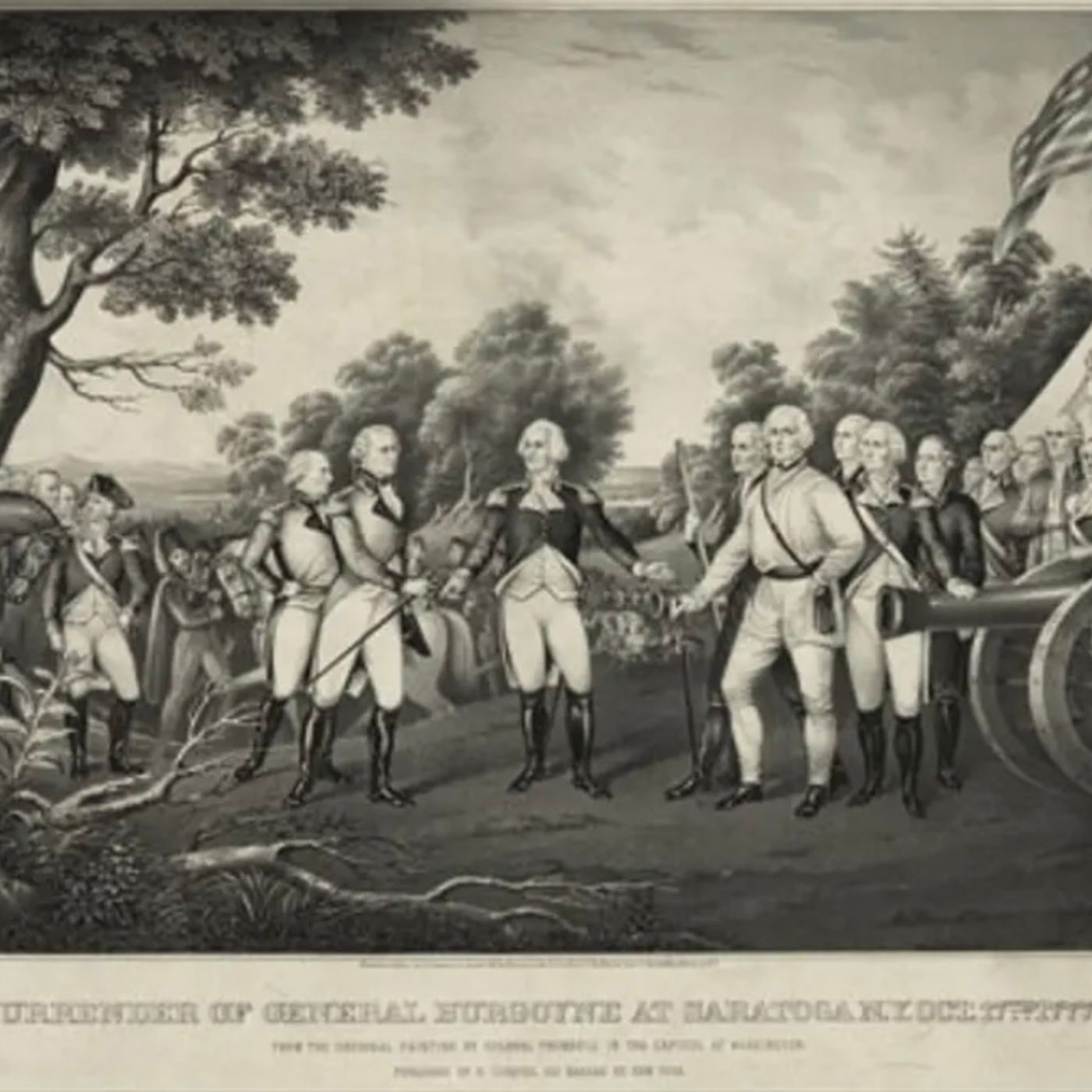
GATES AND BURGOYNE Burgoyne Surrender Tactical Negotiations Turning Point — Part Four Patrick K. O’Donnell, author of Revolutionary Snipers: Washington’s Frontier Commandos Whose Marksmanship Forged a New Way of War and Helped Win the Revolution, explains how, surrounded and cut off from water by relentless American snipers, Burgoyne’s starving army opened surrender negotiations with Gates and James Wilkinson. The capitulation of an entire British field army secured vital French intervention, marking the decisive turning point of the Revolutionary War. (12)
In Brought to You By: How Corporations Warped the Truth, Conned the Public, and Broke Democracy (https://bookshop.org/a/12343/9781639736331), Amy Westervelt exposes the plot hidden within the familiar story of science denial. Over the last century, Big Industry has built a vast apparatus of think tanks, lobbyists, sponsored university labs, and obliging news networks to con the public and fool decision-makers, poisoning the informational ecosystem and warping the nature of truth along the way. With her signature wit and incisiveness, Westervelt introduces the masterminds of corporate misinformation: Herb Schmertz, the public relations pioneer who made Mobil “the thinking man's oil company;” Richard Edelman, the PR guy who helped the dairy industry vilify oat milk; David Petraeus, the disgraced spy chief using counter-insurgency tactics to discredit climate science; and many more. She shows how these company men have worked to usher in an era of unprecedented corporate control. Only by
Check out the Space Time Merch Store Sign Up on Patreon to get access to the Space Time Discord! Black holes are inevitable predictions of general relativity—our best theory of space, time and gravity. But they clash in multiple ways with quantum mechanics, our equally successful description of the subatomic world. One such clash is the black hole information paradox—and a proposed solution—black hole complementarity—may forced us to radically rethink what it even means to say that something to exists. PBS Member Stations rely on viewers like you. To support your local station, go to:http://to.pbs.org/DonateSPACE Sign up for the mailing list to get episode notifications and hear special announcements! Search the Entire Space Time Library Here: https://search.pbsspacetime.com/ Hosted by Matt O'Dowd Written by Matt O'Dowd Post Production by Leonardo Scholzer, Yago Ballarini & Stephanie Faria Directed by Andrew Kornhaber Associate Producer: Bahar Gholipour Executive Producers: Eric Brown
From Melbourne to Munich, Lombardy to Wuhan and all the way back again: this episode is about what happened when we faced those first coronavirus cases. Where things went well, where they didn’t — and whether there’s anything we could have done to stop it.Guests:Rhonda StuartHead of infection prevention at Monash HealthMerle BöhmerInfectious disease epidemiologist at the Bavarian Health and Food Safety AuthorityRaina MacIntyreProfessor of Biosecurity at the Kirby Institute, University of New South WalesFabrizio CarinciBiostatistician at the University of BolognaCarl ZimmerScience journalist and columnist for The New York TimesHost:Olivia WillisProducers:Cheyne Anderson, James BullenExecutive Producer:Joel WernerSound Design:Tim Jenkins
Three transplant patients die within a week of each other and alarm bells start ringing.Guests:Fiona PepperActor, playing the part of Rae MoranDr Mike CattonDeputy Director, Doherty Institute for Infection and ImmunityDr Dominique MartinAssociate Professor in Bioethics, Deakin UniversityHost:Olivia WillisProducers:James Bullen, Cheyne AndersonExecutive Producer:Joel WernerSound Design:Tim Jenkins
A junior doctor uncovers a mystery that rewrites the story of a famous epidemic — and we learn the troubling origins of 'patient zero' as a concept.Guests: Dr John GerrardDirector of Infectious Diseases and Immunology, Gold Coast University Hospital Professor Sharon LewinDirector, Peter Doherty Institute for Infection and Immunity Phil CarswellFounding president, Victorian AIDS Council Bill BowtellAdjunct professor, University of New South Wales Host:Olivia WillisProducers:Cheyne Anderson, James BullenExecutive Producer:Joel WernerSound Design:Tim Jenkins
People affected by infrastructure routes should have a meaningful role in choosing them.
Share your view, then see how readers voted. No sign-in required. This poll is shared across stories.
Do you agree or disagree?
Common Quandary
A Common Quandary to discuss
Another conversation to explore, separate from this news story.
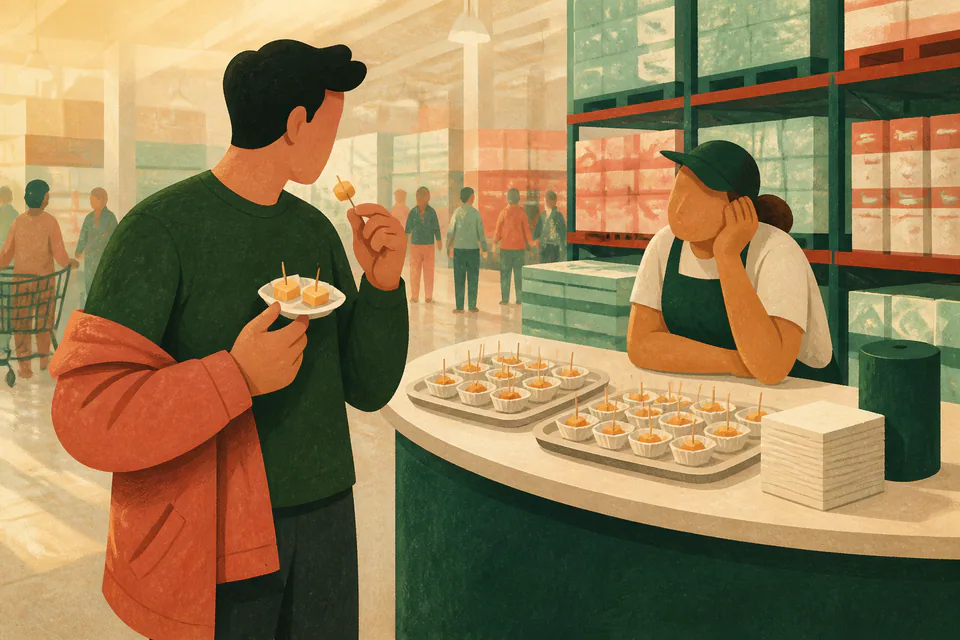
You love the free sample but will never buy it. How many times may you circle back?
A warehouse store is offering delicious samples. You have no intention of purchasing the product, but the employee seems bored and has trays to spare. After taking two, you consider removing your jacket and returning for a third.
Is exploiting generosity wrong when the giver appears not to care?