Are you ready for the understatement of the century? Health care is complicated. Across the 200 or so countries on Earth, there are a lot of different ways people receive health care. In this episode of Crash Course Public Health, we’re going to break down the building blocks that are used to create a health care system and take a look at four of the most common models. Check out our shared playlist with APHA: https://www.youtube.com/playlist?list=PLDjqc55aK3kywF2dd97_Jh5iP0d2ARhdo Vanessa’s channel: https://www.youtube.com/braincraft Sources: https://docs.google.com/document/d/1OHJiQ1njj5jWJC1YLDBzQgKC1QfnVgqJbbpK6qs7ekA/edit?usp=sharing Chapters: Introduction to Health Care Systems 00:00 Six Building Blocks 2:03 Beveridge Model 5:18 Bismarck Model 6:37 National Health Insurance Model 7:09 Out-of-Pocket Model 7:35 Goals of Healthcare 10:45 Review & Credits 11:44 *** Crash Course is on Patreon! Thanks to the following patrons for their generous monthly contributions that help keep Cras
Nearly a third of all our greenhouse gas emissions come from generating electricity. Scientists agree that we have to find ways to make electricity without releasing so much carbon dioxide into the air. In this episode of Crash Course Climate and Energy, we’re going to tell you about some of the ways scientists and engineers are decarbonizing the electricity supply with energy sources such as solar, wind, nuclear, and hydroelectric and the benefits and drawbacks of each. Chapters: Introduction: Decarbonizing Electricity 00:00 Electricity From Solar & Wind Power 2:05 Challenges of Solar & Wind Power 3:36 Hydroelectric Power 6:46 Nuclear Power 8:21 Why Carbon-Free Electricity Matters 9:52 Review & Credits 11:35 Sources: *** Crash Course is on Patreon! Thanks to the following patrons for their generous monthly contributions that help keep Crash Course free for everyone forever: Katie, Hilary Sturges, Austin Zielman, Tori Thomas, Justin Snyder, DL Singfield, Amelia Ryczek, Ken Davidian, St
Today, Craig is going to talk about political parties and their role in American politics. So, when most people think about political parties they associate them with the common ideologies of the voters and representatives within that party, but the goal of a party is NOT to influence policies. The role of political parties is much simpler: to win control of the government. So today, we’re going got talk about why we have political parties in the first place and then finish with the five functions they use in reaching that goal. It’s a lot to cover, so next week we’ll talk about what each political party stands for and how that has changed historically. Produced in collaboration with PBS Digital Studios: http://youtube.com/pbsdigitalstudios Support is provided by Voqal: http://www.voqal.org (http://www.voqal.org/) All attributed images are licensed under Creative Commons by Attribution 4.0 Want to find Crash Course elsewhere on the internet? Facebook - http://www.facebook.com/YouTubeCr
What do the smells of feet, armpits, vomit, and goats all have in common? (Besides being super gross…) Carboxylic acids! Despite being responsible for some of our least favorite odors, carboxylic acids are also super useful in organic chemistry. In this episode of Crash Course Organic Chemistry, we’ll review carboxylic acid synthesis and nomenclature, react carboxylic acids to form salts, esters, and acid chlorides, and start our journey towards synthesizing one of the most important organic chemicals in medicine, penicillin! Episode Sources: Kennedy, J: Common names of carboxylic acids https://jameskennedymonash.wordpress.com/2014/11/26/common-names-of-carboxylic-acids/ Thomas, J: Mouldy Mary and the cantaloupe C H Arnaud, C&EN: Penicillin Series Penicillin References: Nicolaou, K. C., & Sorensen, E. J. (1996). Classics in total synthesis: targets, strategies, methods. John Wiley & Sons. Sheehan, J. C. (1982). The enchanted ring: the untold story of penicillin. Primary literature for
We used to think that the human brain was a lot like a computer; using logic to figure out complicated problems. It turns out, it's a lot more complex and, well, weird than that. In this episode of Crash Course Psychology, Hank discusses thinking & communication, solving problems, creating problems, and a few ideas about what our brains are doing up there. Want more videos about psychology? Check out our sister channel SciShow Psych at https://www.youtube.com/scishowpsych! -- Chapters: Introduction: Cognition 00:00 Concepts & Prototypes 1:39 Prejudice 3:00 Solving Problems: Algorithms & Heuristics 3:29 Neurology of Problem Solving 4:44 Confirmation Bias & Belief Perseverance 5:46 Mental Sets & the Availability Heuristic 6:39 Framing 9:01 Review & Credits 9:46 -- Crash Course is on Patreon! Want to find Crash Course elsewhere on the internet? Facebook - http://www.facebook.com/YouTubeCrashCourse Twitter - http://www.twitter.com/TheCrashCourse Instagram - https://www.instagram.com/thecra
** Up to 50% Raycon sitewide - https://buyraycon.com/thatufoopen ** I'm joined by Bible teacher and UFO enthusiast Nick Jarratt to explore the Book of Enoch and why this ancient text keeps coming up in the UFO conversation. We discuss the Watchers, the Nephilim, and the parallels people draw with modern UFO encounters. Nick also tackles claims that Enoch was removed from the Bible, Anna Paulina Luna’s comments, and Tom DeLonge’s references to the “old gods”. What does the text actually say, how much are we reading into it, and where do faith and evidence meet? Spotify: https://open.spotify.com/show/7wnXUAQ3vwdsX1BoyaEvjZ Buy Me a Coffee: https://www.buymeacoffee.com/ThatUFOPodcast Connect with the show: Twitter: @UFOUAPAM Facebook, Instagram & YouTube: That UFO Podcast YouTube: YouTube.com/c/ThatUFOPodcast (https://youtube.com/c/ThatUFOPodcast) Email: [email protected] All links: https://linktr.ee/ufouapam Official Website: ThatUFOPodcast.com (https://thatufopodcast.com/) Thanks for l
Music is an integral part of Black American culture. Today, Clint Smith will teach you about rap & hip hop, and the cultural significance of artists including Public Enemy, Wu-Tang Clan, the Notorious B.I.G., Tupac, N.W.A., Queen Latifah, and Missy Elliott. And he just might break dance while doing it. Clint's book, How the Word is Passed is available now! https://bookshop.org/books/how-the-word-is-passed-a-reckoning-with-the-history-of-slavery-across-america/9780316492935 SOURCES: Janell Hobson and R. Dianne Bartlow eds., Representin’: Women, Hip-Hop, and Popular Music (Durham, N.C.: Duke University Press, 2008). Brittney Cooper, Susana M. Morris, and Robin M. Boylorn eds., The Crunk Feminist Collection (New York: The Feminist Press at CUNY, 2017). Robin D. G. Kelley, Race Rebels: Culture, Politics, and the Black Working Class (New York: Free Press, 1994). James Haskins, One Nation Under a Groove: Rap Music and its Roots (New York: Hyperion Books, 2000). Adam Woog, From Ragtime to Hip
Early in President Trump’s second term, thousands of federal scientists were laid off, USAID was shuttered, and billions of dollars worth of grants were frozen or terminated. Then, later, Congress decided to fund science and health agencies similarly to previous years. So where do things stand now (https://www.sciencefriday.com/segments/federal-science-funding-update/)? Flora chats with Sudip Parikh, head of the American Association for the Advancement of Science, about the state of science funding and whether the midterm election results will affect anything. Guest: Dr. Sudip Parikh is the CEO of the American Association for the Advancement of Science. Transcripts for each episode are available within 1-3 days at sciencefriday.com (https://www.sciencefriday.com/segments/federal-science-funding-update/). Got a science question that’s keeping you up at night? Call us: 877-472-4374 Hosted by Simplecast, an AdsWizz company.
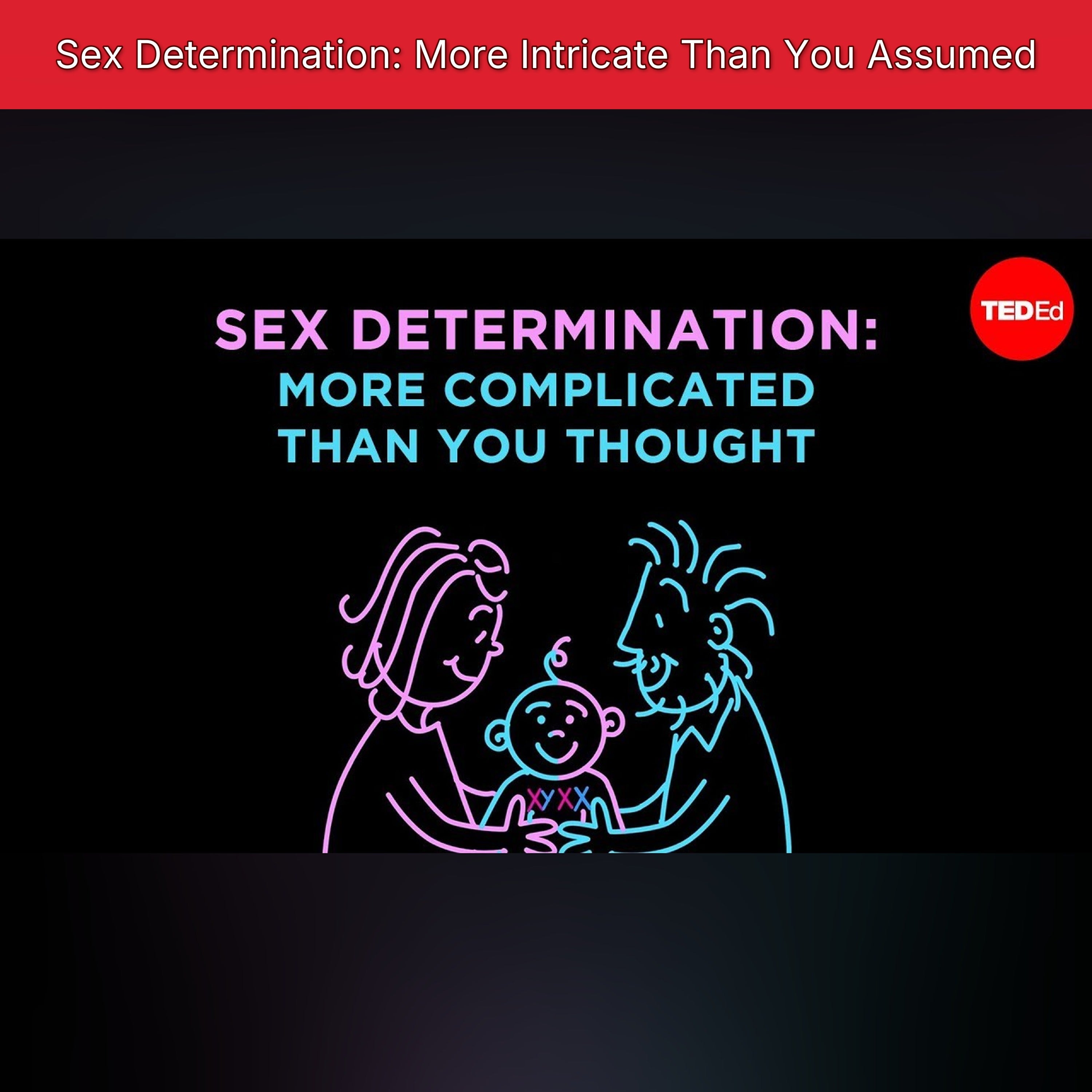
From something as small and complex as a chromosome to something as seemingly simple as the weather, sex determination systems vary significantly across the animal kingdom. Biologist and teacher Aaron Reedy shows us the amazing differences between species when it comes to determination of gender. Lesson by Aaron Reedy, animation by BuzzCo (http://buzzzco.com). (http://buzzzco.com)./)
Discover how practicing acceptance can help you let go of fear, open your heart, and meet life's challenges with greater love and compassion. How To Do This Practice: Begin With Acceptance: Take a moment to acknowledge whatever is happening in your life right now, without trying to change, resist, or judge it. Repeat the Affirmation: Slowly read or repeat these words, allowing yourself to take in their meaning: I am thankful for the enduring capacity to love that has come to me from the sacred heart of the universe. May everything that happens to me today open my heart more and more. Reconnect With Love: Remember that your capacity to love endures, no matter what challenges you face or how others treat you. Practice Loving-Kindness: Consider how your thoughts, words, feelings, and actions can express kindness toward yourself, those close to you, and all beings. Look for Opportunities to Give Love: Think about how you can be a compassionate presence for someone who feels alone, lost, or
It's that time of year again! The days are getting shorter, the end-of-year festivities are starting to ramp up, and Trace is off gallivanting somewhere out of town. With a VERY special episode in the works, we're taking a little breather to get ready and revisit an old favorite from the archives. Consider this a little something to tide you over! Get your moisture sensors ready. In this episode Dr. Alex Dainis slides into the scientific journals all about lubrication to understand the slip-factor of classic yellow bananas. Meanwhile, Julian argues with an actual, college educated PhD scientist about the wetness of molten lava. Is Julian actually… correct?! QUESTIONS Julian: "Is lava wet?" from Marlene Alex Danis: "What food would be a better substitute for the ol' banana peel slipping gag?" from Gerald Do you have an absurd question? Maybe it's a silly idea that popped into your head, a shower thought about the nature of reality, or a ridiculous musing about your favorite food? Whatev
Costa Rica has so much to see - even in downtown San Jose! In this episode, we discuss our trip to Costa Rica; each time we stepped outside Hotel Bougainvillea, there was something different, and our stay at the beautiful Maquenque Lodge. Our trip with Naturalist Journeys (https://www.naturalistjourneys.com/tours/2026/10/15/costa-rica-s-caribbean-side) was packed with birds and other sights. Our local guide, Johan (https://www.weareguides.com/costa-rica/johan-fernandez), had a busy schedule so we could see as much as possible! Adventure Begins at: 8:30 Show notes Rio Grande Valley Bird Festival (https://rgvbf.org/) Birding The Border (https://wildlife.tamu.edu/birding-the-border-2026/) IC4WB (https://ic4wb.com/) Flock To Marion Episodes: 2022 Flock (https://www.buzzsprout.com/187049/episodes/10221779-flock-to-marion-cruise); 2025 Flock (https://www.buzzsprout.com/187049/episodes/16908136-flock-to-marion-again-2025) Booking to go on Flock to Marion (https://birdlife.org.za/flock/) Hotel
AI is collapsing the distance between an idea and a playable game. What happens when almost anyone can build one? In this episode, a16z General Partners Anish Acharya and Jonathan Lai discuss how AI is changing game development, from generating art and code to operating tools like Blender and game engines directly. They explain why cheaper development could let studios take more creative risks while opening game creation to people without traditional coding or design skills. They also explore modding, remixing existing games, and the emergence of AI-native experiences that generate characters, abilities, and storylines on the fly, potentially creating games that never really end. Resources: Follow Anish Acharya on X:https://x.com/illscience Follow Jonathan Lai on X:https://x.com/Tocelot Stay Updated: Find a16z on YouTube: YouTube (https://www.youtube.com/@a16z) Find a16z on X (https://x.com/a16z) Find a16z onLinkedIn (https://www.linkedin.com/company/a16z) Follow our host: https://twit
This week’s episode is a little different from our usual format, because it is a little more human-oriented, but the topics we discuss are crucial to conservation and ecology and our own relationships as humans to the environments we live in. Our guest is a writer and comedian whose work on projects like Paw Patrol and Spirit Rangers you might already familiar with, and we discuss Native representation in media, impacts of colonialism on ecosystems throughout North America and how indigenous practices are helping to heal them, what the landback movement means and how it’s restoring populations of some of our most iconic keystone species, how cultural values can influence our perceptions of wildlife, and more. Links: Find We’ve Been Here The Whole Time! A Not So Sacred Guide To All Things Native America (https://www.joeyclift.com/book) wherever you get books! Learn more about Joey's work on his website (https://www.joeyclift.com/)! Follow Joey on Instagram (https://www.instagram.com/joe
Eating more plants is not always helpful if it affects muscle health. Two recent randomized controlled trials published in the American Journal of Clinical Nutrition investigated the effects of replacing animal protein with plant protein in older adults. One study reported that participants adhering to a vegan diet experienced significant muscle loss over a 12-week period. The other study found that older people on a predominantly plant-based vegetarian diet and doing resistance training gained both muscle and strength over the same 12-week period. This review looks at the design and results of the studies, considers the importance of both the amount and quality of protein for older adults and provides practical advice on how to put together a plant-based diet to support muscle. Older adults can certainly gain muscle on a predominantly plant-based diet but it's important to be very mindful of certain factors to get the best results. Connect with Dr. Gabrielle Lyon: Instagram: https://w
From killer snails to flying beavers, our panel of experts answer your wildest questions! At the end of every Terrestrials episode, we hand over the mic to our brilliant listeners to badger our experts with questions, and you’ve sent in SO many good ones over the years that we thought these badgers deserve their own special episode. So we gathered three very clever scientists—bug correspondent Dr. Sammy Ramsey (https://www.drsammy.online/), evolutionary biologist Dr. Ana Luz Porzecanski (https://www.amnh.org/research/staff-directory/ana-luz-porzecanski) and planetary geologist Dr. Cynthia Phillips (https://science.nasa.gov/people/cynthia-phillips/)—and we let YOUR curious minds lead the way. Our very own factchecker, Diane Kelly, fact-checked the answers in real time and it was nothing short of thrilling! This first ever Badgerpalooza gets to the bottom of whether pairs of swans really make hearts with their necks, what is the most venomous creature on Earth, what happened before the B
Drug discovery and development has long relied on expensive, time-consuming empirical trial and error. By shifting the discovery process onto computers, Isomorphic Labs wants to fundamentally change medicine from a process of discovery to one of precision engineering. Elad Gil sits down with Isomorphic’s president Max Jaderberg to discuss his vision for using predictive AI models to achieve experimental accuracy. Max details how the success of AlphaFold provided the first proof of concept that a deep learning model could generalize in the field of biology, and how an AI model’s compounding of learnings allows it to achieve generalizability with scale, thus greatly increasing the probability of success as well as speed in real world clinical trials. He also talks about evolving past the need for animal testing through in-silico models, Isomorphic’s focus on developing drug design engines that are agnostic of disease area, target class, and modality, why accurate molecule engineering unl
Nothing really exists in isolation. Almost every part of our lives exists in a network. Consciousness arises from what neurons do together, life from what genes and proteins do together, society from what we do together. When researchers began mapping real-world networks in the 1990s – from the World Wide Web to Hollywood actors linked by films – they found that wildly different systems shared architectural features that their components alone could not explain. This suggested common organizing principles for how networks form and develop. In this episode, two of the pioneers of network science – Albert-László Barabási (https://cos.northeastern.edu/people/albert-laszlo-barabasi/)and co-host Steven Strogatz – discuss how the field took shape, the ideas that underpin it, and why this is more than graph theory under a different name. The conversation then turns to health and nutrition. Disease-related genes cluster in “network neighborhoods”, Barabási explains, which may help identify bet
In which John Green talks about the future of Crash Course, which in this case is the past because we're going to teach some more World History. This year, things will be a little more topical. We'll be talking about big ideas like money and debt, disease, and war. And Vikings. Crash Course is on Patreon! Want to find Crash Course elsewhere on the internet? Facebook - http://www.facebook.com/YouTubeCrashCourse Twitter - http://www.twitter.com/TheCrashCourse Instagram - https://www.instagram.com/thecrashcourse/ CC Kids: http://www.youtube.com/crashcoursekids
We're kicking off our exploration of muscles with a look at the complex and important relationship between actin and myosin. Your smooth, cardiac, and skeletal muscles create movement by contracting and releasing in a process called the sliding filament model. Your skeletal muscles are constructed like a rope made of bundles of protein fibers, and the smallest strands are your actin and myosin myofilaments. It's their use of calcium and ATP that causes the binding and unbinding that makes sarcomeres contract and relax. Pssst... we made flashcards to help you review the content in this episode! Find them on the free Crash Course App! Download it here for Apple Devices: https://apple.co/3d4eyZo Download it here for Android Devices: https://bit.ly/2SrDulJ Chapters: Introduction: Muscle Love 00:00 Smooth, Cardiac, and Skeletal Muscle Tissues 1:18 Structure of Skeletal Muscles 2:40 Protein Rules 3:25 Sarcomeres Are Made of Myofilaments: Actin & Myosin 3:54 Sliding Filament Model of Muscle C
If you’ve been paying attention to the news since, oh, say, 2020, then you’ll no doubt be aware that public health policy can often create tension. Having policies that affect public health can, and does, save lives, but not all policies affecting our health are “health policies.” Don’t worry, we’re going to break it all down in this episode of Crash Course Public Health, where we will discuss how an orthopedic surgeon’s love of racing helped create seatbelt policies in the US, and why sometimes laws governing what can be built where affect our health. Chapters: Seat Belts & Your Health 00:00 Understanding Health & Policy 2:21 Vaccination Policies 4:40 How Policies Save Lives 6:42 Who Makes Health Policy? 10:01 Review & Credits 12:33 Check out our shared playlist with APHA: https://www.youtube.com/playlist?list=PLDjqc55aK3kywF2dd97_Jh5iP0d2ARhdo Vanessa’s channel: https://www.youtube.com/braincraft Sources: https://docs.google.com/document/d/1OHJiQ1njj5jWJC1YLDBzQgKC1QfnVgqJbbpK6qs7ekA
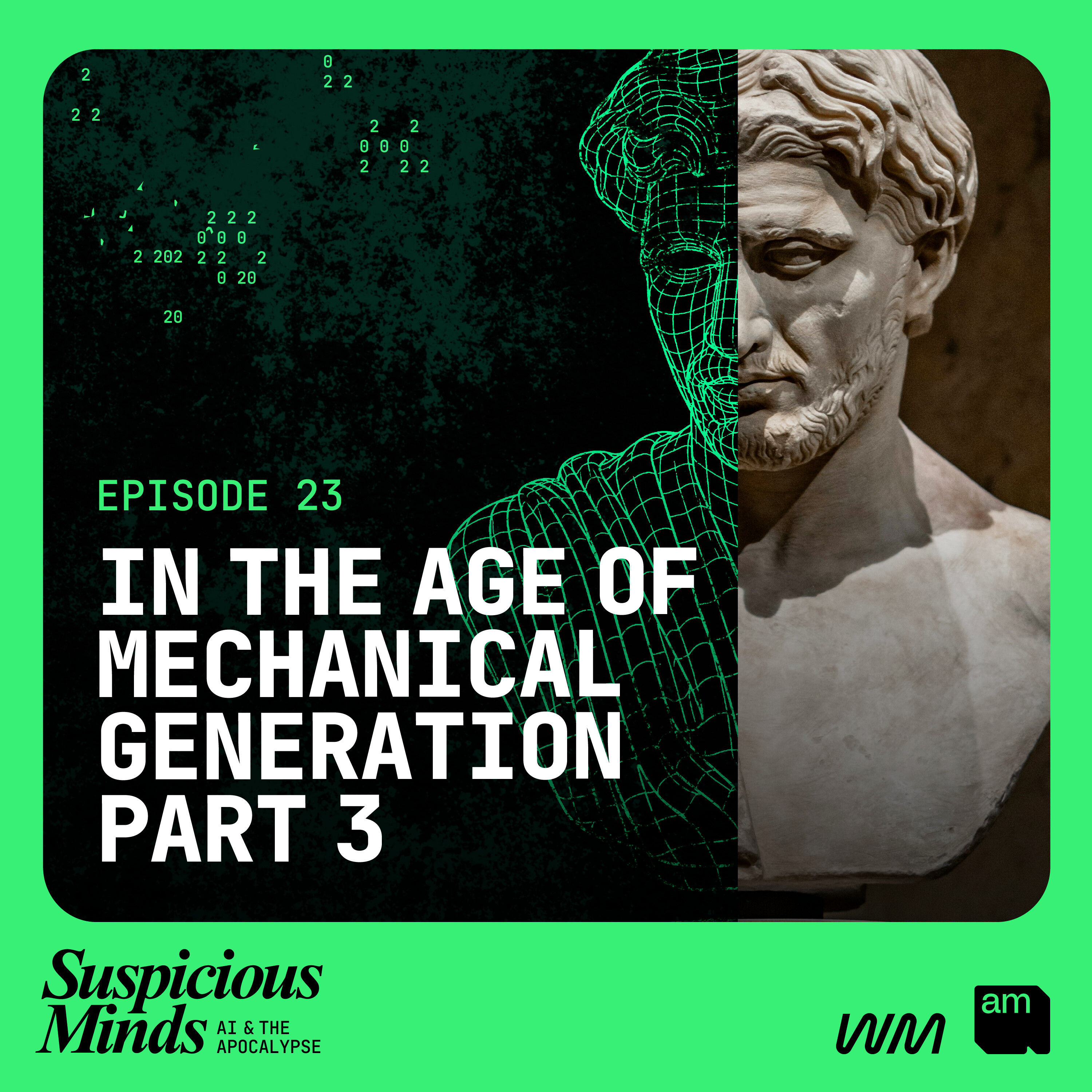
In 2002, Al Pacino played a director who hid the fact that the star of his hit film was AI, and ended up arrested for her murder. The movie was Simone, written by Andrew Niccol, who also wrote The Truman Show, which makes it part of this podcast's origin story whether he knows it or not. Three weeks after this episode comes out, a feature film made almost entirely with AI opens in American theaters. Part Three of our series on art, artificial intelligence, and the apocalypse is about art that isn't made by people, and whether that's a contradiction. This episode features Stanford's Adrian Daub (What Tech Calls Thinking) discussing what AI promises to remove from the creative process and why the result keeps looking like a banner from 1950s Siberia; the composer Mark Henry Phillips (host of Radiotopia's Light Box) on the afternoon a machine wrote a Bernard Herrmann cue better than anything he believes he will ever write, and what he did next; the philosopher Timothy Morton on the One Ri
The organic molecules that make up life on Earth are more than just the 2-D structures we’ve been drawing so far. Molecules have 3-D shapes that help us understand what they can do. In this episode of Crash Course Organic Chemistry, we’ll learn how orbital hybridization and valence bond theory can help us explain 3D molecular structures and about constitutional and geometric isomers. Episode Sources: Discovery of DNA Double Helix: Watson and Crick | Learn Science at Scitable Citation: Pray, L. (2008) Discovery of DNA structure and function: Watson and Crick. Nature Education 1(1):100 Nature 1953. Watson J.D., Crick F.H. A structure for deoxyribose nucleic acid. Nature 1953;171:737–738. Harding, S. E., Channell, G., & Phillips-Jones, M. K. (2018). The discovery of hydrogen bonds in DNA and a re-evaluation of the 1948 Creeth two-chain model for its structure. Biochemical Society transactions, 46(5), 1171–1182. doi:10.1042/BST20180158 Series Sources: Brown, W. H., Iverson, B. L., Ansyln,
In this episode of Crash Course Psychology, Hank has a look at that oh-so-troublesome time in everyone's life: Adolescence! He talks about identity, individuality, and The Breakfast Club. Want more videos about psychology? Check out our sister channel SciShow Psych at https://www.youtube.com/scishowpsych! -- Chapters: Introduction: The Breakfast Club 00:00 Erikson's 8 Stages of Progressive Psychosocial Development 2:05 Adolescence: Identity vs. Role Confusion 2:51 Young Adulthood: Intimacy vs. Isolation 3:39 Middle Adulthood: Generativity vs. Stagnation 4:35 Late Adulthood: Integrity vs. Despair 5:10 Physical Changes in Adulthood 5:57 Fluid & Crystallized Intelligence 6:50 Dementia & Alzheimer's Disease 8:10 Review & Credits 9:25 -- Crash Course is on Patreon! Want to find Crash Course elsewhere on the internet? Facebook - http://www.facebook.com/YouTubeCrashCourse Twitter - http://www.twitter.com/TheCrashCourse Instagram - https://www.instagram.com/thecrashcourse/ CC Kids: http://www.