Listen through the publisher, then discuss the episode here or arrange an in-person Roundtable. Your city determines where to meet.
Roundtables are designed for groups of four, with a shared subject and room for everyone to speak. Come for discussion, with no dating expectation.
Early in President Trump’s second term, thousands of federal scientists were laid off, USAID was shuttered, and billions of dollars worth of grants were frozen or terminated. Then, later, Congress decided to fund science and health agencies similarly to previous years. So where do things stand now (https://www.sciencefriday.com/segments/federal-science-funding-update/)? Flora chats with Sudip Parikh, head of the American Association for the Advancement of Science, about the state of science funding and whether the midterm election results will affect anything. Guest: Dr. Sudip Parikh is the CEO of the American Association for the Advancement of Science. Transcripts for each episode are available within 1-3 days at sciencefriday.com (https://www.sciencefriday.com/segments/federal-science-funding-update/). Got a science question that’s keeping you up at night? Call us: 877-472-4374 Hosted by Simplecast, an AdsWizz company.
Episode information is provided by the publisher. Listening takes place on the publisher’s service.
PBS Member Stations rely on viewers like you. To support your local station, go to: http://to.pbs.org/DonateSPACE ↓ More info below ↓ Uploaded 18-02-20 Sign Up on Patreon to get access to the Space Time Discord! Check out the Space Time Merch Store It’s not surprising that the profound weirdness of the quantum world has inspired some outlandish explanations - nor that these have strayed into the realm of what we might call mysticism. One particularly pervasive notion is the idea that consciousness can directly influence quantum systems - and so influence reality. Today we’re going to see where this idea comes from, and whether quantum theory really supports it. Hosted by Matt O'Dowd Written by Matt O'Dowd Graphics by Leonardo Scholzer and Adriano Leal Post Production: Yago Ballarini, Max Willians, Pedro Osinski Directed by: Eric Brown and Andrew Kornhaber Executive Producers: Eric Brown and Andrew Kornhaber End Credits Music by J.R.S. Schattenberg: https://www.youtube.com/channel/UCRl6
My special guest tonight is author and cryptozoologist Lyle Blackburn who's here to discuss an upright walking creature that resembles a lizard terrorizing a town in South Carolina. From the swamplands near Bishopville, South Carolina, come reports of a seven-foot-tall, scaly humanoid creature the locals call the "Lizard Man." Over the years, the creature has been seen by numerous witnesses, including a teenager who claimed it attacked him one night near a remote area called Scape Ore Swamp. The young man's testimony and physical evidence was so compelling, it not only launched a serious investigation by the local sheriff's office but an all-out monster hunt that drew hundreds of people to the small town. This real-life "creature from the black lagoon" has inspired major national news coverage, even a call from the famous CBS news anchor, Dan Rather, as he and the rest of the world clamored to know more about Bishopville's elusive monster. The case is often mentioned in books, websites
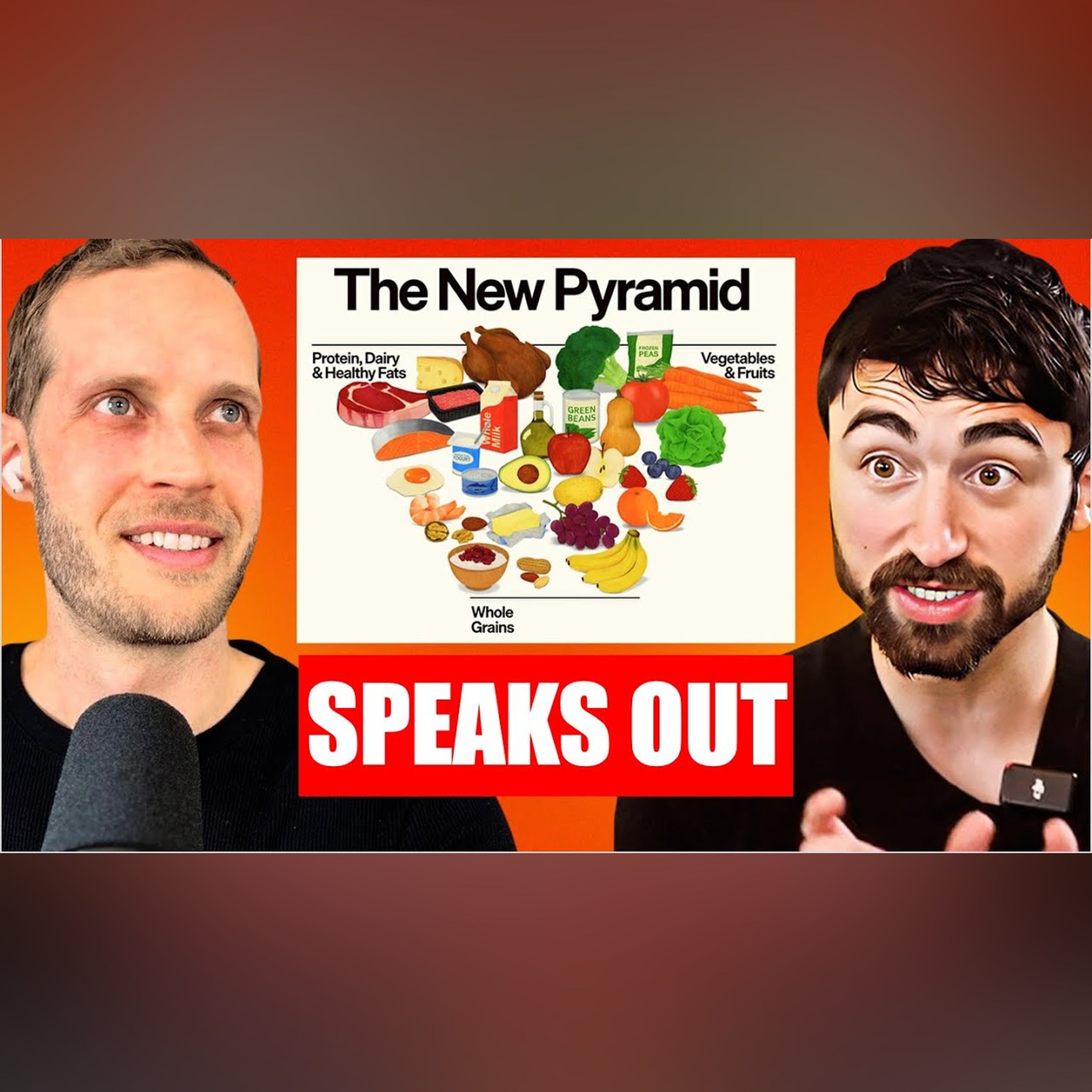
For a written digest on the guidelines, see the StayCurious Metabolism Letter: https://staycuriousmetabolism.substack.com/p/the-new-dietary-guidelines-actually?r=40ekz2 The 2025–2030 Dietary Guidelines are being marketed as a major reset with a simple message: put “real food” back at the center of the American diet. And in a lot of ways, they do represent progress. But when you actually read what’s written, some of the most important details raise real questions. For example, the document still states that saturated fat should not exceed 10% of total daily calories. To separate signal from spin, I’m joined by Dr. Ty Beal PhD, who worked on the evidence review side of the Guidelines process, to explain what the scientific background documents actually say, what happens after scientists submit reviews, and why the final public-facing document can end up with compromises, inconsistencies, or imprecise terminology. If you want a clear, good-faith breakdown—what’s genuinely better, what sti
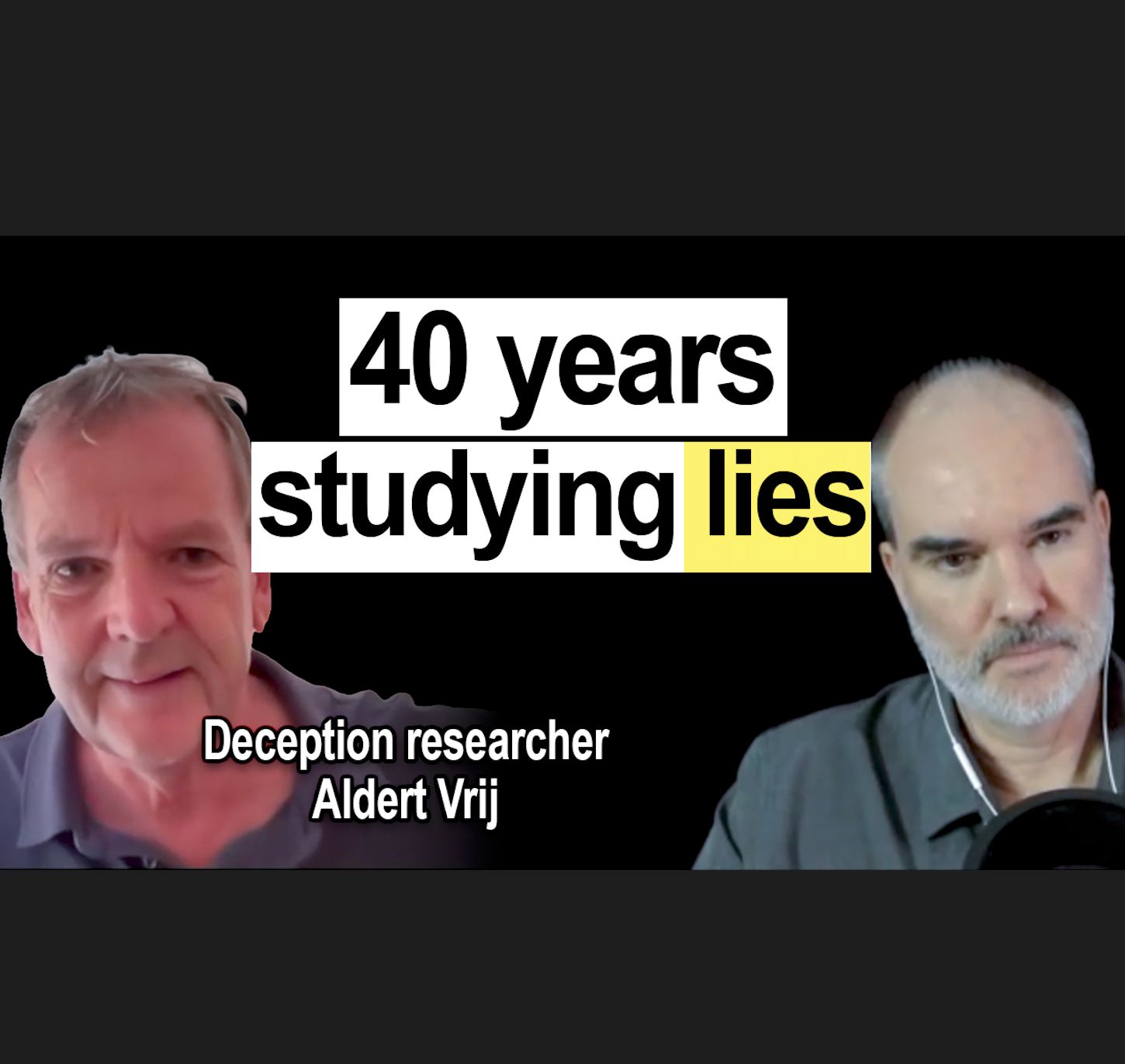
What actually works when it comes to detecting lies, and why are so many popular ideas about reading people and nonverbal behavior at odds with the scientific research? I talk with Aldert Vrij, one of the world's leading deception-detection researchers, who has spent almost four decades studying these topics. We discuss why what people say is far more revealing than their body language; why the perceived “sexiness” of reading nonverbal behavior has contributed to widespread myths and misconceptions; whether vocal behaviors like pitch, volume, and hesitation contain meaningful clues; and whether there's value in analyzing minor word choices and turns of phrase, as is done in so-called “statement analysis.” We discuss Paul Ekman's legacy as a source of faulty ideas about deception, micro-expression-based deception detection training, and the strategies that popular “body language experts” use to appear scientifically credible while simultaneously promoting ideas that conflict with the sc
Dig into the science of how kidney transplants work, how donors are matched and find out how this surgery saves lives. -- In 1954, Joseph Murray attempted a type of kidney swap that no doctor had tried before. The surgery was a success, and the patient would go on to live with the transplanted organ thanks to one key factor: it came from his identical twin. 70 years later, nearly 100,000 kidneys are transplanted annually in the US alone. So how does this surgery work today? Alexander H. Toledo explains the procedure. Lesson by Alexander H. Toledo, directed by Biljana Labović. Support Our Non-Profit Mission ---------------------------------------------- Support us on Patreon: http://bit.ly/TEDEdPatreon Check out our merch: http://bit.ly/TEDEDShop ---------------------------------------------- Connect With Us ---------------------------------------------- Sign up for our newsletter: http://bit.ly/TEDEdNewsletter Find us on Twitter: http://bit.ly/TEDEdTwitter Peep us on Instagram: http://
This holiday season, inspire the next generation of thinkers with KiwiCo! In this week's episode, David is joined by Jacob Haqq-Misra (https://www.haqqmisra.net), Senior Research Investigator and Co-Founder of Blue Marble Space (https://www.bluemarblespace.org). Check out Jacob's UAP software at https://mcdonald.bluemarblespace.org (https://mcdonald.bluemarblespace.org/) To support this podcast and our research lab, head to https://coolworldslab.com/support REFERENCES - Haqq-Misra et al. (2022): “Detectability of Chlorofluorocarbons in the Atmospheres of Habitable M-dwarf Planets” - Kopparapu et al. (2021): “Nitrogen Dioxide Pollution as a Signature of Extraterrestrial Technology” - Haqq-Misra et al. (2022): “Disruption of a Planetary Nitrogen Cycle as Evidence of Extraterrestrial Agriculture” - Loeb & Turner (2012): “Detection Technique for Artificially-Illuminated Objects in the Outer Solar System and Beyond” - Crawford & Schulze-Makuch (2024): “Is the apparent absence of extraterres
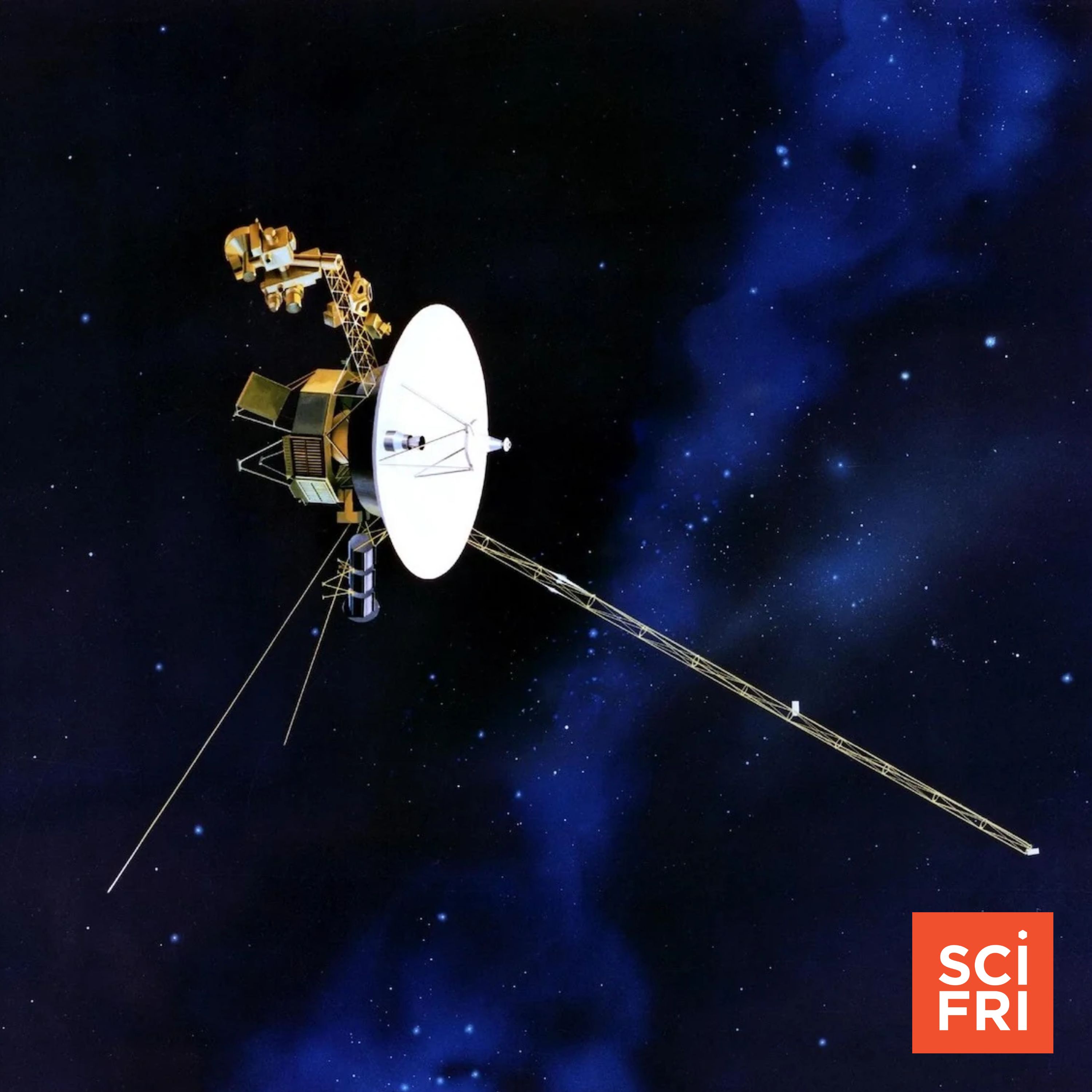
On November 18, the Voyager 1 spacecraft reached a cosmic milestone (https://www.sciencefriday.com/segments/voyager-1-is-a-full-light-day-away/), passing one light-day in distance from Earth, over 16 billion miles. That means that any transmission to or from Voyager takes a full 24 hours to arrive. NASA’s Jennifer Rocca joins Ira Flatow to mark the achievement, and look back on the legacy of the nearly 50-year flight of Voyager 1. Then, in an archival interview (https://www.sciencefriday.com/segments/are-we-there-yet-voyager-1-finally-answers-yes/) from 2013, Ira talks about the mission with the late Ed Stone, who managed the Voyager project for 50 years. Guest: Jennifer Rocca is NASA JPL deputy division manager for astrophysics flight projects. Transcripts for each episode are available within 1-3 days at sciencefriday.com (https://www.sciencefriday.com/segments/voyager-1-is-a-full-light-day-away/). Got a science question that’s keeping you up at night? Call us: 877-472-4374 Hosted by
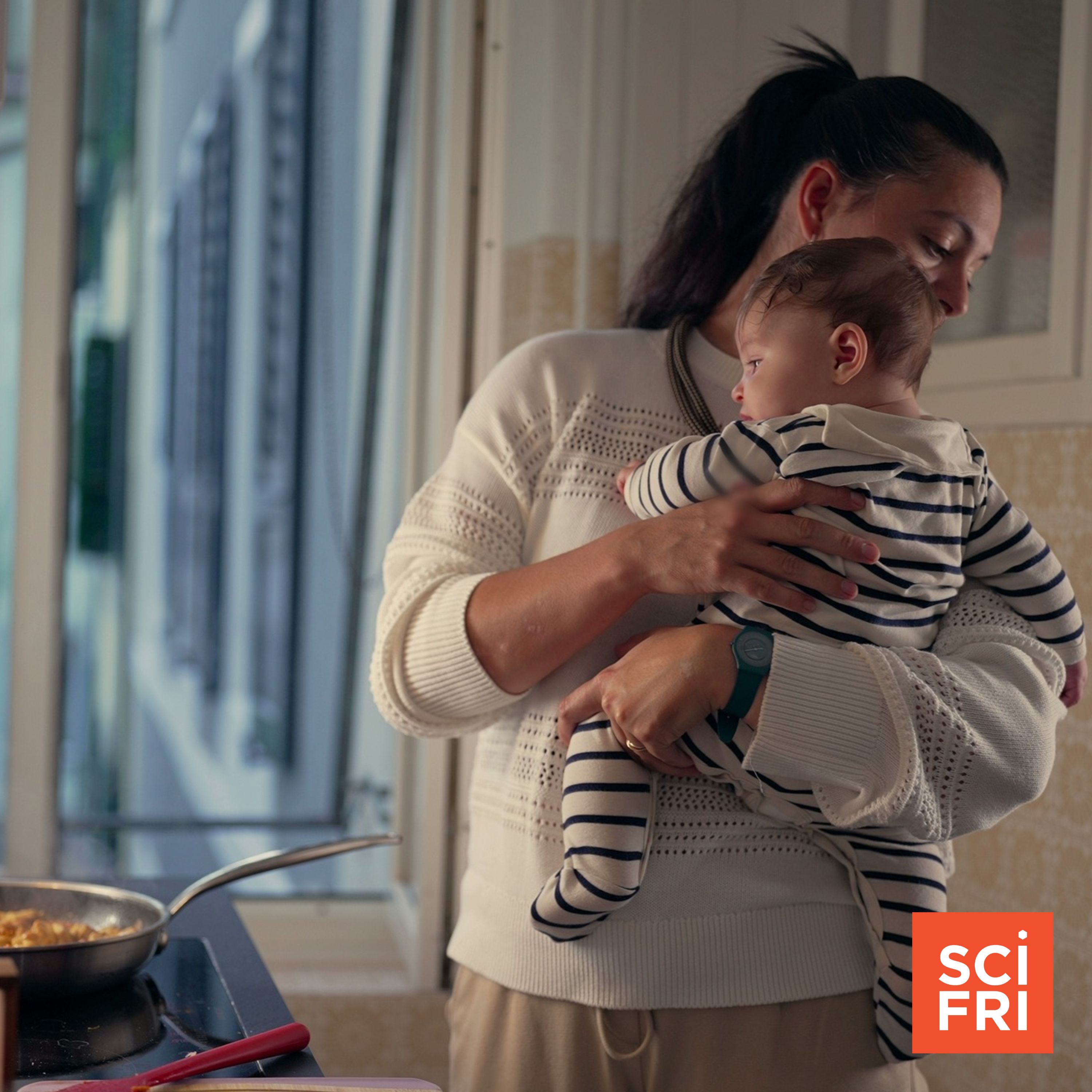
The term “mommy brain” has been popularized to describe a range of changes people experience (https://www.sciencefriday.com/segments/neuroscience-behind-mommy-brain/) during pregnancy and postpartum. They can include forgetfulness and brain fog, or larger personality changes, like a sudden fear of heights or increased paranoia. But how much of this can be tied to changes in the brain? And what happens to the brains of parents who haven’t given birth themselves? Neuroscientist Susana Carmona studies brain changes in pregnancy and parenthood. She joins Flora to talk about what she’s learned, and her new book, “A Mother’s Brain.” (https://bookshop.org/a/18570/9780262054782) Read an excerpt from “A Mother's Brain: The New Science of the Neuro-Maternal Revolution” (https://www.sciencefriday.com/articles/a-mothers-brain-book-excerpt/) Guest: Dr. Susana Carmona is a neuroscientist and author of “A Mother’s Brain: The New Science of the Neuro-Maternal Revolution.” She’s based in Madrid, Spain.
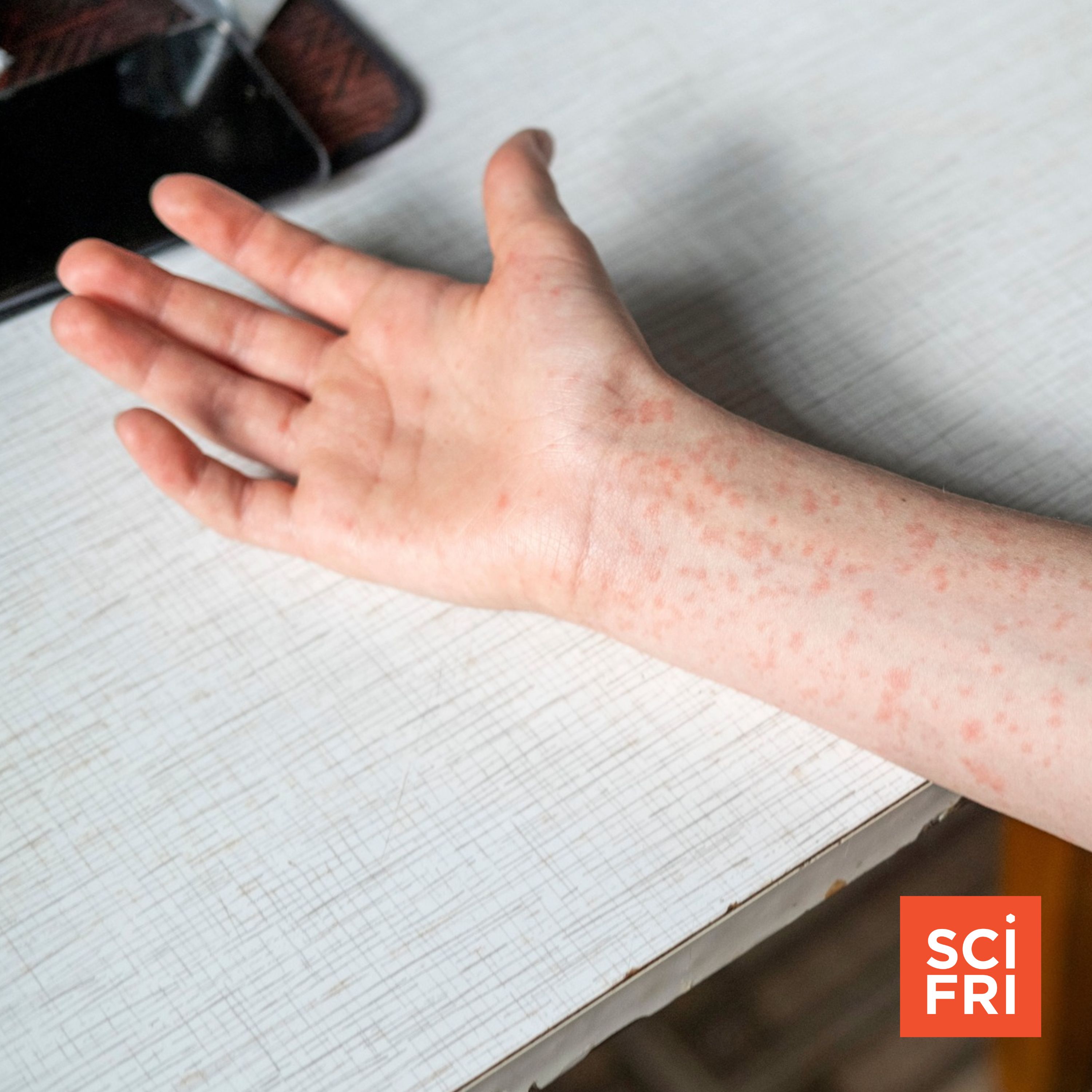
There have been over 5,400 measles cases in the U.S. this year. And on November 17, the Pan American Health Organization declared that the United States has lost its measles elimination status (https://www.sciencefriday.com/articles/us-loses-measles-elimination-status-vaccine-misinformation/). For the first time in 26 years, the virus is endemic. Flora talks with public health reporter Amy Maxmen about what this means going forward. Then, we get into a lesser known effect of the disease. After measles vaccines were introduced in the 1960s, scientists noticed that other childhood infection rates dropped too. In the past few years, infectious disease researchers have figured out (https://www.sciencefriday.com/segments/measles-endemic-in-united-states/) what was going on. The measles virus can wipe out your immune memory—an effect called immune amnesia. The vaccine may not just protect against measles, but also from your immune system losing its ability to remember other viruses. Flora ta
Admissions should consider applicants' circumstances alongside grades and test results.
Share your view, then see how readers voted. No sign-in required. This poll is shared across stories.
Do you agree or disagree?
Common Quandary
A Common Quandary to discuss
Another conversation to explore, separate from this news story.
Someone holds a grocery line spot while their partner fills the cart. Is that cutting?
A shopper with one item stands ahead of you in a long checkout line. Just before reaching the register, their partner arrives with a cart packed to the top and joins them. They insist they were shopping together all along.
Can one person reserve a place in line for an unknown amount of work?