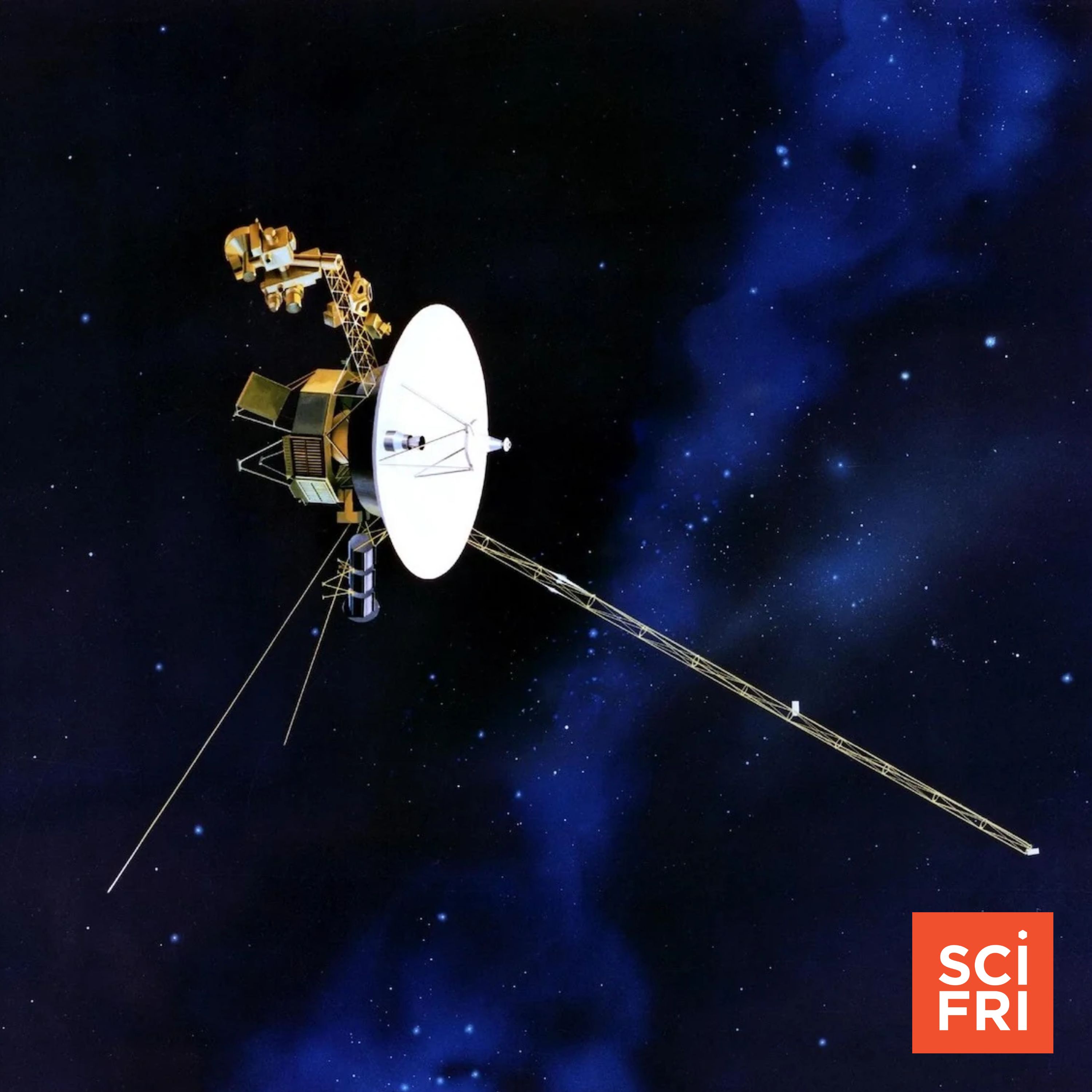
Voyager 1 is a full light-day away, and still going
14 min
Listen through the publisher, then discuss the episode here or arrange an in-person Roundtable. Your city determines where to meet.
Roundtables are designed for groups of four, with a shared subject and room for everyone to speak. Come for discussion, with no dating expectation.
On November 18, the Voyager 1 spacecraft reached a cosmic milestone (https://www.sciencefriday.com/segments/voyager-1-is-a-full-light-day-away/), passing one light-day in distance from Earth, over 16 billion miles. That means that any transmission to or from Voyager takes a full 24 hours to arrive. NASA’s Jennifer Rocca joins Ira Flatow to mark the achievement, and look back on the legacy of the nearly 50-year flight of Voyager 1. Then, in an archival interview (https://www.sciencefriday.com/segments/are-we-there-yet-voyager-1-finally-answers-yes/) from 2013, Ira talks about the mission with the late Ed Stone, who managed the Voyager project for 50 years. Guest: Jennifer Rocca is NASA JPL deputy division manager for astrophysics flight projects. Transcripts for each episode are available within 1-3 days at sciencefriday.com (https://www.sciencefriday.com/segments/voyager-1-is-a-full-light-day-away/). Got a science question that’s keeping you up at night? Call us: 877-472-4374 Hosted by Simplecast, an AdsWizz company.
Episode information is provided by the publisher. Listening takes place on the publisher’s service.
PBS Member Stations rely on viewers like you. To support your local station, go to:http://to.pbs.org/DonateSPACE Sign Up on Patreon to get access to the Space Time Discord! The first discovery of extraterrestrial life will almost certainly NOT be when it visits us, nor when we visit it. It won’t be when we see it’s stray TV signals. It’ll be in the excruciatingly faint changes in the color of alien sunsets glimpsed hundreds of light years away. Today we’re going to talk about the first such hint, why it's probably not aliens, and why there’s a tiny chance that it still might not not be aliens. Check out the Space Time Merch Store Search the Entire Space Time Library Here: https://search.pbsspacetime.com/ Hosted by Matt O'Dowd Written by Matt Caplan & Matt O'Dowd Post Production by Leonardo Scholzer, Yago Ballarini & Stephanie Faria Directed by Andrew Kornhaber Associate Producer: Bahar Gholipour Executive Producers: Eric Brown & Andrew Kornhaber Executive in Charge for PBS: Maribel Lop
For some reason, it did not stop him.Now I just want to ask you something real quick to put you in the mind of a bear. If you found some of your favorite food just left out and you somehow, like me most of the time, just couldn’t resist the temptation. Bears live and eat by what is detected by their noses, so logically, after eating its fill, a proper expectation would be that the bear would go sleep off a large meal upwind of where its food was cached. The wind carries both scent and sound to the bear as it rests and acts as an alarm to it to defend its cache. The hide was still up in the birch, untouched. He dropped his packboard at the base of the tree and glanced up to see where he would need to climb. Movement in the brush, some three hundred feet away, caught his eye. Two bears, roughly thirty feet apart, moved through the brush. From their color and build, he identified them as grizzlies, also called coastal brown bears.Up to that day, every bear he had met in the wild had chose
Explore how pulling an all-nighter can impact your cognitive function, and find out what happens to your brain when you don't sleep. -- You’re just one history final away from a relaxing spring break. But you still have so much to study! You decide to follow in the footsteps of many students before you, and pull an all-nighter. So, what happens to your brain when you stay up all night? And does cramming like this actually help you prepare for a test? Anna Rothschild explores how a sleepless night impacts your cognitive function. Lesson by Anna Rothschild, directed by Biljana Labović. Animation by Noam Sussman & Ali Kellner, Homework Studio. This video made possible in collaboration with the Bezos Family Foundation Learn more about how TED-Ed partnerships work: https://bit.ly/TEDEdPartner A special thanks to Dr. Mathias Basner, Andrew Fuligni, Adriana Galván, and UCLA Center for the Developing Adolescent who provided information and insights for the development of this video. Support Ou
THE SEARCH FOR THE ULTIMATE RED LIGHT THERAPY IS OVER! After decades of exploring wellness technologies, Michael Jaco sits down with Rob Rene, founder of Exodus Strong, to explore the Red Light+ Total Body Reset system, the science behind red and near-infrared light, and why this technology has become such an important part of their wellness conversation. Rob's remarkable personal journey—including surviving five near-death experiences—inspired his mission to develop practical wellness tools that people can incorporate into their everyday lives. Discover the full-body Red Light+ Mat, designed for convenient 20-minute sessions, and the portable Red Light+ Wand, created for targeted use on areas such as the knees, shoulders, hands, and lower back. Michael and Rob discuss the technology, personal experiences, and how red light therapy may support a daily wellness routine. BLACK FRIDAY–CYBER MONDAY LISTENER EXCLUSIVE! This is your opportunity to explore Exodus Strong's special holiday offe
In this calm and sleepy facts episode, we spend eight peaceful hours exploring some of the quietest wonders of the natural world. We begin beneath a gathering thunderstorm, following warm air as it rises into towering clouds and learning how a single flash of lightning can briefly heat the air to several times the temperature of the surface of the Sun. From there we settle into the hidden world of hibernation, where animals slow their breathing and their heartbeats to just a few beats a minute and wait out the long winter in stillness. Next, we wander among the trees, discovering how they lift water hundreds of feet into the air without a single moving part and quietly record each passing year in rings of wood. Finally, we cross the deserts, where the heat of the day gives way to cold, clear nights and some dunes hum softly as the sand slides down their slopes. Each story unfolds slowly and gently, with no sudden sounds, so the whole night can pass in calm and quiet wonder. Let these c
In today's brief: Lake Erie, 1957: a newly released Air Force report says two boys saw a humming, bell-shaped craft near the Enrico Fermi Atomic Plant. Skinwalker Ranch: owner Brandon Fugal calls the new files landmark and recalls a daylight saucer over the mesa. Warship footage: a 20-second 2020 infrared clip shows a light crossing a US Navy ship in the Middle East, with no Pentagon assessment. Martha's Vineyard, 1957: a spiked, nickel-coloured object that the Air Force put down to a radar-reflector balloon. Loch Ness: reported sightings jump to 15 this year, up from six in 2025. The Book of Miracles: a 16th-century manuscript of comets, blood rain and multiple suns heads to auction at Christie's. Quick hits: a 1952 file blames the saucer wave on temperature inversions; more Pentagon UFO files are on the way. Every story and source: https://believepod.com/ufo-paranormal-news-22-november-2026/ New episodes every morning. Keep your eyes on the sky. Sources: FOX 2 Detroit: https://www.fo
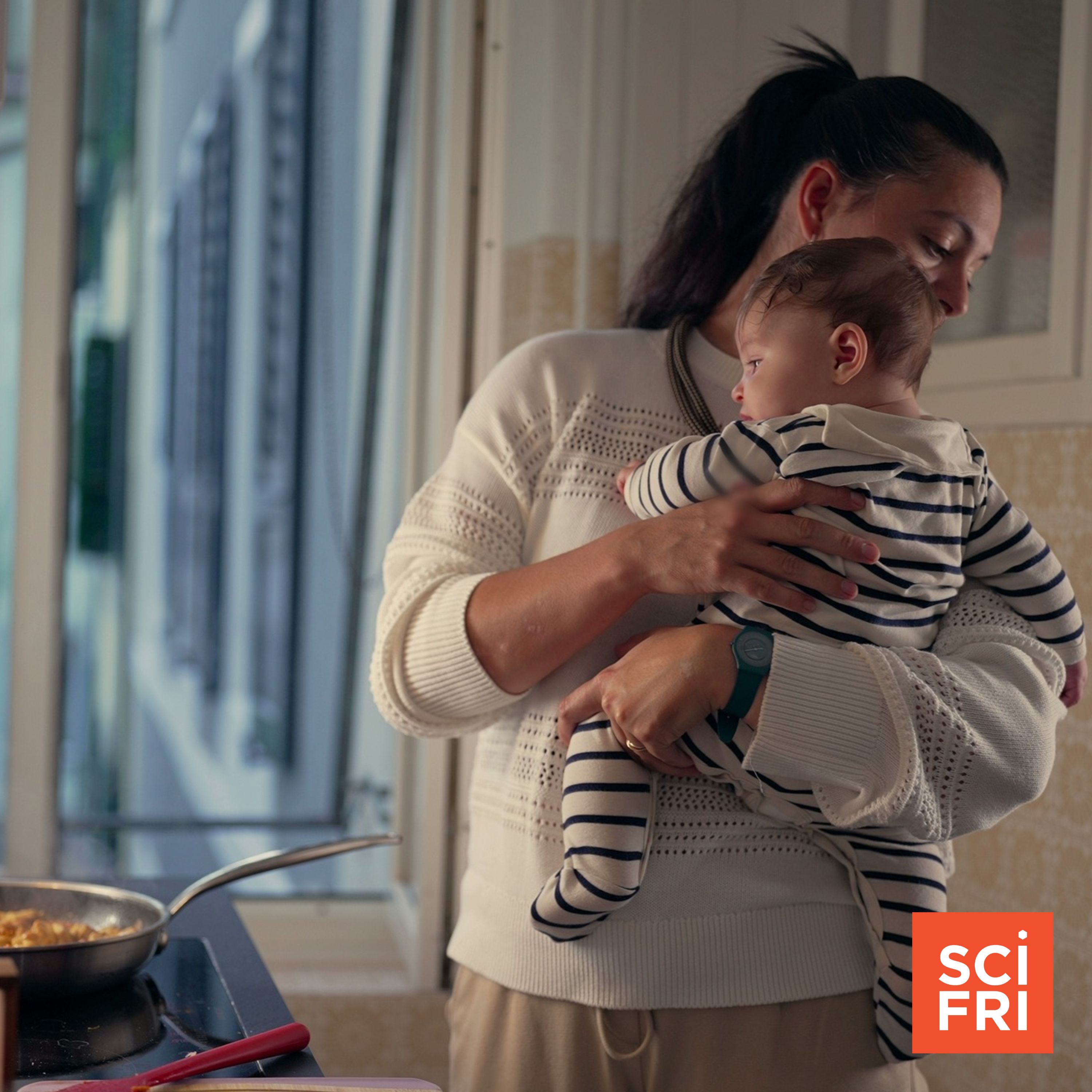
The term “mommy brain” has been popularized to describe a range of changes people experience (https://www.sciencefriday.com/segments/neuroscience-behind-mommy-brain/) during pregnancy and postpartum. They can include forgetfulness and brain fog, or larger personality changes, like a sudden fear of heights or increased paranoia. But how much of this can be tied to changes in the brain? And what happens to the brains of parents who haven’t given birth themselves? Neuroscientist Susana Carmona studies brain changes in pregnancy and parenthood. She joins Flora to talk about what she’s learned, and her new book, “A Mother’s Brain.” (https://bookshop.org/a/18570/9780262054782) Read an excerpt from “A Mother's Brain: The New Science of the Neuro-Maternal Revolution” (https://www.sciencefriday.com/articles/a-mothers-brain-book-excerpt/) Guest: Dr. Susana Carmona is a neuroscientist and author of “A Mother’s Brain: The New Science of the Neuro-Maternal Revolution.” She’s based in Madrid, Spain.
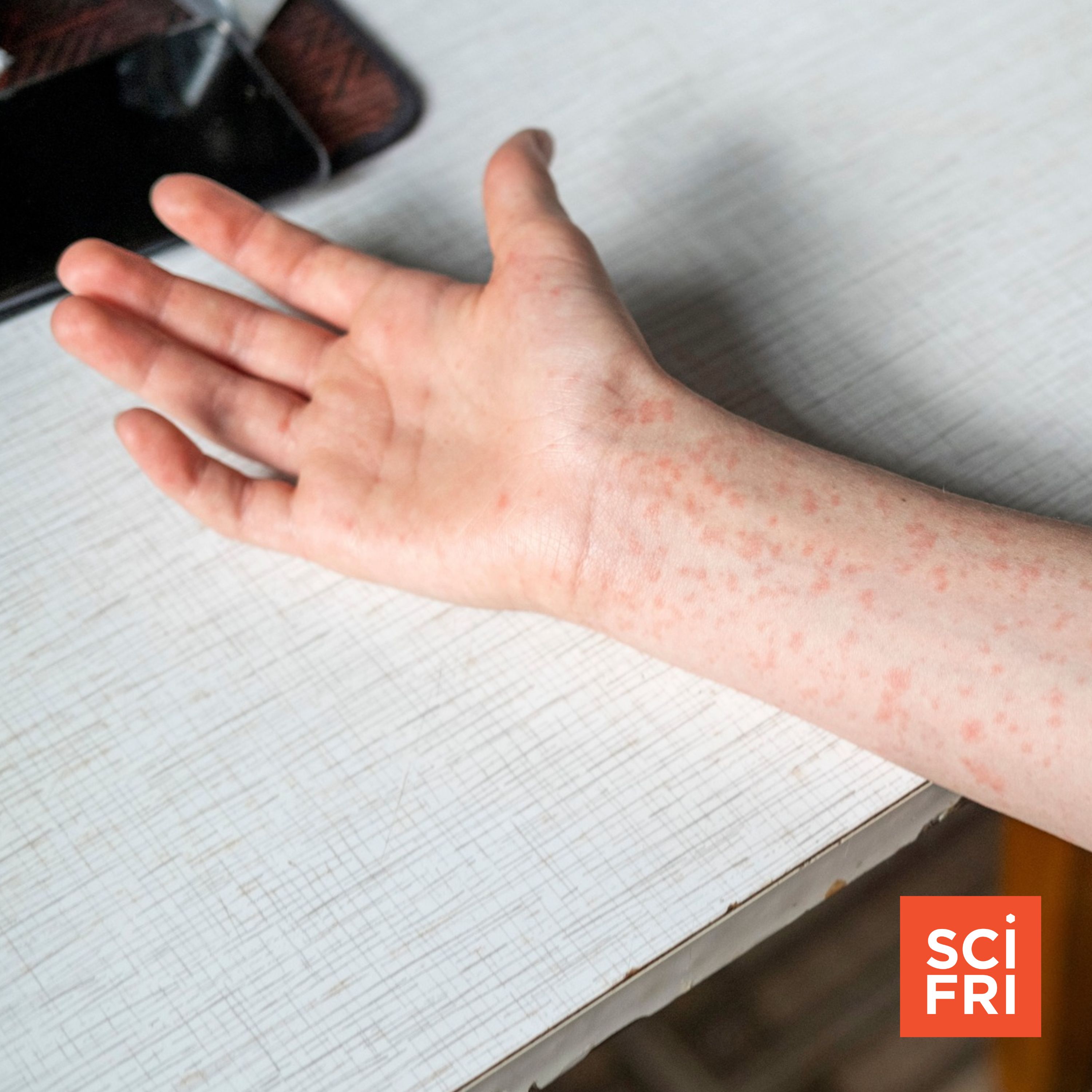
There have been over 5,400 measles cases in the U.S. this year. And on November 17, the Pan American Health Organization declared that the United States has lost its measles elimination status (https://www.sciencefriday.com/articles/us-loses-measles-elimination-status-vaccine-misinformation/). For the first time in 26 years, the virus is endemic. Flora talks with public health reporter Amy Maxmen about what this means going forward. Then, we get into a lesser known effect of the disease. After measles vaccines were introduced in the 1960s, scientists noticed that other childhood infection rates dropped too. In the past few years, infectious disease researchers have figured out (https://www.sciencefriday.com/segments/measles-endemic-in-united-states/) what was going on. The measles virus can wipe out your immune memory—an effect called immune amnesia. The vaccine may not just protect against measles, but also from your immune system losing its ability to remember other viruses. Flora ta
We finally did it. For years, our listeners have been asking to hear the podcast without the ads, and to get even more episodes. We heard you, and we’re excited to announce the launch of Science Friday SuperFans, our new membership program. (https://sciencefriday.supercast.com/) The daily podcast won’t change. But if you become a SuperFan, you can access all our episodes without the ads, and get bonus episodes, including first listens, extended interviews, and behind-the-scenes stories. And you can unlock other benefits, like AMAs, merch discounts, and virtual events. But membership is about more than the perks. Your support helps us bring you science reporting you won’t find anywhere else. Plus, you get the warm, fuzzy feeling of helping a show that needs you. Become a SuperFan today. (https://sciencefriday.supercast.com/) Got a science question that’s keeping you up at night? Call us: 877-472-4374 Hosted by Simplecast, an AdsWizz company.
Publicly rescued businesses should share future gains with taxpayers.
Share your view, then see how readers voted. No sign-in required. This poll is shared across stories.
Do you agree or disagree?
Common Quandary
A Common Quandary to discuss
Another conversation to explore, separate from this news story.
One coffee, four hours, last table. Can the café ask you to leave?
A neighborhood café has become a popular remote workplace. Some guests buy one drink and occupy tables for hours, while families and friends regularly leave because they cannot sit together.